December 4, 2006
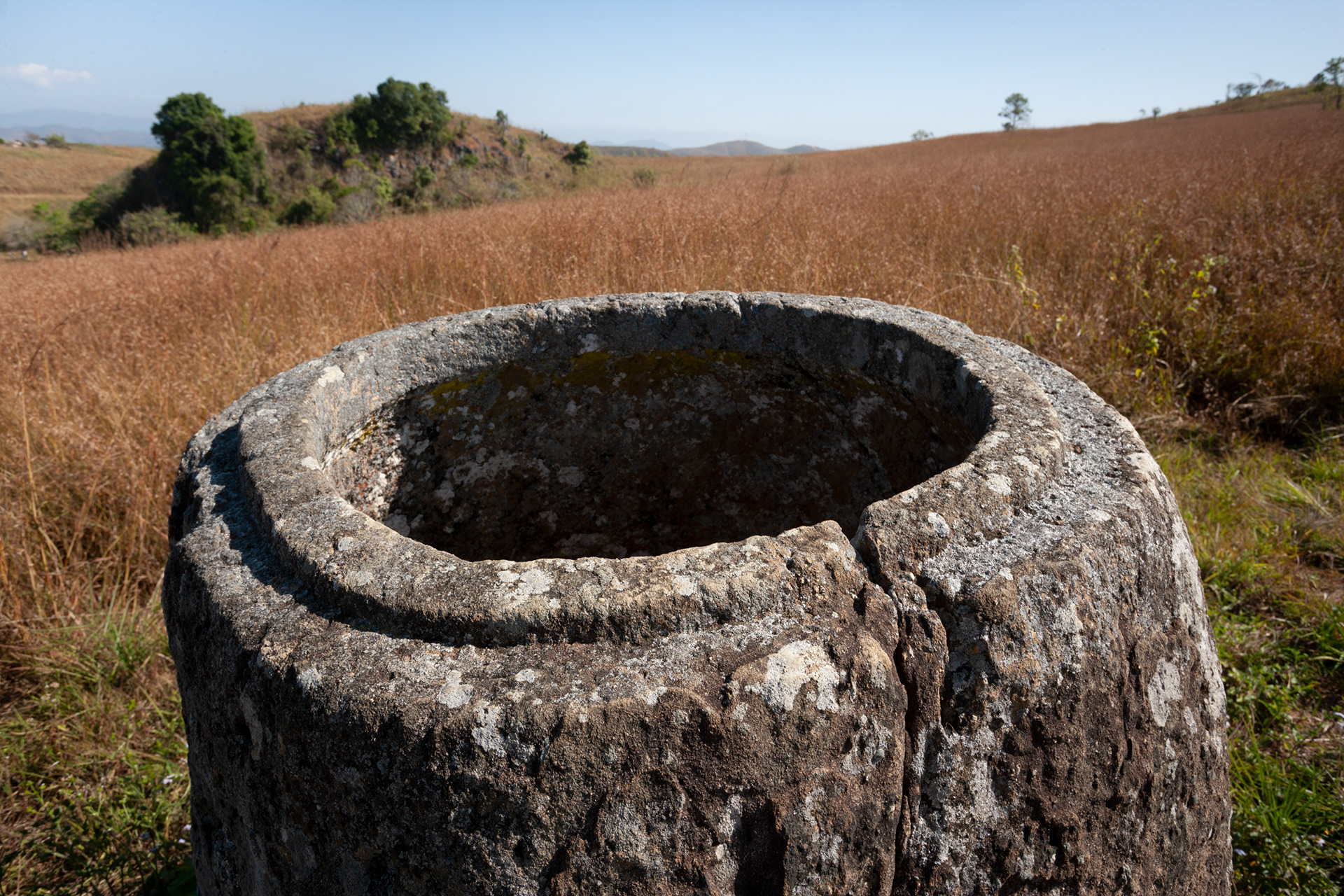
Jar site one lies just outside Phonsavan, the capital of Xieng Khouang Province. Sites two and three are about 23 kilometers away. Fighting was very heavy here during two wars. The Plain of Jars was a principal theater of conflict for both the French-Hmong alliance fighting the Japanese during WWII and for the CIA-backed Hmong fighting the Lao-Vietnamese communists from 1961-1975.
For nearly one hundred years, archeologists debated the significance of the jars, their age, and theories about who carved them and what they were used for. Some thought the jars might have been used to store grain, while others speculated that they once held water or alcoholic brew. Modern carbon dating suggests that the jars at these sites are much older than originally thought—about 3,000 to 3,200 years old.
More importantly, new research at recently discovered site 75, 140 miles northeast of Phonsavan, reveals that stone Jars in that area were used for human burial. Along with skeletal remains of at least 37 people, an iron knife, a copper bell, and glass beads used as trade currency were found. The glass beads have origins as far away as Egypt, Sumatra and Mesopotamia, pointing to the global nature of trade networks in the Megalithic Era. This discovery supports the theory that the stone jars found throughout Northern Laos were used for funerary purposes, not for food or water storage. These findings were published in 2026.
Archeologists’ work in the Plain of Jars has been made difficult by the prevalence of unexploded ordinance (UXO) from the Secret War. Even when I visited in 2006, it was necessary to hire a Hmong guide in order to avoid stepping on a bomb.
During the Secret War, the Plain of Jars was bitterly contested and changed hands many times between Vang Pao’s Hmong irregulars and the Lao-Vietnamese communists. Typically, Hmong forces would advance during the rainy season, only to be turned back when the dry season arrived, bringing fresh troops from Vietnam. The United States supported Hmong fighters by heavily bombing communist positions, sometimes damaging the ancient jars. Ultimately, the Hmong were outnumbered by successive waves of Vietnamese recruits and the PDJ was lost for good.
To see stone jars in a remote mountain forest, please visit our gallery, Ban Pha Keo Rice Harvest.
Plain of Jars-01
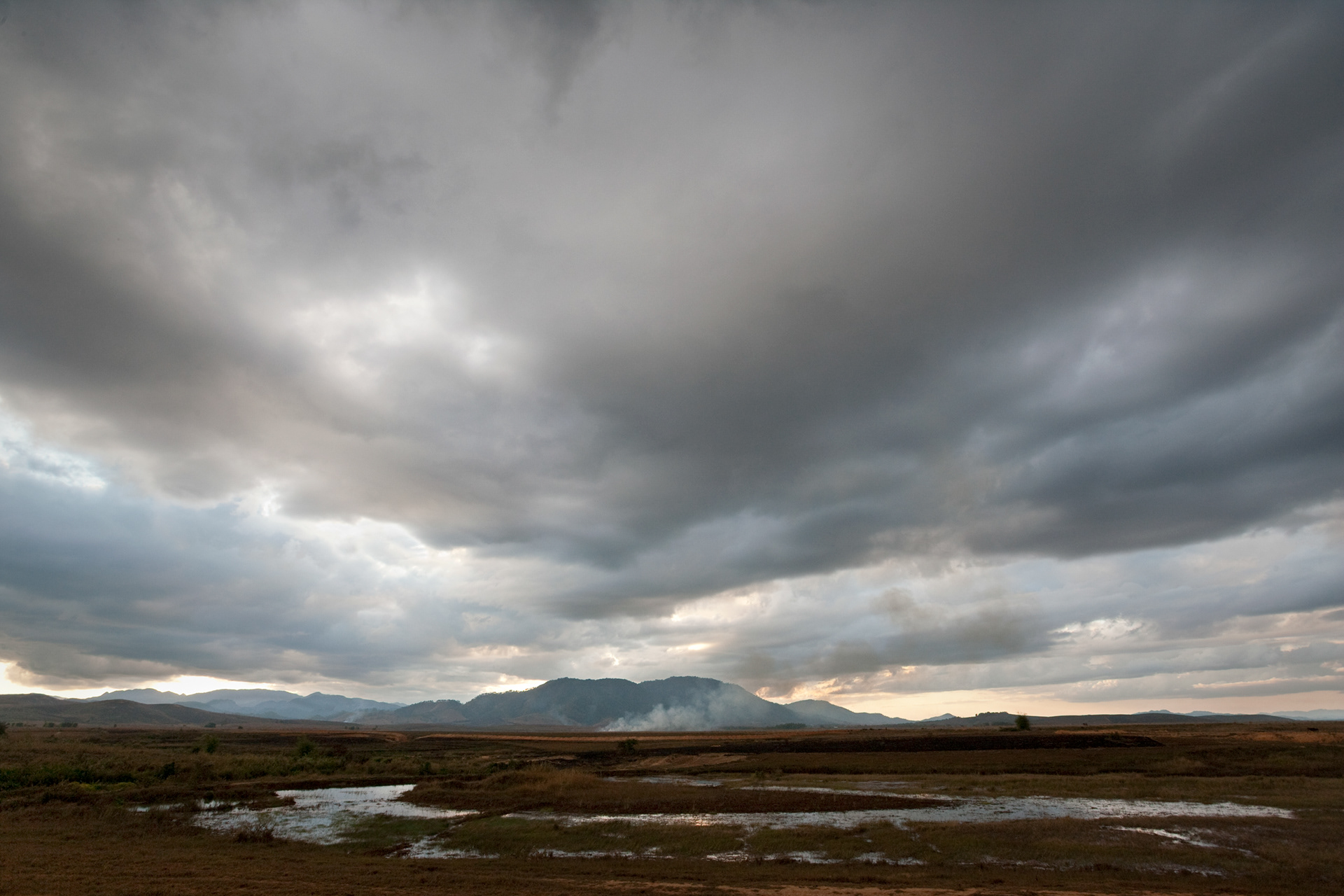
The Xieng Khouang Plateau is home to the Plain of Jars and dozens of other stone jar sites, December 6, 2006.
Plain of Jars-02
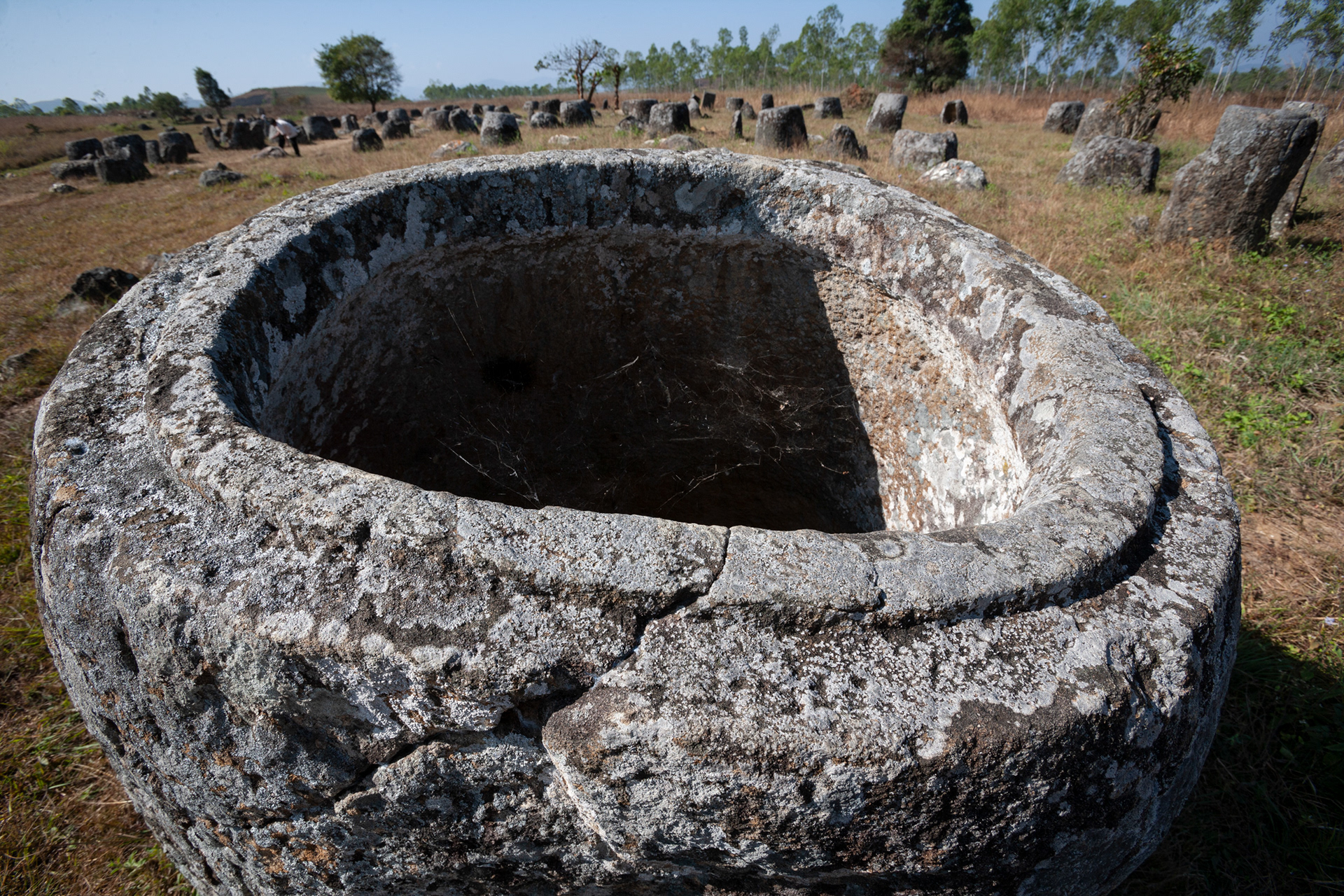
Site one has the densest array of Jars that have been found thus far. UNESCO verified their authenticity before designating the area a World Heritage Site, December 4, 2006
Plain of Jars-03
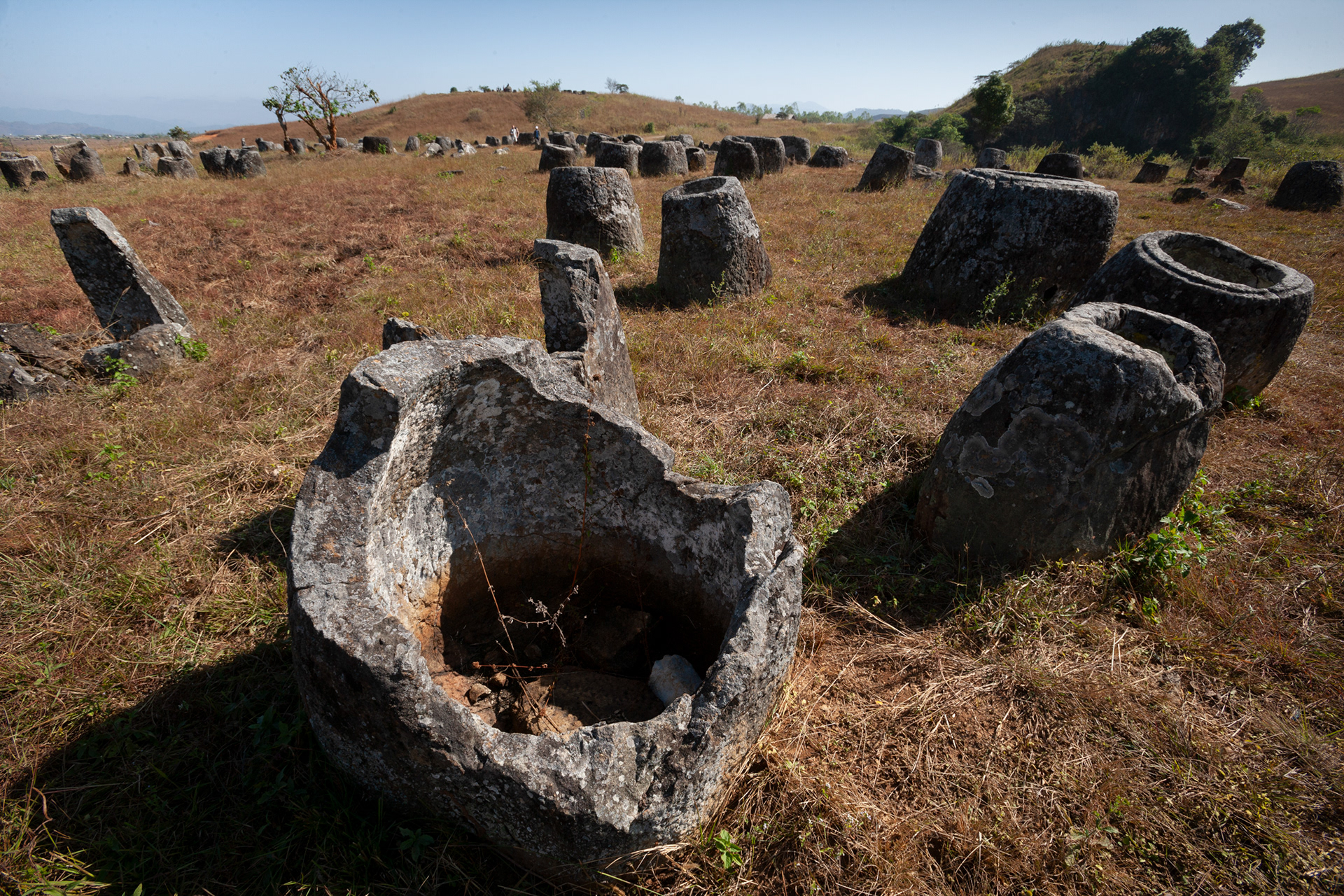
Some of these jars were damaged by American bombing during the Secret War, December 4, 2006
Plain of Jars-06
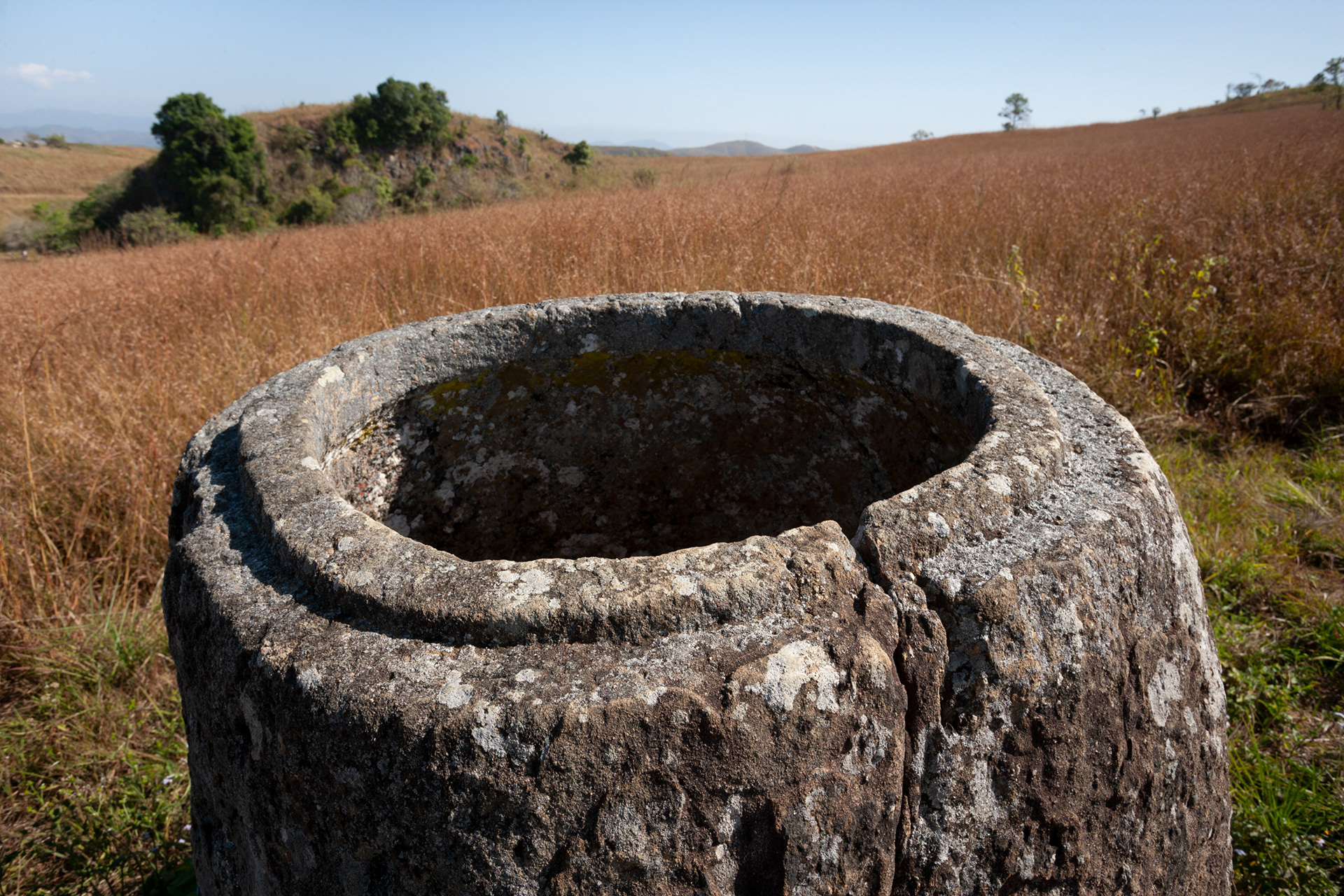
Some jars were carved with a recessed rim to hold a lid in place. The small hill at the upper left contains a cave that was used by troops on both sides of the conflict. It was bombed several times so that today a bit of sky can be seen through the roof of the cave, December 4, 2006
Plain of Jars-07
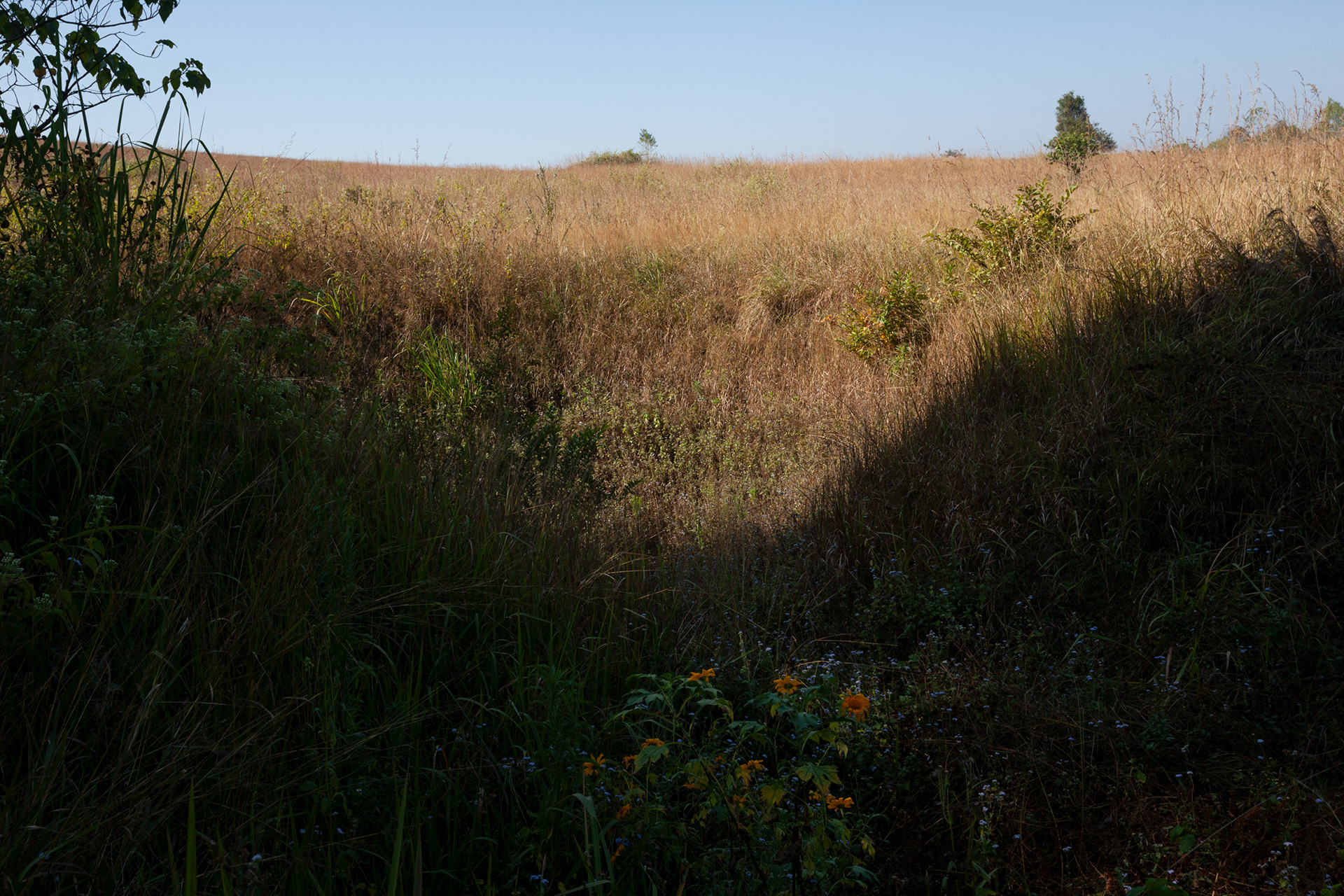
View from the mouth of the cave showing a large bomb crater in the foreground, December 4, 2006
Plain of Jars-05
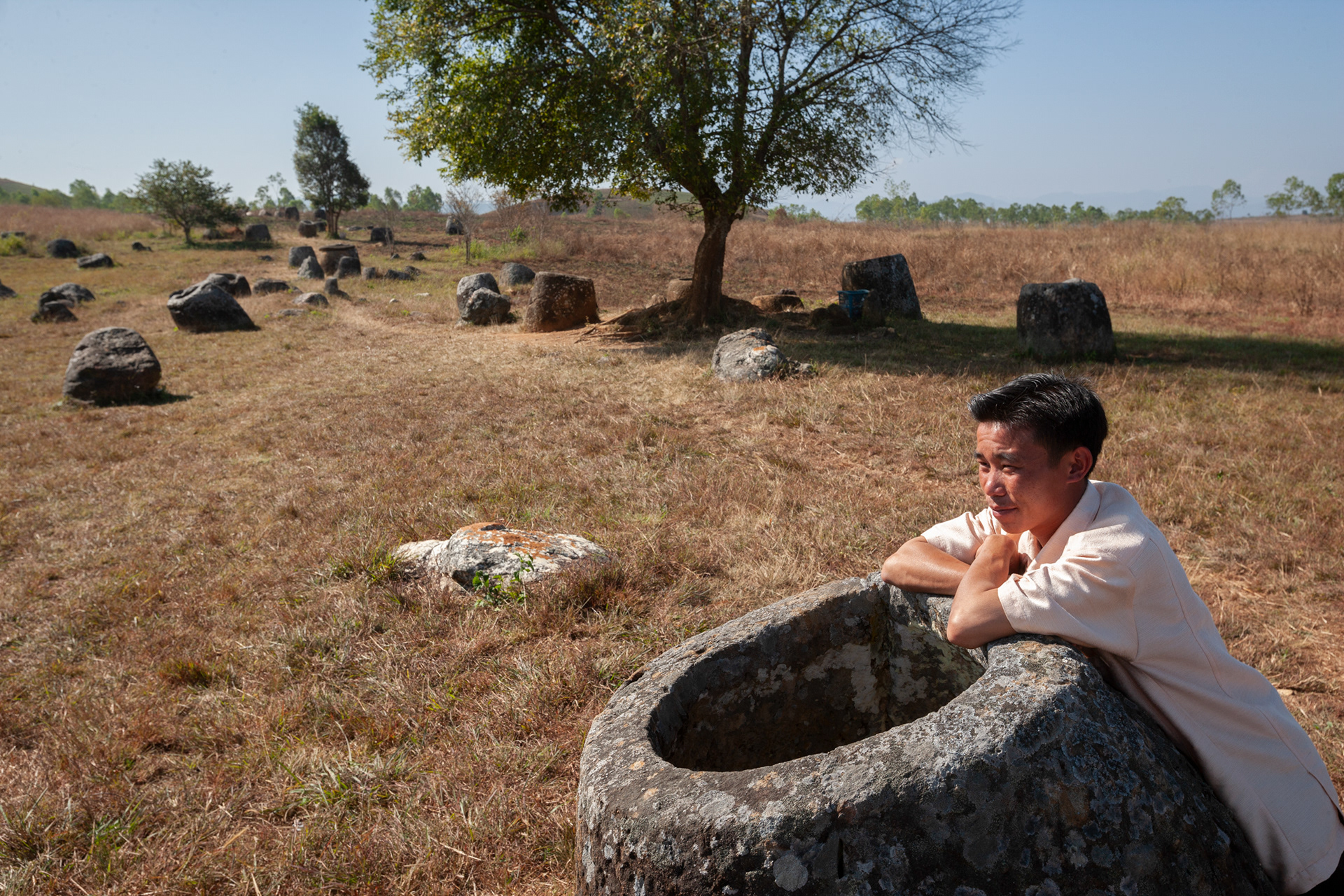
My guide and I took a tuk tuk to jar site two. In 2006, it was unsafe to visit these sites without a guide. He advised me to stay on the trail, except where he could safely lead me to an area of interest, December 4, 2006
Plain of Jars-04
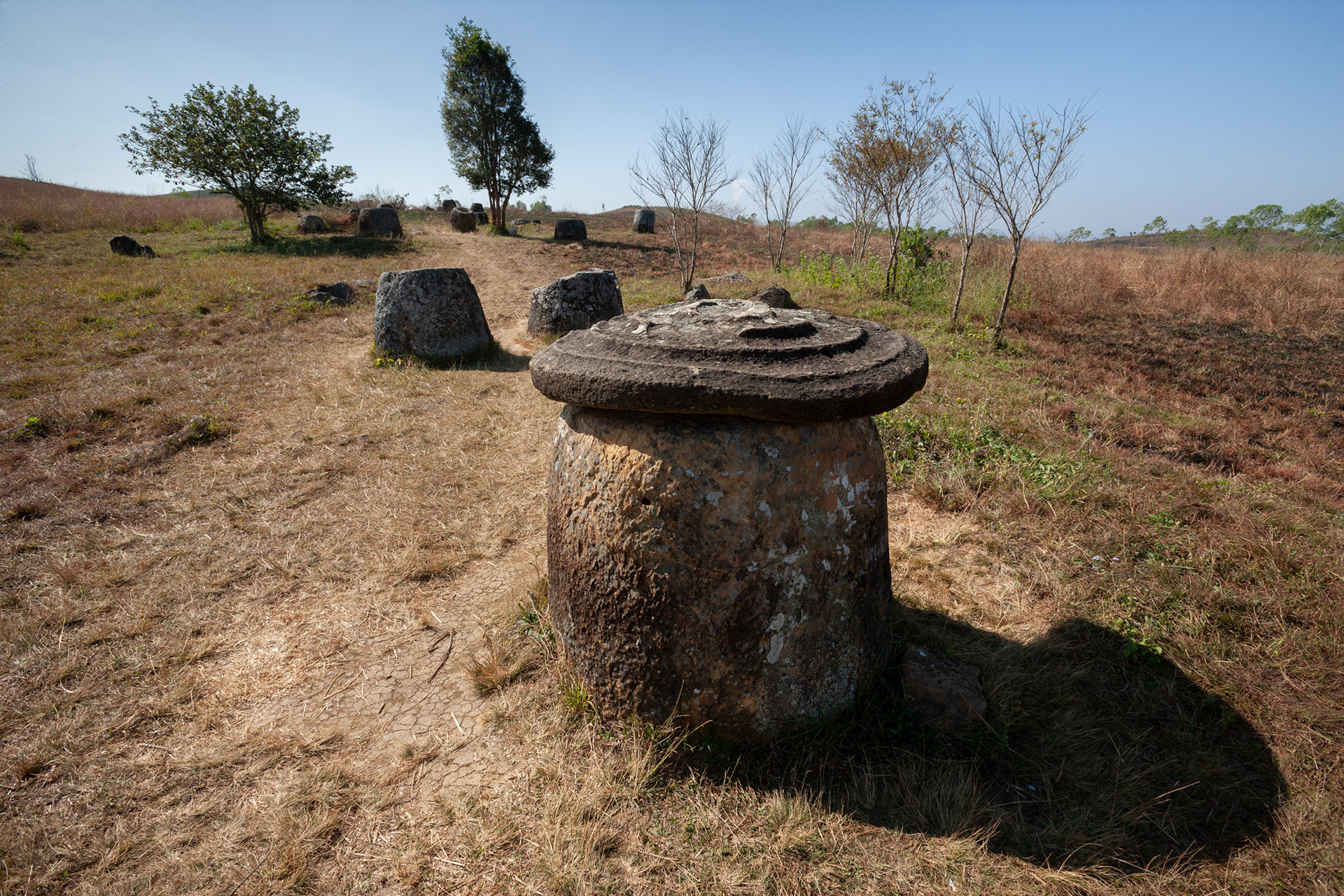
Jars with lids are rarely seen, but archeologists think every jar originally had one, December 4, 2006
Plain of Jars-08
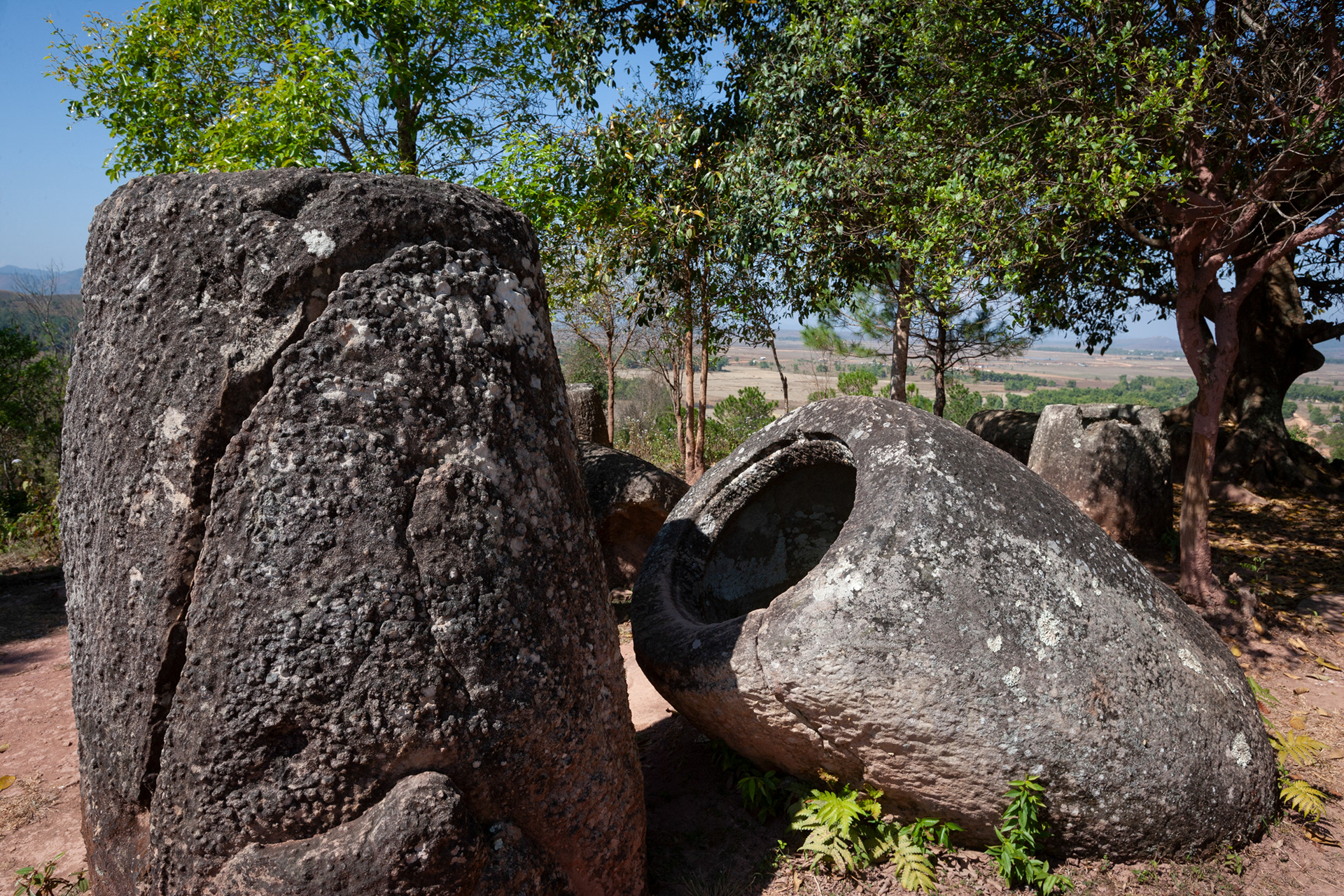
From jar site two, my guide and I walked an hour and 20 minutes through farms and rice paddies to reach site three. Though it has fewer jars, the site is perched atop a small hill with commanding views of the Xieng Khouang plains, December 4, 2006
Plain of Jars-09
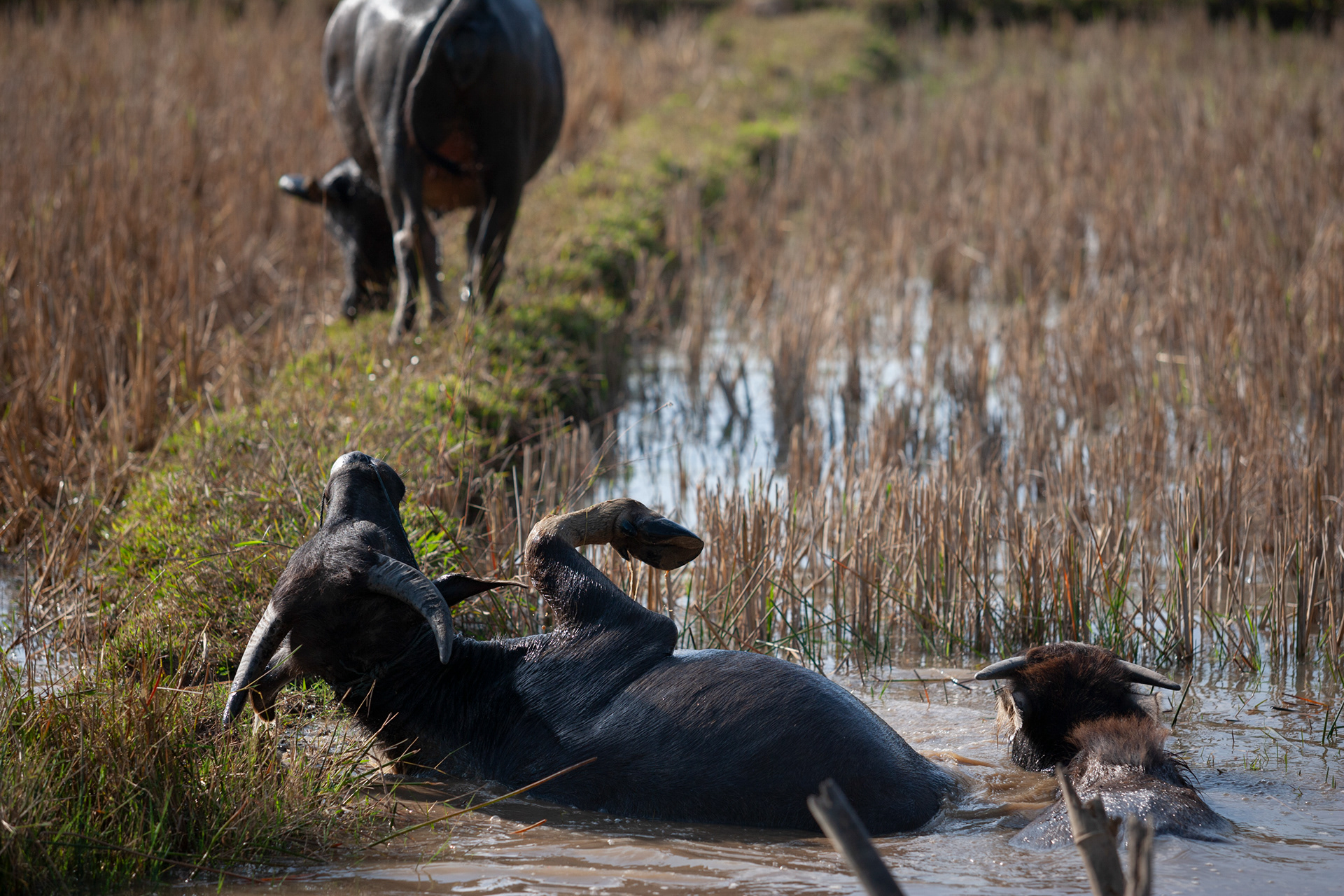
On the return hike, I spot a mother buffalo and her calf frolicking in a rice paddy, December 4, 2006
Plain of Jars-09
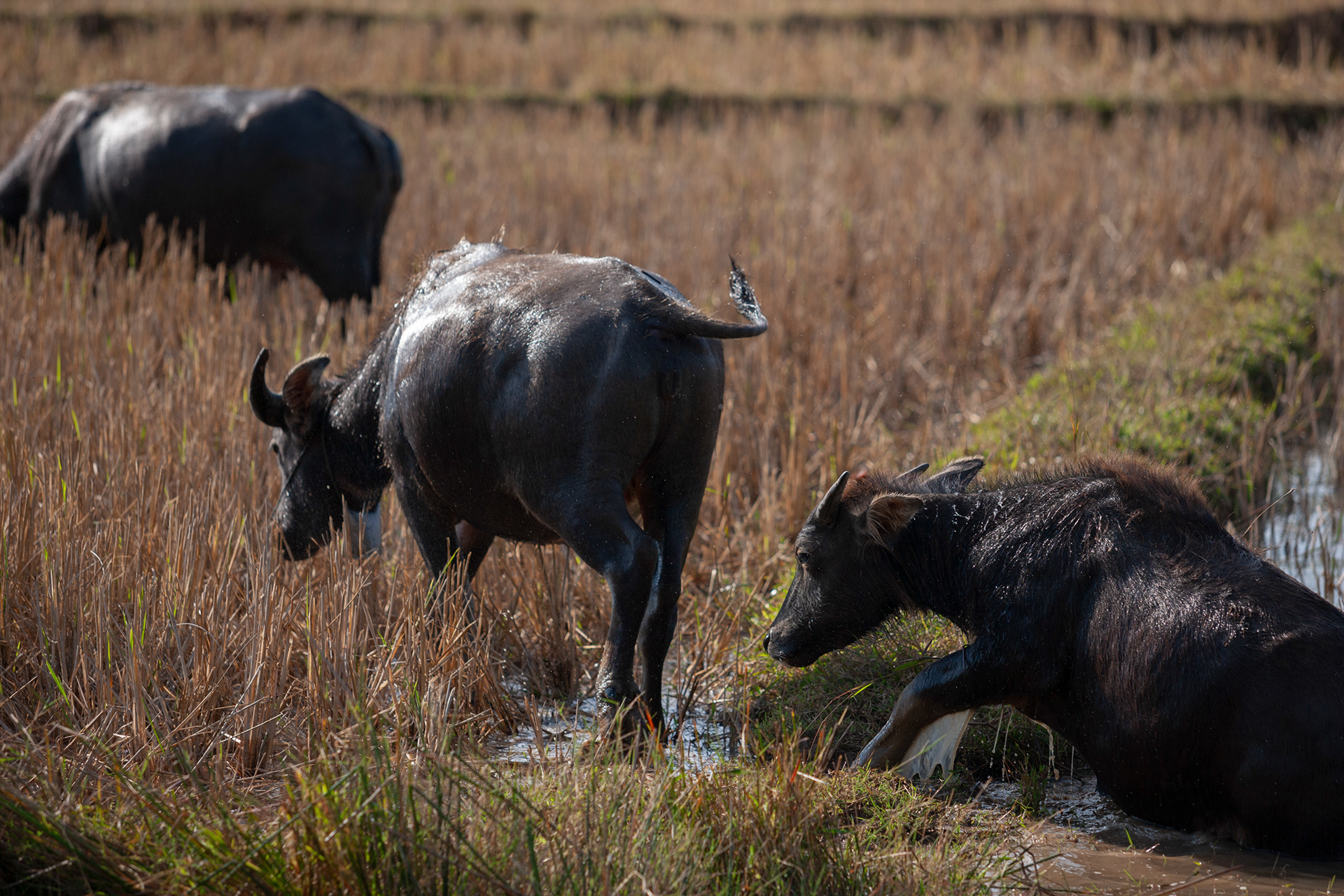
The calf struggles to follow its mother out of a deep paddy into a shallower one, December 4, 2006
Plain of Jars-10
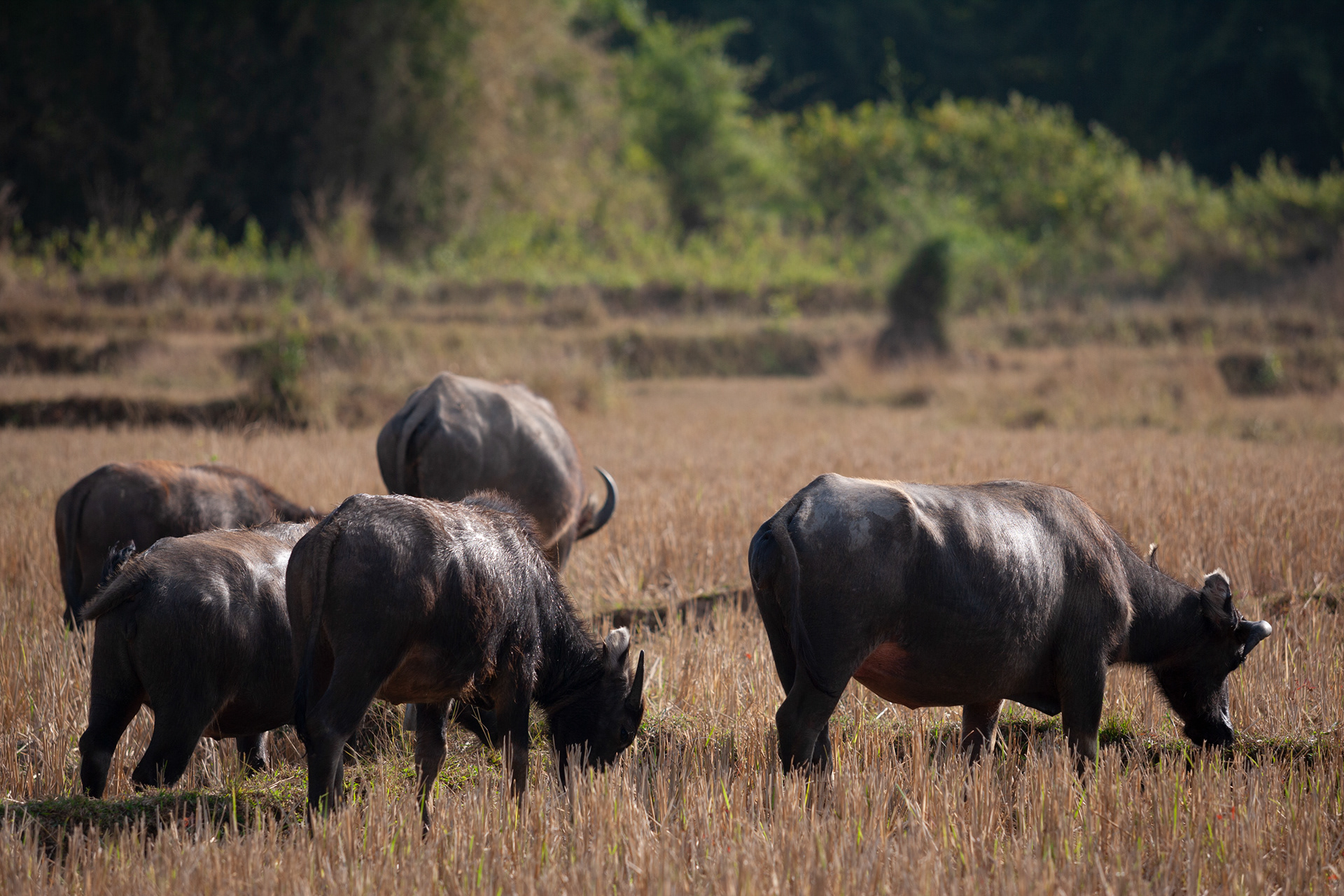
Buffaloes graze on the stubble of recently harvested rice, December 4, 2006
Plain of Jars-09
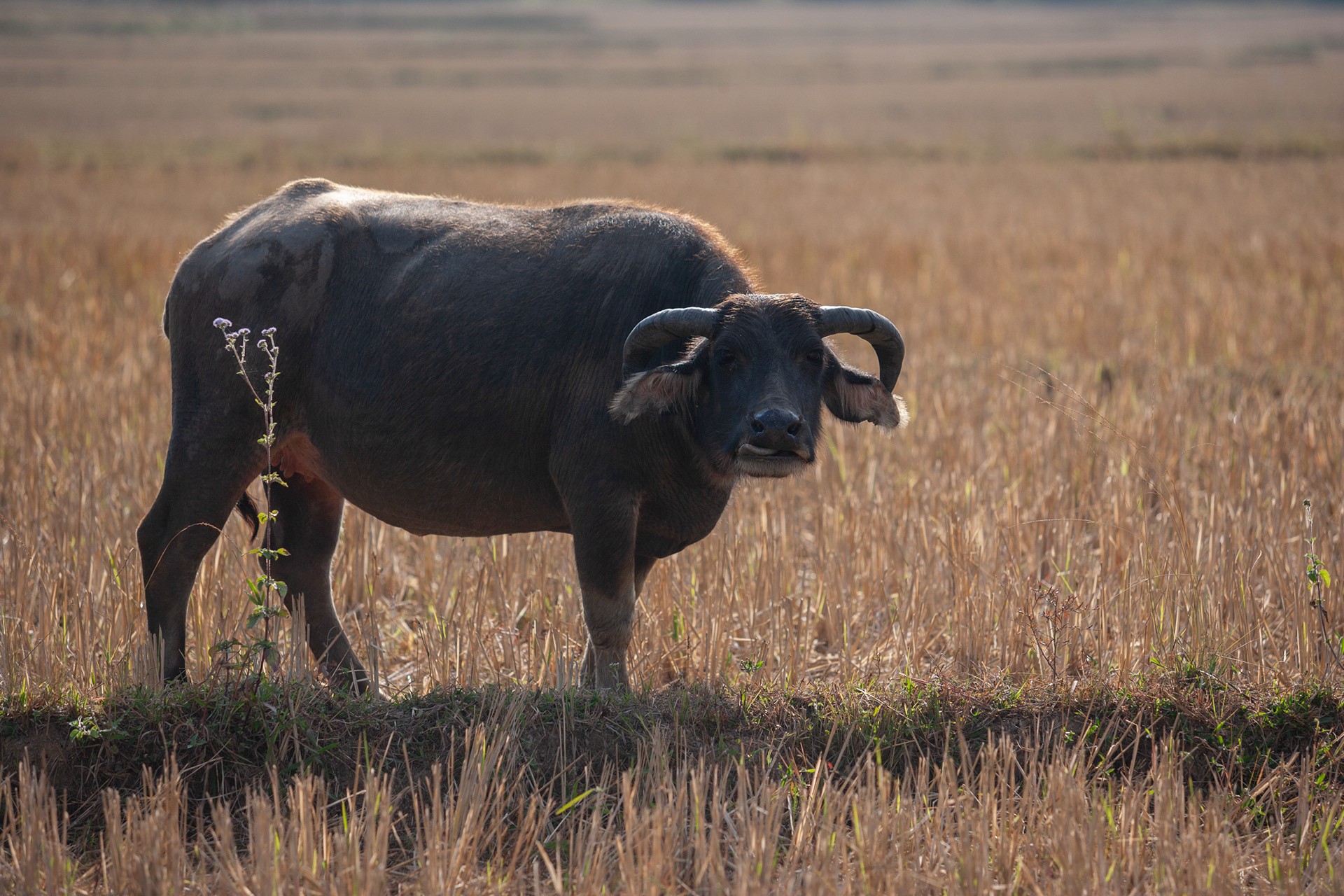
A mother buffalo warily watches two human passersby, December 4, 2006
Plain of Jars-10
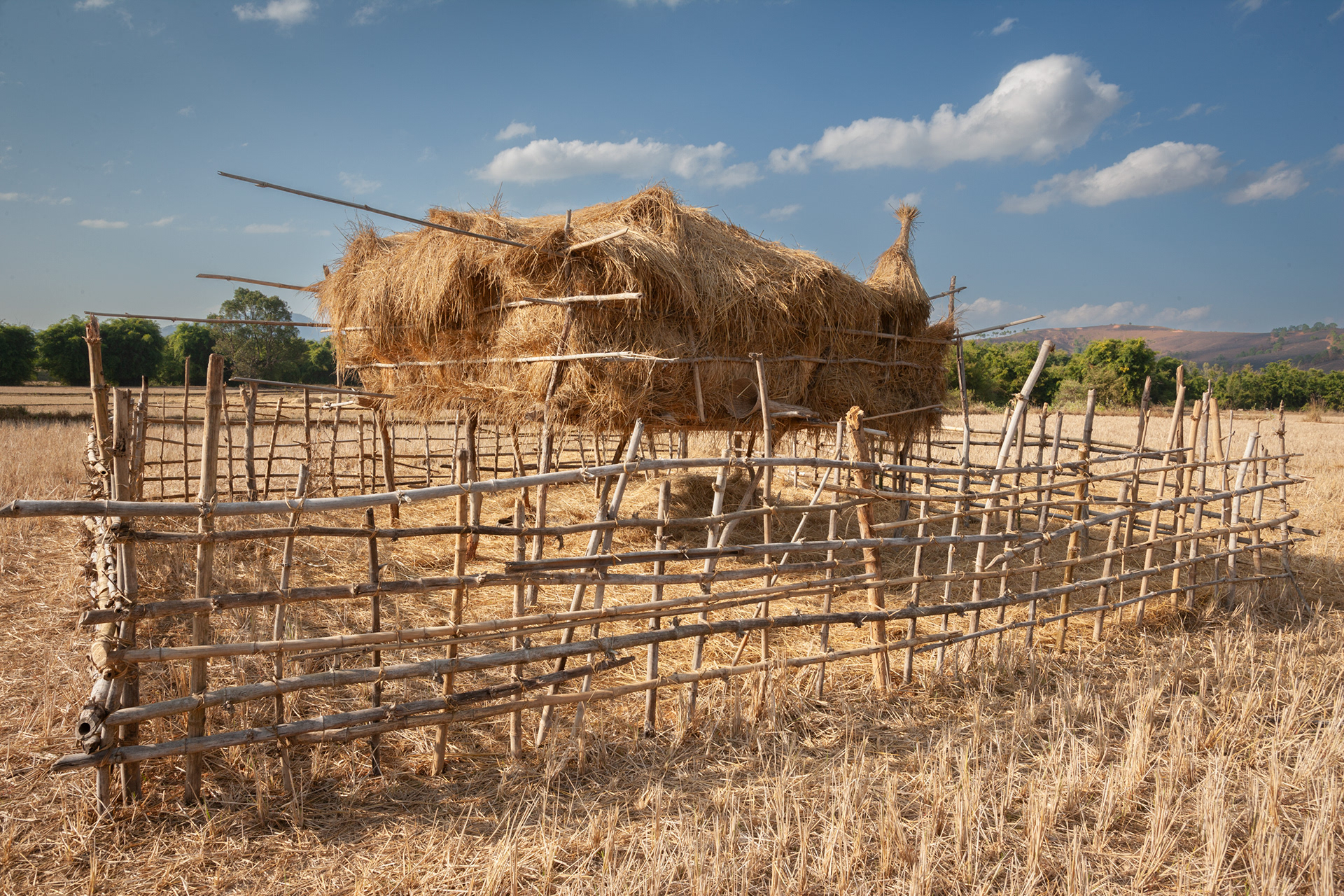
The plains around Phonsavan are one of the few regions in the country where Hmong farmers have flat enough land to practice paddy farming. Here, a farmer is protecting his rice harvest from pests large and small while it dries, December 4, 2006