December 7, 2006
November 12, 2007
December 15,, 2007
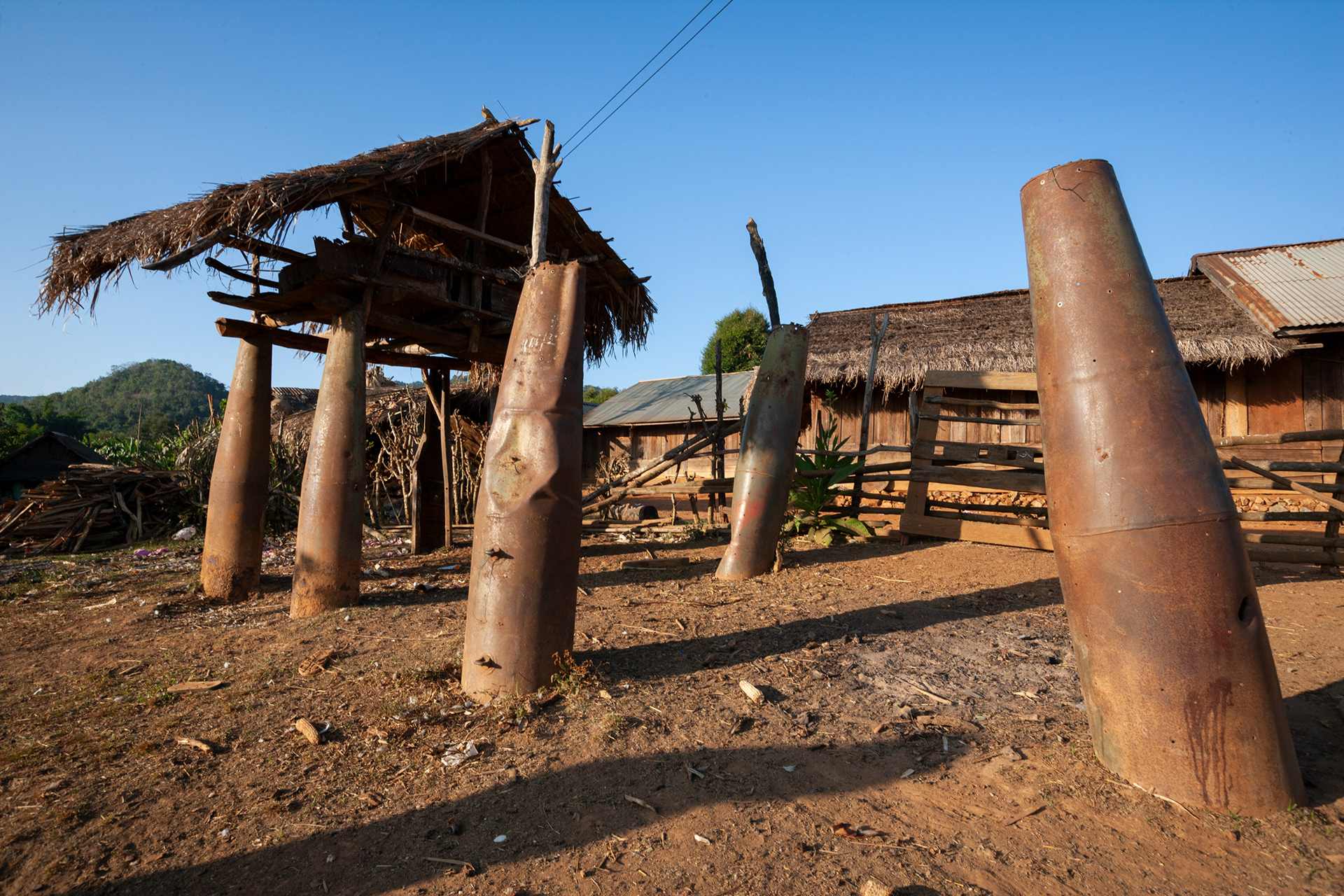
Ban Tha Chok is also known as The Bomb Village thanks to the ubiquitous presence of American ordinance remaining from The Secret War. Hmong villagers there have found many ingenious uses for the bomb casings and war scrap metal that abound in the area.
The village lies two hour’s drive northeast of Phonsavan off Route Seven in Xiang Khouang Province. Route Seven is the major road linking Laos and Vietnam.
My guide and tri-lingual interpreter was Long Vang.
The following is an edited excerpt from the book Soul Calling: A Photographic Journey Through the Hmong Diaspora (©2012 Joel Pickford):
Life and Death in a Hmong Village
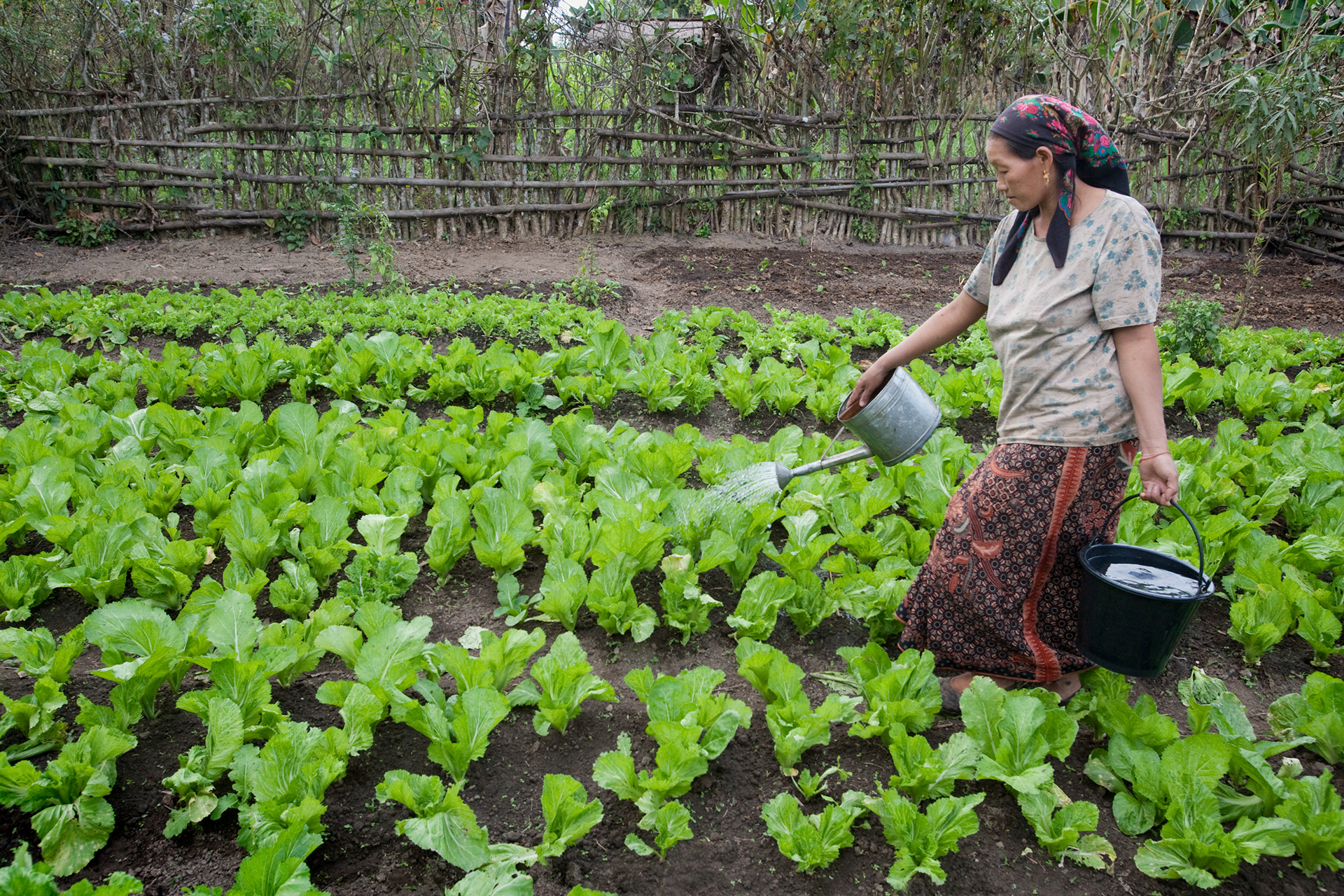
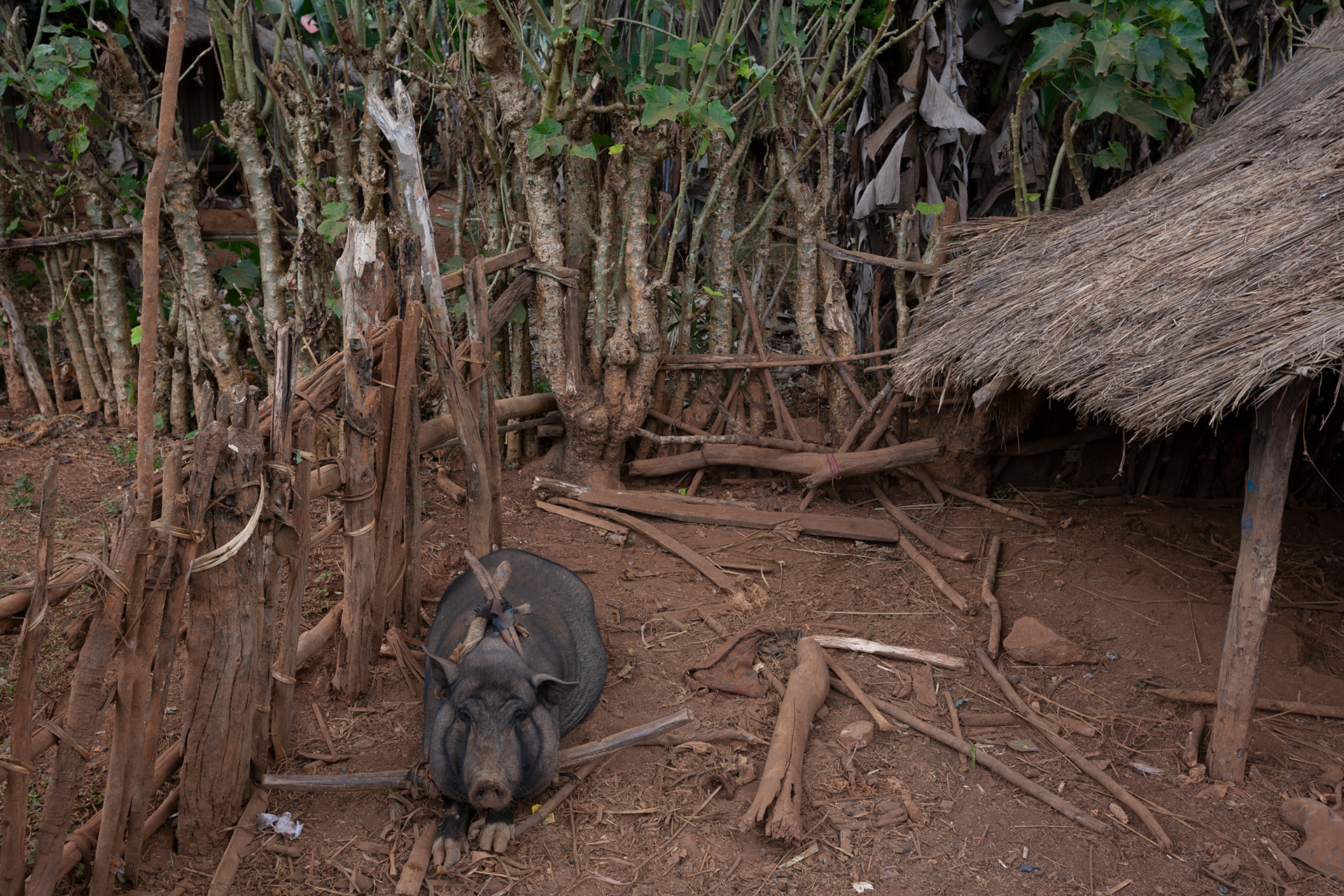
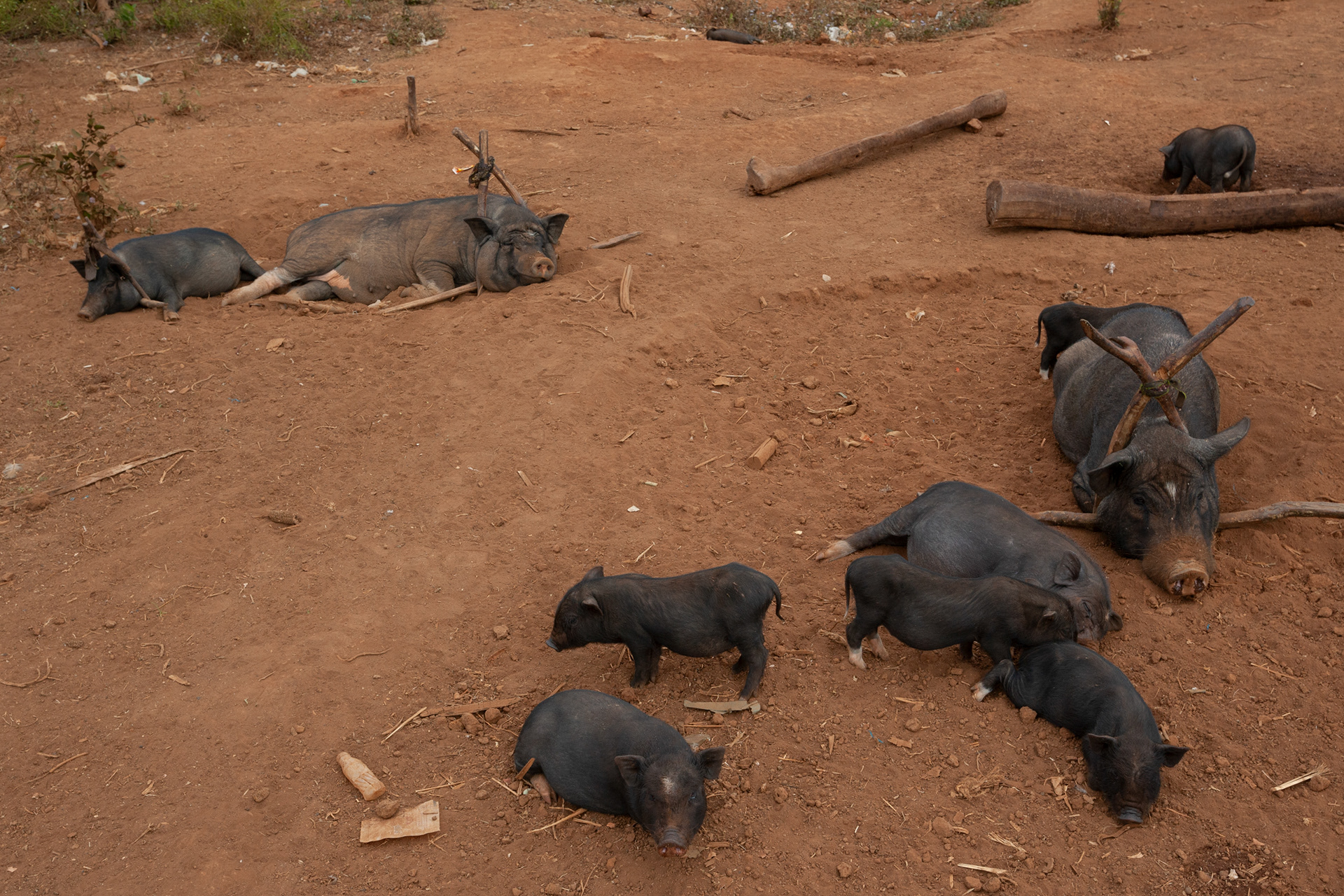
Established more than a hundred years ago, Ban Tha Chok is one of the oldest extant Hmong villages in Laos. Its survival is something of a miracle given the heavy fighting along nearby Route Seven during both the First and Second Indochina Wars. Today, about eighty families live here in large wooden houses nestled among lush gardens, mature fruit trees, and thick stands of cultivated bamboo. Huge, fat pigs wander about everywhere, a testament to the relative wealth of the village. Broad wooden yokes have been lashed to their shoulders in an attempt to prevent them from wriggling out of their pens, but many escape on a regular basis, feasting on neighbors’ vegetable crops.
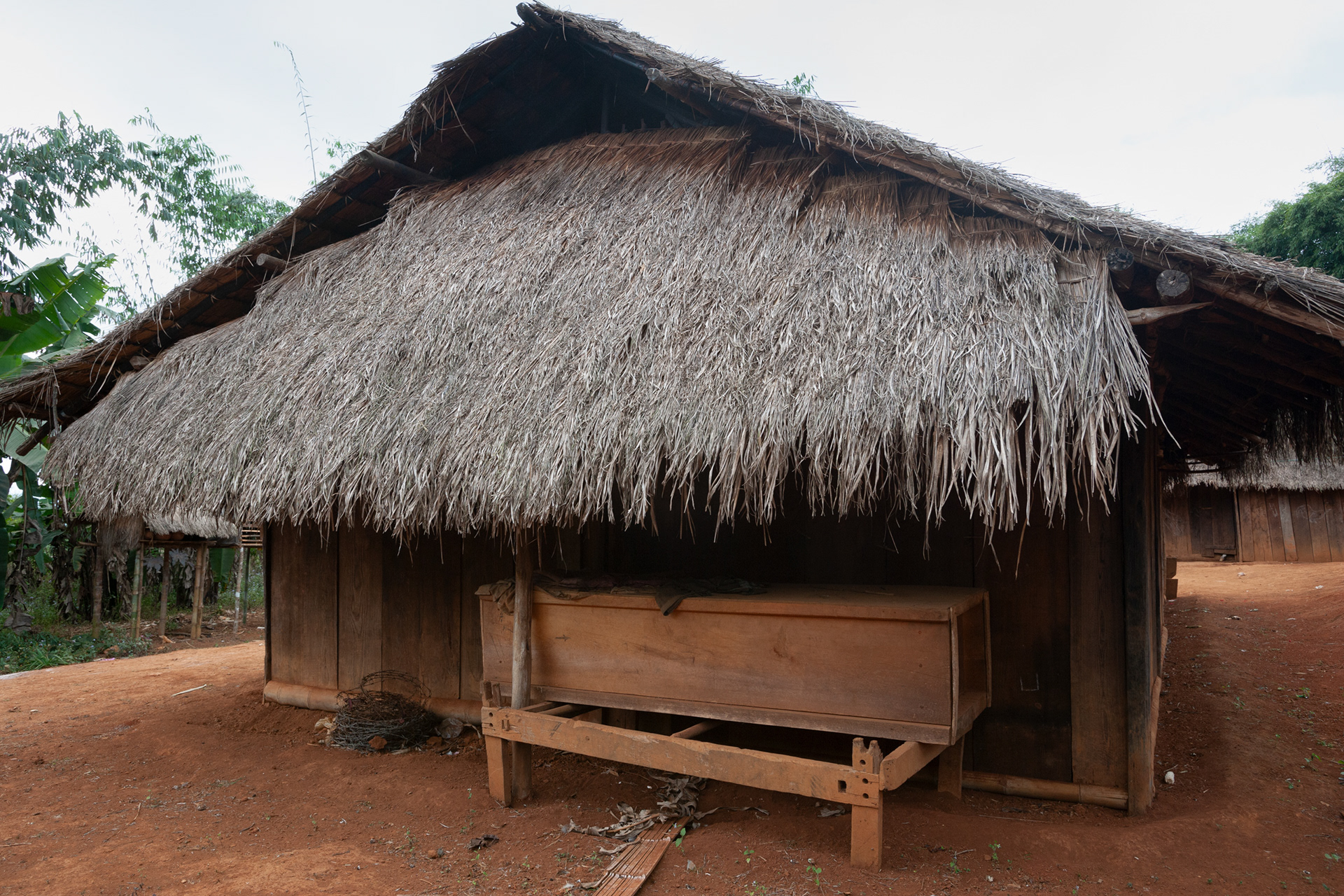
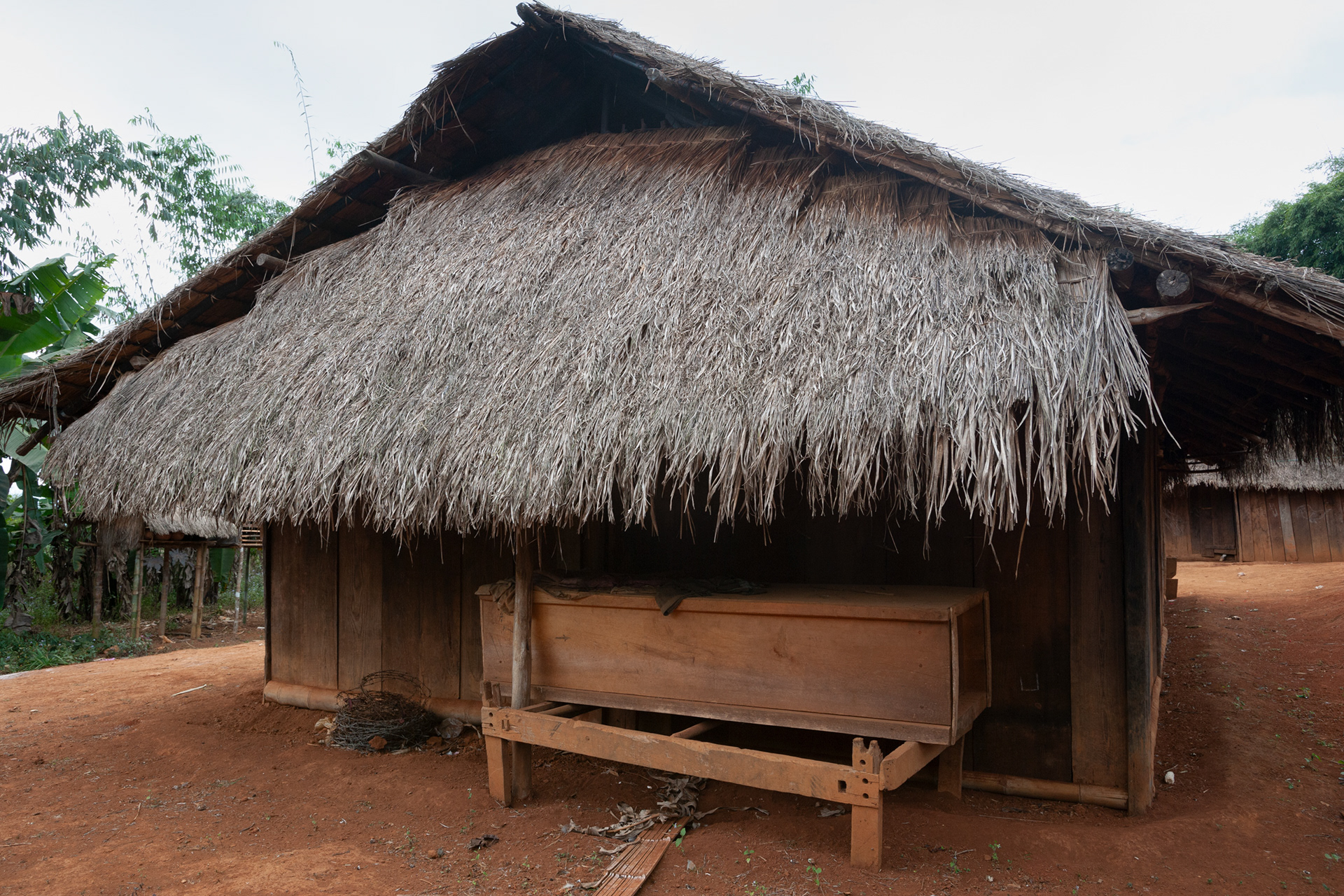
Long Vang and I stop to look at a house with a coffin resting ominously against one wall; he explains that someone in the family is expected to die soon. The simple hardwood casket is built entirely with joinery rather than nails, as the Hmong belief system does not permit the dead to be buried with any metal objects other than their silver jewelry.
A coffin outside of a home signals that a person who lives there is expected to die soon
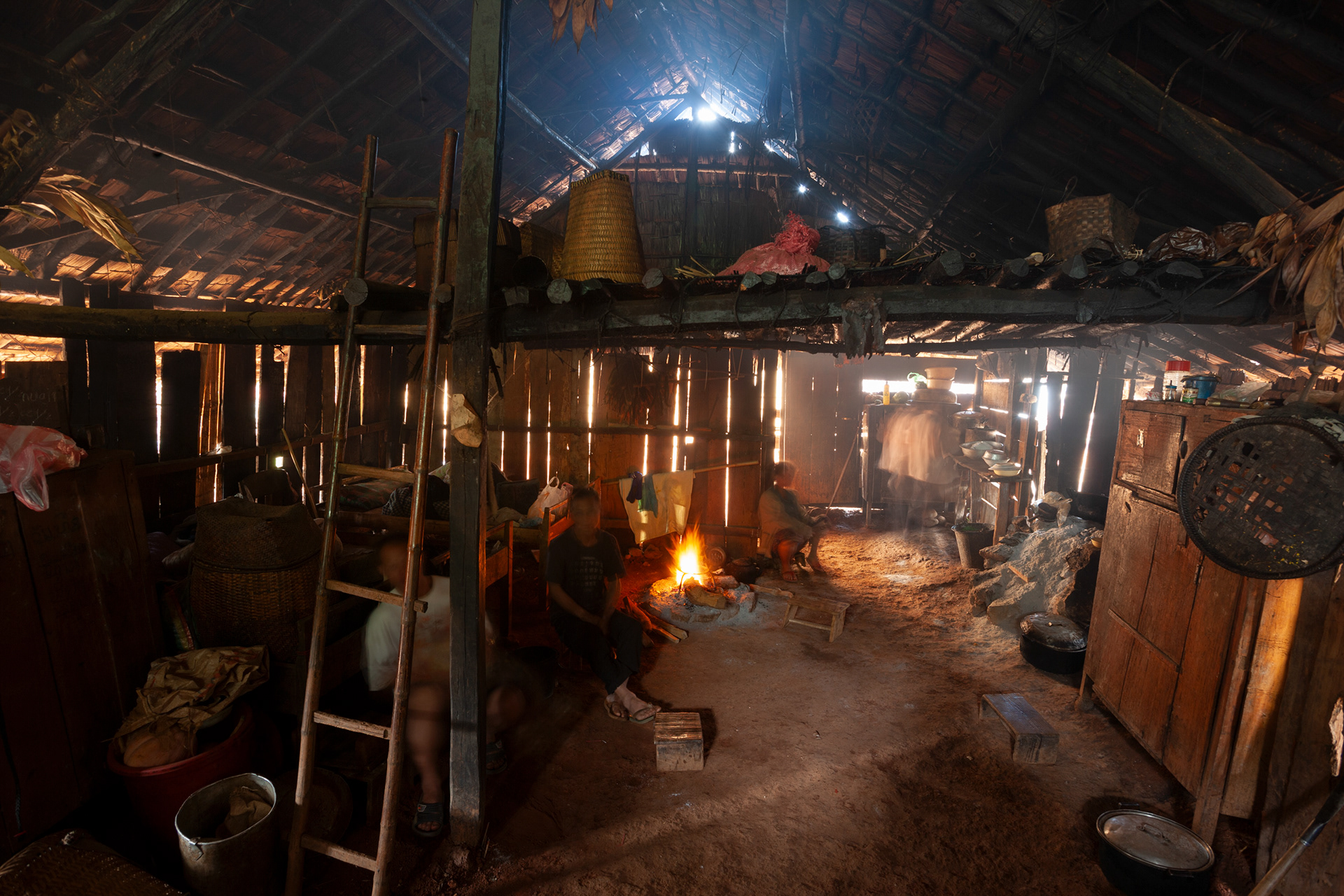
We visit another house nearby where I photograph the high ceilinged interior, with its upper-level loft and ornate shamanic altar. A fire smolders on the earthen floor, providing warmth against the high-altitude chill. Bright skylight oozes into the smoky atmosphere through the open eaves and wide gaps in the wood siding. Later, Long tells me that Hmong teenagers often begin their earliest flirtations by whispering secret messages through these gaps in the walls.
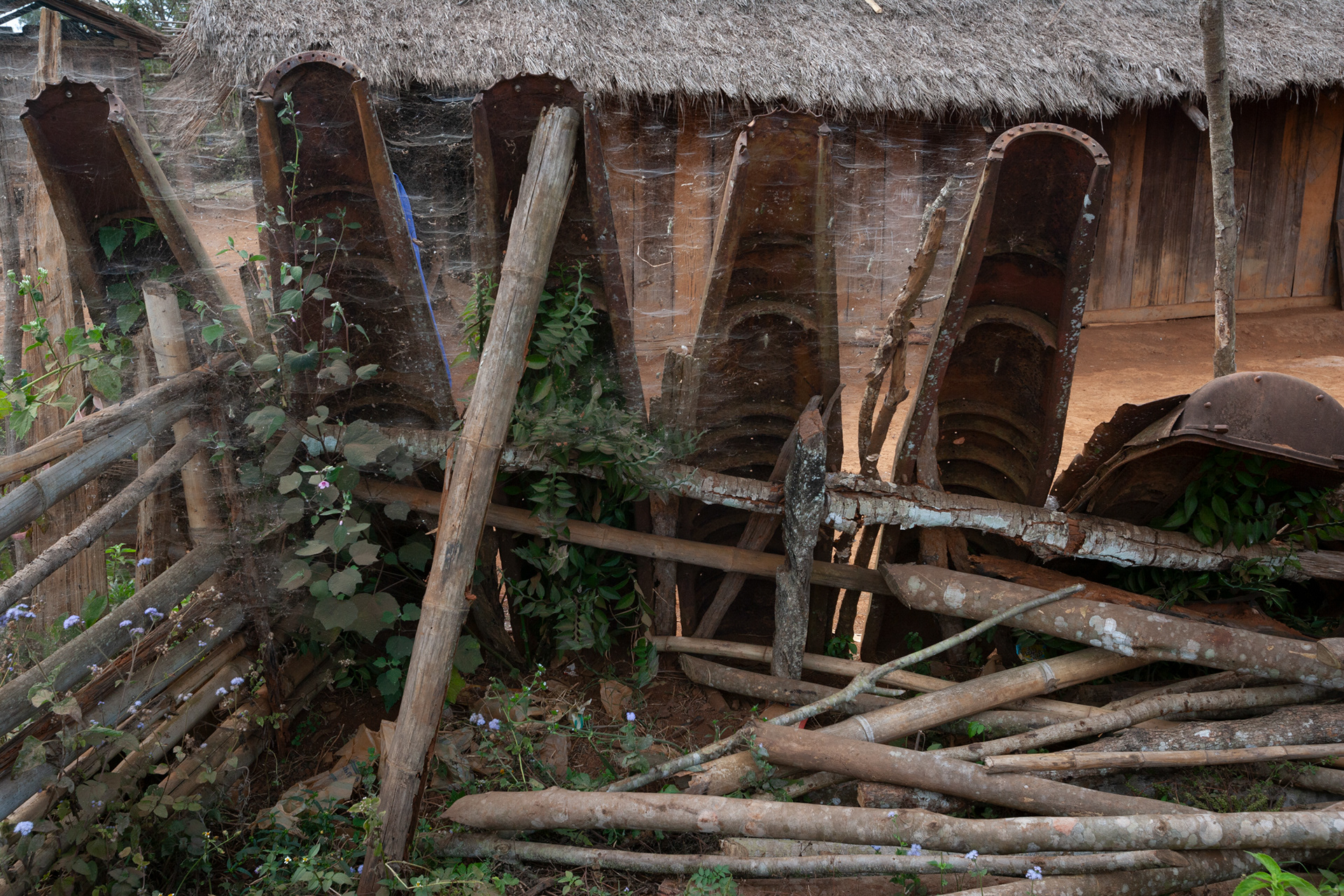
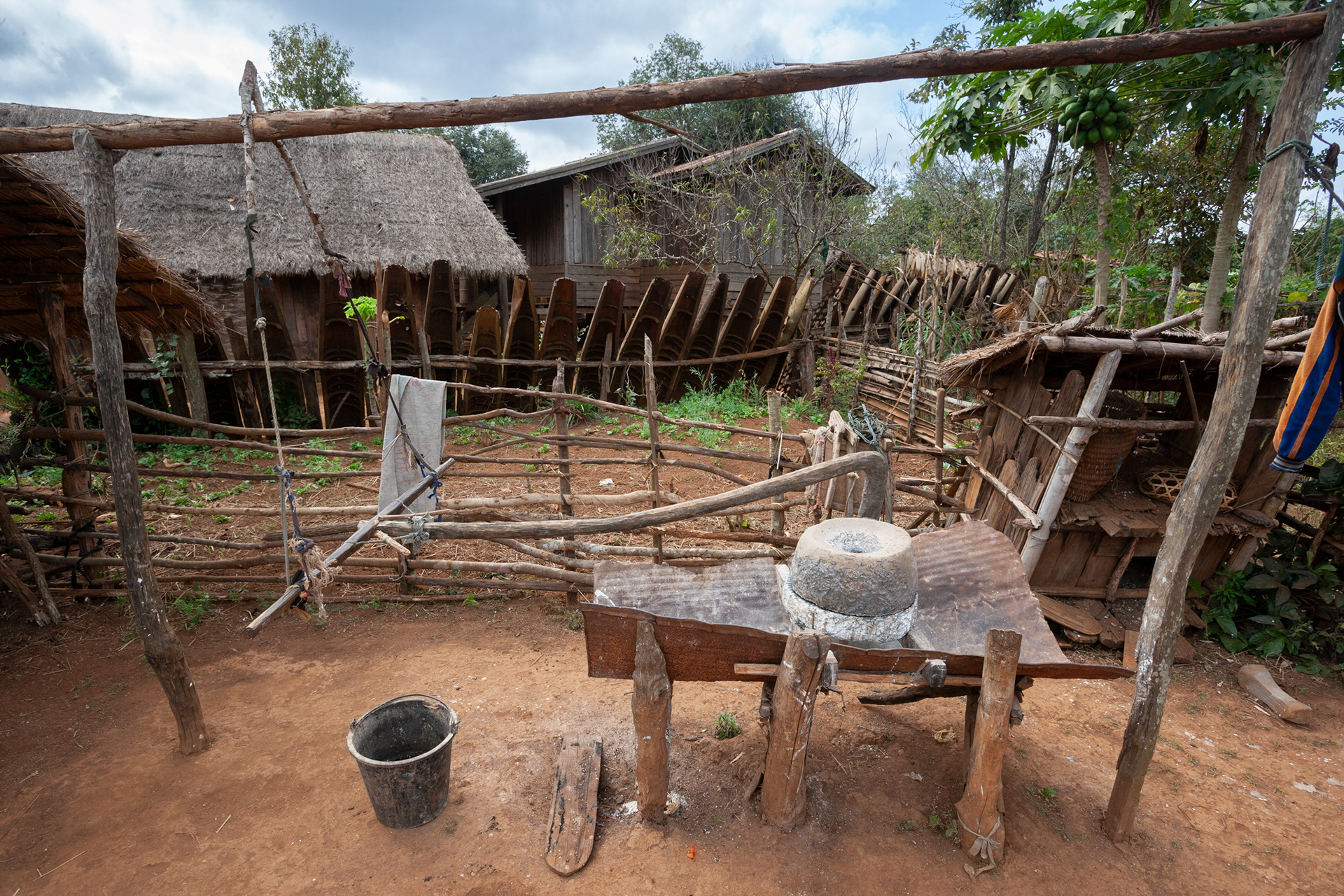
War has altered the landscape of Ban Tha Chok village: American- made bomb casings are seen everywhere and pressed into service for many unlikely purposes. They are the legs that hold granaries above ground to keep vermin out of last year’s rice and corn crops. Suspended horizontally on a pair of forked stakes, the half-shell casings serve as sinks for washing vegetables, pots, and pans. Filled with topsoil, they become herb and flower planters. Left empty on the ground, they are used to feed pigs. Some families anchor them side by side in the dirt to construct fences around their houses or gardens. The most impressive example of this at Ban Tha Chok is a fifty-foot-long fence built from matching six-foot bomb casings. At the house next door, an old woman sweeps detritus from her front walkway into a large dustbin pounded out of rusty war scrap; it still bears a faint U.S. Air Force insignia. Every family can tell a story about a relative who has been maimed or killed by unexploded ordinance.
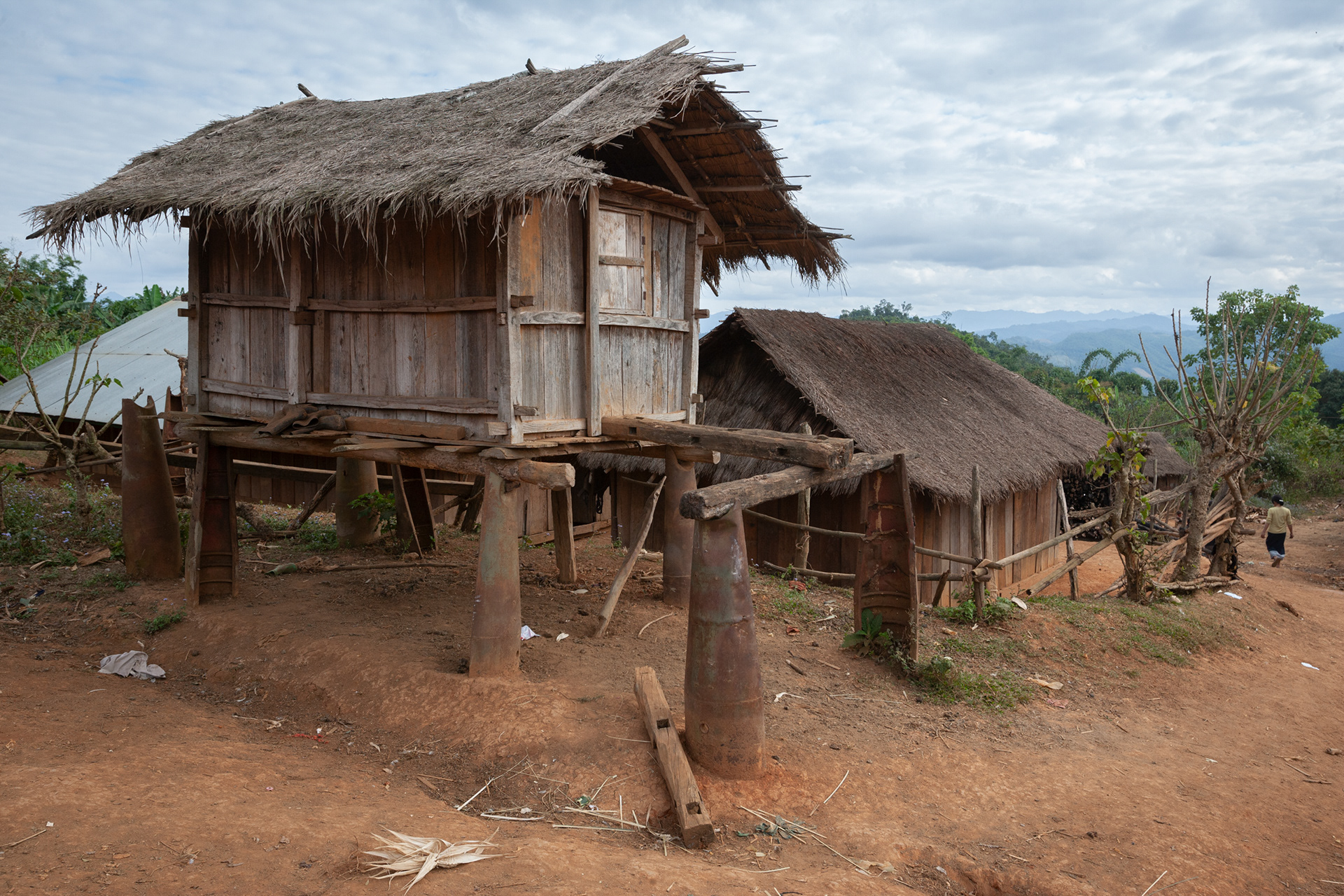
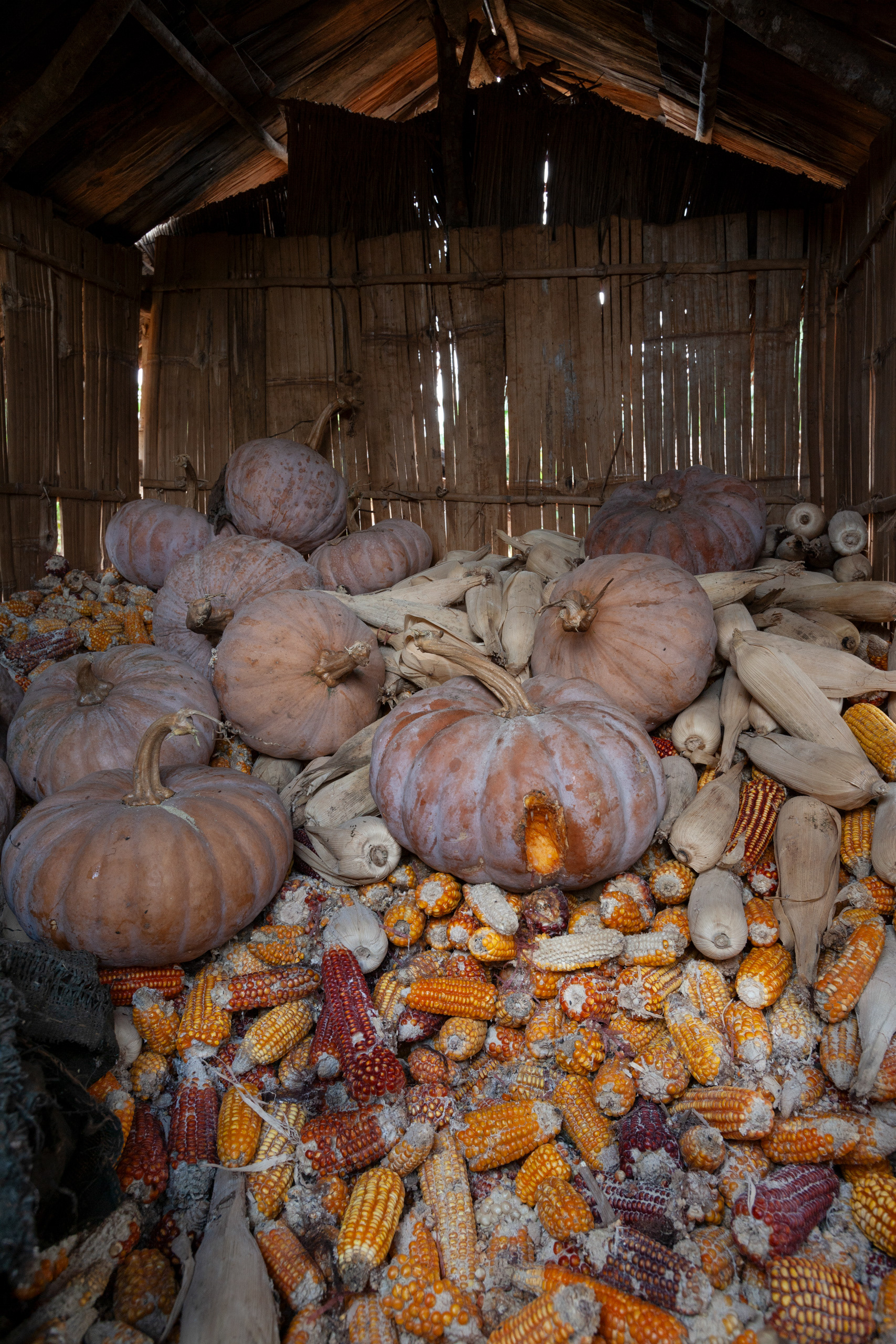
One of the most common uses of bomb casings in Ban Tha Chok is to make legs for granaries. The purpose is to keep small animals and other vermin from eating the family’s harvested crops.
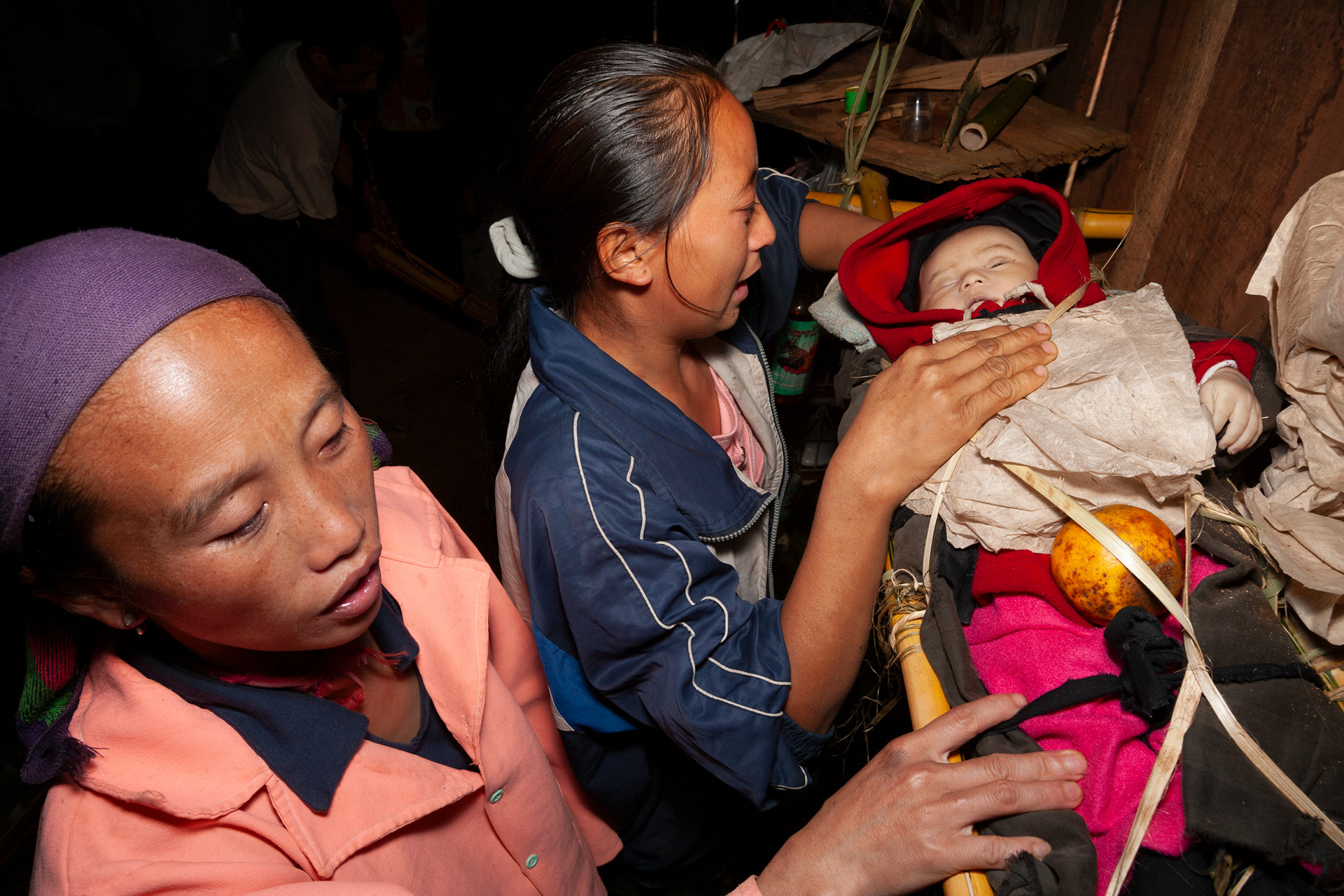
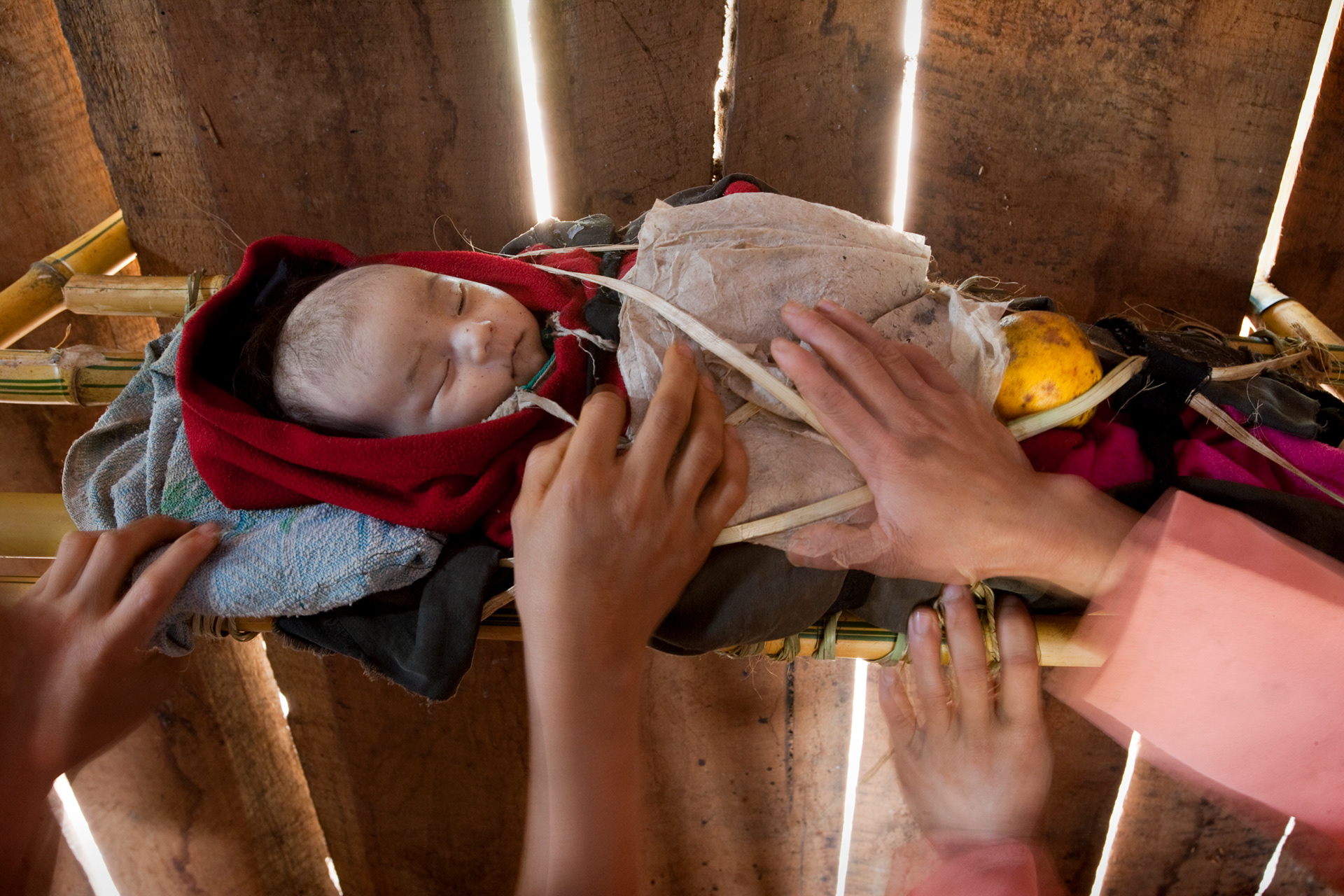
Long and I walk up a hill where a knot of young men stand talking among themselves. After a brief exchange with them, Long turns to me and says, “You’re in luck; there is a funeral today.” They point us toward the very last house at the end of a path where the village peters out at the foot of a mountain. As we approach, I hear the beat of a drum and the low wheezing sounds of a qeej (musical instrument made of bamboo pipes). An inebriated man emerges from the open doorway and greets us. Long asks him if I can photograph the funeral. Without uttering any response, the man grabs me by the arm and pulls me into the dark, smoky house. After my eyes adjust, I see two young women standing over the body of a small baby resting on a pallet of bamboo lashed together in the shape of a boat. The structure is anchored to the back wall of the house with two lengths of twine at about shoulder height to the mourners. Dressed in a bright red hooded jumpsuit and swaddled with ceremonial cloth and paper, the body of the infant is tightly bound to the boat-shaped pallet, which the Hmong believe will carry the soul to its next destination: the Land of Darkness, where the dab and neeb (spirits) live. A large orange tucked against the body and a bottle of rice whiskey hanging beneath the palette provide sustenance for the journey.
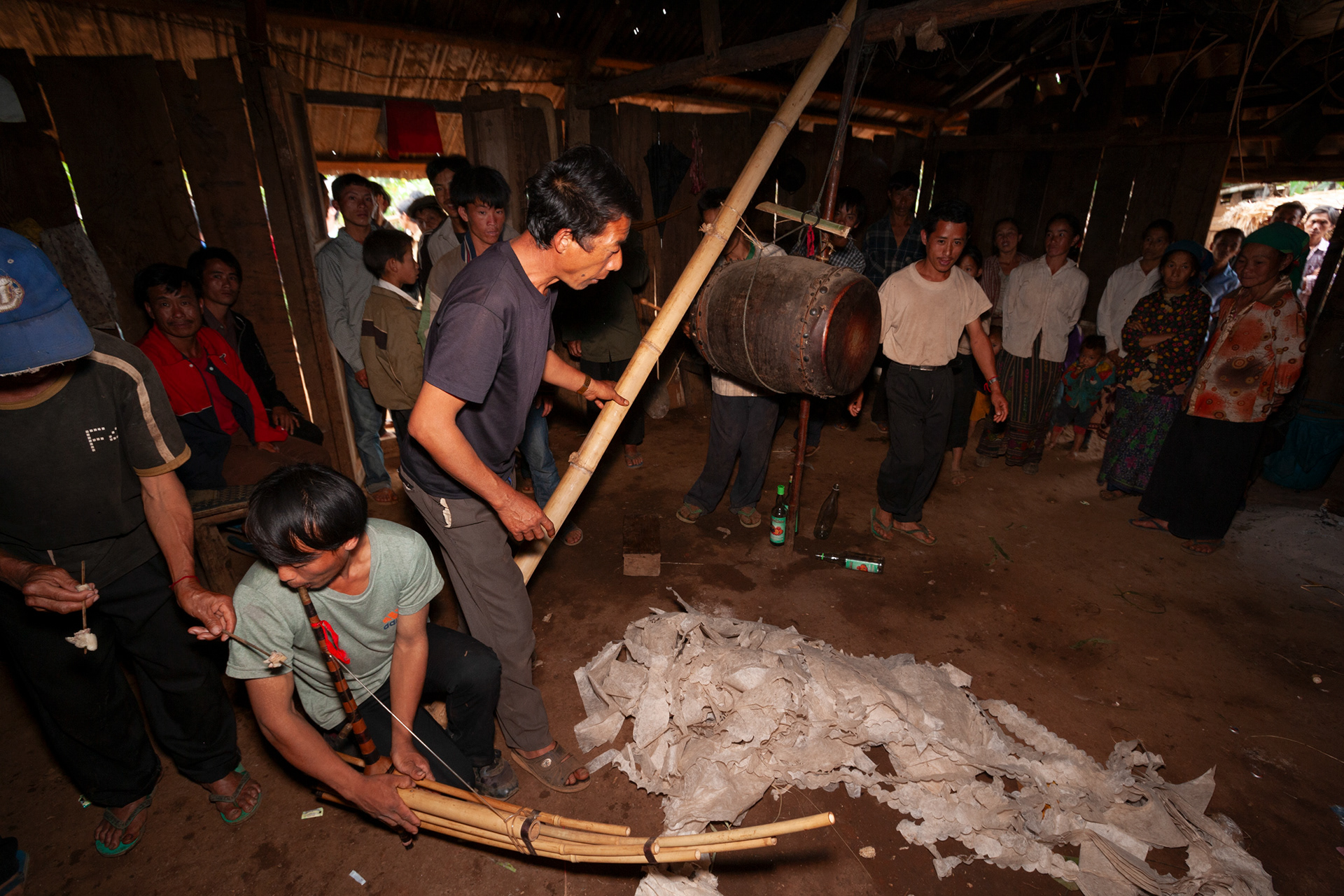
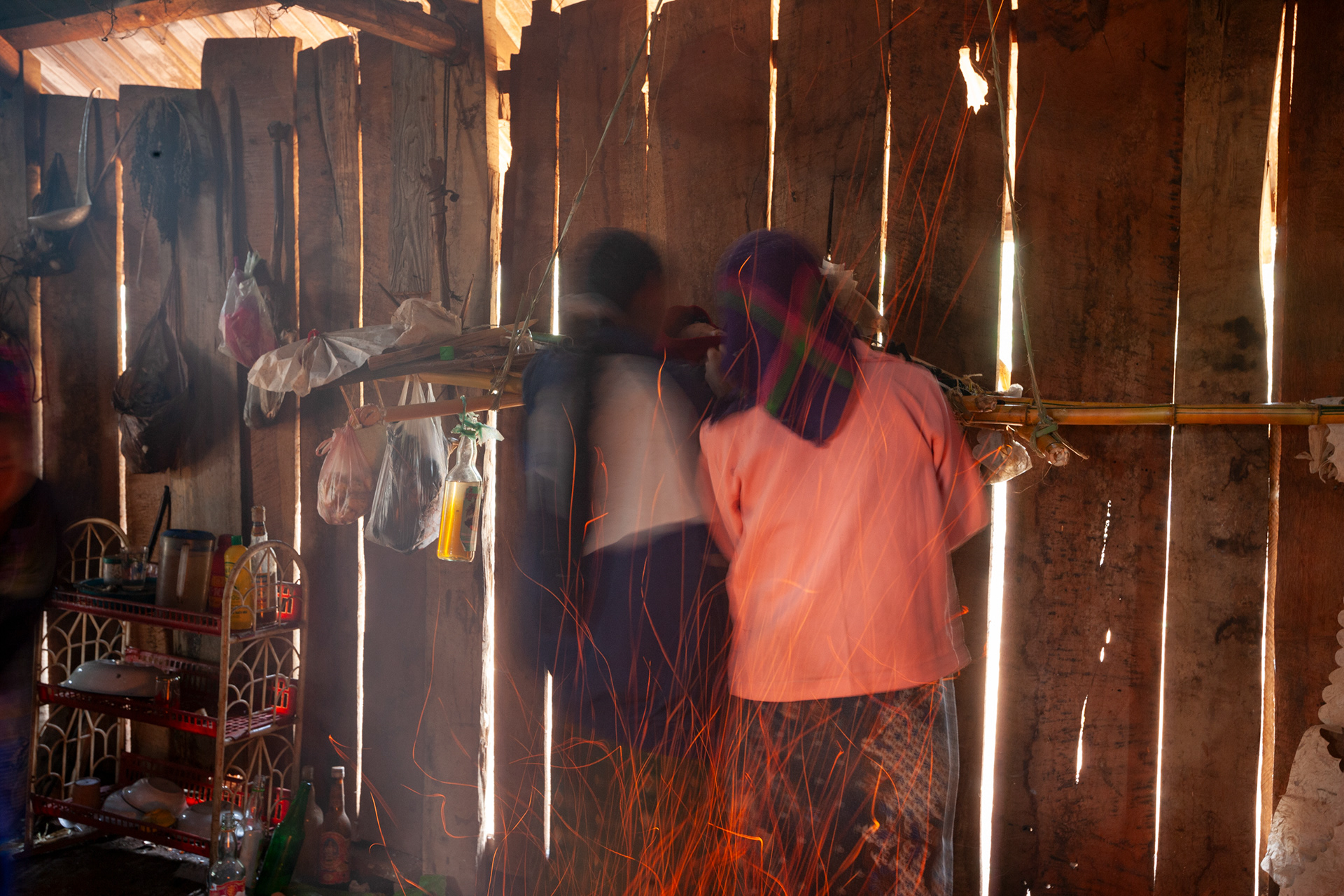
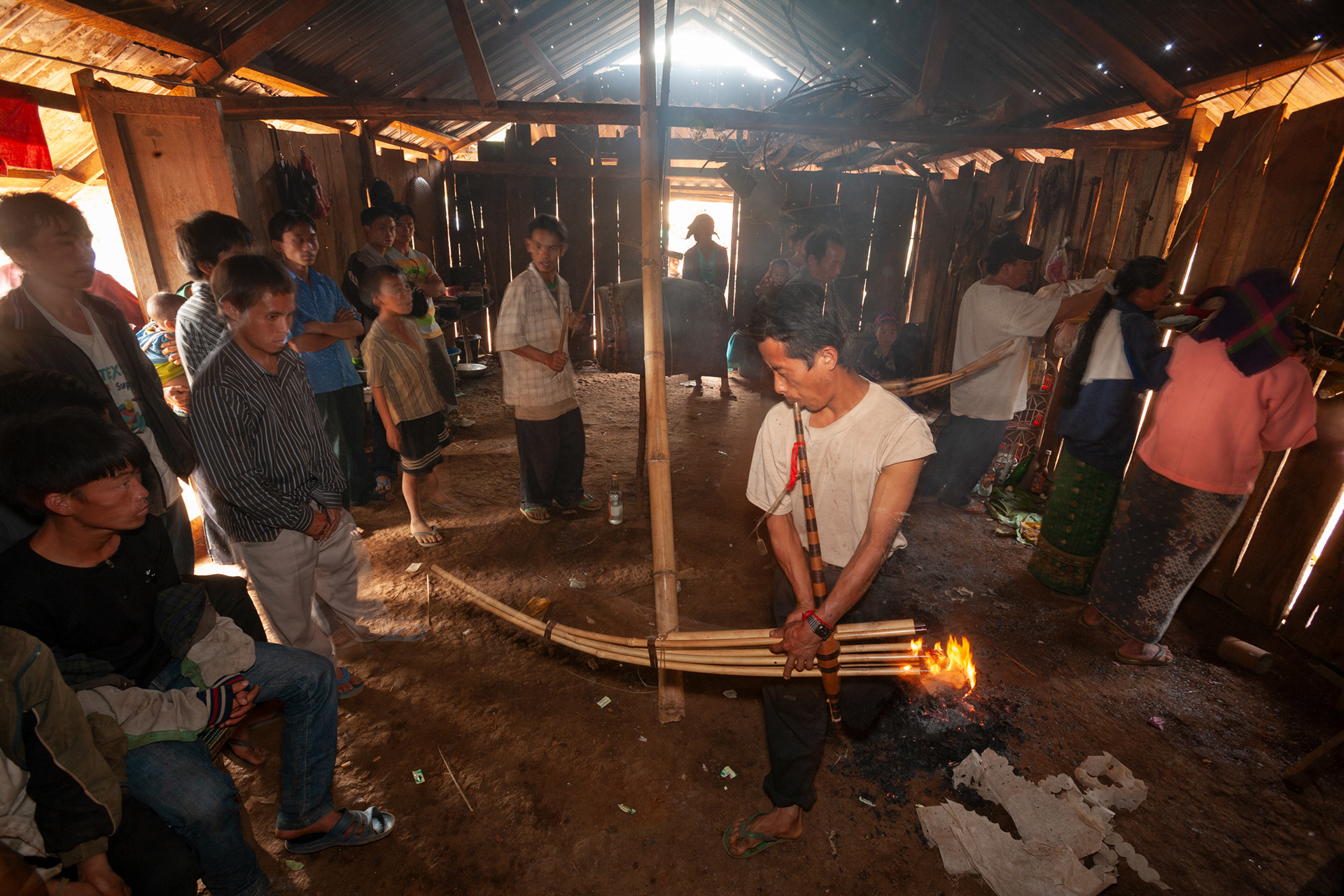
The drunken man hurries me over to the mourners, who immediately turn to pose for mug shots in front of the corpse. Mounting a flash on my camera, I oblige them. The older of two sisters is the mother of the deceased baby. After the mug shots are finished, the women return to their mourning and I am free to begin capturing the funeral as it unfolds. The two sisters lean against the pallet, stroking the dead infant and crying theatrically. Behind them, a man sets two large piles of spirit money aflame on the packed-earth floor, momentarily bathing all of the participants in an orange glow. Two qeej players prowl for dab, crouching low and wheeling about in slow circles to the steady beat of the drum. Family members squat along the walls of the house; others wander about, carrying open bottles of lao lao, or rice whiskey. Two older women join the younger ones in front of the pallet, adding their more experienced voices to the collective wailing. As successive piles of spirit money are burned, ashes accumulate in the mourners’ hair. The smoke thickens, the beat of the drum grows louder, the wheezing qeej players spin like whirling dervishes, the wailing of the mourners rises, the atmosphere in the house is charged.
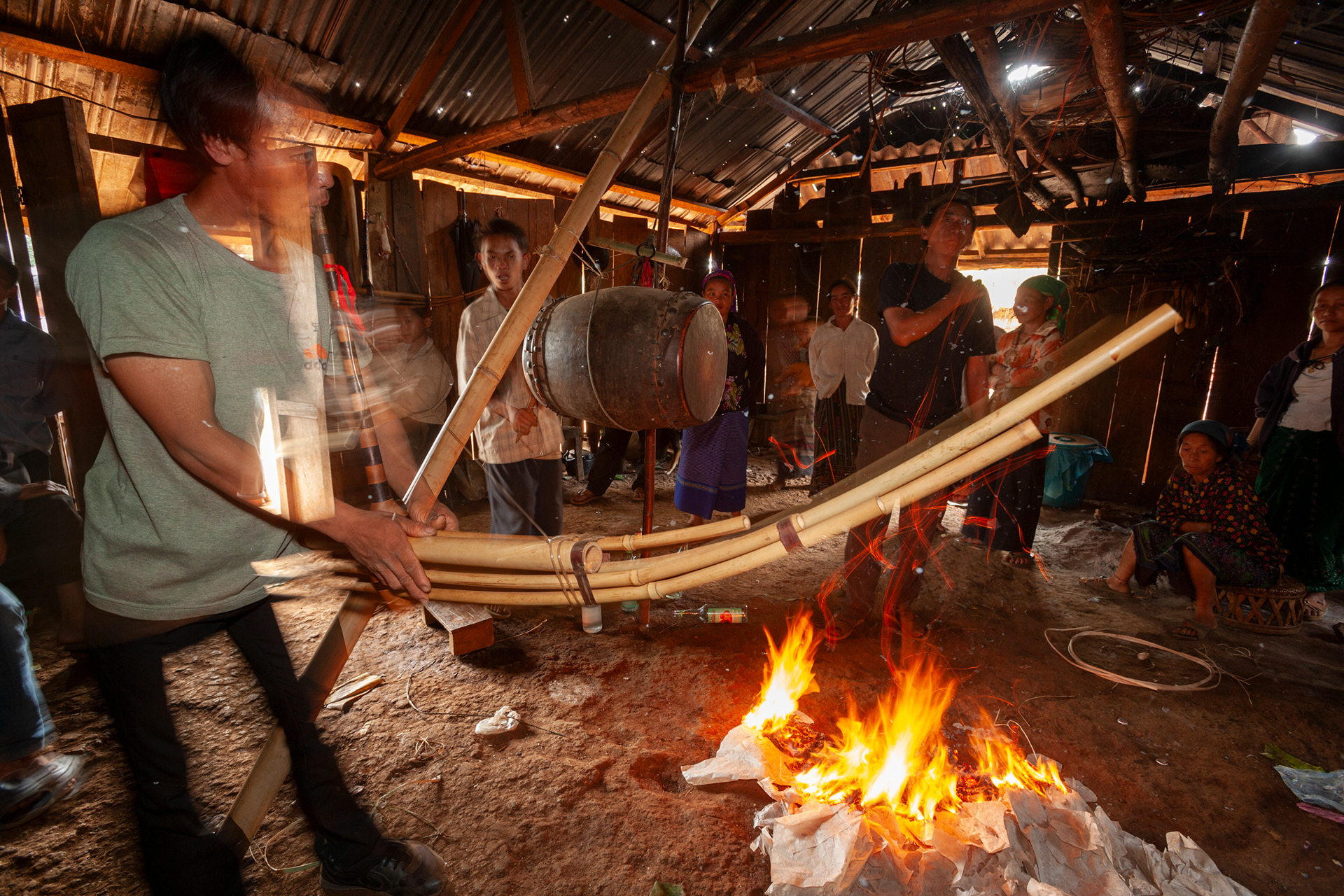
Even though gaining access to this funeral was easy, it poses formidable technical challenges for photography. The house is pitch dark inside, while the tropical daylight seeping through the doorway, eaves, and gaps in the walls is blindingly overexposed. Whenever a pile of spirit money is burned, the surroundings are illuminated for a few brief seconds before the flimsy tissue turns to ash. Using an electronic flash is always a photographer’s last resort; it creates glary, intrusive lighting, like poking a flashlight in someone’s face. Setting up my tripod, I experiment with a variety of slow exposures, transforming the participants into blurry, silhouetted ghosts as they move across my frame. I add a little flash to the mixture, lighting only the foreground and creating a stop-time image in the midst of a blur. The result is a frightening and somewhat distorted picture that comes closer to capturing the spirit-laden ambience of the scene than a conventional exposure would.
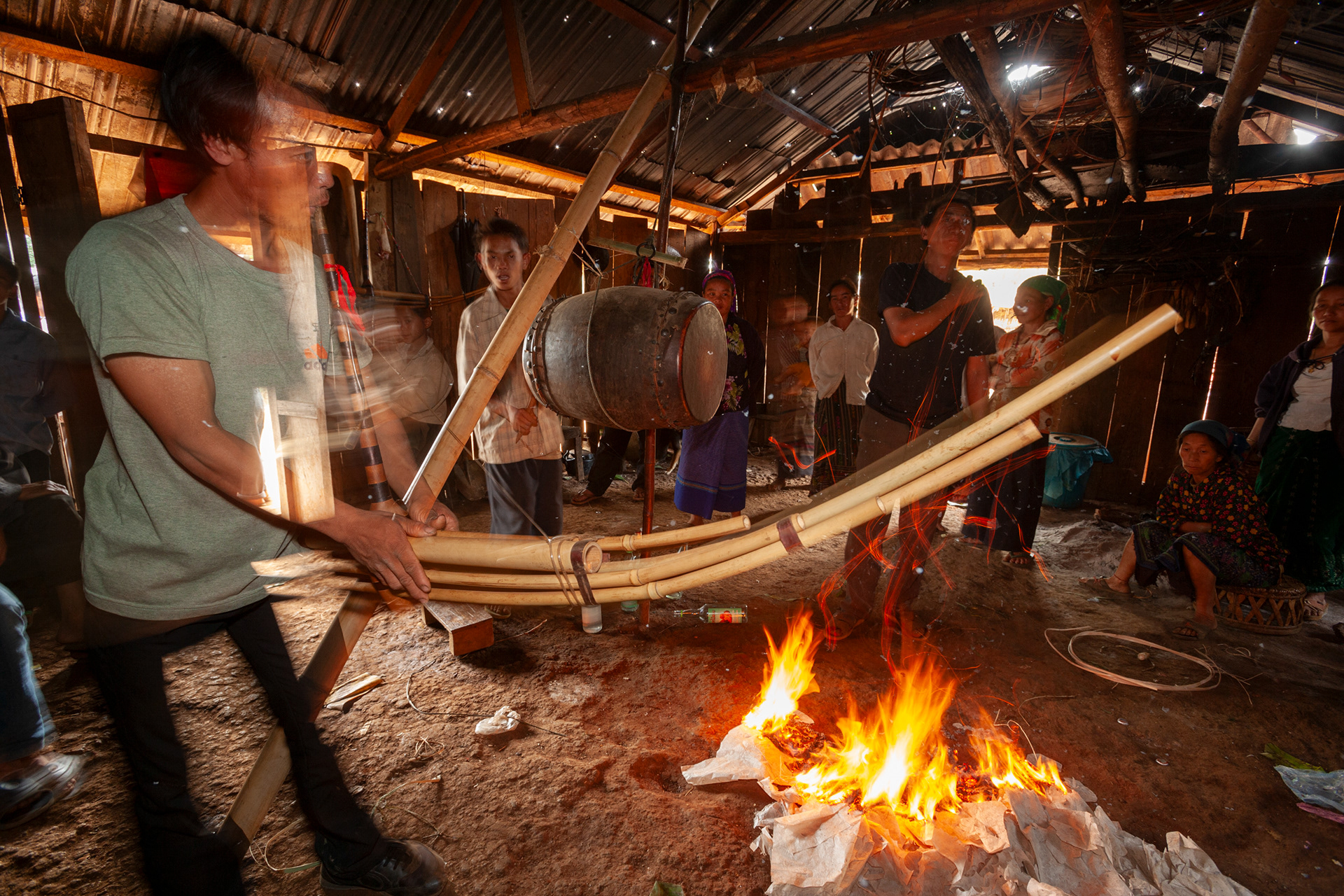
A qeej player prowls the home for dab (spirits) as the spirit money catches flame.
Finally, I pick up my tripod and move in close to the baby, focusing my wide angle lens on its shriveled face, blue-white skin, and one tiny, stiff hand that protrudes from the swaddling. Sunlight bleeds through the gaps in the wall behind the baby; it is so far beyond the camera’s exposure range that it casts halos around everything it touches. The mourners caress the body of the infant as I make several long exposures, transforming their hands into ghostly apparitions.
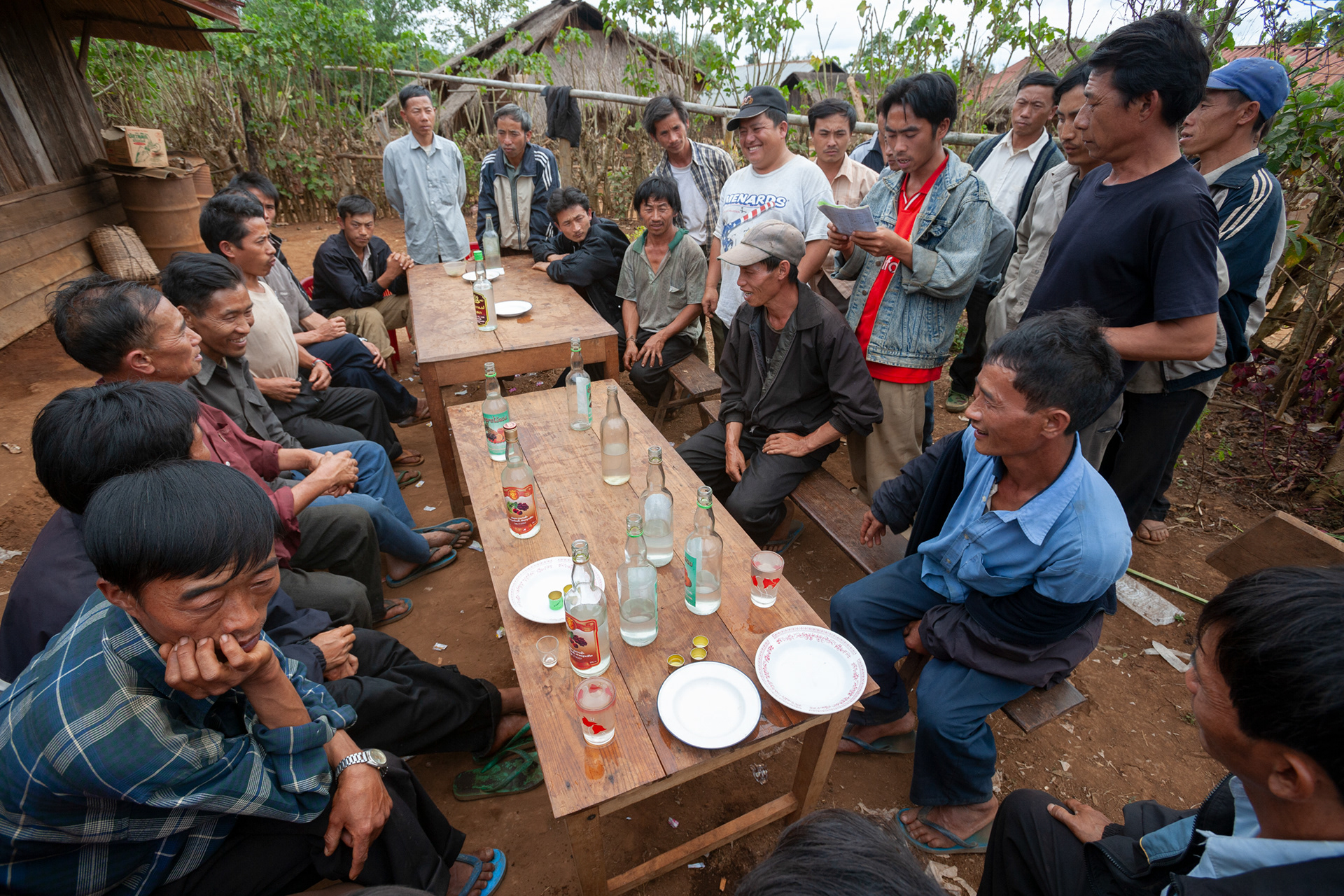
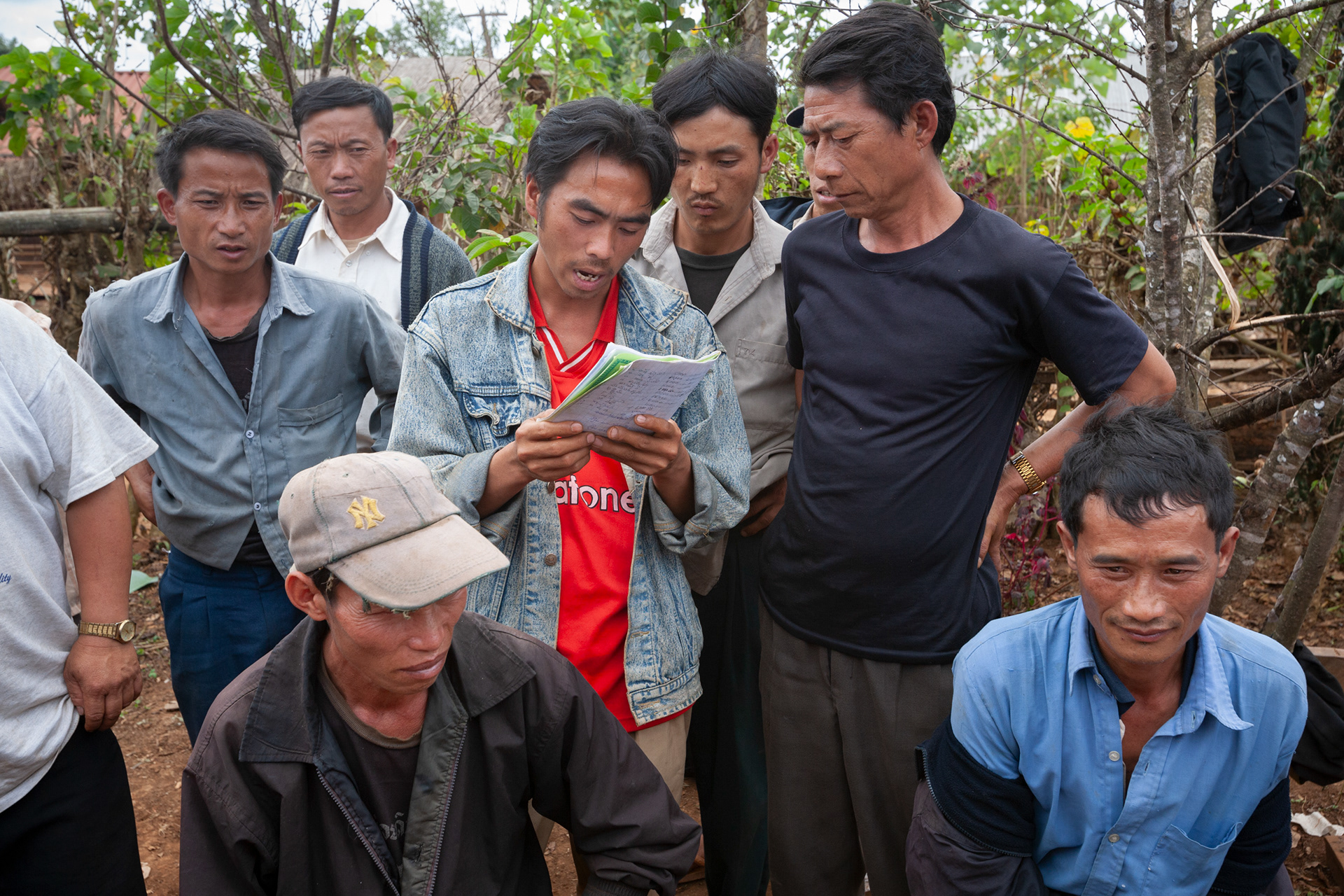
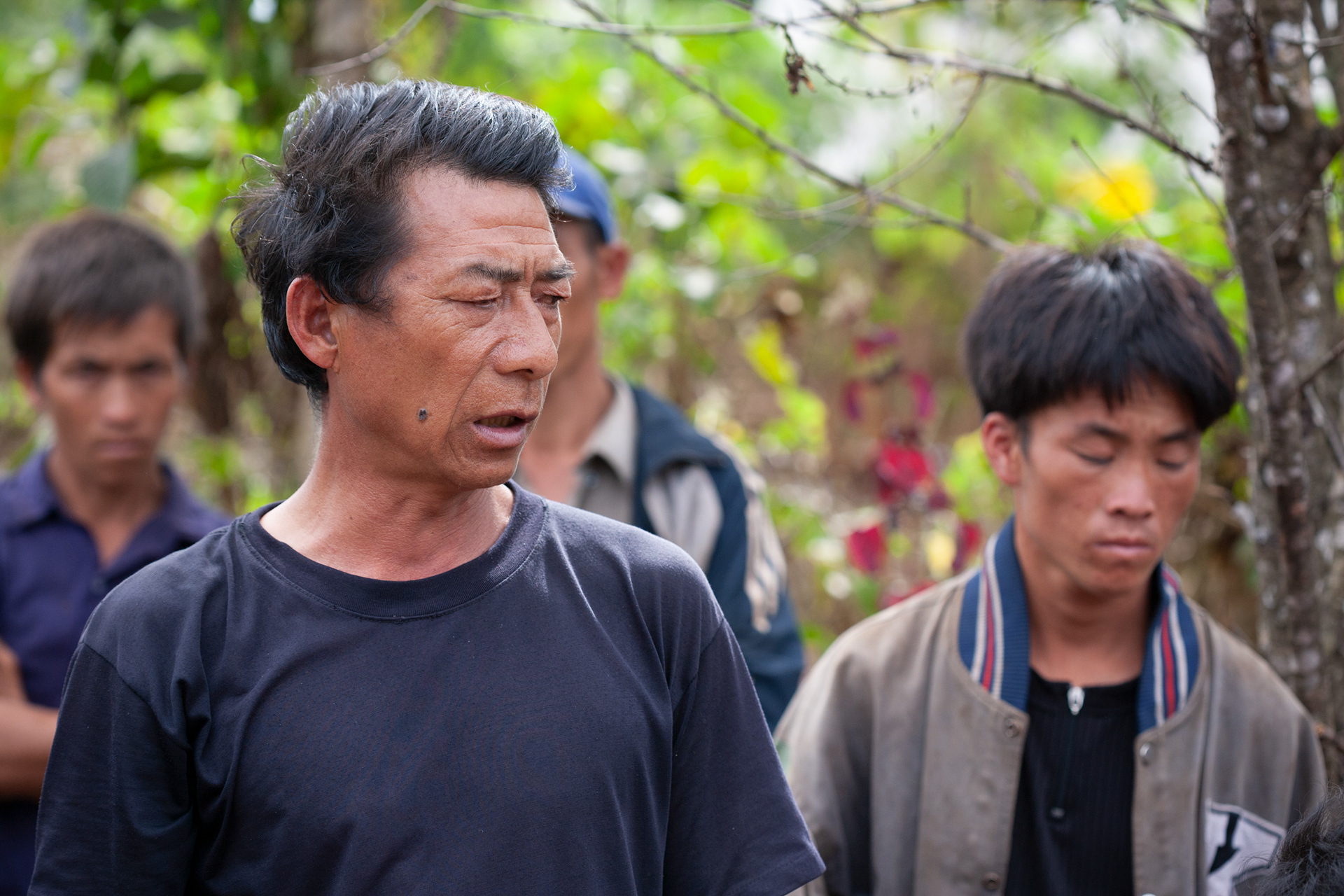
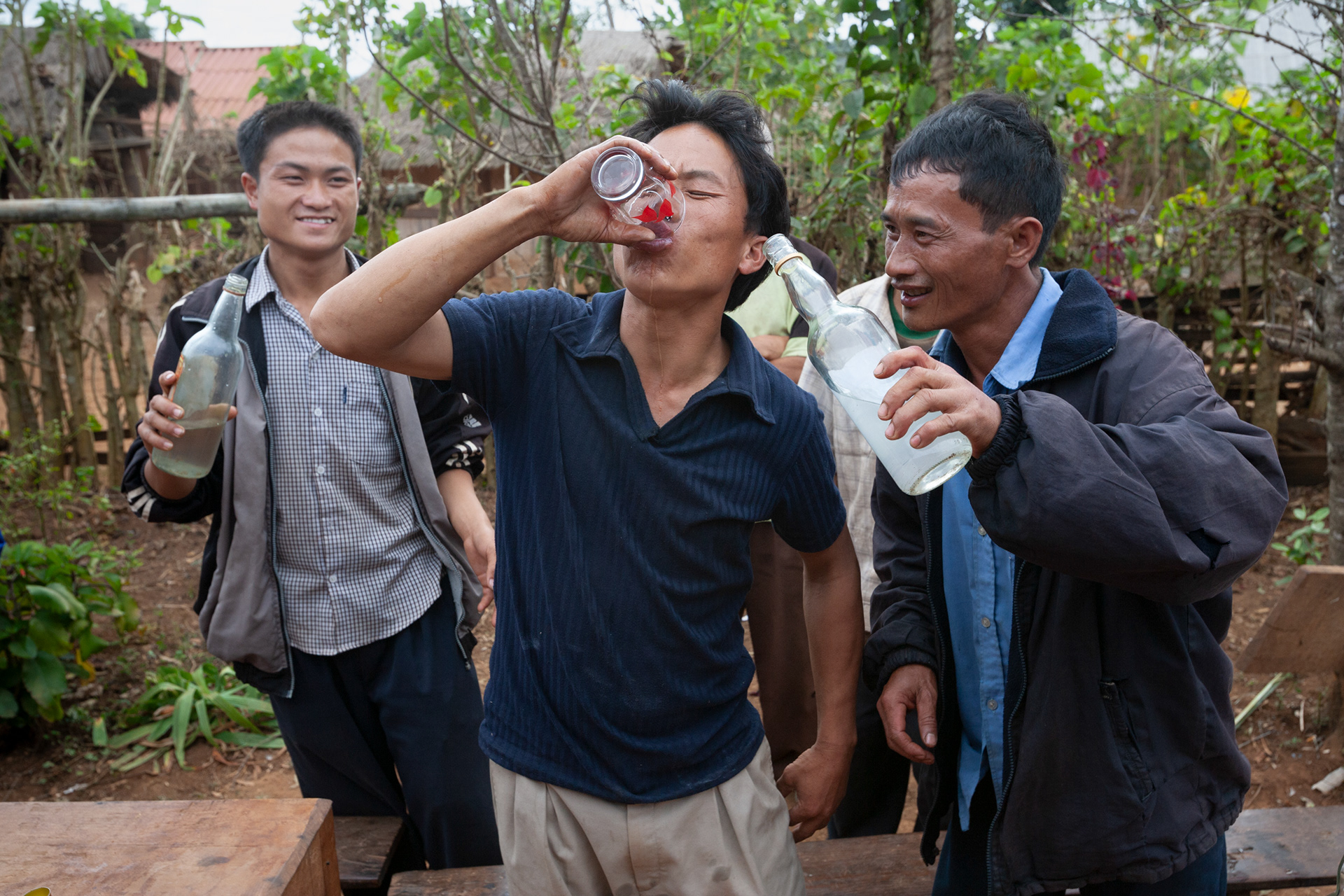
Overwhelmed by the smoke and the intensity of it all, I seek fresh air outside the house. About thirty men from the extended family are gathered around a long wooden table drinking lao lao (rice liquor). They have been drinking for hours, knocking back shots or guzzling the deceptively clear liquid from tall water glasses. By now, many are well on their way to passing out. The mood is more somber than festive. Every time a family member makes a cash contribution to the funeral or brings another bottle of whiskey, a tall, craggy-faced man stands and gives a short, solemn speech acknowledging the contribution, then duly records it in a notebook. Everyone in the assembled congregation echoes his blessing by downing another shot of lao lao. Occasionally, several men dare another to swallow a brimming glassful in a single draft; about half of it ends up dribbling down the front of his shirt.
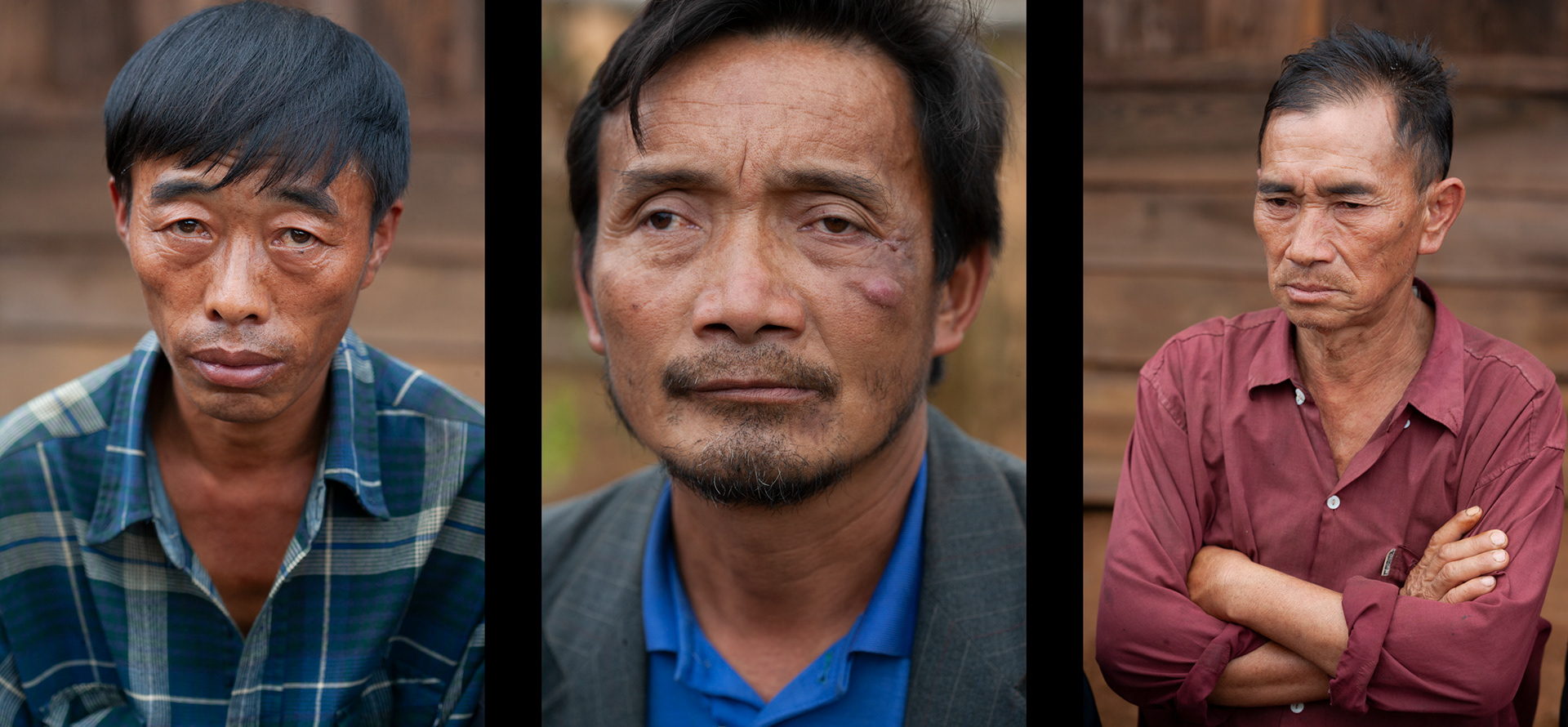
I mount a close-up lens on my camera to make portraits of the men’s faces. A partially overcast sky veils the midday sun, creating soft light. The men are remarkably easy to photograph in their inebriated state. It is almost as if they are sleeping; the muscles in their faces are completely relaxed, allowing the character of each man to show through. I walk around the table photographing them one at a time. Each face has its own particular pathos—a crooked jaw, a wandering eye, lines of age and worry. I try to imagine each man’s inner thoughts and the arc of his life story, but the chasm of language and experience that separates us is too deep.
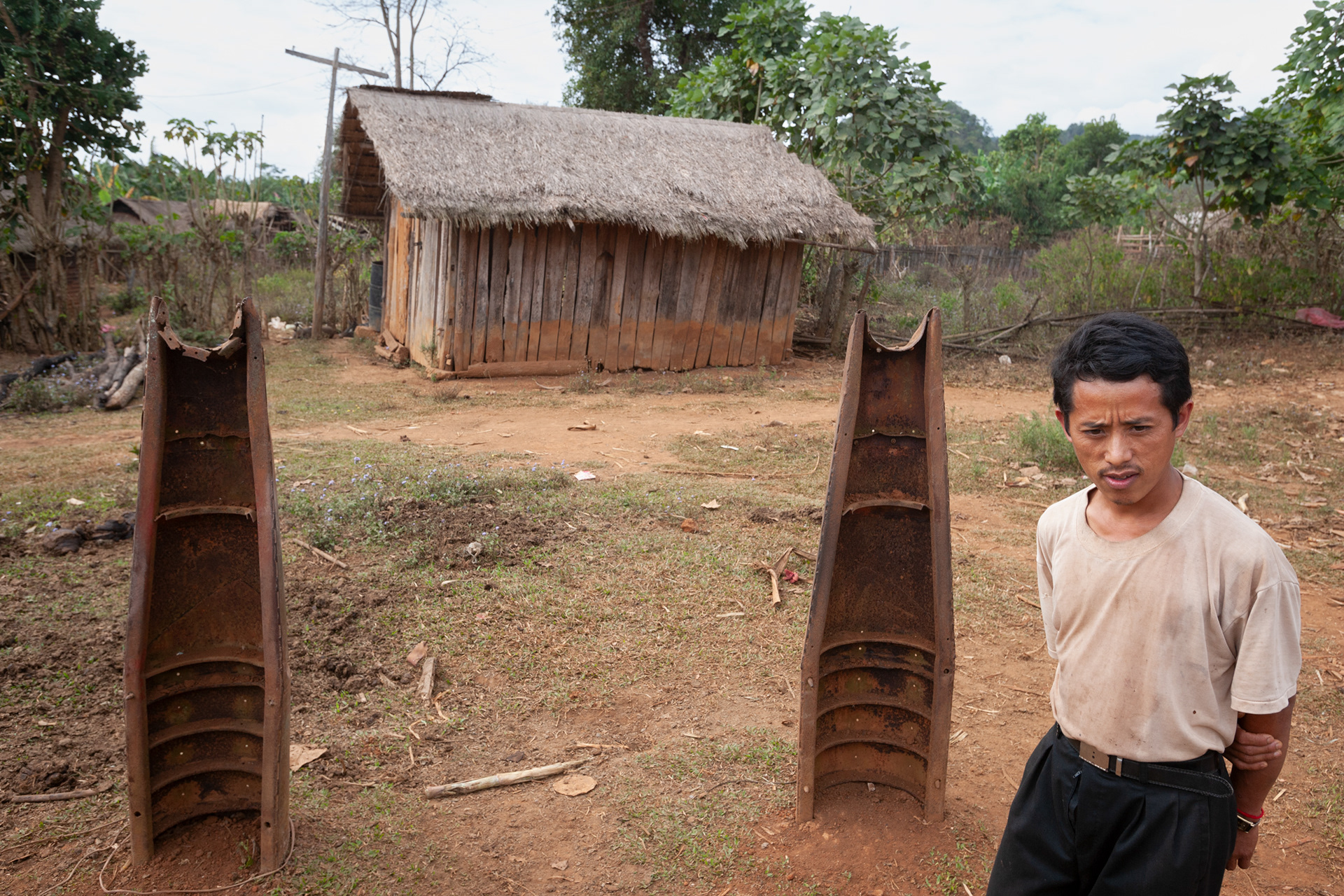
A small, wiry man in his thirties approaches me, aggressively beating his chest and exclaiming “CIA” over and over. He is far too young to have fought in the war, yet he appears to be trying to convince me that he has some connection with the agency. Rumors persist that the CIA secretly armed and funded Hmong insurgents in Laos as recently as 2004. I raise the camera to my eye and snap the drunken man’s picture: he is framed perfectly with two bomb casings planted in the earth at about his height.
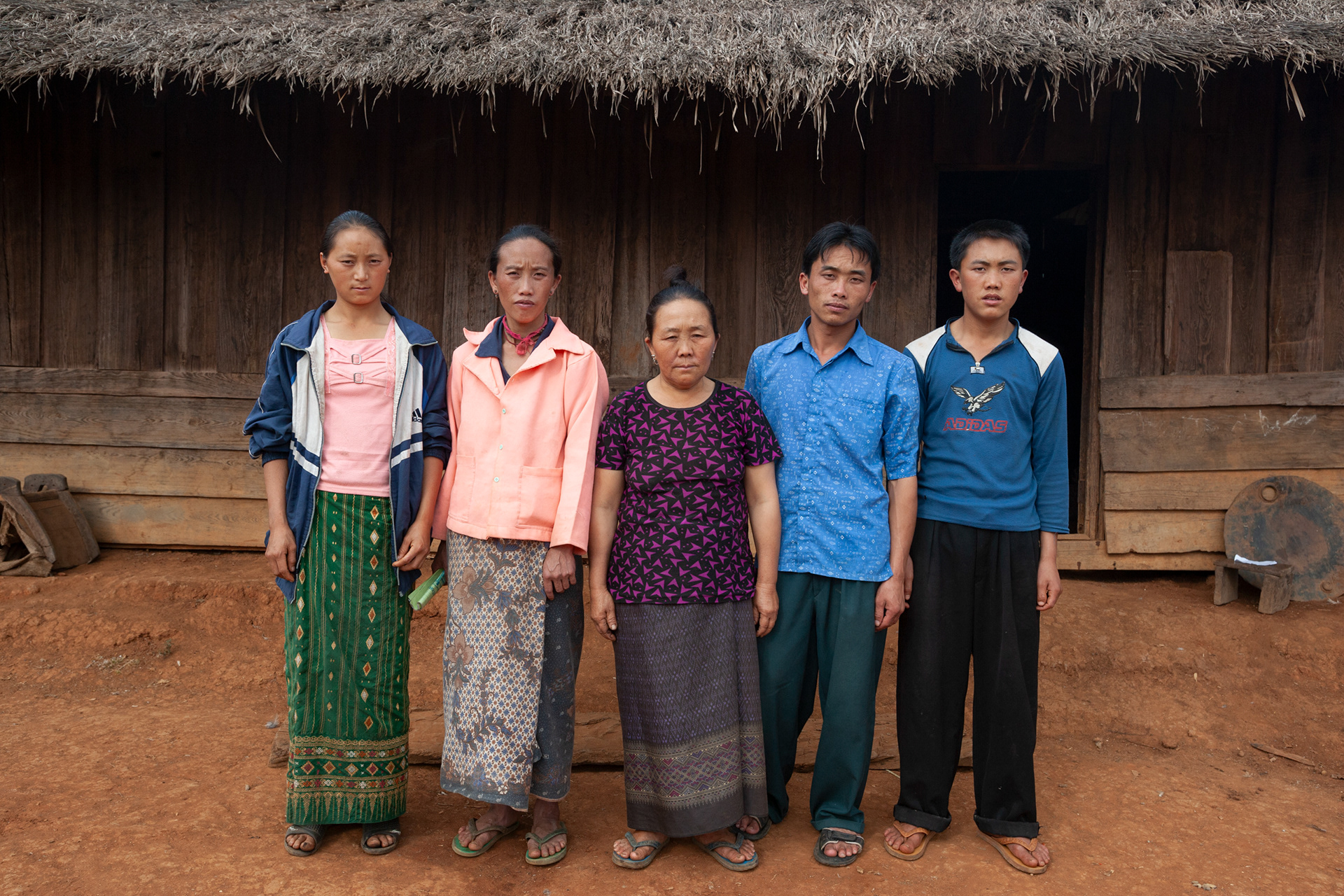
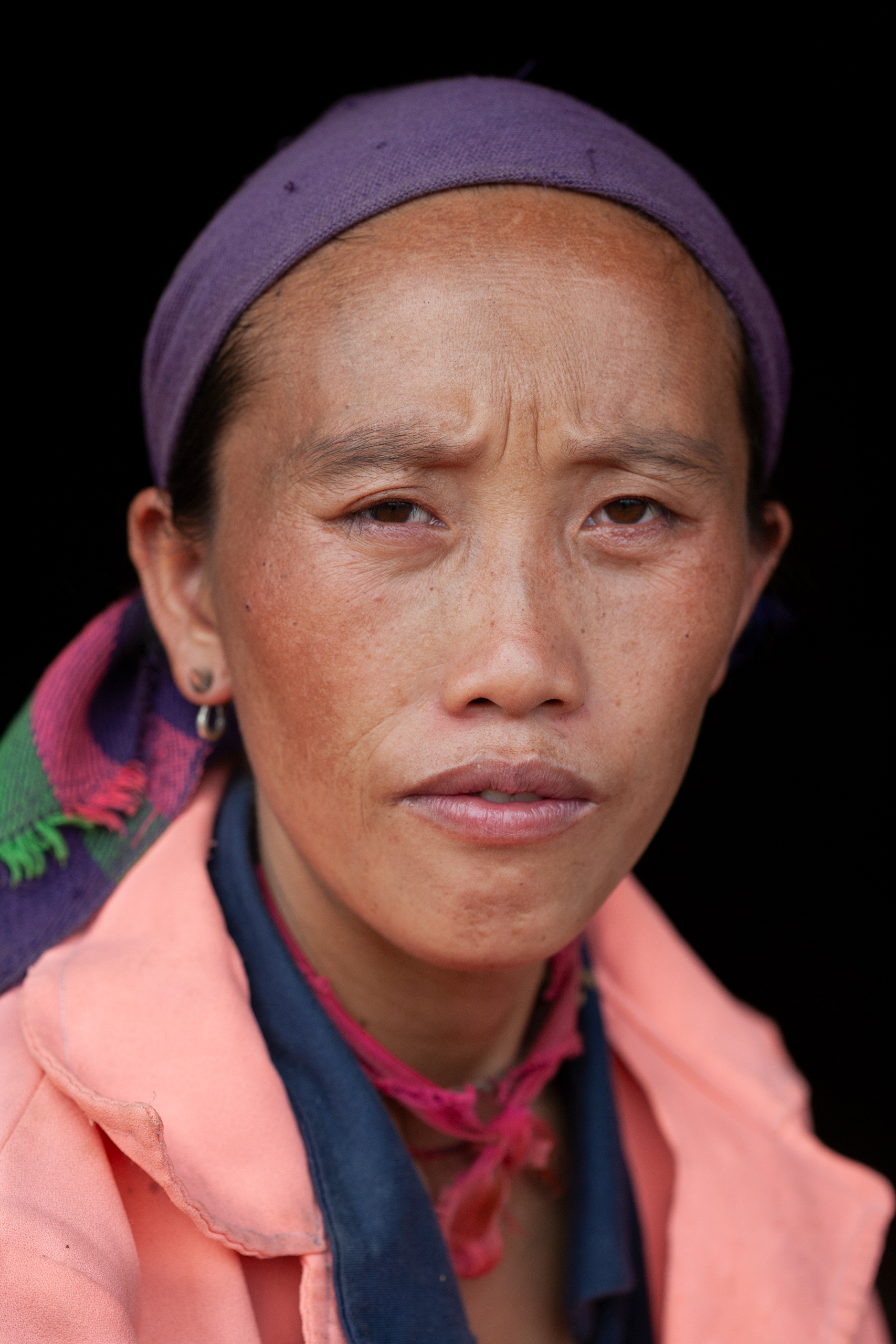
Exhausted from the funeral and hours of walking through the sprawling village, Long and I finally assent to a shot of rice whiskey apiece before heading off to eat lunch with the family of Xai, one of Long’s high school classmates. As it turns out, Xai’s sister, Nee, is the mother of the deceased infant; she has also taken a break from mourning at the funeral to come home for lunch. As Xai’s mother kills and plucks a chicken, we sit around the fire, talking. I learn that the dead baby is Nee’s seventh child; she is twenty-four and has been married for nine years. A gaunt, dark-skinned girl, her brow is already permanently creased with worry. However, at her mother’s home she seems more relaxed than she did at the funeral. After lunch we all pose together for mug shots and, for the first time, Nee smiles.
A girl prepares to bathe with water form the village spring as her brother looks on. This spring is the source of Ban Tha Chok's prosperity and longevity. December 7, 2006.
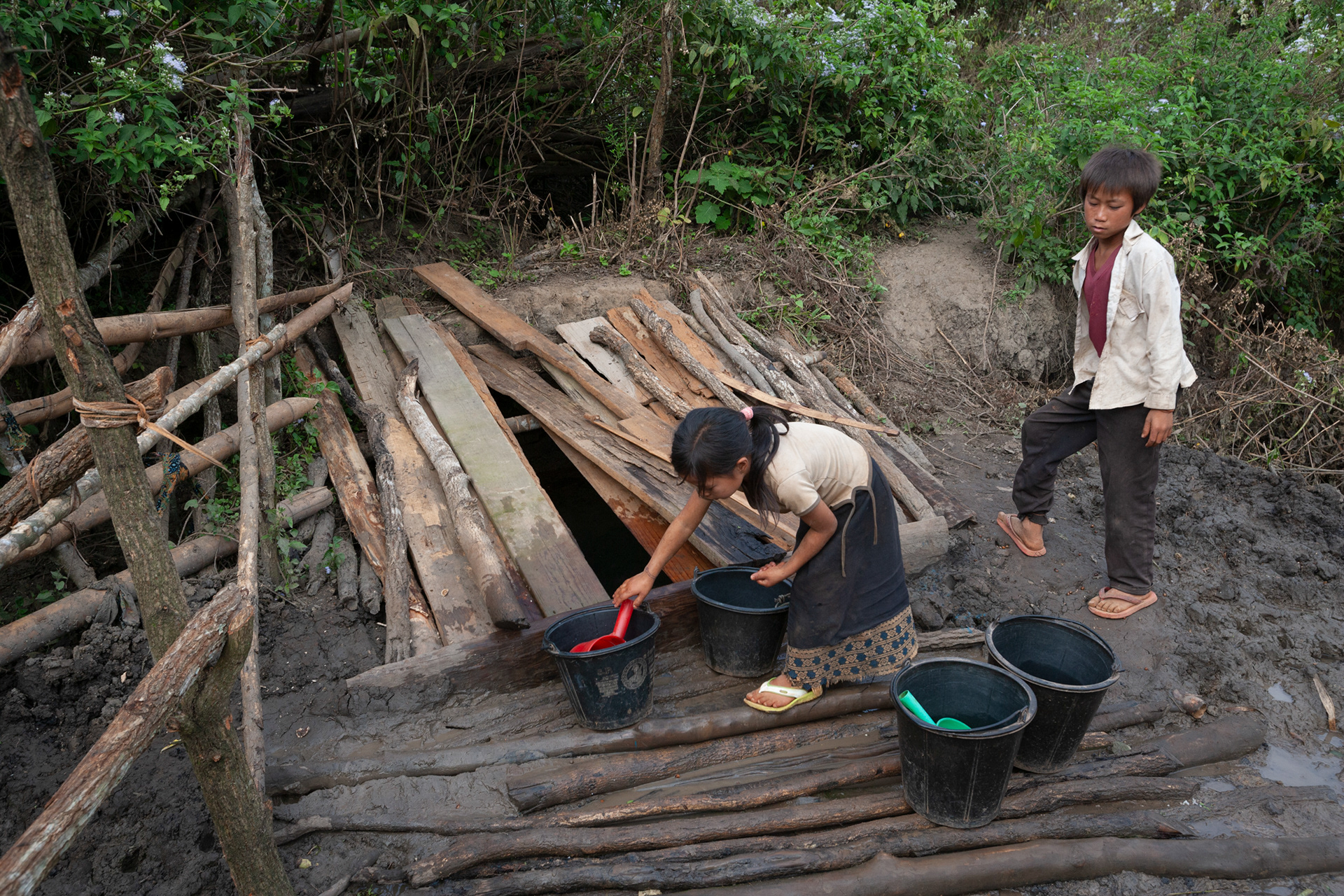
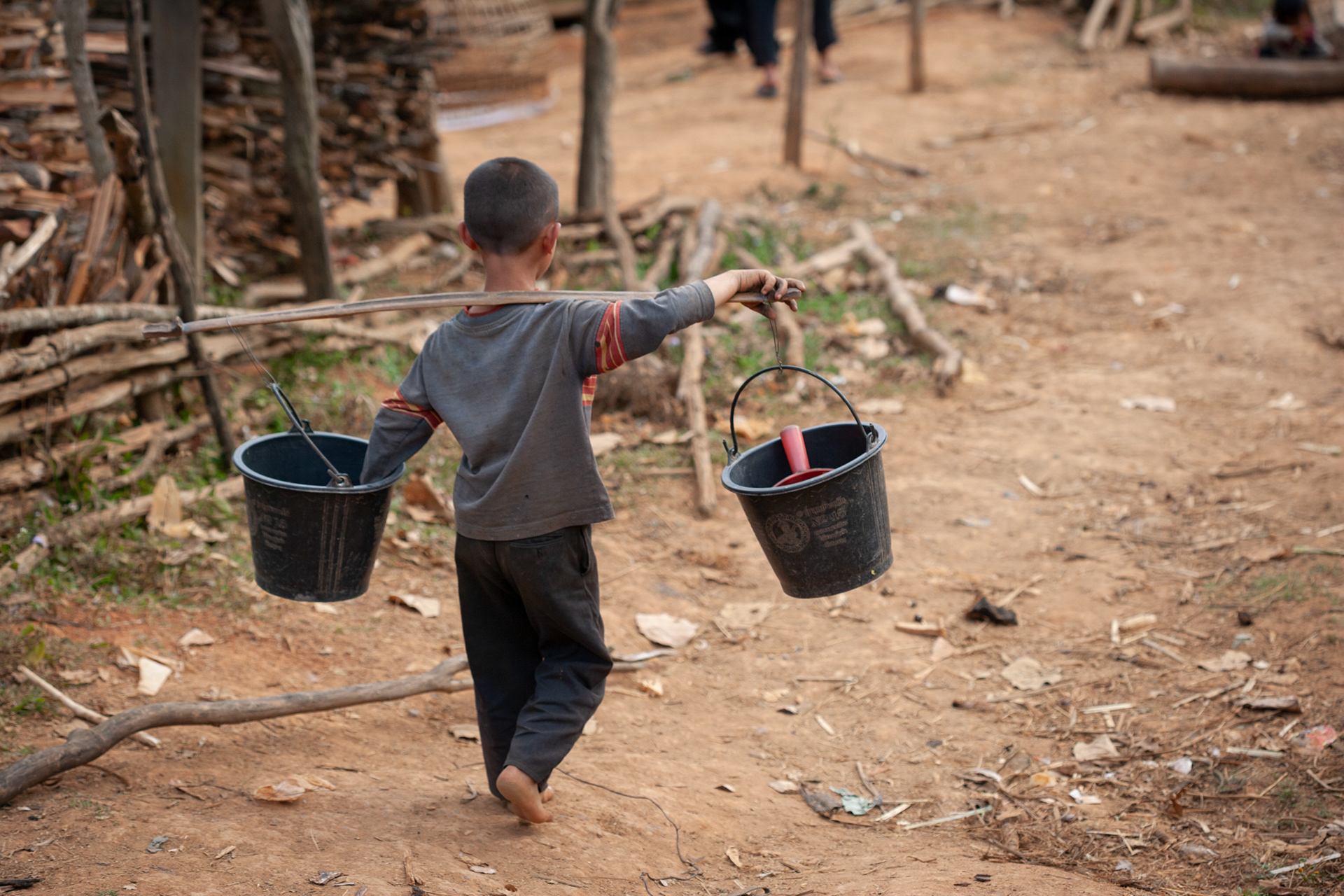
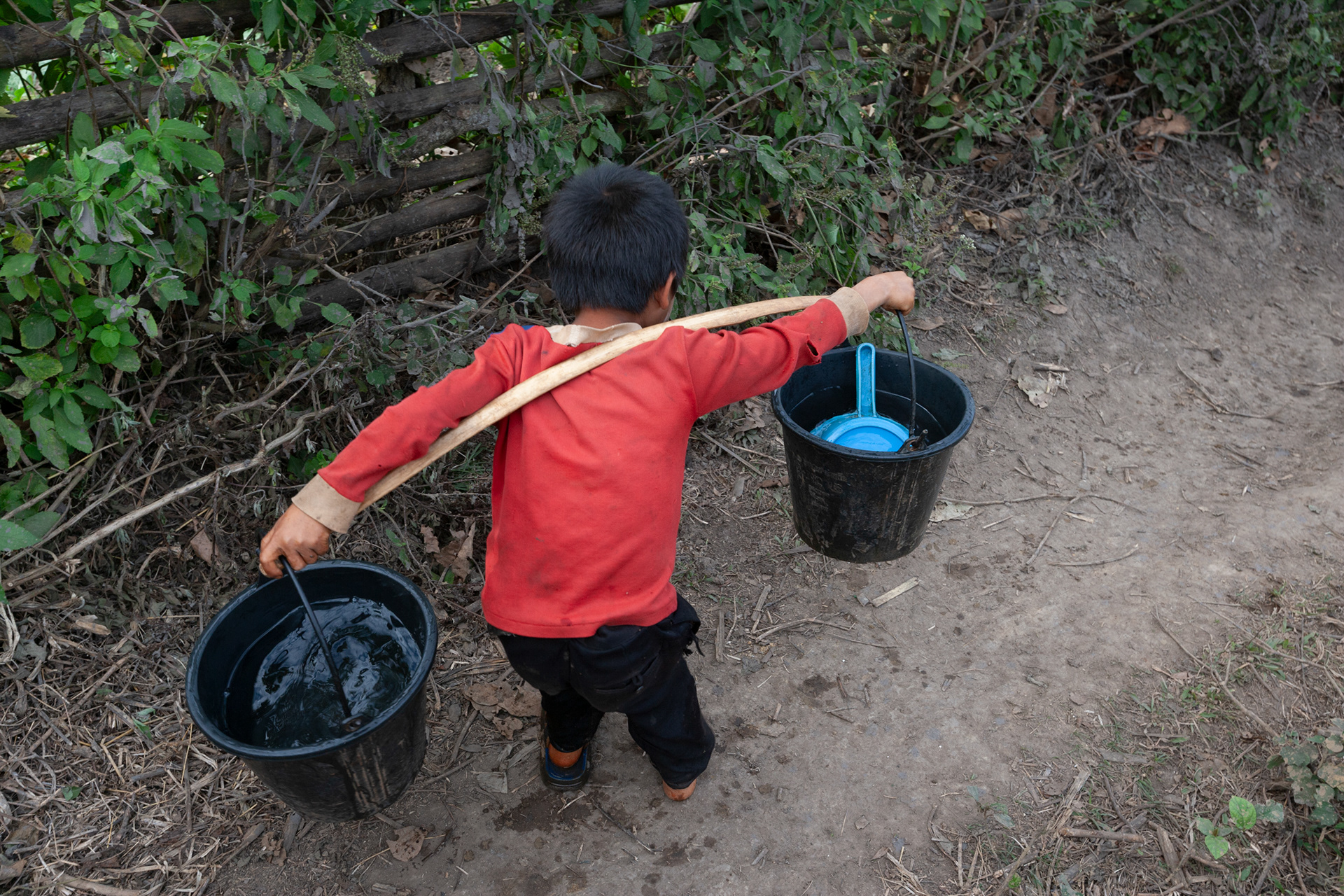
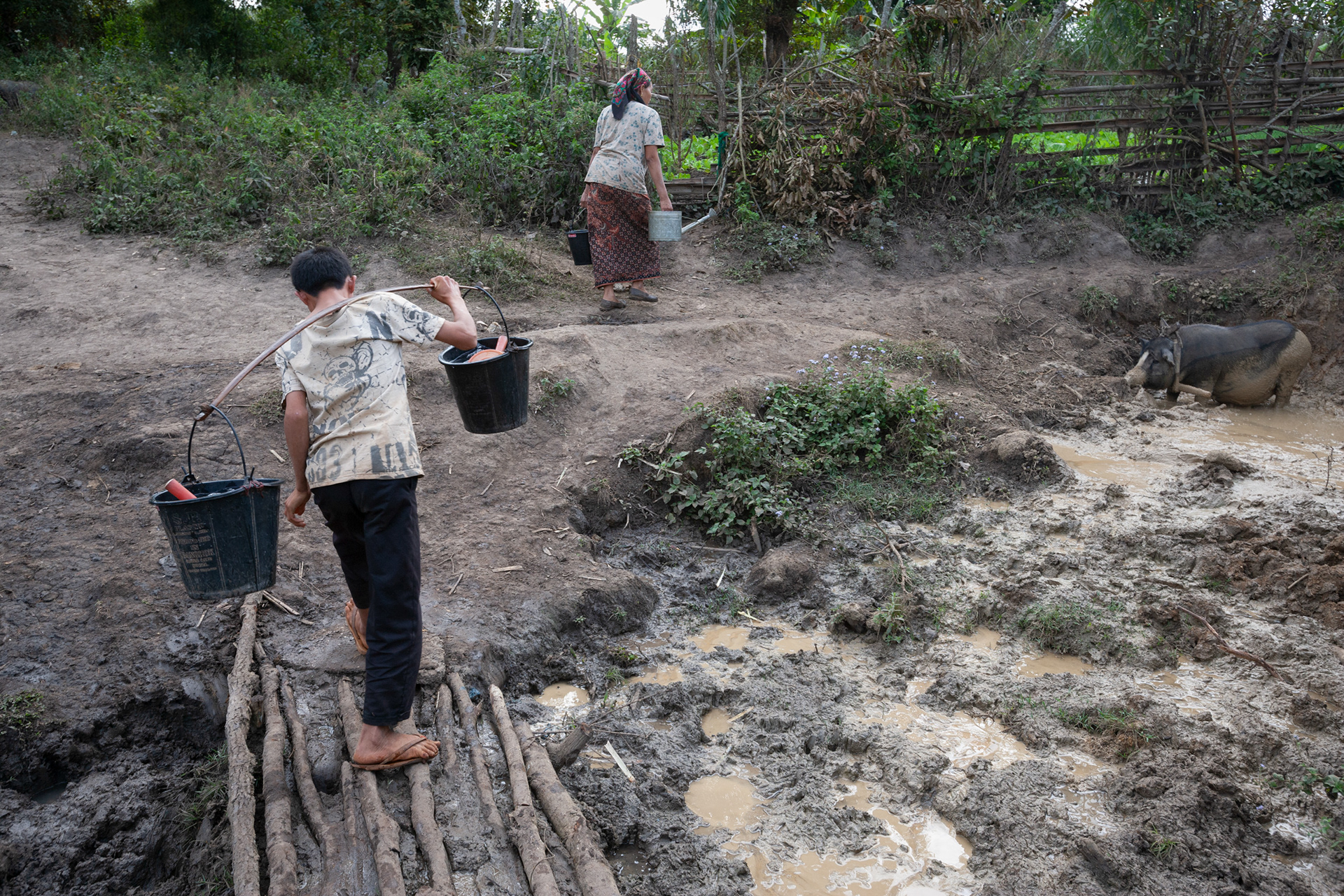
It is four o’clock and only a couple of hours remain before sundown; the light is at its best now, and not to be wasted. I am offered the choice of either going to watch a soccer game or visiting the well at the far end of the village. I choose the latter, knowing that at this time of day the well is always the hub of village life. As we walk down the sloping path, kids trudge past us hauling twin pails of water balanced over their shoulders on bamboo sticks. Women wrapped in sarongs pass us going both ways, carrying buckets with soap, shampoo, and toothbrushes. An old man leads his buffalo by the ring in its nose.
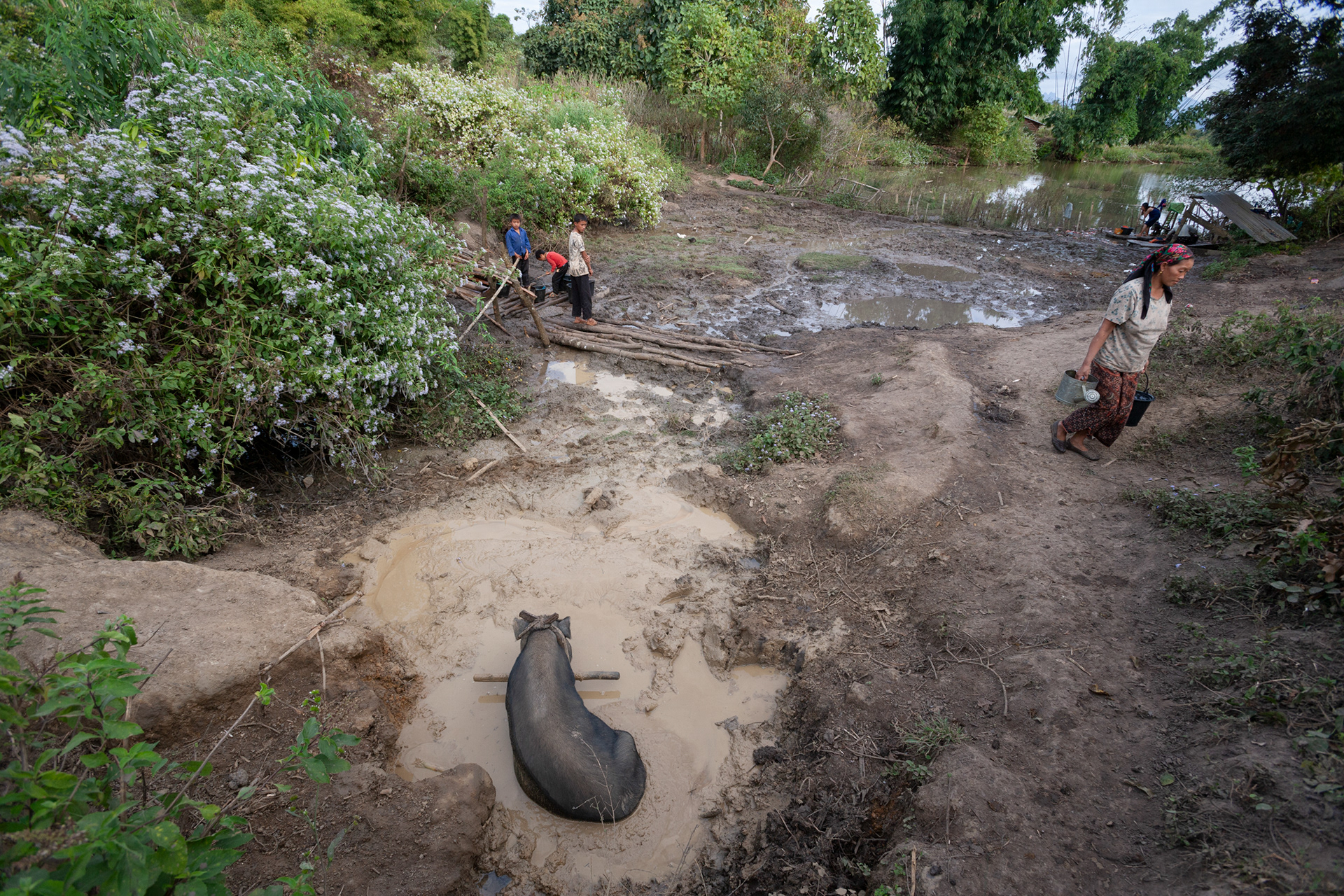
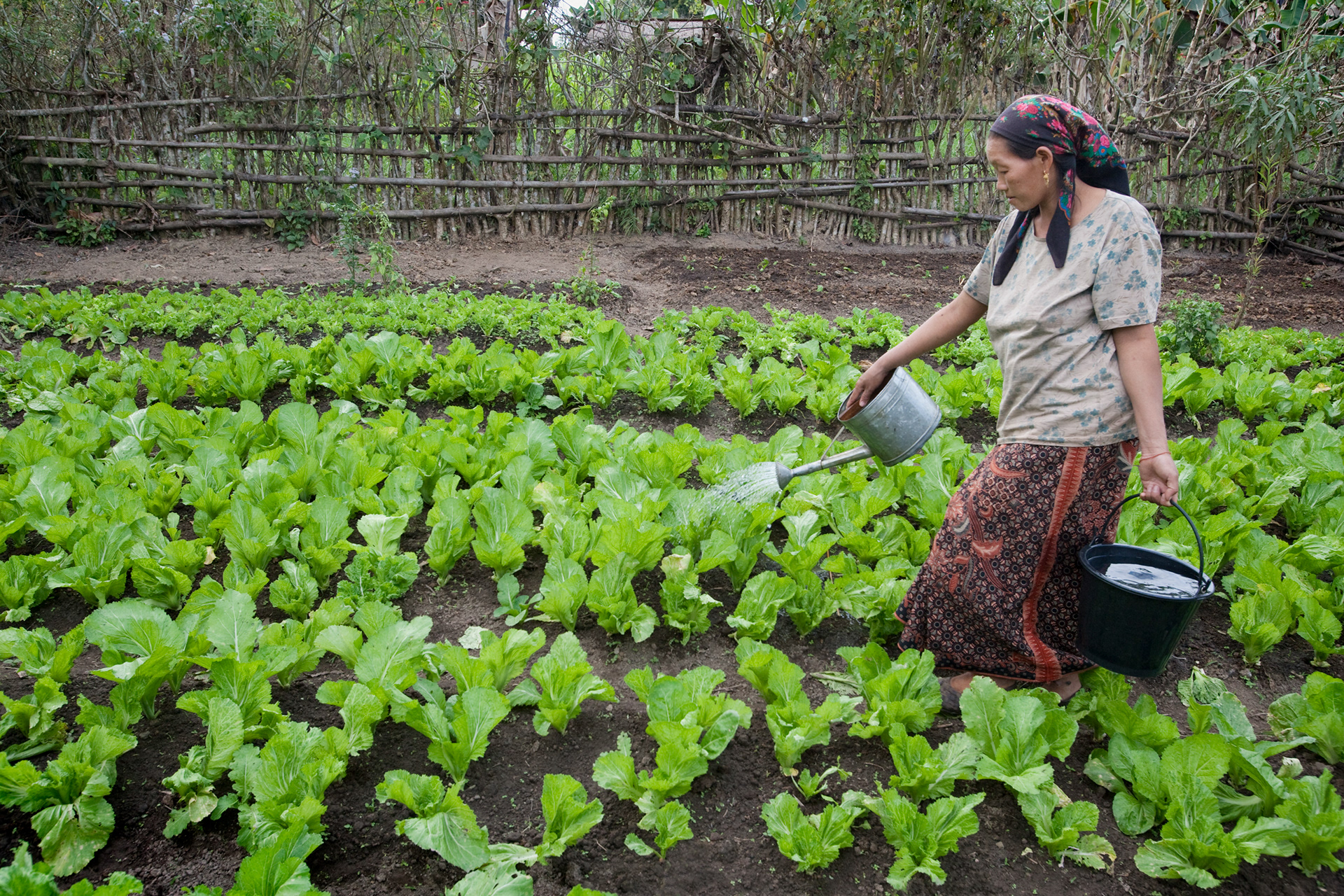
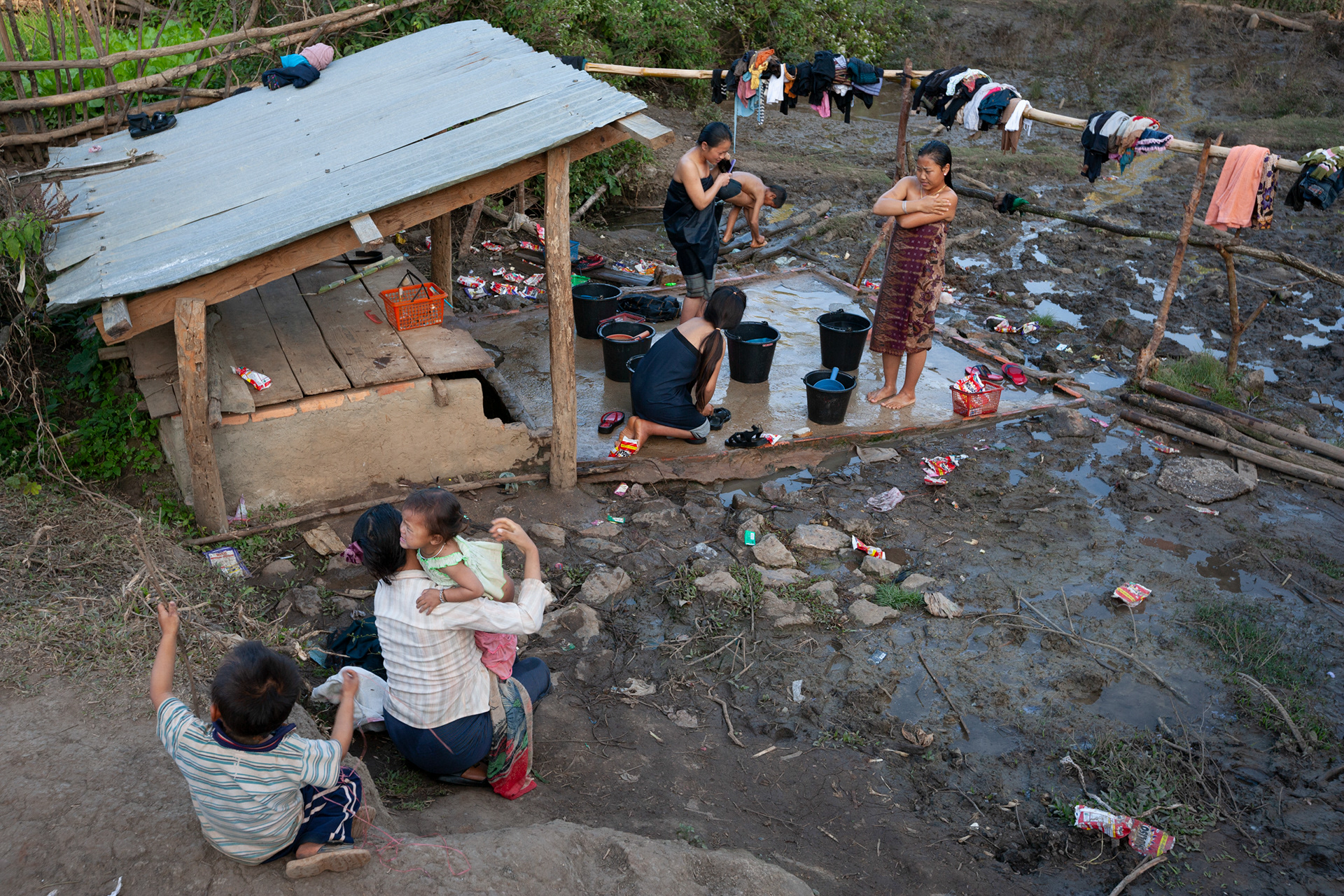
At the end of the trail, we reach a big muddy area bustling with activity. Villagers wade through the ankle-deep muck to fill their buckets for cooking, drinking, and watering vegetable gardens. A group of women and children stand on a small slab of concrete, pouring bowls of water over themselves, scrubbing their hair, and brushing their teeth; bathing is, by necessity, a public act in most Laotian villages.
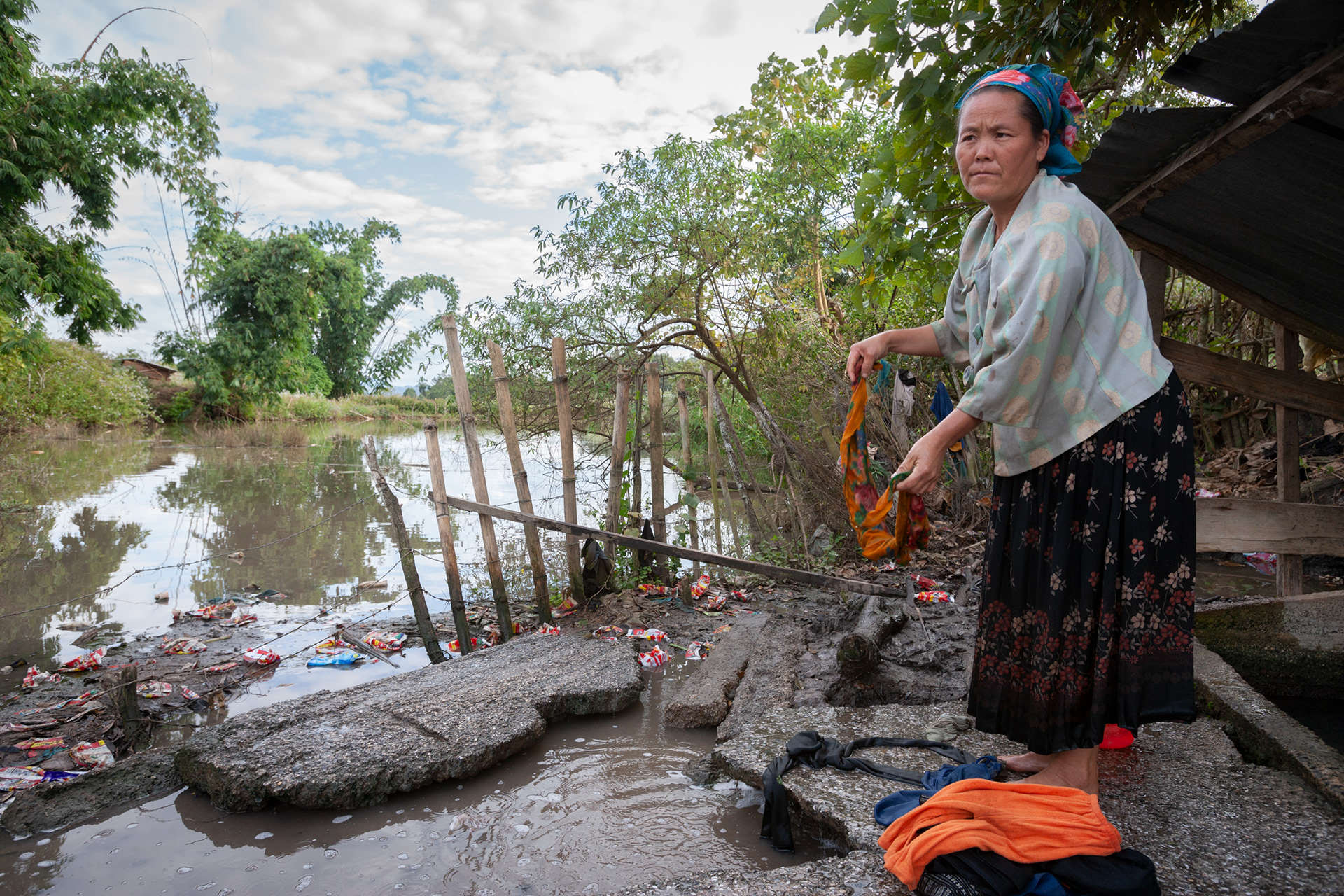
Nearby, three women squat on slightly higher ground, doing their laundry by hand. An obese pig wallows in the mire. The old man we passed earlier on the trail rolls up his pant legs and leads his buffalo to drink. At the heart of all this muddy chaos lies the secret to Ban Tha Chok’s longevity and prosperity: a deep natural spring that has given life to the village for more than a century. As day turns to dusk, I am reminded that the life-giving power of water is more enduring than the destruction of war.
2026 addendum about water sanitation in villages like Ban Tha Chok:
During the 2000s, waterborne disease was the leading cause of infant mortality in rural villages throughout Laos. Late in the decade, several NGOs stepped up the construction of clean water pumps, concrete-lined wells, latrines and community-led education to change behavior. These programs resulted in a substantial reduction in the infant mortality rate. By 2017, 82% of rural households had access to safe water and 98% reported saving time previously spent boiling water every day.
Ban Tha Chok-01
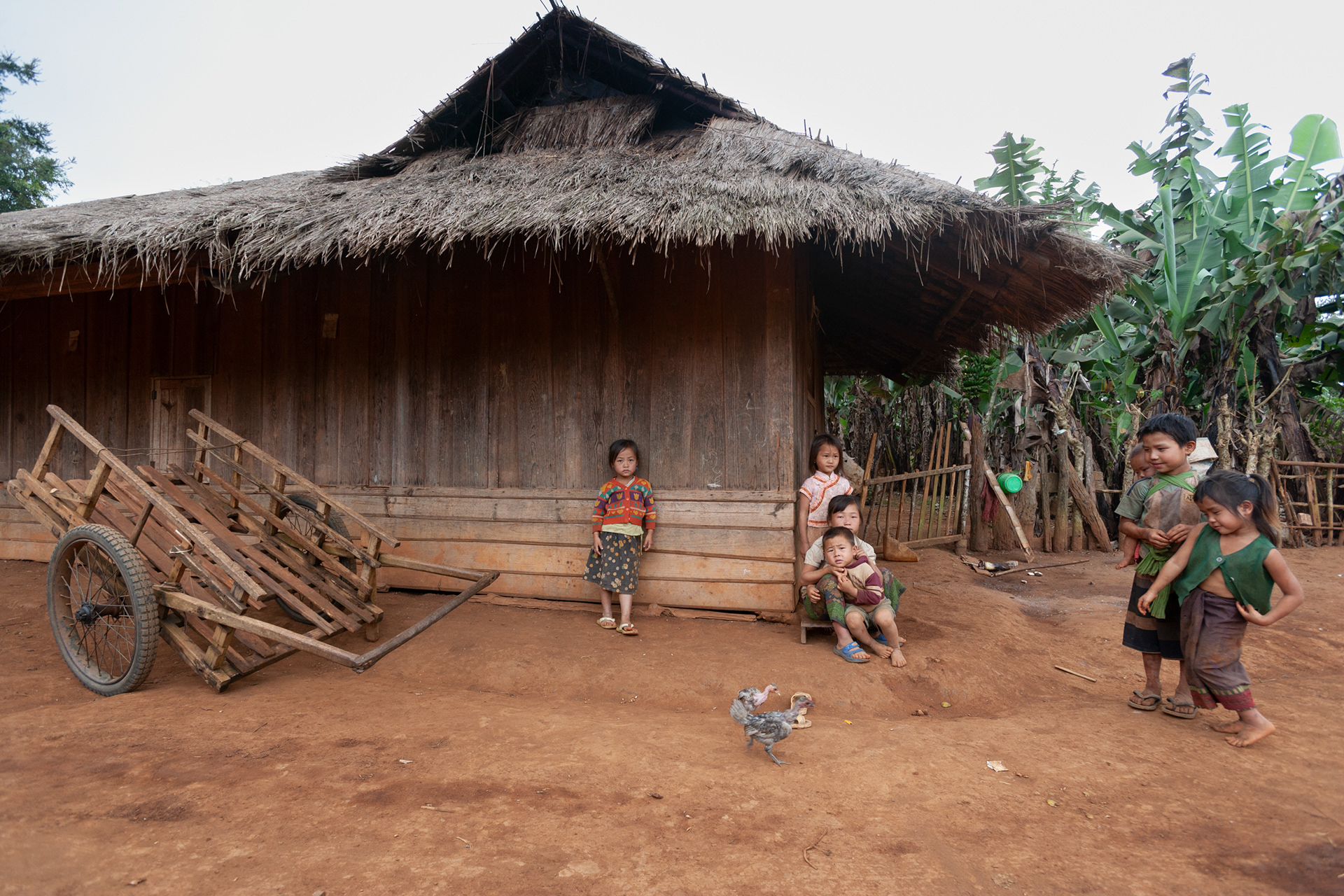
Children play outside of a typical wooden house in Ban Tha Chok. The hand-built cart uses bicycle wheels, December 7, 2006.
Ban Tha Chok-02
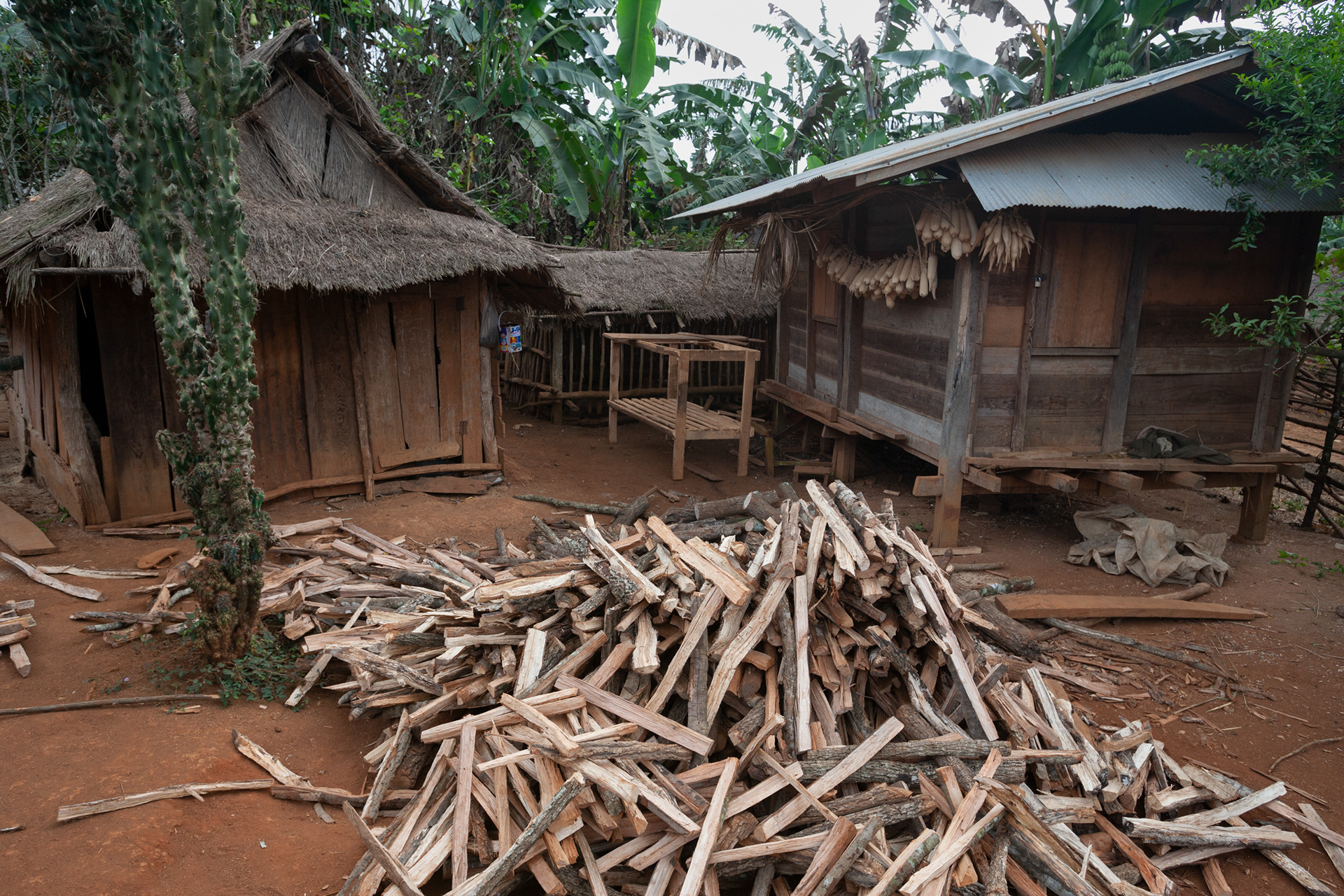
Firewood is essential during the winter as the village lies at an altitude of nearly 4,000 feet. Nighttime temperatures fall to zero degrees Celsius (32 degrees Fahrenheit).
The Peruvian Apple Cactus on the left is not native to Laos but is grown for its prickly pear-like fruit, December 7, 2006.
Ban Tha Chok-06
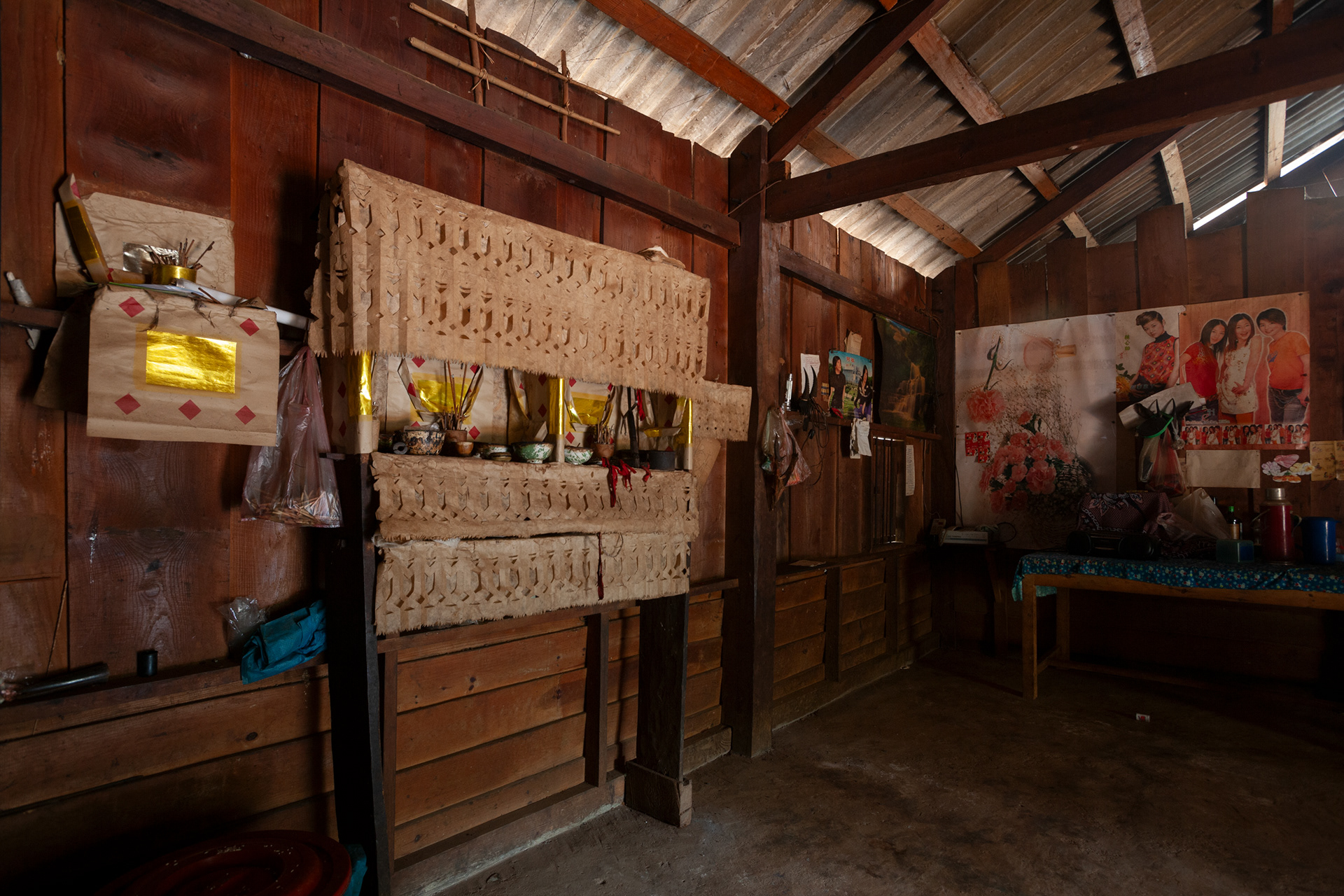
Interior of the Village chief’s relatively prosperous house. A shamanic altar dominates the wall on the left, while discarded advertising imagery decorates the wall to the right.
When visiting a Hmong village, the requisite first stop is always the chief's house to explain your purpose and get permission, December 7, 2006.
Ban Tha Chok-07
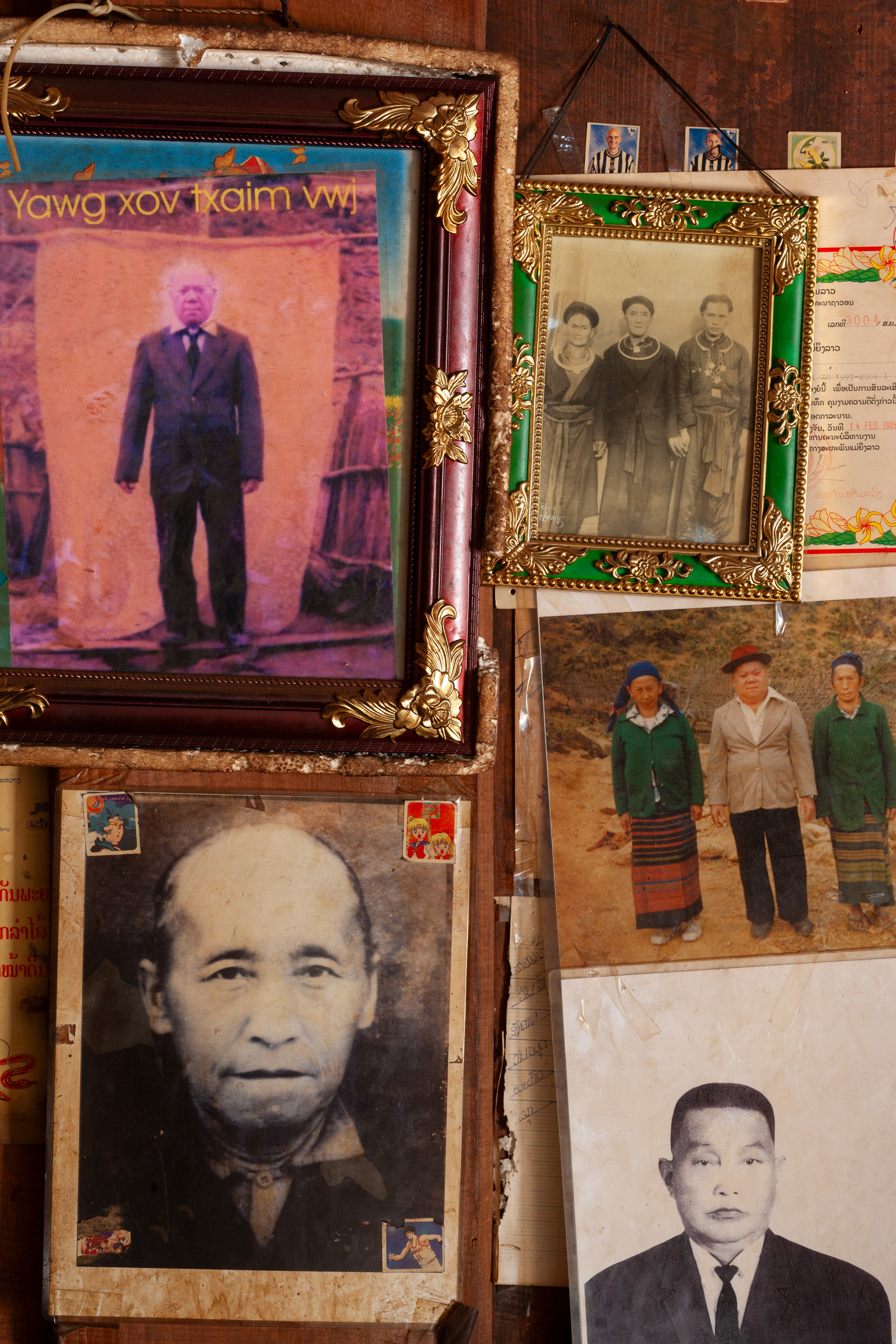
A detail of the wall shows photos of the village Chief’s ancestors and historic Hmong leaders. Touby Lyfoung and his two wives are shown in the color photo at the right, halfway down. Lyfoung was the top Hmong political leader during the Japanese occupation during WWII and the French colonial period of the mid-Twentieth Century. As a teenager,, Vang Pao served as a translator and assistant to Lyfoung.
In WWII, the Hmong fought against the Japanese in alliance with the French. The man in the two photos at the left was a Vue clan leader, village chief and grandfather of the current chief. The man in the lower right photo is Zheng Qingle, a highly respected leader of Chinese ancestry who lived in the area. Photo: December 7, 2006.
Ban Tha Chok-08
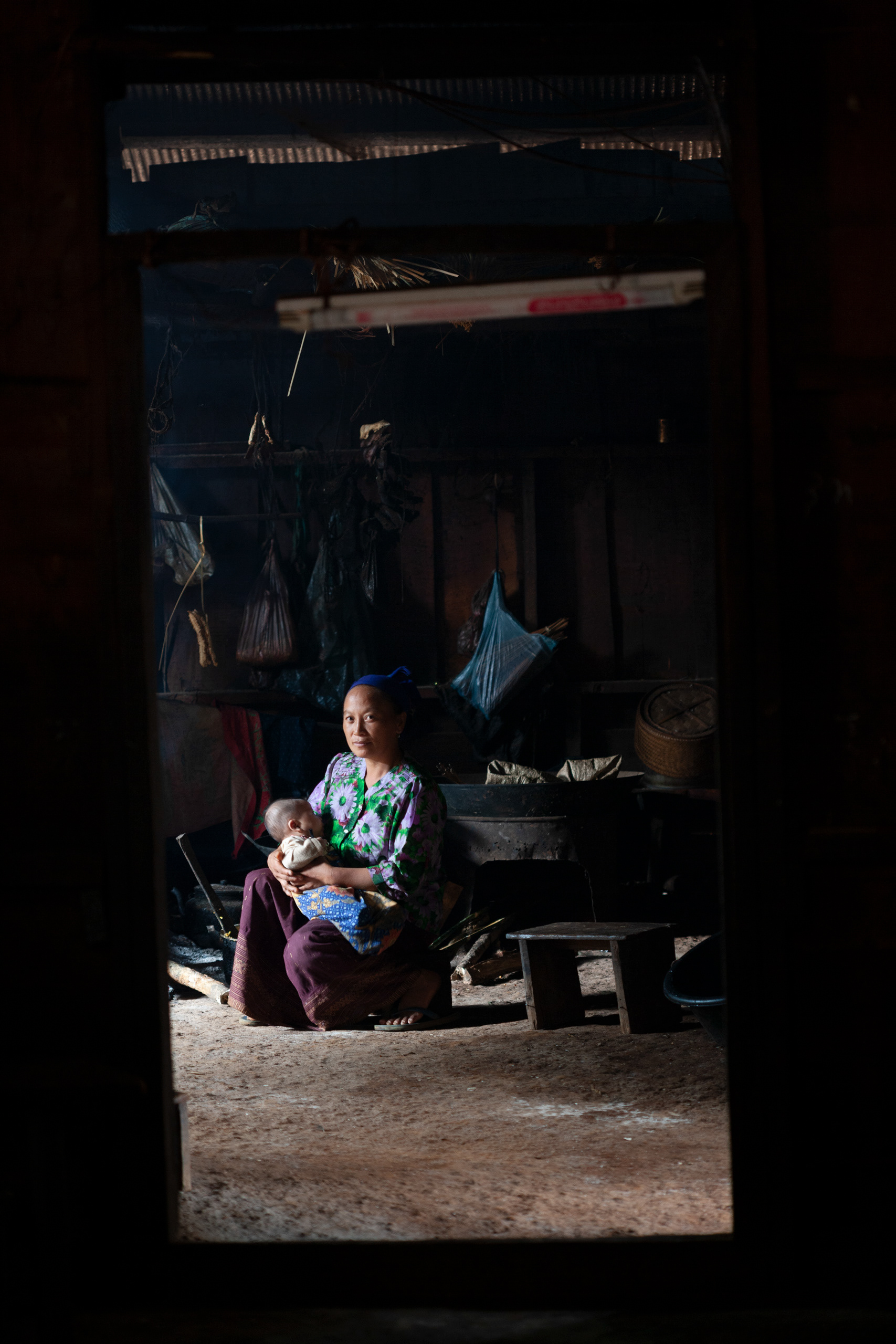
The Chief’s wife is home nursing a baby while he is out. She is seen through an interior doorway in his very large house, December 7, 2006.
Ban Tha Chok-04
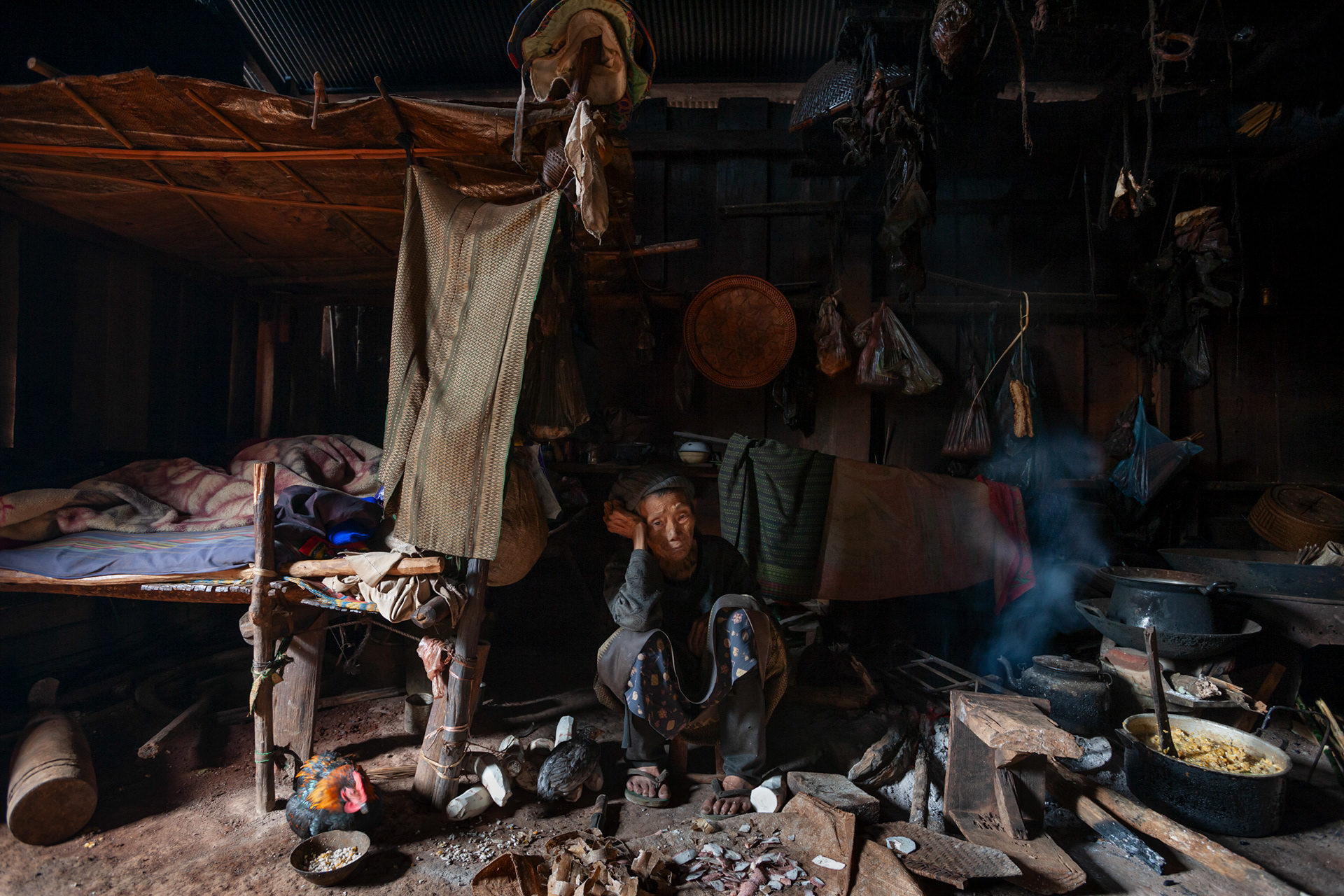
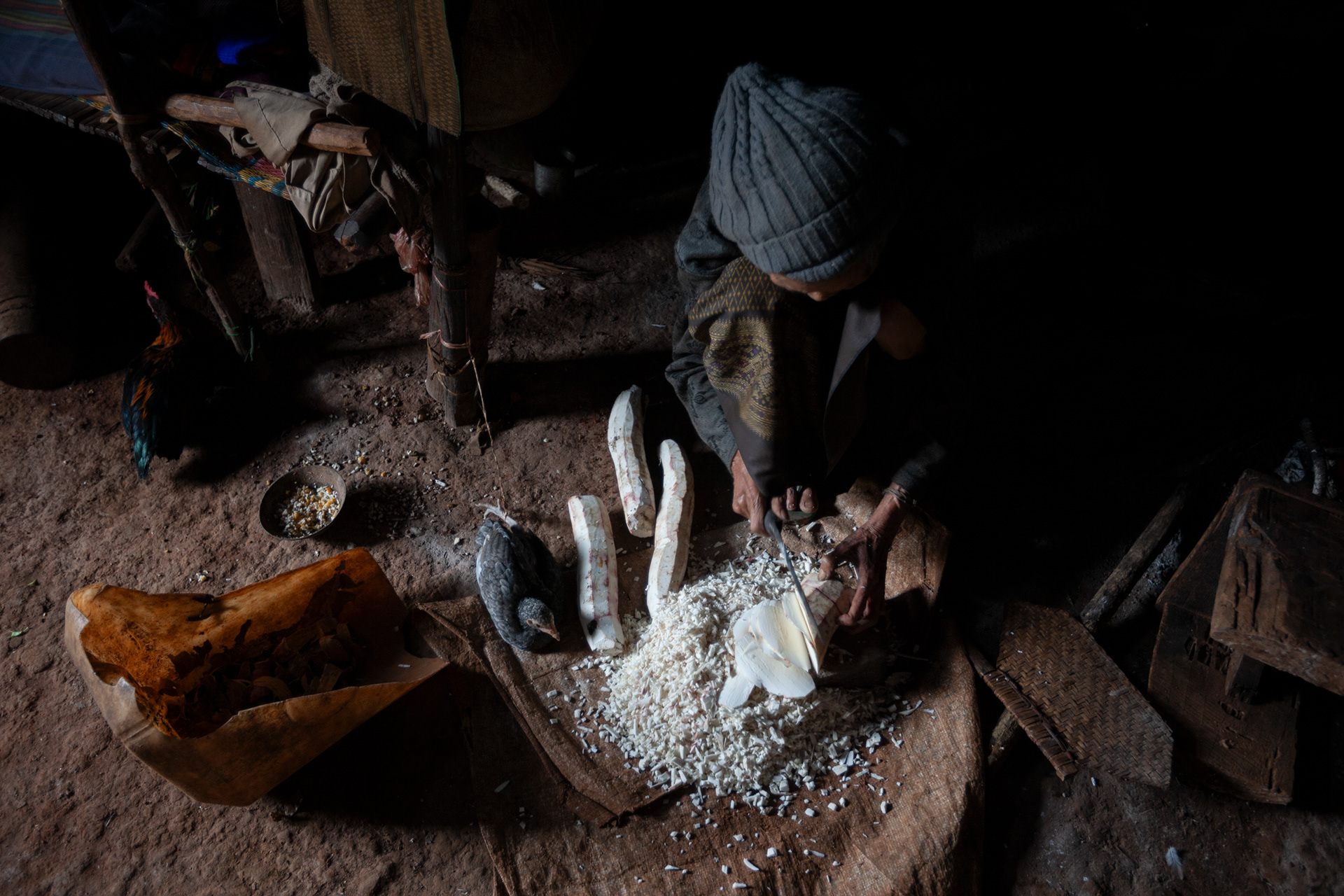
The chief’s elderly mother chops up an arrowroot (nplooj ntse tug) to make a rice-like food that will be boiled. The men of the family are out harvesting rice or attending a funeral in the village, December 7, 2006.
Ban Tha Chok-03
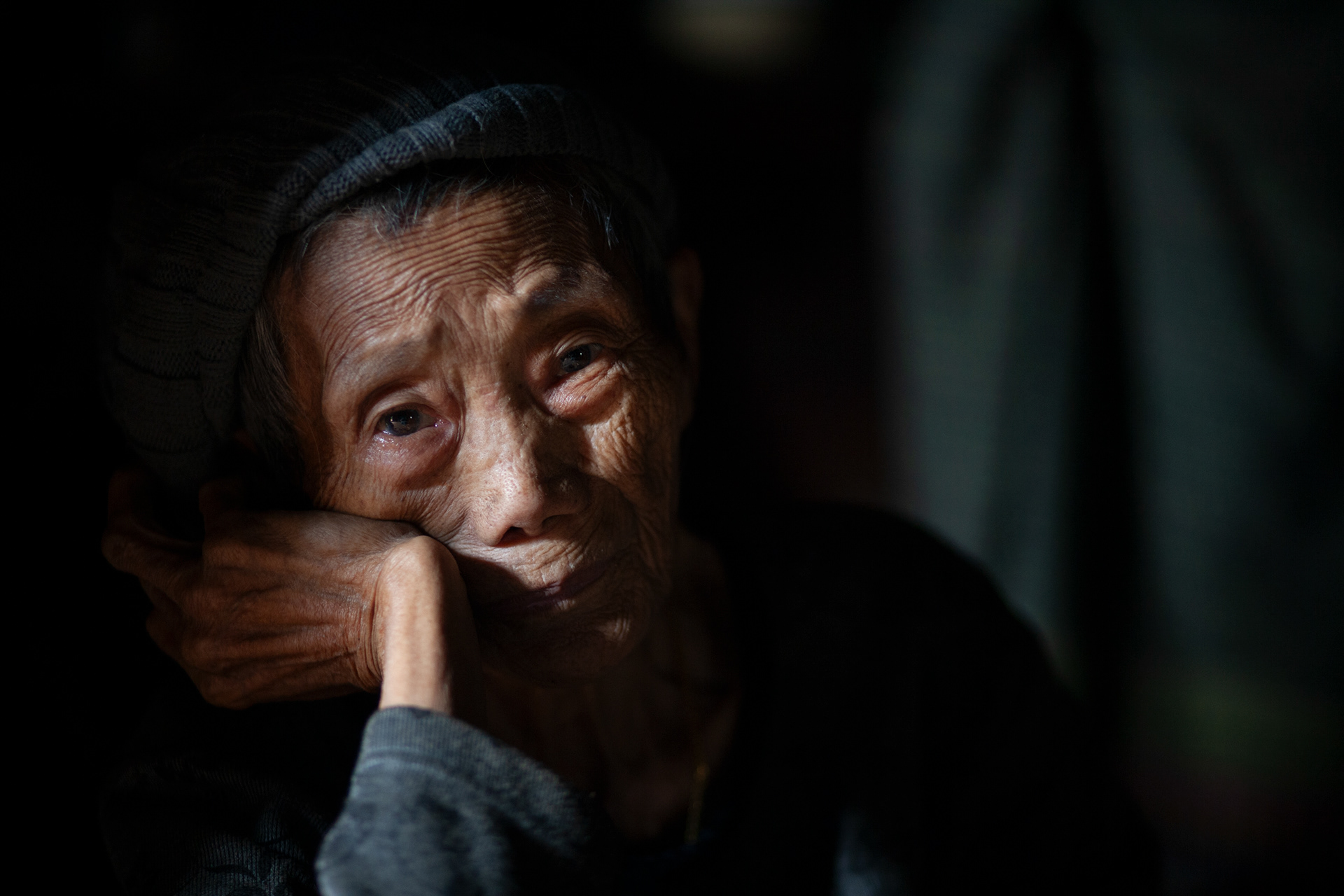
Close up portrait of the village chief's mother, December 7, 2006.
Ban Tha Chok-05
Detail of the chief's mother chopping arrowroot. During the Secret War and its aftermath, Hmong refugees often survived on this staple while hiding in the jungle and making their way toward the Mekong River.
Photo: December 7, 2006.
Ban Tha Chok-09
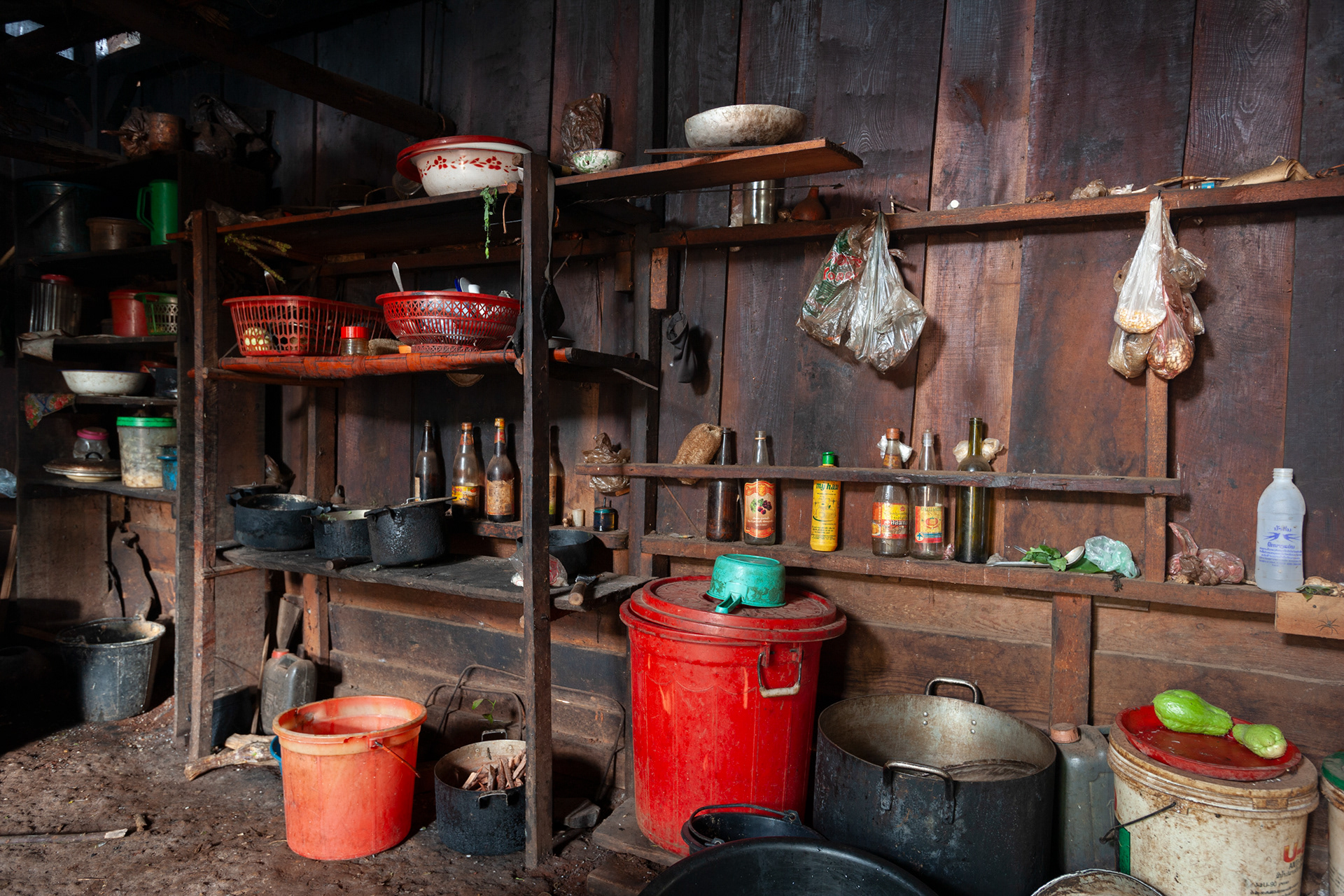
Cooking utensils and ingredients along a wall of the chief’s house that serves as its kitchen, December 7, 2006.
Ban Tha Chok-10
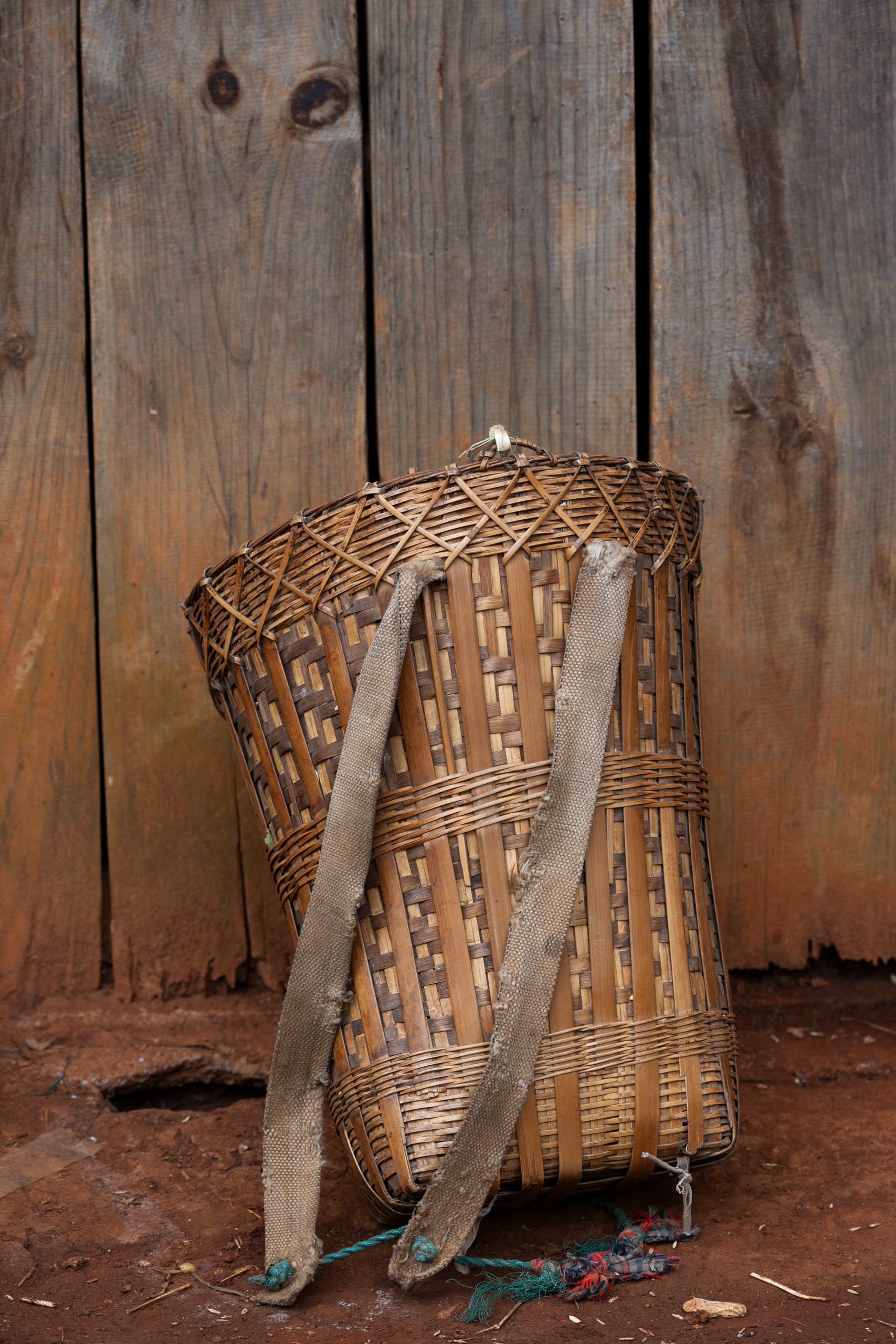
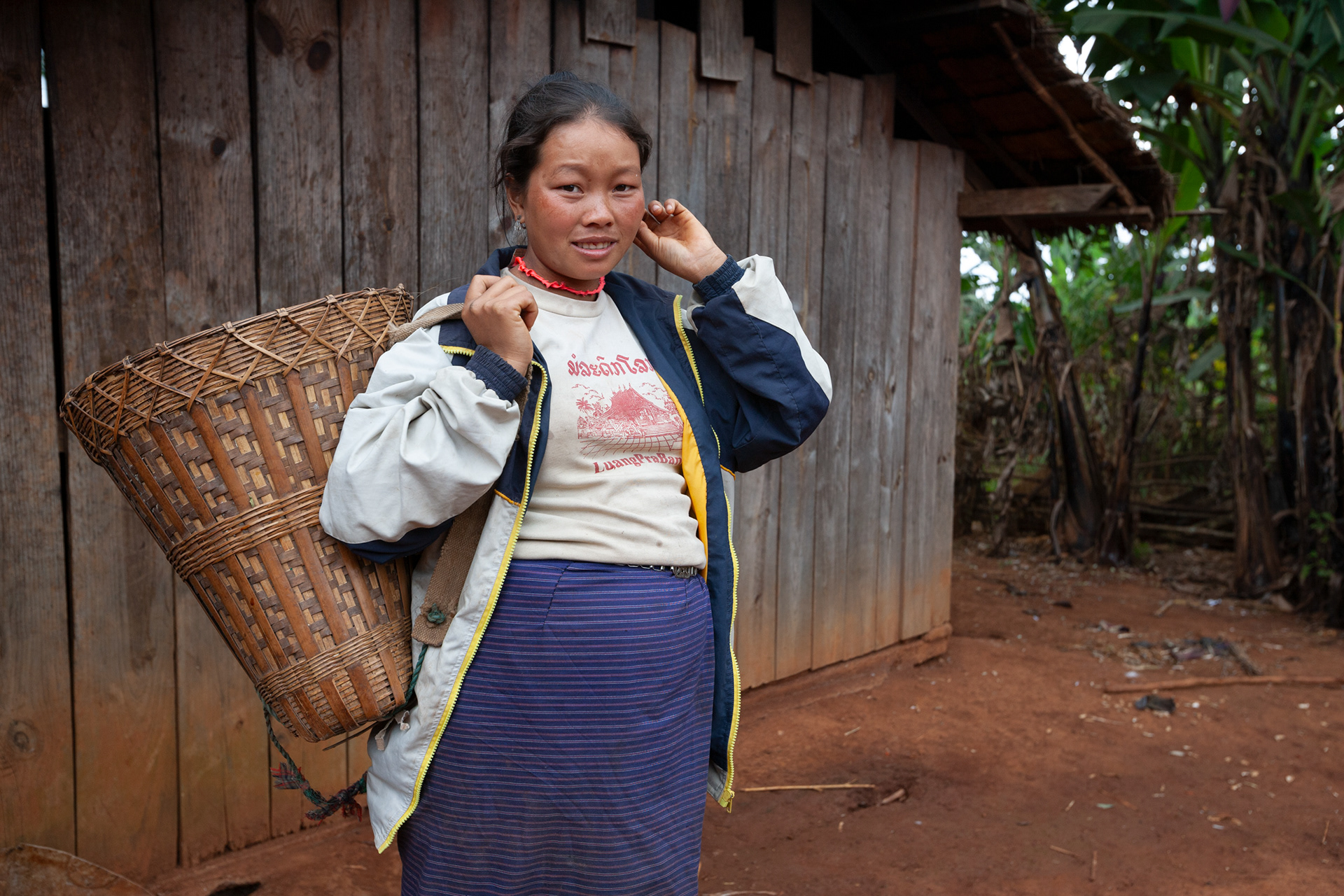
A ubiquitous Hmong basket fitted with straps so that it can be worn like a backpack, December 7, 2006.
Ban Tha Chok-11
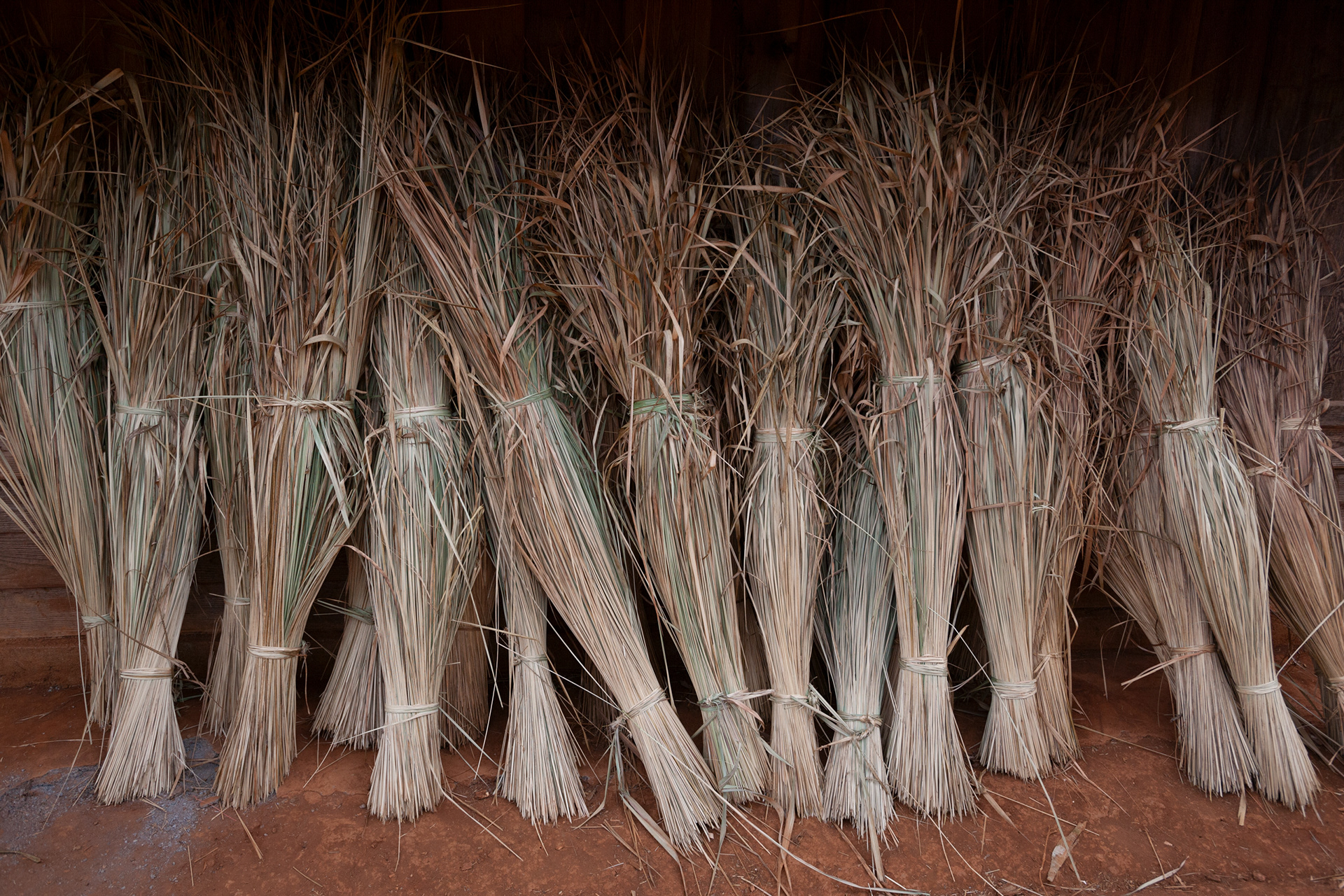
Bundles of wild, Imperata grass that will be used make a thatch roof or to refurbish an existing one. This grass is also known as Alang Alang (Lao) or nqeeb (Hmong), December 7, 2006.
Ban Tha Chok-12
A pregnant woman prepares to go out gathering wild plants for food and other purposes, December 7, 2006.
Ban Tha Chok-13
On obese pig wears a wooden device designed to prevent it from escaping its pen or entering a neighbor's vegetable garden.
The prevalence of such pigs is testament to the relative wealth of this village,
December 7, 2006.
Ban Tha Chok-14
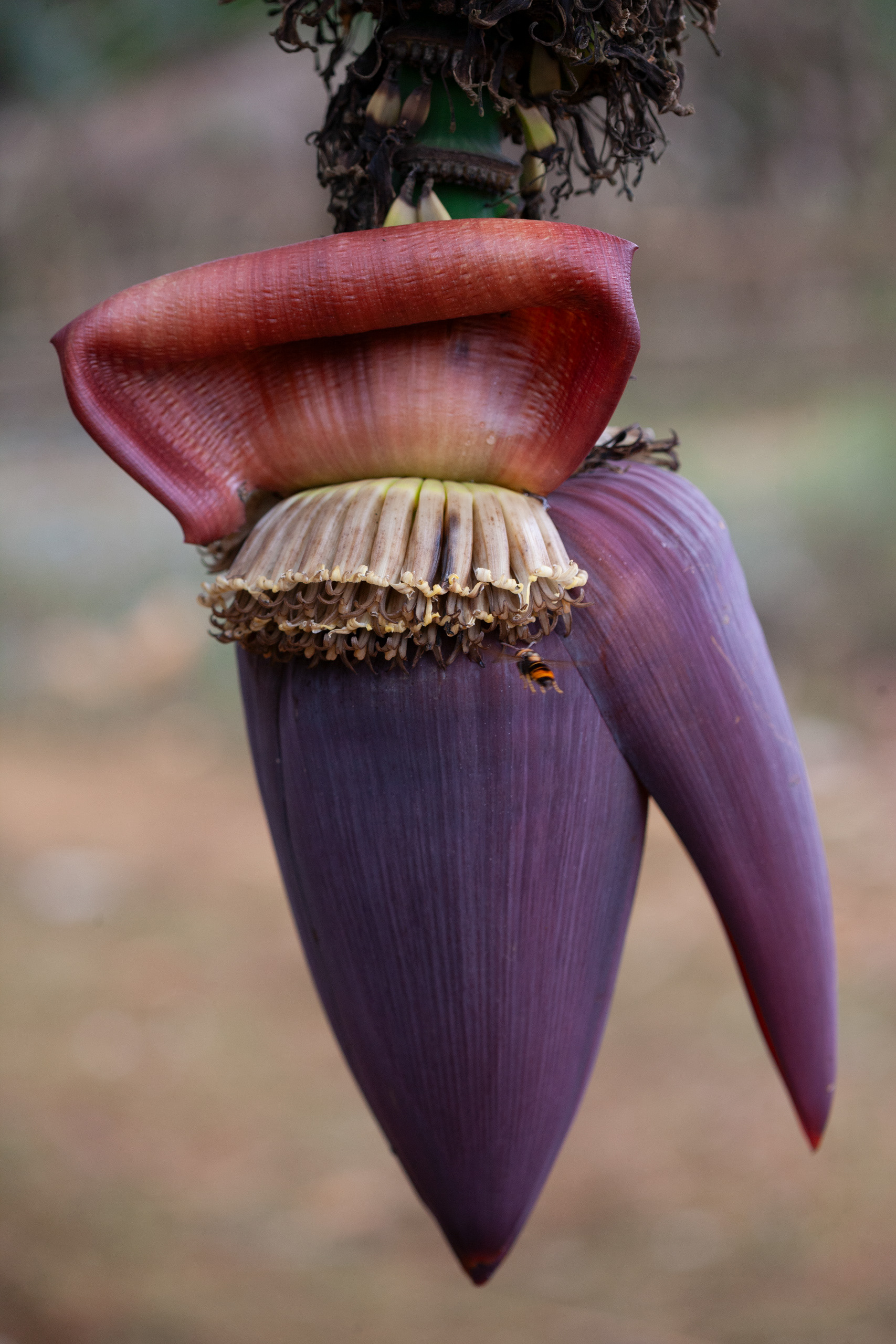
A bee pollinates a banana flower, December 7, 2006.
Ban Tha Chok-15
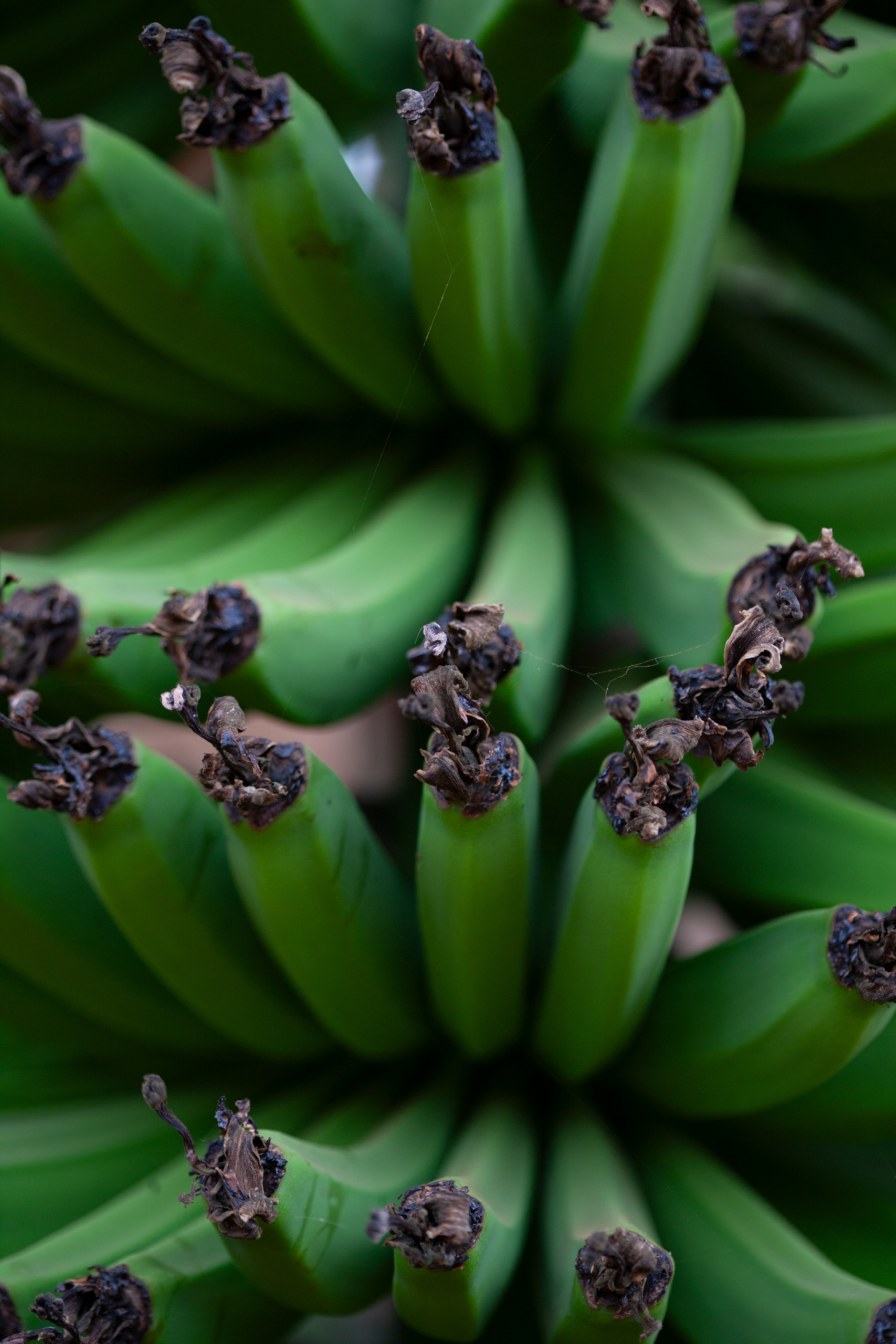
Green bananas grow throughout Ban Tha Chok village,
December 7, 2006.
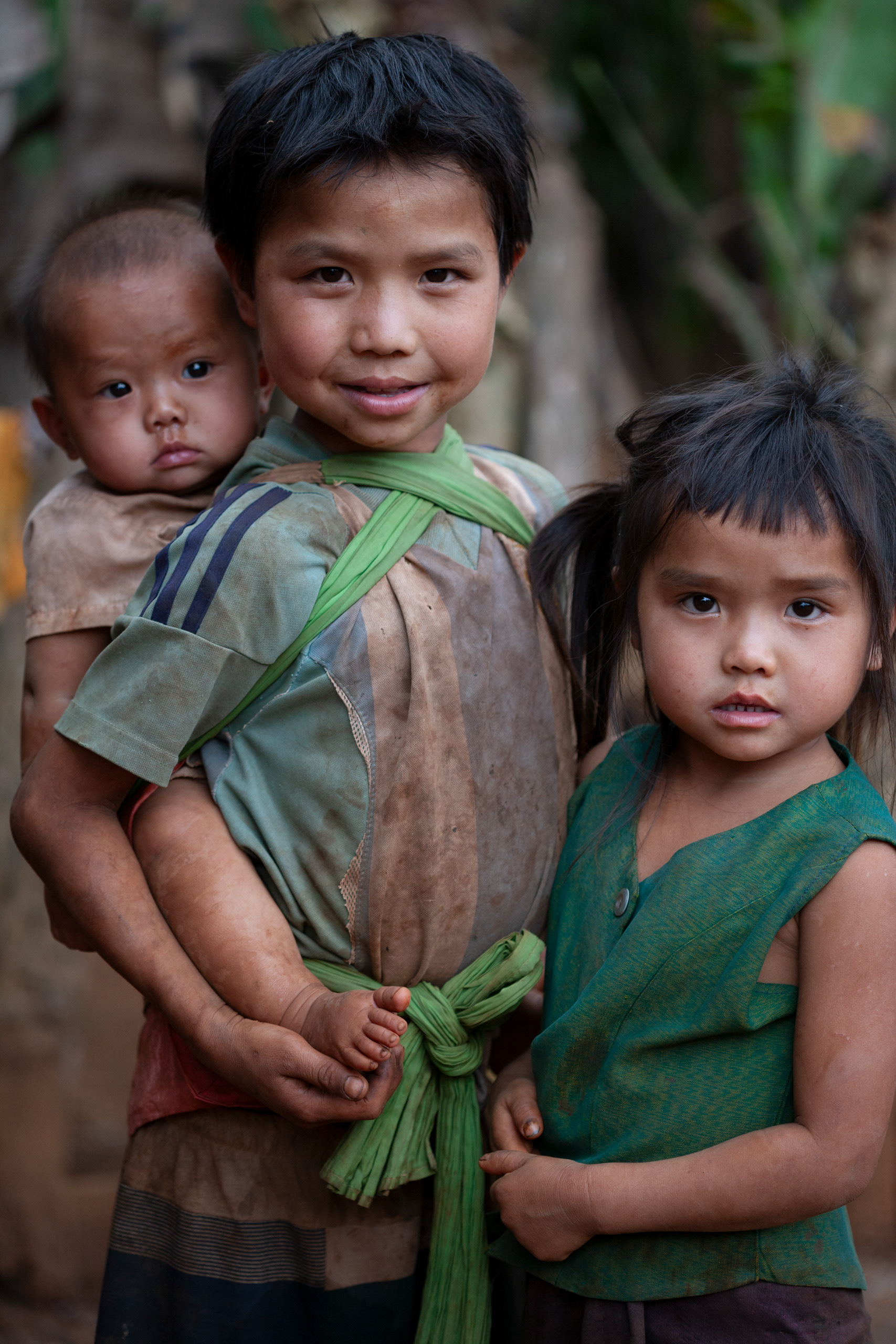
Ban Tha Chok-16
The children of Ban Tha Chok are friendly and curious, December 7, 2006.
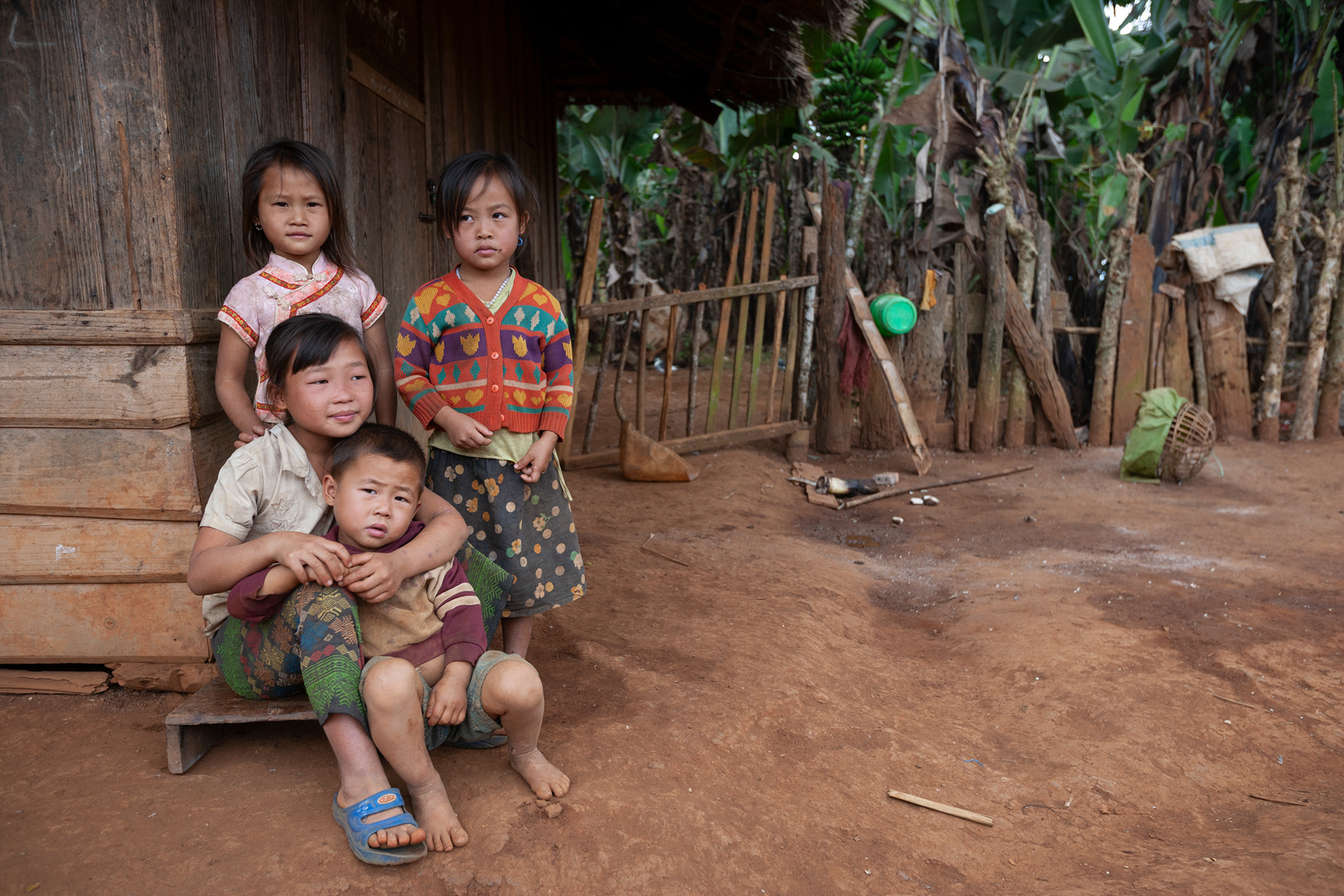
Ban Tha Chok-17
These children wear a mélange of commercially-made Chinese clothes and a traditionally embroidered sinh (Lao skirt), December 7, 2006.
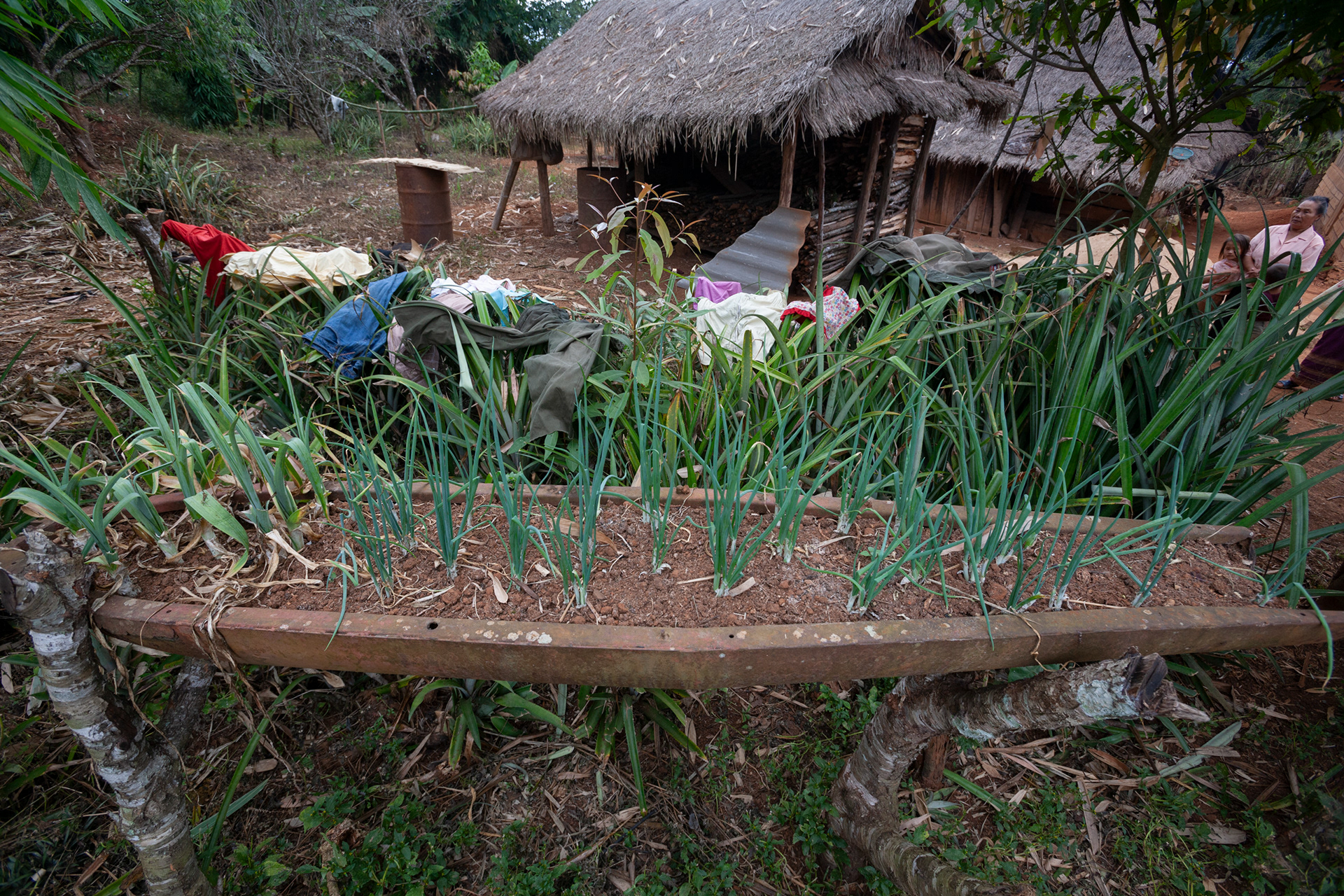
Ban Tha Chok-18
This half bomb casing, a remnant of American bombardment during the Secret War, now serves as a planter for spring onions,
December 7, 2006.
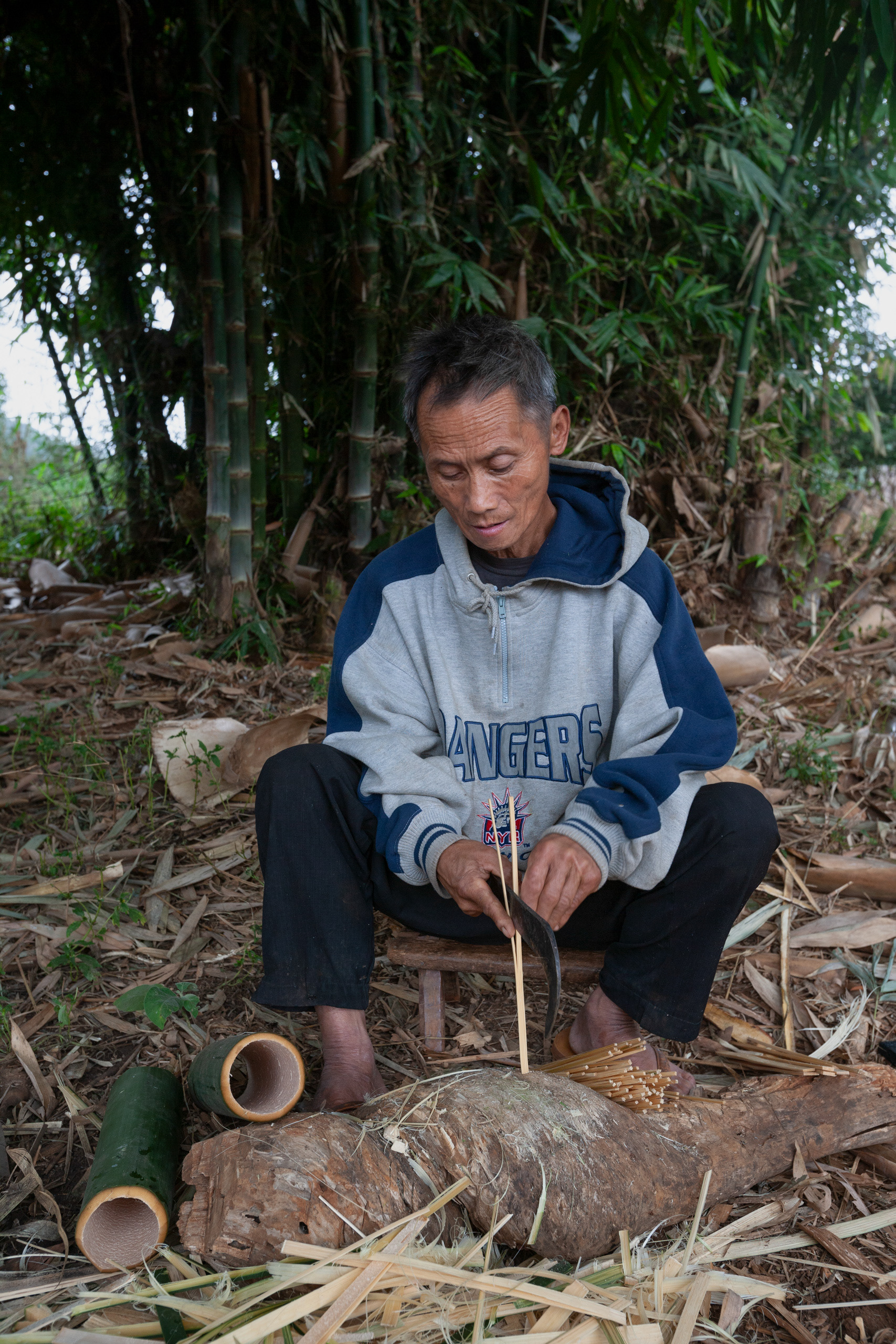
Ban Tha Chok-19
A man splitting strands of bamboo so they can be woven into a variety of items, including baskets, December 7, 2006.
Ban Tha Chok-20
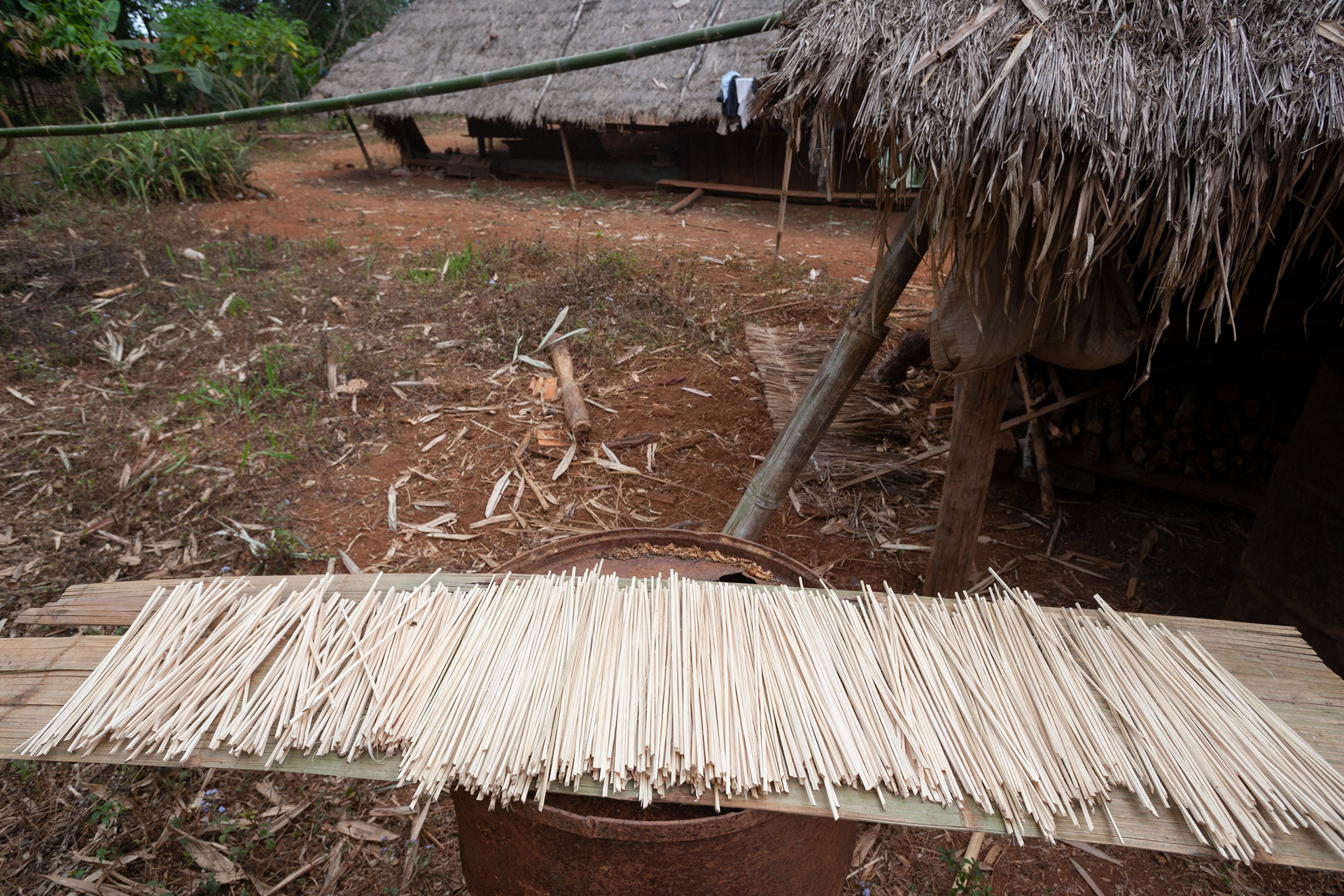
Fresh-cut bamboo strips must dry before they can be used to make baskets and other household items. Such work is traditionally done by men, December 7, 2006.
Ban Tha Chok-21
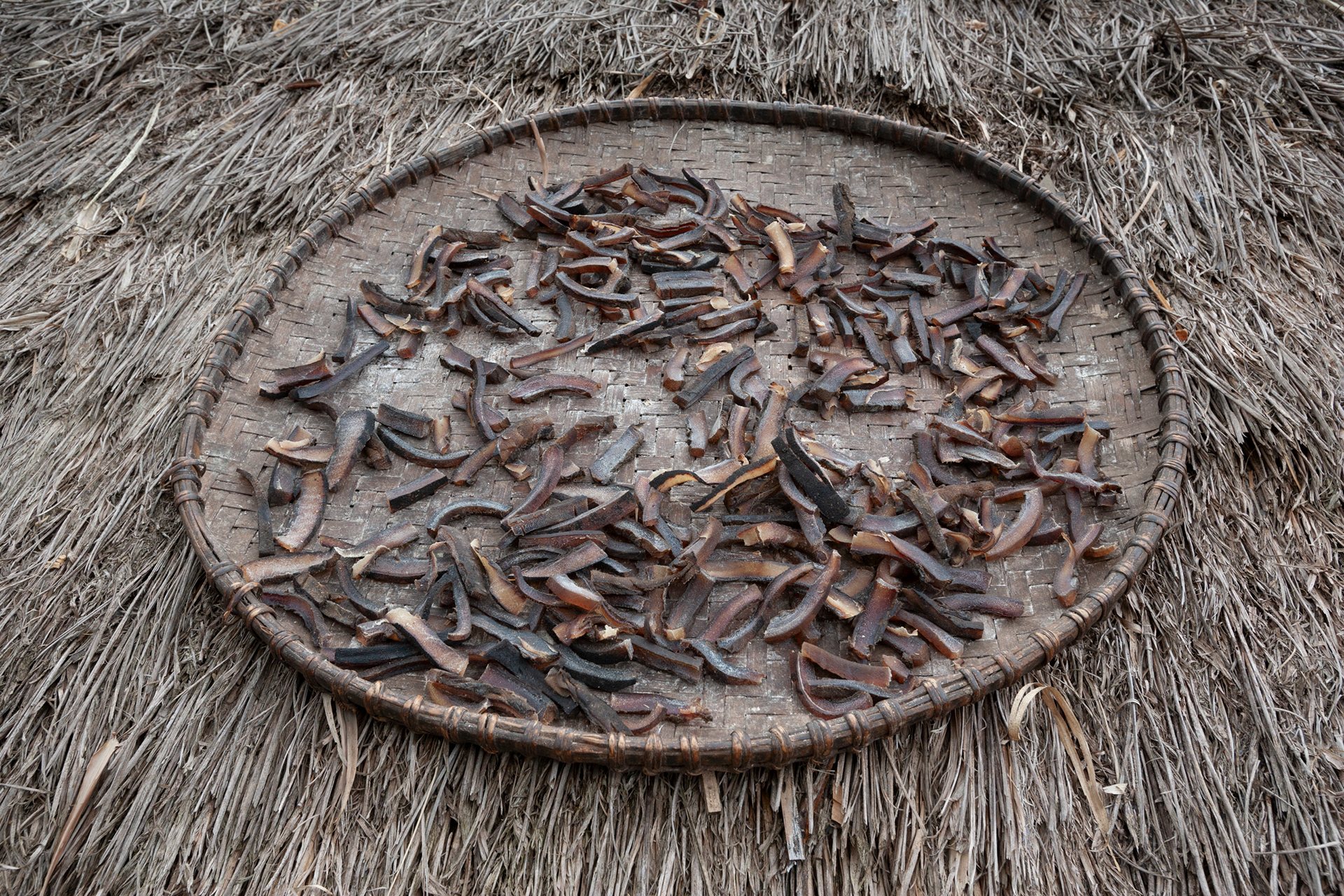
Strips of buffalo skin drying on the thatched roof of a Hmong house, December 7, 2006.
Ban Tha Chok-22
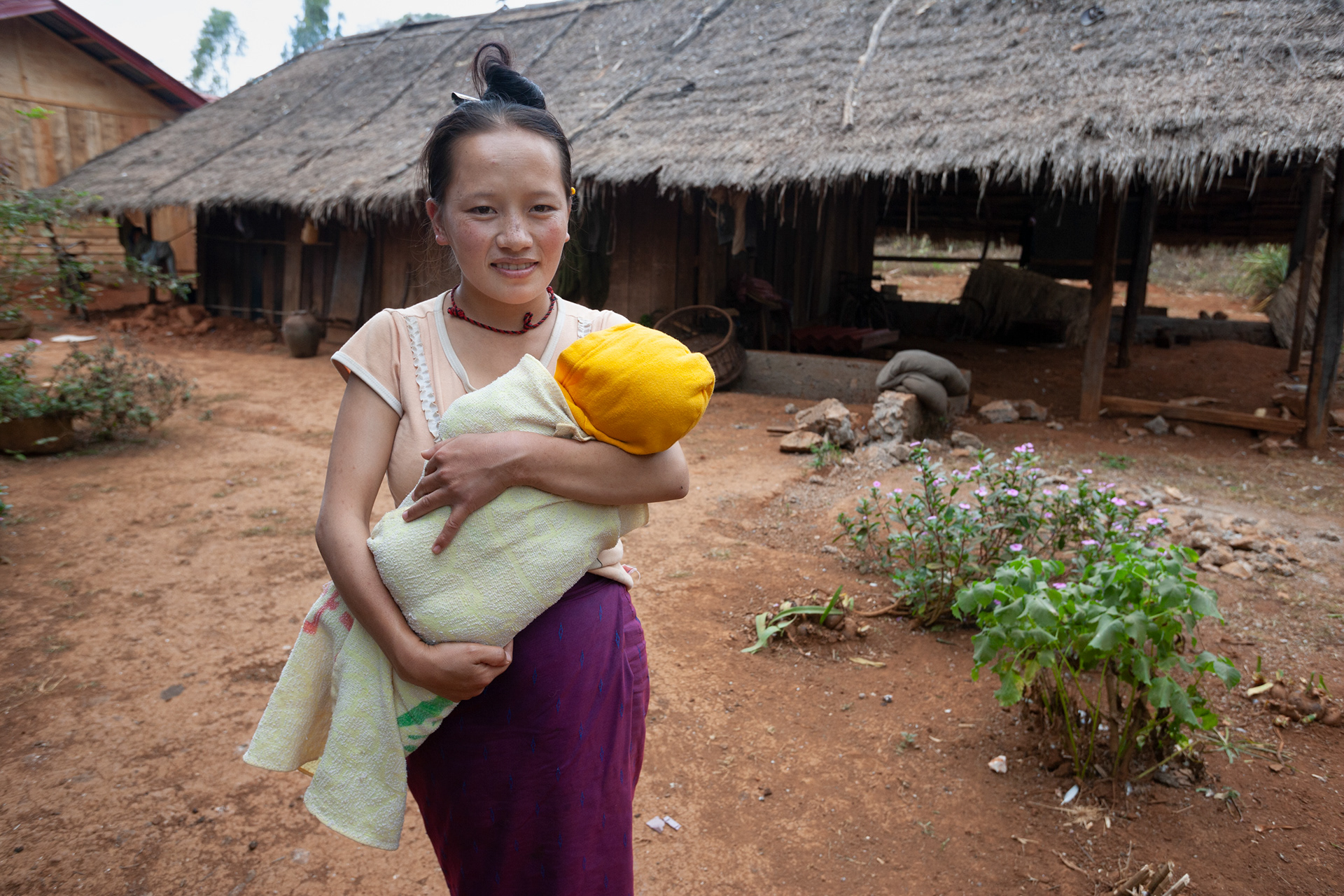
A young woman with a newborn baby, December 7, 2006.
Ban Tha Chok-23
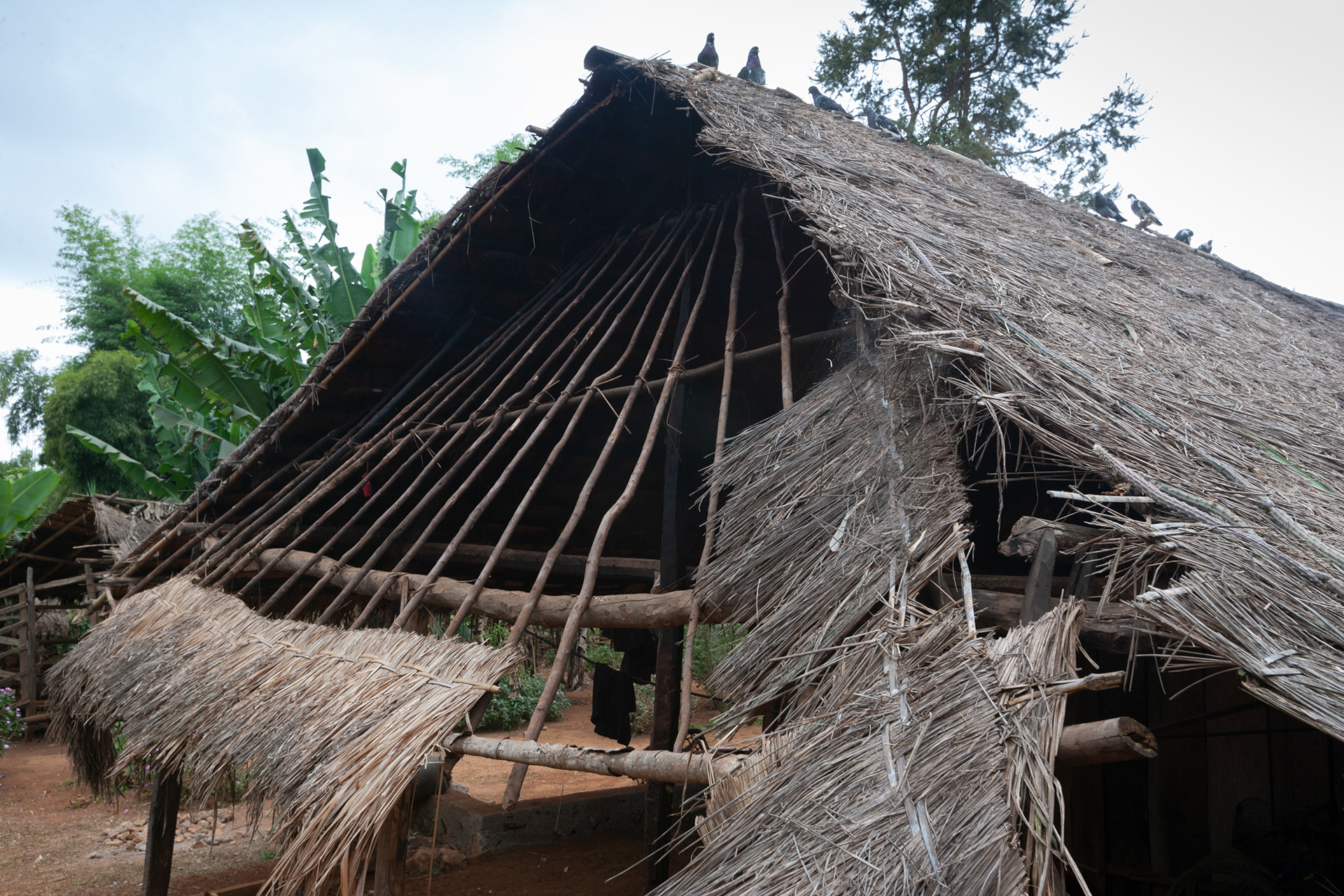
A thatched roof in need of repair and refurbishing. Such work is never-ending for Hmong and other ethnic villagers in Laos. For this reason, traditional thatched roofs have been disappearing rapidly throughout the country as they are replaced with much more expensive, but more permanent, corrugated tin roofs. December 7, 2006.
Ban Tha Chok-24
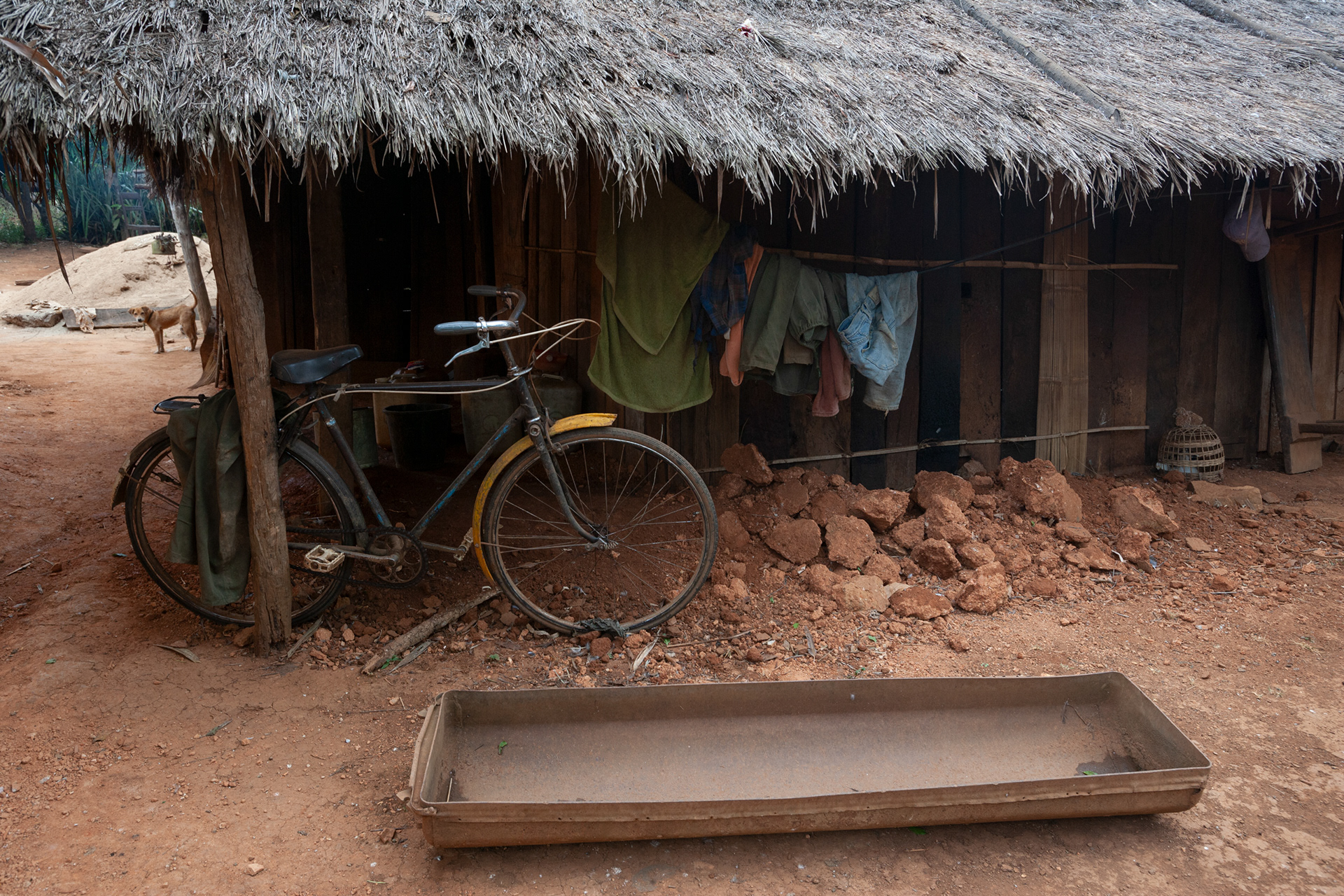
Scrap metal from bomb casings has been fashioned into a feed trough for pigs, December 7, 2006.
Ban Tha Chok-25
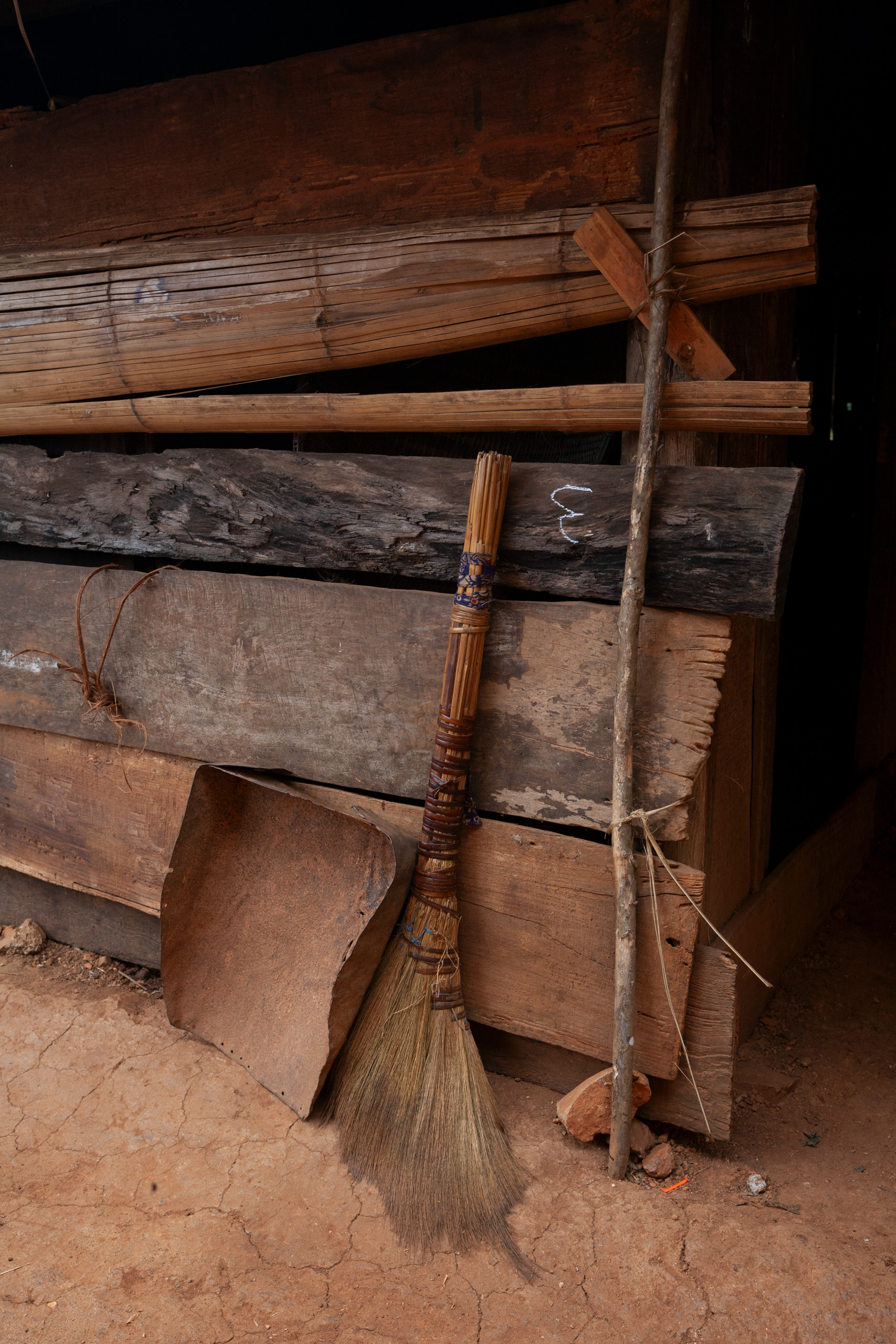
A scrap metal dust bin is paired with a handmade broom, December 7, 2006.
Ban Tha Chok-26
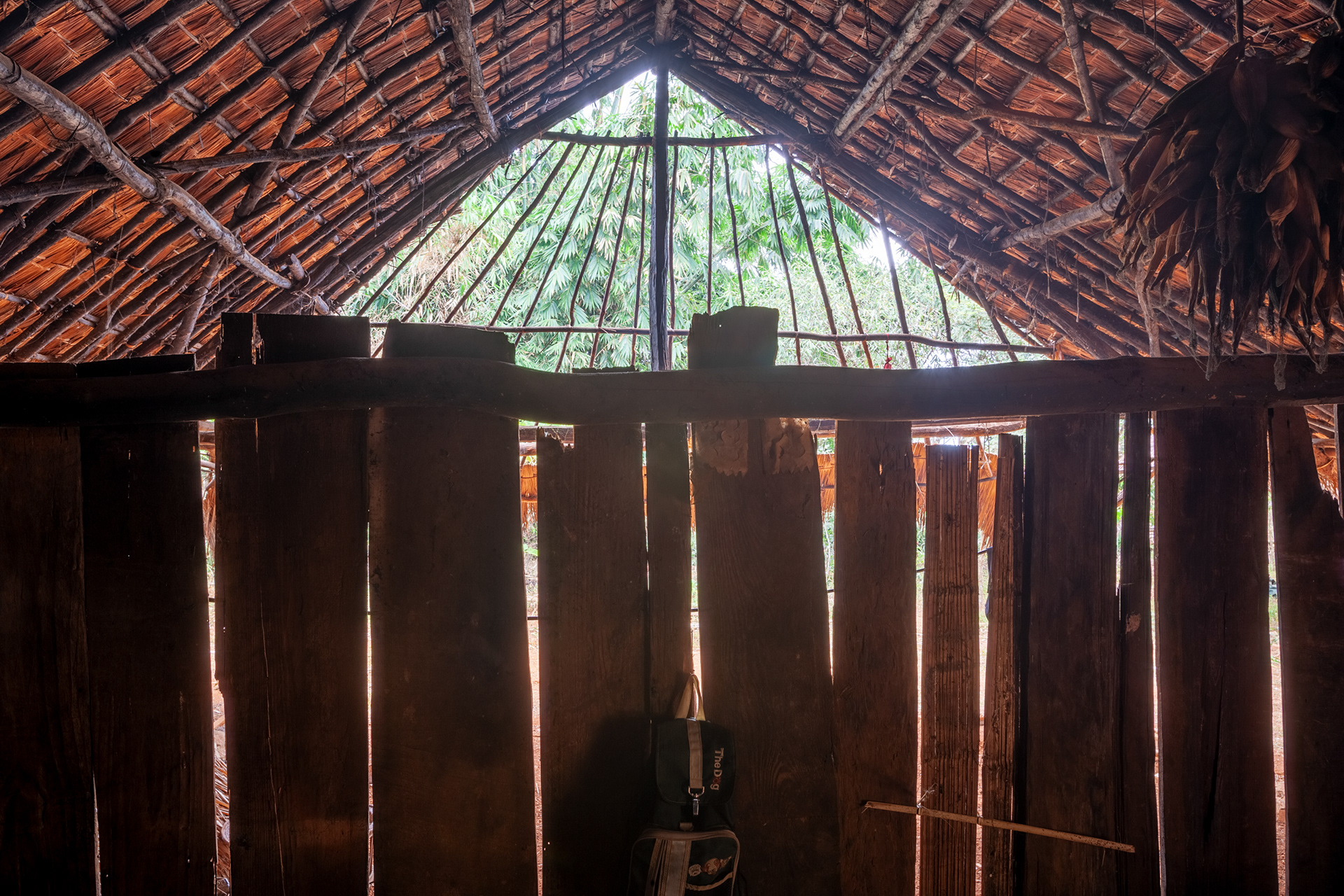
The view looking out the back end of a traditional Xiang Khouang-style wooden house with thatch roof, December 7, 2006.
Ban Tha Chok-27
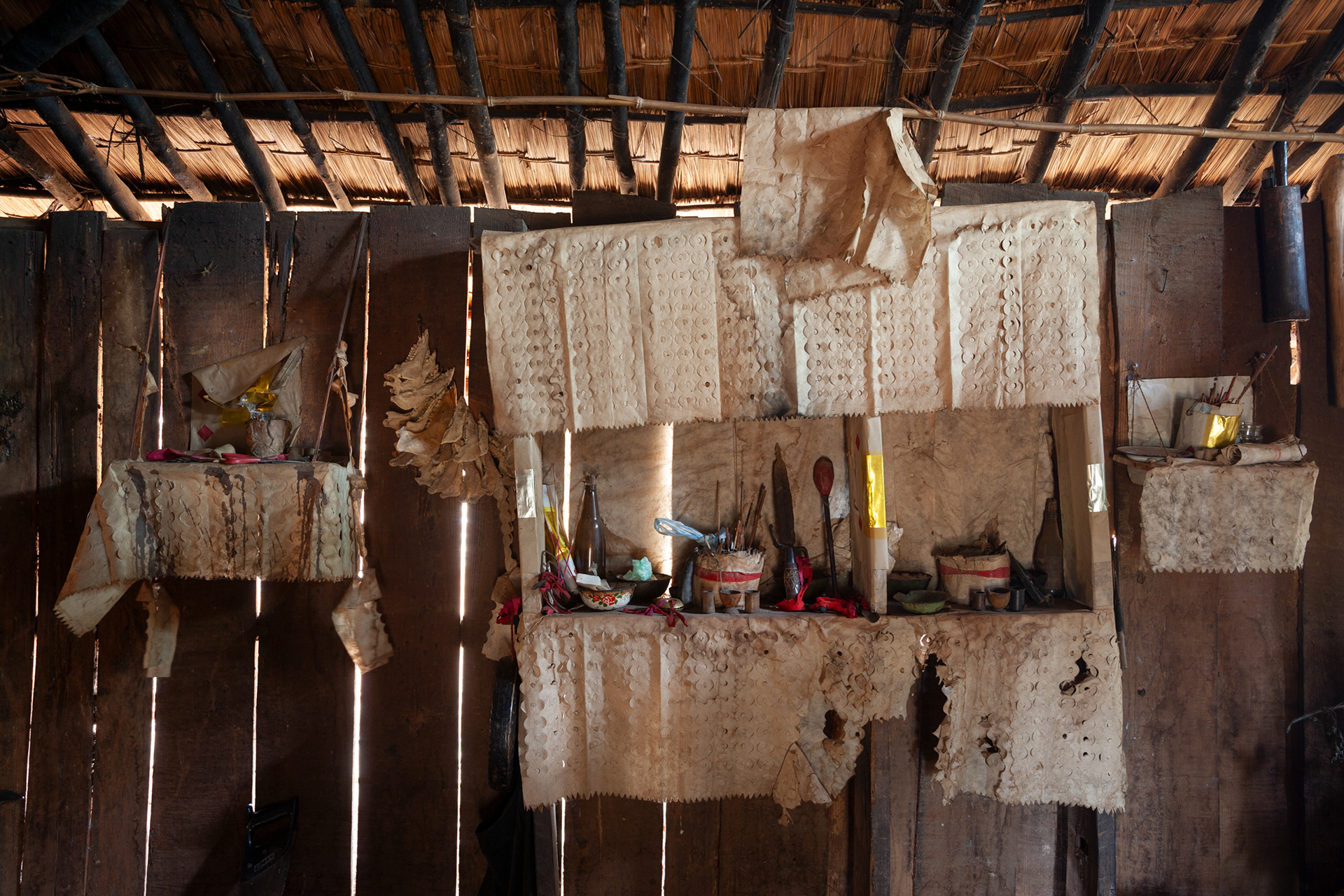
A shamanic altar in a typical village house. A stack of pig’s jaws (center left) shows how many ceremonies have taken place in the past year.
The dirty, tattered spirit money covering the altar is overdue for replacement,
December 7, 2006.
Ban Tha Chok-28
Interior view of a typical Xieng Khouang-style village house. In winter, fires are often kept burning around the clock as nighttime temperatures often reach zero degrees Celsius (32 degrees Fahrenheit). Daytime highs in winter hover in the low seventies Fahrenheit, which villagers find uncomfortably cold.
My guide, Long Vang, told me that early courtship between Hmong teens often begins with ‘secret’ conversations whispered through the gaps in walls like these. Photo: December 7, 2006.
Ban Tha Chok-29
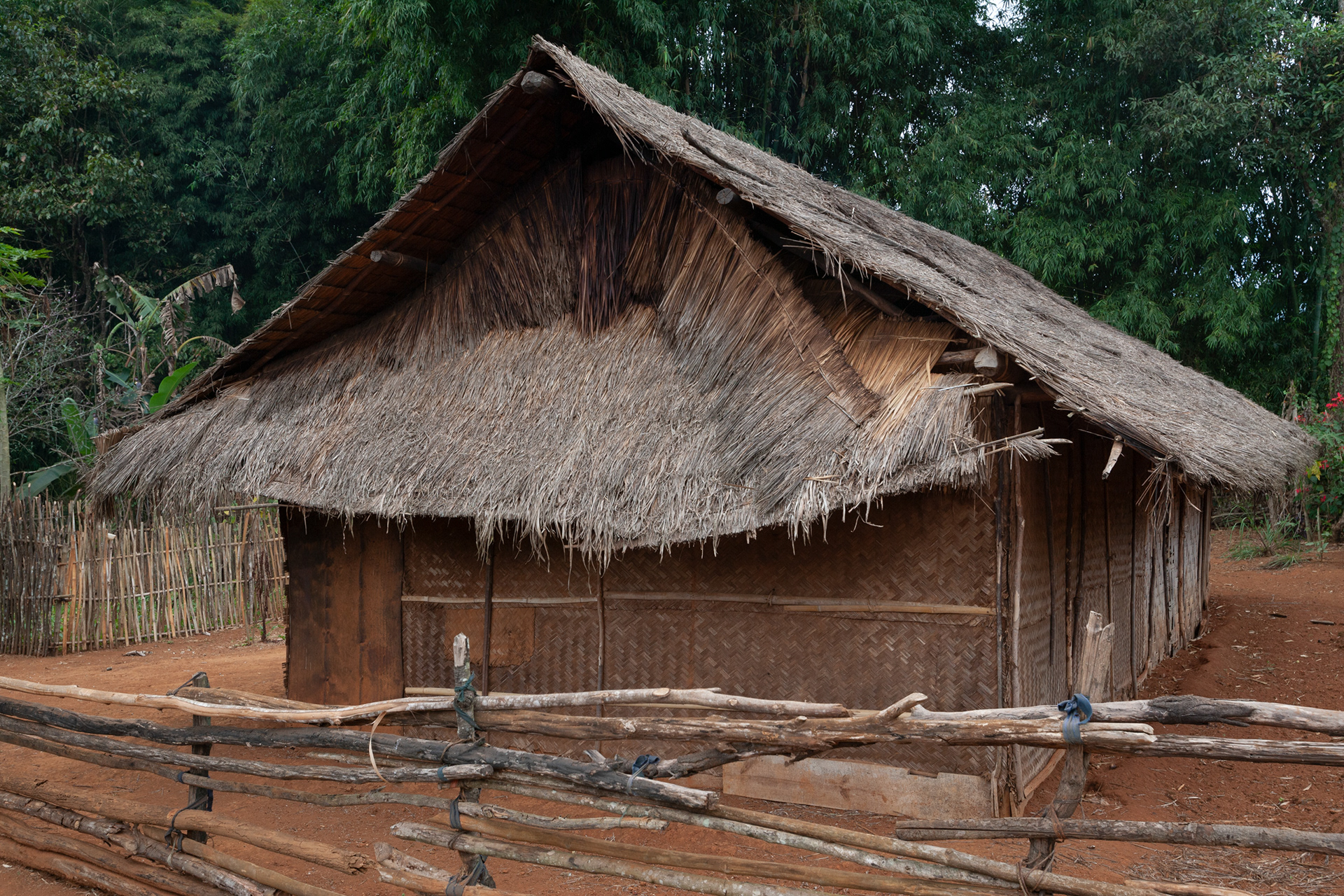
A good specimen of a traditional Hmong house whose thatched roof is in need of repair. Its walls are woven from bamboo strips.
Hmong houses are easily recognizable in Laos by their ground-level construction on packed-earth floors.
Most of the country’s seventy-plus ethnic groups build their homes on stilts to create shelter from rain and sun for both people and livestock.
The Hmong pack and shape the earth to control drainage and keep the interior dry, December 7, 2006.
Ban Tha Chok-30
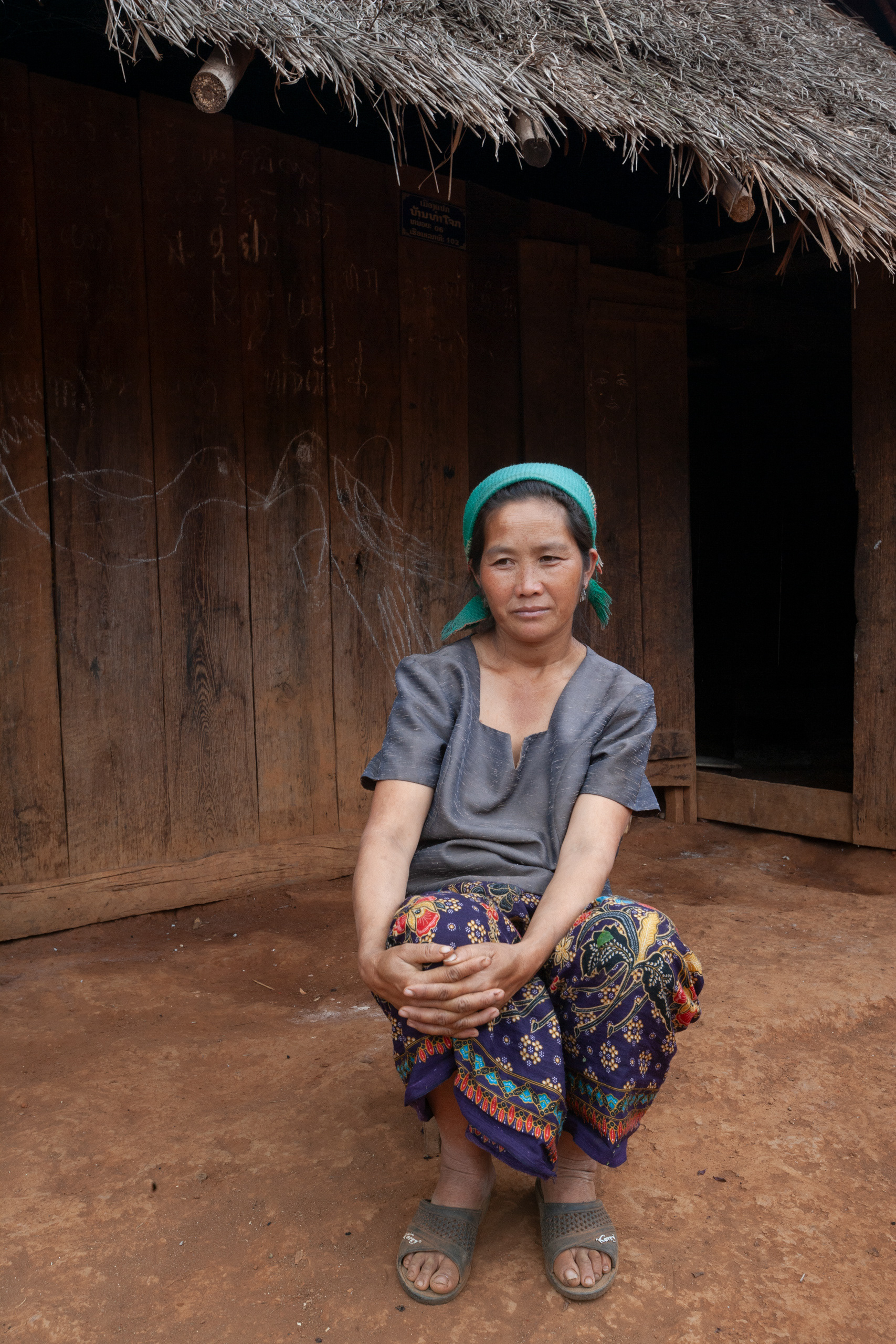
A woman sits in front of her packed-earth, thatched roof house, December 7, 2006.
Ban Tha Chok-31
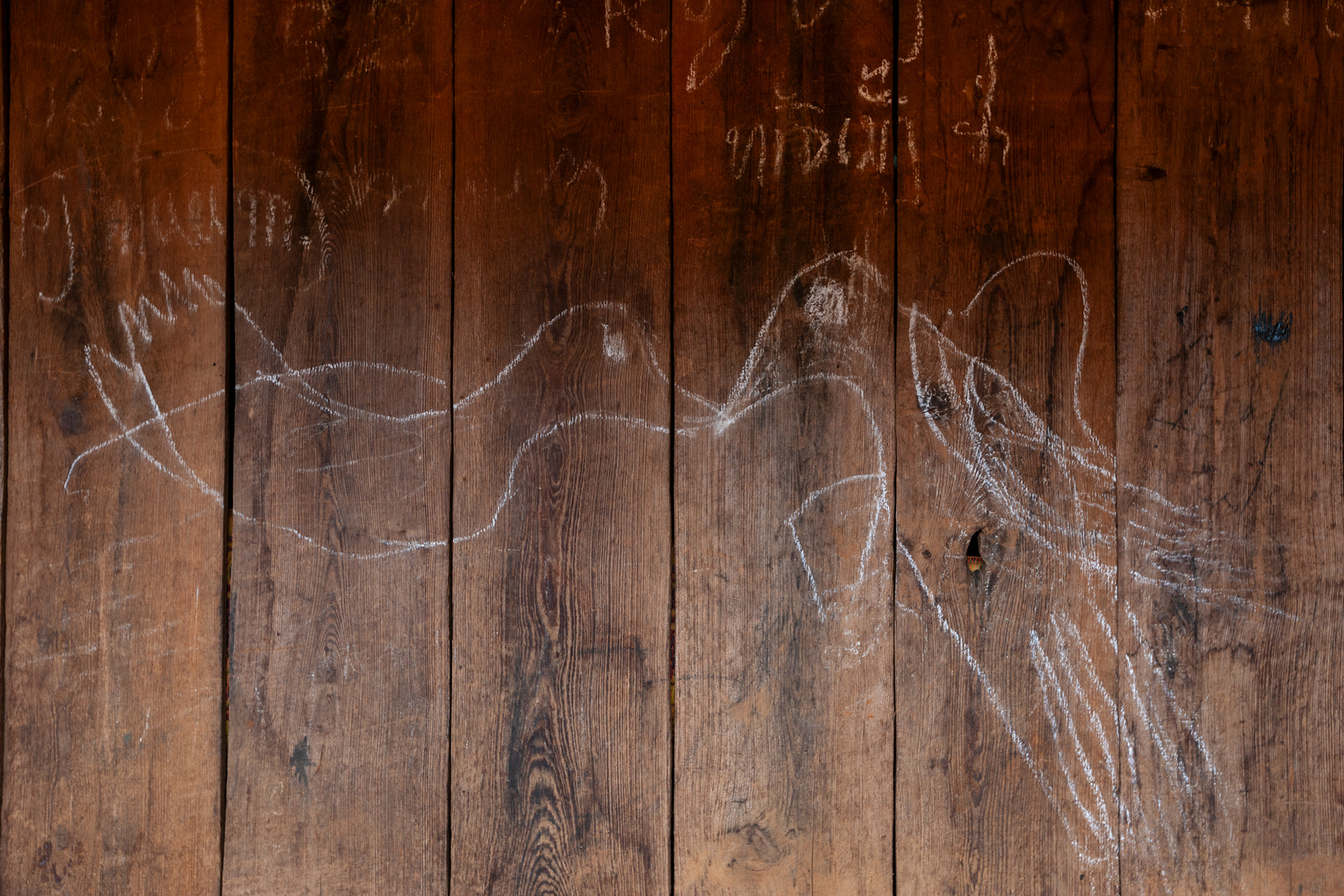
The children of this household have made a chalk drawing on the outside wall of their house and scribbled graffiti in Lao script. Translation: “so-and-so likes such-and-such person (of the opposite gender)."
December 7, 2006
Ban Tha Chok-32
A coffin outside of a home signals that a person who lives there is expected to die soon. Hmong burial caskets are constructed entirely of wood, using dowels instead of nails. Hmong burial custom does not permit the use of any metal other than silver in the burial process.
Before the Secret War, the deceased were sometimes buried with their valuable silver jewelry to pay their way in the afterlife. After the fall of the Royal Lao Government in 1975, Hmong silver Jewelry was mostly used up paying for safe passage or hiring boatmen to cross the Mekong River to Thailand.
Ban Tha Chok-33
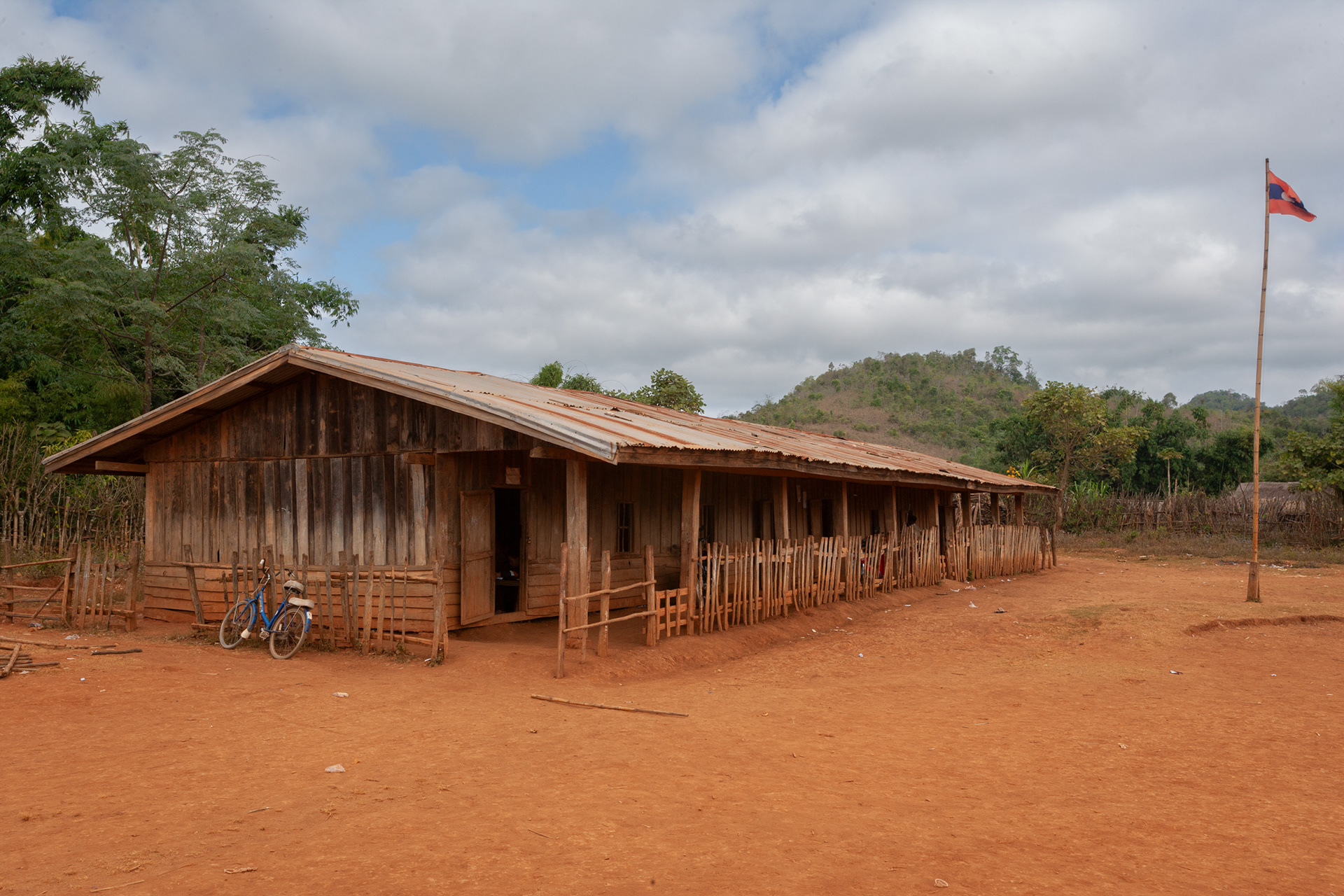
This small school serves about eighty families, December 7, 2006.
Ban Tha Chok-35
Two mother pigs and their offspring, December 7, 2006.
Ban Tha Chok-36
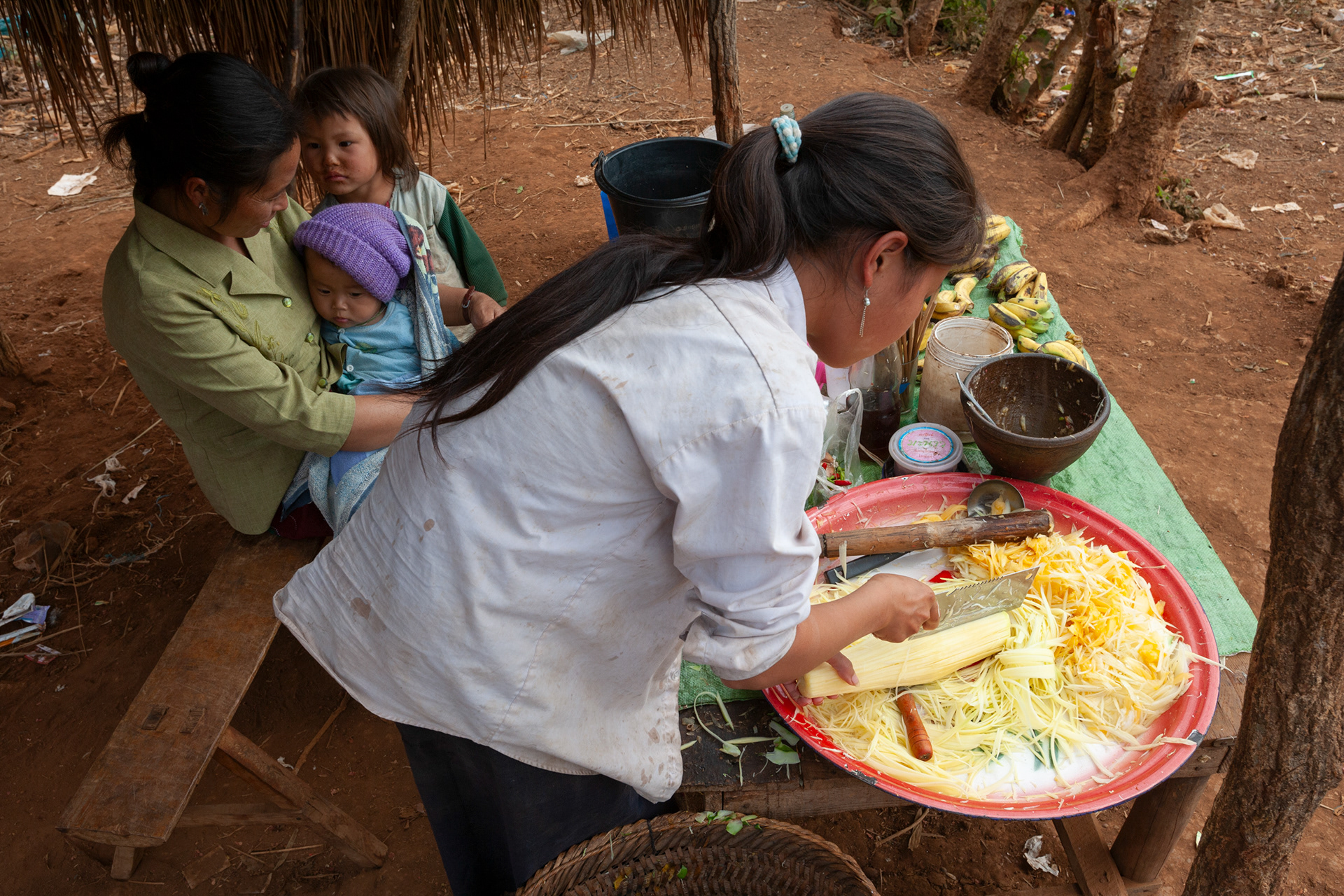
Cutting up green papayas for a spicy salad, the most popular snack sold throughout the country of Laos, December 7, 2006.
Ban Tha Chok-37
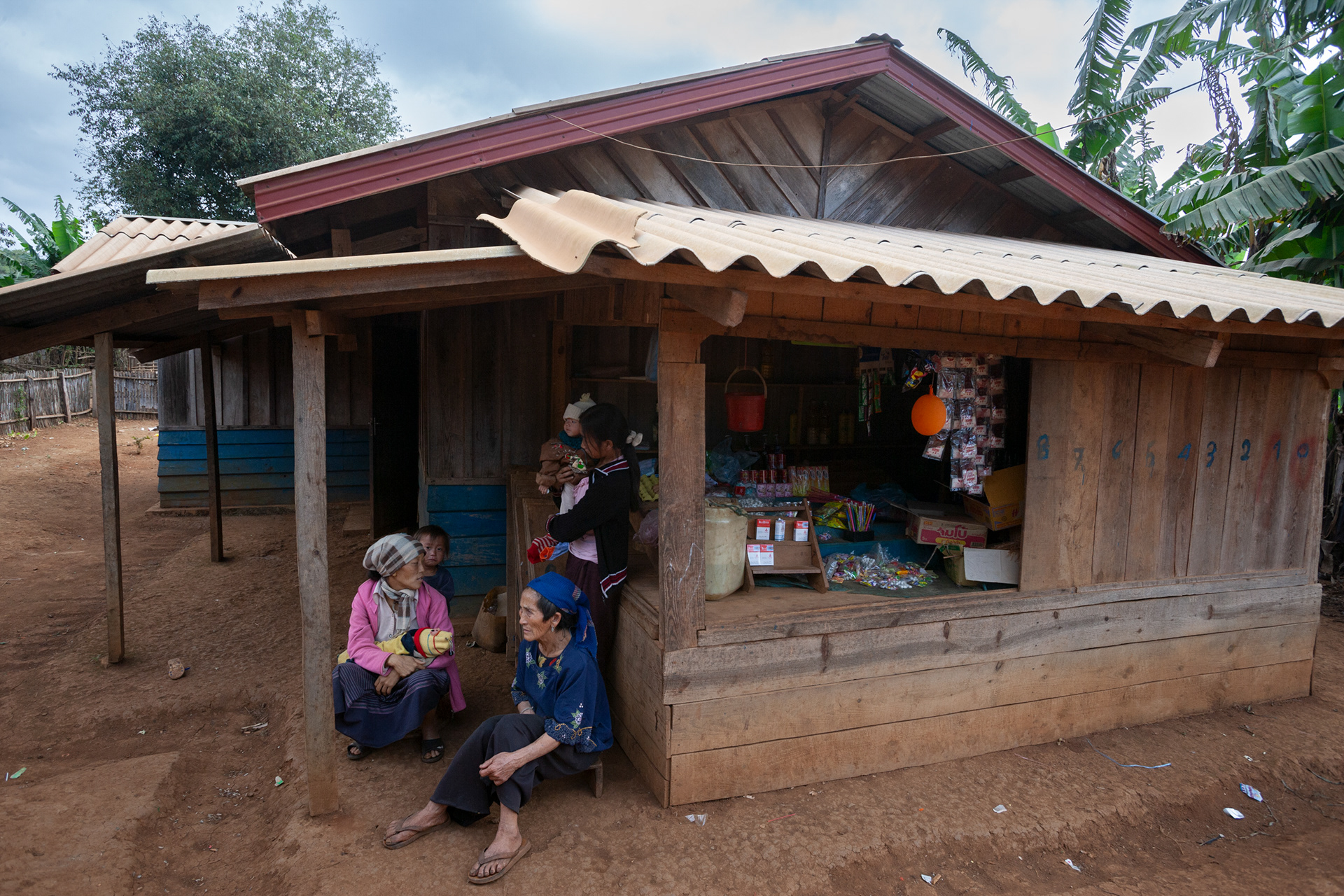
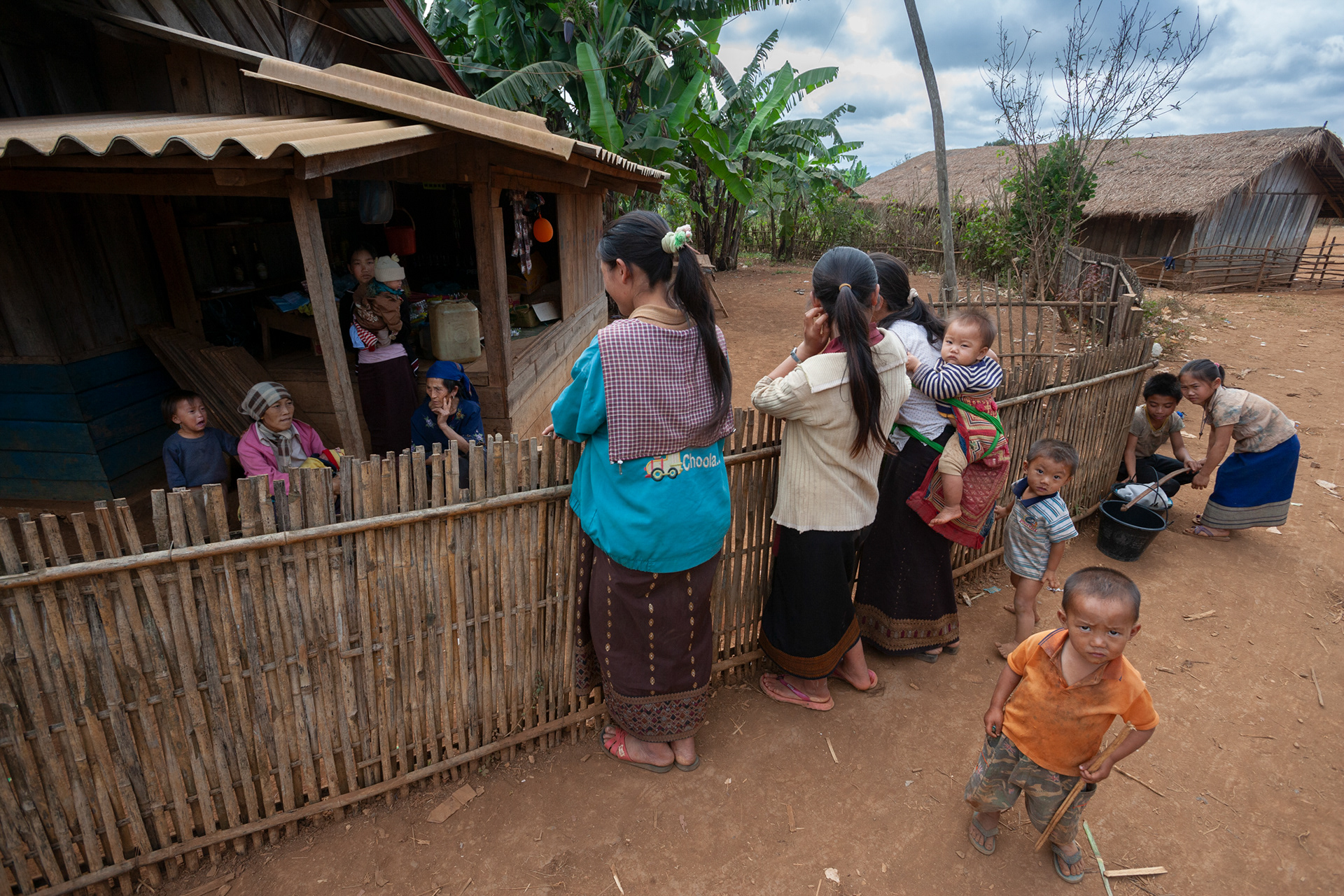
This small shop attached to a home brings the family much-needed cash income, December 7, 2006.
Ban Tha Chok-38
The small family-operated shop provides a popular hangout for socializing, December 7, 2006.
Ban Tha Chok-39
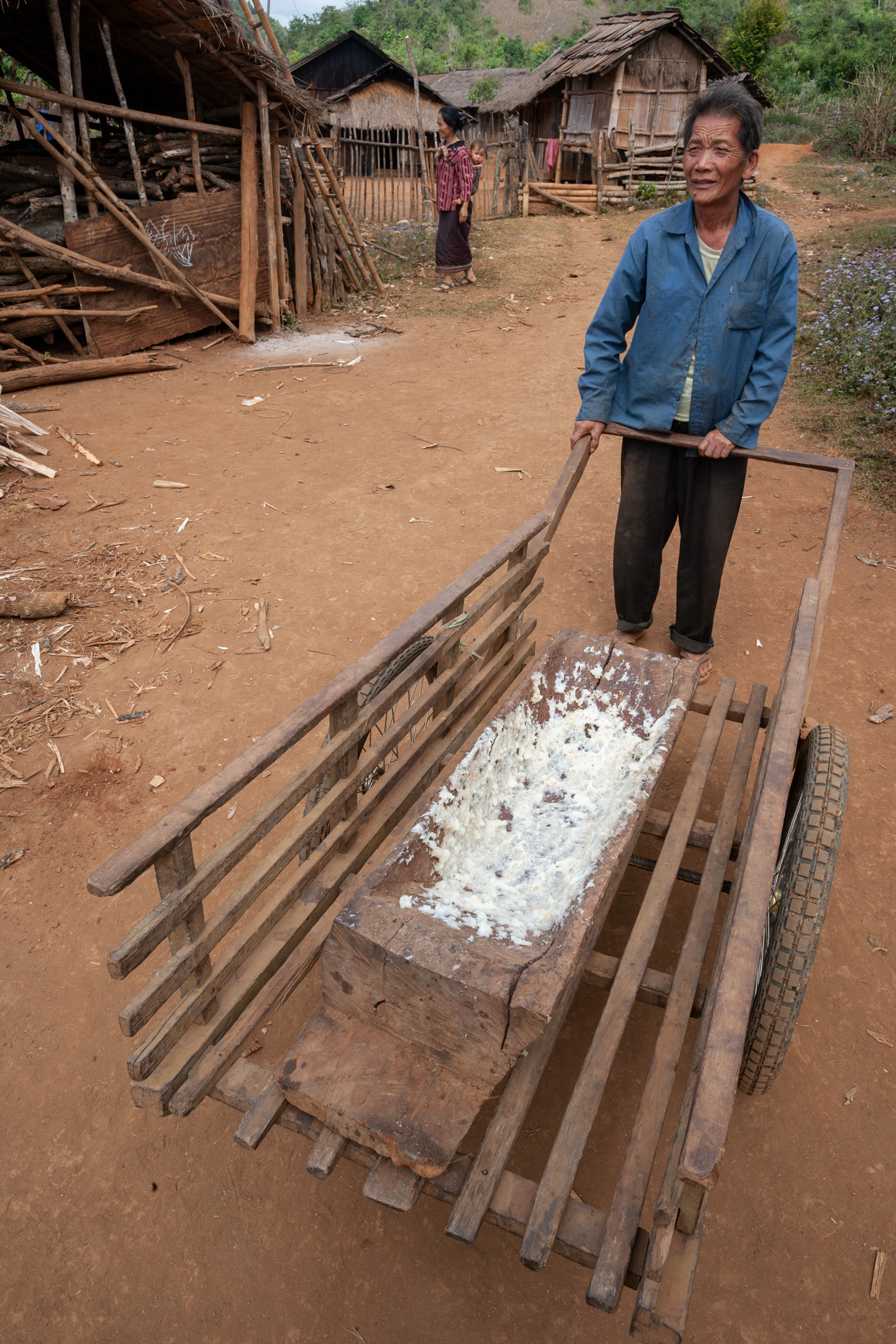
This man with a cart has just sold out a batch of ncauv, a pounded sticky rice confection that is often compared to Japanese mochi. This snack is very popular during Hmong New Year after the harvest is finished, December 7. 2006.
Ban Tha Chok-41
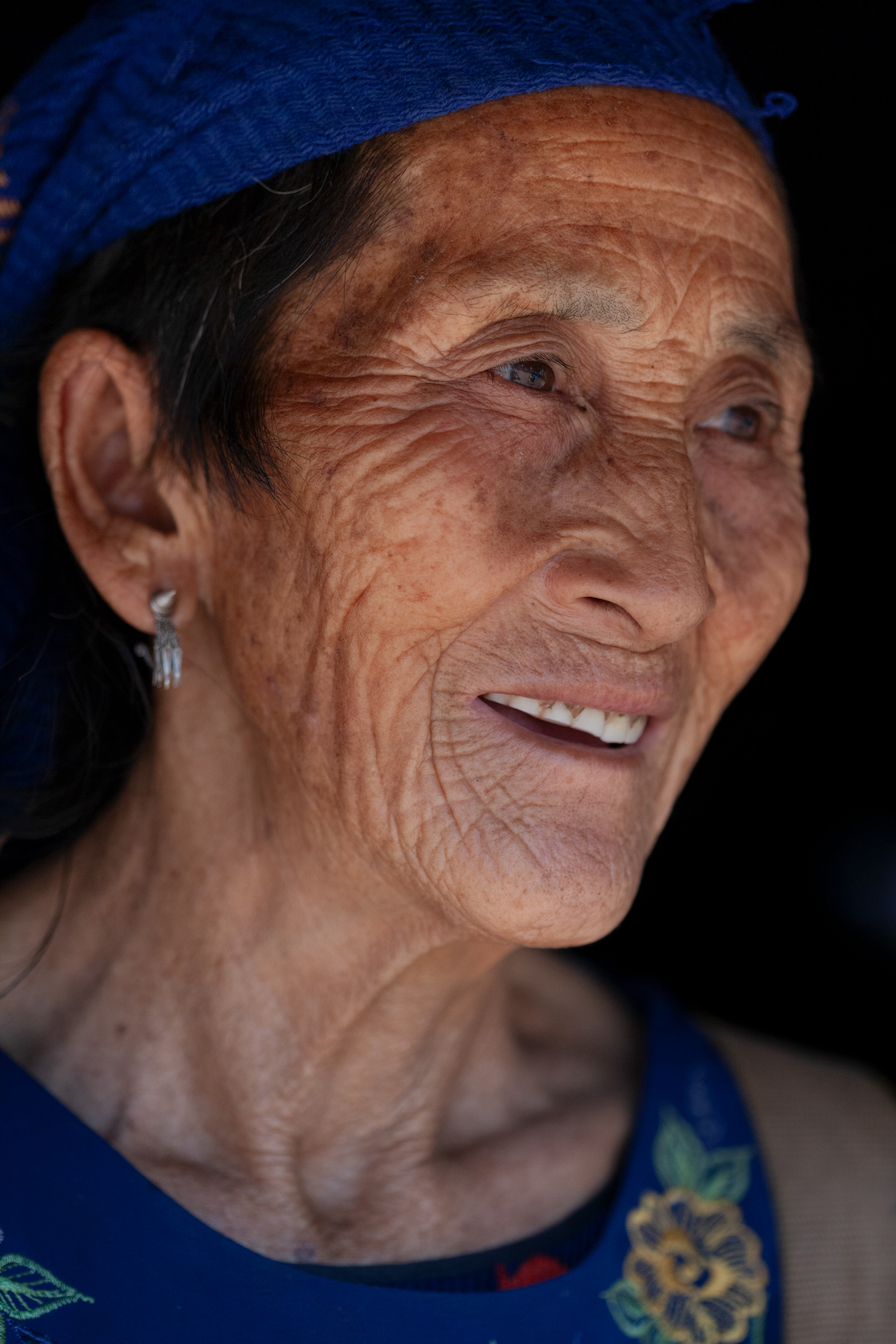
A middle aged Hmong woman with worn teeth. This may be caused by an abrasive, high fiber diet, unilateral chewing due to a painful tooth, or a misalignment of the jaw. Access to competent dentistry is almost non-existent in Hmong villages, December, 7, 2006.
Ban Tha Chok-40
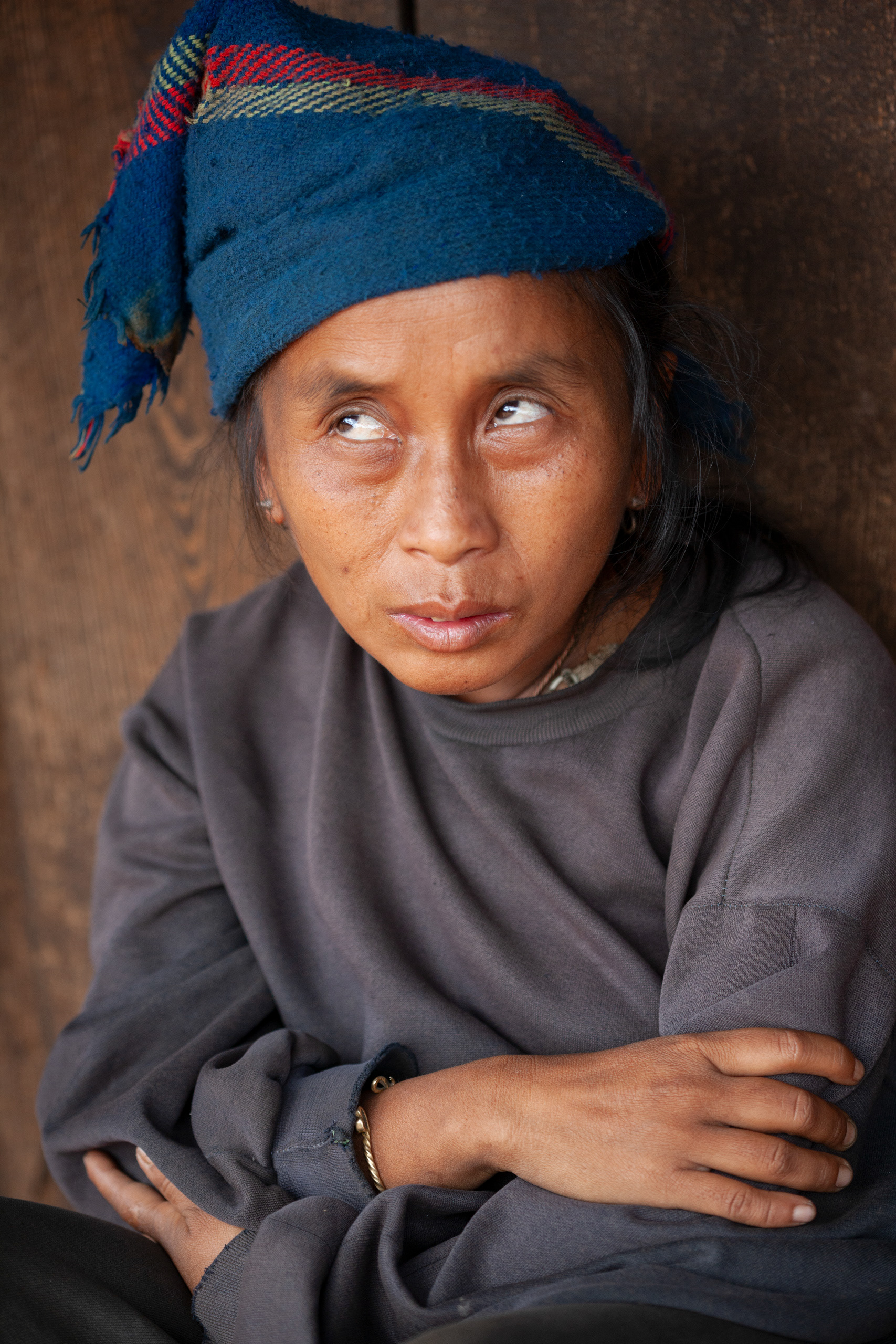
A Hmong woman with untreated strabismus. This eye condition can be caused by childhood infections or trauma, followed by a lack of access to early pediatric vision care. If such vision problems are not diagnosed and treated early, they often become more severe as the person ages, December 7, 2006
Ban Tha Chok-42
A fence constructed from half bomb casings, remnants of American bombing during the Secret War. Photo: December 7, 2006.
Ban Tha Chok-43
A corn grinding rig (foreground) and a very long fence made from half bomb casings, remnants of American bombing during the Secret War. Photo: December 7, 2006.
Ban Tha Chok-44
Corn and pumpkins stored in an above-ground granary, December 7, 2006.
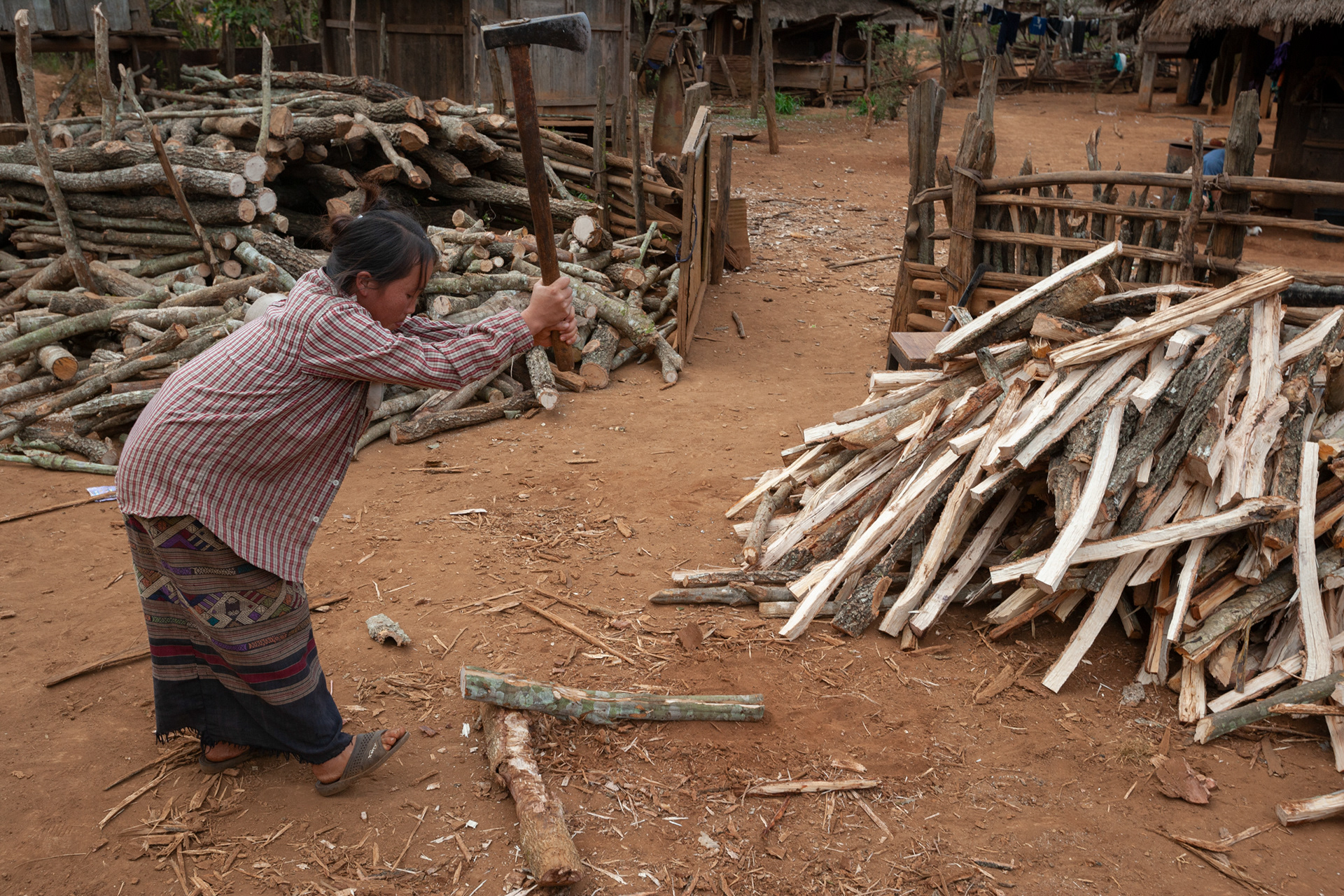
Ban Tha Chok-45
Chopping wood, is a constant chore during cold winters at the village’s altitude of nearly 4,000 feet. December 7, 2006.
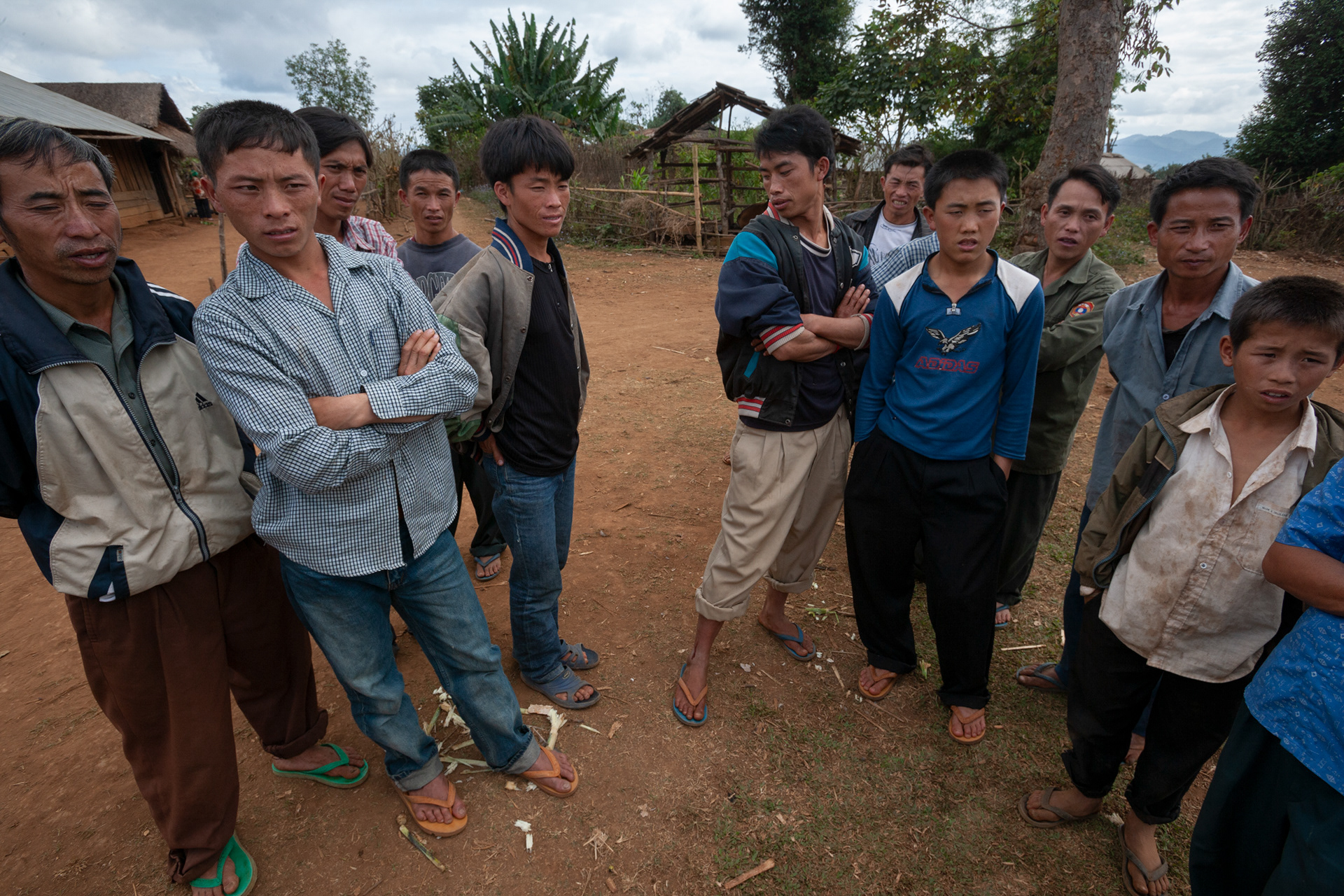
Ban Tha Chok-46
Men milling about outside of a house where a funeral is taking place, December 7, 2006.
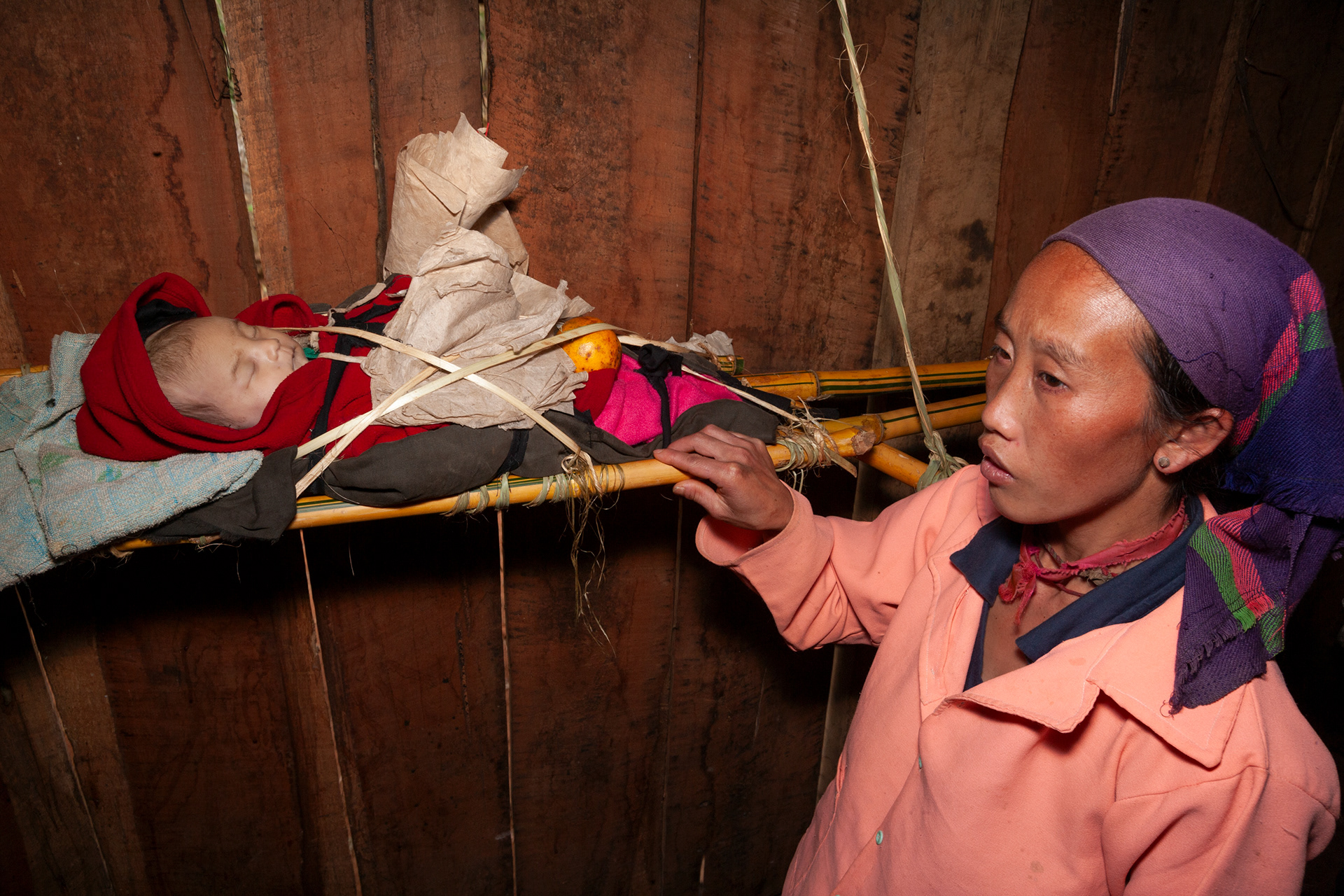
Ban Tha Chok-47
Nee Vang mourns the passing of her eighth child from waterborne disease. She is 24 years old.
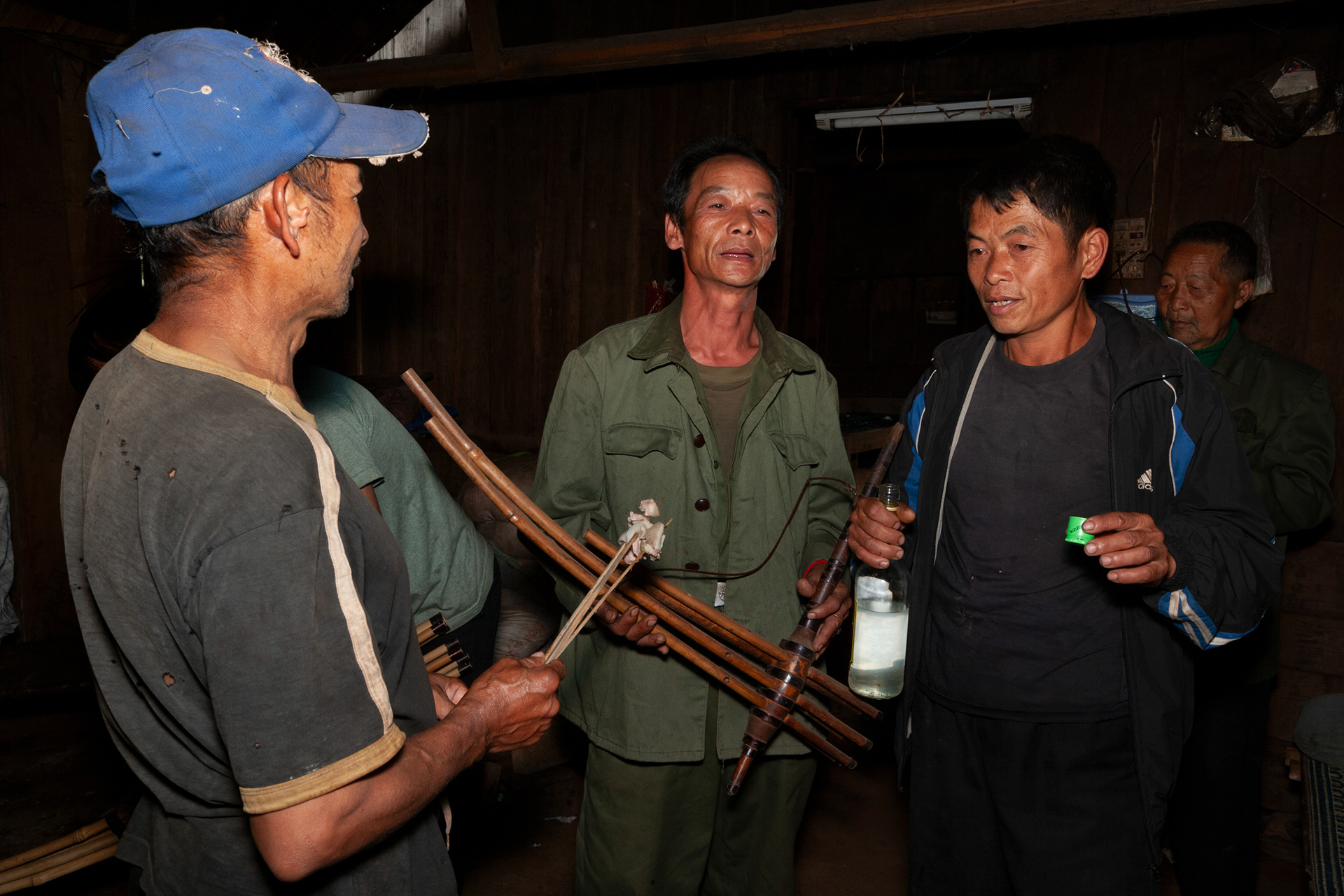
Ban Tha Chok-48
Two qeej players (pronounced “keng”), a man who will burn spirit money (left), and a family member (right) share a shot of lao lao (rice liquor). The men at this funeral are drinking heavily, December 7, 2006.
Ban Tha Chok-49
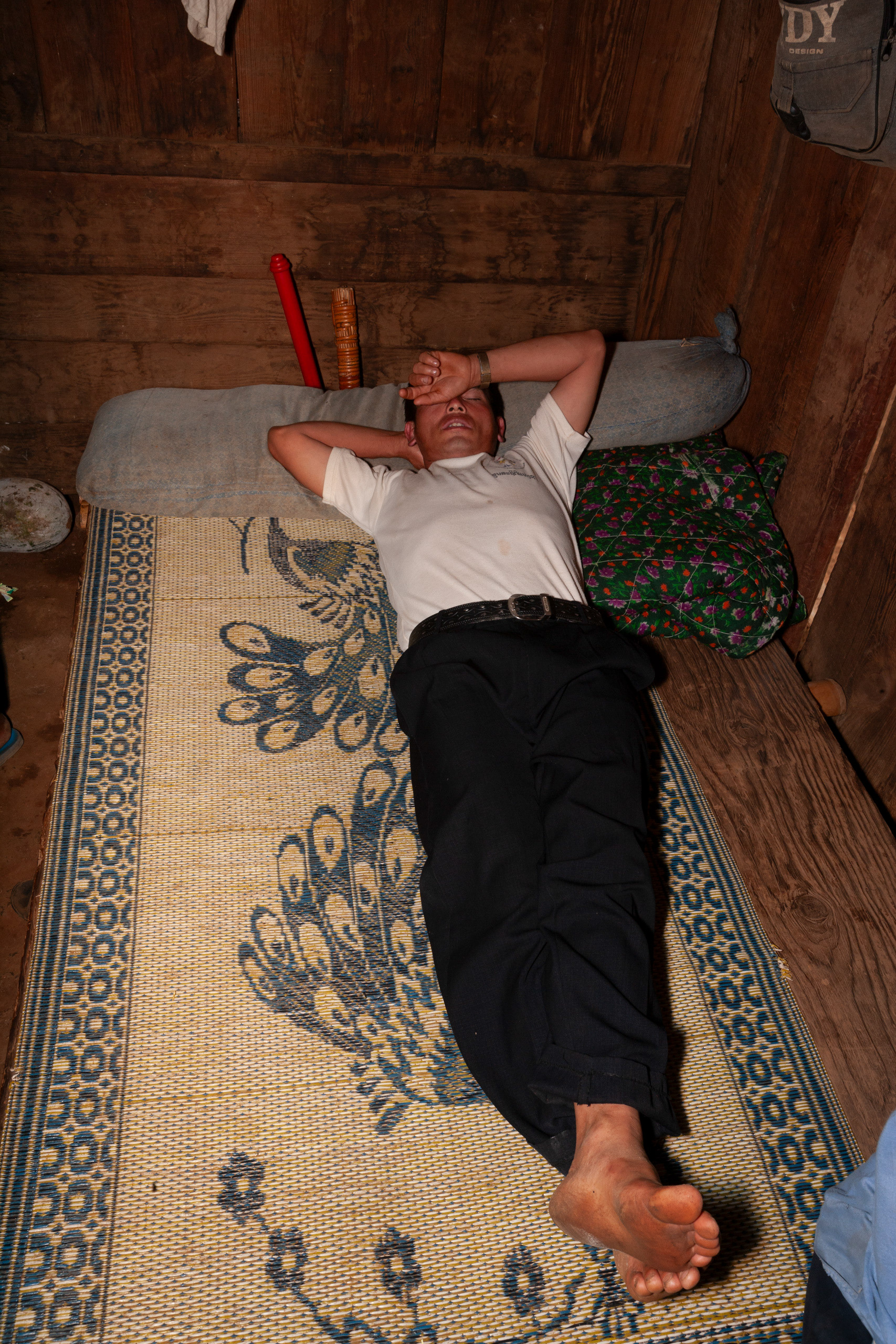
This man is so inebriated, he has to lie down, December 7, 2006.
Ban Tha Chok-50
Nee Vang (left) and her sister mourn the passing of Nee’s infant son. Hmong funeral custom requires round-the-clock mourning for two days. Every two or three hours, these sisters will get a break as other relatives fill in for them, so that the mourning remains continuous. Mourning at Hmong funerals is expected to be demonstrative with lots of theatrical crying and emotion, December 7, 2006.
Ban Tha Chok-51
The father of the deceased child (center) prepares to burn a pile of spirit money that he has just laid on the ground. A qeej player sweeps the area to chase away dab (pronounced “da!”), evil spirits that could bring further harm to the family and the soul of the deceased, December 7, 2006.
Ban Tha Chok-52
The qeej player continues to prowl the home for dab as the spirit money catches flame. The Hmong spirit realm is strongly connected to ancestors. The burning money is intended to settle old clan debts and pay the deceased person’s way for a safe passage through the spirit world, December 7, 2006.
Ban Tha Chok-53
The burning spirit money fills the home with sparks and smoke as the mourners caress the deceased infant, December 7, 2006.
Ban Tha Chok-54
The second qeej player circles the drum player, who keeps a steady beat, December 7, 2006.
Ban Tha Chok-55
The young mother and her sister caress the deceased baby, who is bundled with swaddling, spirit money and an orange to sustain the soul on its journey through the spirit world, December 7, 2006.
Ban Tha Chok-56
Outside, the men of the clan collect monetary donations from visitors to help pay for the funeral and drink heavily, December 7, 2006.
Ban Tha Chok-57
The designated record keeper records each donation in a notebook and thanks the donor as the father of the deceased infant looks on. December 7, 2006.
Ban Tha Chok-58
The father of the deceased infant adds his thanks to the donors, December 7, 2006.
Ban Tha Chok-60
The men begin challenging each other to drink more and more, December 7, 2006.
Ban Tha Chok-62
The drunken men’s faces each tell a unique story of lived experience, December 7, 2006.
Ban Tha Chok-65
Just before I made the photograph, this drunken funeral participant approached me, thumping his chest and repeating “CIA! CIA!"
Photo: December 7, 2006.
Ban Tha Chok-69
Nee Vang invites Long and me for a lunch break from the funeral at her mother’s house.
She is flanked by her sister, mother and two brothers. There, I make several portraits to give the family, December 7, 2006.
Ban Tha Chok-70
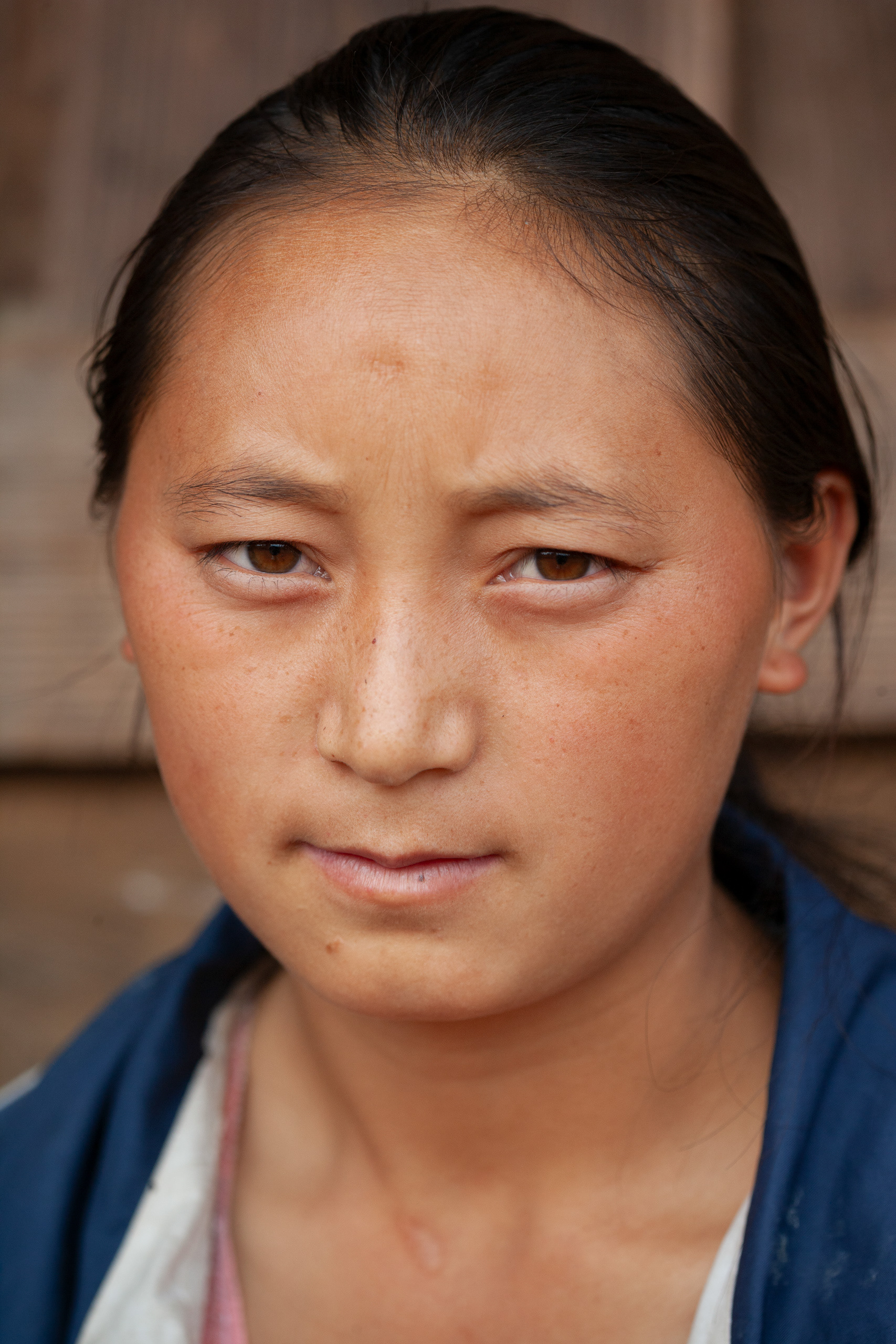
Portrait of Nee Vang, taken while on break from the funeral for her deceased child, December 7, 2006.
Ban Tha Chok-71
Portrait of Nee Vang’s sister, December 7, 2006.
Ban Tha Chok-72
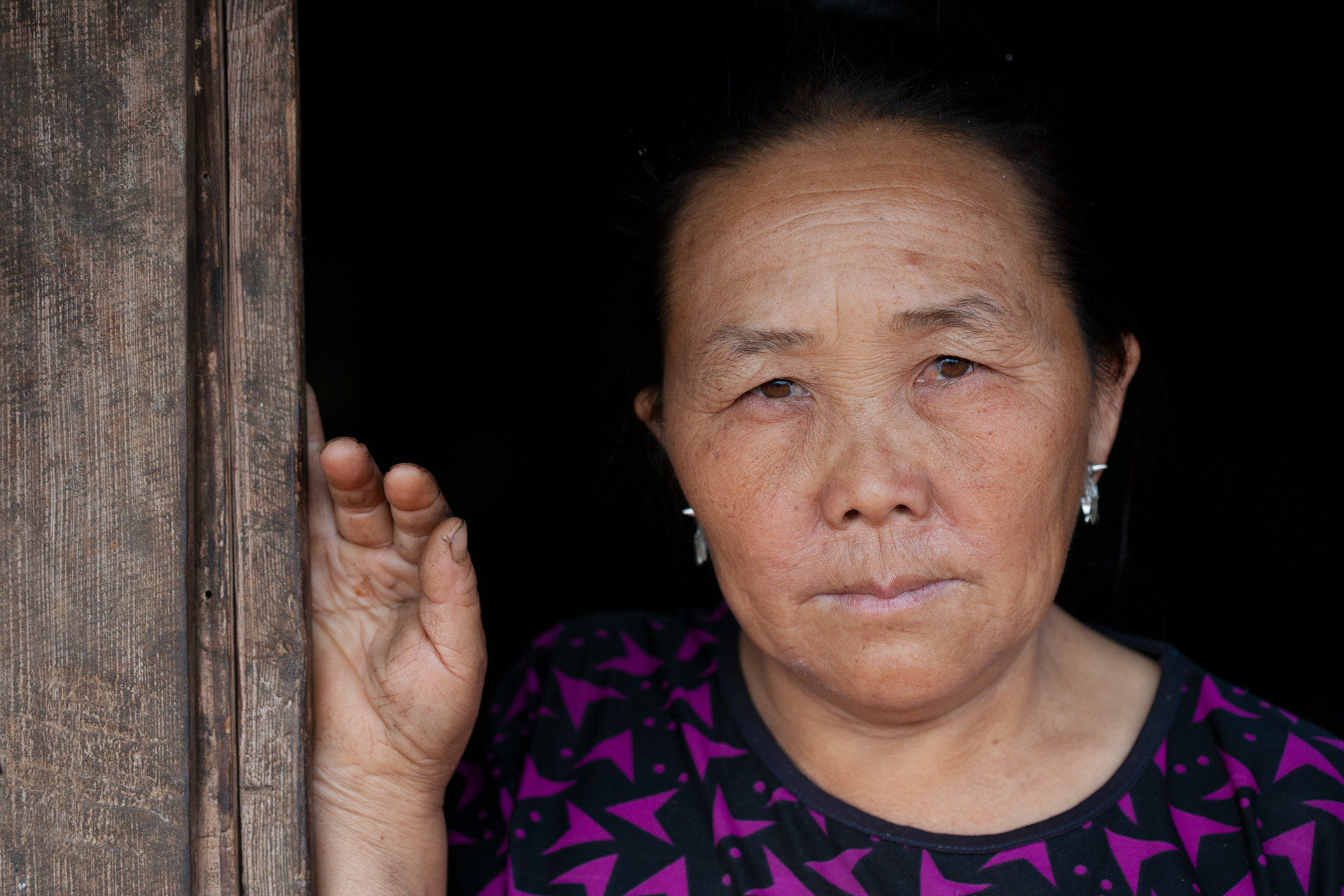
Portrait of Nee Vang’s mother,
December 7, 2006.
Ban Tha Chok-73
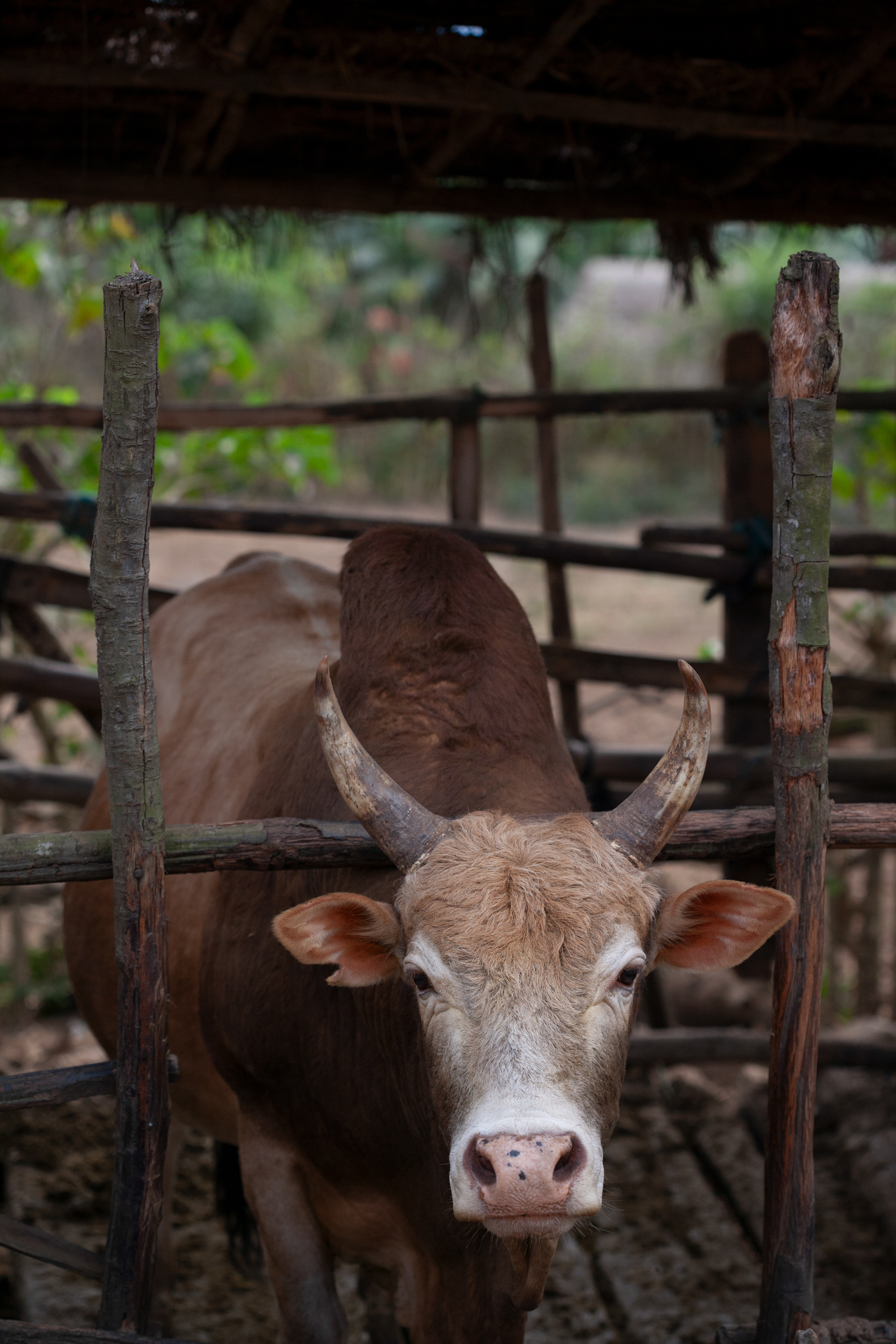
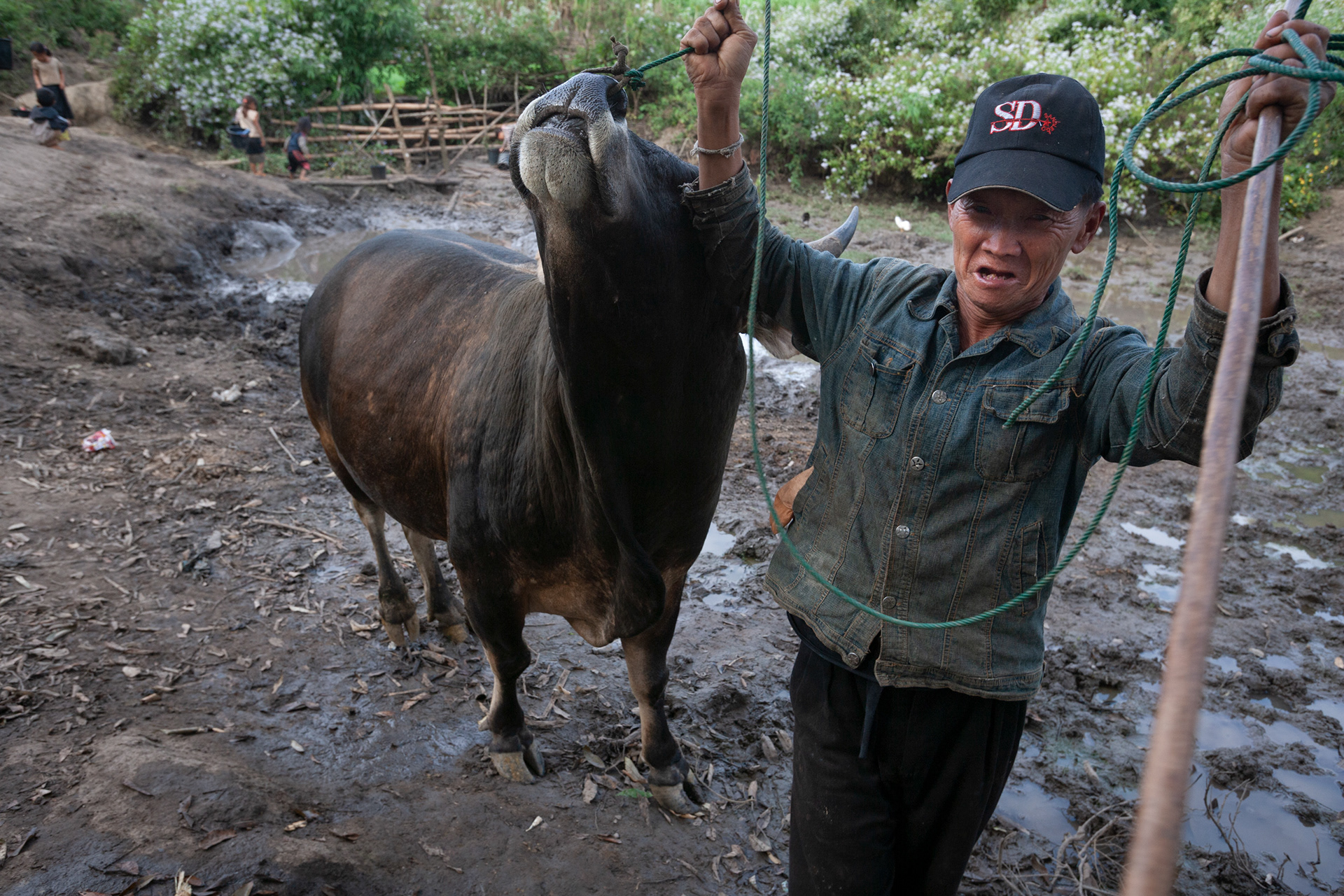
This cow represents significant wealth in a village like Ban Tha Chok, December 7, 2006.
Ban Tha Chok-74
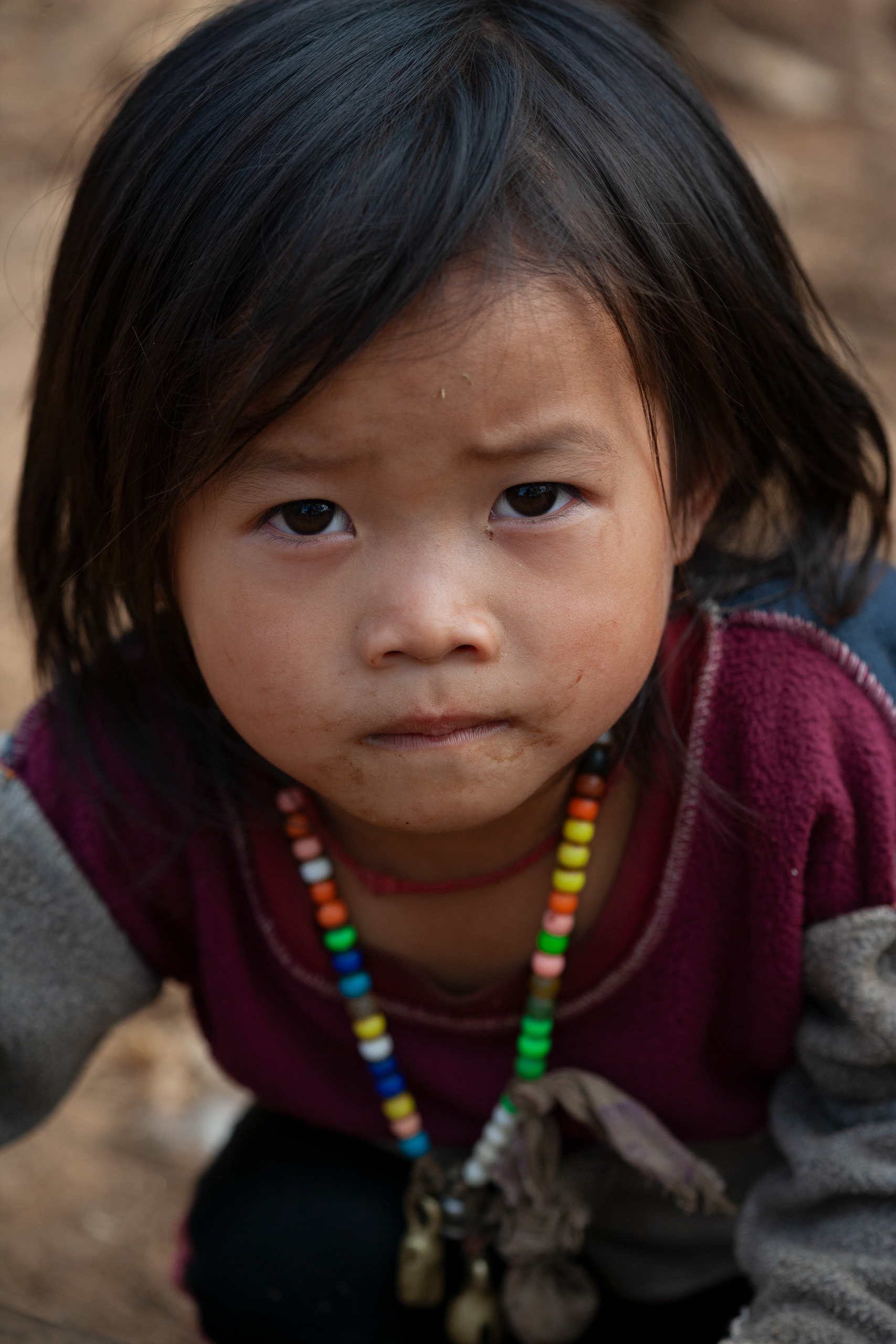
A village child wears a necklace with baubles meant to ward off spirits that cause sickness, December 7, 2006.
Ban Tha Chok-75
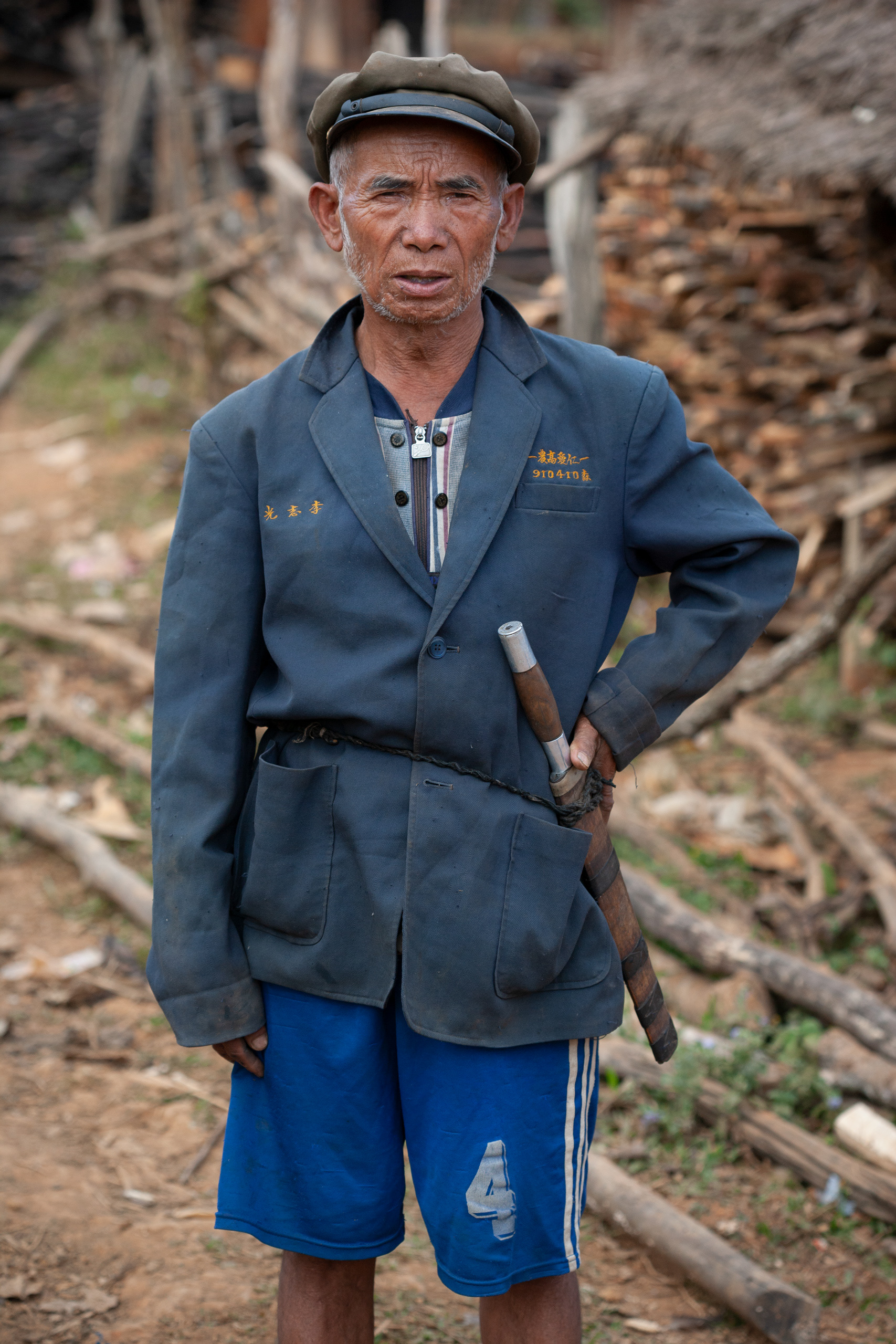
A Hmong man wearing a second-hand Chinese military jacket, December 7, 2006.
Ban Tha Chok-76
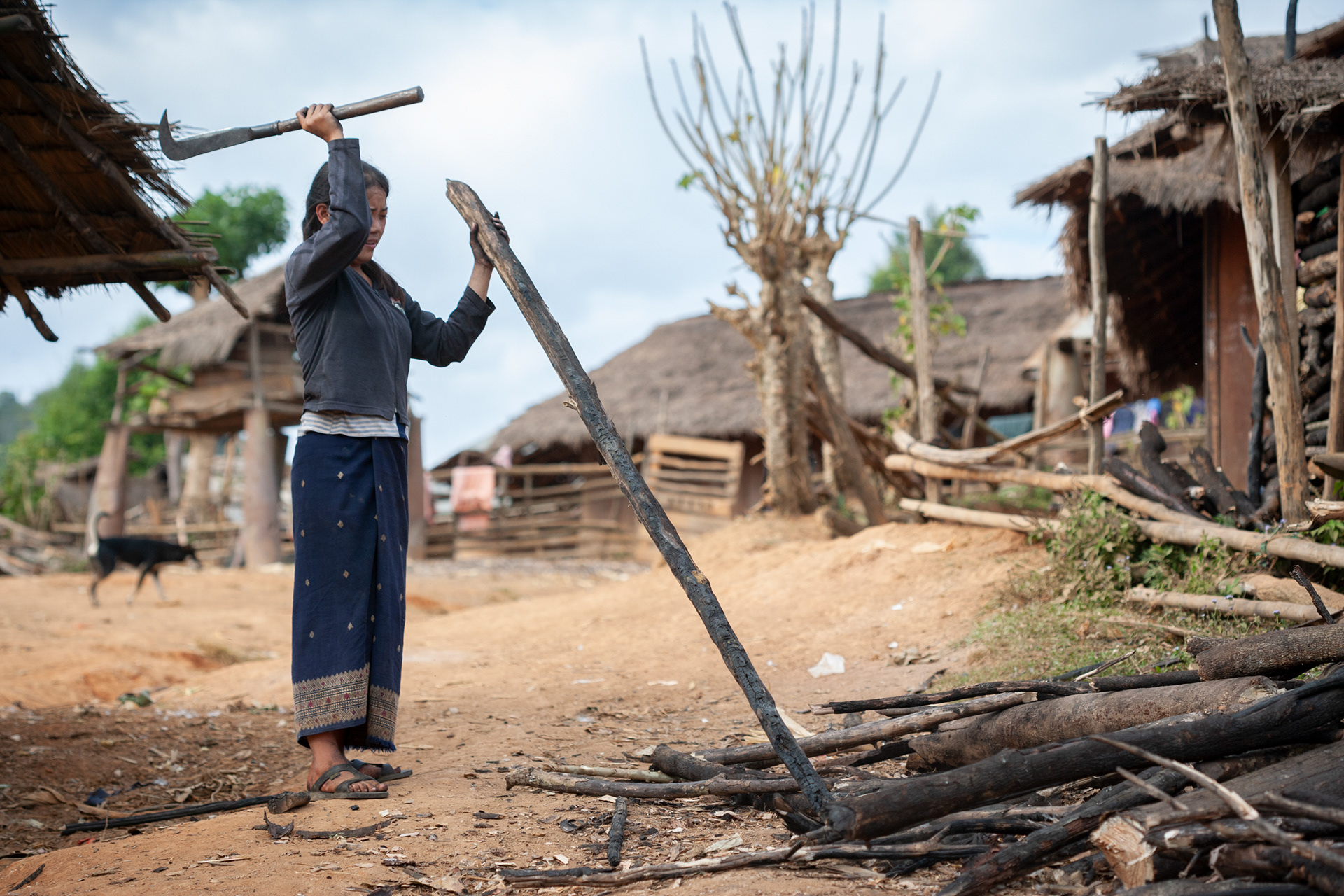
A woman splits firewood with a machete. This is a never ending chore during winter on the Xieng Khouang Plateau, December 7, 2006.
Ban Tha Chok-77
A boy heads for the village spring to bathe and collect water, December 7, 2006.
Ban Tha Chok-79
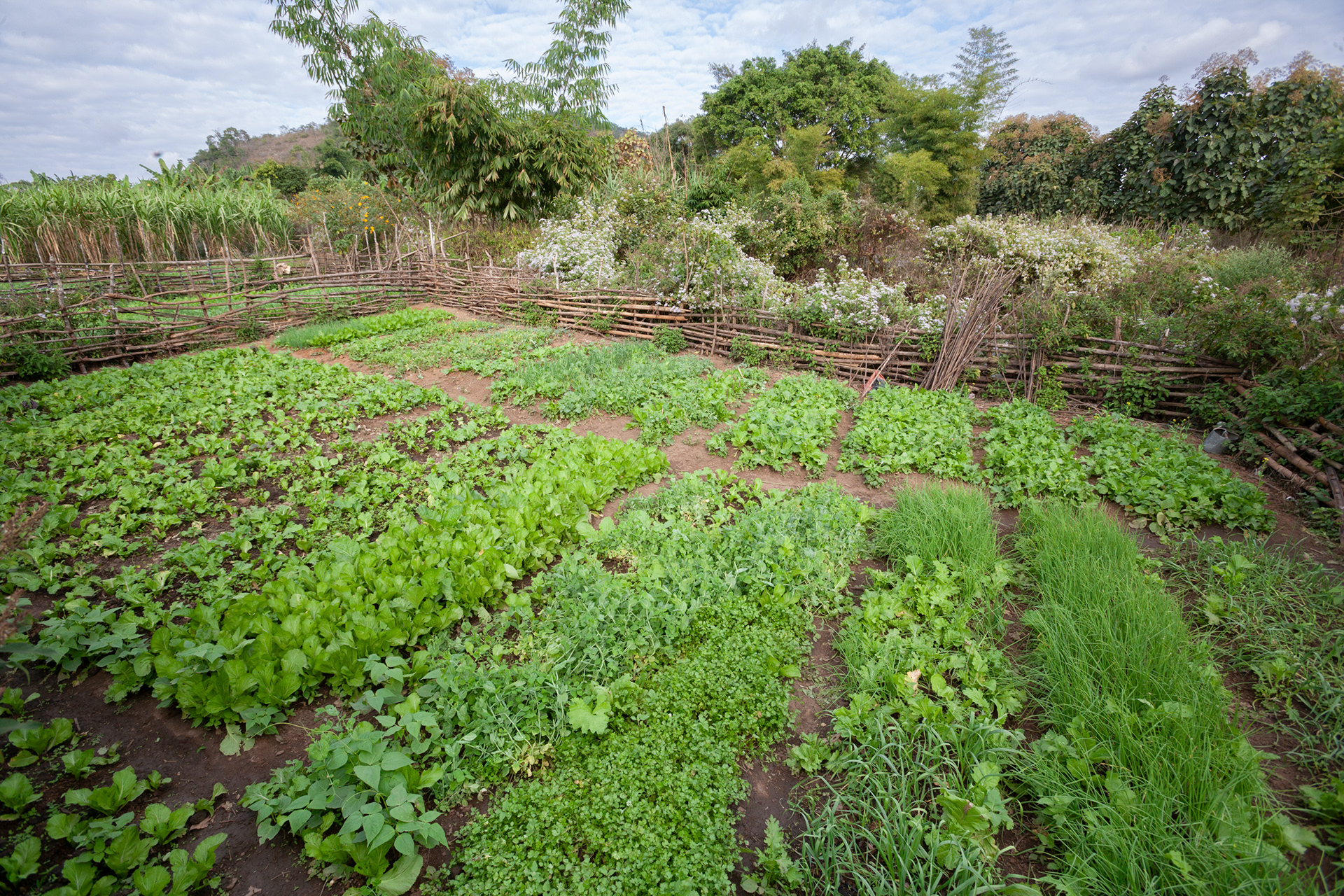
Lush gardens line the path leading to the village spring, December 7, 2006.
Ban Tha Chok-80
A small boy struggles under the weight of two water buckets, December 7, 2006.
Ban Tha Chok-81
A pig enjoys a mud bath as a woman carries water to her vegetable garden. Several boys fill their water buckets. In the background, two girls bathe next to a pond fed by the abundant spring. December 7, 2006.
Ban Tha Chok-82
A boy delicately balances two heavy water buckets as he crosses a makeshift footbridge, December 7, 2006.
Ban Tha Chok-83
A woman nourishes her bountiful vegetable garden with water from the spring, December 7, 2006.
Ban Tha Chok-85
A woman washes clothes at the edge of the spring-fed pond, December 7, 2006.
Ban Tha Chok-86
A man has brought his buffalo to drink from the spring, December 7, 2006.
Ban Tha Chok-98
Bathing becomes a social activity every evening, December 15, 2007.
Ban Tha Chok-87
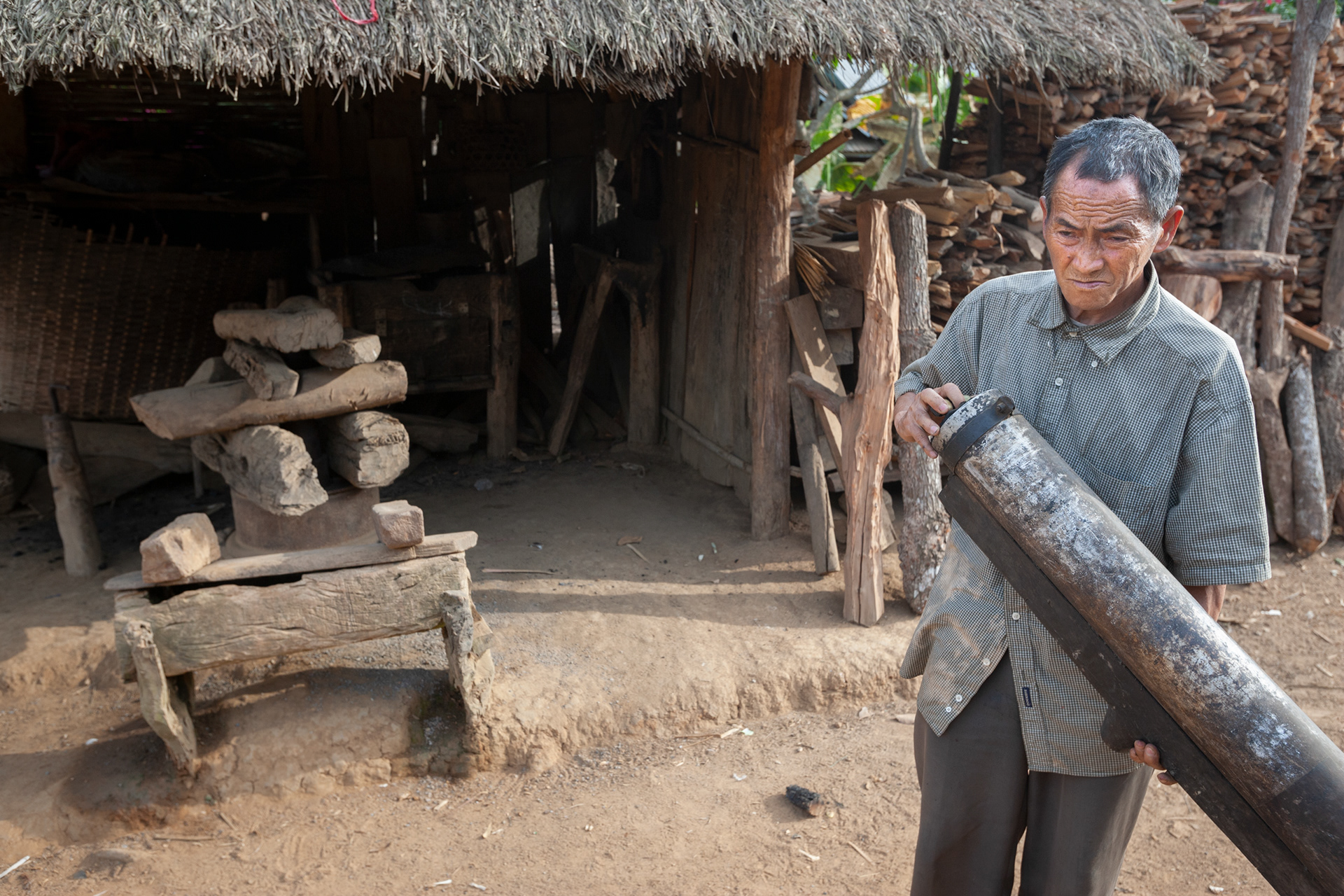
The village blacksmith has fashioned a bomb casing into a piston bellows. When bomb casings are not available, hollowed-out tree trunks are often used, December 7, 2006.
Ban Tha Chok-88
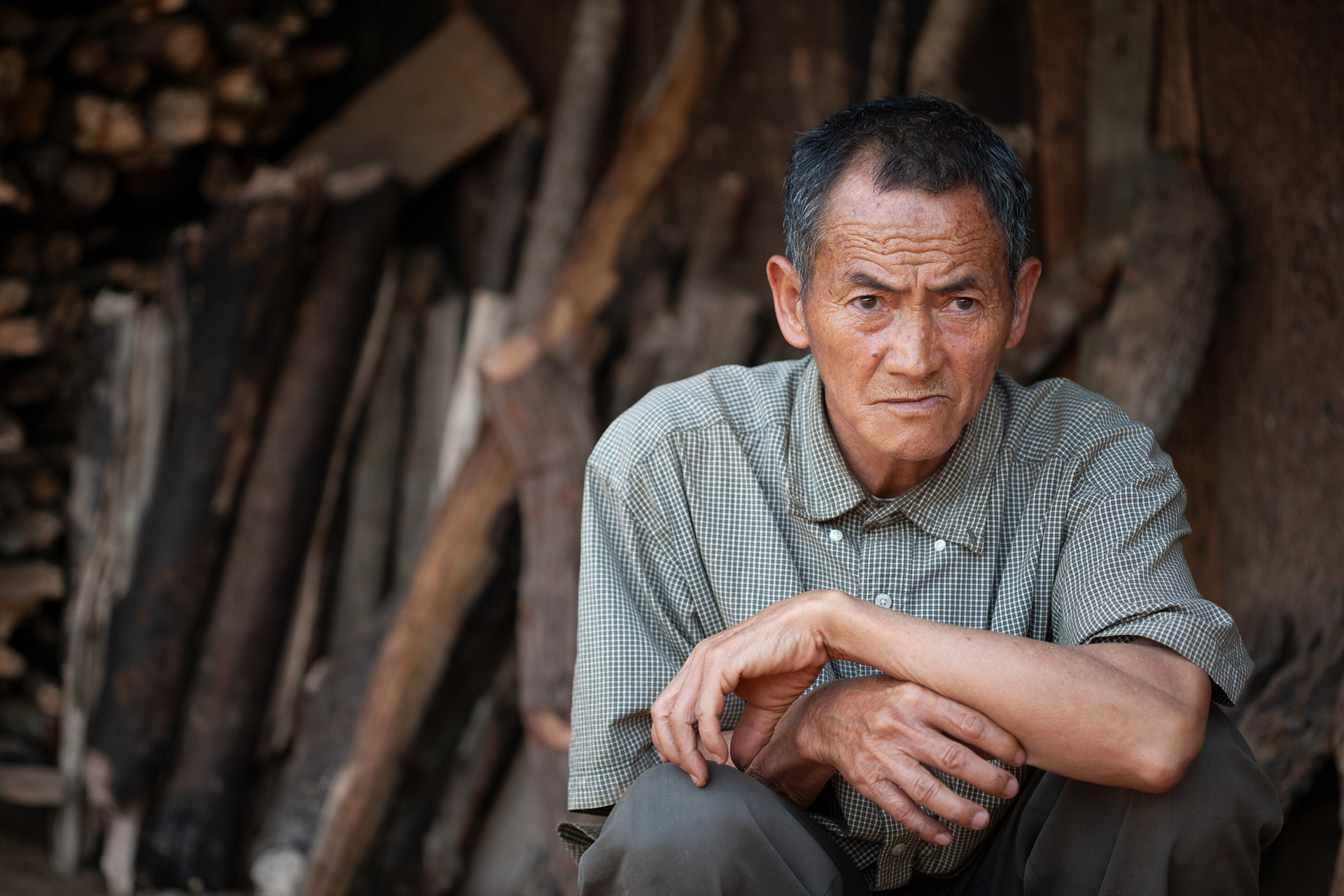
The village blacksmith shows signs of French patrimony. He was likely born in the 1940s when colonial French and Hmong forces were united against Japanese invaders.
He wears a Chinese-manufactured shirt. Such attire is commonplace as Chinese traders use motorbikes or carts to bring their wares to Hmong villages,
December 7, 2006.
Ban Tha Chok-89
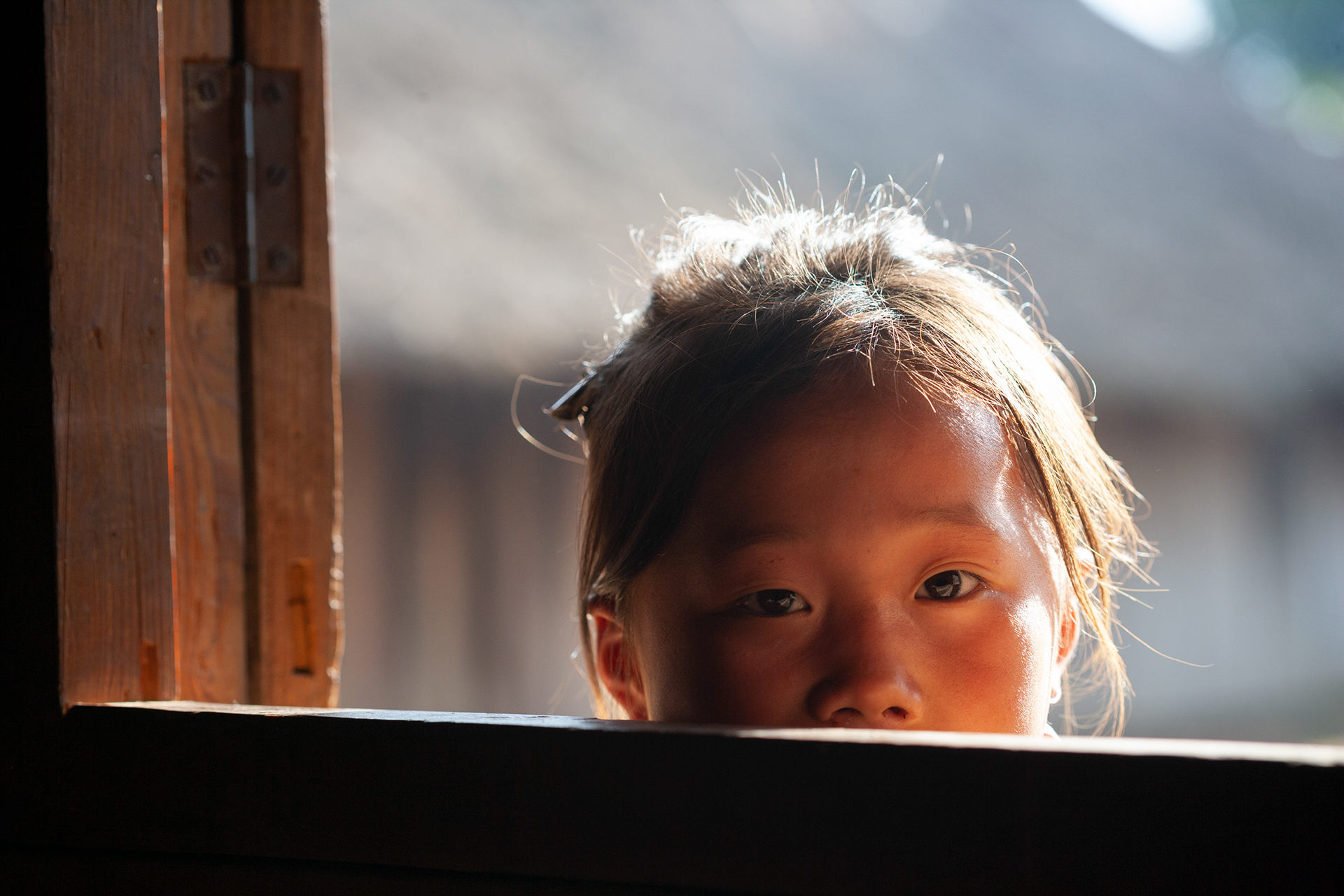
A Hmong girl peeks into the blacksmith’s shop, December 7, 2006.
Ban Tha Chok-90
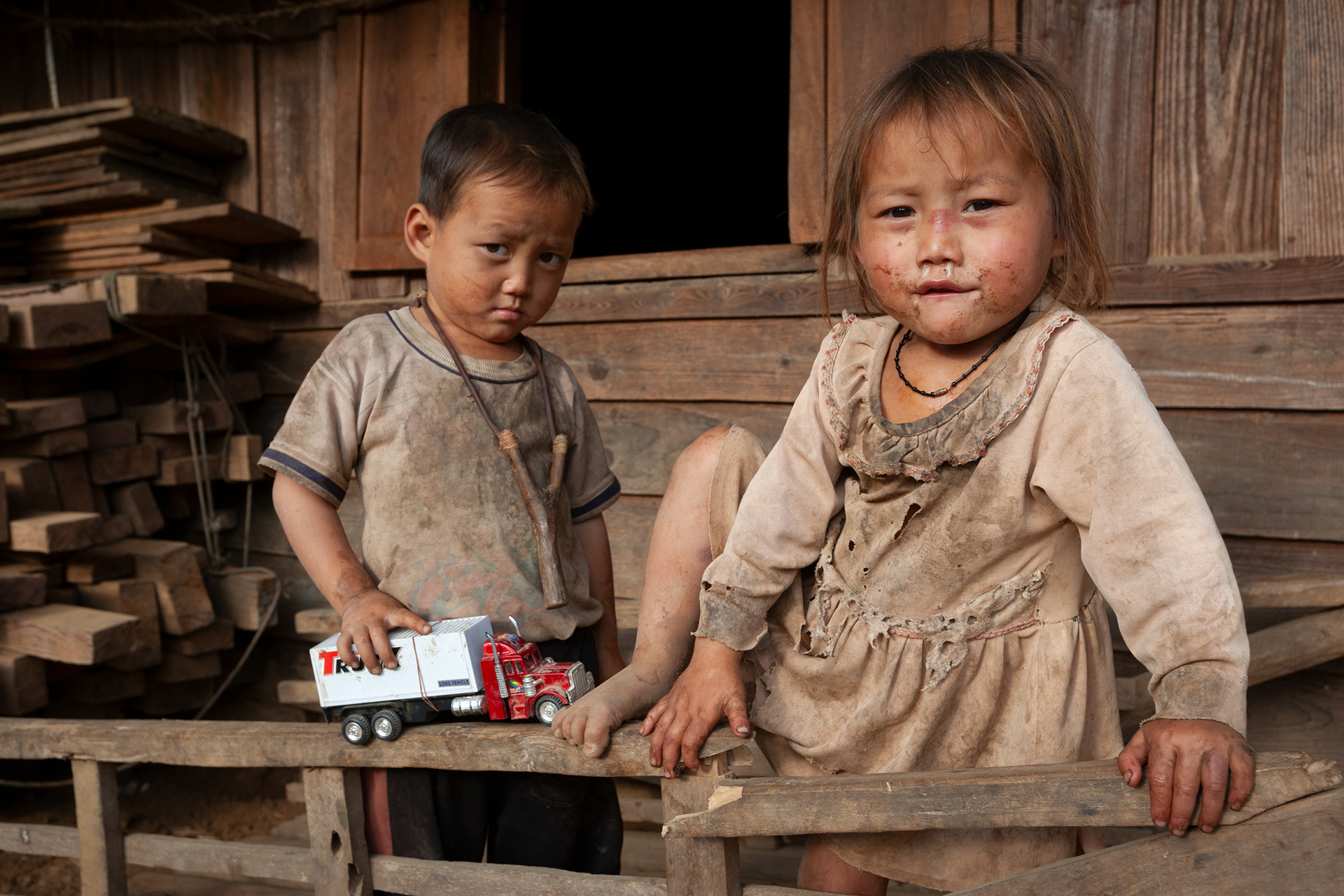
Two children play with a Chinese-made toy truck. The slingshot worn around the neck is a standard accoutrement for Hmong boys.
December 7, 2006.
Ban Tha Chok-92
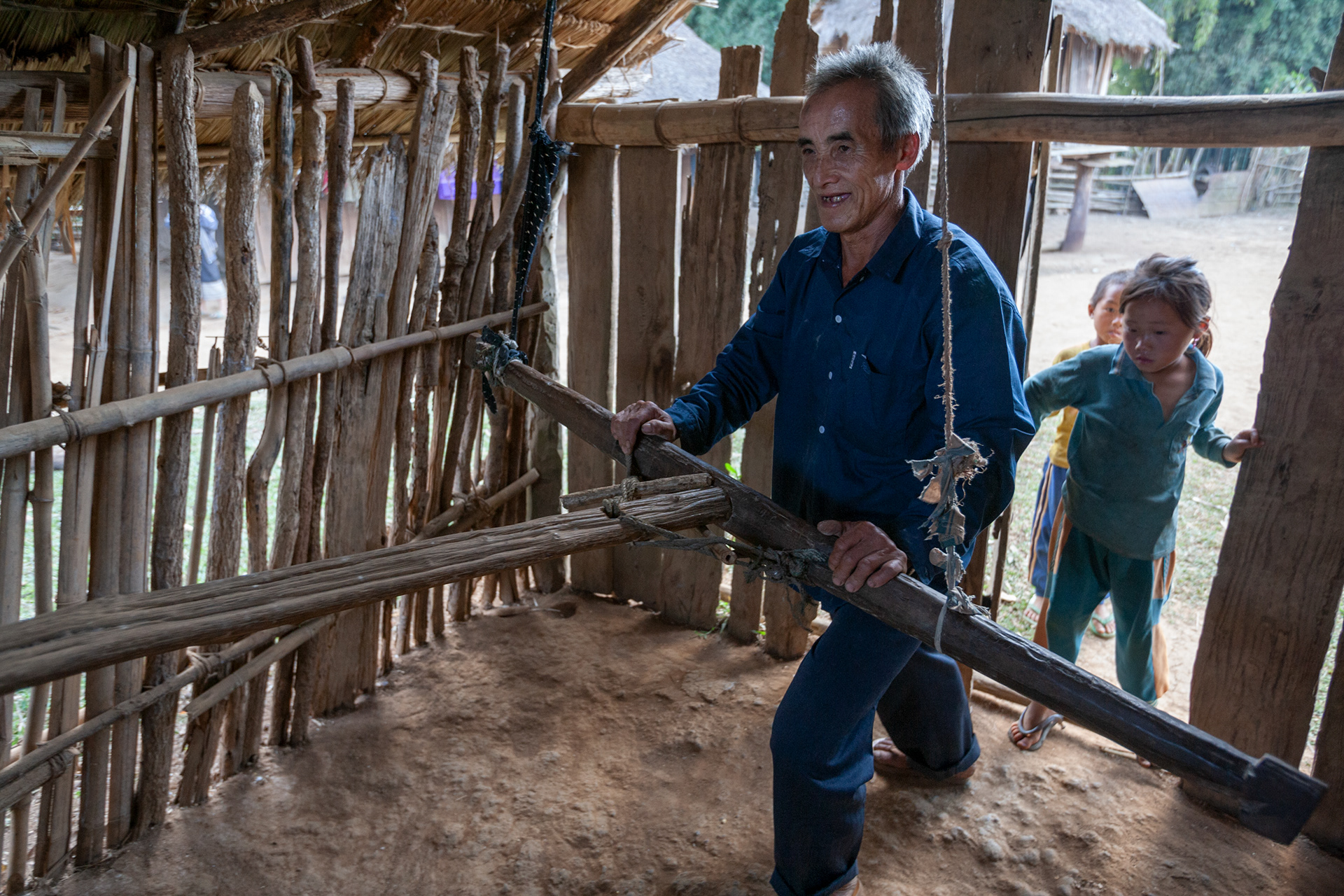
A man operates a corn-grinding rig as his daughters look on, December 7, 2006.
Ban Tha Chok-93
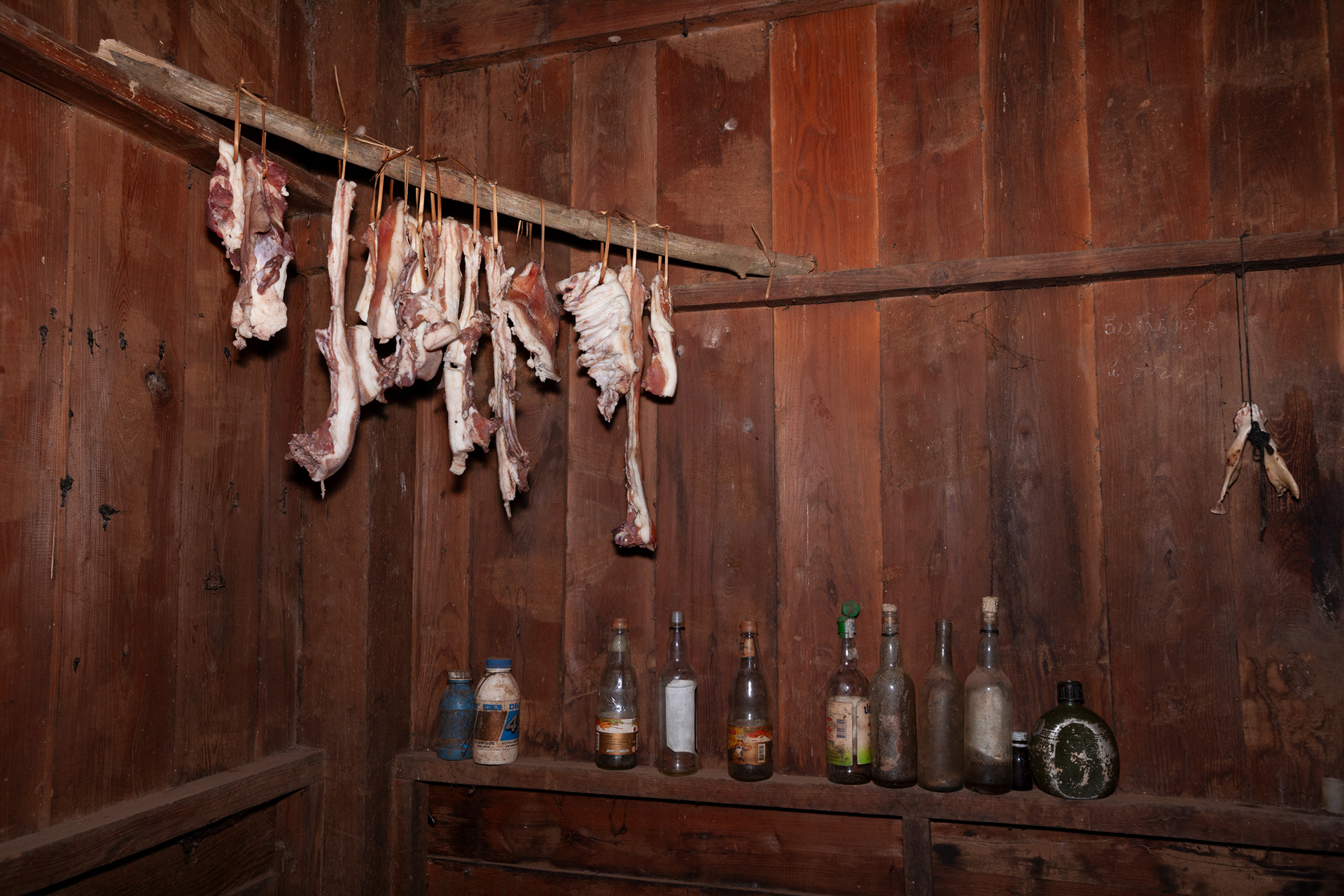
Freshly butchered pork hangs in the kitchen of the village chief's house. The jawbone hanging at the right indicates that the pig was slaughtered as part of a soul calling ceremony, December 15, 2007.
Ban Tha Chok-94
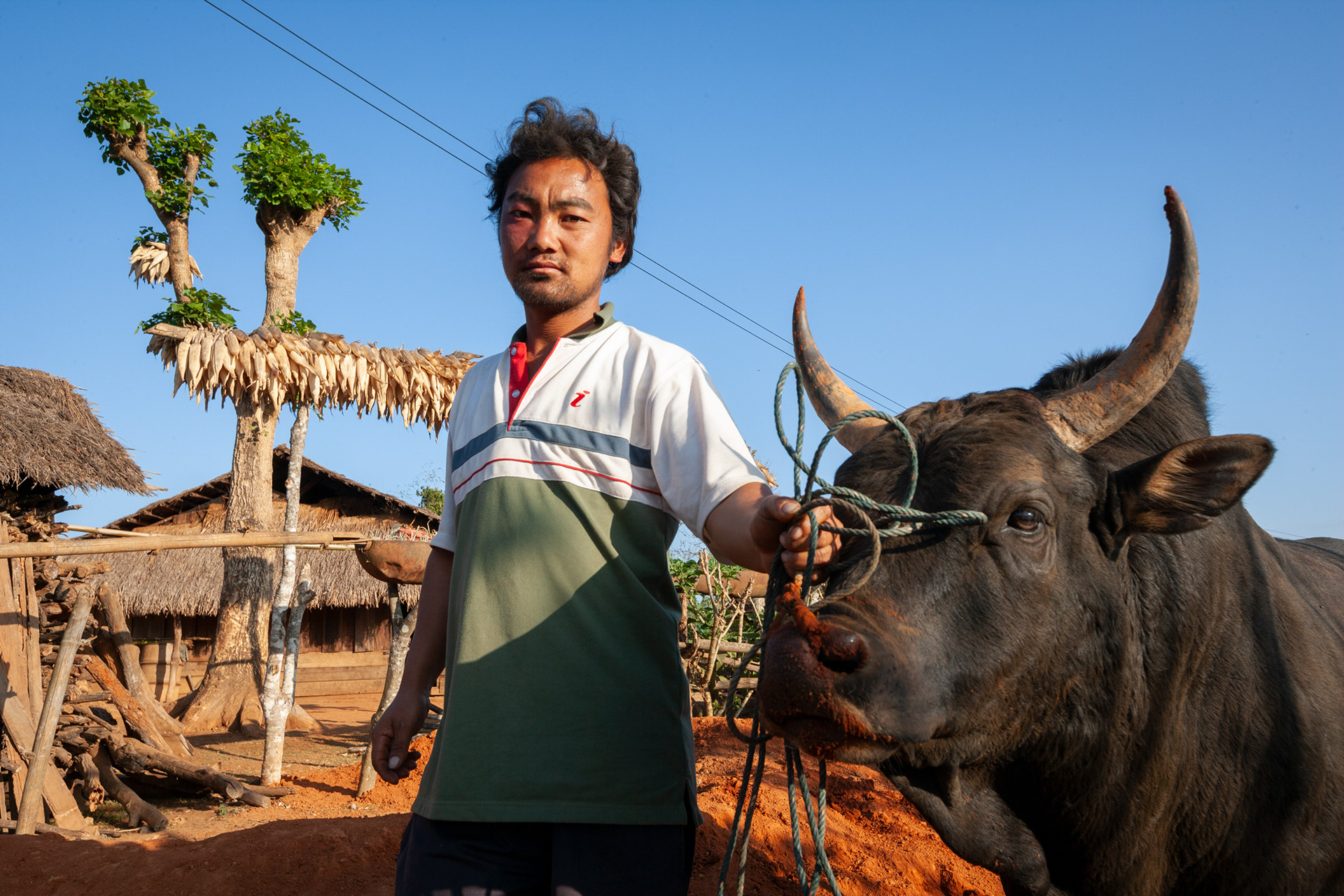
A man shows off his fighting bull. The sport, in which bulls fight each other and are not killed, is popular during Hmong New Year, December 15, 2007.
Ban Tha Chok-95
The prevalence of shell casings has earned Ban Tha Chok the nickname “The Bomb Village,” December 15, 2007.
Ban Tha Chok-96
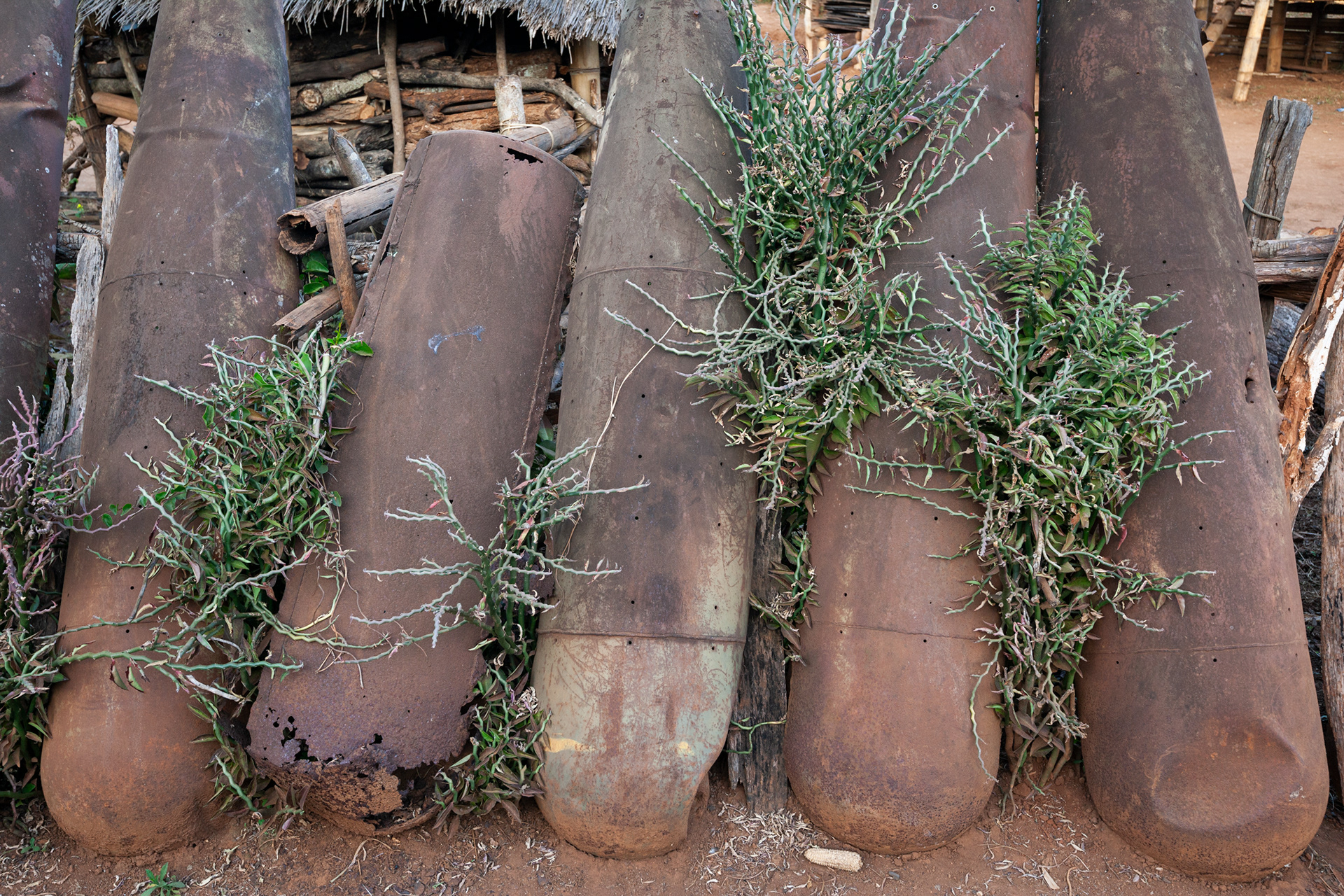
Rusting bomb casings await repurposing by Hmong villagers, December 15, 2007.
Ban Tha Chok-99
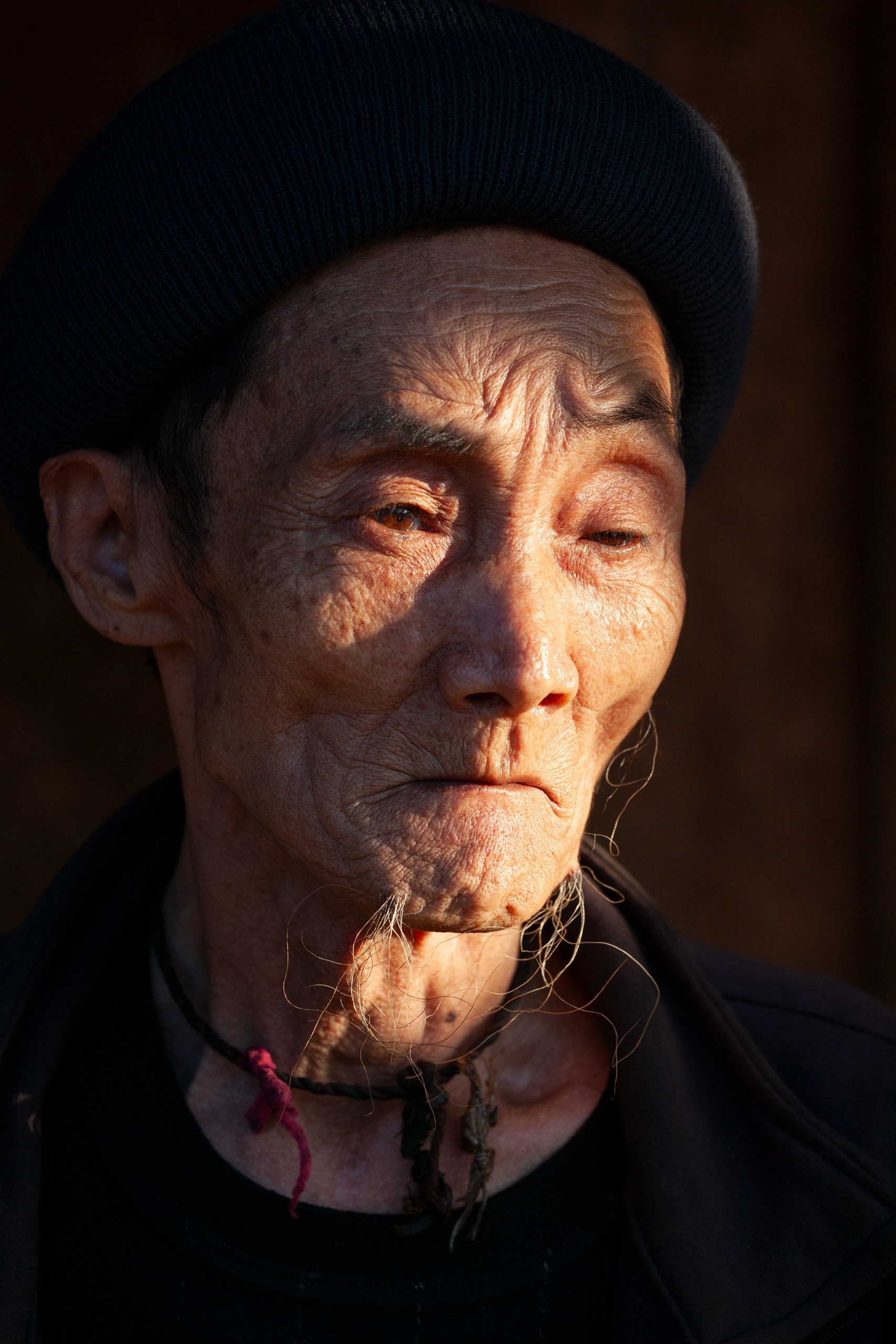
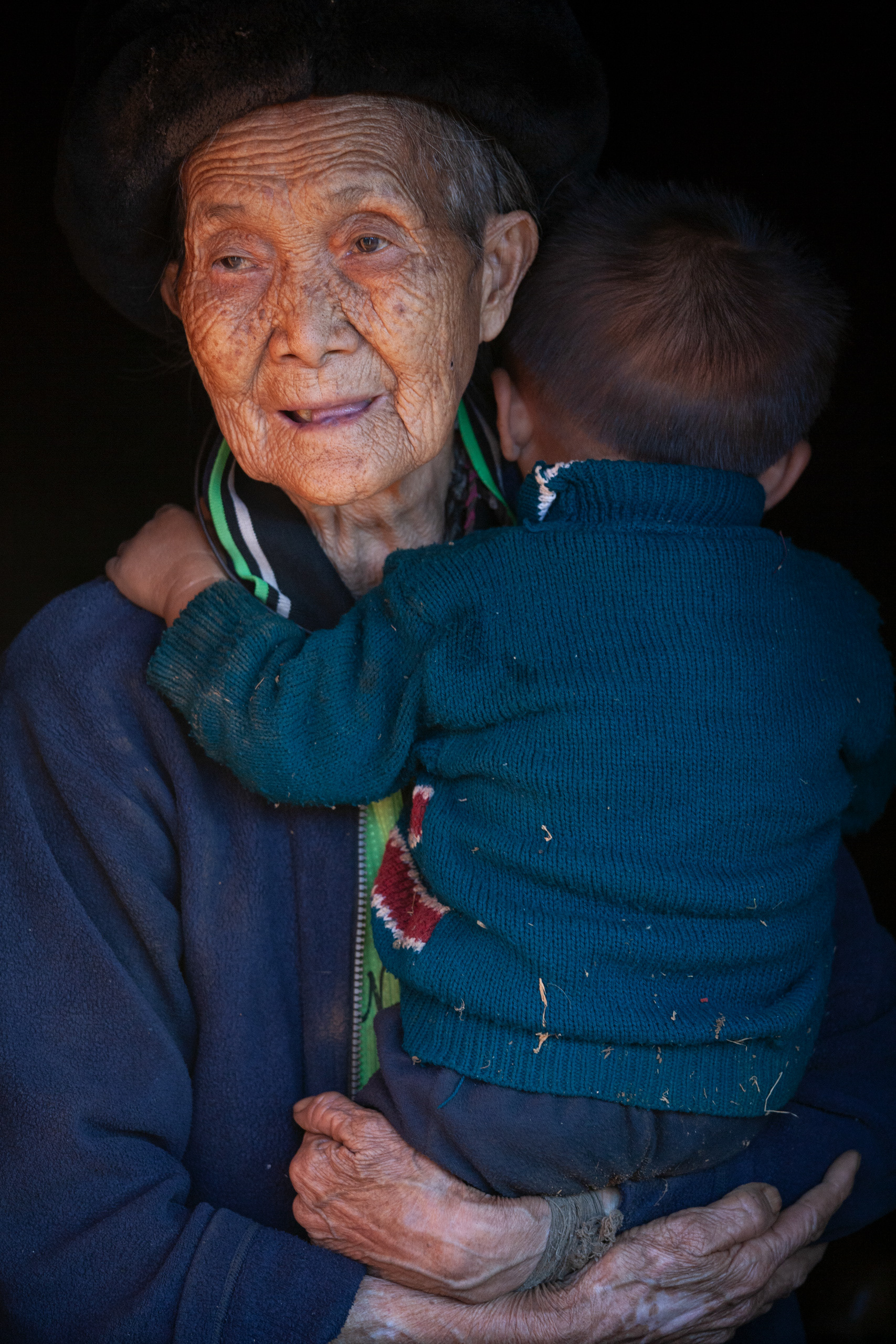
A village elder photographed in late afternoon light, December 15, 2007.
Ban Tha Chok-100
His wife holds a grandchild, December 15, 2007.
Ban Tha Chok-101
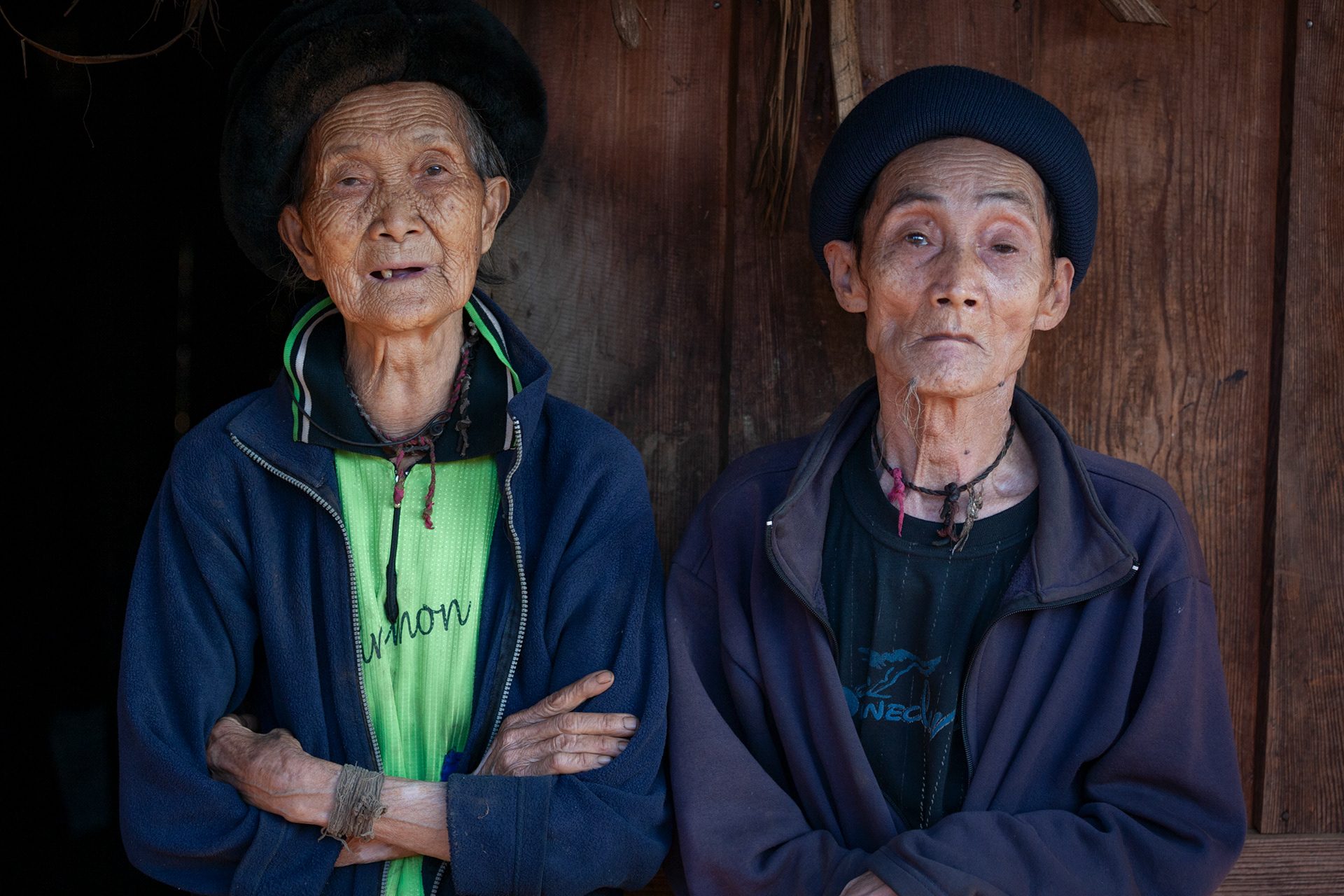
This elder couple shows that great longevity is possible in Ban Tha Chok, despite high infant mortality. They were likely born in the late 1920s to early 1930s and can remember French colonial rule, the Japanese invasion in WWII, Lao independence, the Laotian Civil War, Lao-Vietnamese persecution of the Hmong, communist rule and the recent opening of the country to foreign tourists. Photo: December 15, 2007.
Ban Tha Chok-102
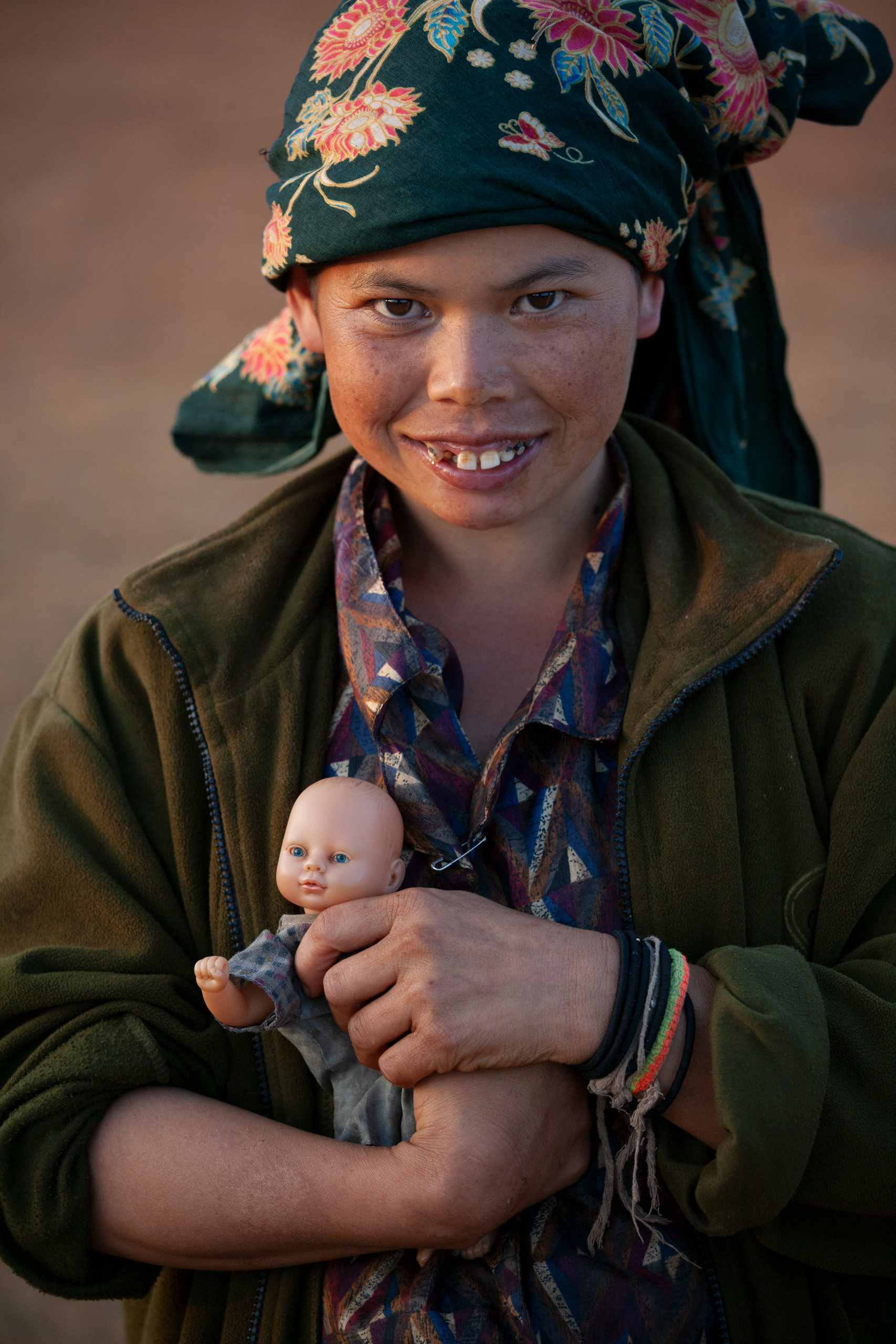
A developmentally disabled teen holds a treasured doll, December 15, 2007.
Ban Tha Chok-103
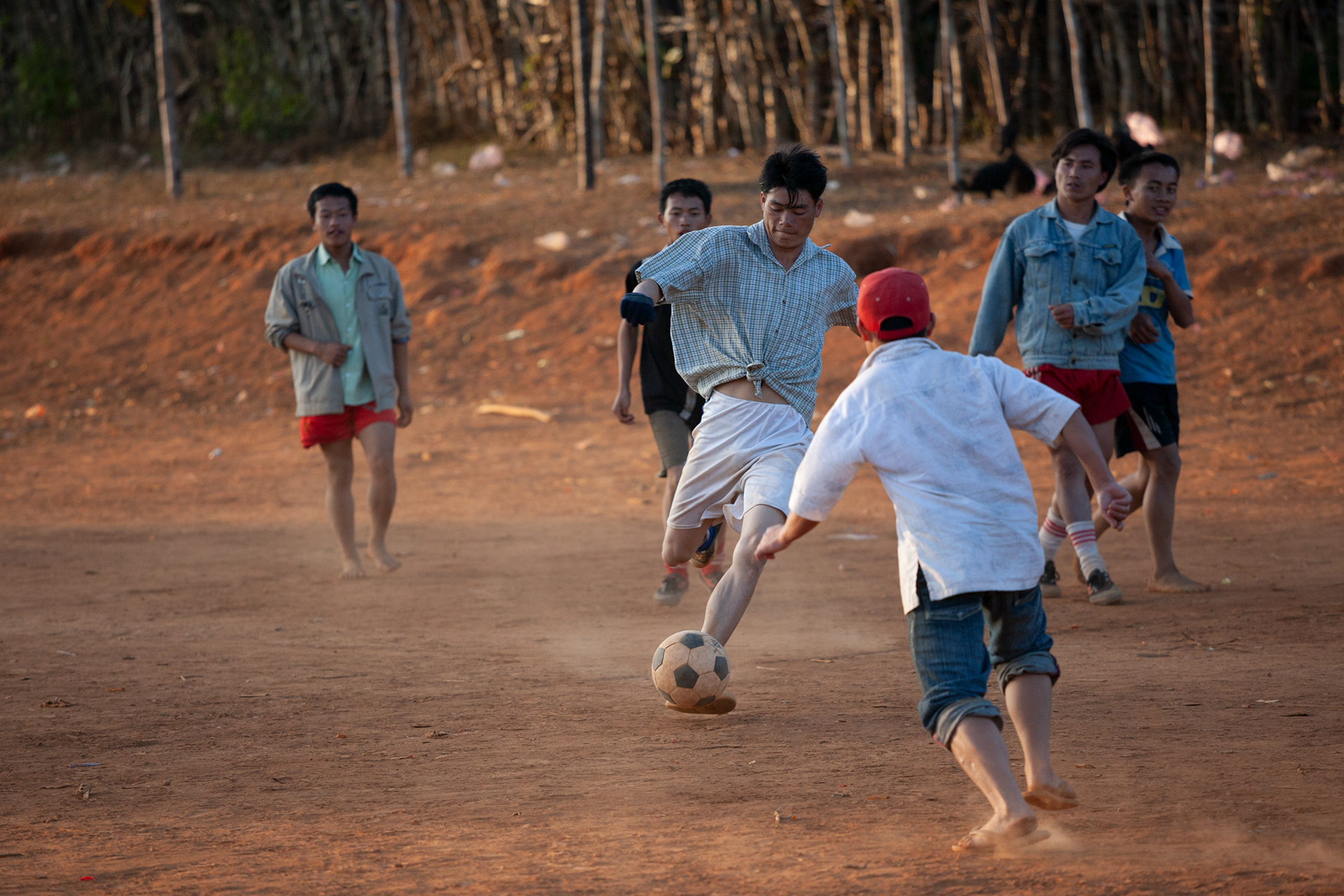
Informal soccer games are popular in many Hmong villages, December 15, 2007.
Ban Tha Chok-104
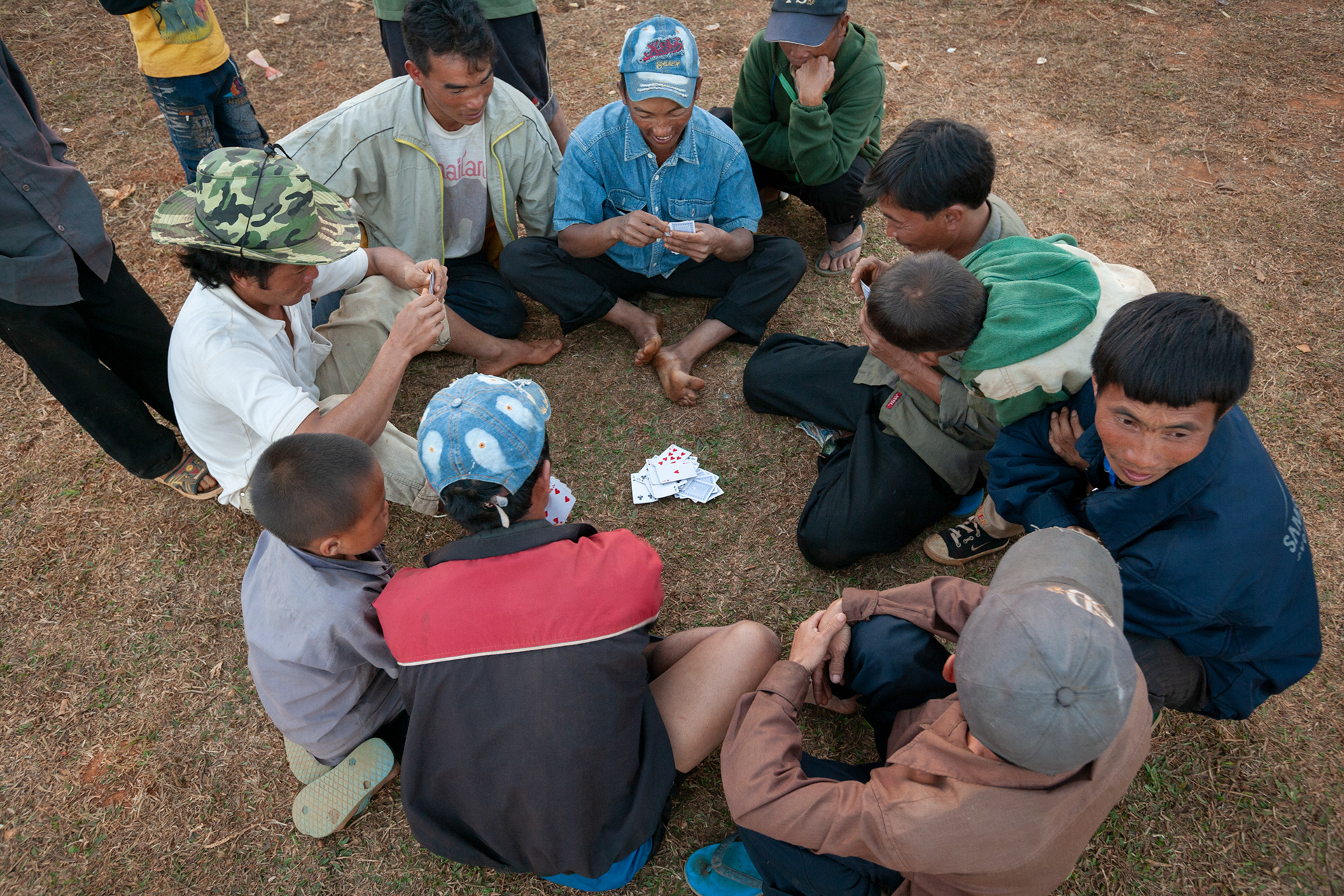
A group of men enjoy a card game, December 15, 2007.
Ban Tha Chok-105
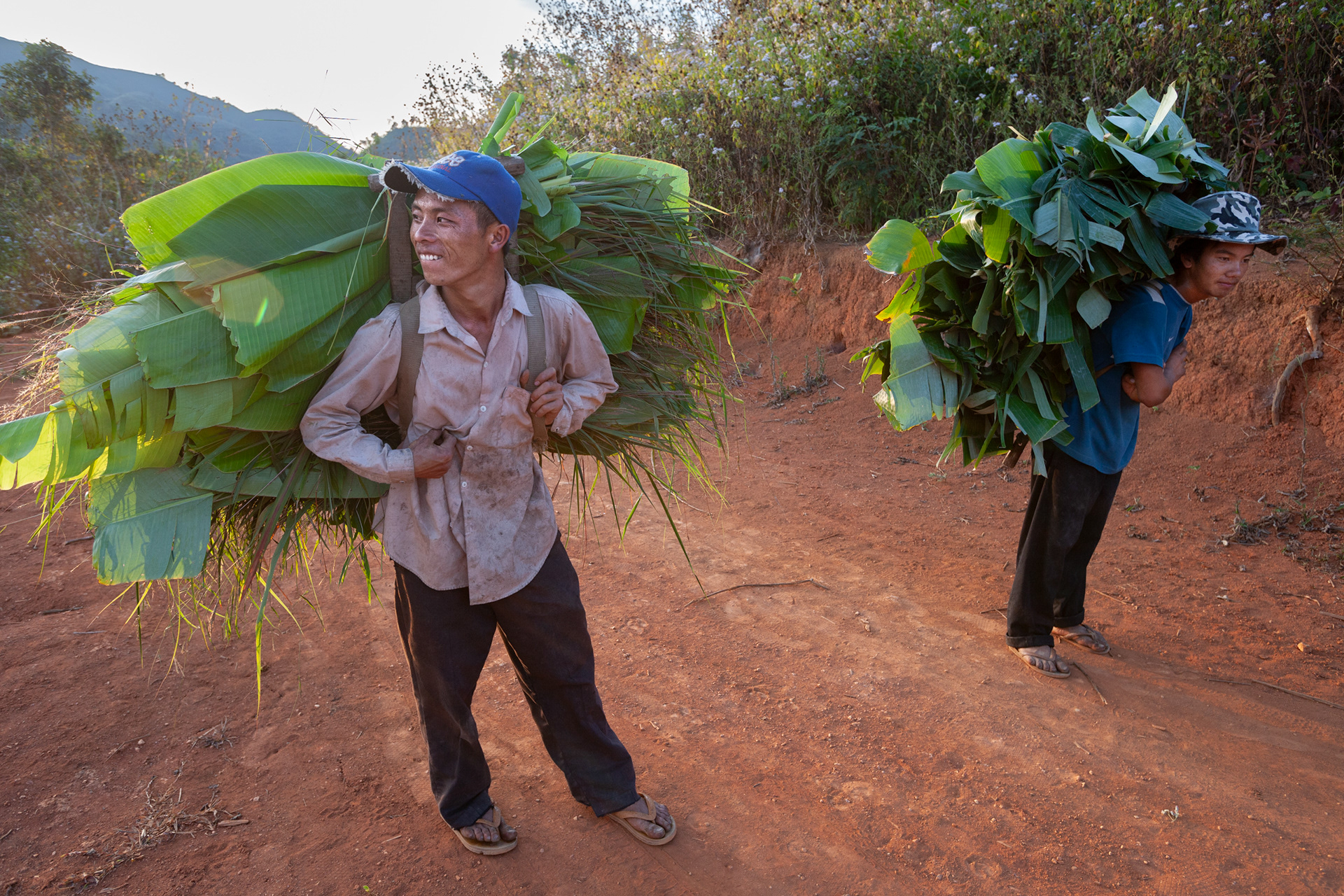
Two men carry banana leaves they have gathered back to the village, December 7, 2006.
Ban Tha Chok-106
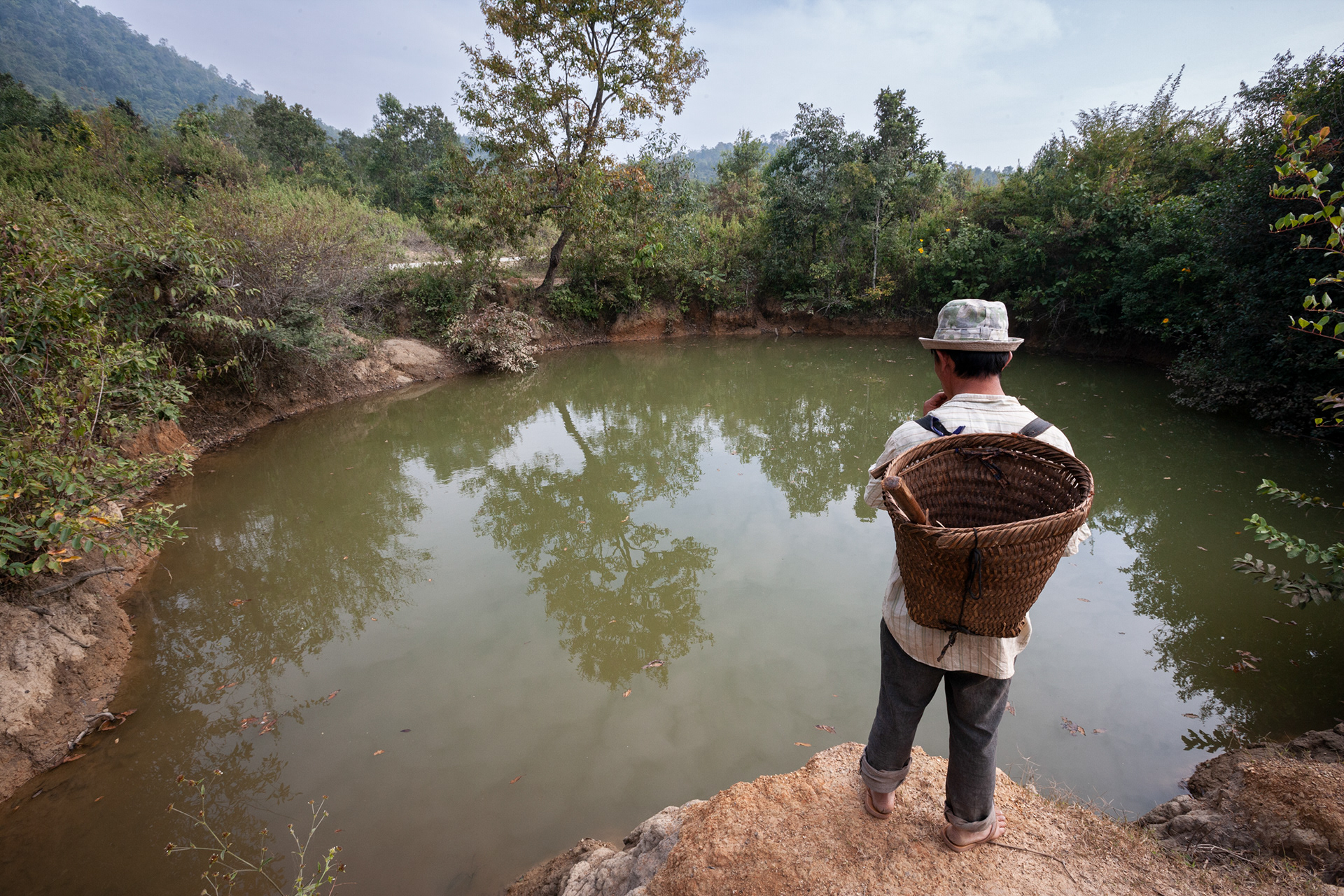
A Hmong villager prepares to fish from a giant bomb crater that has been converted into a pond on the outskirts of the village. After flooding the crater, it was stocked with Tilapia.
The trailhead to Ban Pha Keo is nearby,
November 11, 2007.
Ban Tha Chok-107
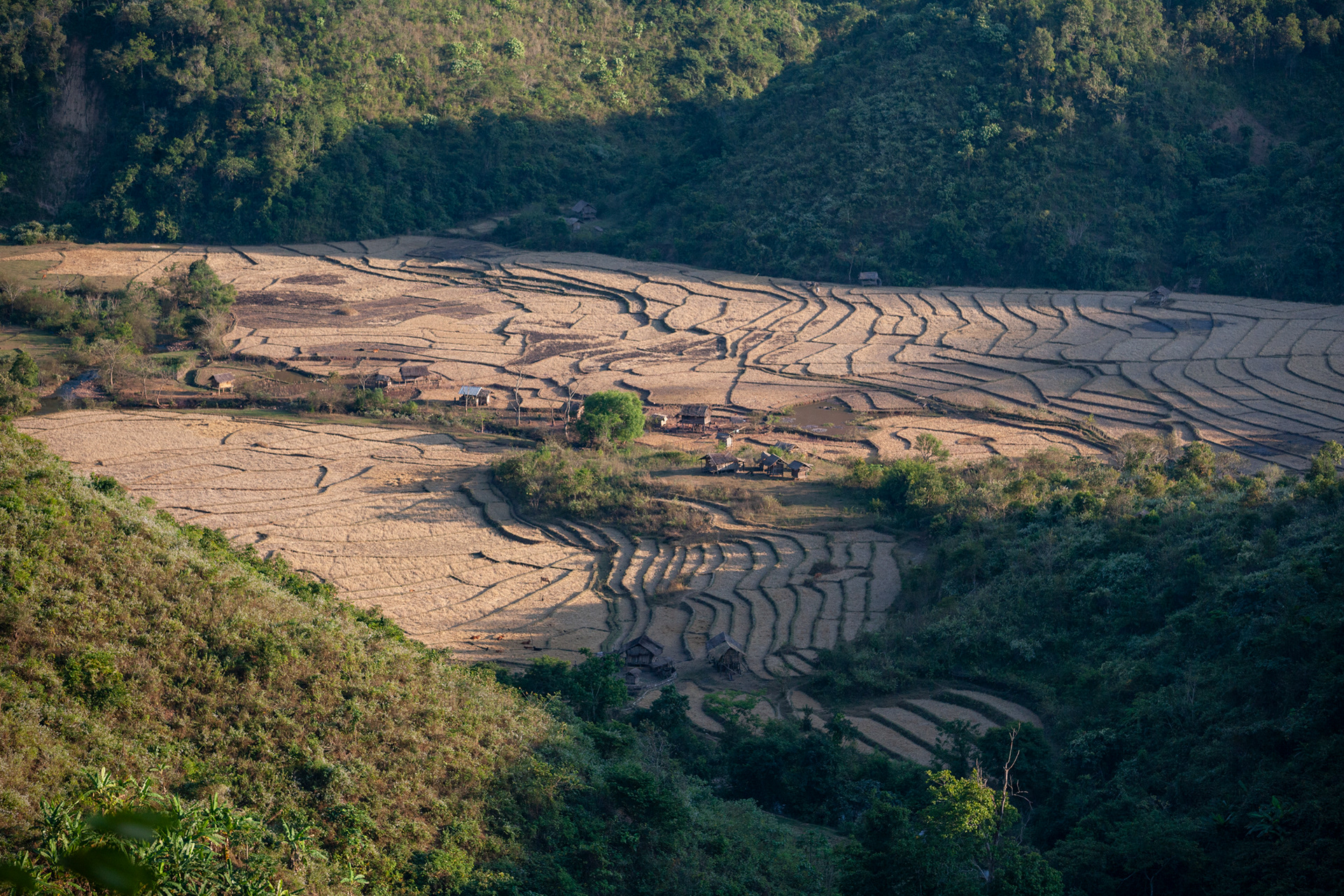
High quality land surrounds the village, enabling rice to be grown in terraced paddies instead of the slash-and-burn hillside farming that makes survival in other villages so tenuous, December 7, 2007.