March 19, 2006
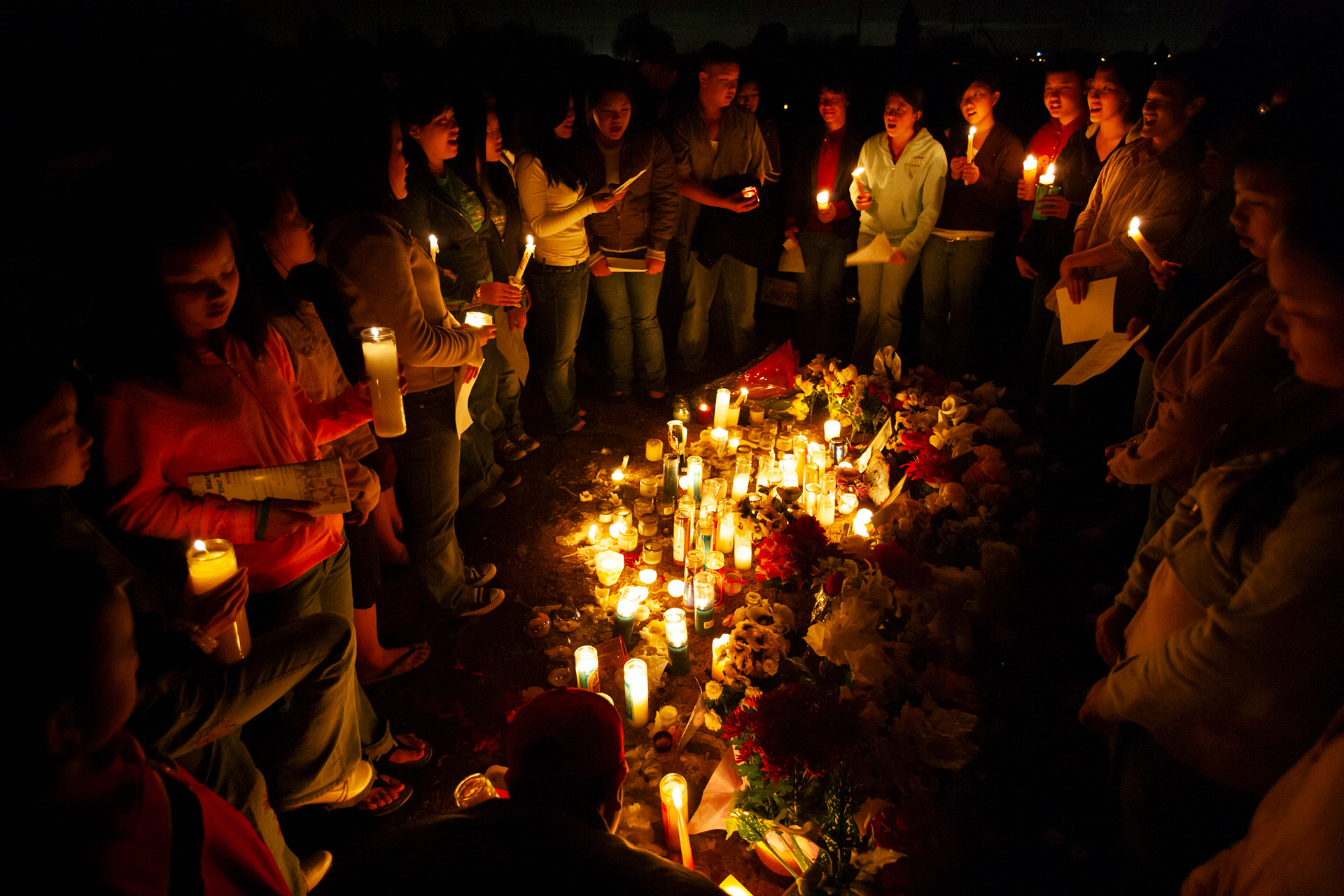
The fire site and candlelight vigils were photographed on March 21, 22 and 24, 2006.
The clan meeting at a Fresno home was photographed later in the evening on March 24.
In less than seven minutes, a deadly fire turned a mobile home into a twisted wreck, killing two teenage sisters and their uncle, a Fresno State senior. Shee Yang, 22, would have been the first member of his Hmong refugee family to graduate from college. Ia Yang, 15, (pronounced “E-yah”) was a tenth grade student at Duncan Polytechnical High School in Fresno. Pakou Yang, 13, was an eighth grade student at Clark Intermediate School in Clovis.
A year before the accident, Chong Yang, 37, his wife Doua Vang-Yang, 38, and nine of their children moved from Merced to rural Clovis, renting a small plot of farmland with a mobile home. They grew farmers market vegetables, which earned them more income than a previous factory job had in Merced. Chong’s younger brother, Shee, moved in with the family so he could finish his studies at Fresno State University. Altogether, twelve people lived in the two-bedroom trailer, which was engulfed in a sudden blaze on the night of Sunday, March 19, 2006.
After dinner that evening, the family went to bed early because the electricity wasn’t working so they couldn’t watch TV. A few hours later, Chong Yang was awakened by what sounded to him like a small explosion. Smoke was already filling the trailer and flames blocked the entrance, so he began breaking windows and yelling at everyone to get up. Chong managed to get his wife and seven of the children out through the windows, but the three victims had already died by the time he was awakened.
Rain and faulty wiring in the mobile home likely caused the sudden blaze; high winds fueled its destructive force. Both the Clovis Fire Department rand Fresno County Fire Department responded within eight minutes of the first call but the trailer was already engulfed in flames and three people had already died. Chong Yang successfully rescued his wife, Doua, and seven of their children: Shoua, 14; Kayoua, 12; Macy, 11; Christy, 10; Aaron, 7; and Allysa, 3. Five-year-old Kyle Yang suffered burns to his arms, neck and the lower part of his face; he was treated at University Medical Center where he spent several weeks recovering.
Crowded living conditions were common for Hmong refugees in the 2000s. According to 2000 census data, 17% of Central Valley families and 24% of Asian-American families lived in crowded conditions compared with just 5.8% nationally.
In 2005, a federal study found that fire fatalities were 32% to 50% higher in mobile homes than in conventional dwellings. The construction materials used in older trailers were highly flammable. Faulty electrical systems often caused fires. The “flashover” effect in trailer fires is exponentially worse than in conventional homes; lower ceilings and smaller rooms cause heat and smoke to build up much faster, leading to “flashover,” where every combustible object in a room ignites simultaneously. On March 19, 2006, it took less than seven minutes from ignition of the fire to total destruction of the mobile home and the loss of three lives.
The Yang family also lost nearly all of their clothing and other material possessions. Three of their vehicles parked near the trailer were totaled in the blaze. Surviving family members went to stay with relatives.
In response to this tragedy, the Central Valley Hmong community organized to support the family in a way it never had in any previous crisis. Candlelight vigils were held for four nights at the fire site to draw public attention. I arrived on the scene on the afternoon of Tuesday, April 21st and began photographing the wreckage. Just as the sun was setting, a handful of family members walked up the long dirt road and lit a few candles. Other friends and family soon joined them. Paula Yang, a relative and community activist invited me to return with my camera for the next three nights.
Each night the number of candles grew along with the number of participants. Middle school classmates of Ia and Pakou joined the group, along with Shee’s friends from Fresno State University. By the fourth night, many Caucasian faces were also illuminated by the growing number of candles.
After the last vigil, I was invited to photograph a Yang clan meeting held in the garage of a Fresno home. Here, Yang elders met and discussed how to raise money and media awareness of the tragic fire and the plight of its victims. Traditionally a clan meeting like this would include only men. But Paula Yang had recently emerged as a community leader and played a prominent role in the dialog. She became the Yang family’s primary media liaison. My presence at the clan meeting as a non-Hmong photographer was also a first, as are the pictures I captured that night.
After the clan meeting, the family established a charitable fund to help the victims recover. Donations large and small of goods and cash began to come in. Extensive coverage of the story by local media aided the fundraising effort. Thousands of envelopes with small cash donations were mailed to the homes of relatives where Yang fire victims were sheltering.
Even more historic was the way that this tragedy brought local communities together who had never previously interacted. As non-Hmong neighbors reached out to lend a helping hand, they were often invited to join the Yang family for meals. Social barriers came down. Neighbors who had been strangers became friends. A wealthy Madera rancher, Marge Bilsten, was an early supporter, paying some of the funeral costs and helping the family replace lost clothing and other possessions. She sent Chong and Doua Yang to a tailor at her expense so that they would have proper clothes for the upcoming funerals. In the process, she became part of the Yang family.
Yang fire site vigils-01:
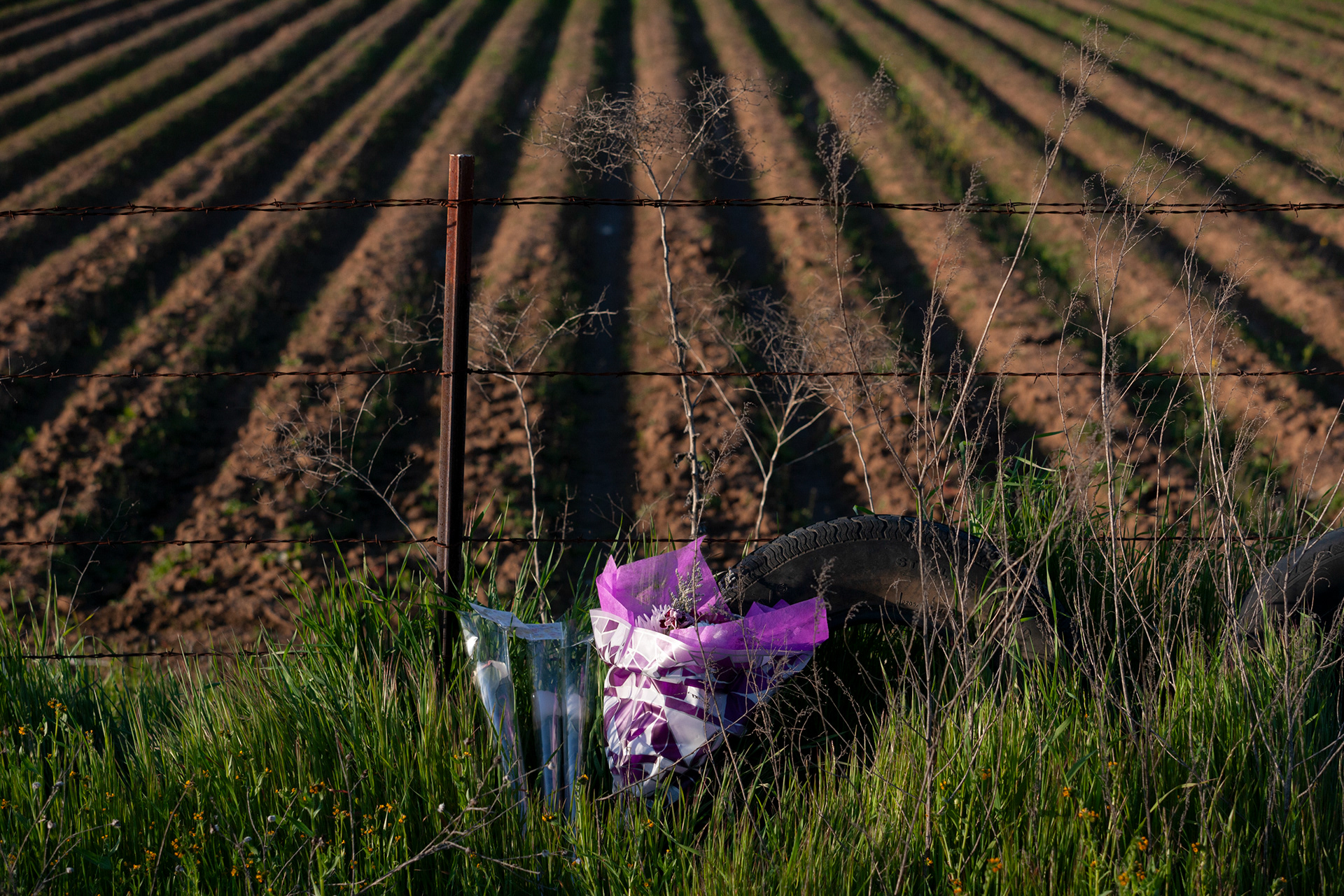
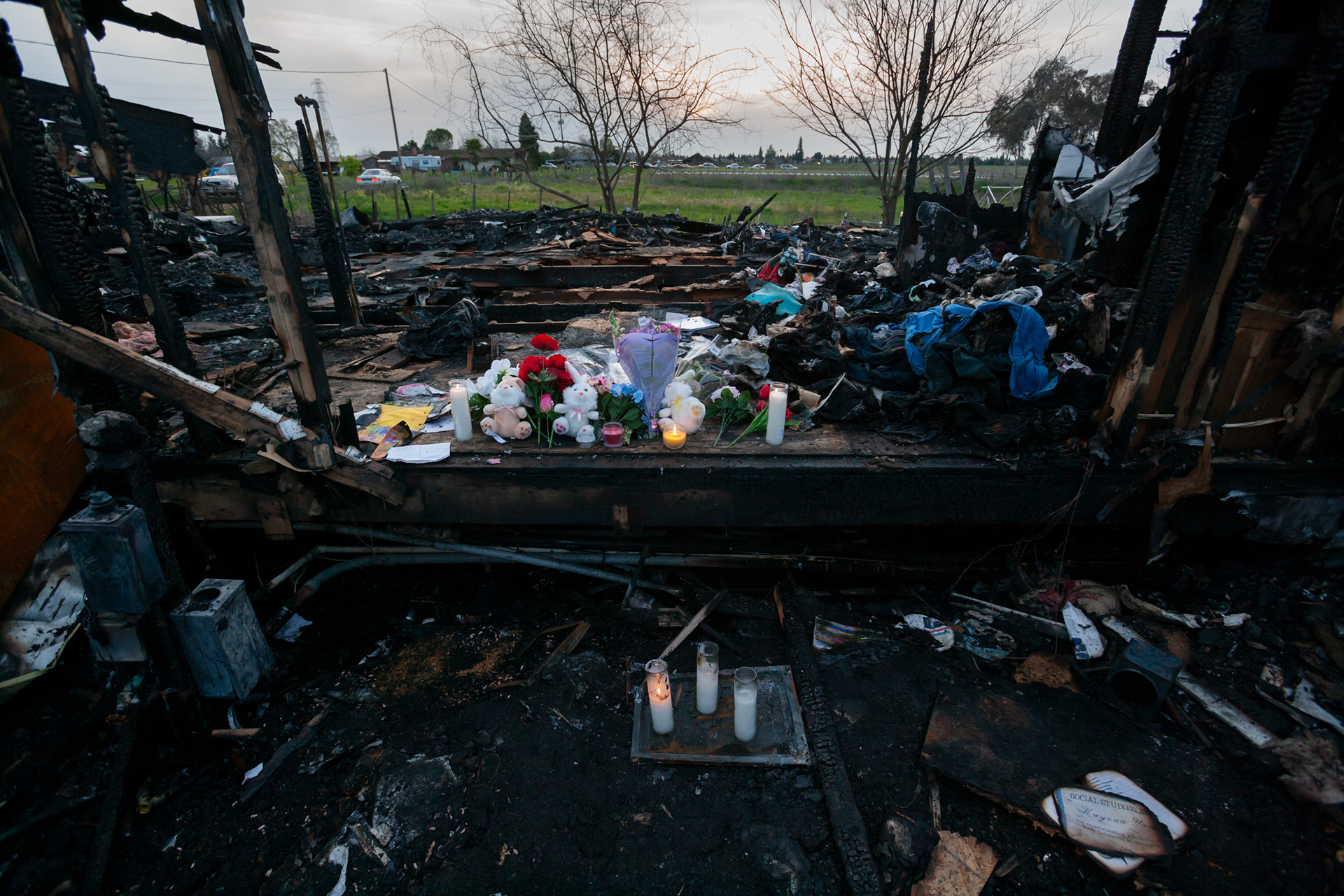
Flowers left by a mourner near the site of the fire. The Yang family farmed this field before the fire left them homeless. Photo: March 21, 2006.
Yang fire site vigils-03
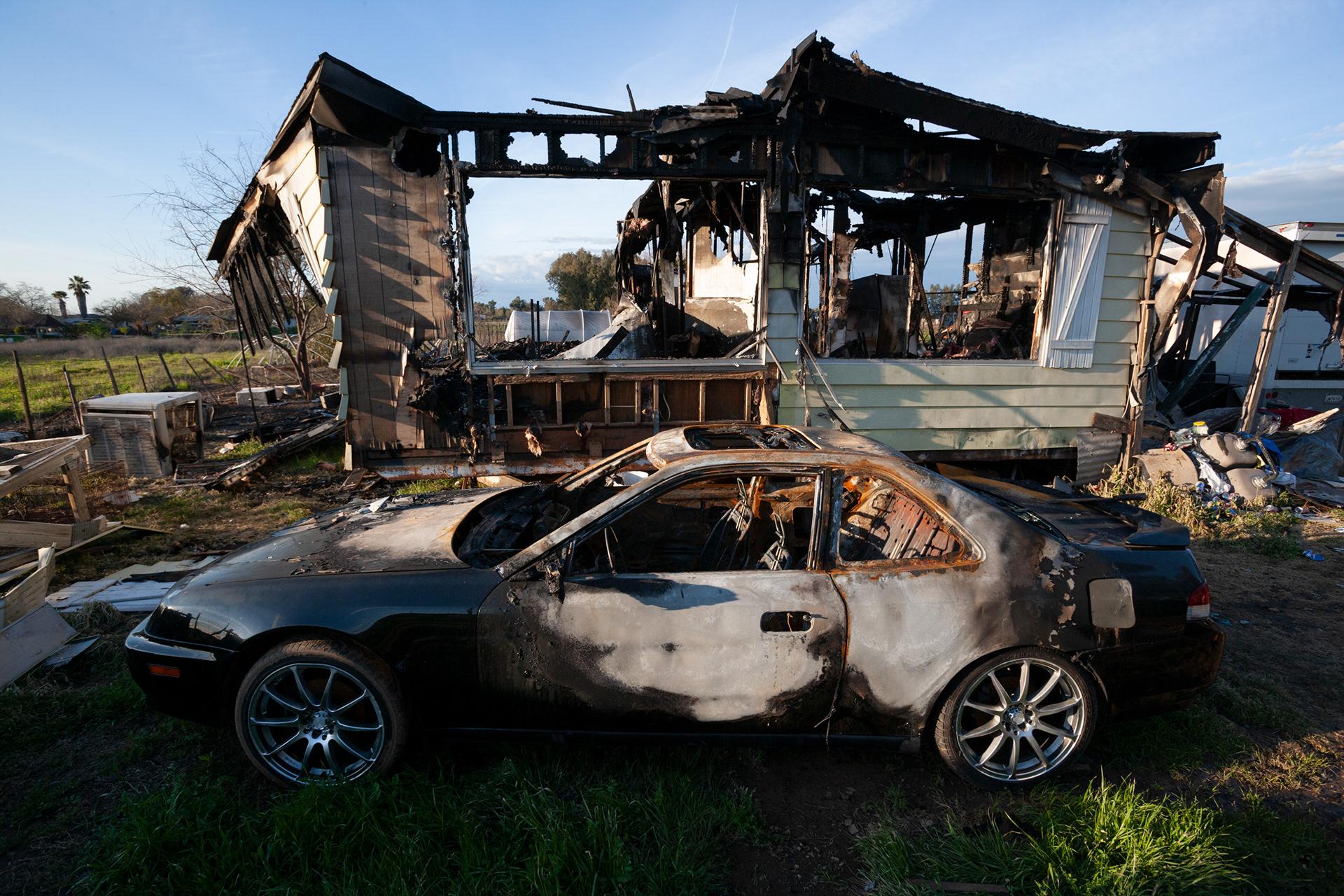
A totaled car and the twisted wreckage of the trailer shows the fire’s destructive reach. Photo: March 21, 2006.
Yang fire site vigils-04
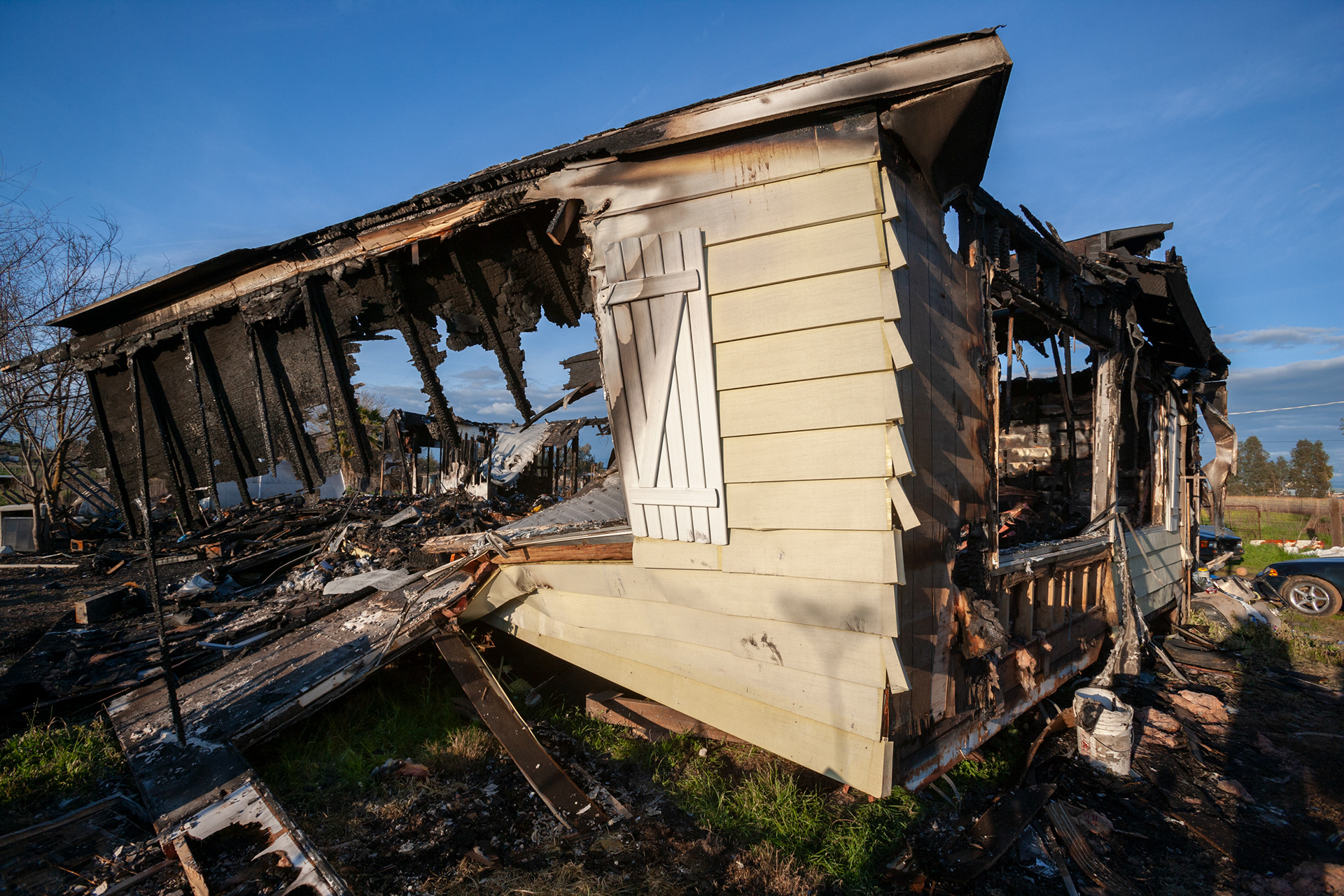
A corner view of the trailer wreckage. Photo: March 21, 2006.
Yang fire site vigils-05
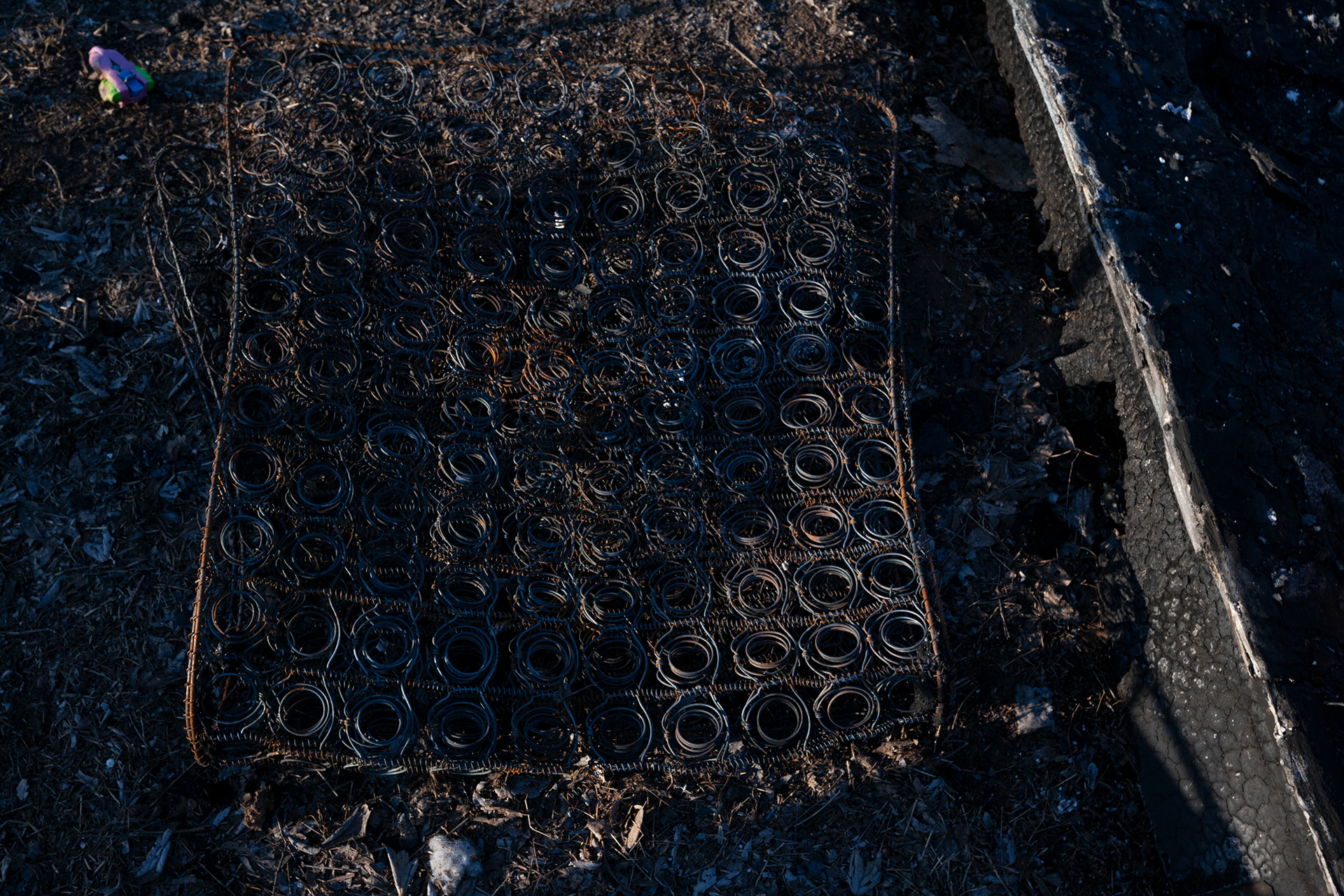
The remains of an incinerated mattress. Photo: March 21, 2006.
Yang fire site vigils-06
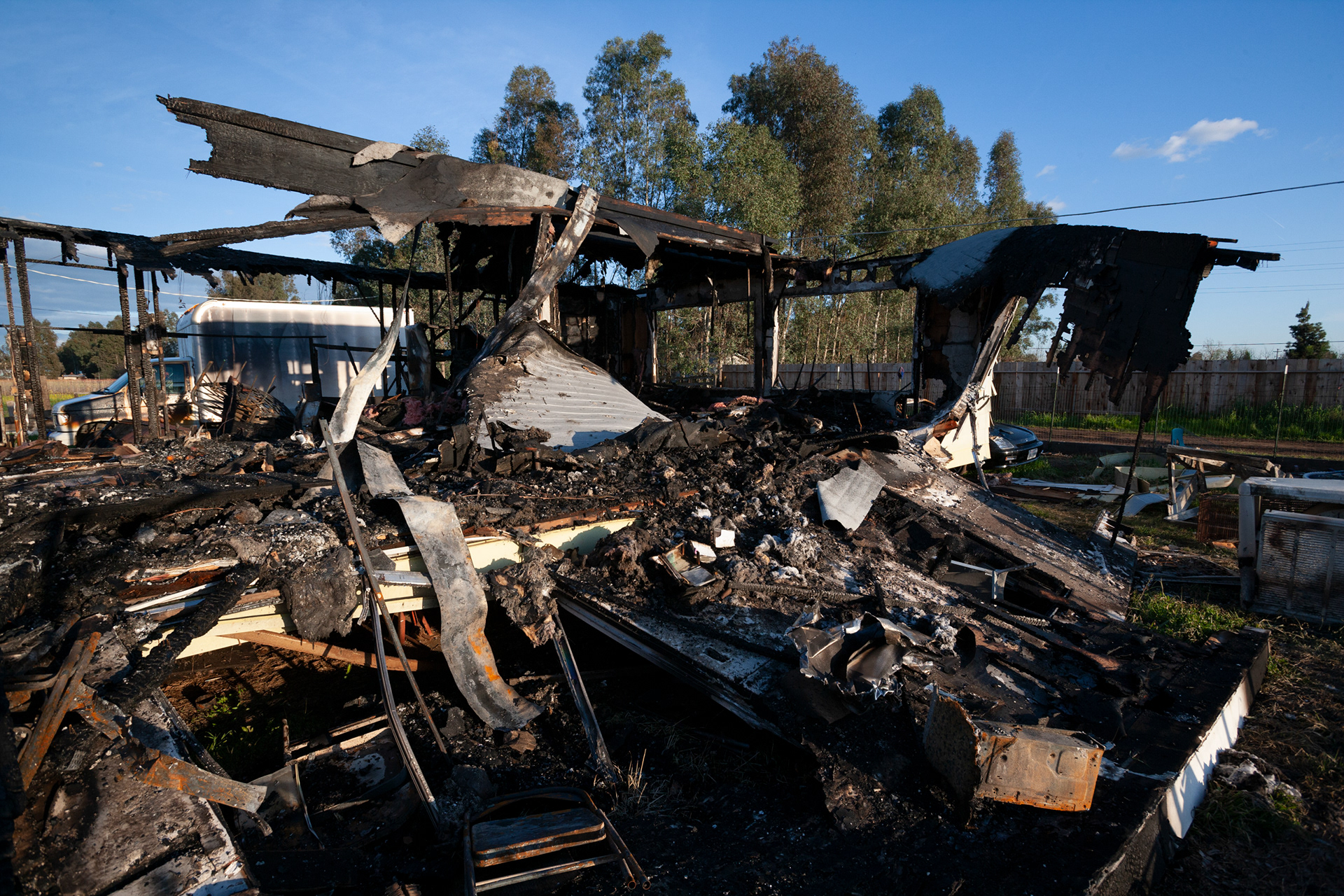
This angle shows how the side entrance to the mobile home was completely obliterated in the blaze.
It took less than seven minutes from ignition of the fire to total destruction of the mobile home and the loss of three lives. Photo: March 21, 2006.
Yang fire site vigils-07
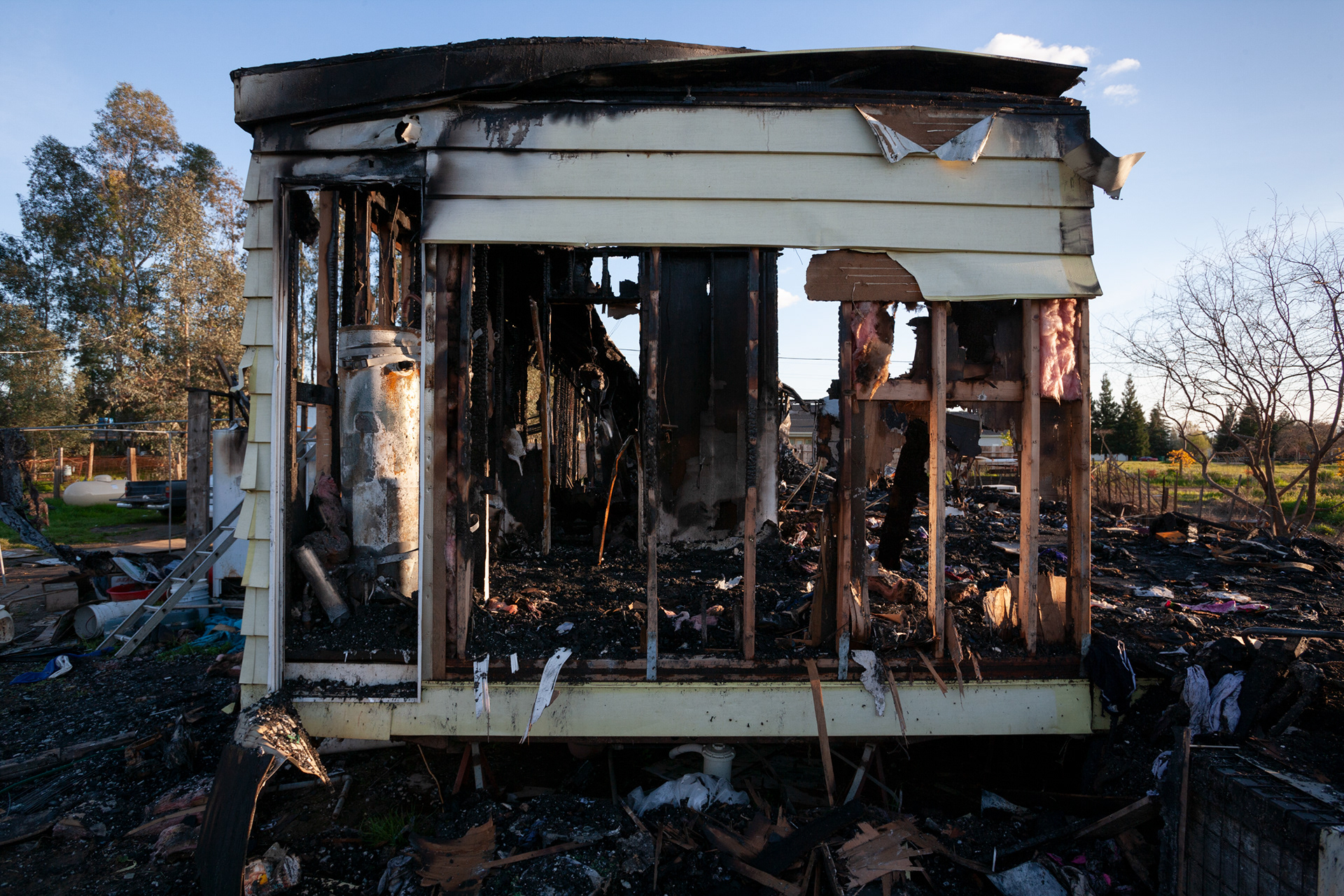
This end of the trailer was the most intact of its remains. Note the position of the water heater. Photo: March 21, 2006.
Yang fire site vigils-08
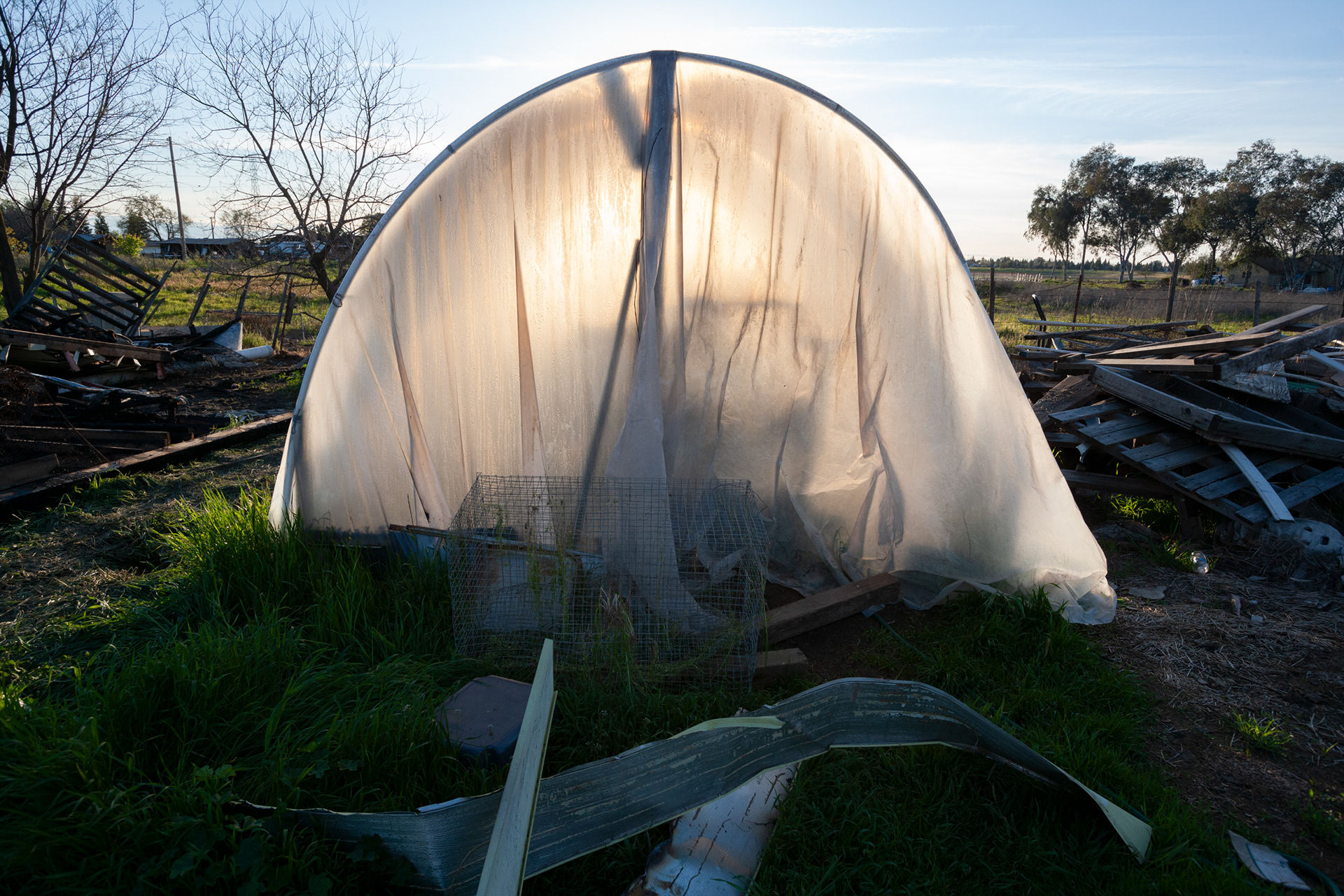
An improvised hothouse where the Yang family grew Asian specialty crops and cages where they kept chickens. Photo: March 21, 2006.
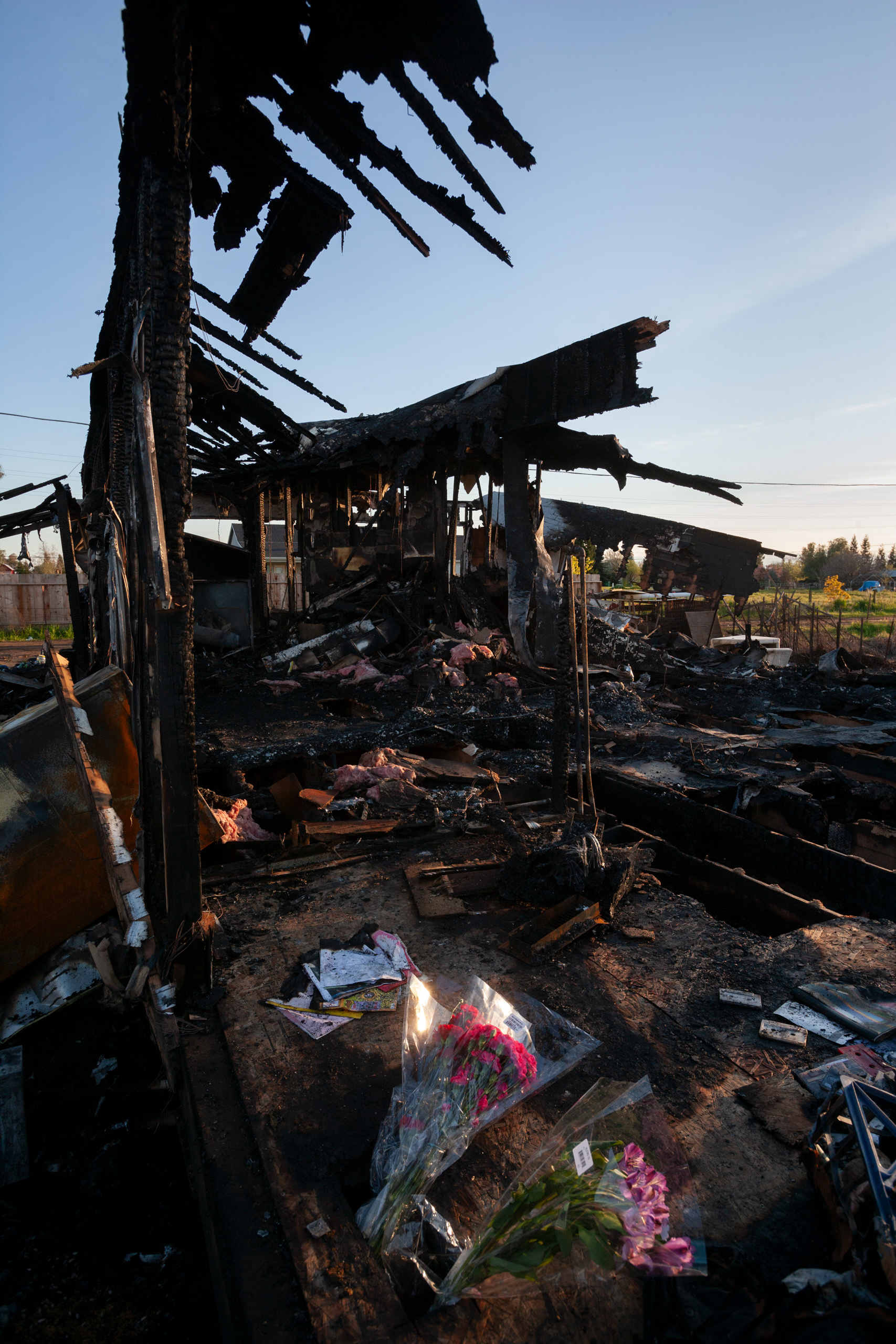
Yang fire site vigils-09
Flowers left by mourners near the end of the trailer, where the fire’s destruction was almost total. Photo: March 21, 2006.
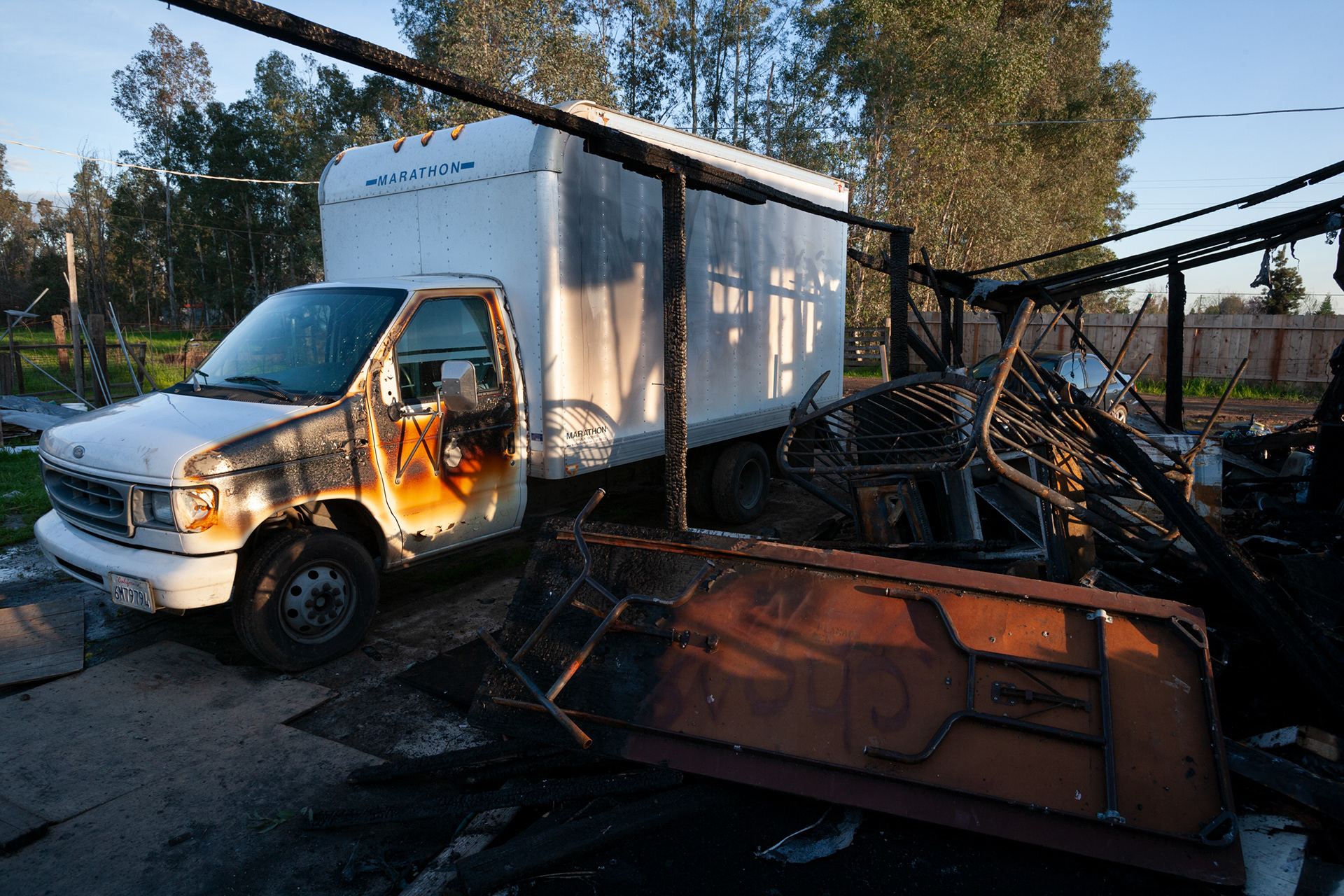
Yang fire site vigils-10
The Yang family’s produce truck was also totaled. Photo: March 21, 2006.
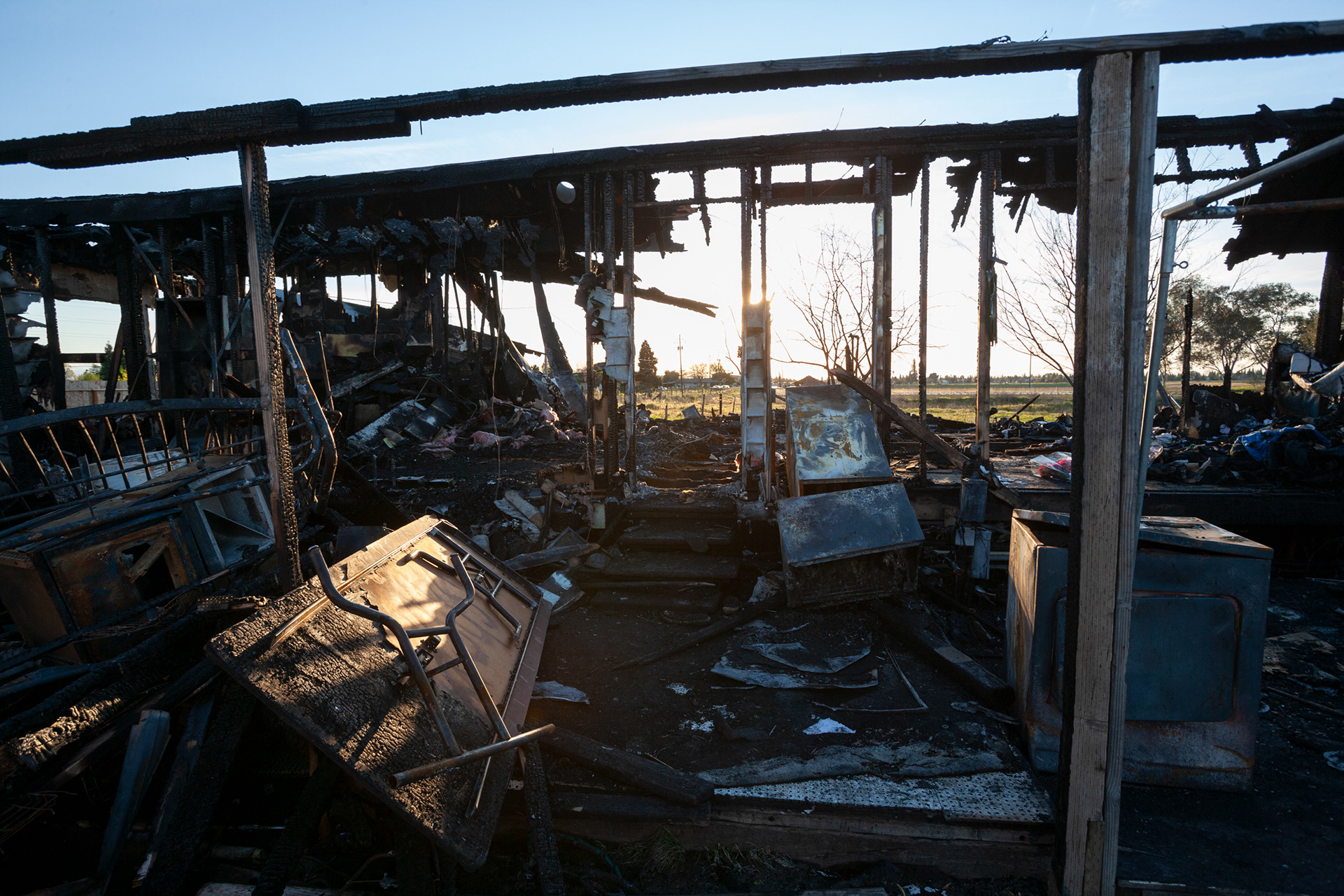
Yang fire site vigils-11
The sun nears the horizon, casting long shadows amid the wreckage. Photo: March 21, 2006.
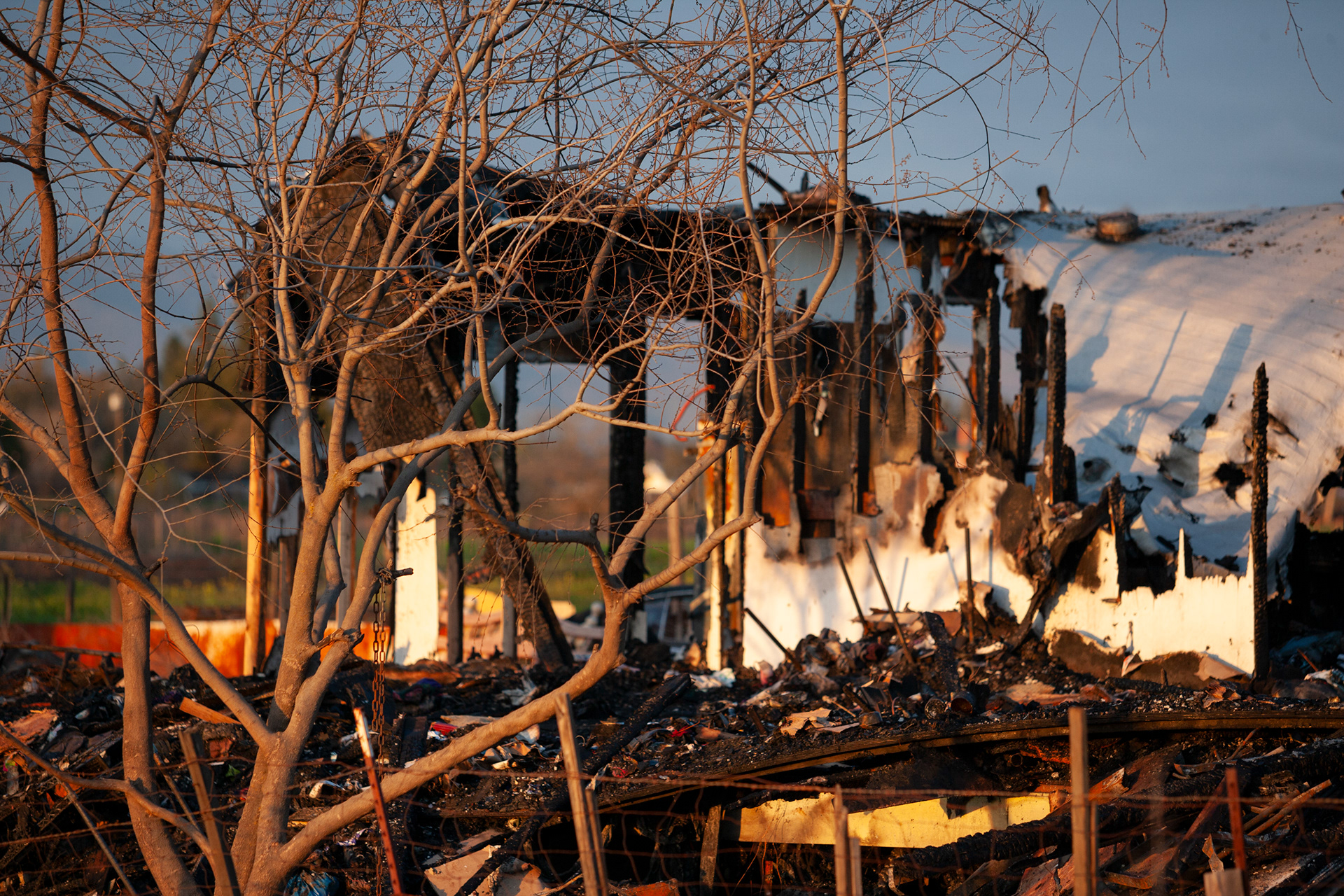
Yang fire site vigils-12
The west side of the trailer wreckage. Photo: March 21, 2006.
Yang fire site vigils-13
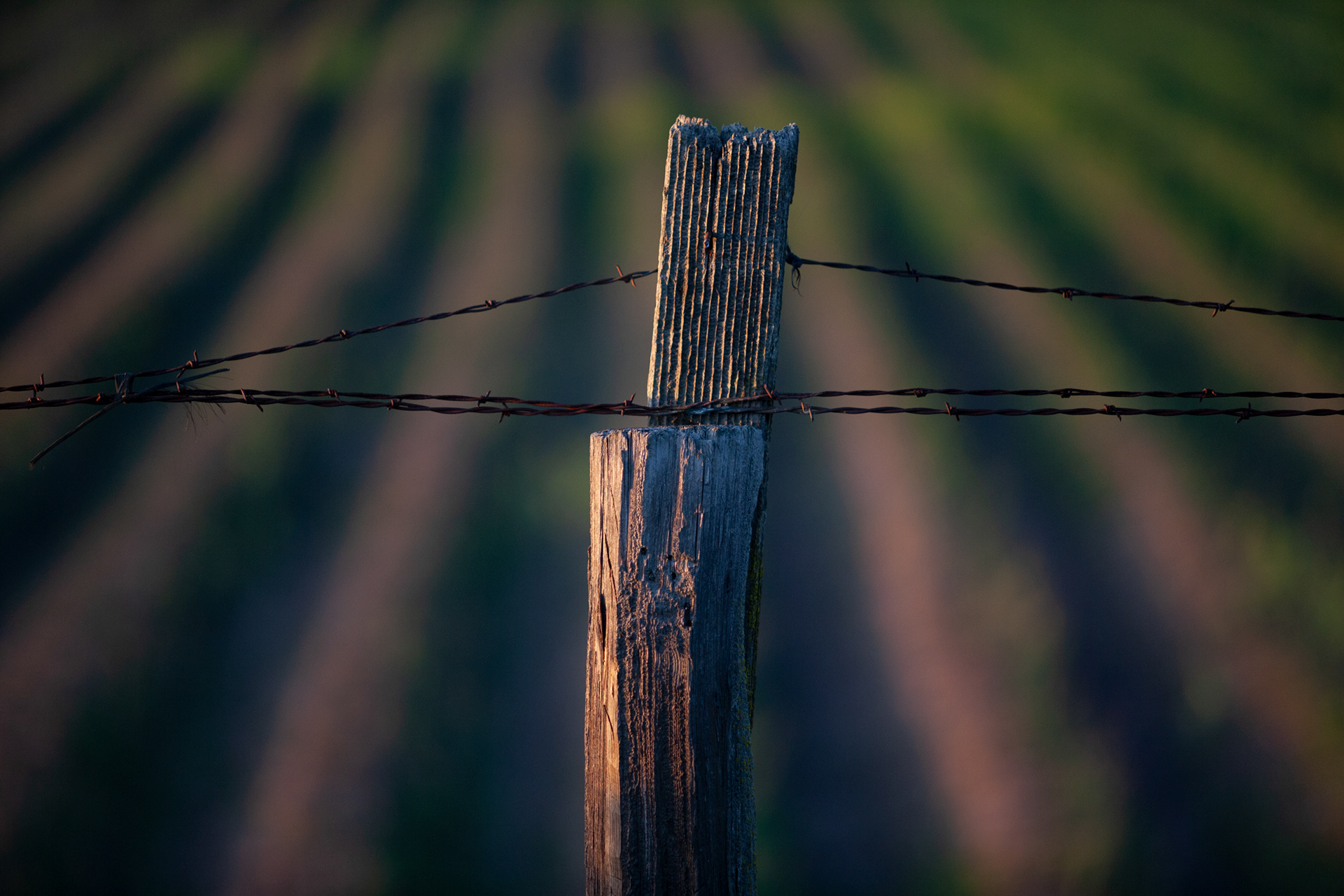
Evening light on a fencepost near the fire site. Photo: March 21, 2006.
Yang fire site vigils-14
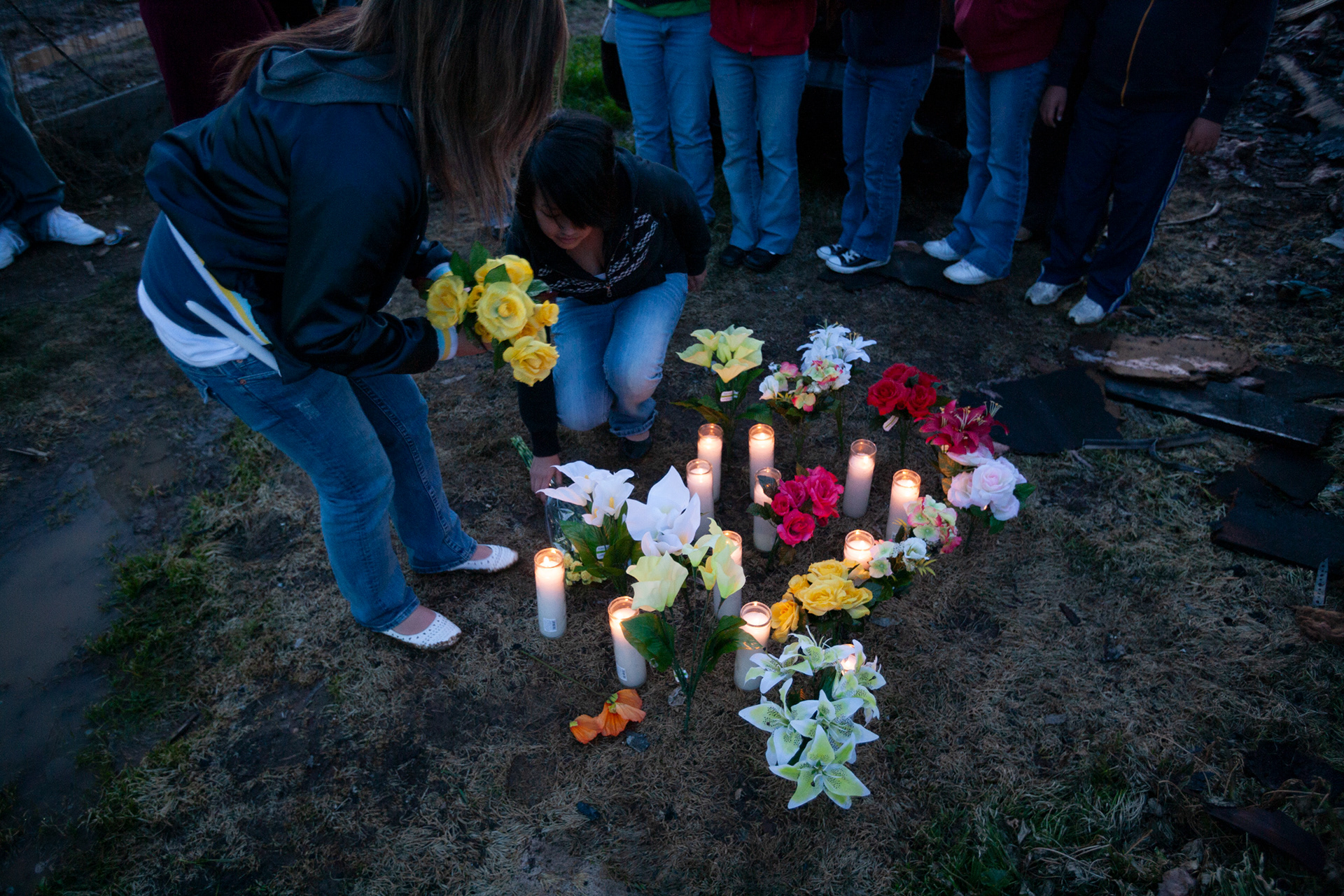
Relatives and friends arrive and begin lighting candles. Photo: March 21, 2006.
Yang fire site vigils-15
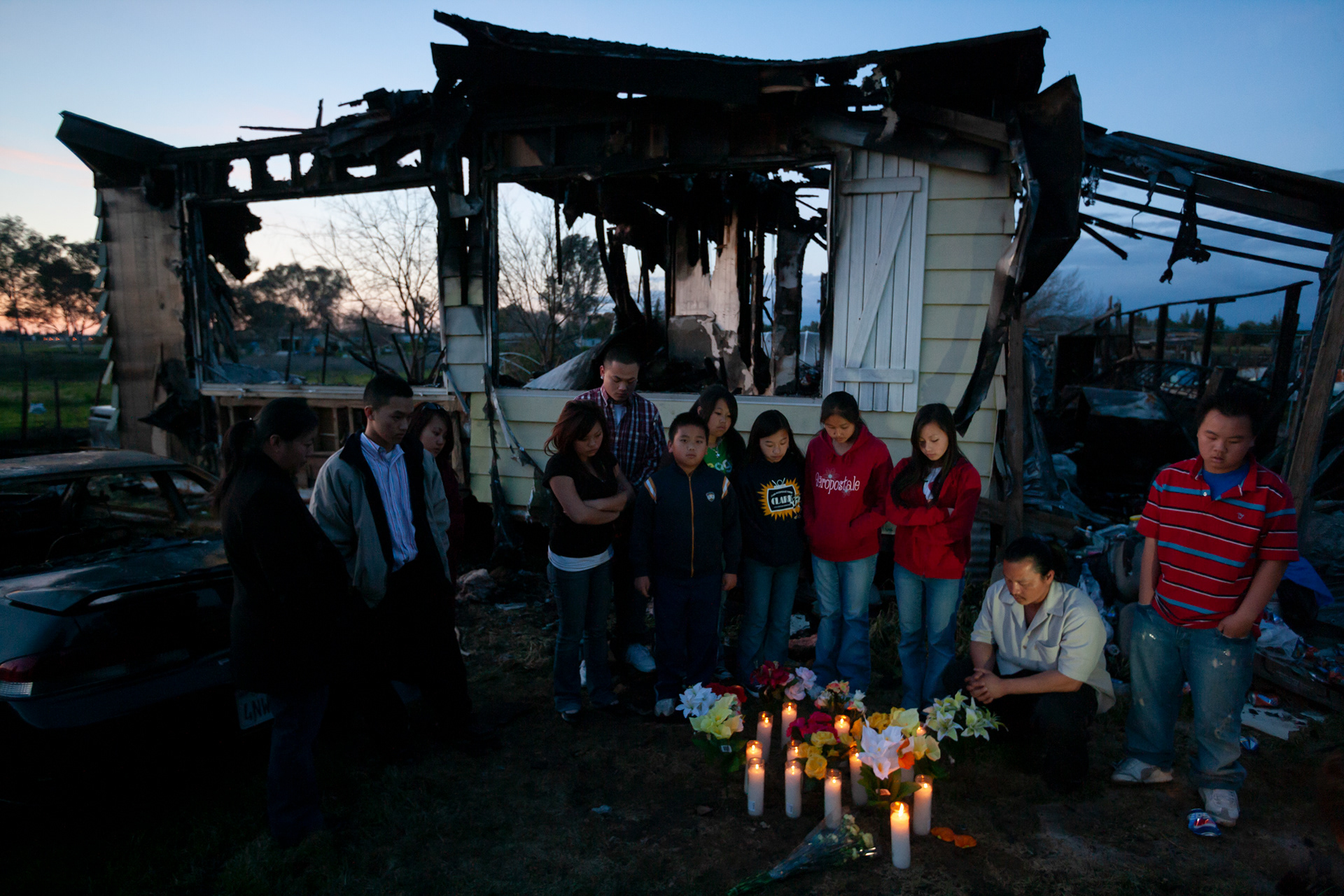
Mourners in front of the trailer wreckage. Cousin Chong Yang squats near the right. This will be the first of four consecutive nightly vigils. Photo: March 21, 2006.
Yang fire site vigils-16
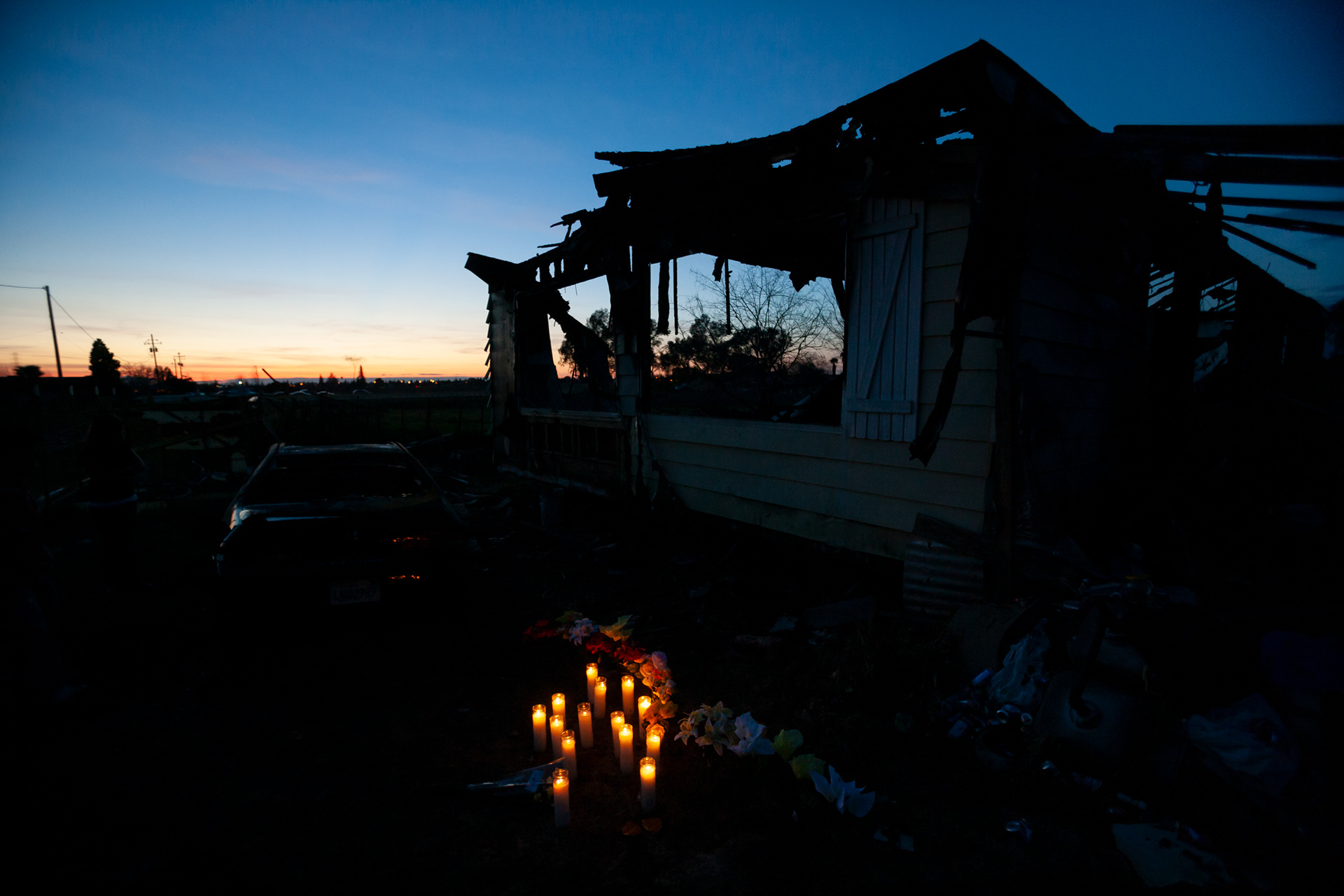
The glow of candles just after sunset. Photo: March 21, 2006.
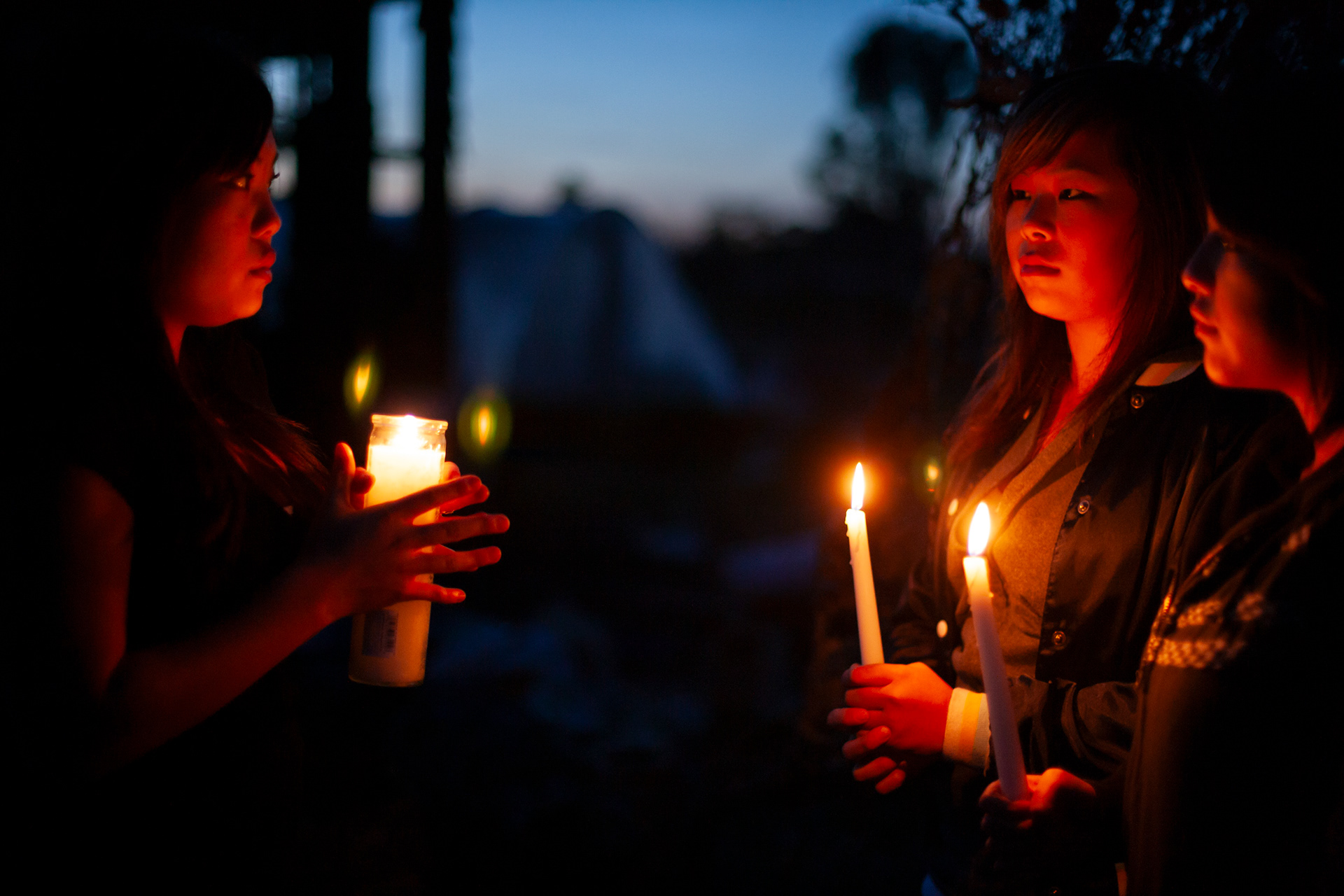
Yang fire site vigils-17
Gabby Vang, left, and two cousins mourn the loss of three family members. Photo: March 21, 2006.
Yang fire site vigils-18
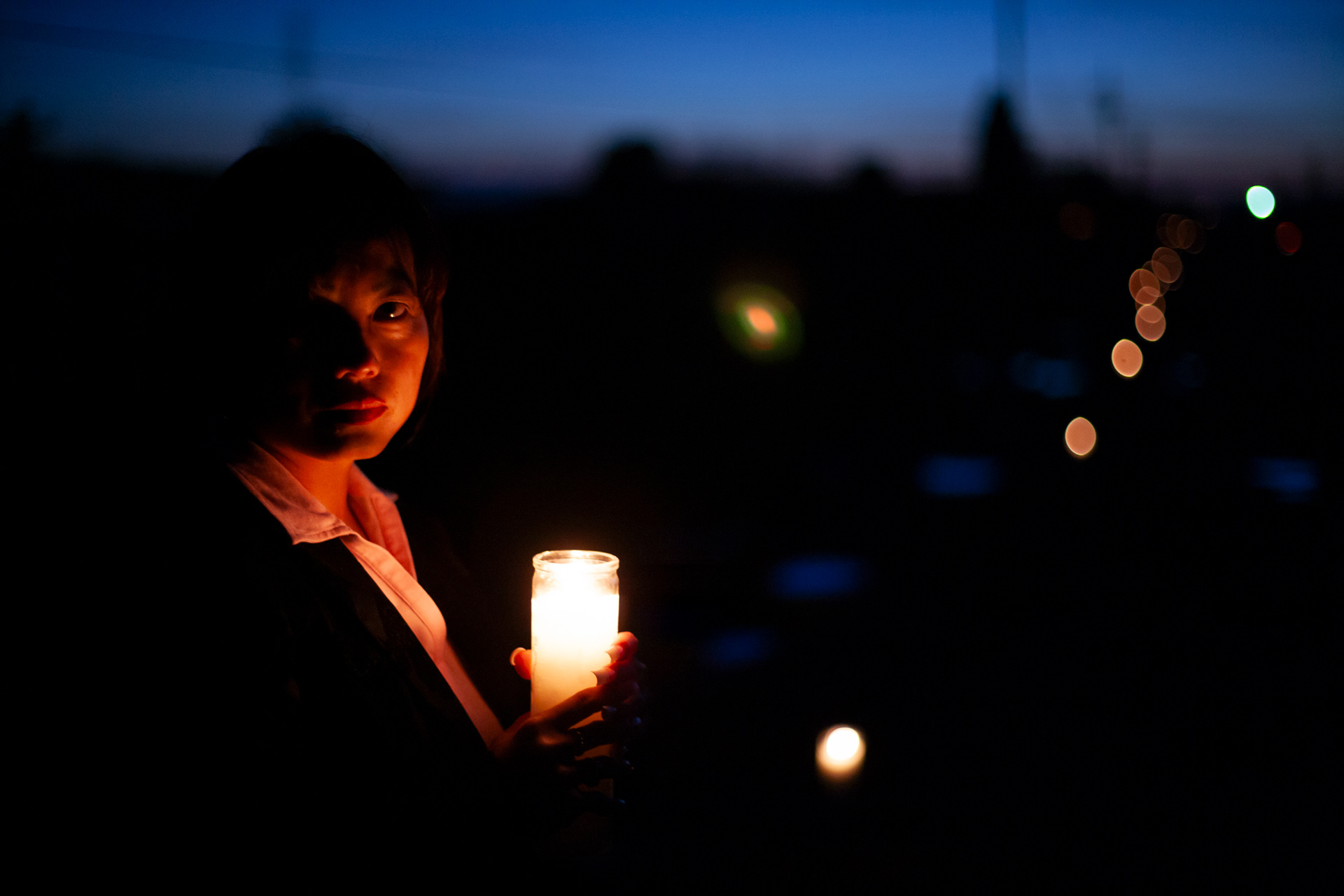
Community activist, Paula Yang, a distant cousin of the deceased, stands in the long, dirt driveway leading up to the mobile home. Paula would play a major role in raising money and support for the fire victims’ family.
I met Paula for the first time after taking this picture. She would invite me to photograph many other Hmong events over the next several years, including a clan meeting and the Yang family funerals. Photo: March 21, 2006.
Yang fire site vigils-19
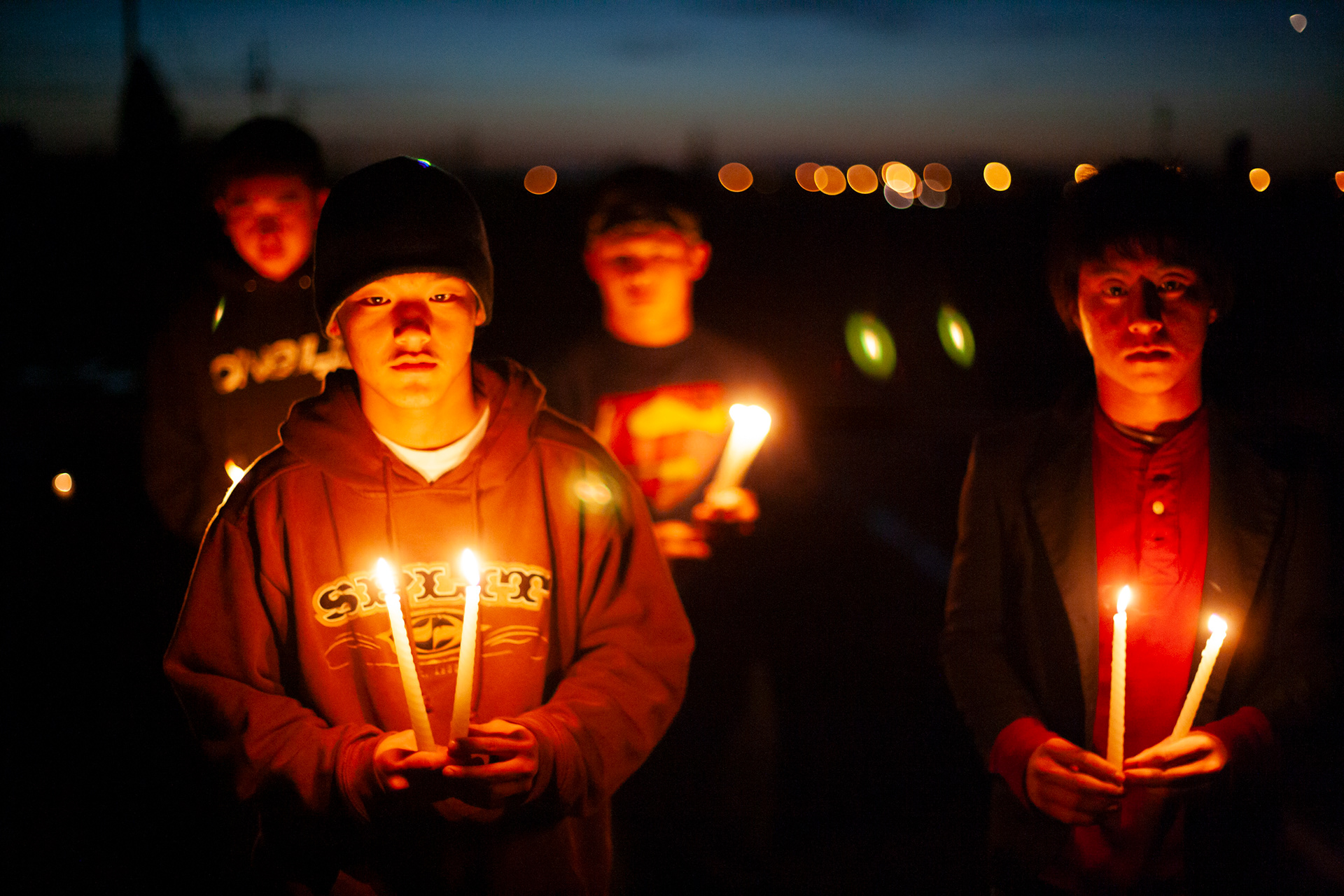
Several college friends of Shee Yang arrive at the first candlelight vigil. Photo: March 21, 2006.
Yang fire site vigils-20
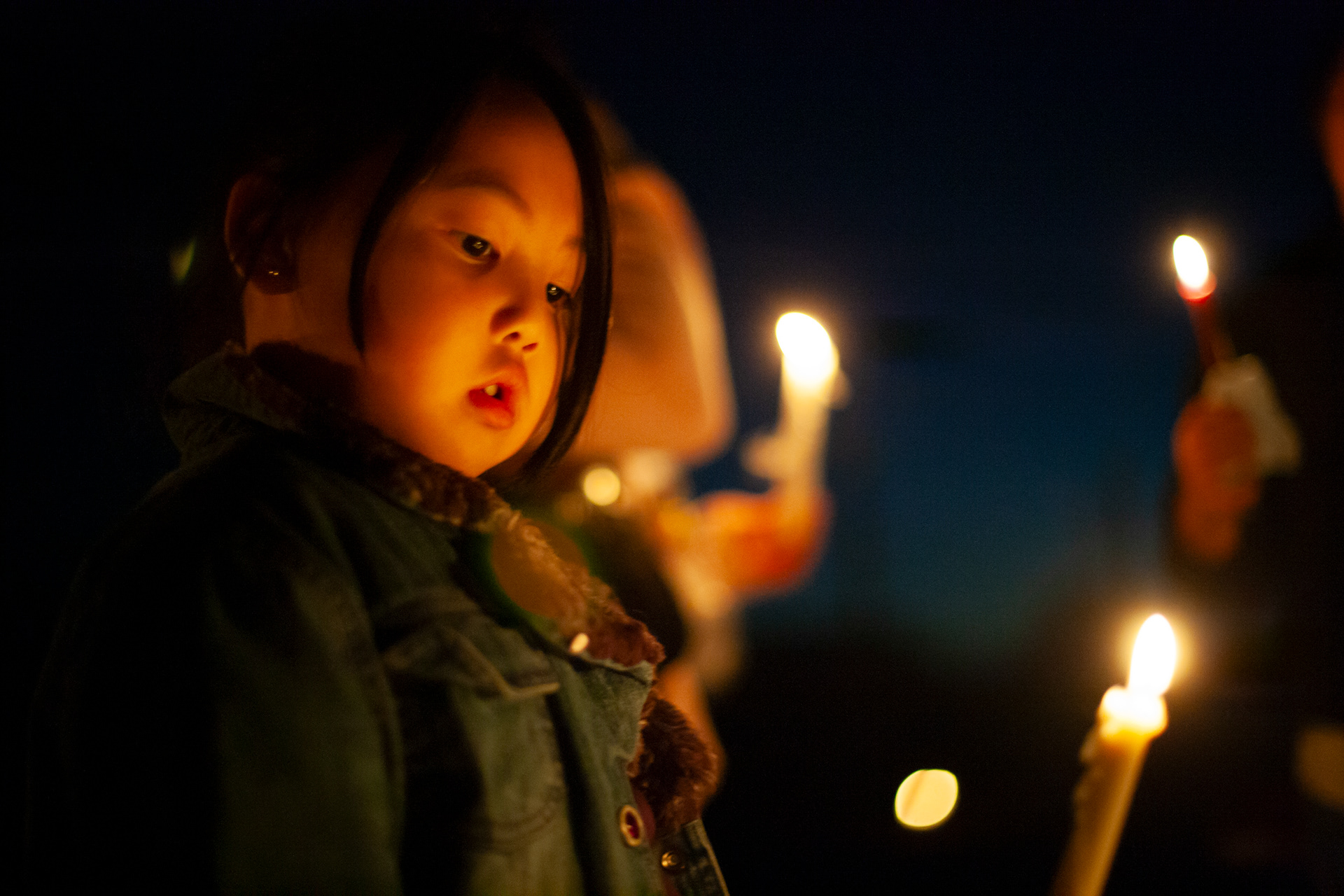
A child joins the first candlelight vigil. Photo: March 21, 2006.
Yang fire site vigils-21
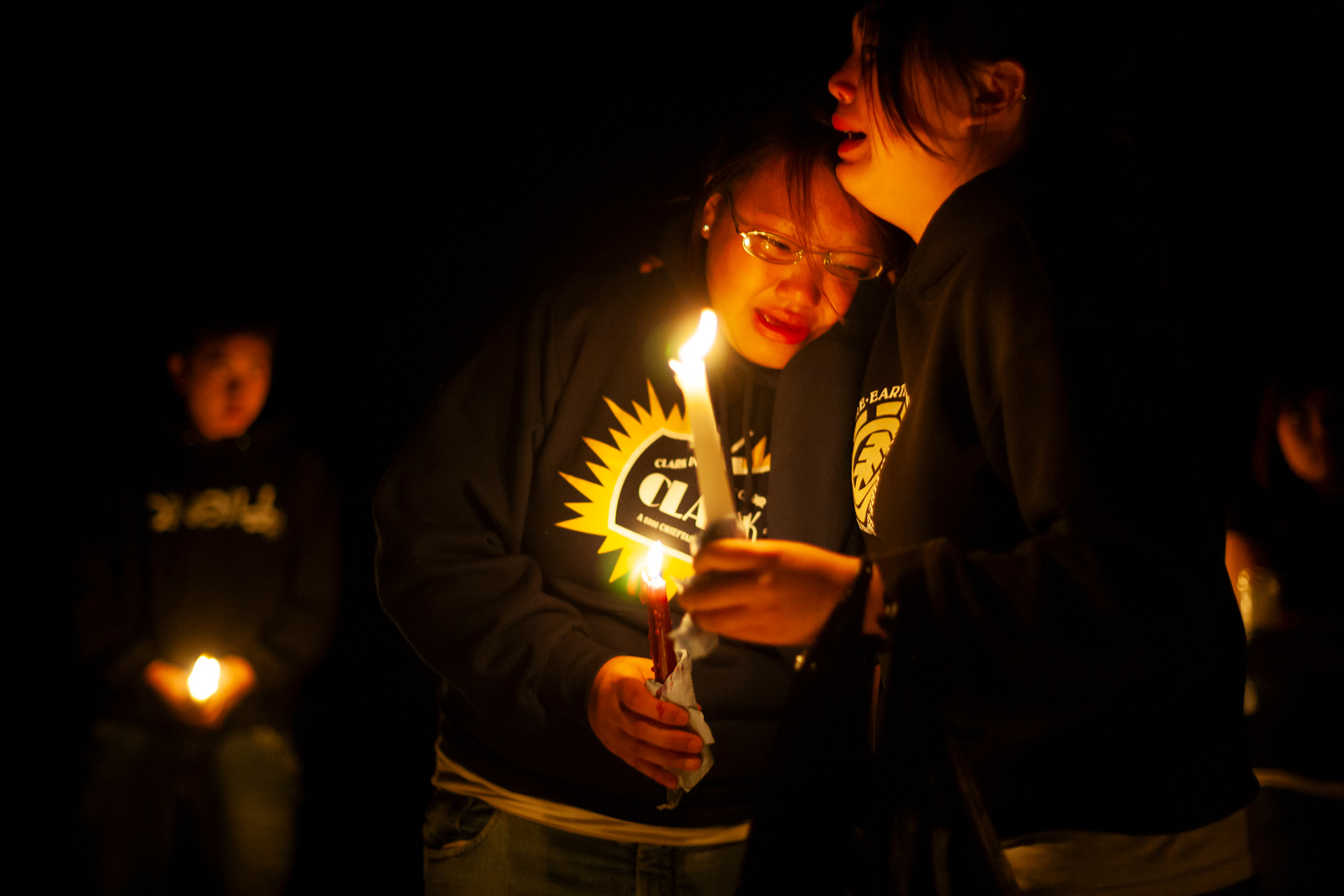
Highschool classmates of Ia (pronounced “Ee-yah”) Yang mourn the loss of their friend. Photo: March 21, 2006.
Yang fire site vigils-22
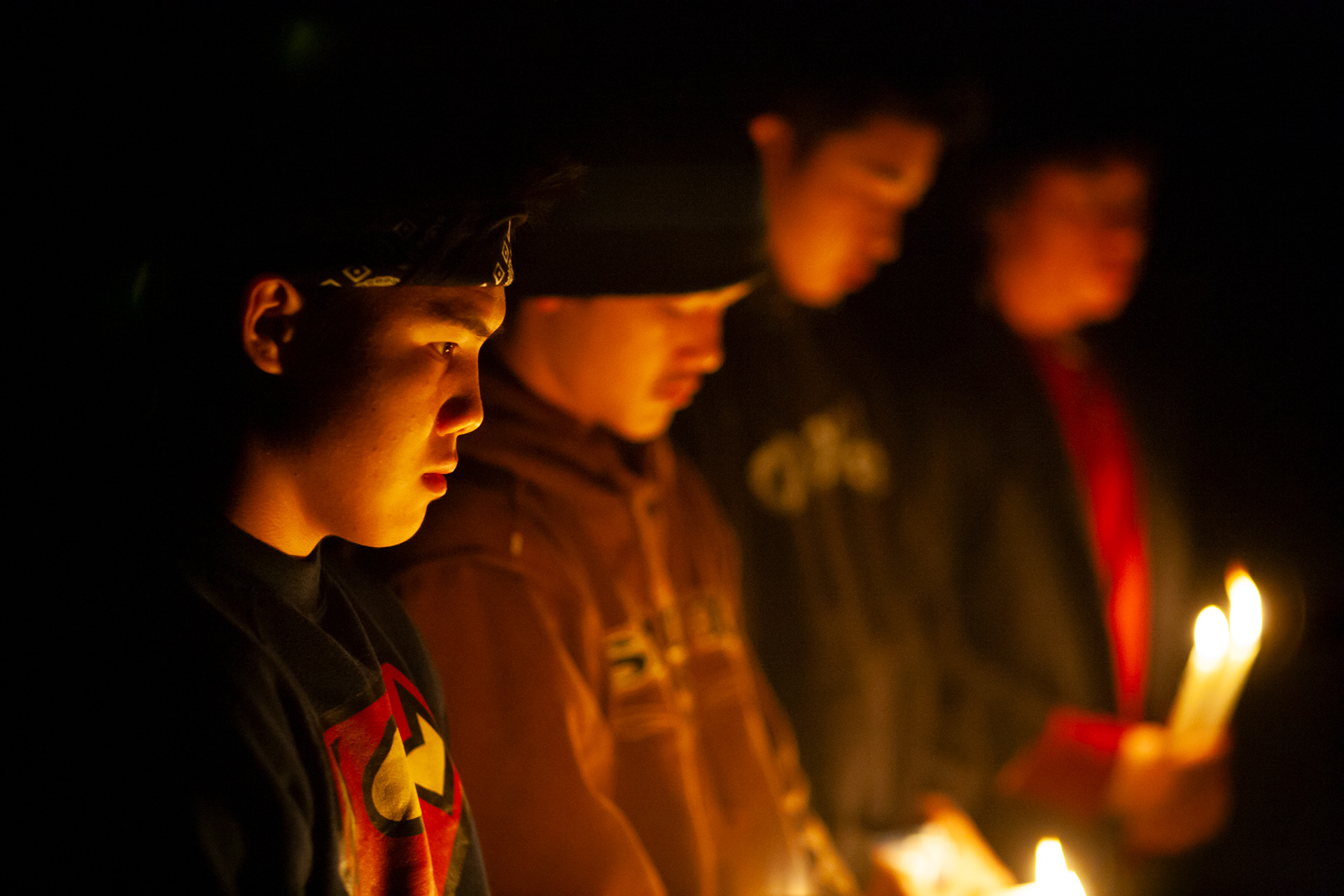
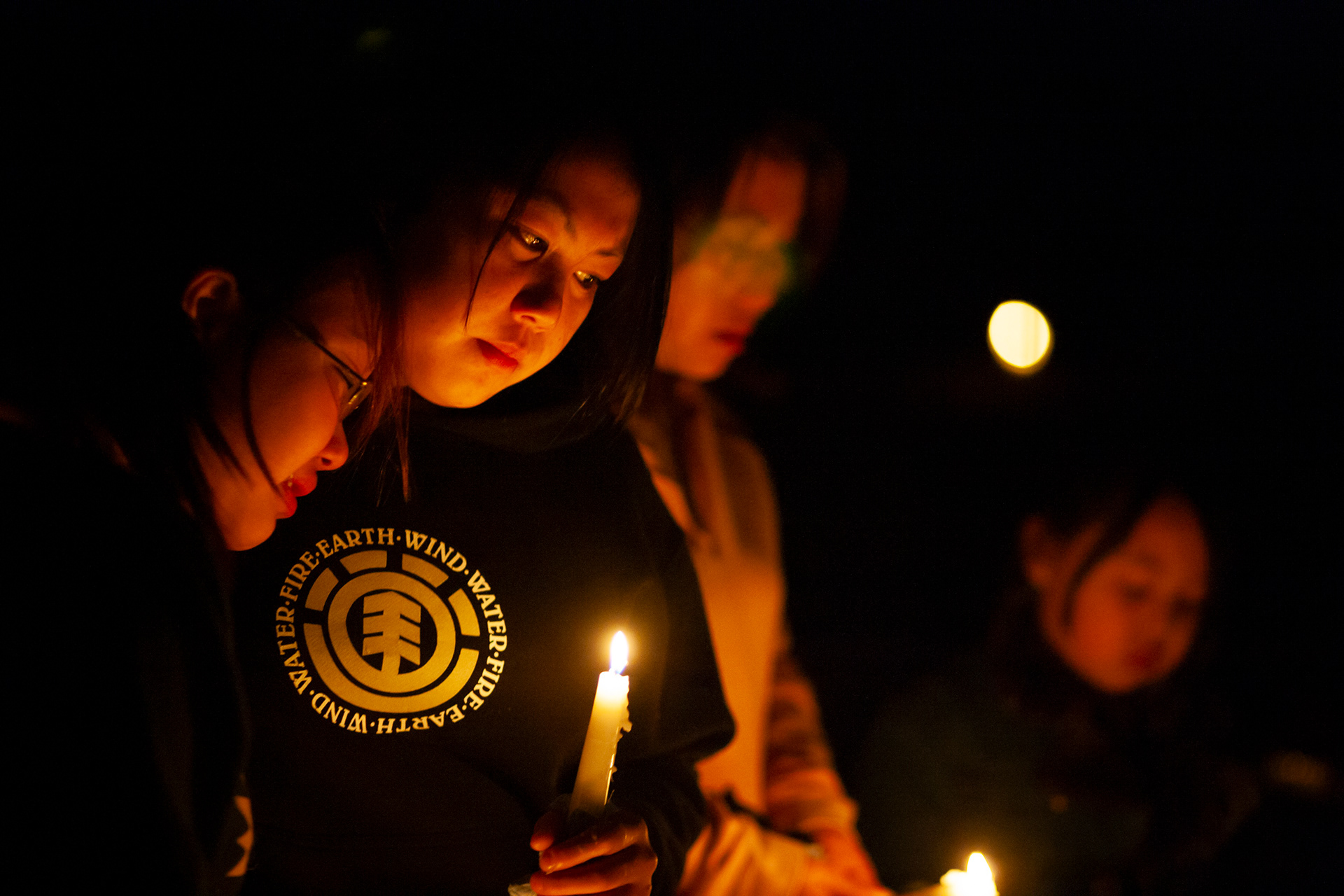
Tommy Her and friends mourn the loss of Ia and Pakou Yang. Photo: March 21, 2006
Yang fire site vigils-23
More classmates join the first candlelight vigil. Photo: March 21, 2006.
Yang fire site vigils-24
Cars arrive for the second nightly vigil. Photo: March 22, 2006.
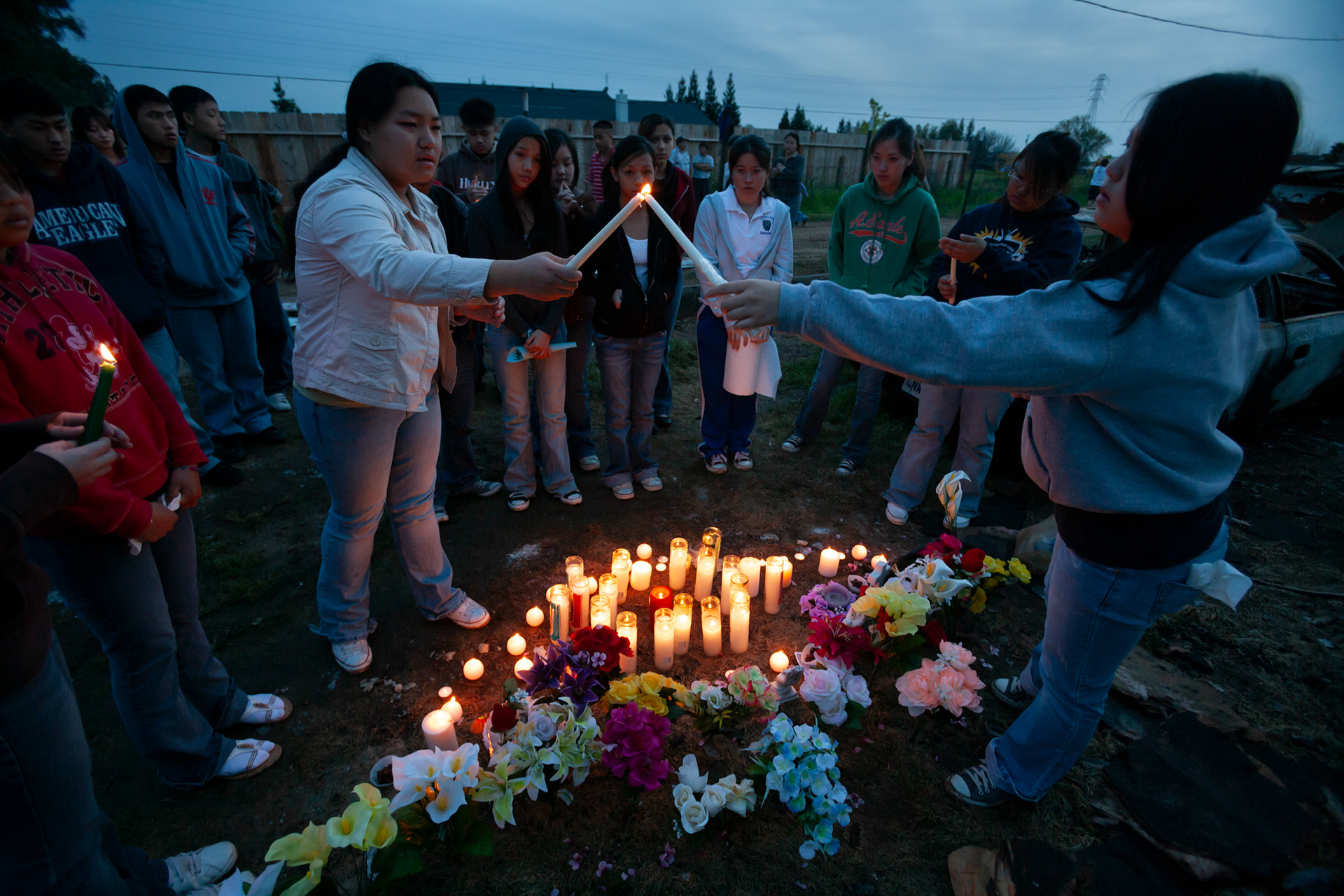
Yang fire site vigils-25
Roxanne Moua (left) passes the flame to Vicki Cha (right). Vicki was Shee Yang’s girlfriend and had become part of the family. They planned to marry after graduation. Photo: March 22, 2006.
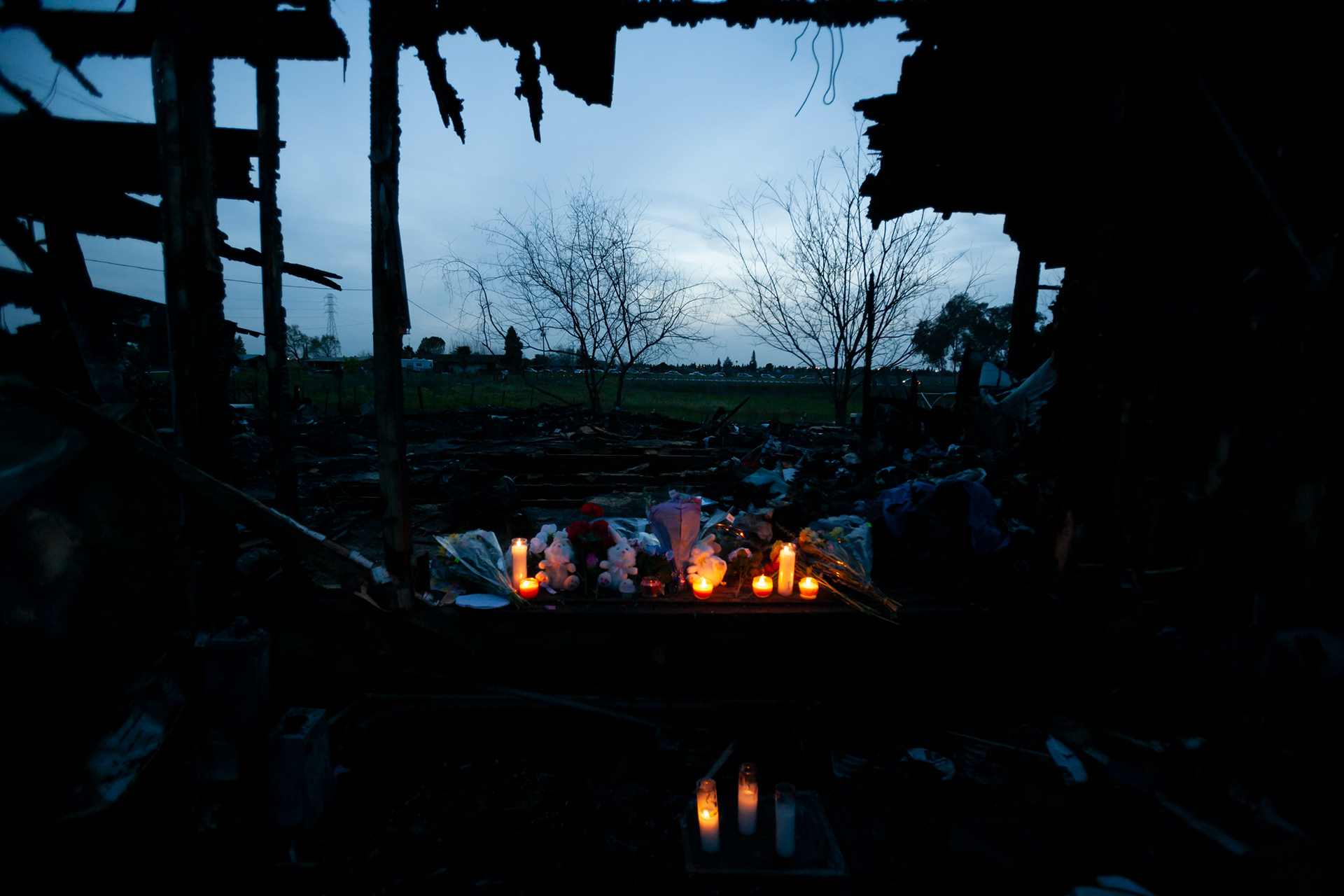
Yang fire site vigils-26
Freshly-lit candles glow against a dusk sky. Photo: March 22, 2006
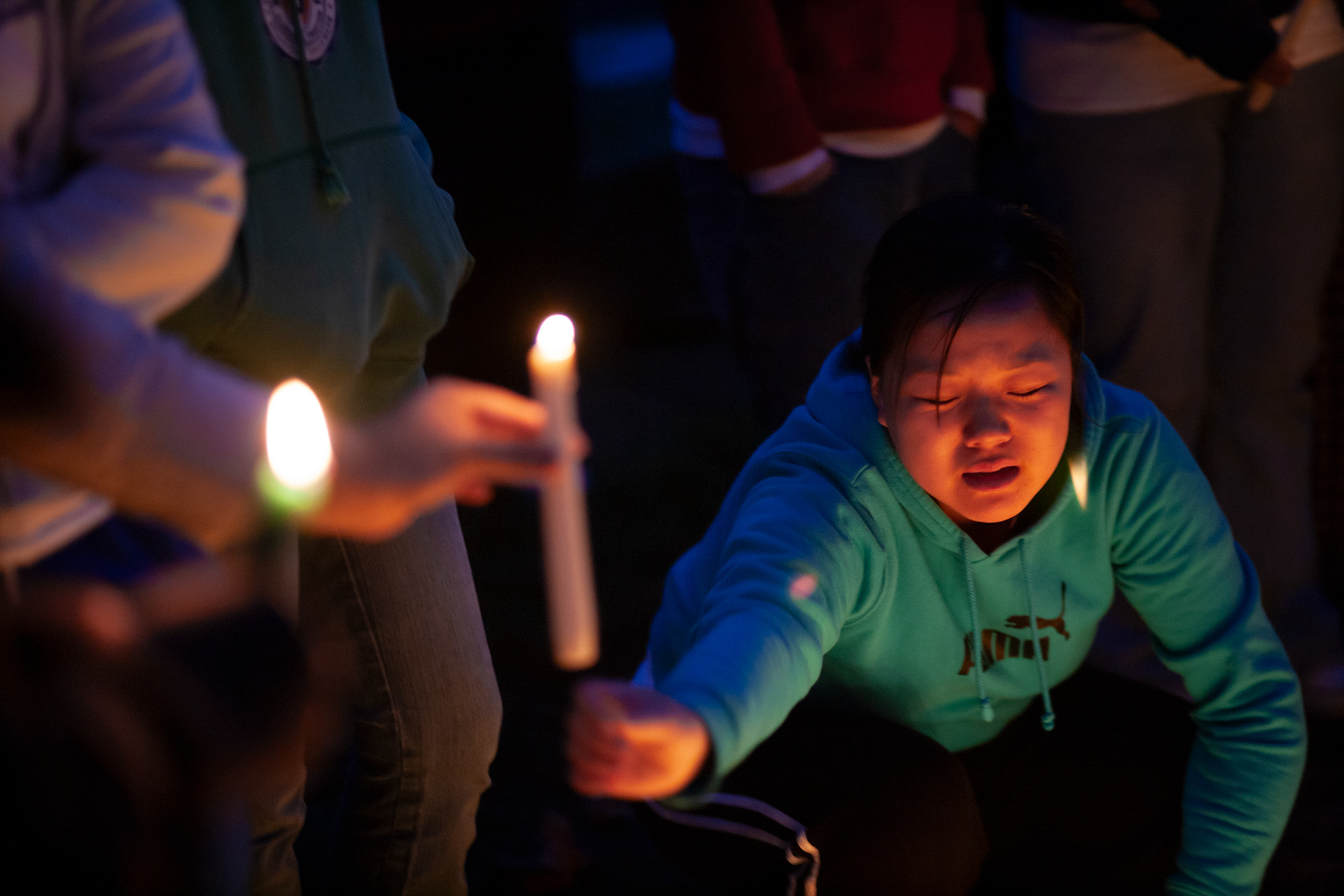
Yang fire site vigils-27
Vicki Cha tearfully reaches for a candle. Photo: March 22, 2006.
Yang fire site vigils-28
Ia’s classmates write on a poster board they have made for her. Photo: March 22, 2006
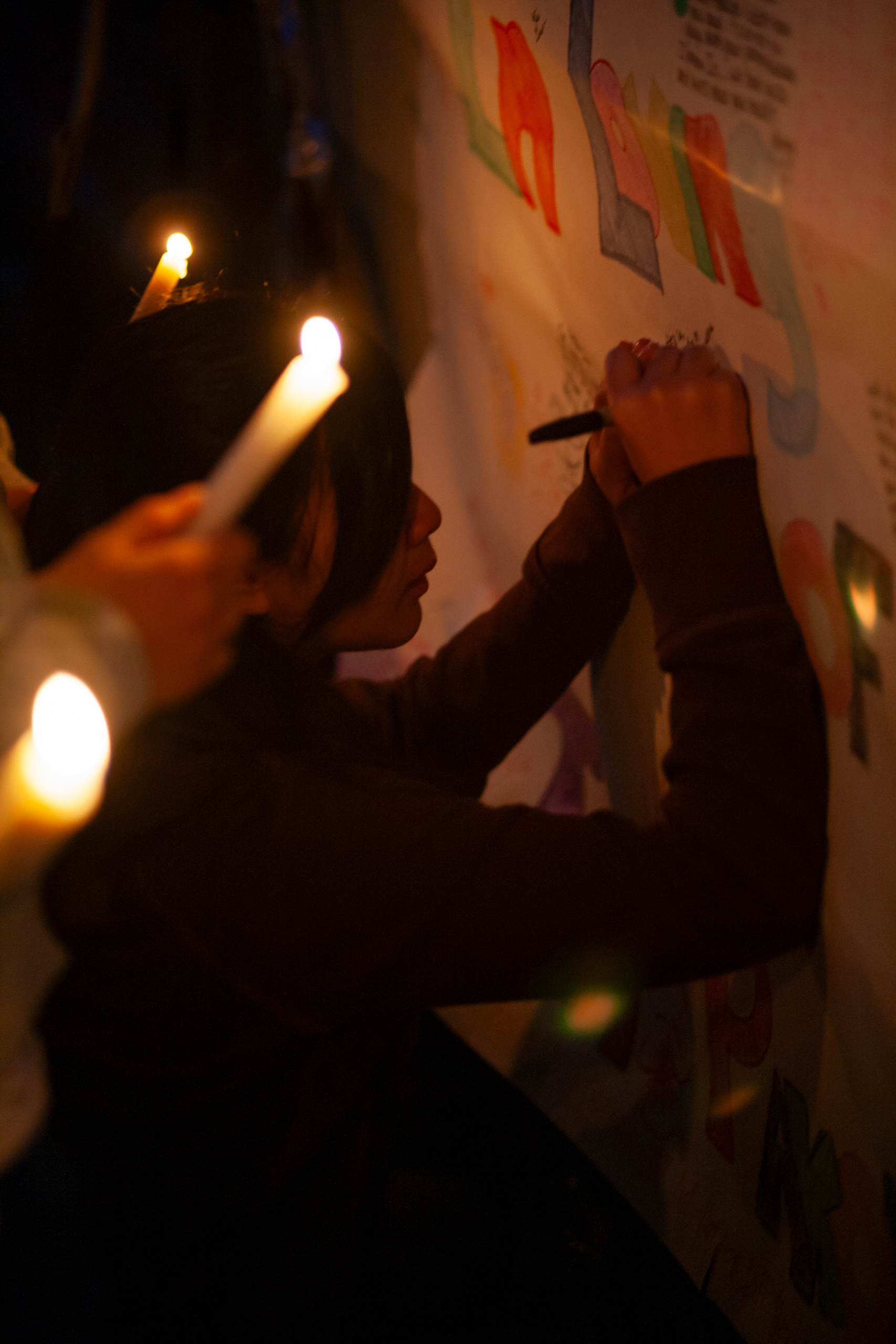
Yang fire site vigils-29
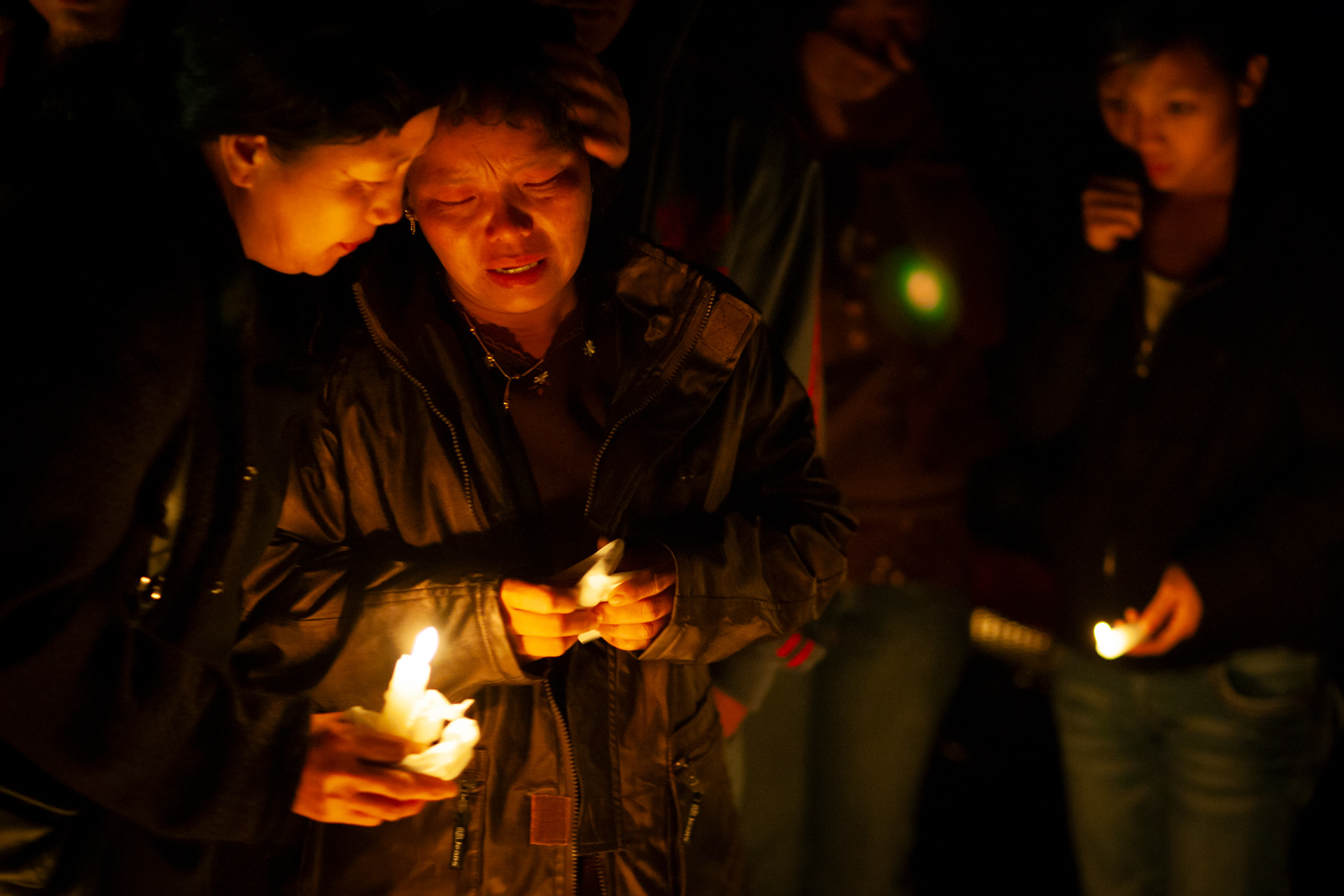
Doua Vang-Yang, mother of the deceased children, is comforted by a relative. Photo: March 22, 2006.
Yang fire site vigils-30
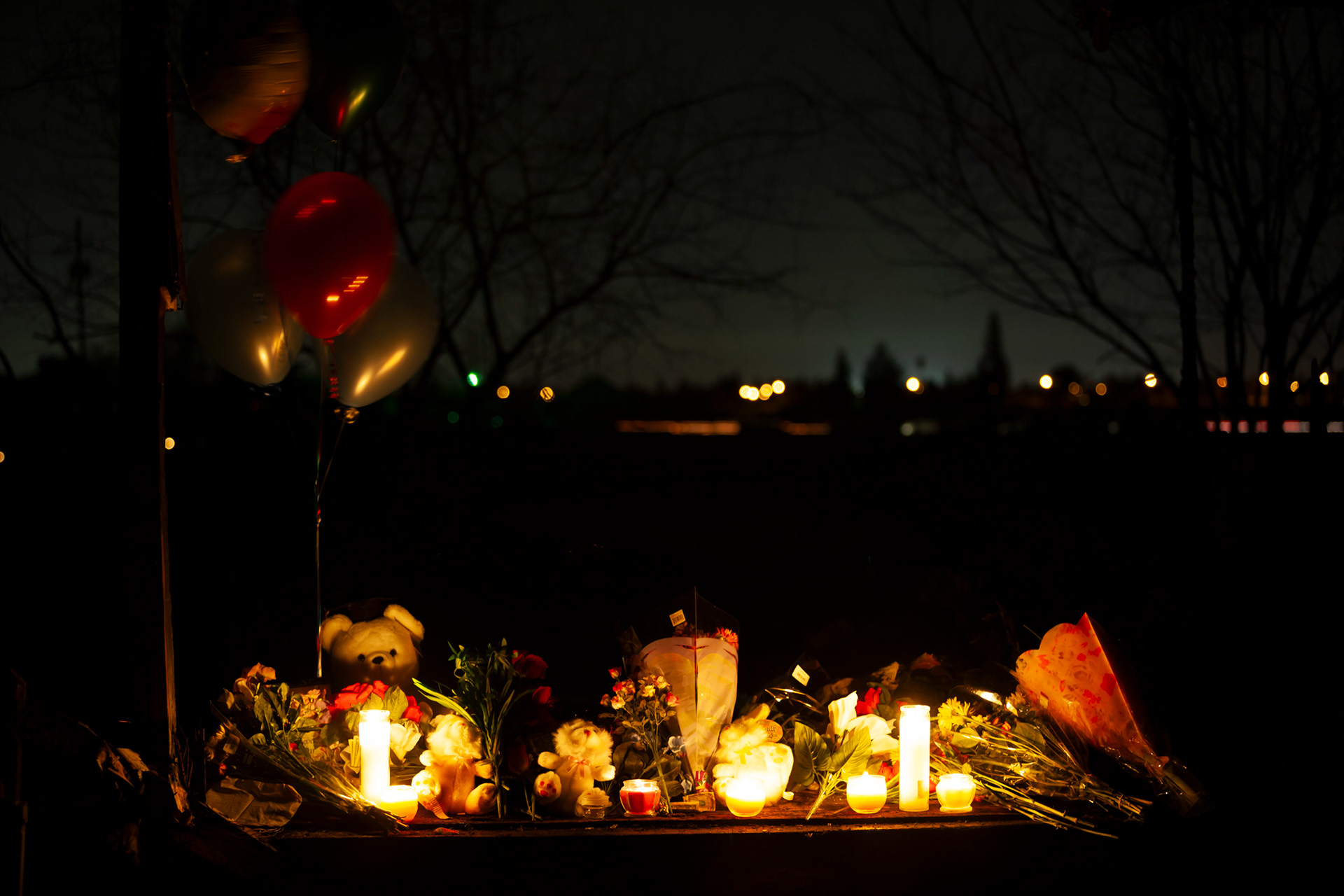
Memorial offerings. Photo: March 22, 2006.
Yang fire site vigils-31
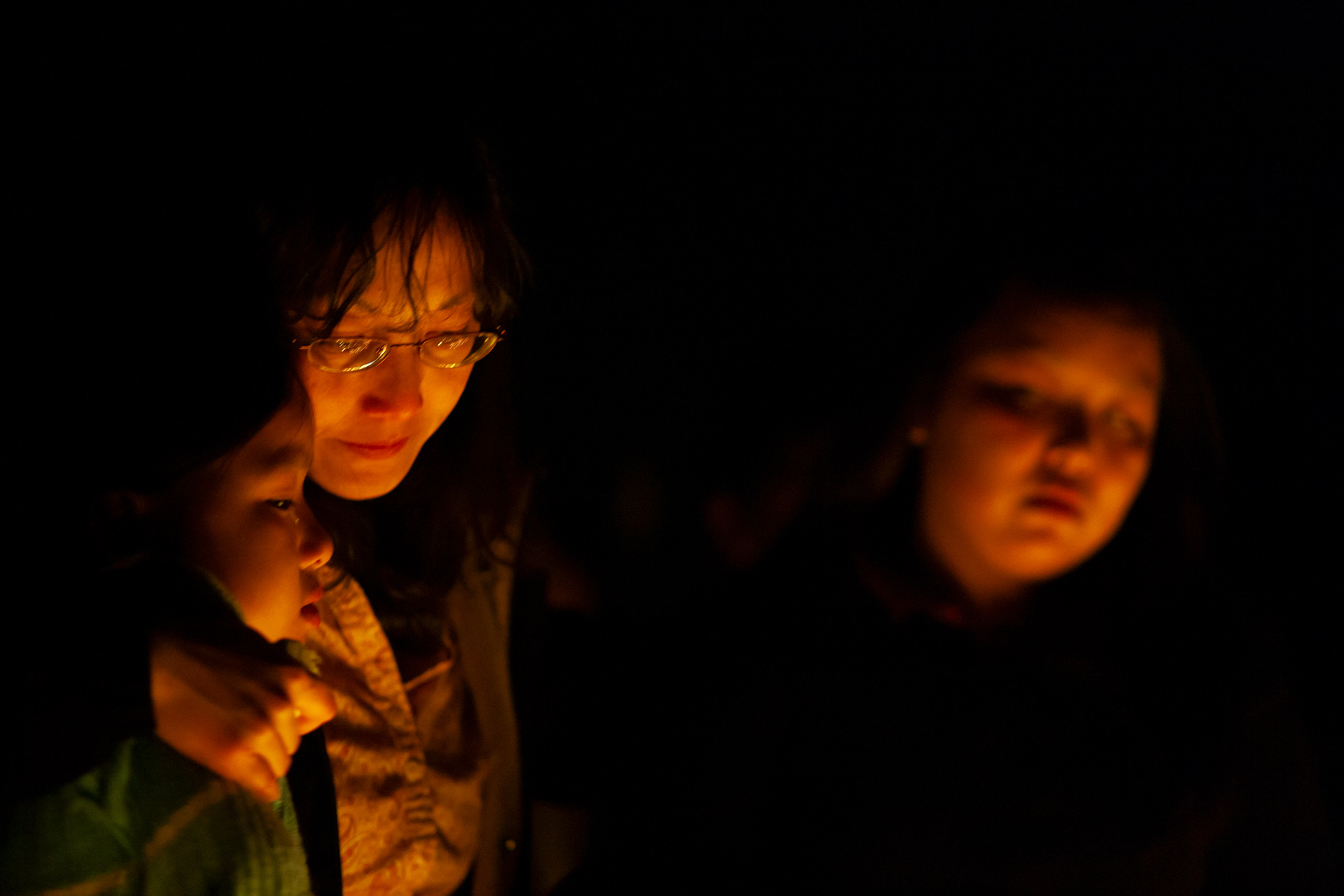
Need Moua-Yang comforts her niece, Christy Yang, one of the children who survived the fire.
A sister-in-law of Chong Yang, Need Moua hosted the family at her home for many weeks, helped with fundraising and relief efforts and frequently provided meals for dozens of volunteers in her backyard. Photo: March 22, 2006.
Yang fire site vigils-34
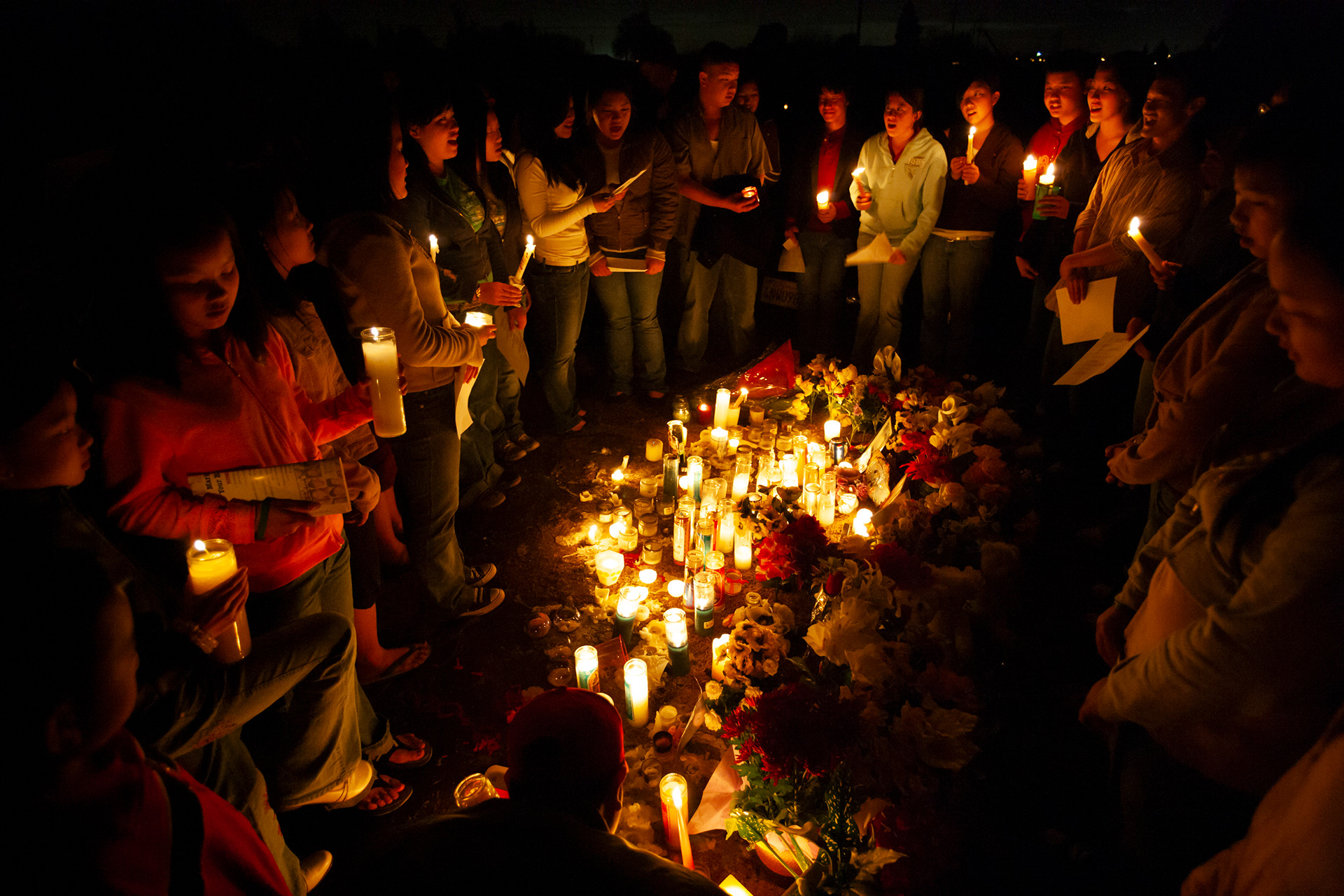
By the fourth night, the numbers of both candles and mourners had grown. Photo: March 24, 2006.
Yang fire site vigils-35
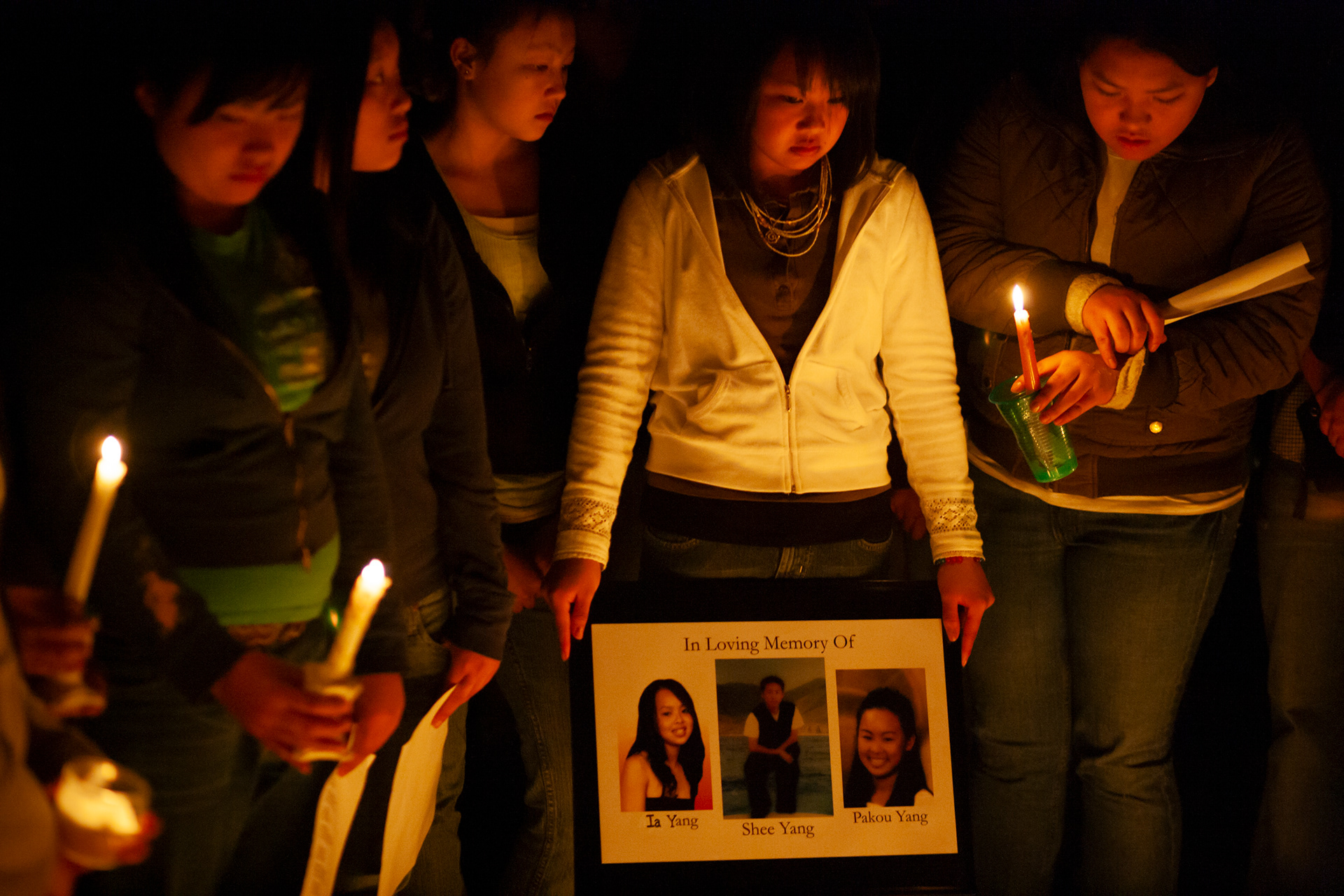
Mourners hold a photo of the three deceased Yang family members. Photo: March 24, 2006.
Yang fire site vigils-36
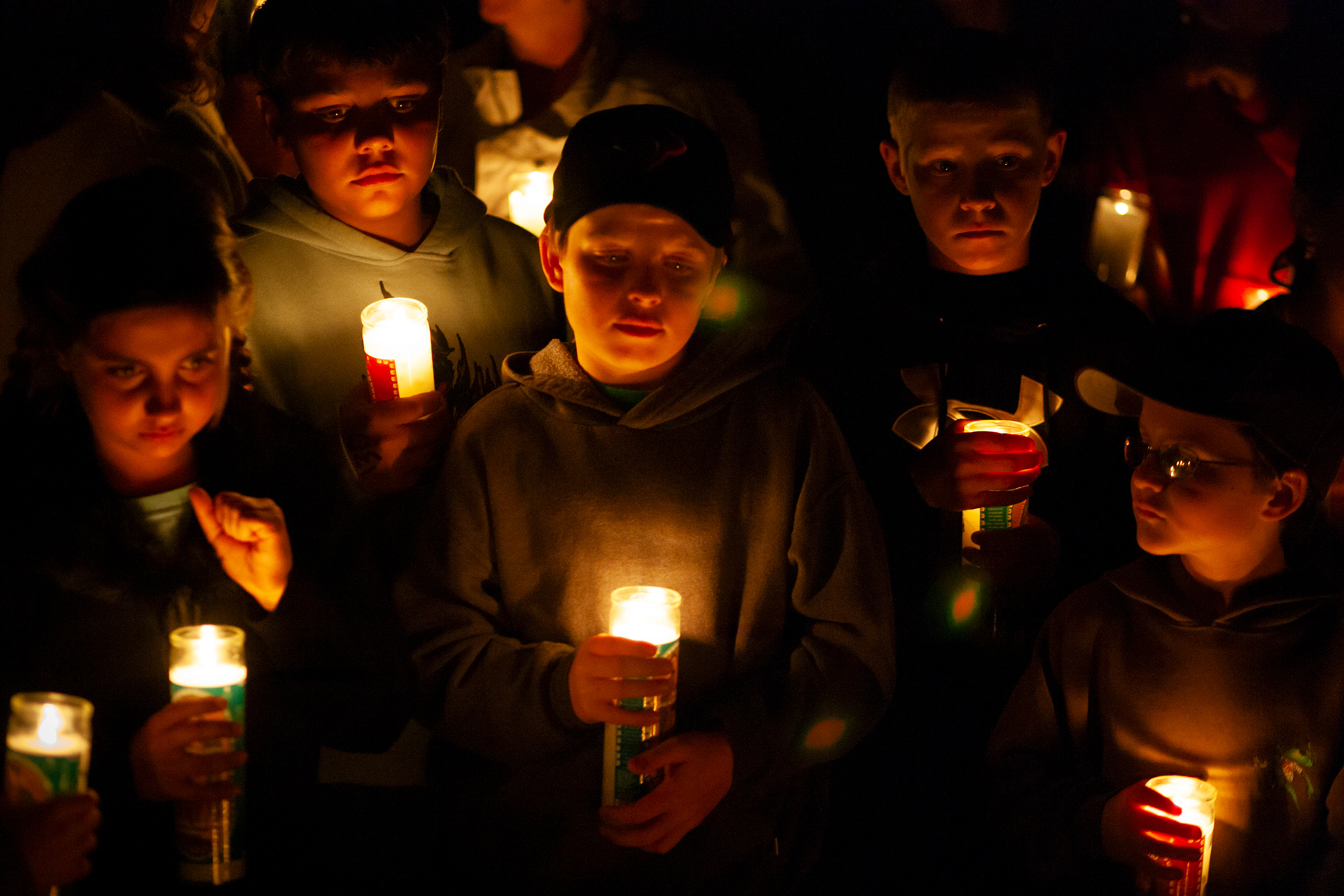
On the fourth nightly vigil for Yang family fire victims, Caucasian faces began to appear among the mourners. Photo: March 24, 2006.
Yang fire site vigils-37
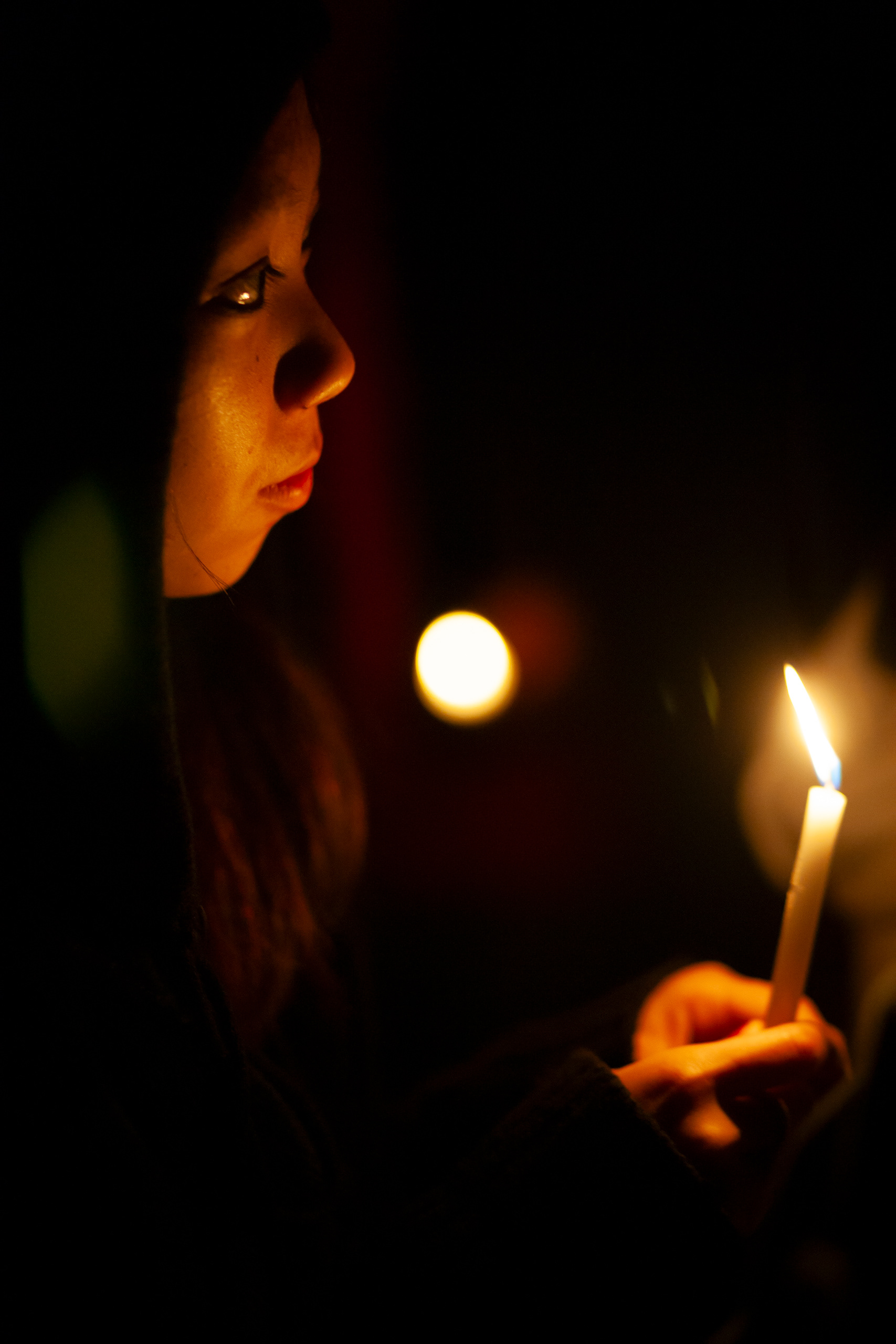
A Yang cousin holds a candle. Photo: March 24, 2006.
Yang fire site vigils-38
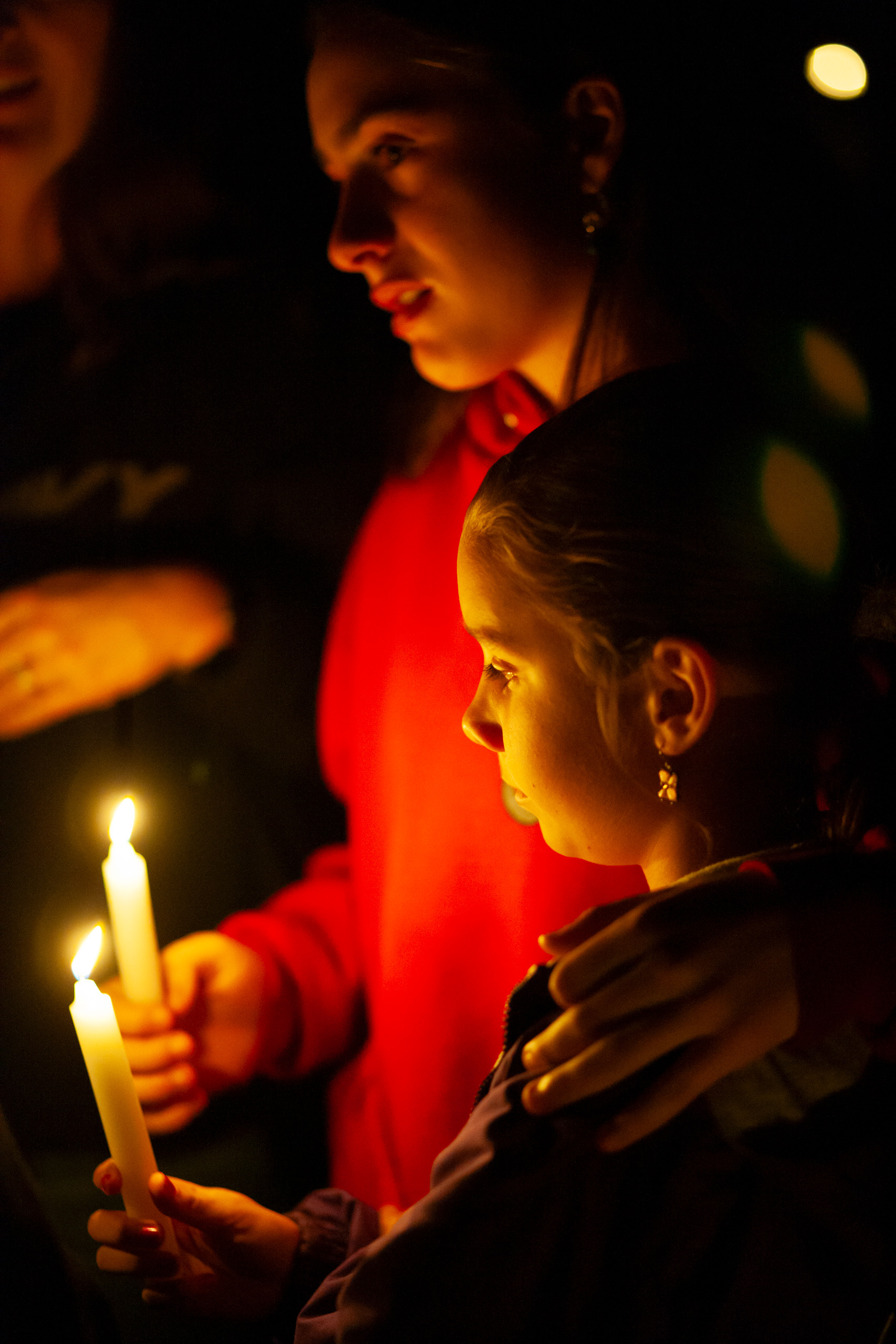
A mother and her daughter, who was a classmate of Pakou Yang, join the fourth night vigil. Photo: March 24, 2006.
Yang fire site vigils-39
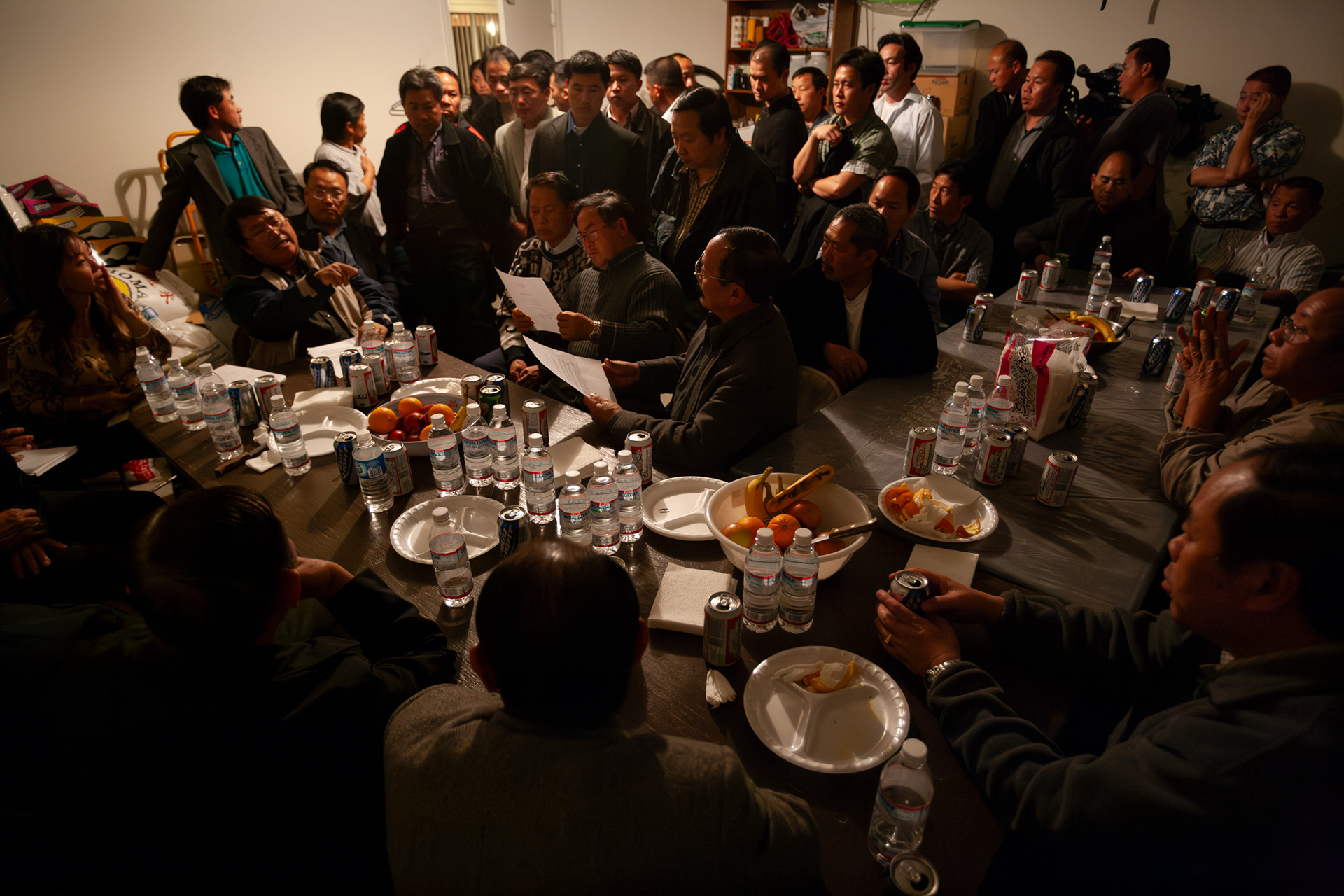
A clan meeting of the Yang elders is held in the crowded garage of a Fresno home. Strategies for fundraising and providing relief to the family are discussed.
Traditionally, Hmong clan meetings would only have included men. But here, Paula Yang (left) has emerged as a community leader and plays a central role in the discussion. Bee Yang (seated left), a professor of Social Work at Fresno State, gestures with his finger toward Ge Paul Yang (center), a farmer and respected elder from Merced.
This is likely the first time a cultural outsider has ever been allowed to photograph a Hmong clan meeting. Photo: March 24, 2006.
Yang fire site vigils-40
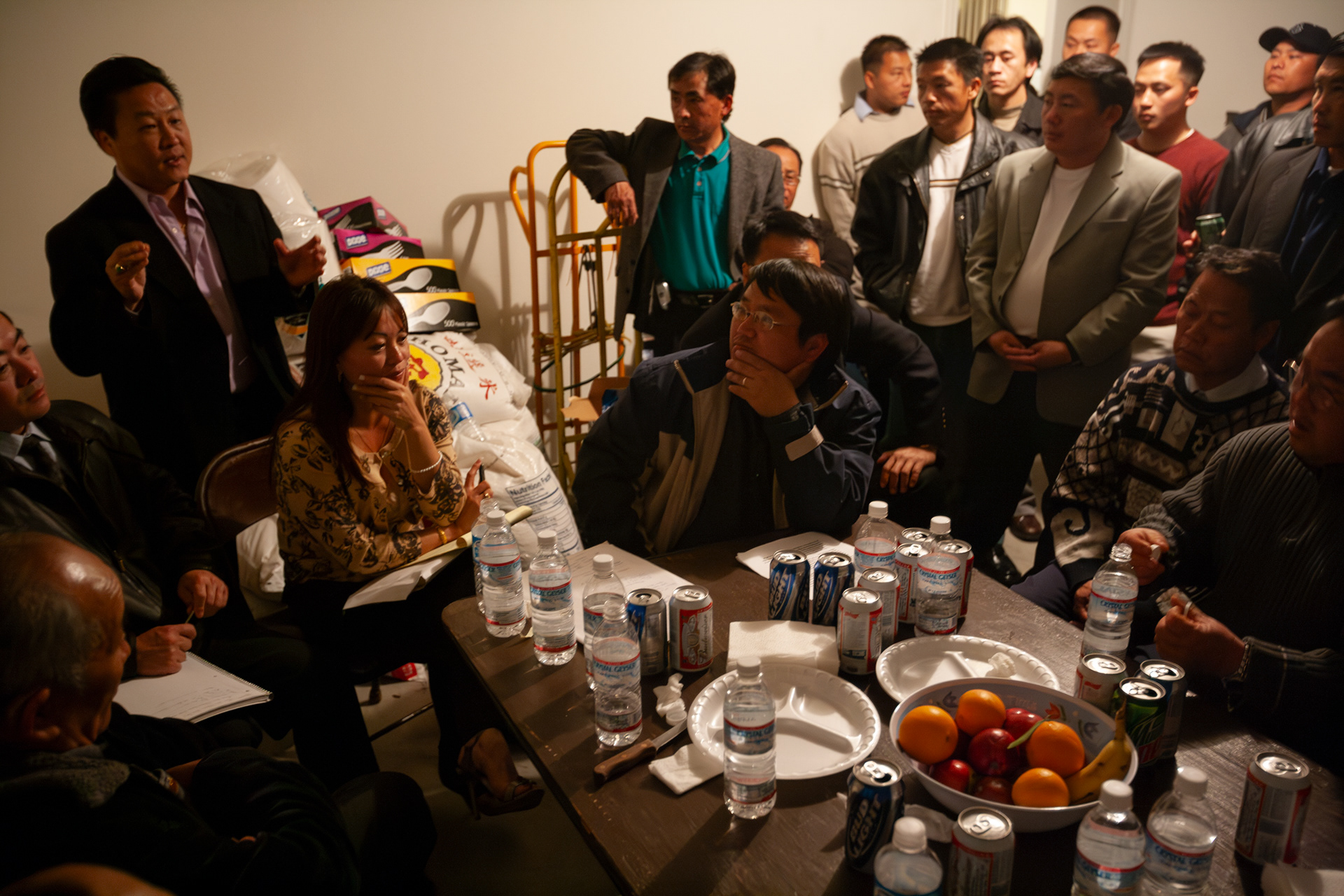
The clan meeting of the Yang elders continues in the crowded garage of a Fresno home. Paula Yang (seated left) has emerged as a community leader and plays a central role in the discussion. Bee Yang (center), listens as Paula Yang’s husband, Wayne Vang (upper left), speaks. Fong Yang, younger brother of Chong and owner of the home, is in the gray jacket to the right.
This is likely the first time a cultural outsider has ever been allowed to photograph a Hmong clan meeting. Photo: March 24, 2006.
Yang fire site vigils-41
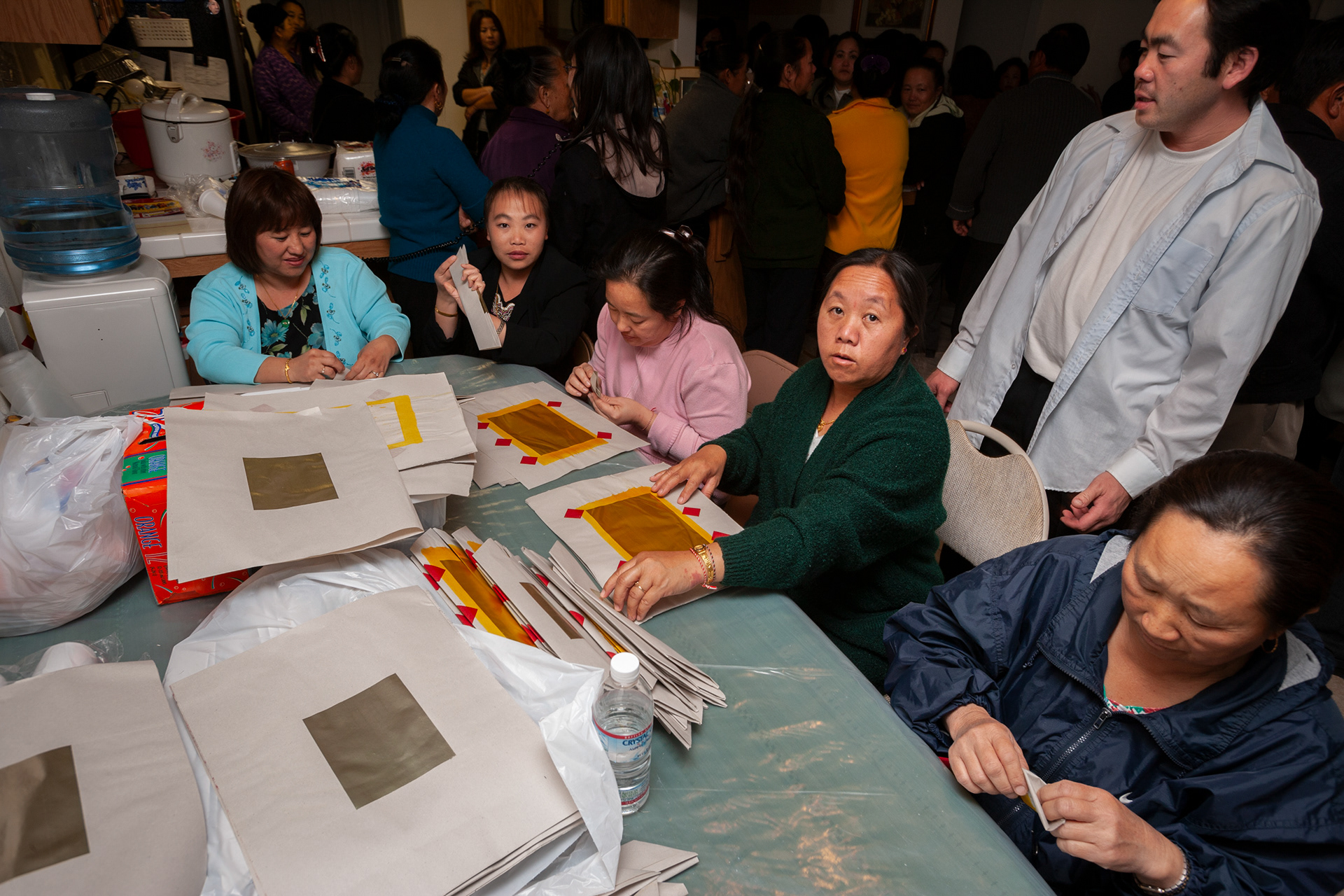
Relatives and volunteers are busy folding spirit money for three upcoming funerals of the Yang fire victims. The spirit money is intended to support three departed souls on their journey back to the Hmong homeland, helping to pay their way in the spirit world. Made out of shiny, gold paper imported from Thailand, folded spirit money also adds an element of origami-like beauty to the funeral ritual.
At the end of the funerals, the spirit money will be burned, sending it into the animist Hmong spirit world. Photo: March 24, 2006.
Pakou Yang Funeral
March 28-29, 2006
Palm Memorial Chapel and Mountain View Cemetery
Fresno, California
Pakou Yang, 13, was an eighth grade student at Clark Intermediate School in Clovis when she died in a mobile home fire on March 19, 2006. In less than seven minutes, the deadly blaze completely destroyed the trailer, killing Pakou, her older sister Ia (pronounced “Eeyah”), 15, and her Uncle Shee, 22.
Pakou’s father, Chong Yang, heroically rescued his wife and seven of Pakou’s siblings by smashing the trailer’s windows and pushing them out one by one. But Pakou and the other two victims had already died by the time Chong Yang was awakened by the fire.
The three consecutive funerals for Yang fire victims were a cultural first in Fresno. Most Hmong funerals are held at Hmong-owned facilities that cater exclusively to their own community. On a given weekend in Fresno, there are two to four funerals for Hmong elders who have passed. Since Hmong people don’t have temples like Lao Buddhists do, these elder funerals are an important cultural gathering point, not just for the families, but for the entire community.
The Yang funerals, by contrast, were the first to be held in a conventional American funeral home, Palm Memorial Chapel in downtown Fresno. This was seen as an important step toward breaking down cultural barriers between the Hmong and other Americans. Pakou was buried at Fresno’s Mountain View Cemetery.
Yang funerals-01
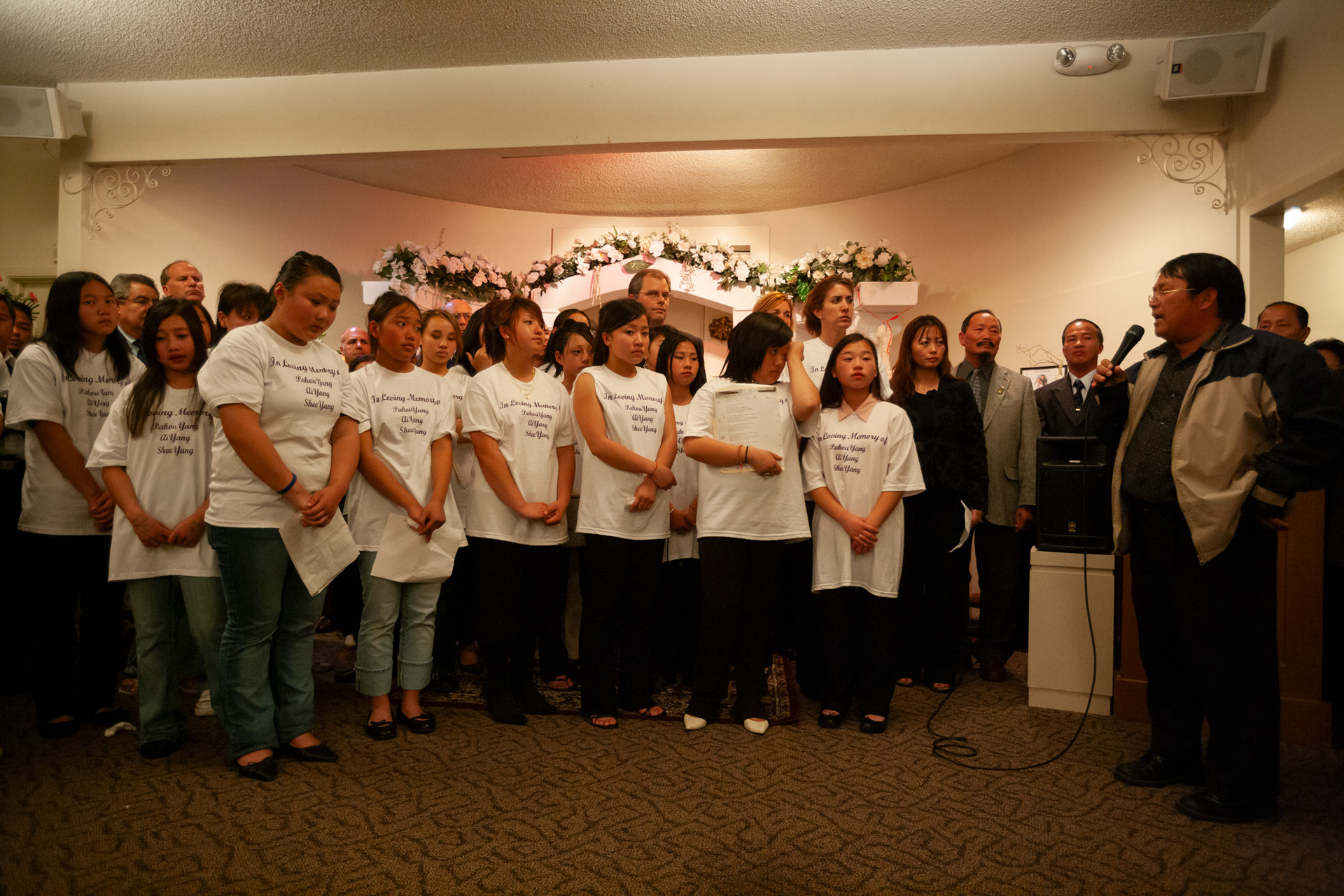
Bee Yang, a professor of social work at Fresno State University and clan elder, delivers the eulogy for Pakou Yang as her classmates from Clarke Intermediate School and family members listen, March 28, 2006.
Yang funerals-02
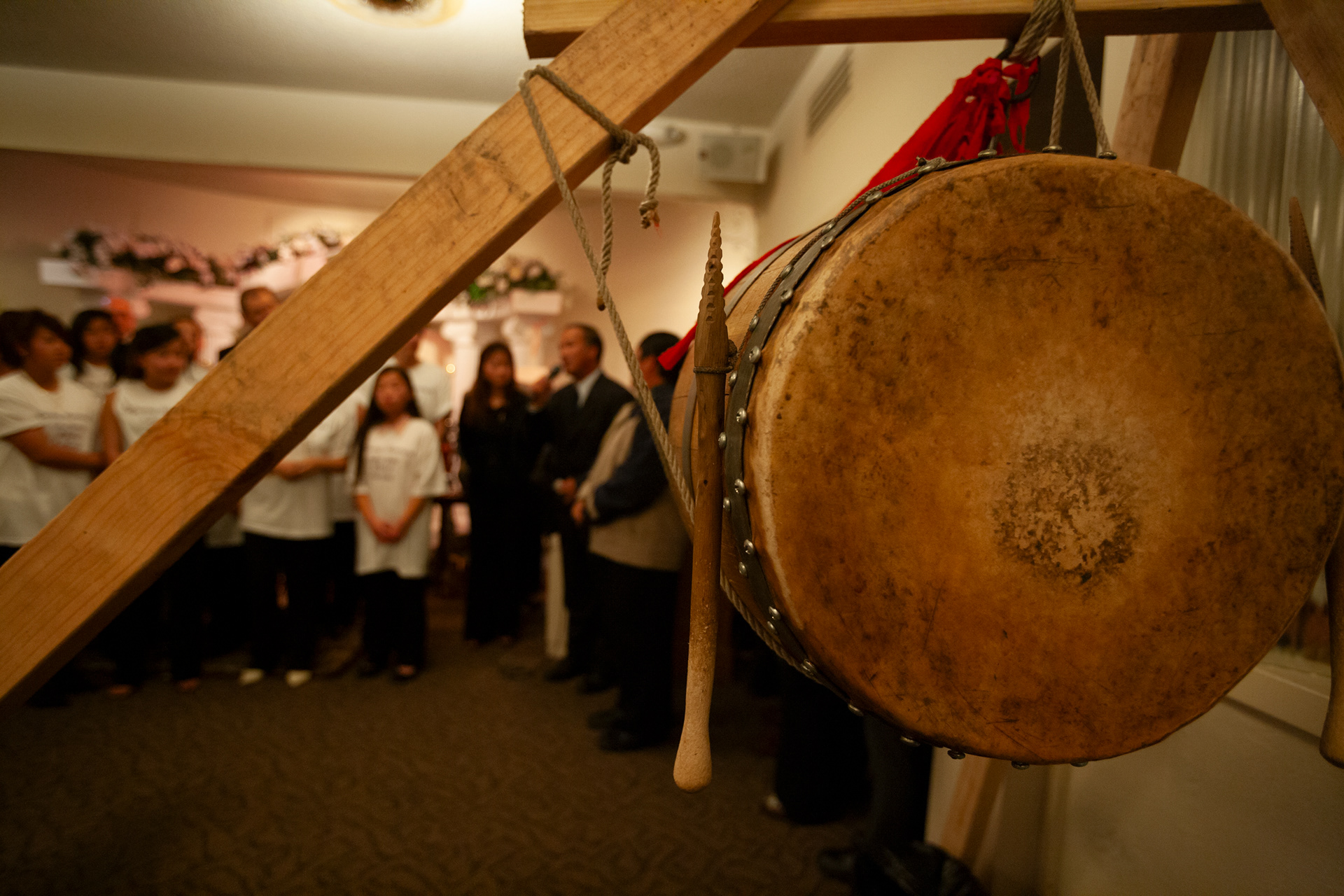
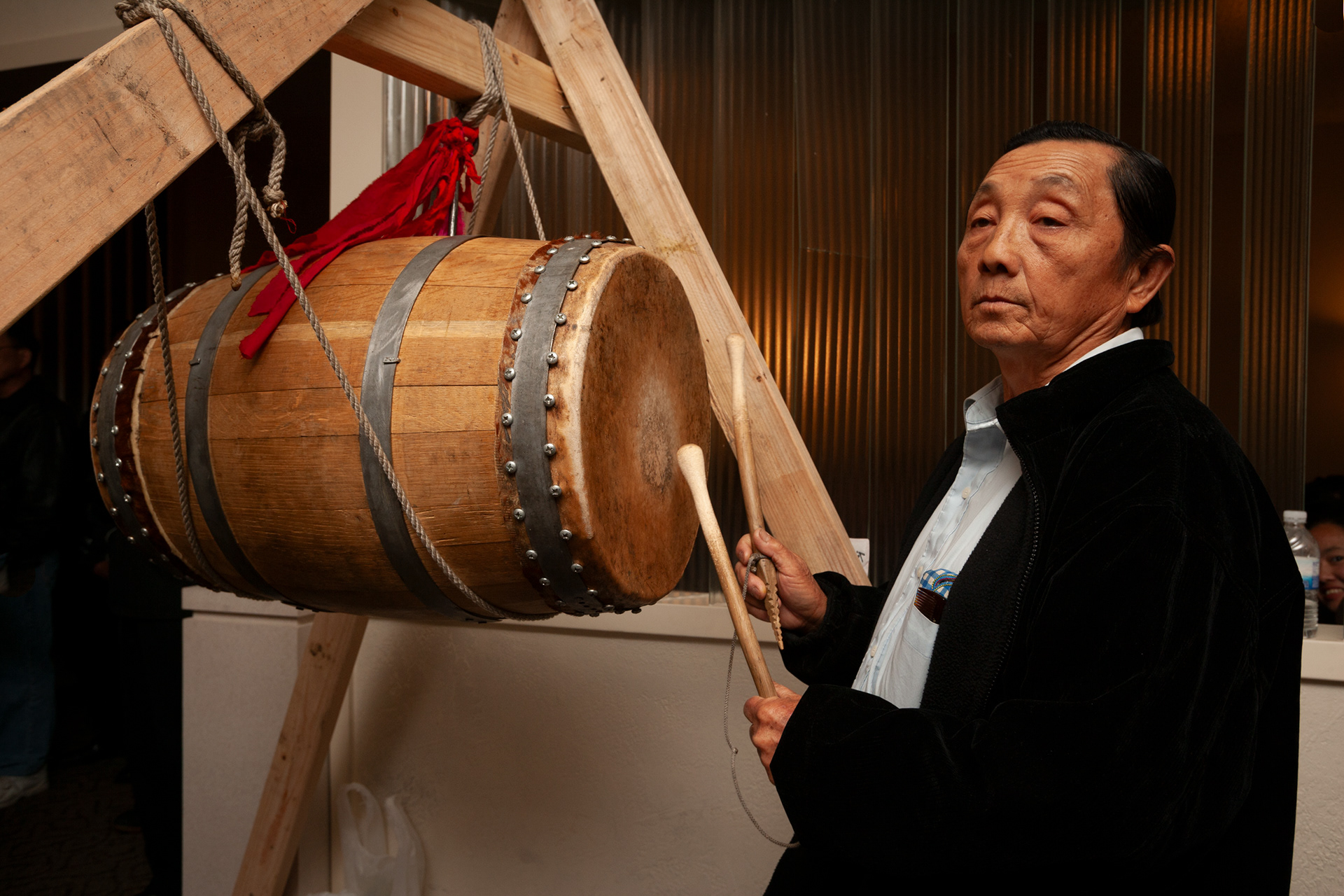
The drum is an important element of all Hmong funerals. When played, it gives emotional support to the participants, March 28, 2006.
Yang funerals-03
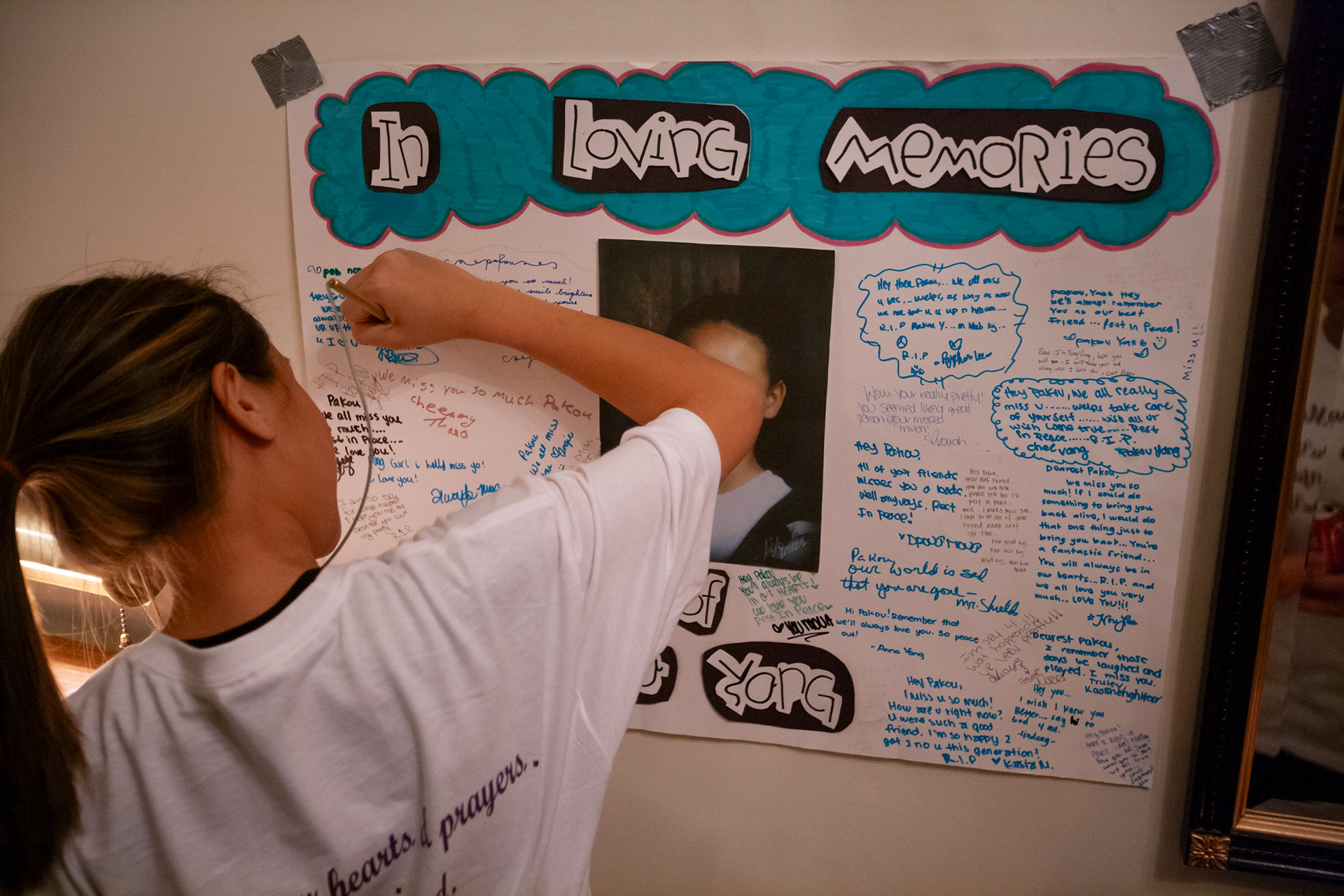
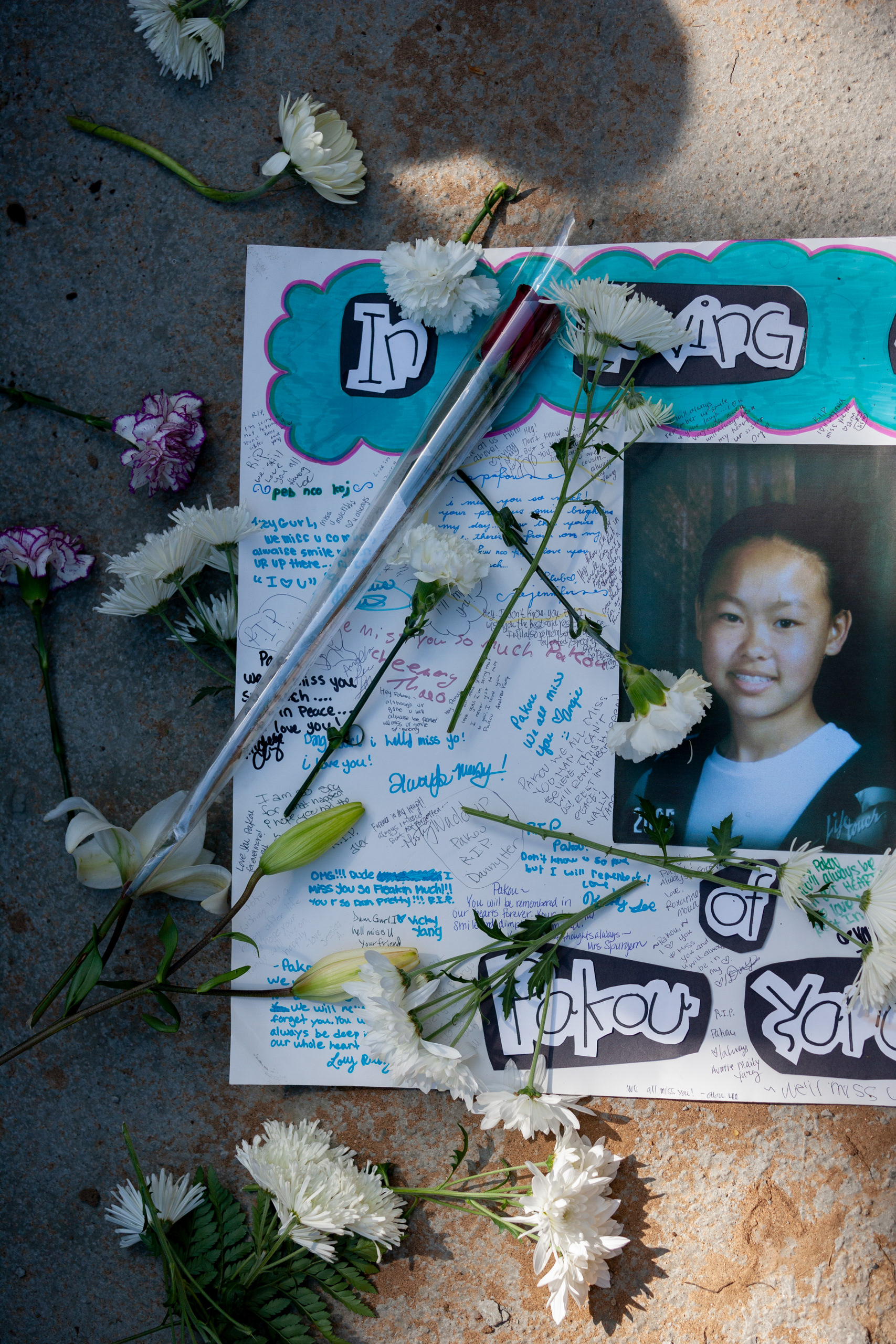
Pakou’s classmates created a memorial posterboard for their fallen friend, March 28, 2006.
Yang funerals-04
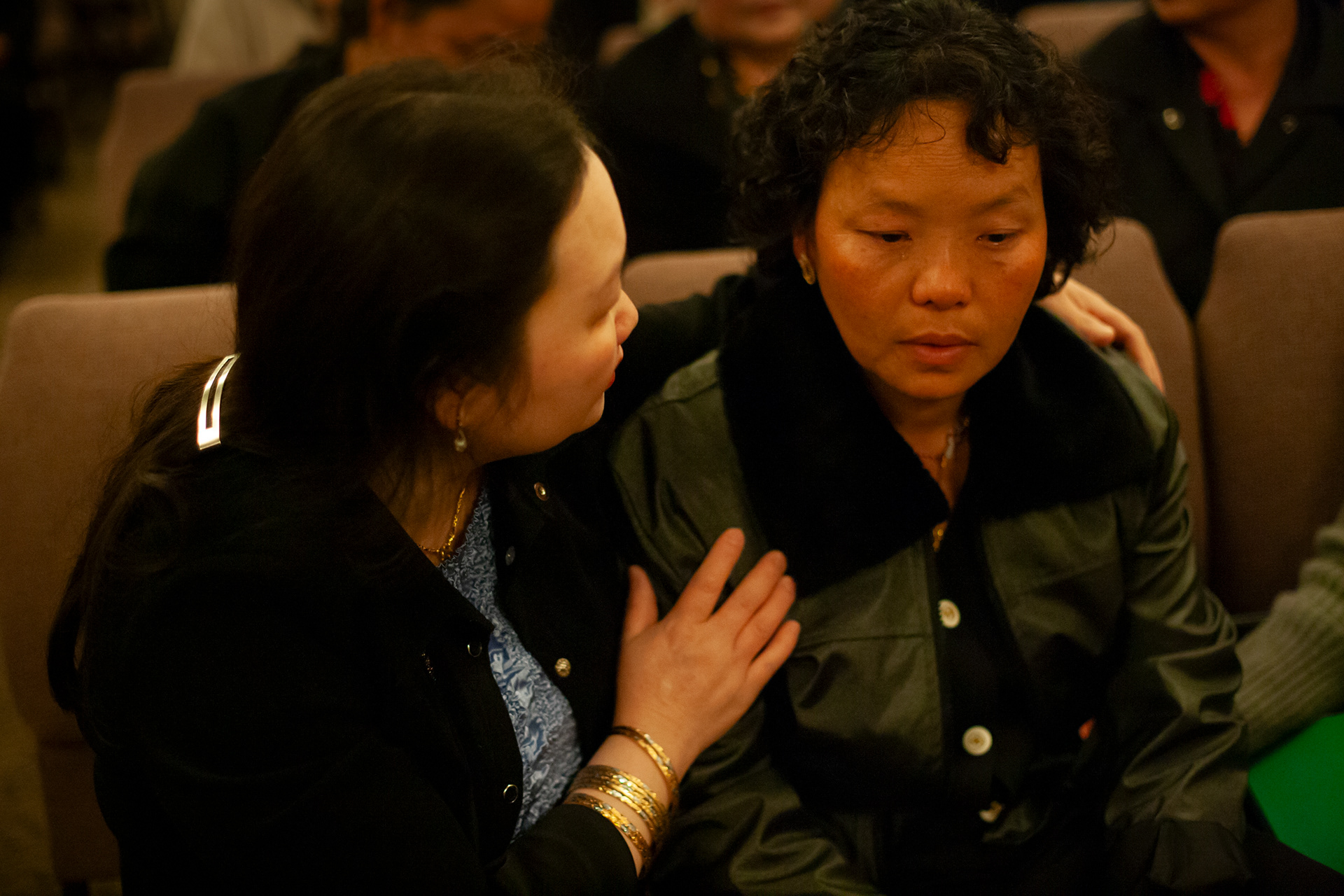
A relative comforts Doua Vang-Yang, Pakou’s mother.
Yang funerals-05
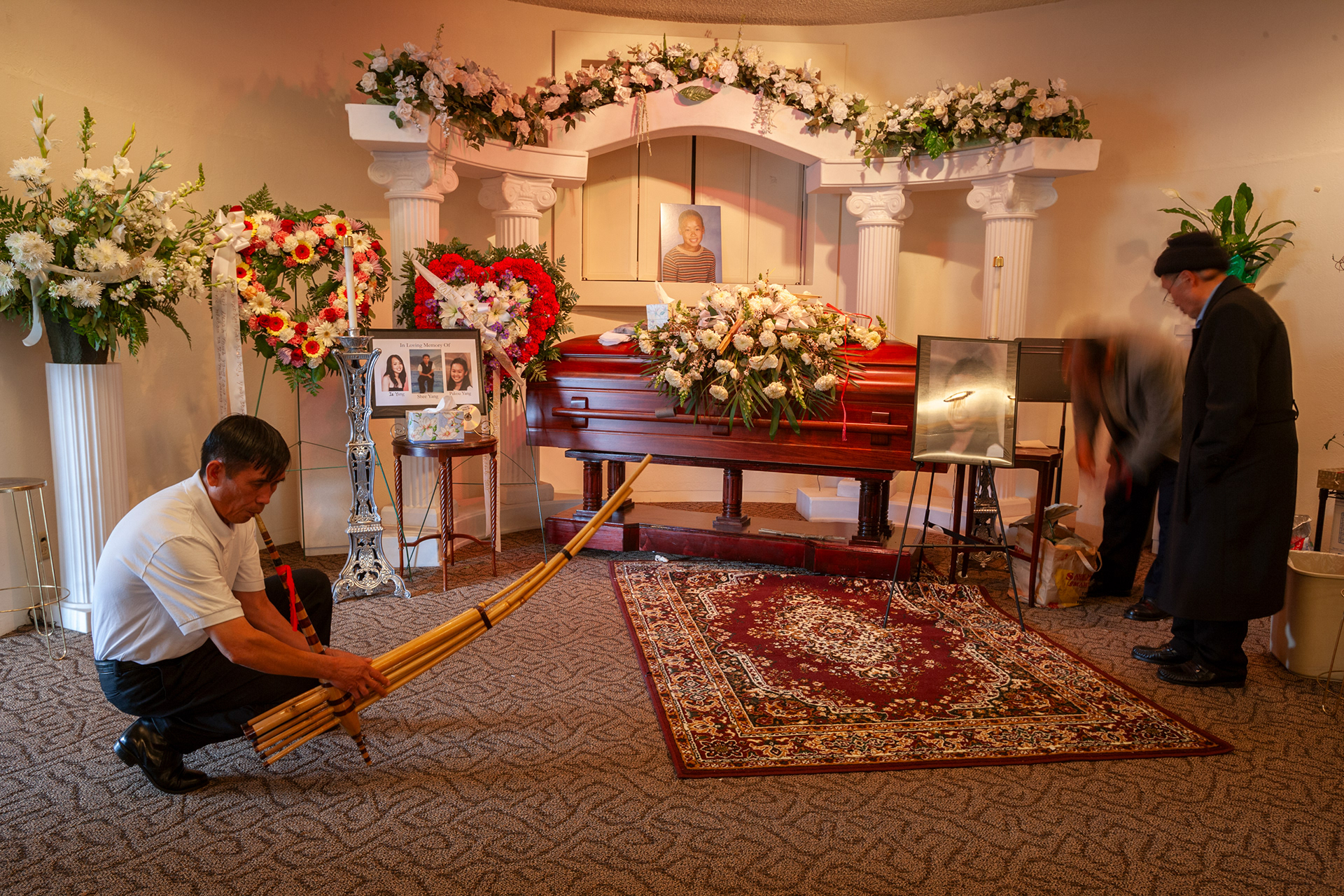
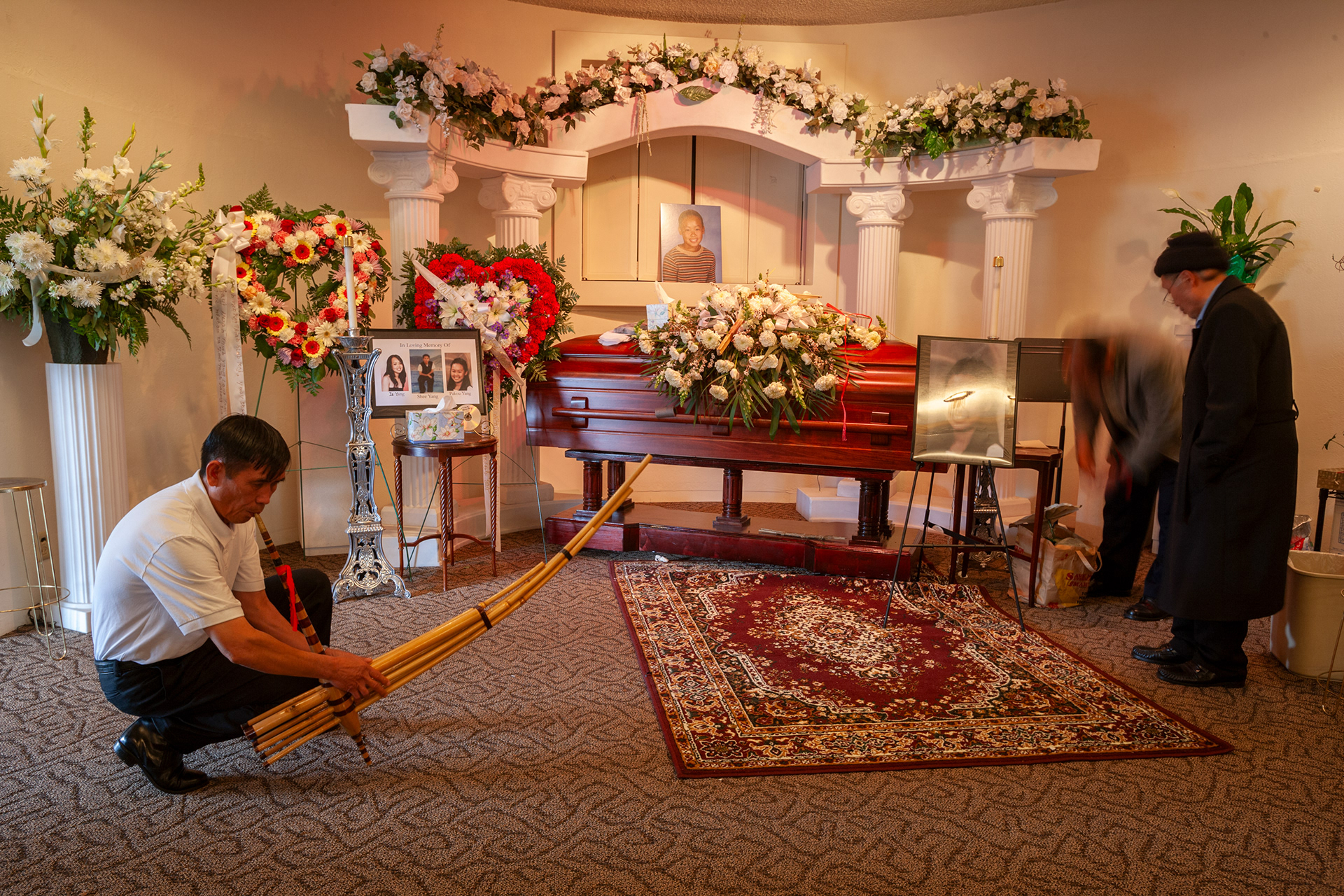
A qeej player (pronounced “keng”) sweeps the area near the casket, looking for da (evil spirits, pronounced “da!”) to chase out of the room. The low, wheezing sound of the bamboo pipes, along with the slow beat of the drum, also creates a calming effect for participants.
At the right, Ia’s grandfather watches as the Daw Kev (funeral officiant, pronounced “Thdaw Kea”) prepares his accoutrements, March 29, 2006.
Yang funerals-06
A soft, steady drumbeat is provided by a Yang clan elder, March 29, 2006.
Yang funerals-08
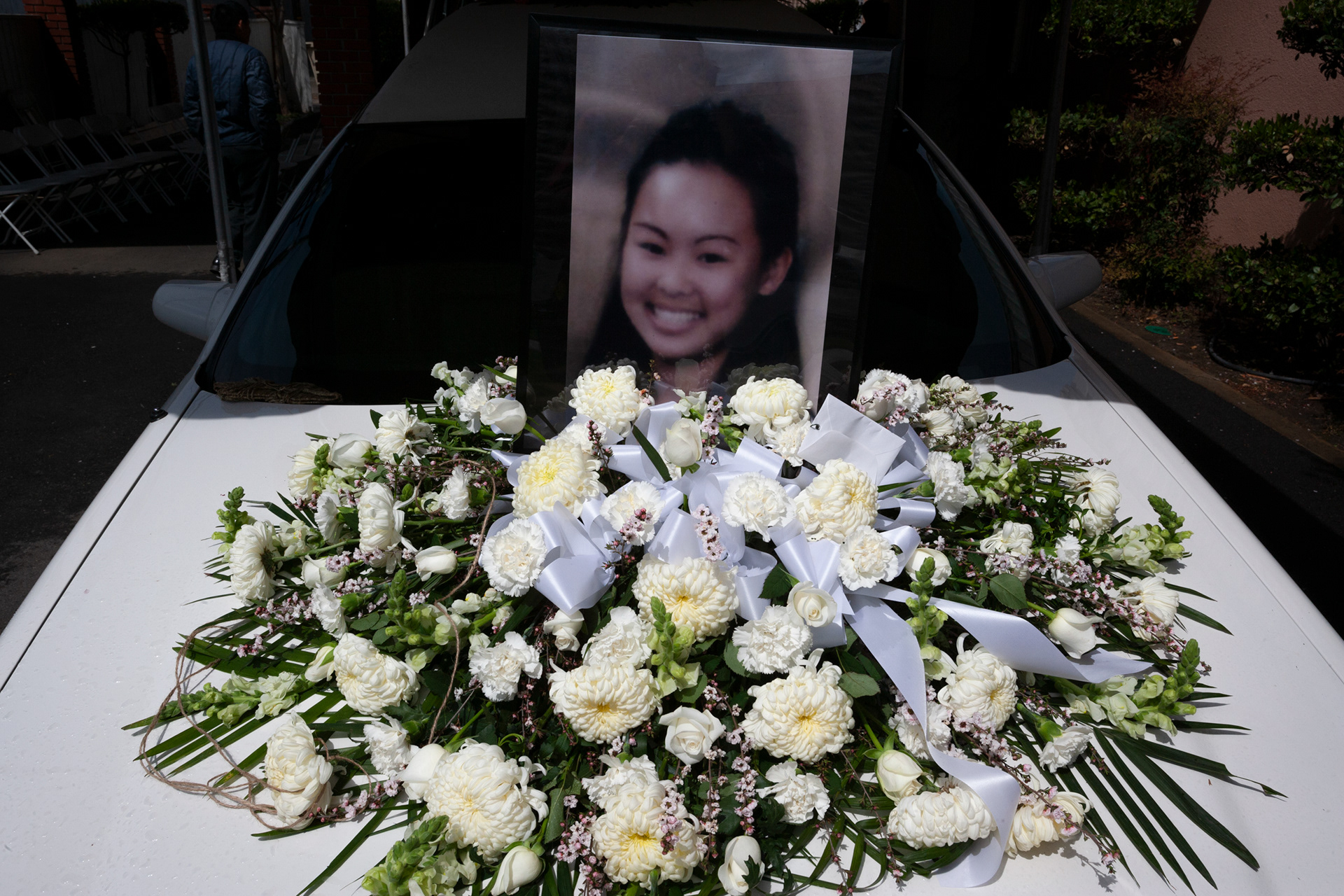
Pakou’s picture and a floral arrangement adorn the hood of the hearse that will carry her casket to the burial site, March 29, 2006.
Yang funerals-09
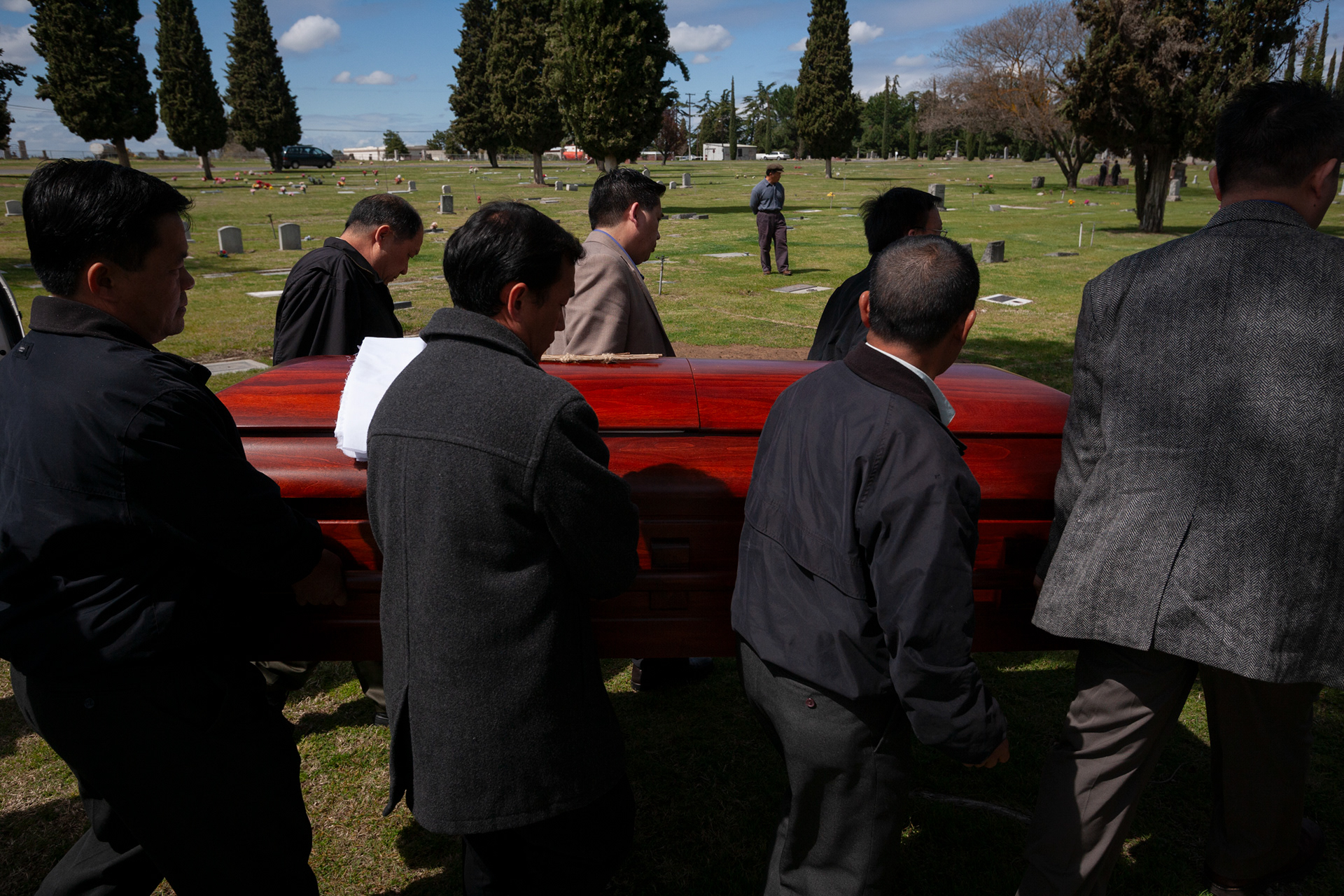
Pallbearers carry Pakou’s casket, March 29, 2006.
Yang funerals-10
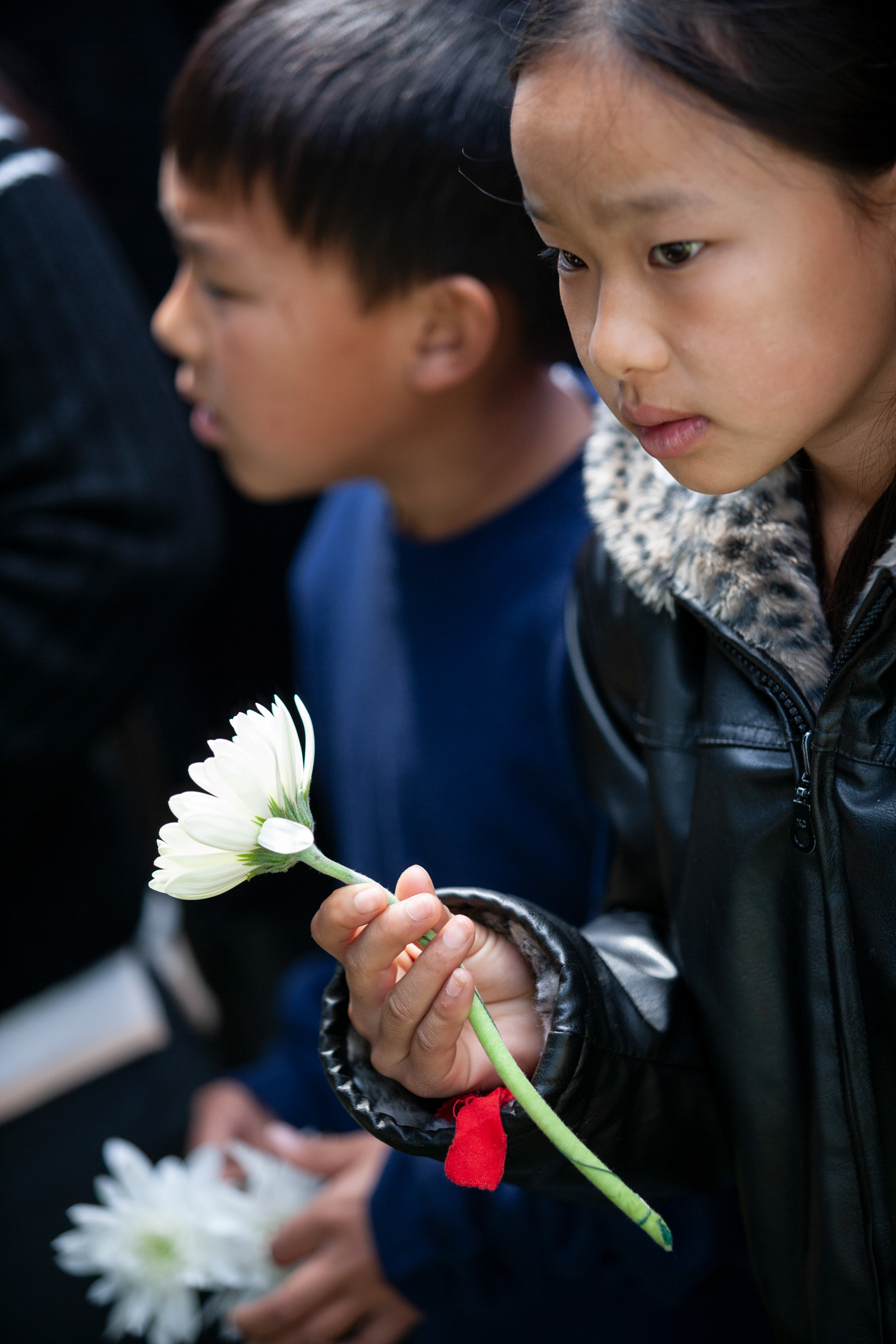
Christy Yang, 10, watches as her older sister’s casket arrives, March 29, 2006.
Yang funerals-11
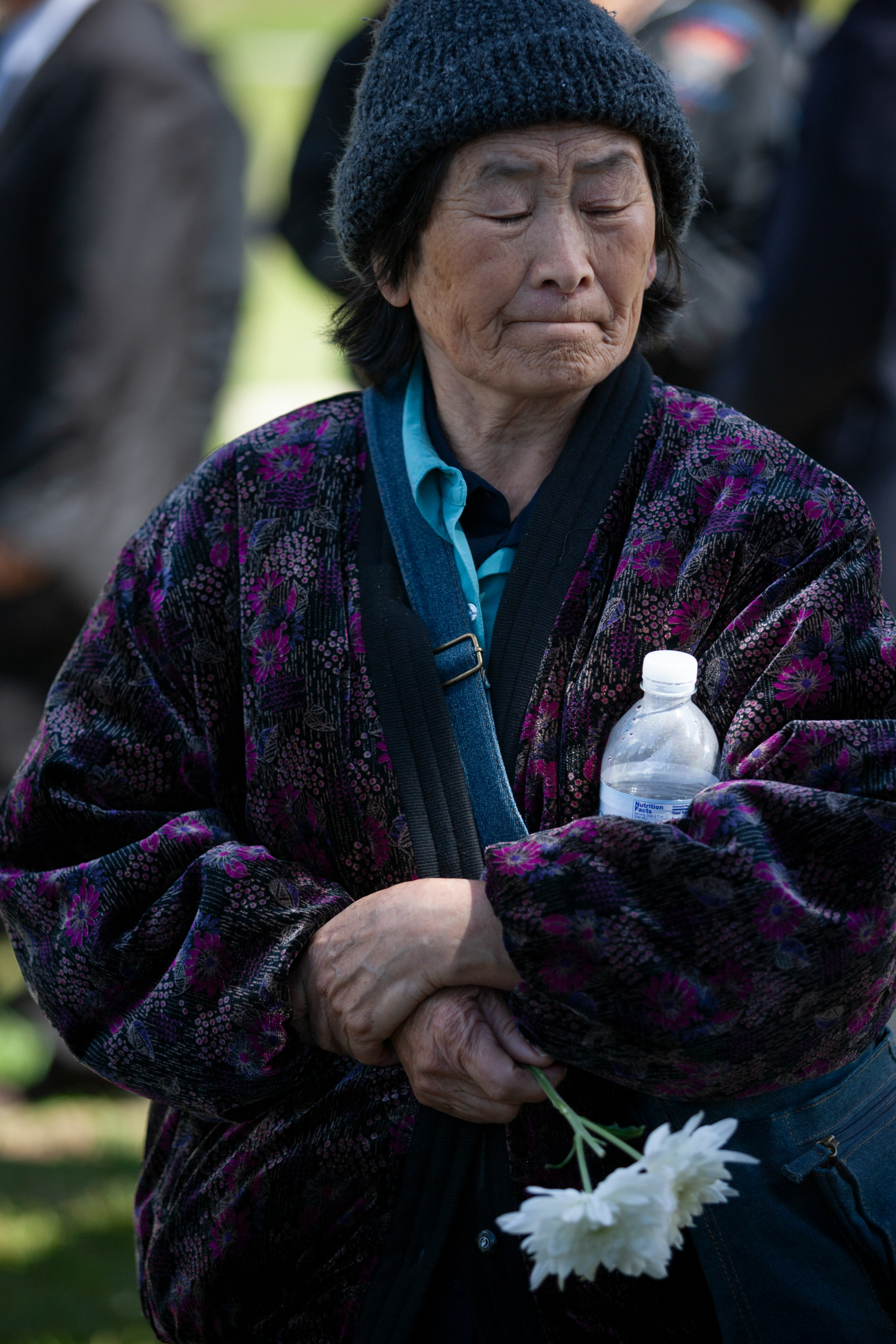
Pakou’s maternal grandmother reacts as the casket arrives, March 29, 2006.
Yang funerals-12
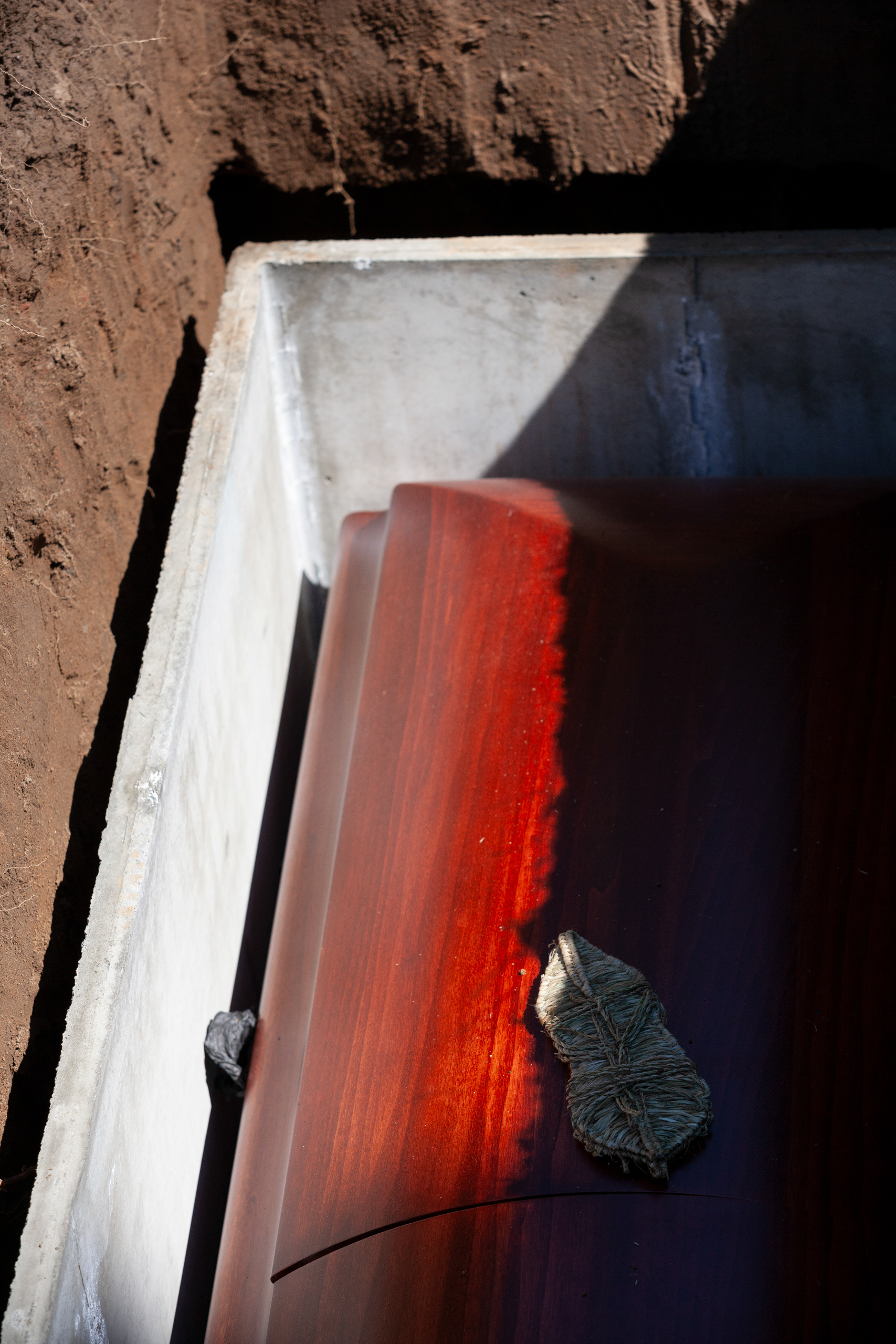
A handmade, ceremonial slipper is placed on Pakou’s casket for her spirit to wear on the journey home, March 29, 2006.
Yang funerals-13
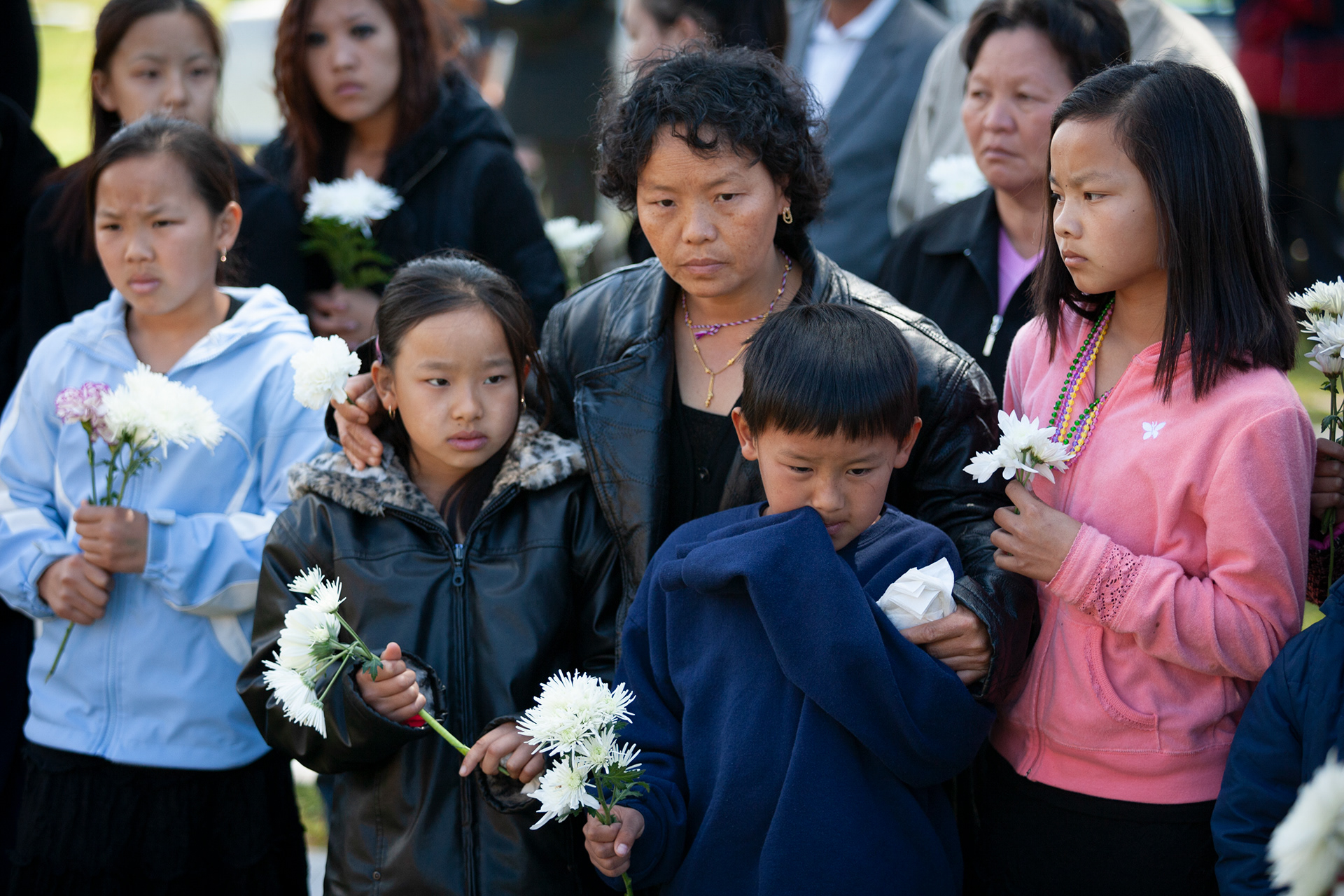
(Foreground, left to right) Macy Yang, Christy Yang, Doua Vang-Yang (their mother), Aaron Yang and Kayoua Yang, all fire survivors, mourn the passing of their sister and daughter, Pakou, March 29, 2006.
Yang funerals-14
Pakou’s classmates’ memorial posterboard is also buried with her, along with flowers tossed by mourners, March 29, 2006.
Yang funerals-15
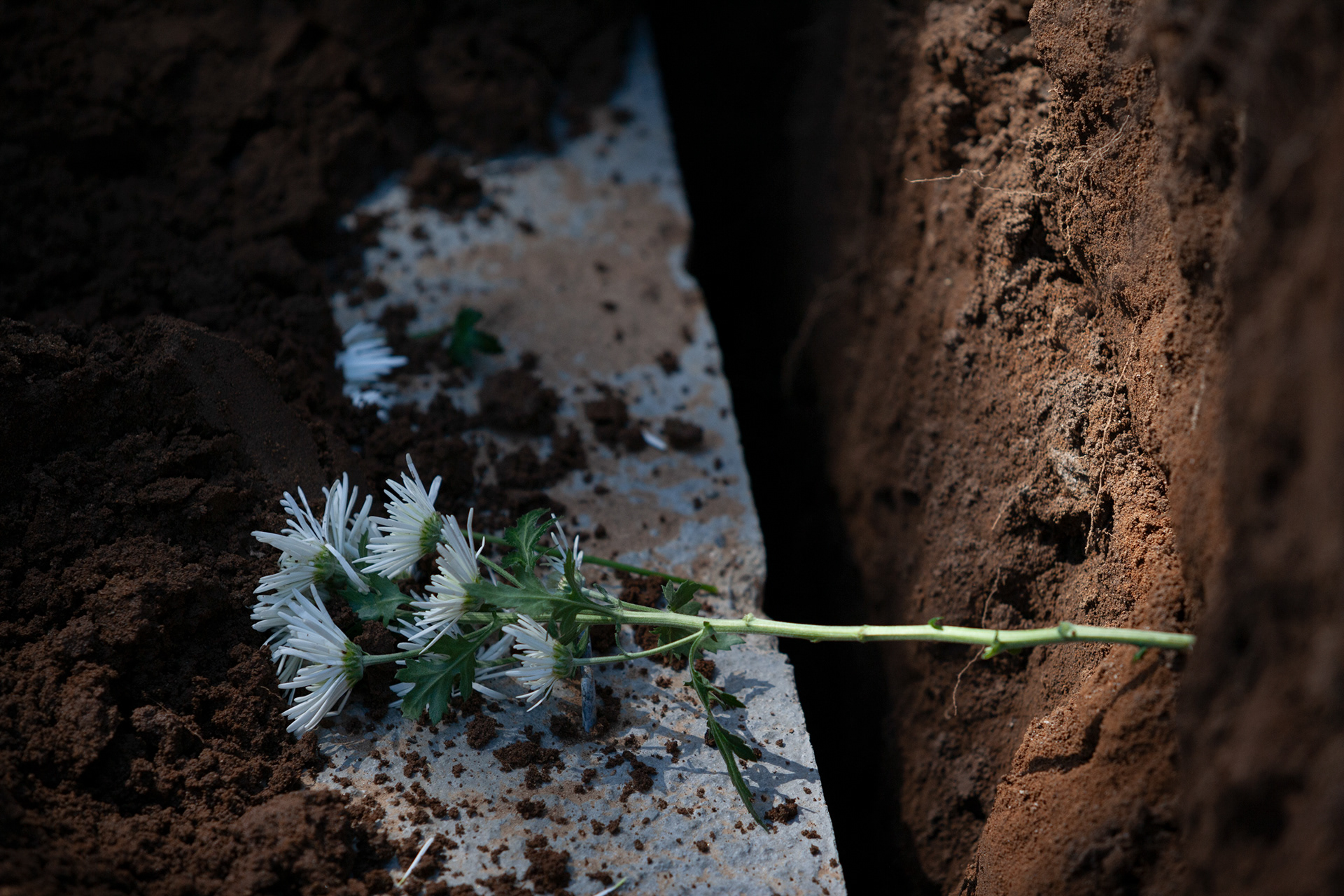
A lone flower thrown by a mourner rests precariously as the grave is filed with earth, March 29, 2006.
Yang funerals-16
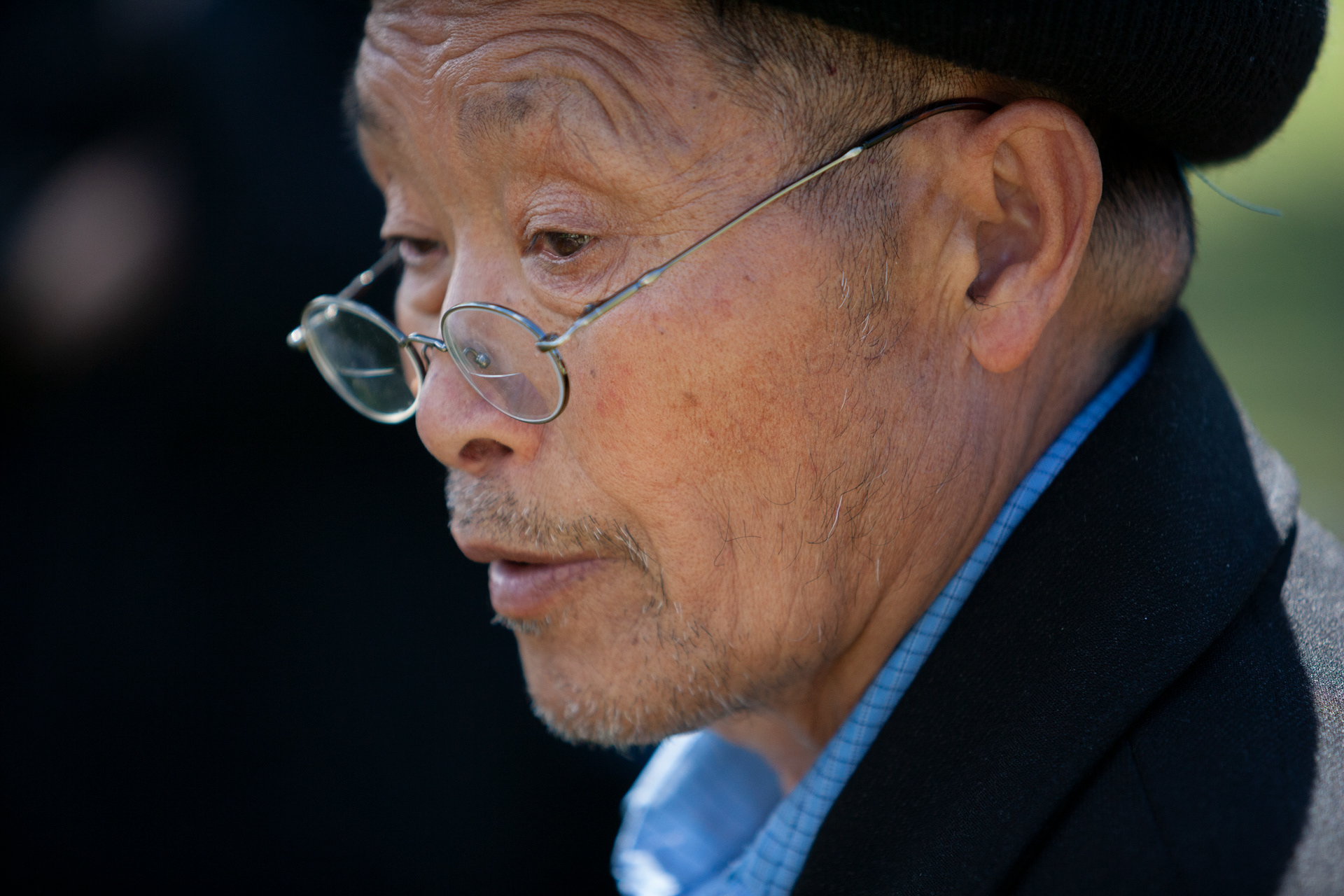
Pakou’s grandfather watches the burial, March 29, 2006.
Please visit the subject gallery Yang Family Funerals, where the story continues.