April 28, 2008
August 15, 2010
May 18, 2014
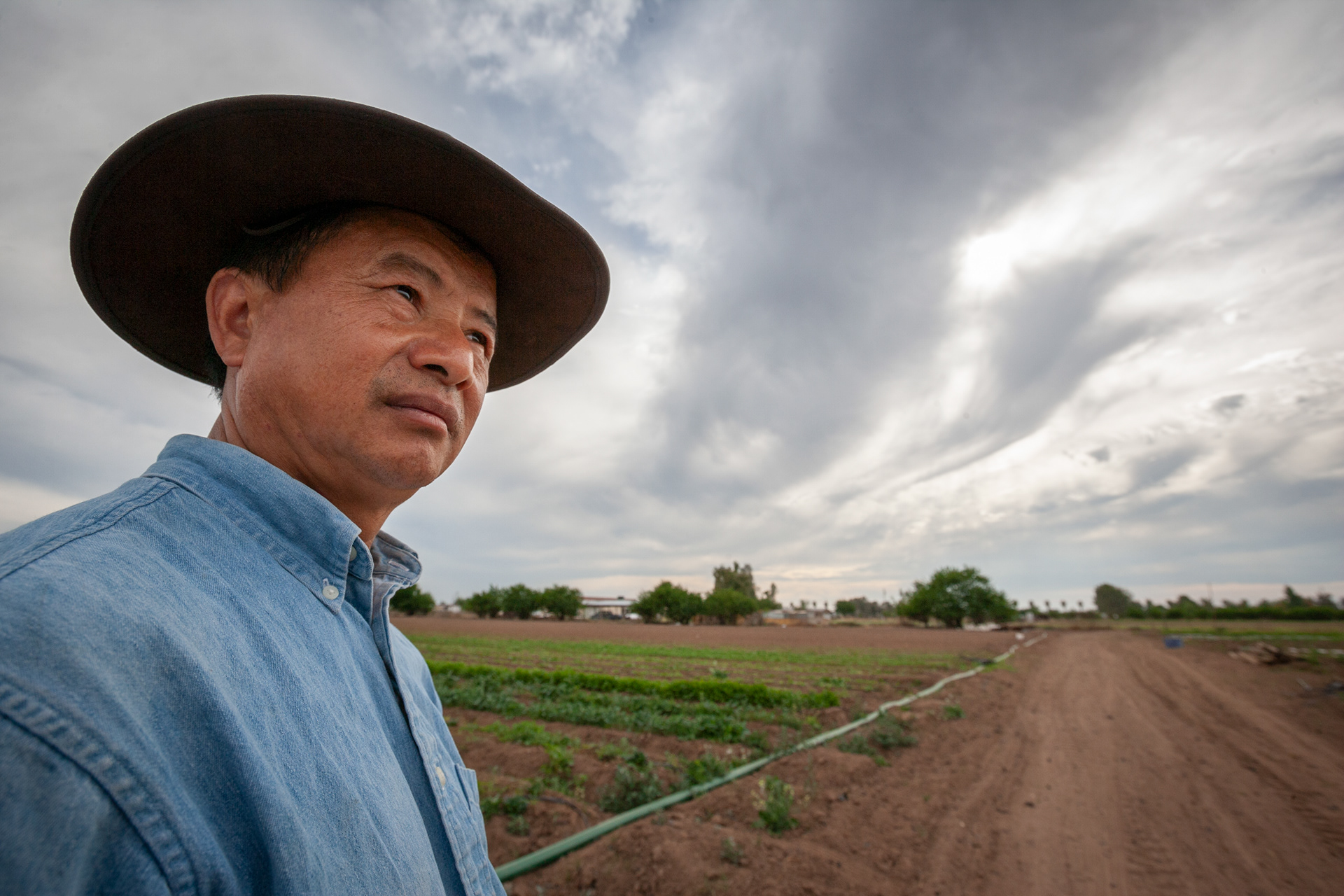
Xiong Pao Her owns and farms twenty acres of land near Sanger, California
Throughout his life, Xiong Pao Her has gotten along by being a little bit smarter than the people around him. Born in Muang Phun, a small town northeast of Vang Vieng, Laos, he is the nephew of Chue Doua Her, a major in Vang Pao’s CIA-backed army (Chue Doua Her’s 2007 funeral will be featured in an archive gallery next year). Muang Phun and nearby Lima Site 37 were strategically important for intercepting and listening to Pathet Lao communications during the war.
At age 14, Xiong Pao was sent to Long Tieng, where he became Vang Pao’s paymaster and served as his uncle’s secretary while also going to school. Xiong Pao could read and write much better than his uncle so his service was critically important to the war effort. Xiong Pao’s job as paymaster worked thus: The CIA would give Vang Pao USD cash for the soldiers’ salaries. After taking his cut, Vang Pao would divvy up the remaining cash between his officers, including Xiong Pao’s uncle, who then took his own cut and instructed his young nephew to distribute the rest of the money to the soldiers. At the time, most people in Laos had never seen American currency and were so covetous of it, they would pay many times the going exchange rate just to own a dollar bill.
In 1970, Xiong Pao was sent to high school in Vientiane, where he studied English and continued to improve his Lao language literacy. His skills at doing paperwork and navigating government bureaucracy would later serve him well as he became a successful farmer in California.
After the fall of the Royal Lao Government in 1975, General Vang Pao told Xiong Pao and his uncle to gather all of the most important military officers and their families at Muang Phun, promising that a US aircraft was coming to pick them up and take them to Thailand. They followed the General’s orders, but the aircraft never arrived.
A Plan B was quickly hatched to evacuate Xiong Pao’s group from Muang Phun to Thailand. A series of safe houses, including one police station, were organized to get the refugees to the Mekong River, where a large boat awaited them. The refugees paid their Laotian collaborators with silver bars, known as “Chao.”
After crossing the Mekong to Thailand, Xiong Pao and his group settled into Nong Khai refugee camp. His father, Xai Lang Her (also an officer under Vang Pao’s command) was interviewed in the camp and immediately emigrated to the United States. Unhappy with camp life and worried about the soldiers he’d left behind, Uncle Chue Doua Her decided to return to Muang Phun, Laos, where he still owned land and cattle. Xiong Pao and family went with him.
For nearly four years, they endured increasingly poor and unsafe living conditions in Laos. Vietnamese soldiers continued to patrol the area and persecute Hmong villagers. After Xiong Pao saw airplanes spraying chemical defoliants, they knew they could no longer drink surface water. As their food supply declined, they resorted to eating buffalo.
One day, Xiong Pao took three cousins to pick up some rice from his father-in-law’s village outside of town. On the way back, some Vietnamese soldiers opened fire, hitting Xiong Pao in the leg. He had to wait until dark before relatives could rescue him, rigging a makeshift leg splint out of a tree branch and some old cloth. Fortunately, the bullet had entered and exited his leg without hitting a bone.
When Xiong Pao’s remaining group of 44 refugees decided to make their final escape from Laos in 1979, it was not as easy as it had been in 1975. The safe houses were less safe, the Laotian collaborators were less reliable, and the silver bar prices for passage had gone up. A Hmong musical instrument made from twigs and grass was used for secret signals along the way.
Arriving in Ban Vinai refugee camp, Thailand, the military men in their group were interviewed by CIA agent, Jerry Daniels, a close Vang Pao ally. However, due to a few incorrect answers, the group had to remain at Ban Vinai another year. Finally, Xiong Pao, his uncle and their families were able to emigrate to the United States with his father, Xai Lang Her serving as their sponsor.
Arriving in San Diego in 1980, Xiong Pao and his family lived in a typical refugee apartment complex. Unable to find a job there, he moved his family to Fresno so that he could work as a laborer on farms owned by relatives. As the decade progressed, Xiong Pao learned about programs to help Asian refugees start their own farms. He was able to lease 20 acres and begin growing Asian specialty crops that sell for high prices in affluent coastal cities like Santa Barbara and Ventura. In 1997, he bought 20 acres of land near Sanger, where he now farms. His ability to navigate government bureaucracy has helped him prosper in the competitive farmers market economy of coastal counties where seller permits are not easily obtained.
Now 73 years old in 2026, Xiong Pao has mostly retired from farming. Two of his sons, Michael and John, have taken over the business. Several of his other children have earned advanced degrees at universities like Stanford and Davis and are now pursuing professional careers.
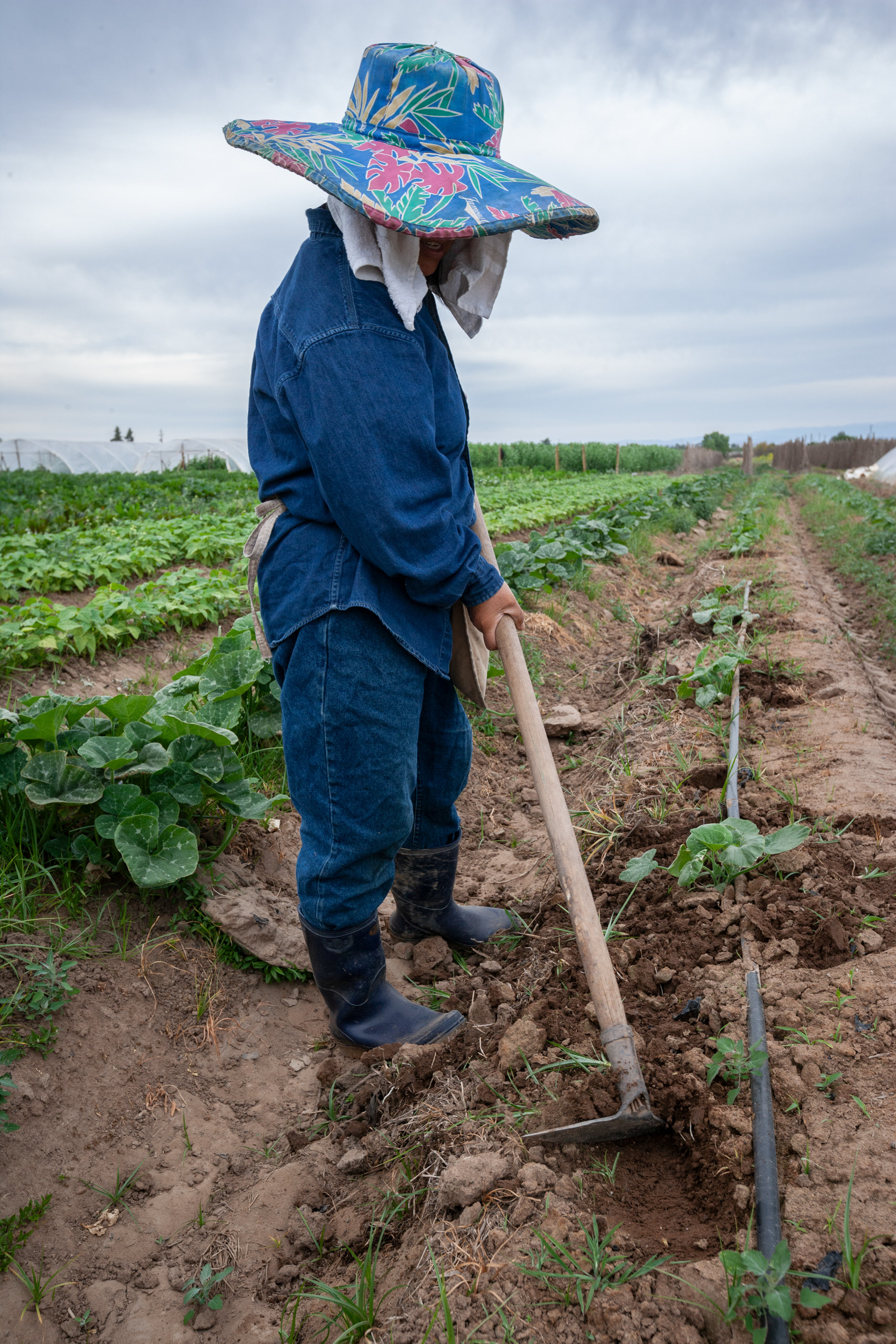
Xiong Pao Her farm -02
Daughter, Sandy Her hoes cucumber plants, April 28, 2008.
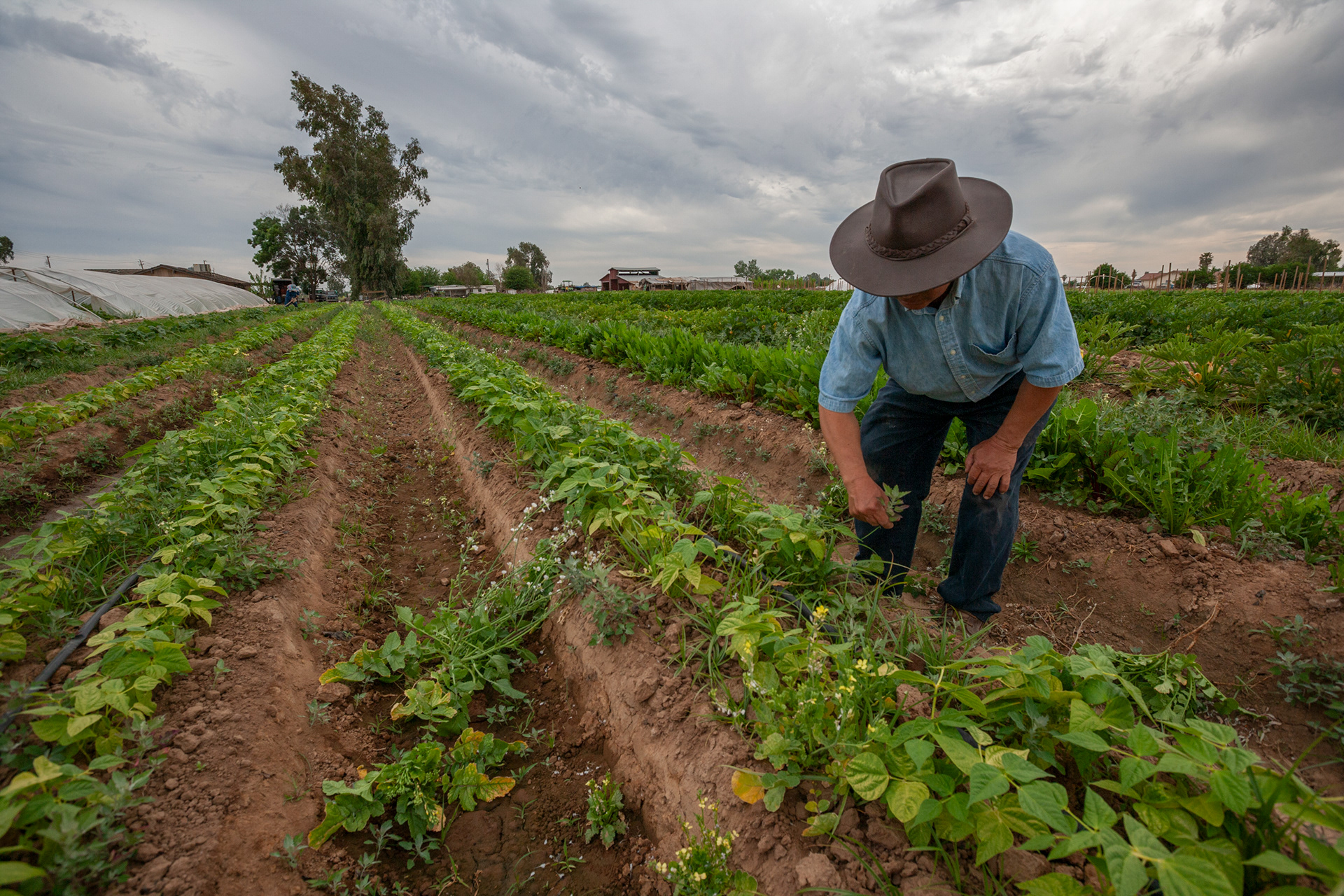
Xiong Pao Her farm -03
Xiong Pao weeds a row of young green bean vines, April 28, 2008.
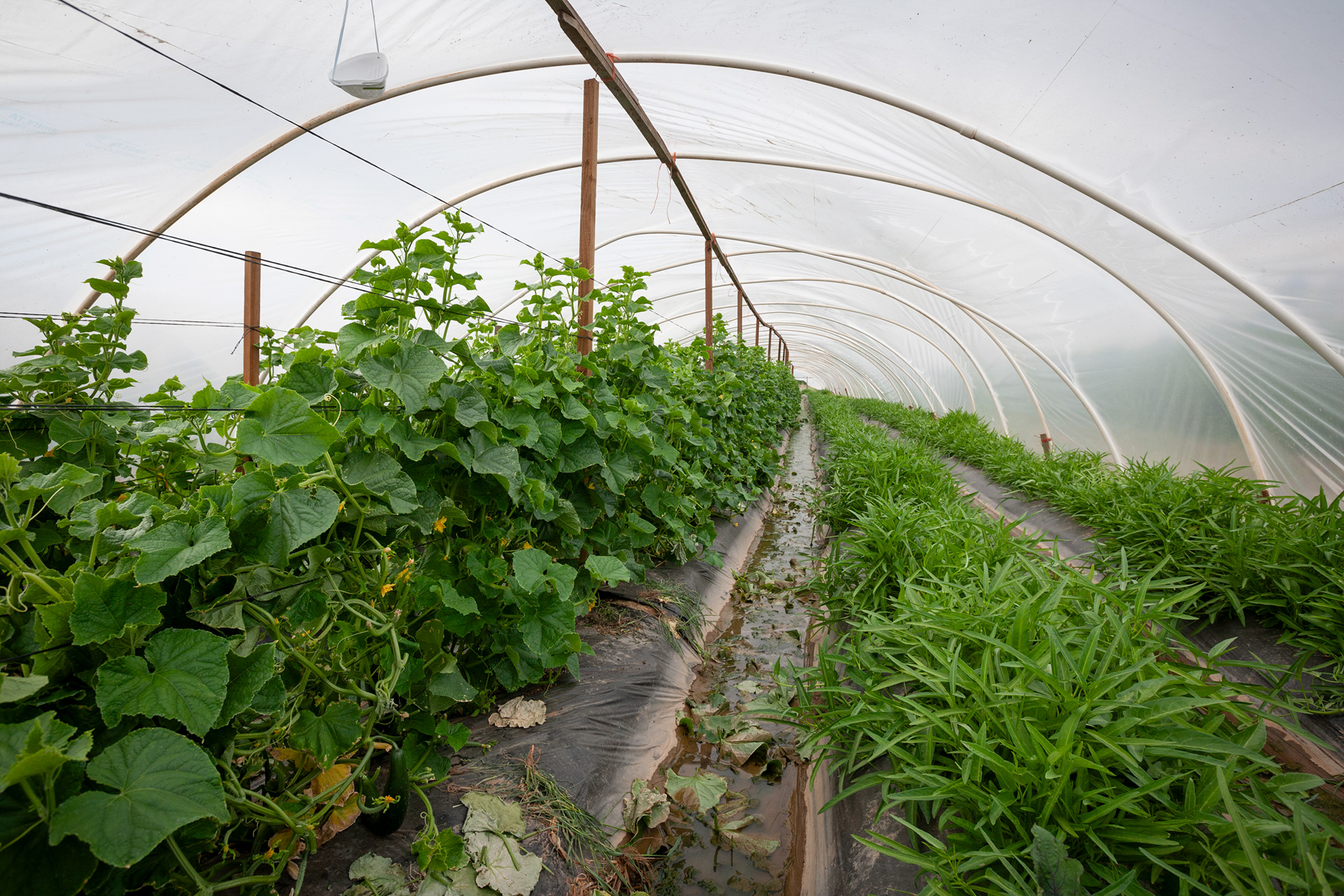
Xiong Pao Her farm -04
A hothouse bursting with Japanese cucumbers and Ong Choy (Japanese water spinach), April 28, 2008.
Xiong Pao Her farm -05
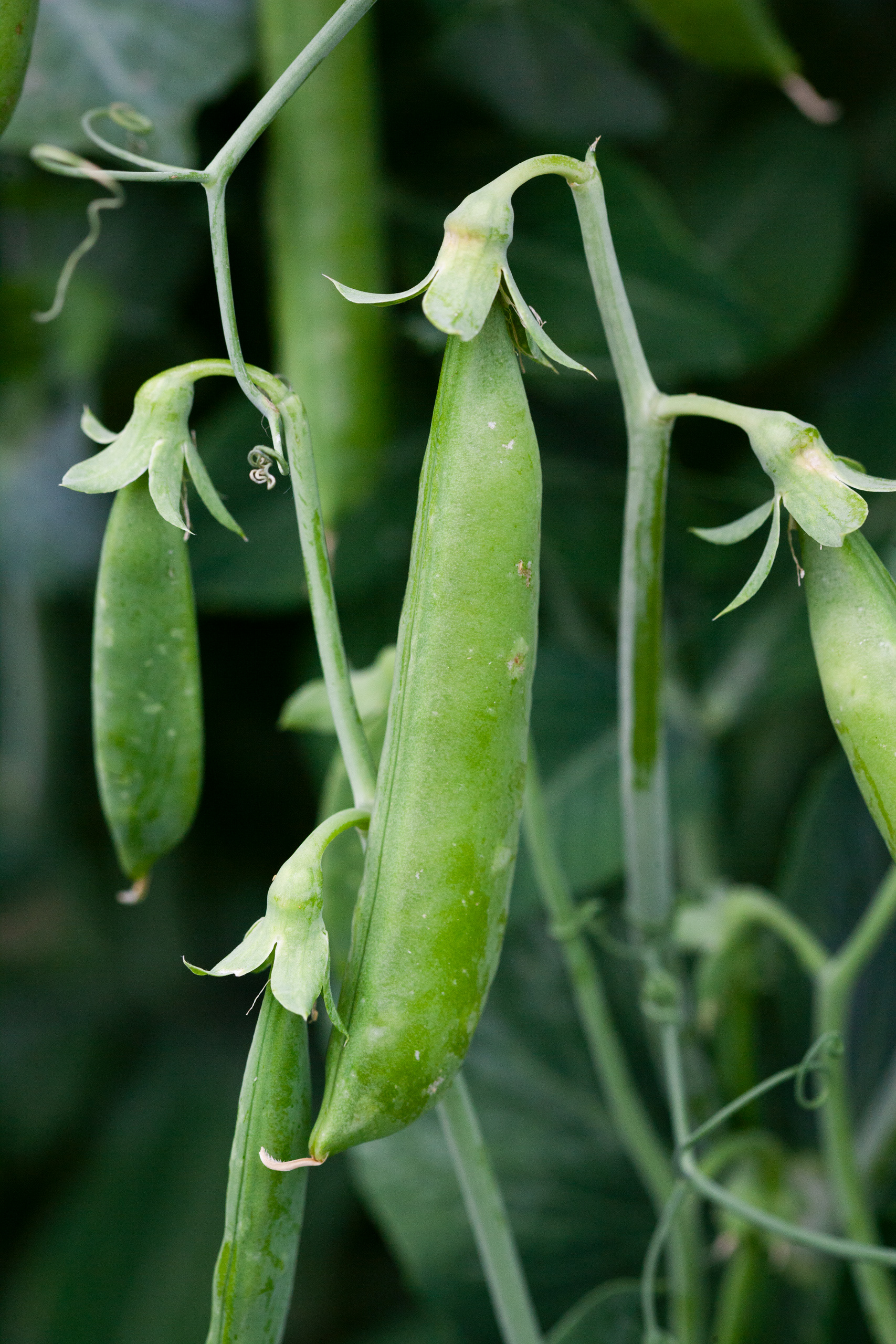
Snap peas hanging from a vine, April 28, 2008.
Xiong Pao Her farm -06
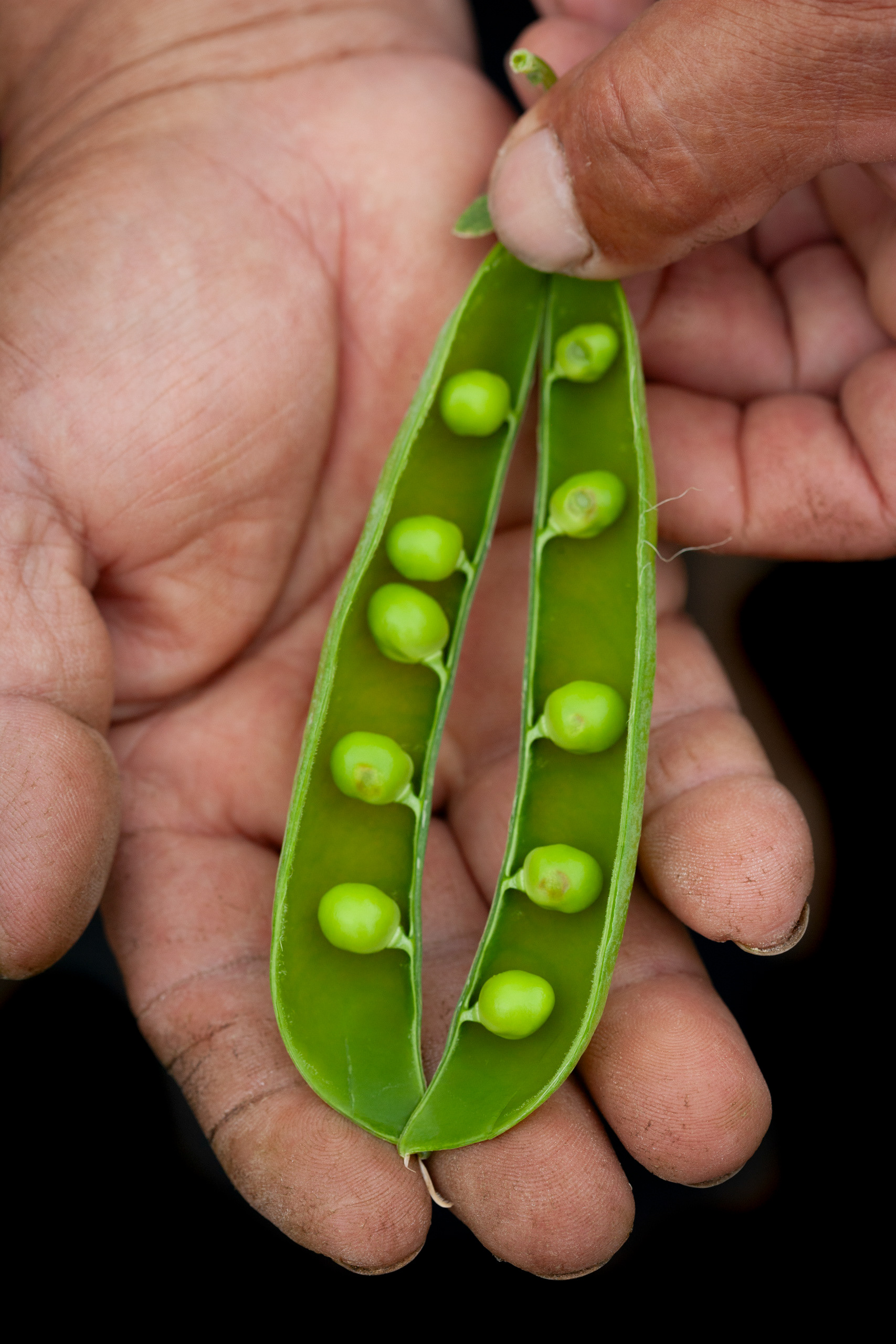
Xiong Pao opens a pod to show the delicate snap peas inside, April 28, 2008.
Xiong Pao Her farm -07
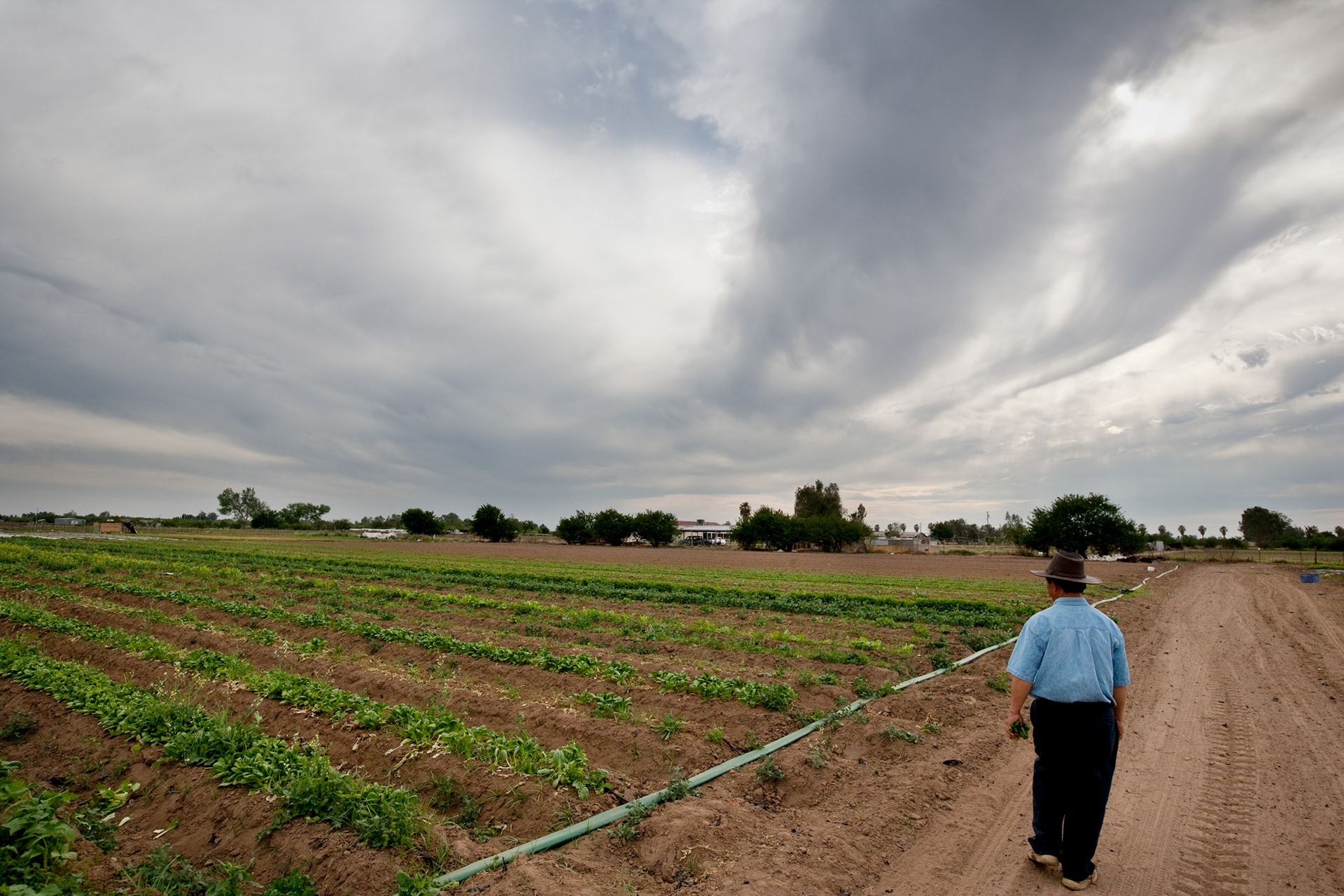
Xiong Pao checks his irrigation lines; maintaining them is a never ending job, April 28, 2008.
Xiong Pao Her farm -08
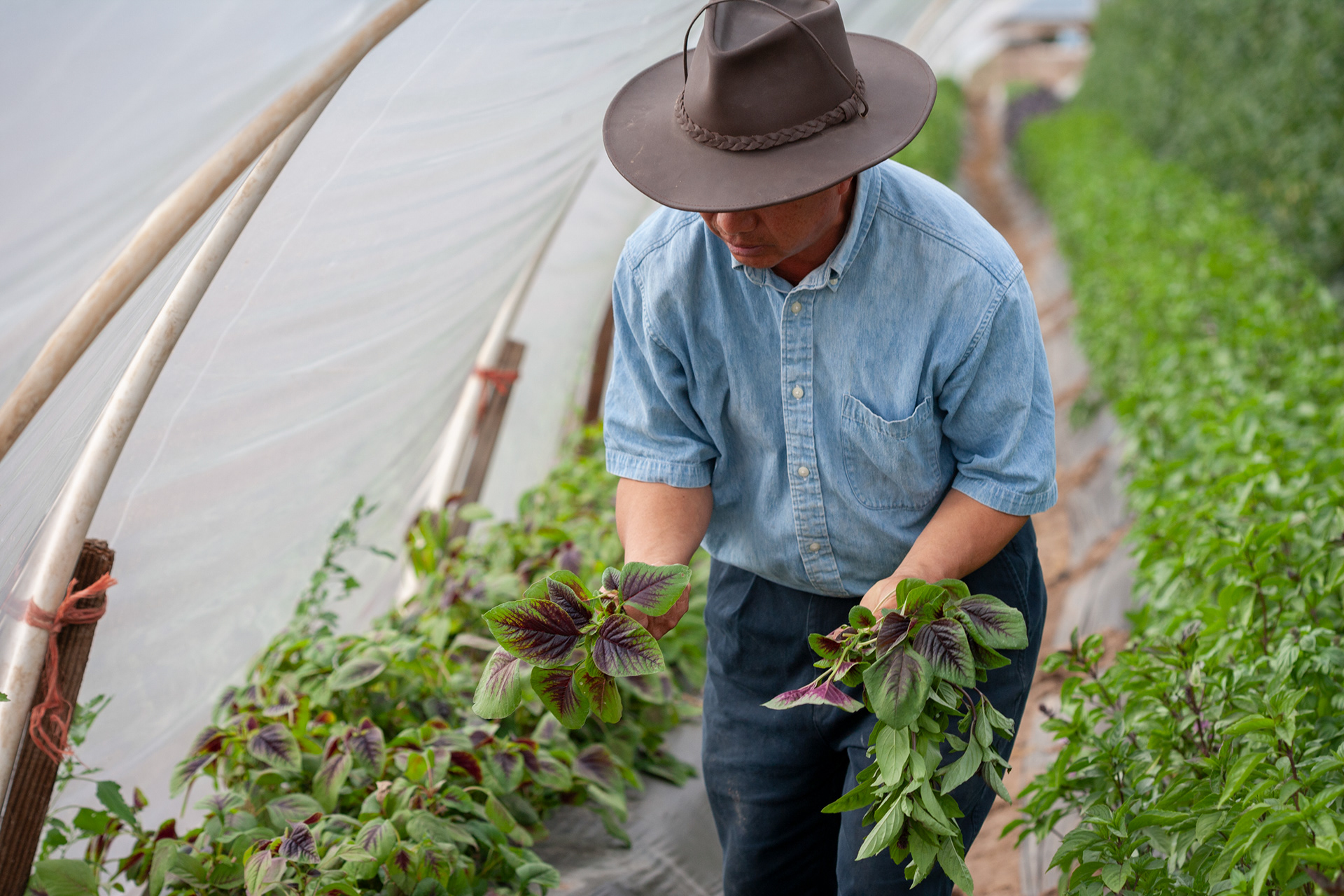
Xiong Pao harvests amaranth from a hothouse that also contains a long row of basil. The two crops are often planted side by side, April 28, 2008.
Xiong Pao Her farm -09
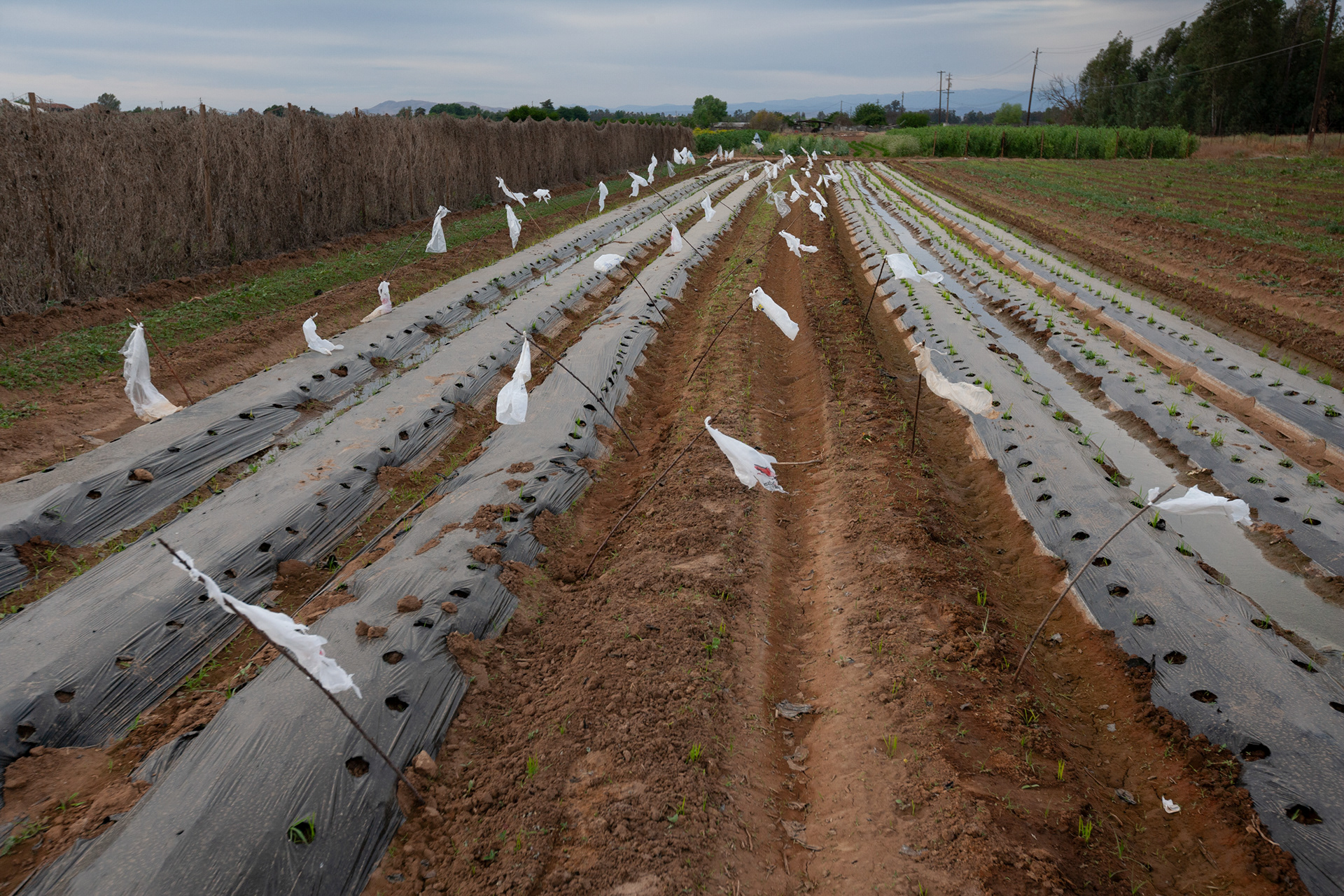
Heirloom rice has recently been planted in these rows. The white flags are placed to frighten birds and prevent them from eating the seedlings, April 28, 2008.
Xiong Pao Her farm -10
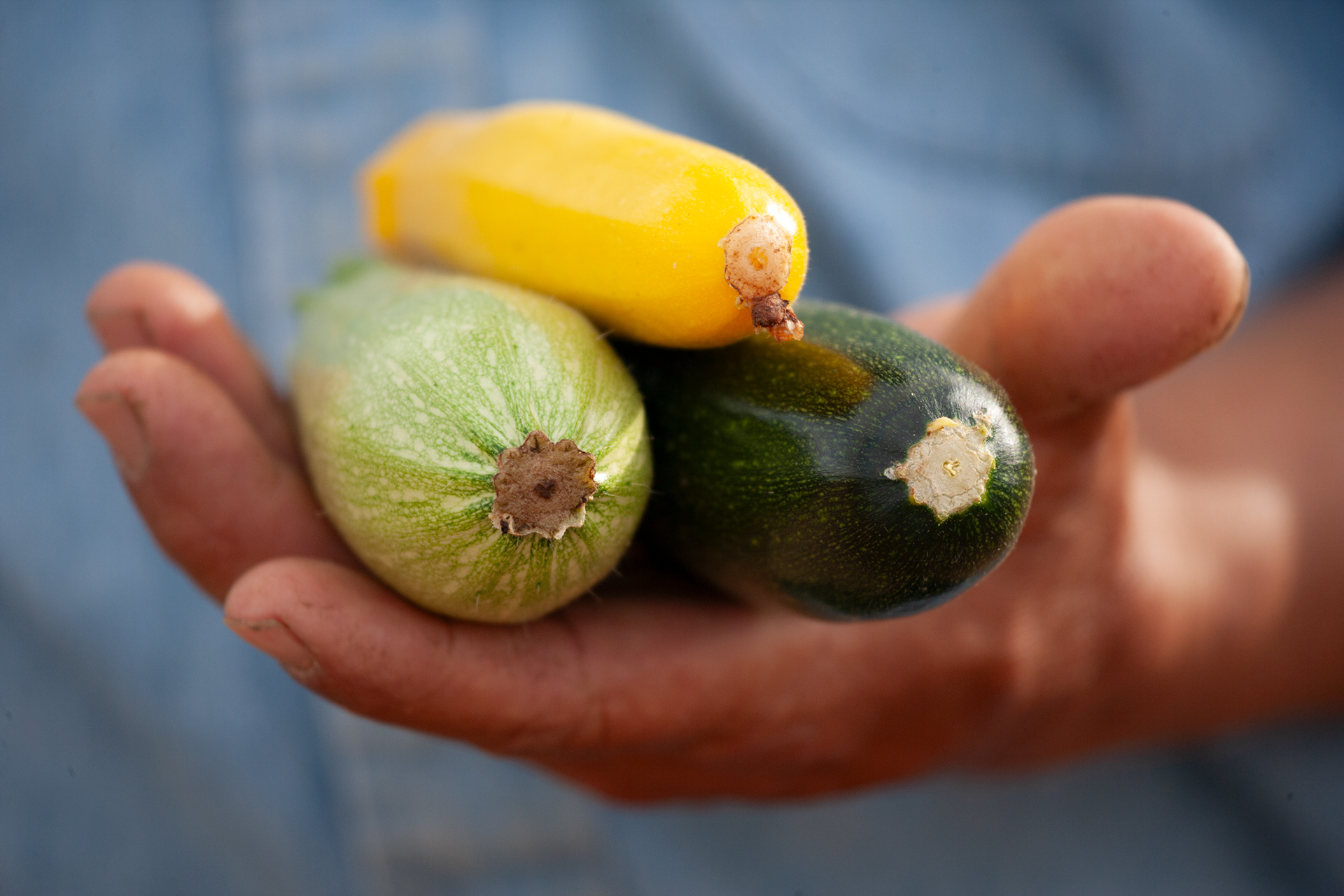
Xiong Pao holds his latest bounty: three colors of squash, April 28, 2008.
Xiong Pao Her farm -11
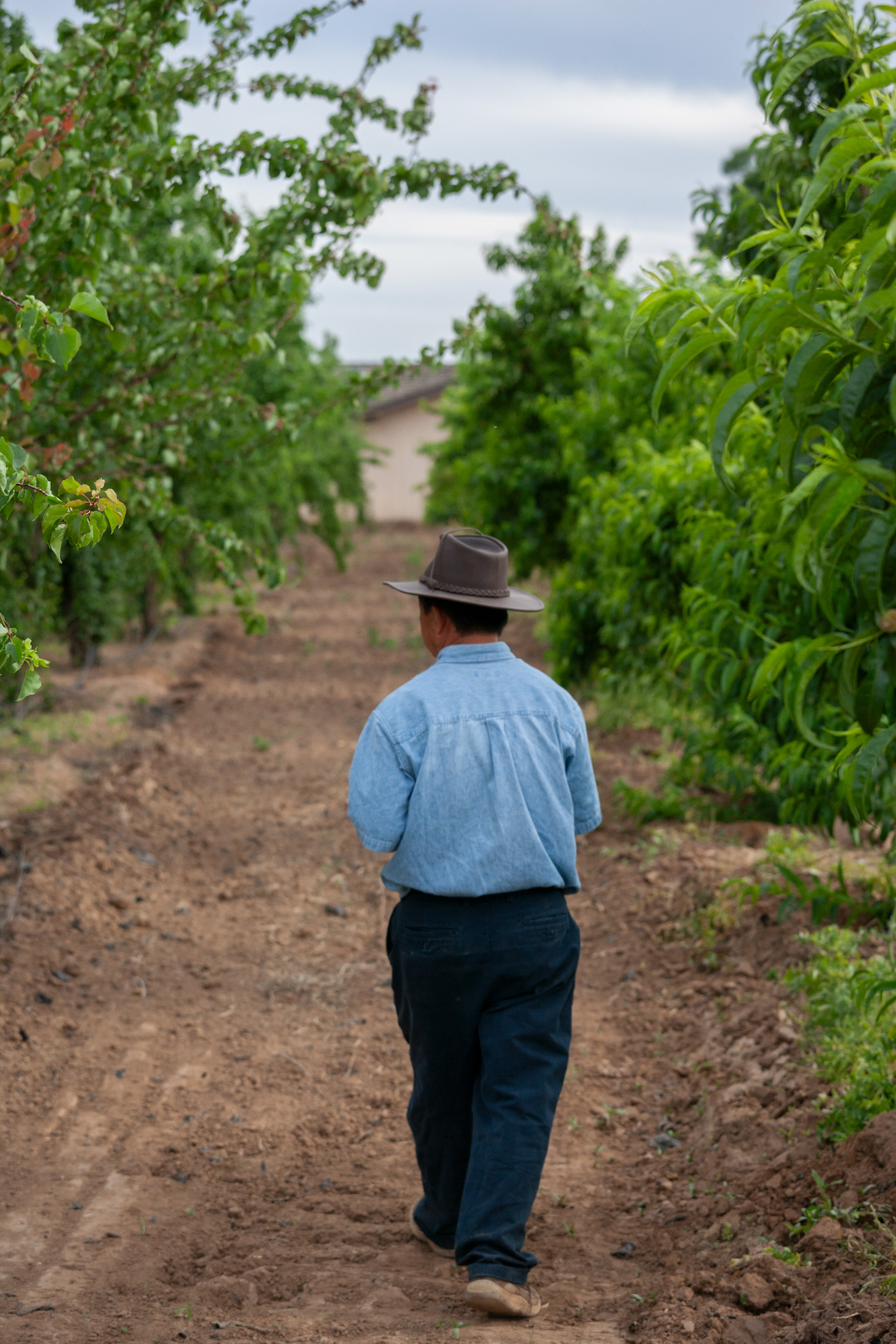
Xiong Pao walks along a row of peach trees toward the modest house that came with the farm when he bought it, April 28, 2008.
Xiong Pao Her farm -12
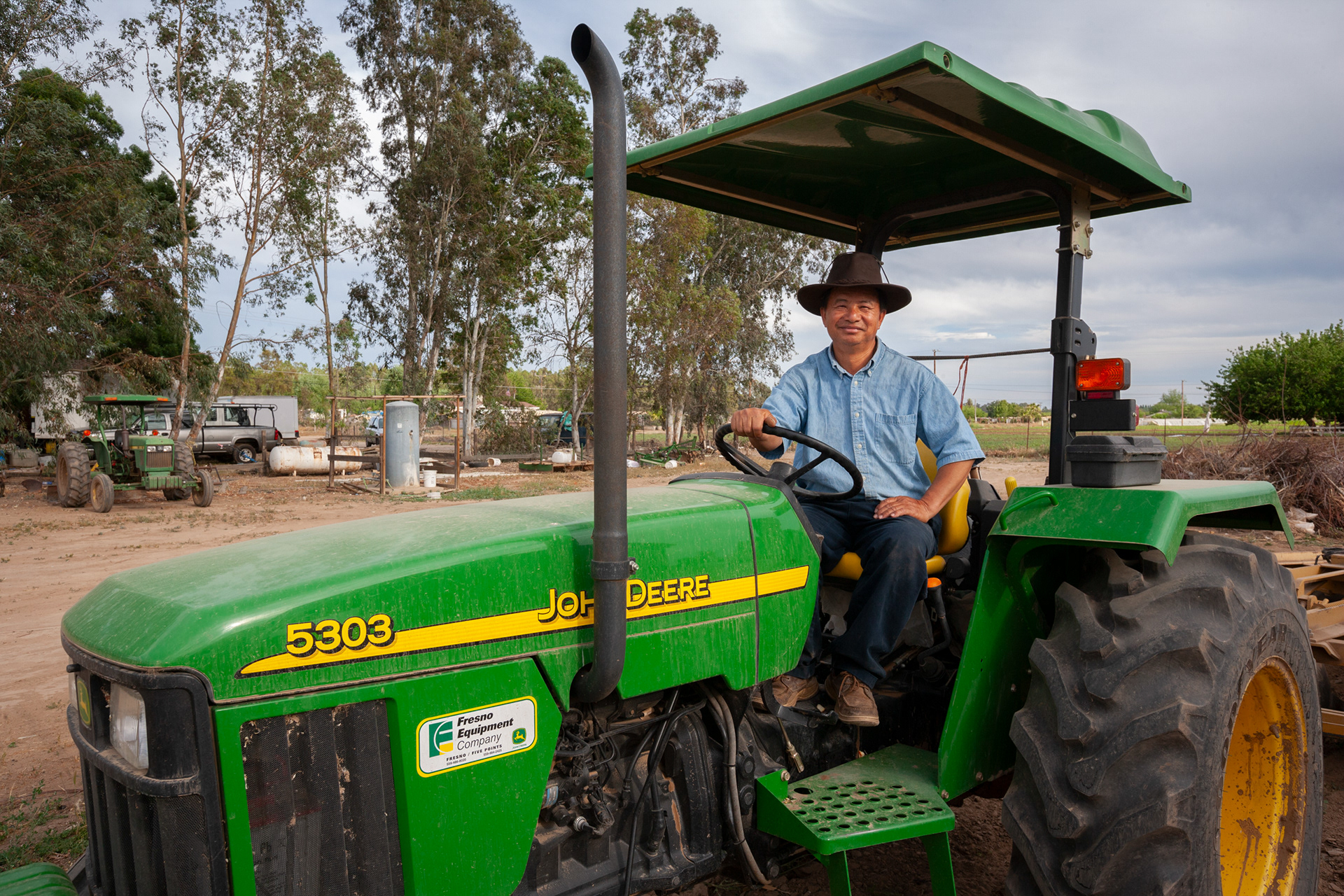
Xiong Pao sits proudly on one of his tractors, April 28, 2008.
Xiong Pao Her farm -13
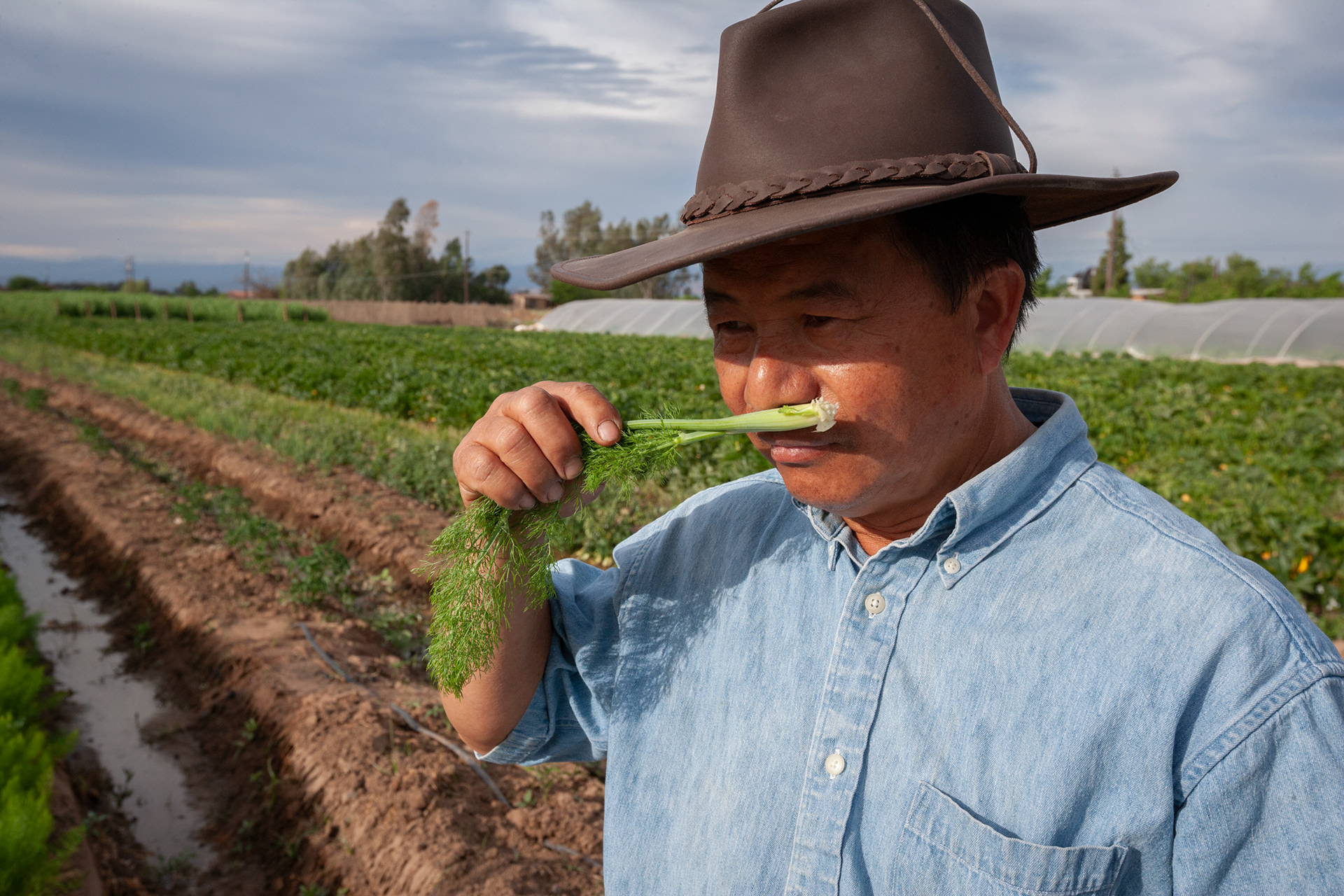
Xiong Pao checks the fragrance of his fennel crop, April 28, 2008.
Xiong Pao Her farm -14
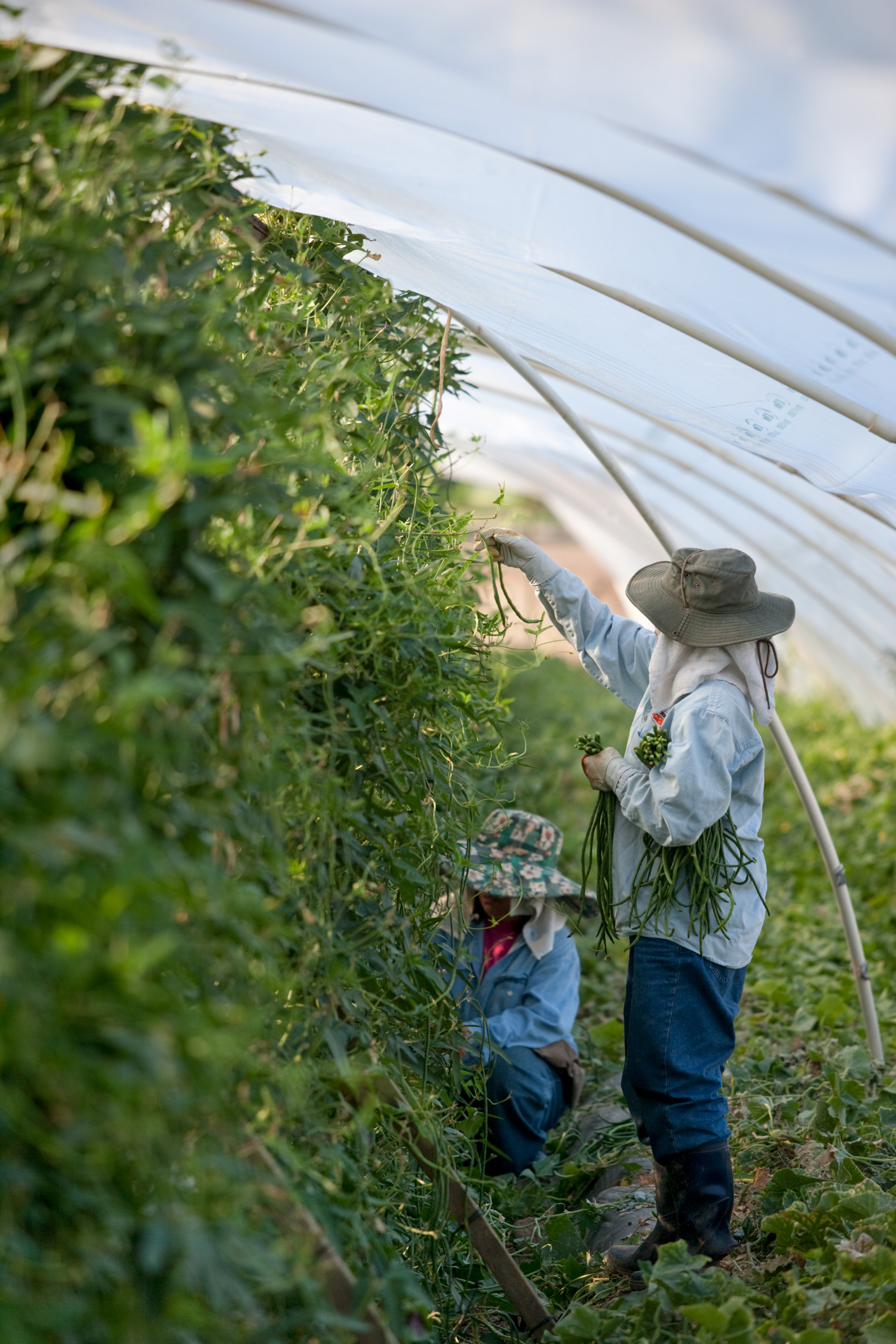
Xiong Pao’s wife, Mee Moua and daughter, Sandy Her harvest long beans from a hothouse, April 28, 2008.
Xiong Pao Her farm -15
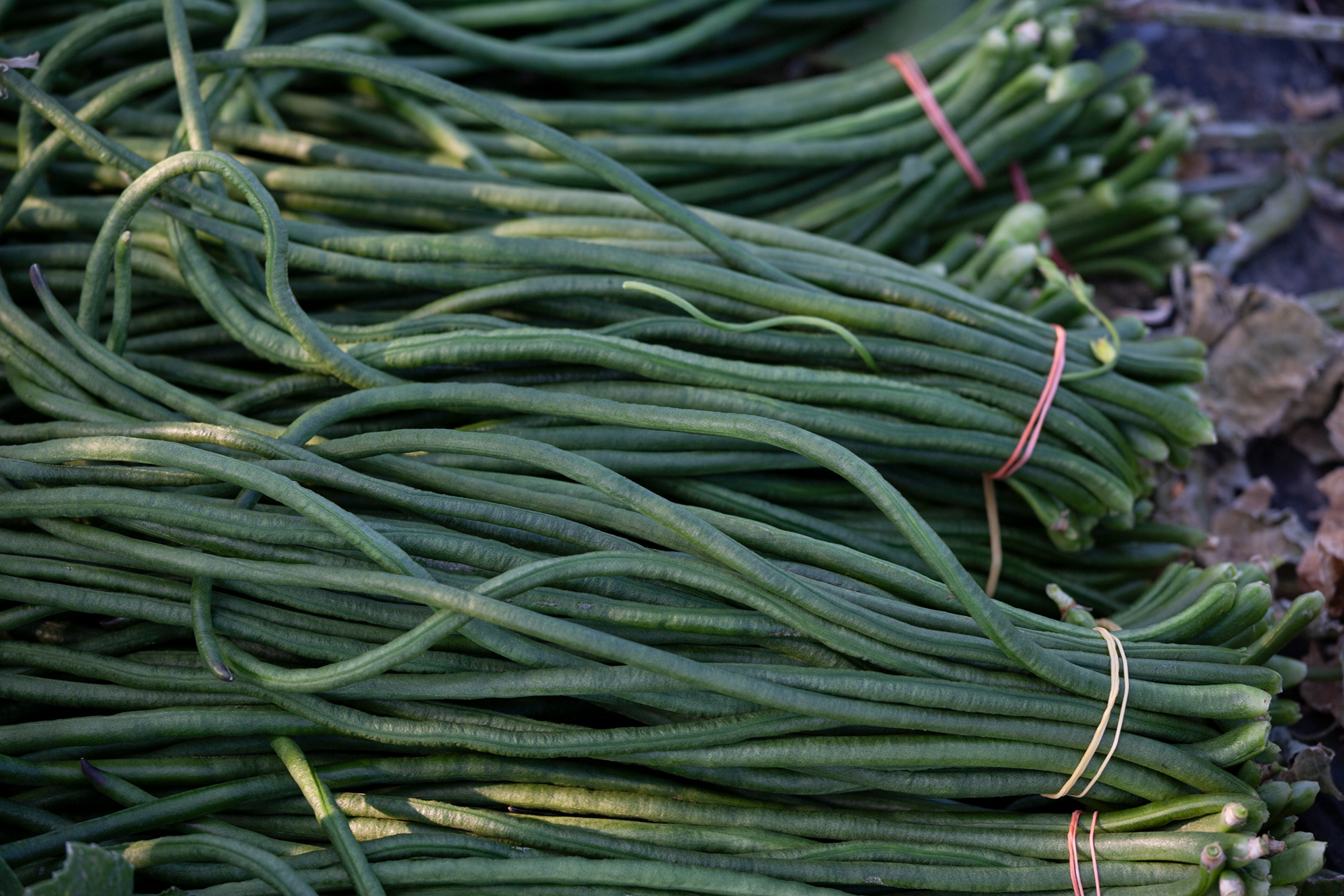
Asian gold: Long beans sell for $6.00 to $8.50 per pound in Santa Barbara, April 28, 2008.
Xiong Pao Her farm -16
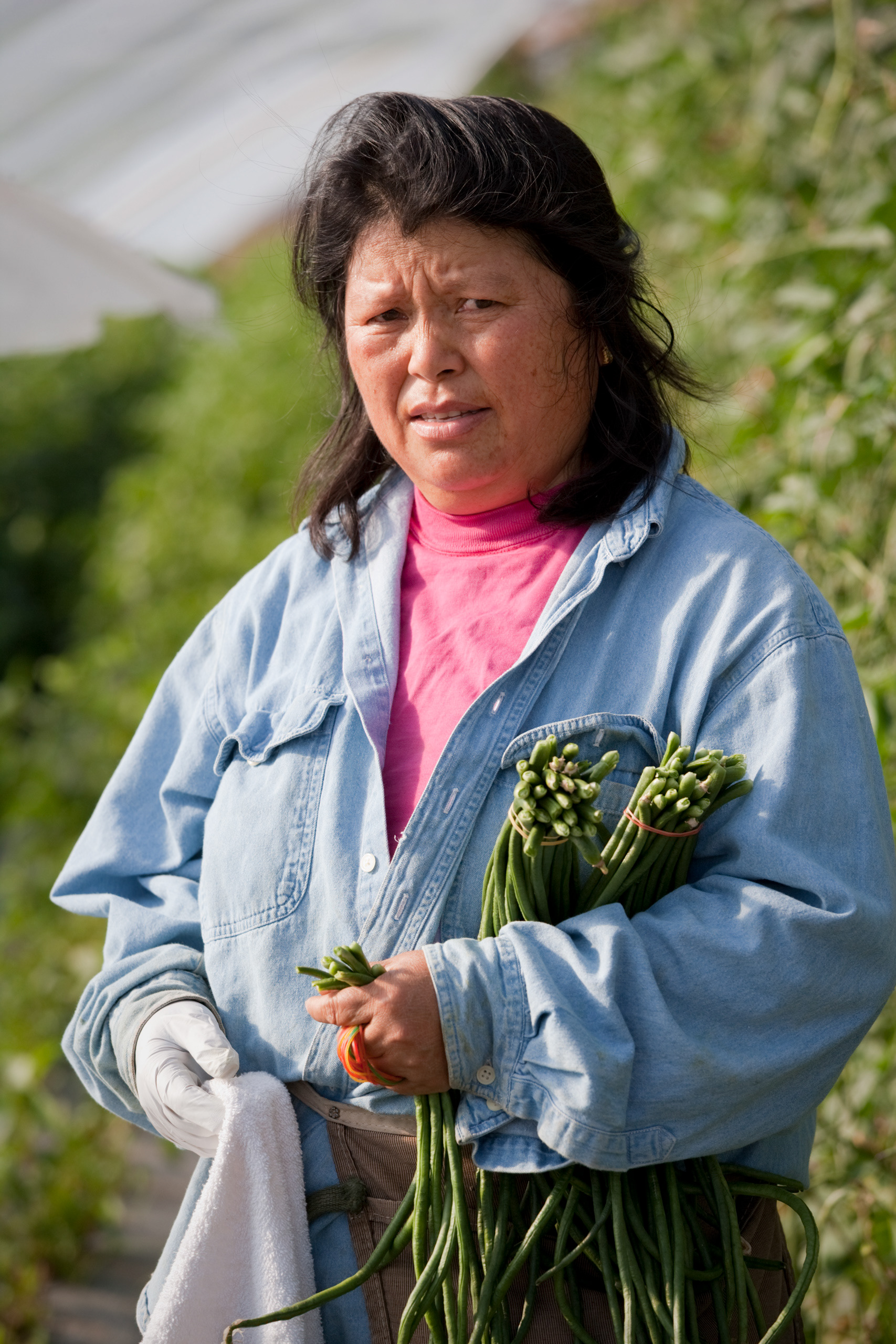
Mee Moua pauses briefly while picking long beans, April 28, 2008.
Xiong Pao Her farm -18
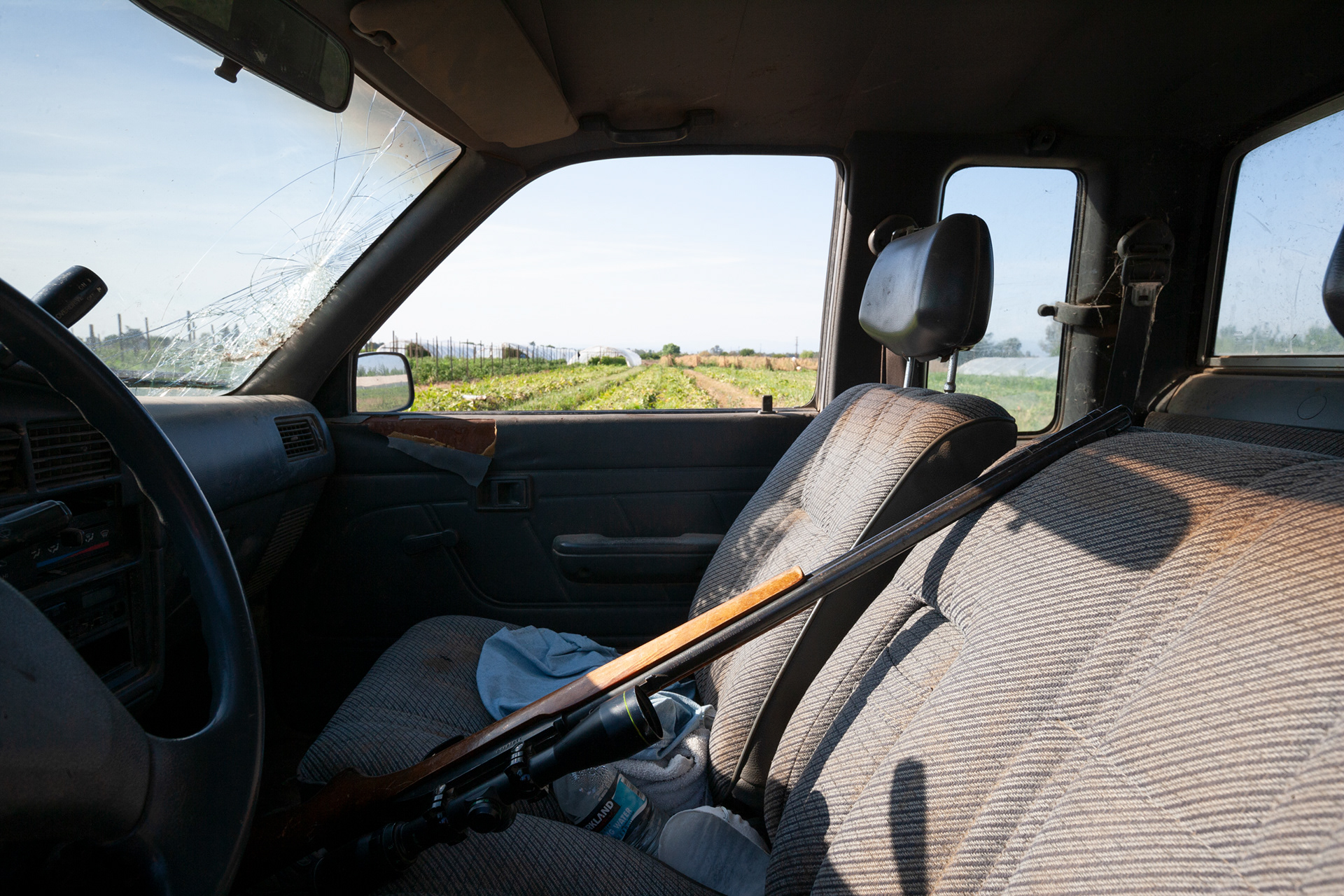
Xiong Pao keeps a small caliber rifle to shoot crop-eating pests, April 28, 2008.
Xiong Pao Her farm -17
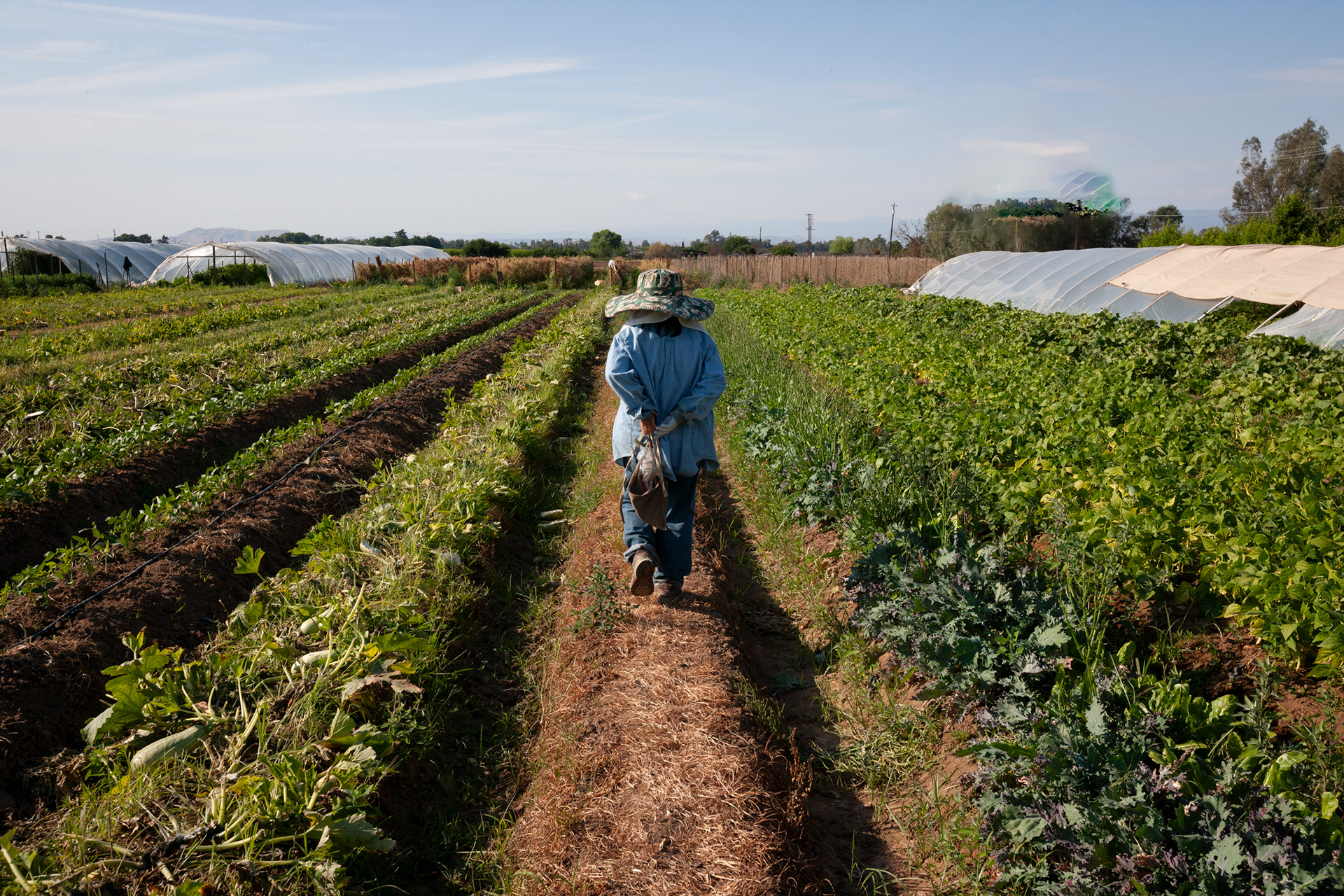
Sandy Her walks along an unplanted row, flanked by squash on her left and purple kale on her right, April 28, 2008.
Xiong Pao Her farm -19
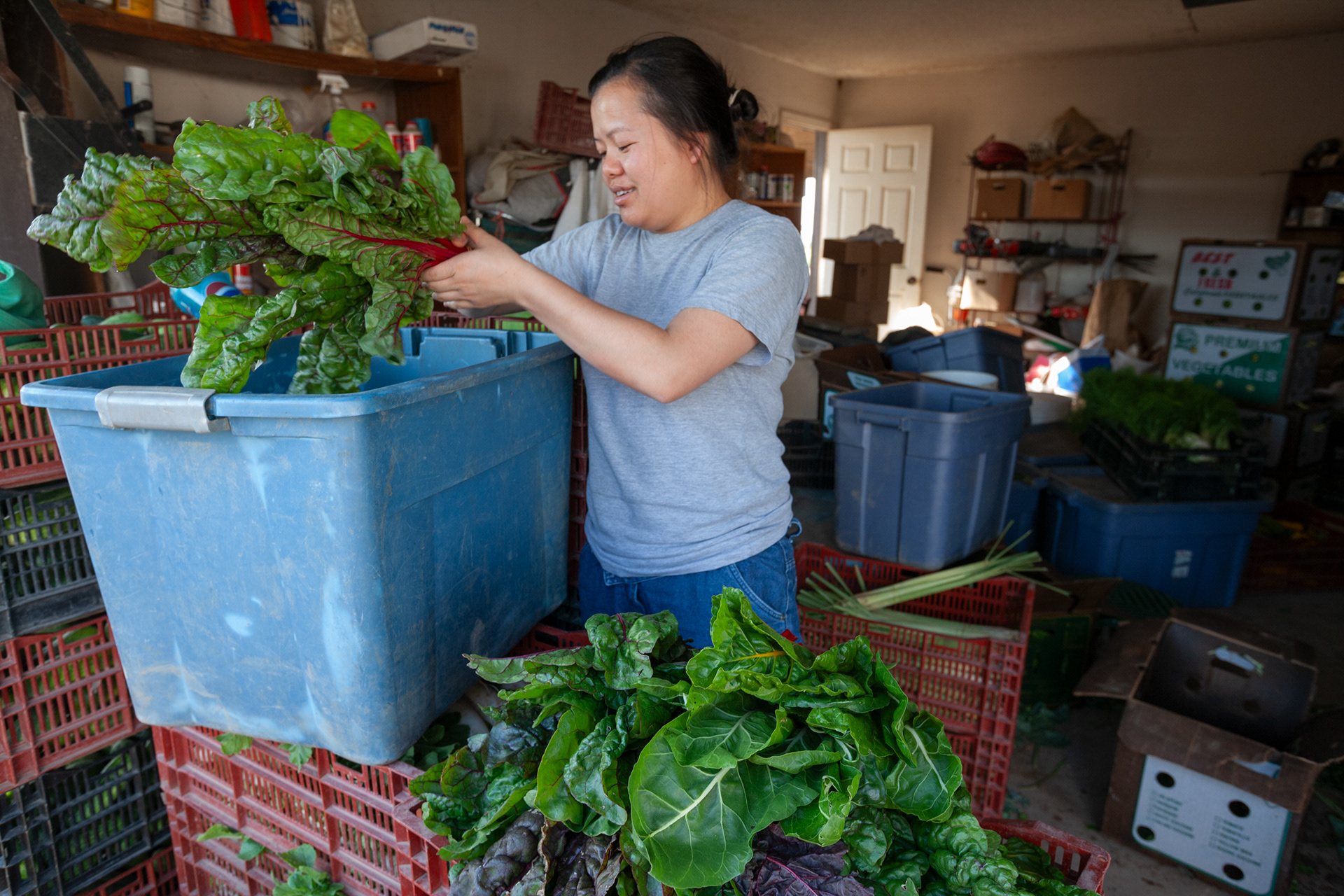
Sandy Her washes Swiss Chard, April 28, 2008.
Xiong Pao Her farm -20
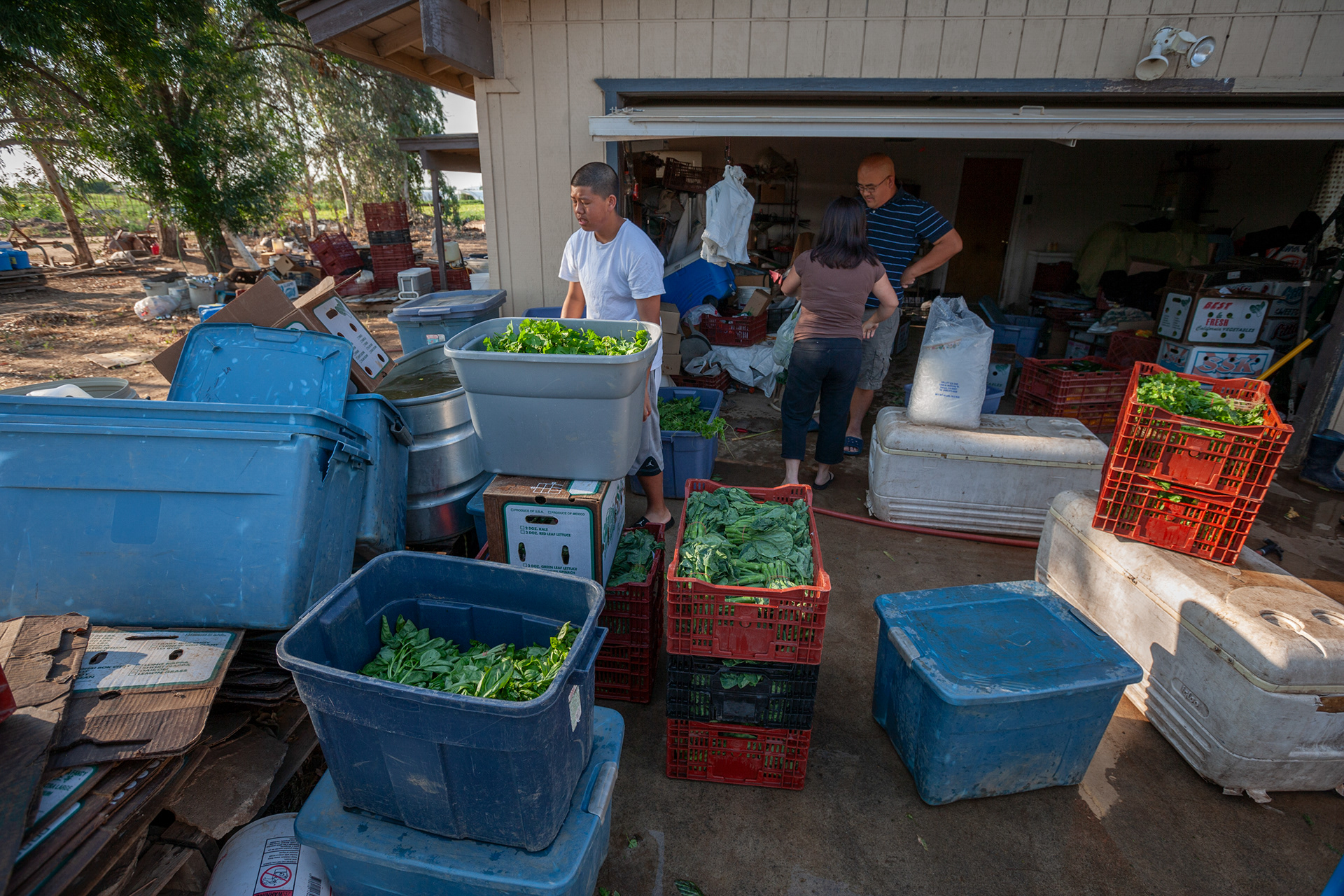
Several family members pitch in to prepare the big truck for its overnight trip to Santa Barbara, April 28, 2008.
Xiong Pao Her farm -21
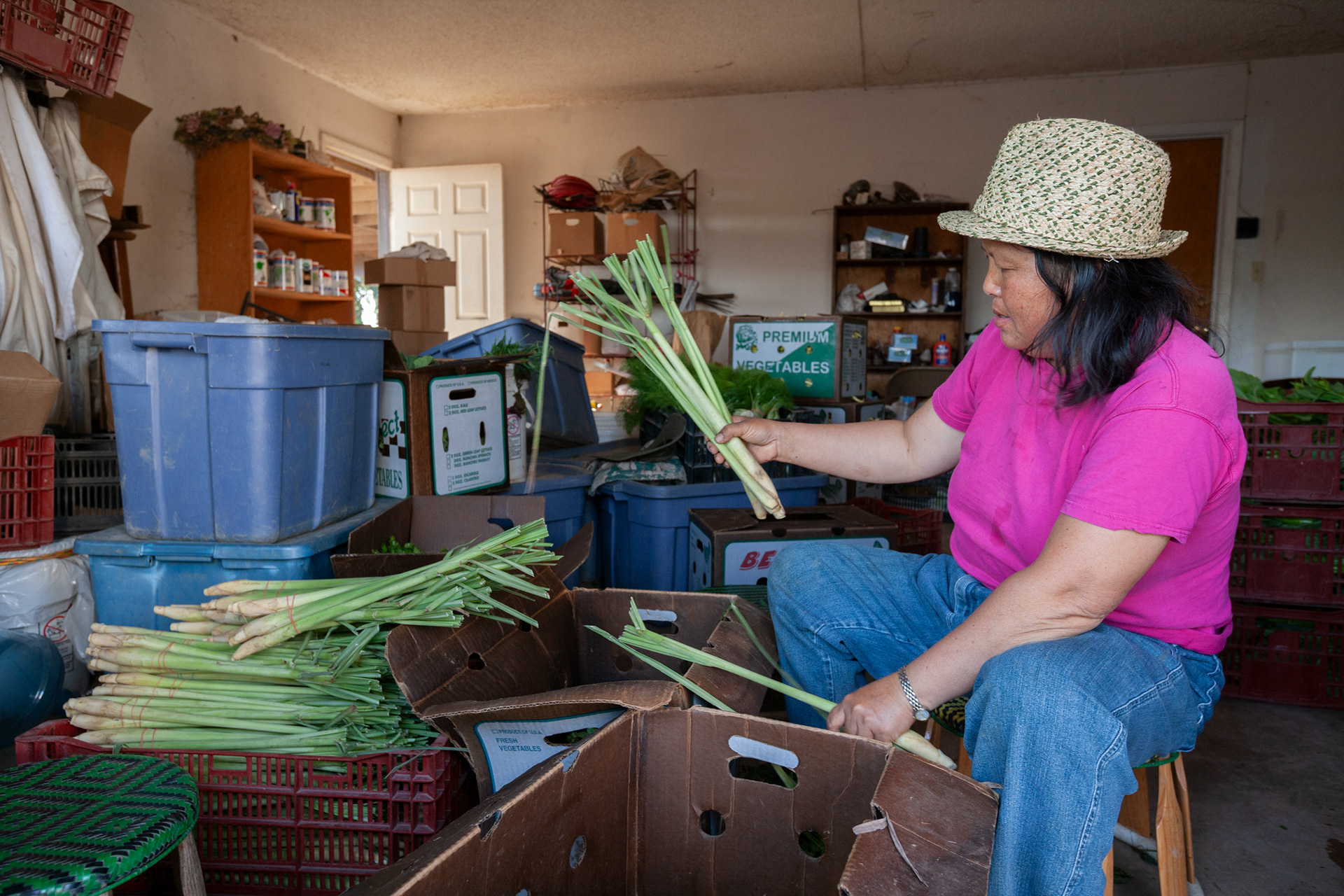
Mee Moua packs lemongrass destined for the Santa Barbara farmers market, April 28, 2008.
Xiong Pao Her farm -22
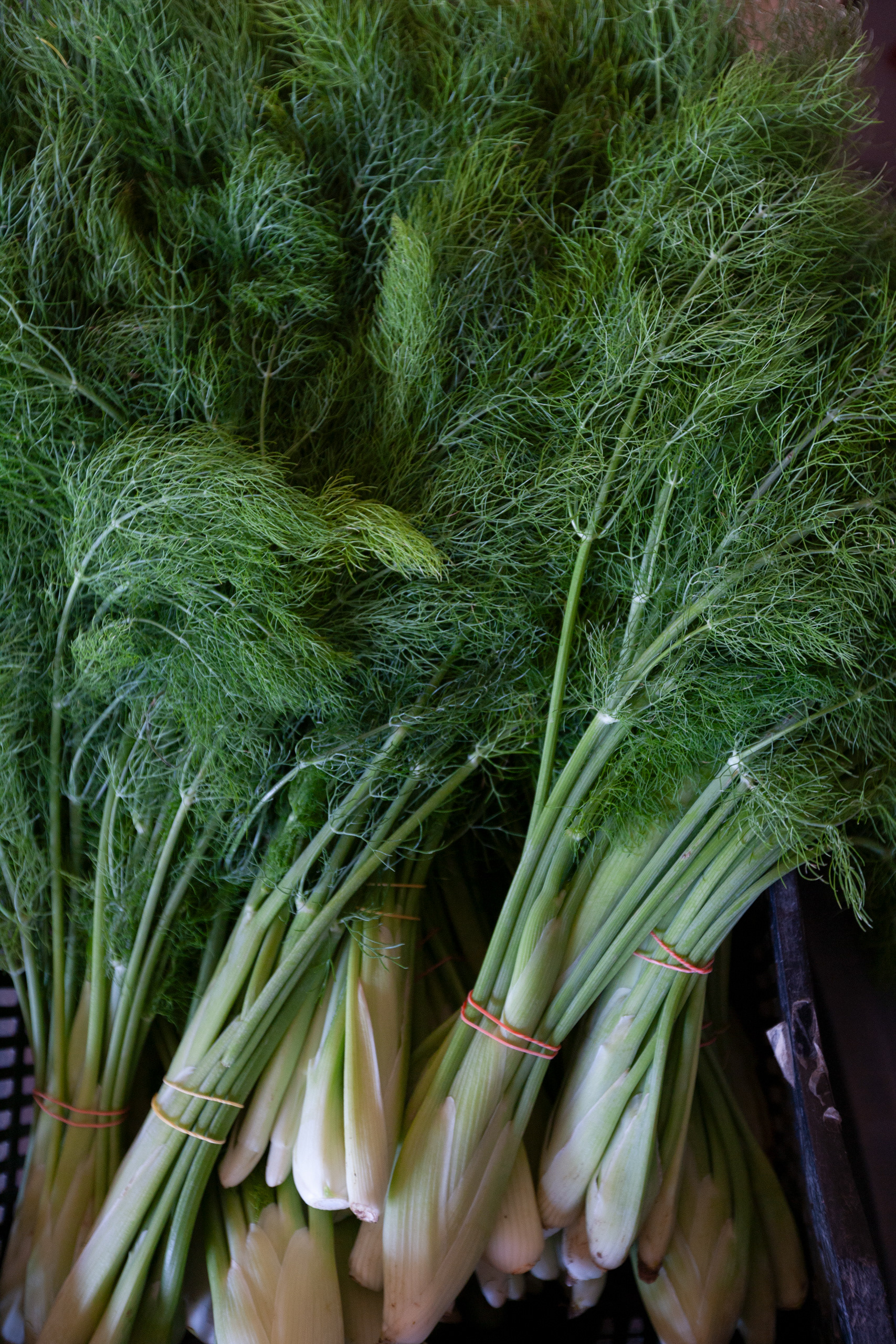
Fennel awaits boxing, April 28, 2008.
Xiong Pao Her farm -23
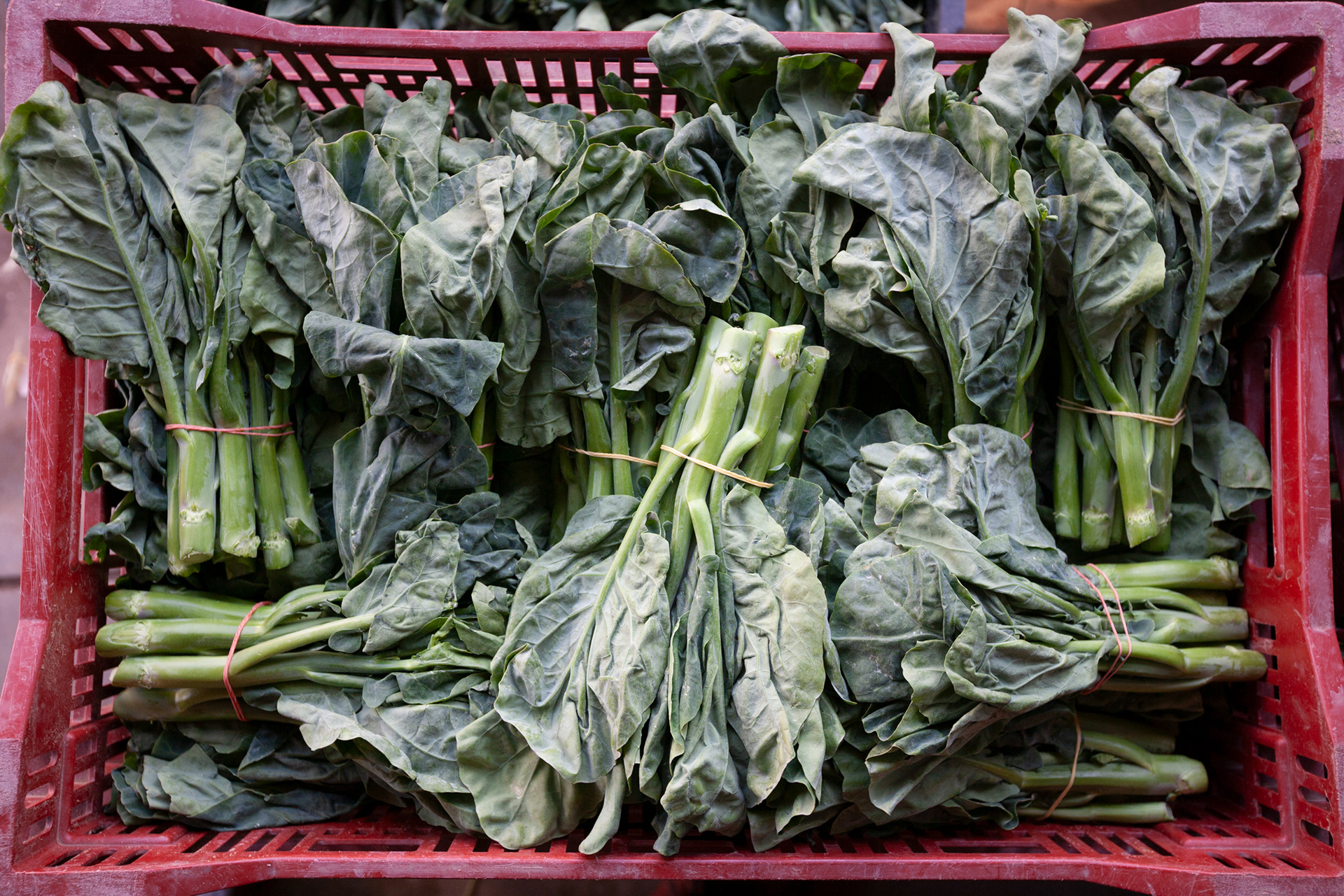
Freshly harvested Gai Lan or Chinese broccoli will sell for $5.00 per bunch in Santa Barbara, April 28, 2008.
Xiong Pao Her farm -24
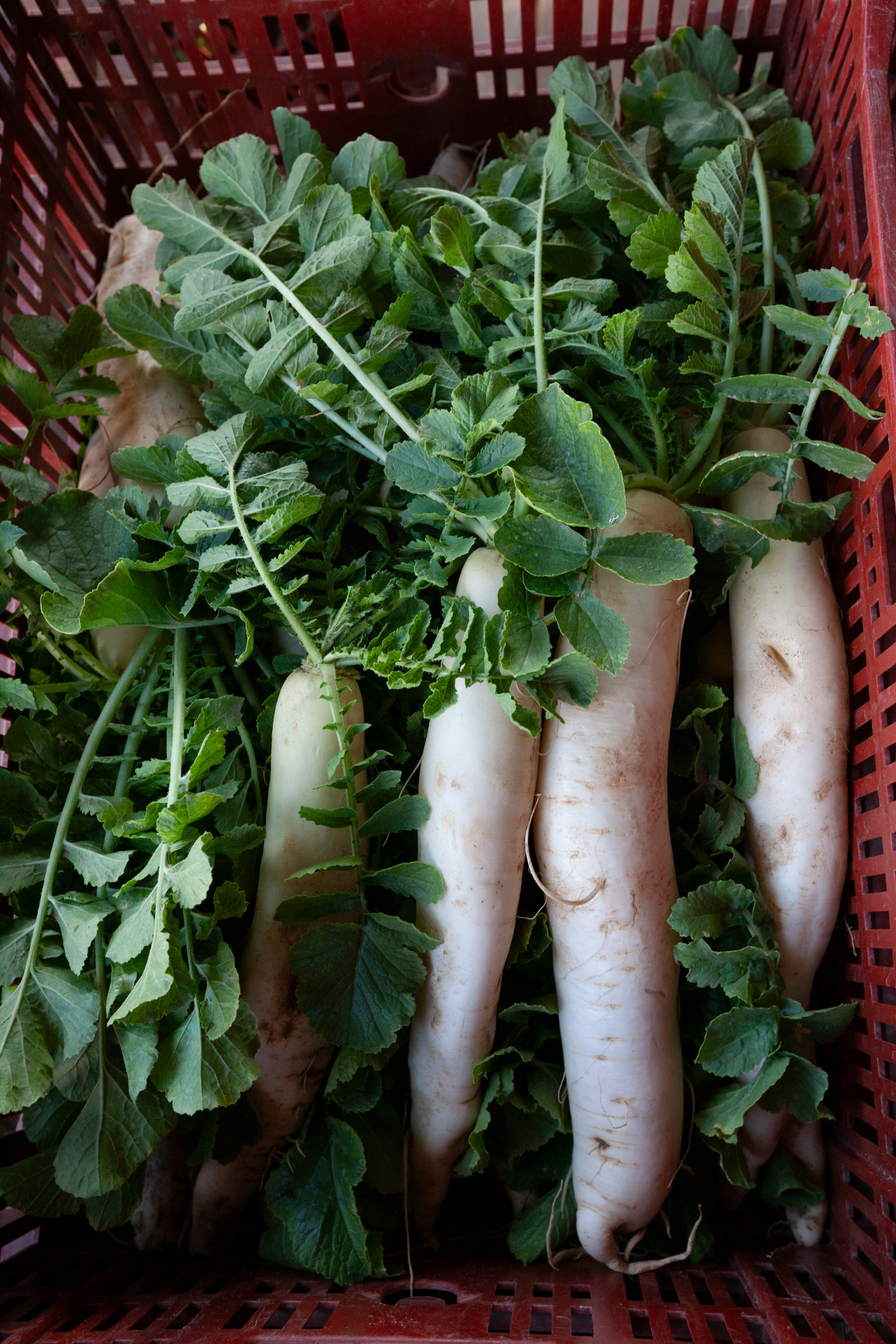
This Daikon will also bring a high price in Santa Barbara, April 28, 2008.
Xiong Pao Her farm -25
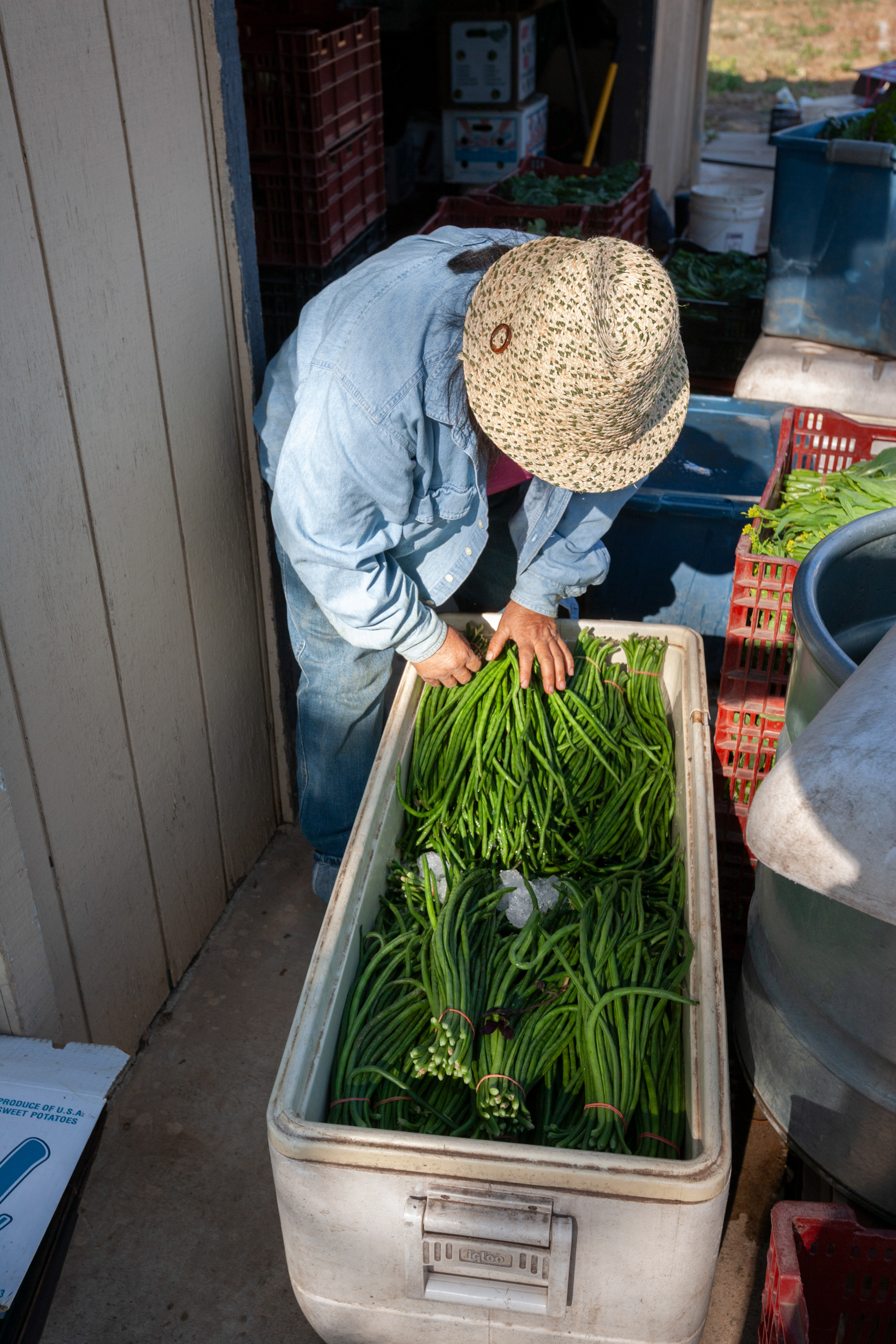
Mee Moua packs long beans into a large ice chest for the overnight journey to Santa Barbara, April 28, 2008.
Xiong Pao Her farm -26
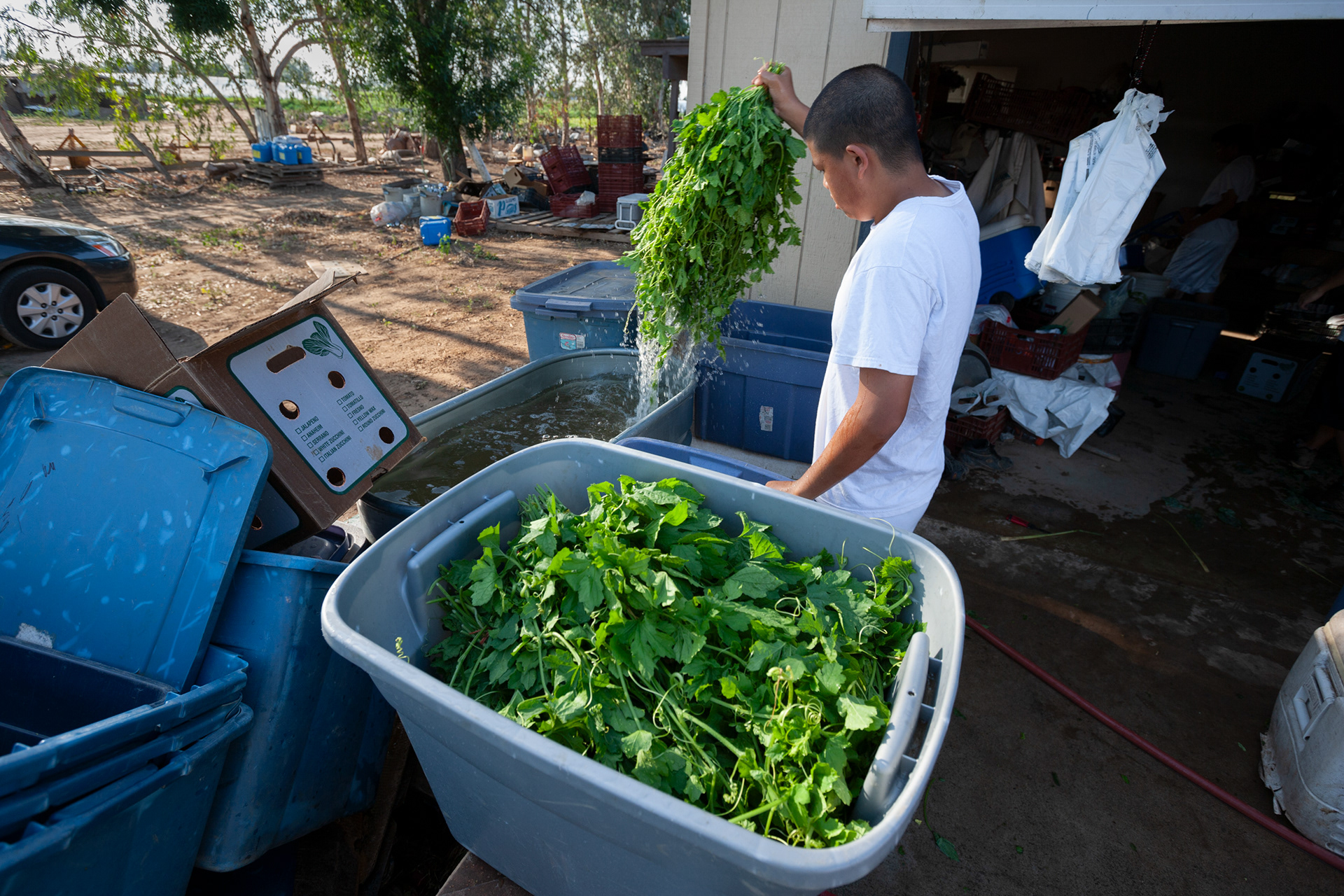
Son, Kee Her washes bitter melon tendrils to be sold as an exotic sauté green, April 28, 2008.
Xiong Pao Her farm -27
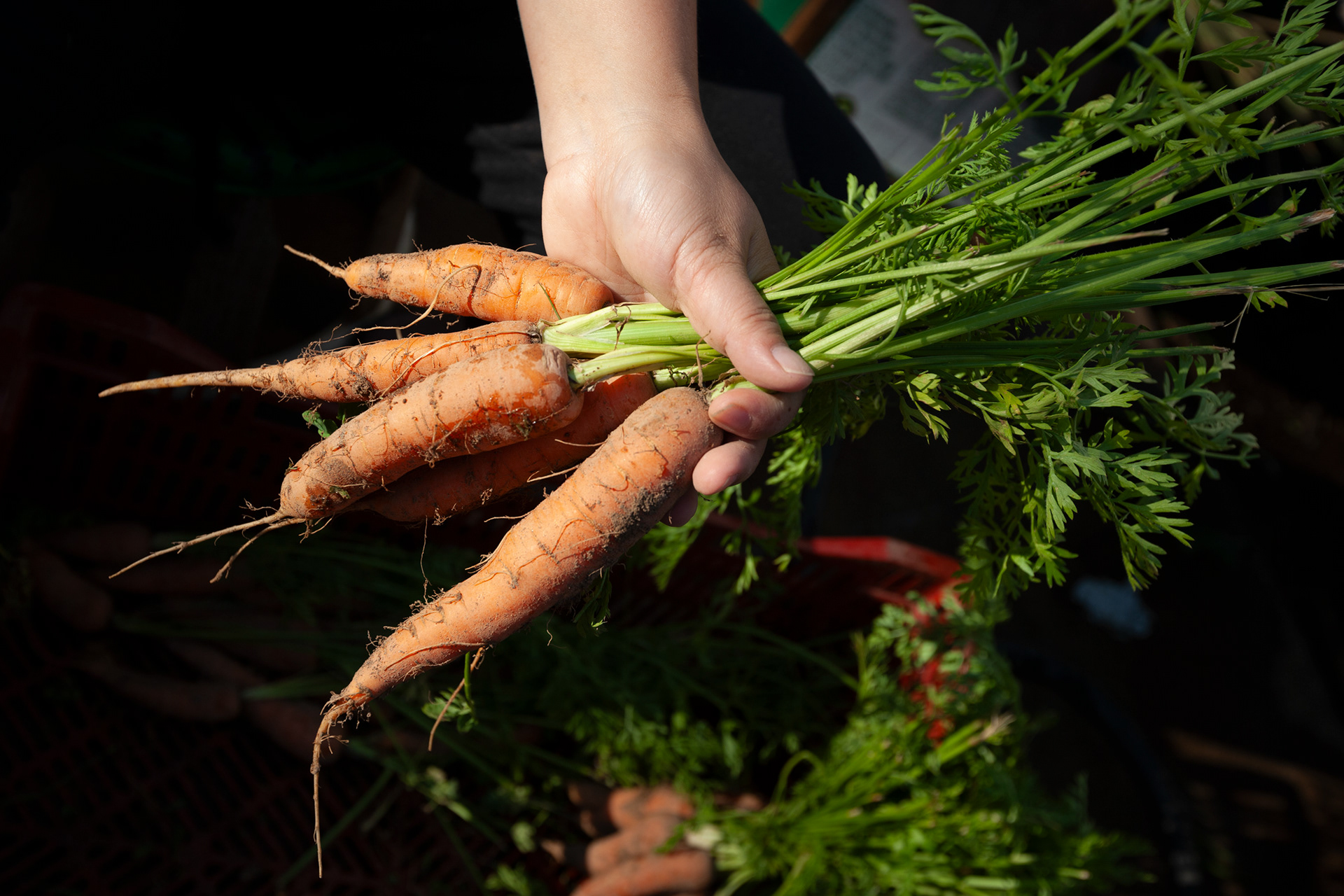
A handful of freshly unearthed carrots, April 28, 2008.
Xiong Pao Her farm -28
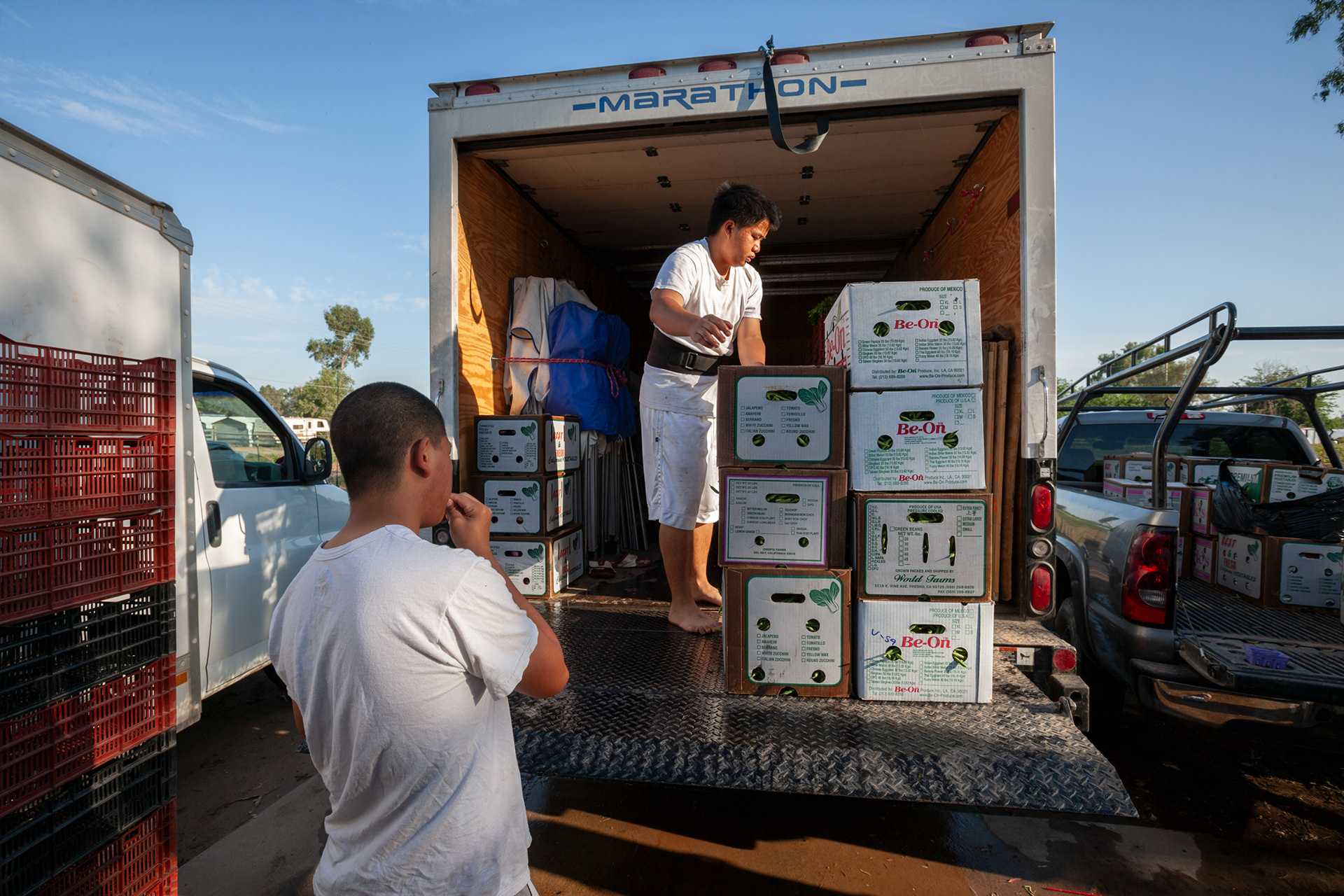
Loading the truck with produce for the overnight trip to Santa Barbara. The cardboard boxes are provided by a local packing company that often buys surplus from the farm, April 28, 2008.
Xiong Pao Her farm -29
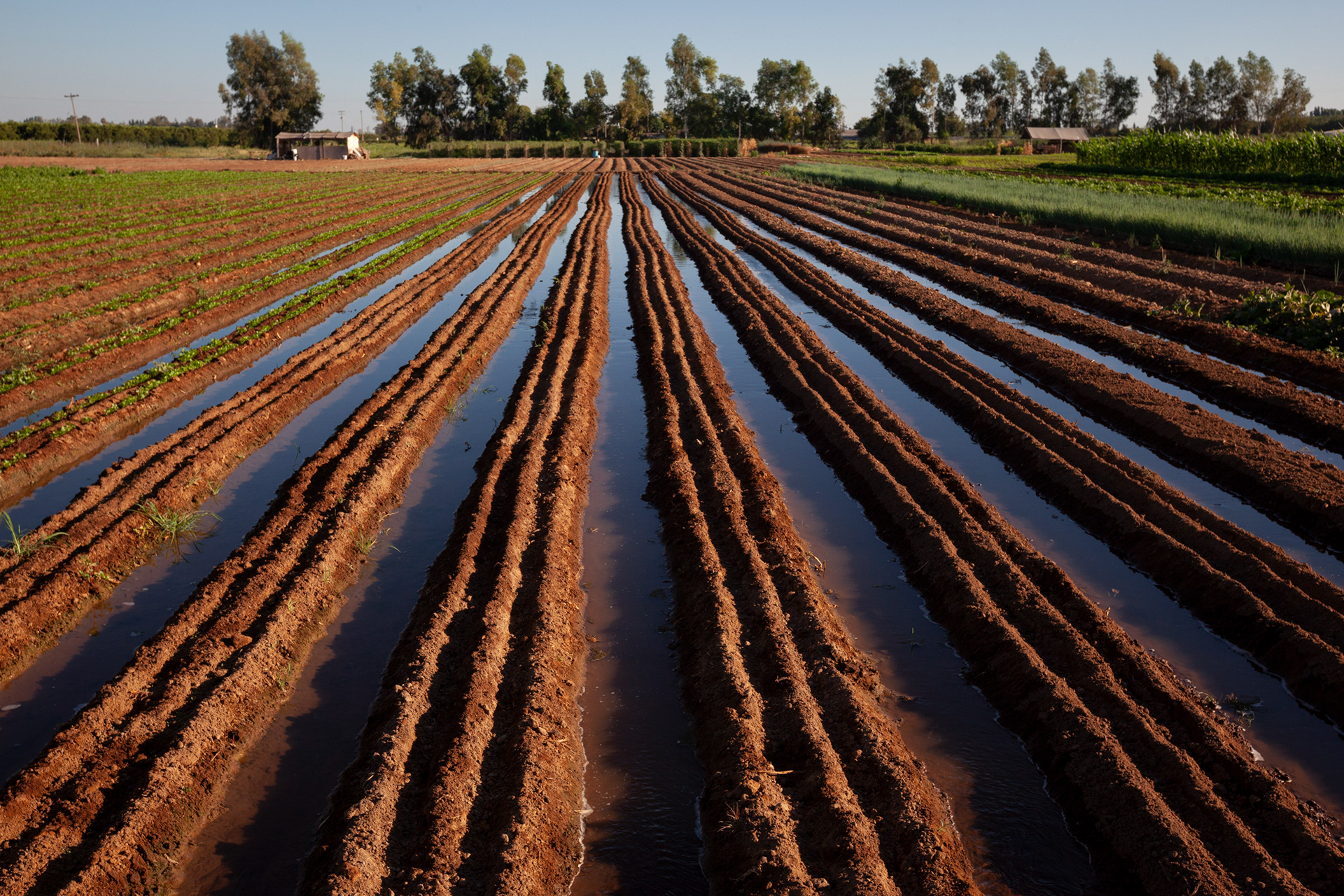
I visited the farm in 2010 looking for a panoramic farm landscape that I could use across two pages of Soul Calling as a portal to the California section of the book. The editor chose this image, August 15, 2010.
Xiong Pao Her farm -30
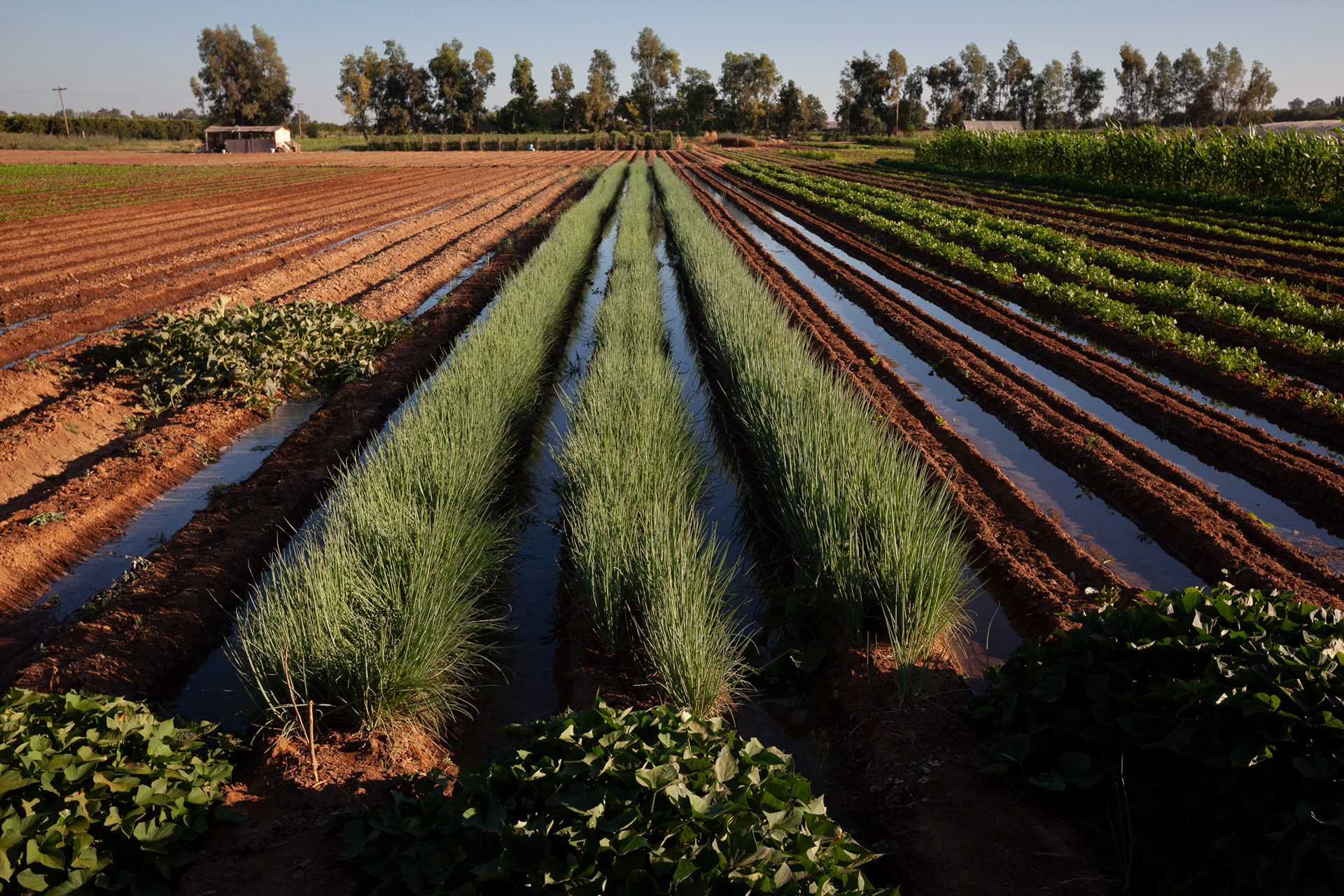
A runner up for the two page spread features Tokyo Negi onions, August 15, 2010.
Xiong Pao Her farm -31
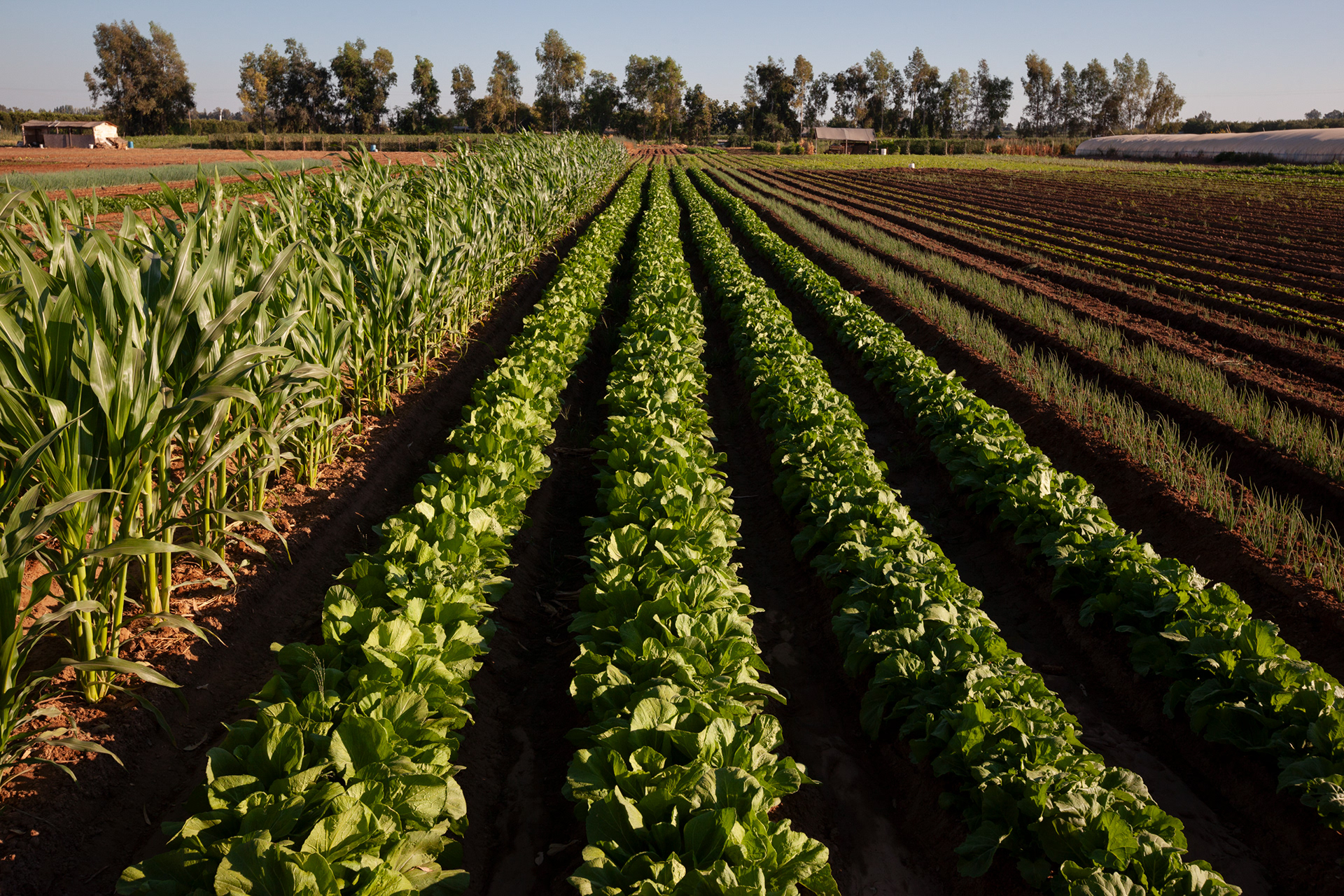
This variation features mustard greens, August 15, 2010.
Xiong Pao Her farm -32
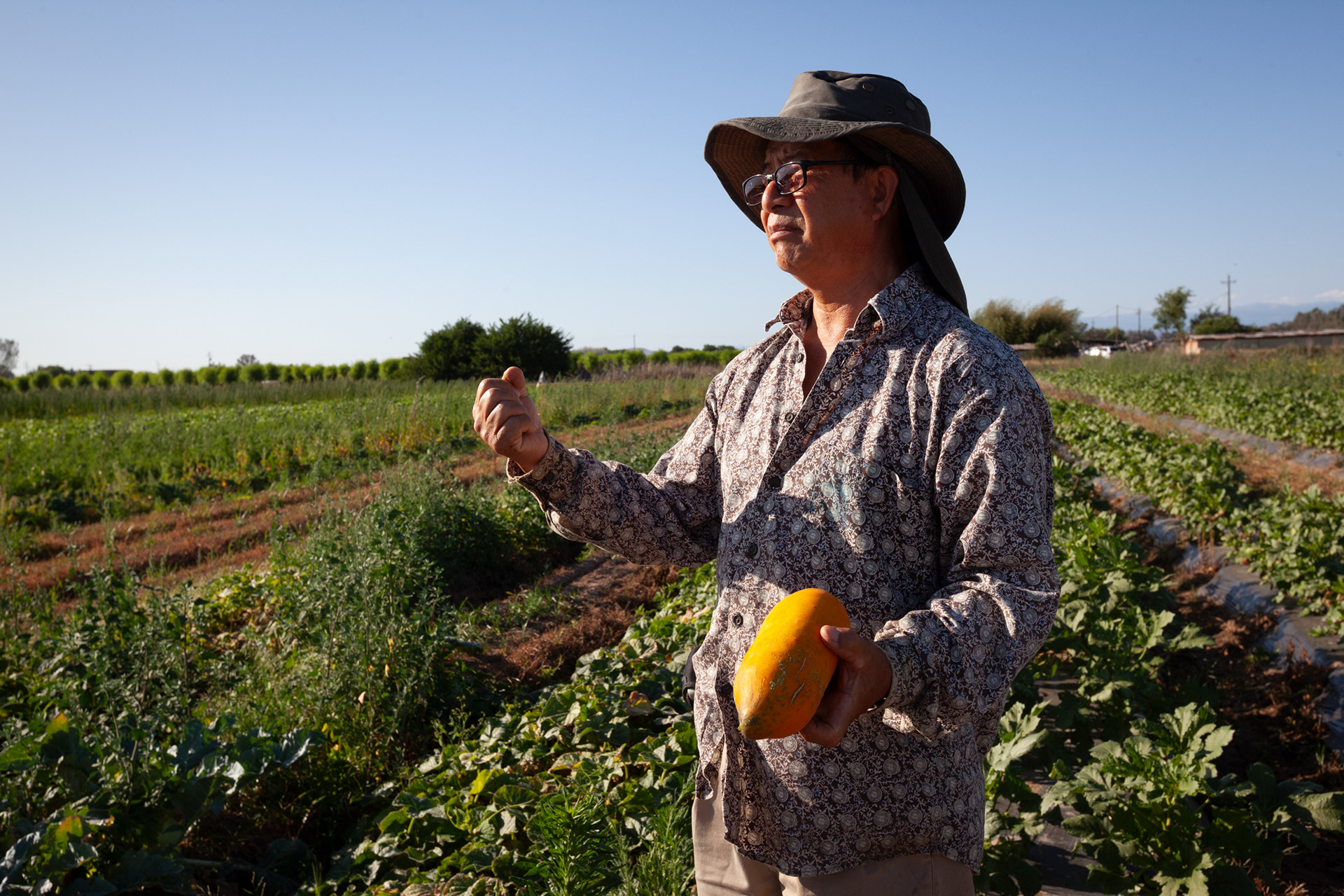
I visited the farm again in 2014, bringing along a filmmaker who was documenting my photographic work with Southeast Asian cultures. Xiong Pao holds a large heirloom Hmong Cucumber, May 15, 2014.
Xiong Pao Her farm -33
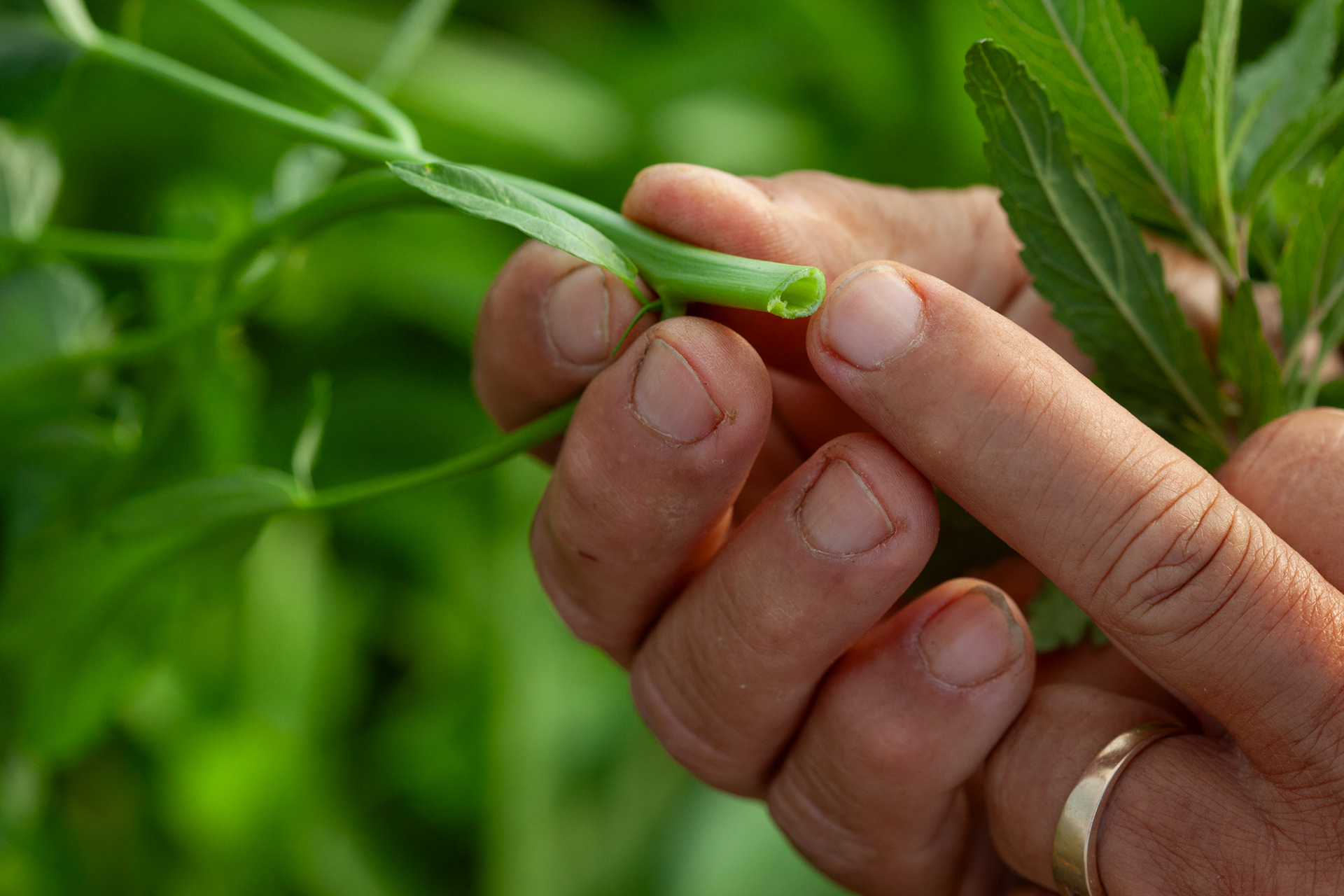
Xiong Pao shows me the hollow stem of an Ong Choy or Japanese water spinach plant, May 15, 2014.
Xiong Pao Her farm -34
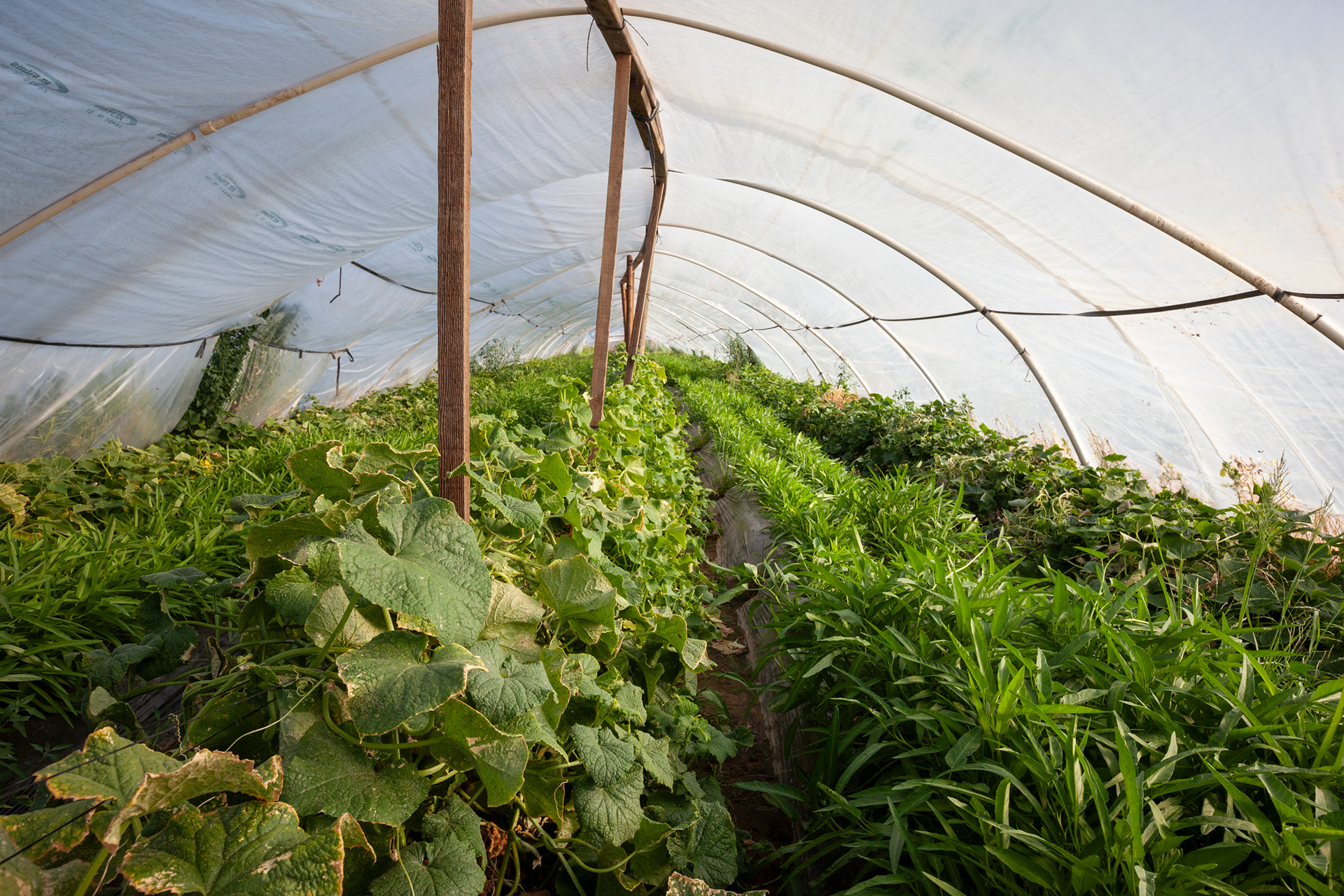
Six years after my first visit, this hothouse is still dedicated to growing Japanese cucumbers and Ong Choy, both lucrative crops, May 15, 2014.
Xiong Pao Her farm -35
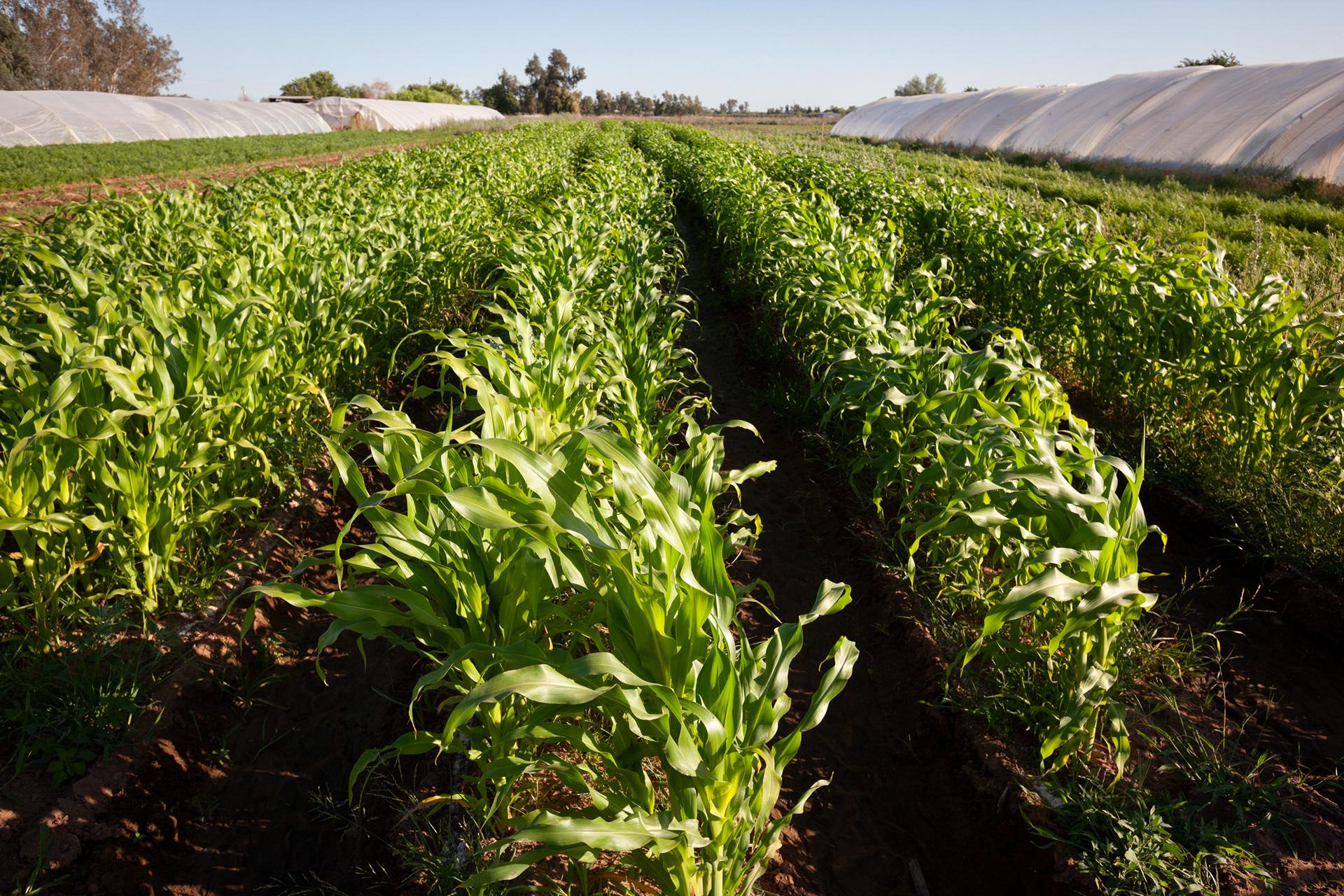
Rows of corn grow between hothouses filled with more exotic crops, May 15, 2014.
Xiong Pao Her farm -36
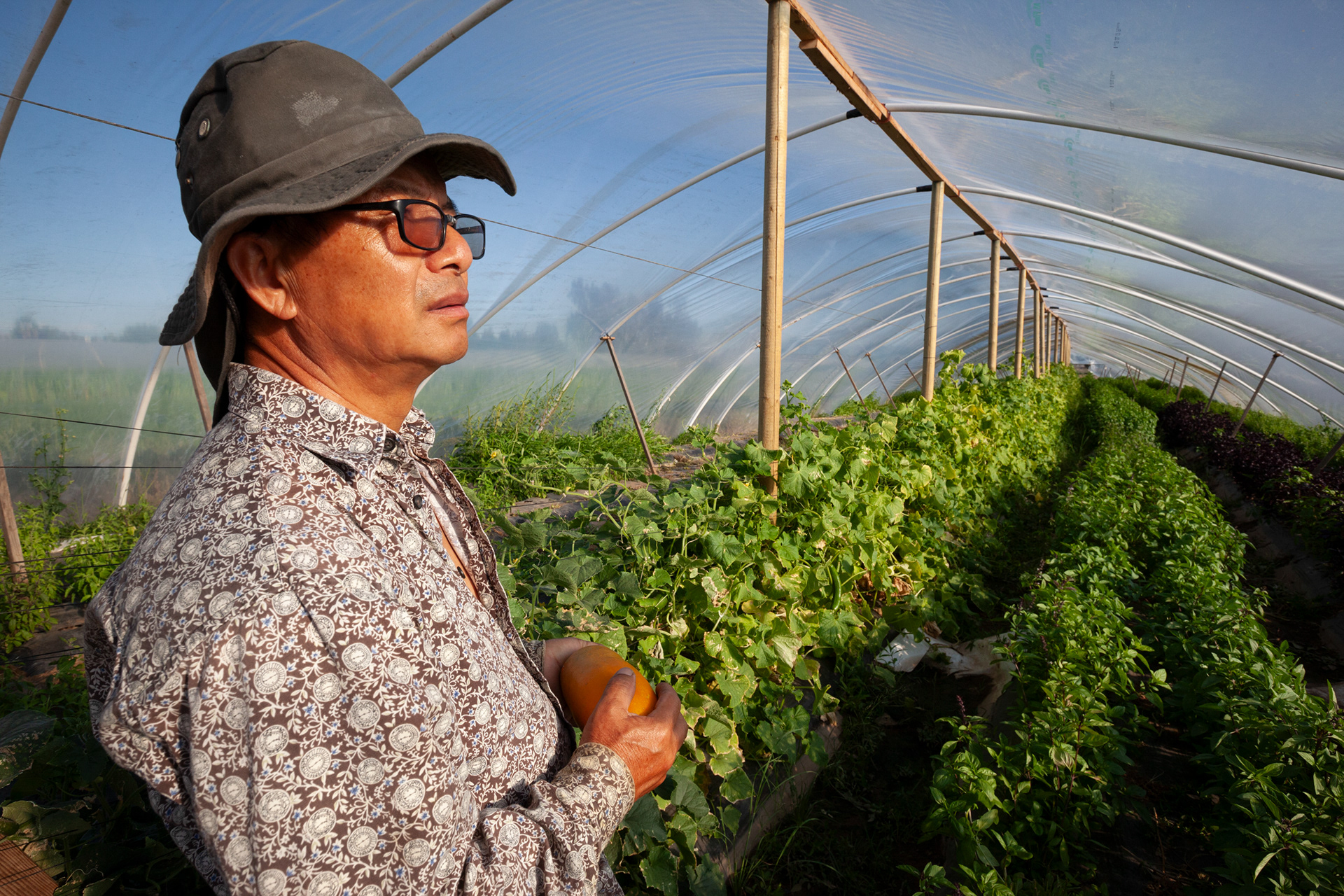
This hothouse has Japanese cumbers on the left and several kinds of very fragrant Thai basil on the right, May 15, 2014.
Xiong Pao Her farm -37
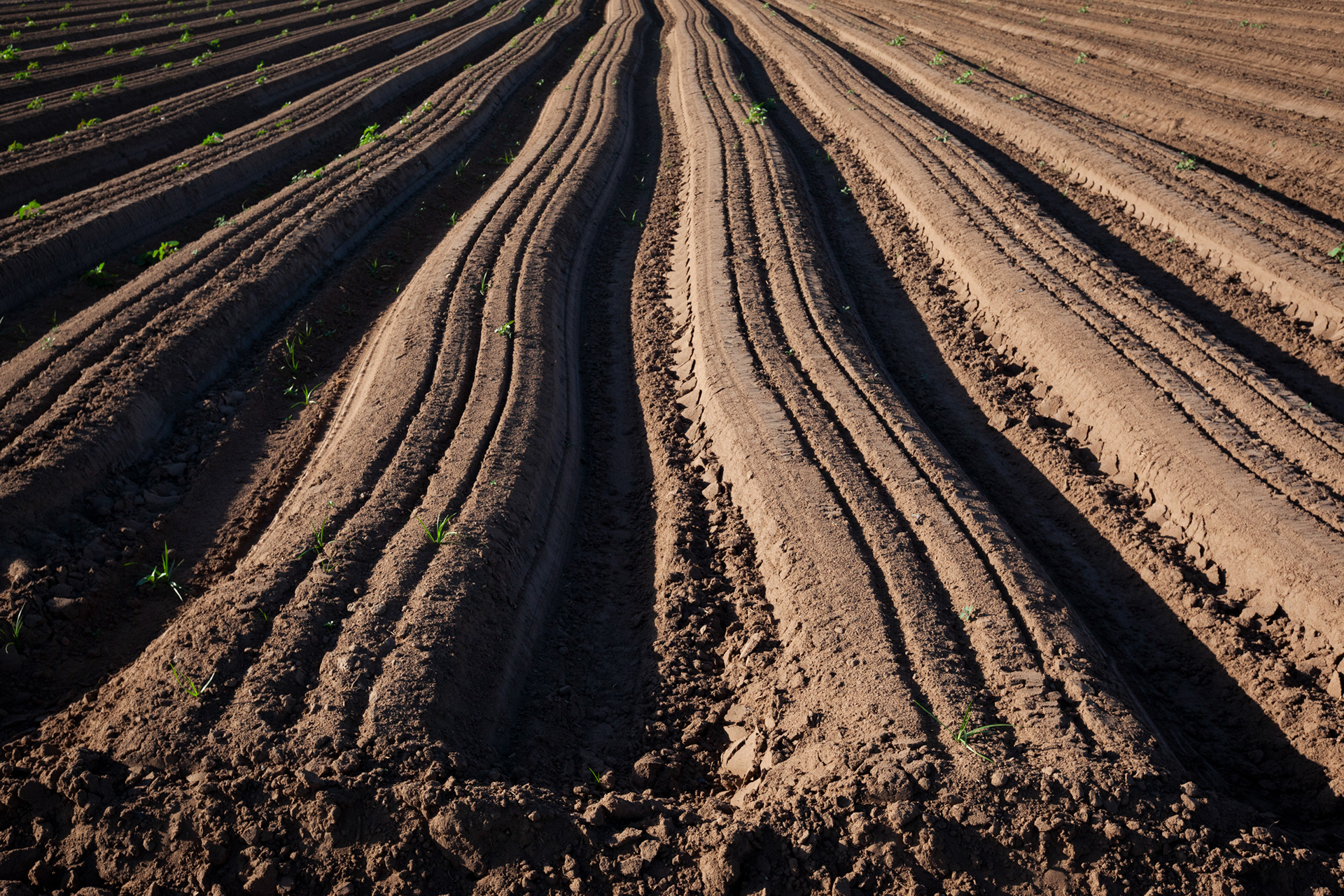
Freshly plowed rows of the world's richest soil await planting, May 15, 2014.
Xiong Pao Her farm -38
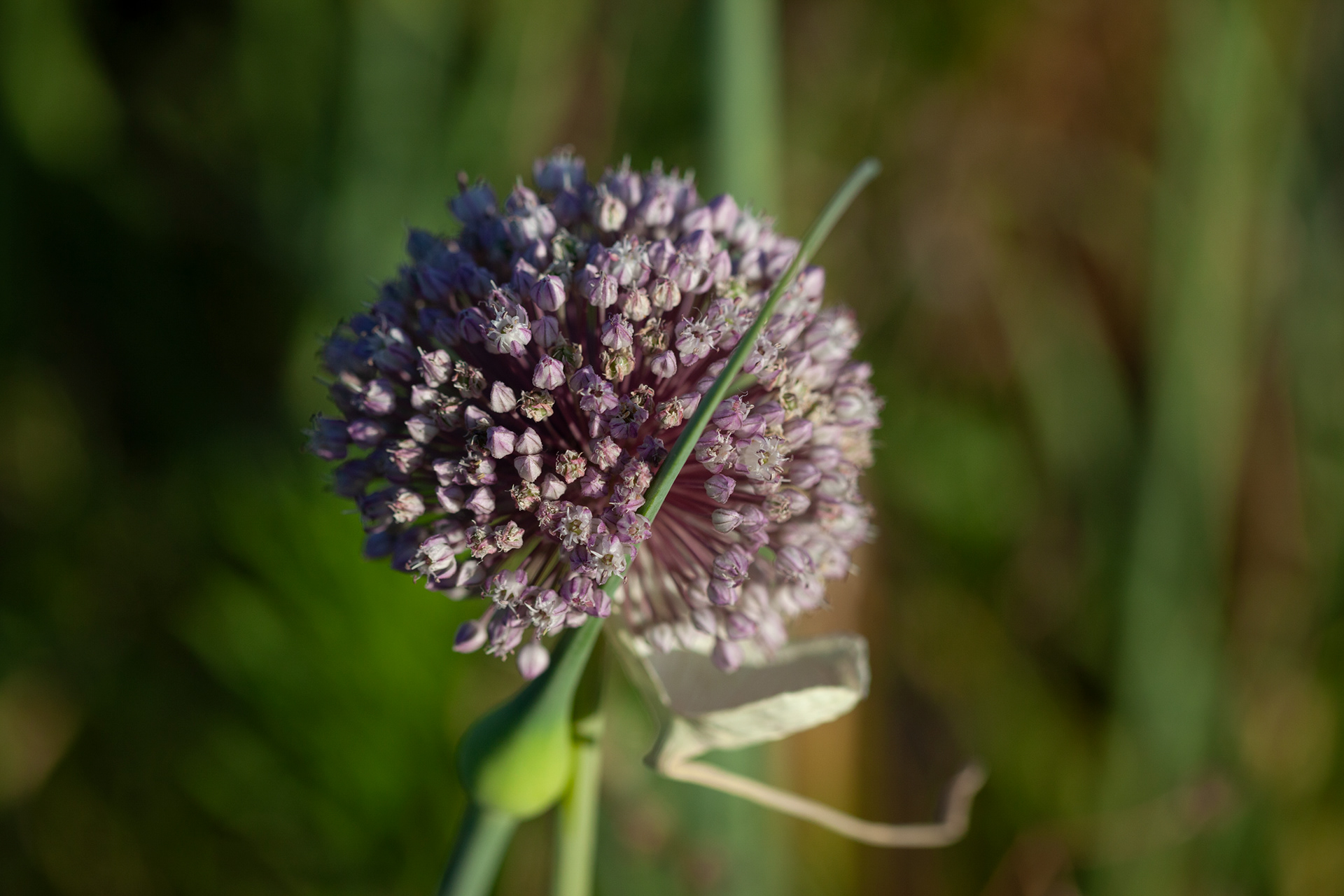
Closeup of a leek flower, May 15, 2014.
Xiong Pao Her farm -39
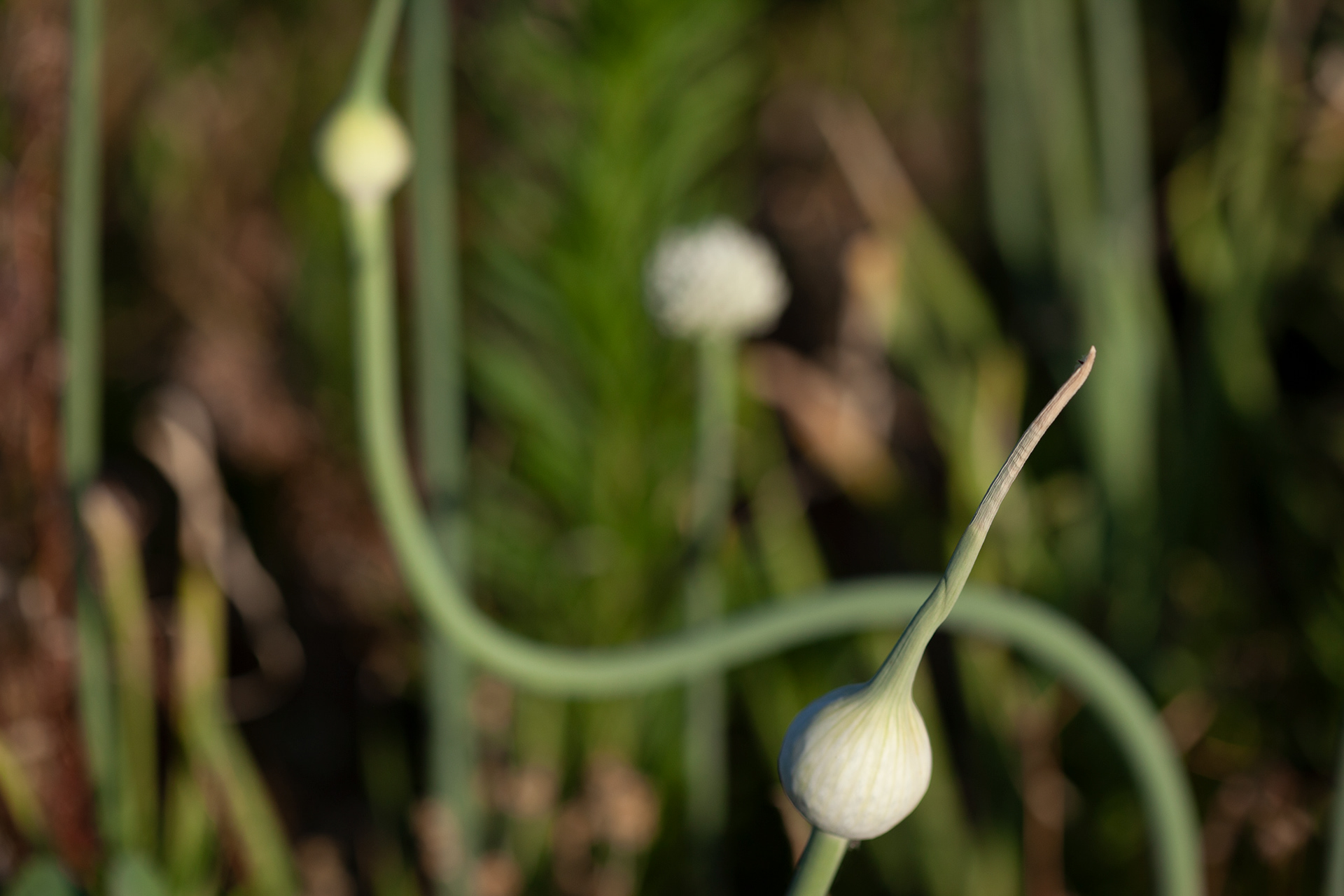
Leeks growing on serpentine stalks, May 15, 2014
Xiong Pao Her farm -40
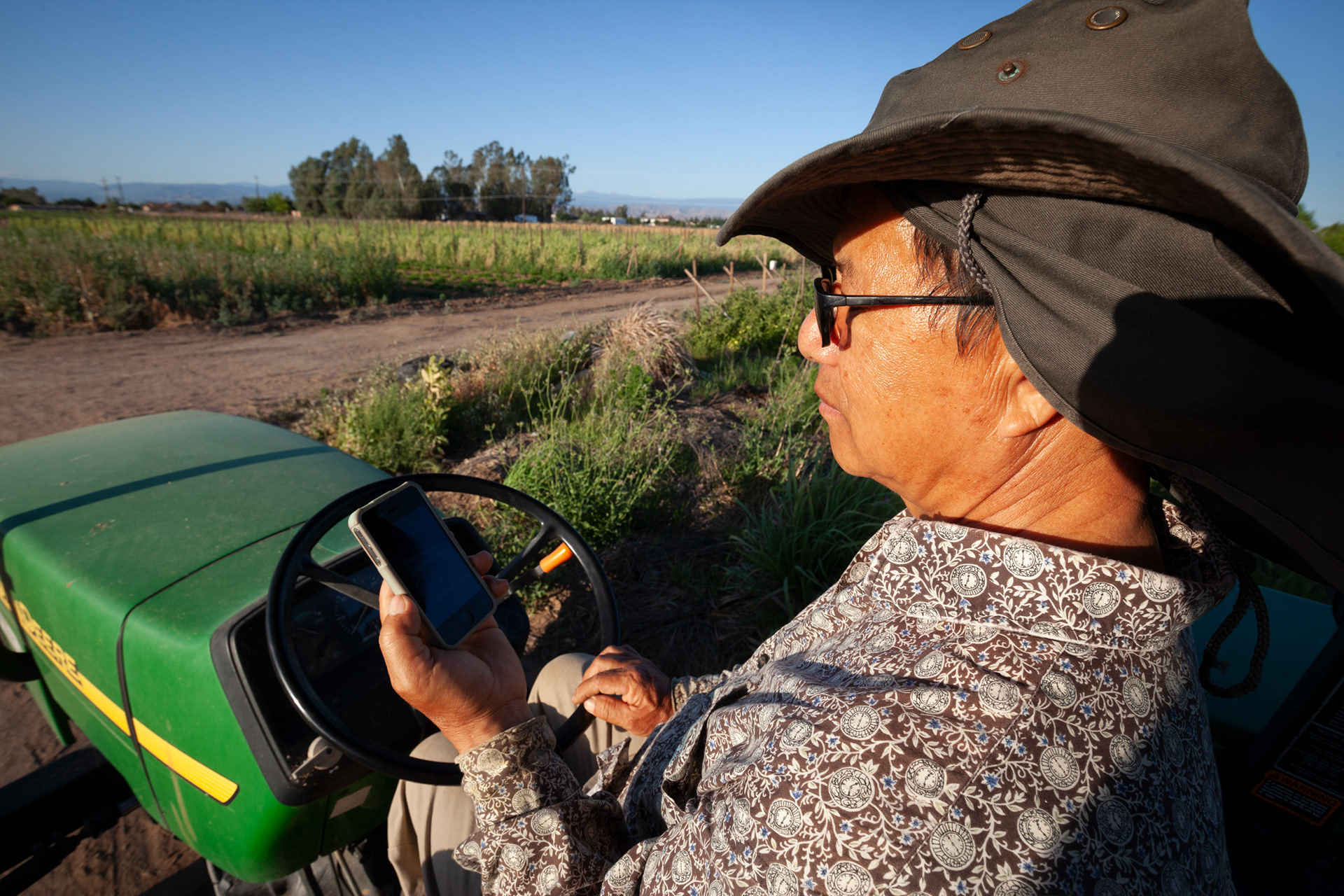
Xiong Pao screens a call on his smartphone as I ride with him on his tractor, May 15, 2014.
Xiong Pao Her farm -41
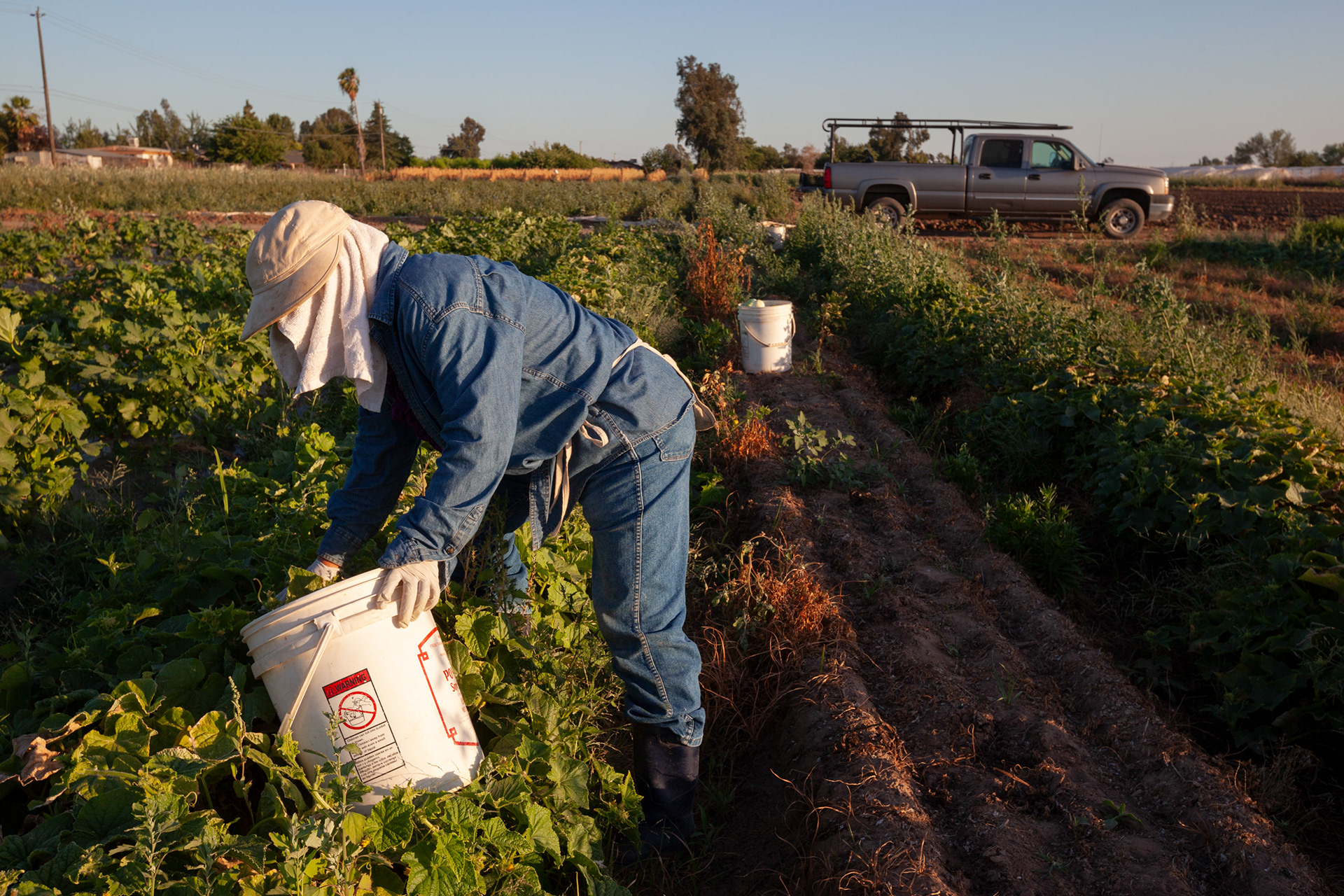
Mee Moua harvests Hmong Heirloom Cucumbers. Xiong Pao and Mee Moua prefer eating them large, soft and very ripe, May 15, 2014.
Xiong Pao Her farm -42
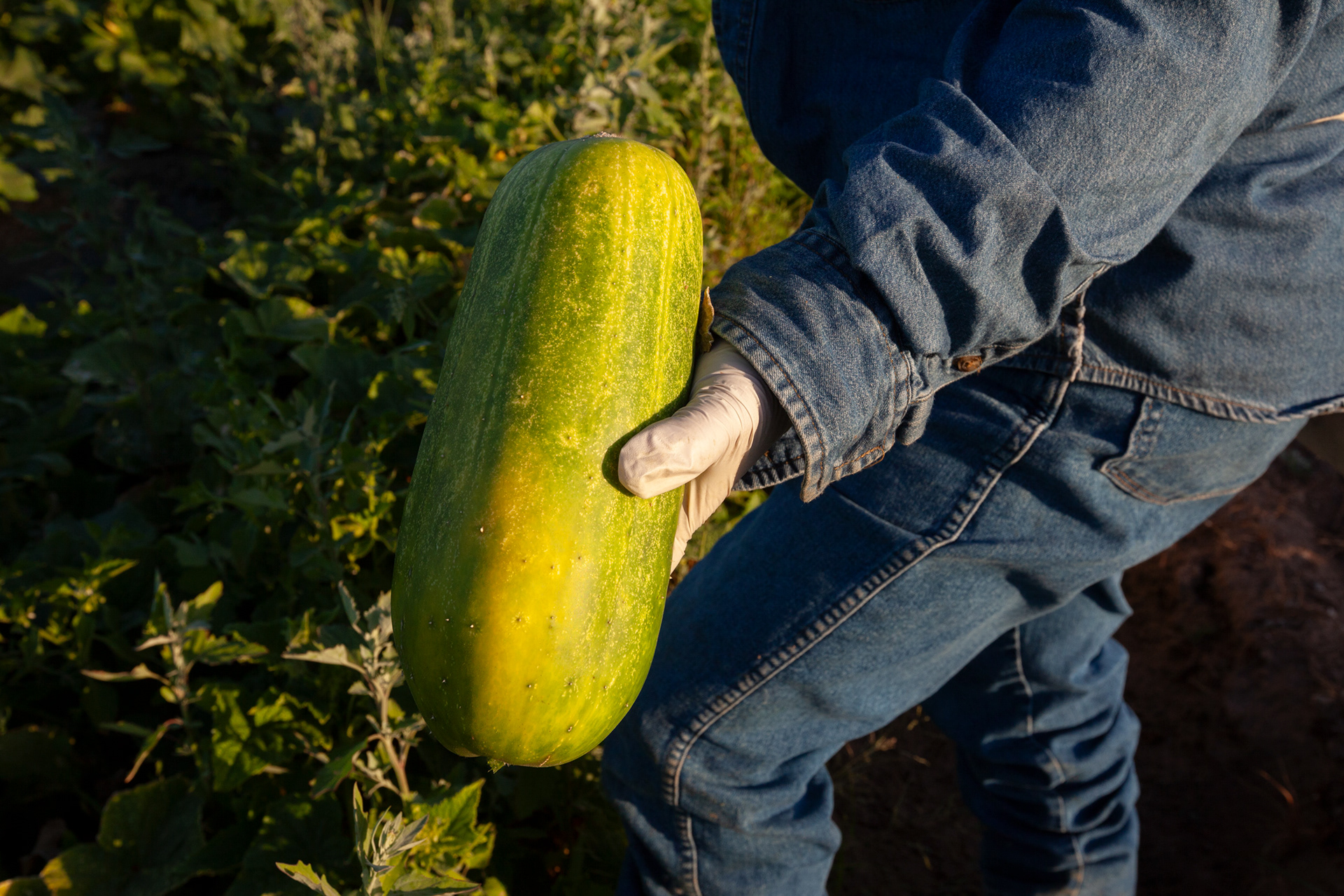
Mee Moua holds a hefty specimen, May 15, 2014.
Xiong Pao Her farm -43
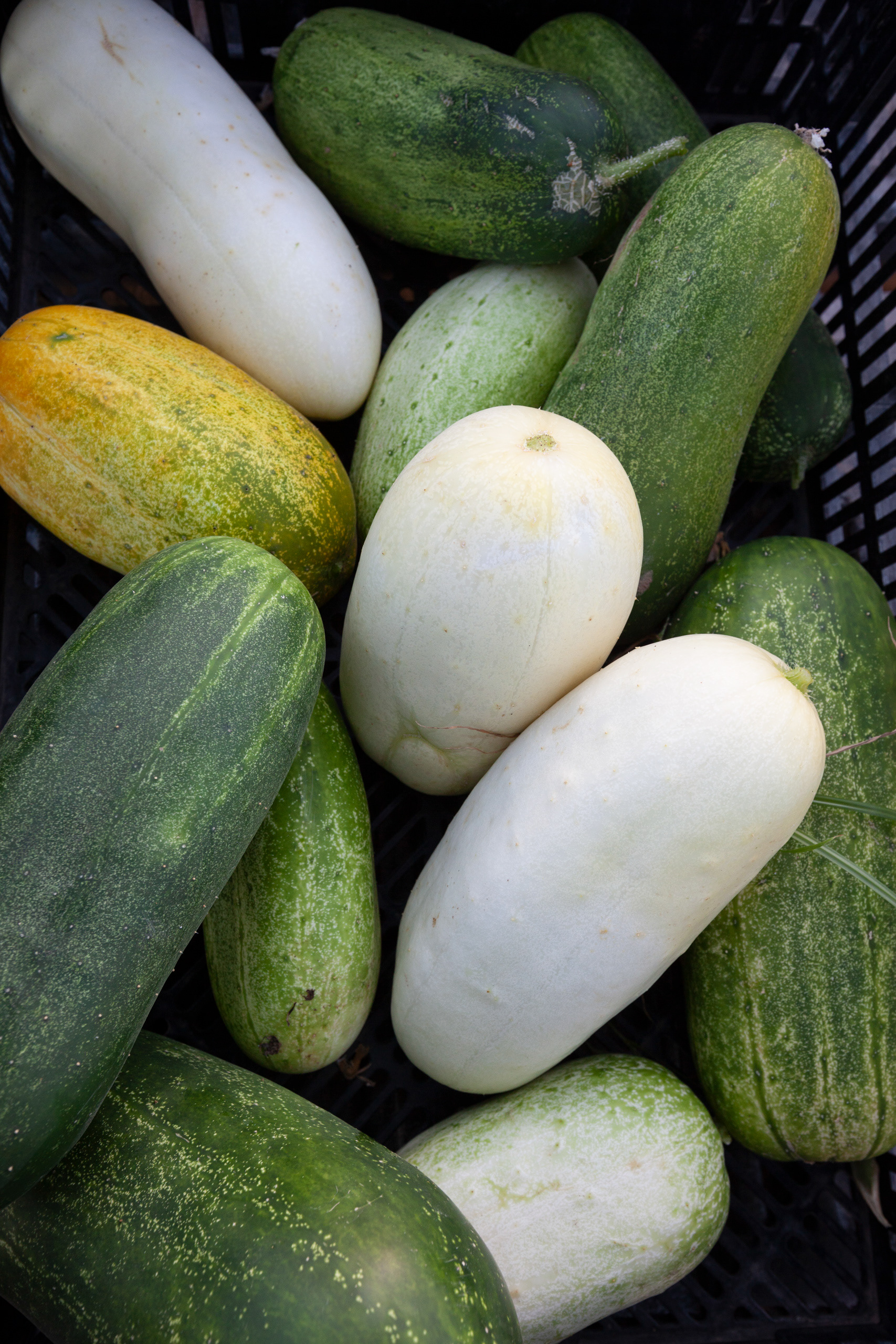
The three colors of mature Hmong Heirloom Cucumbers, May 15, 2014.
Xiong Pao Her farm farm -44
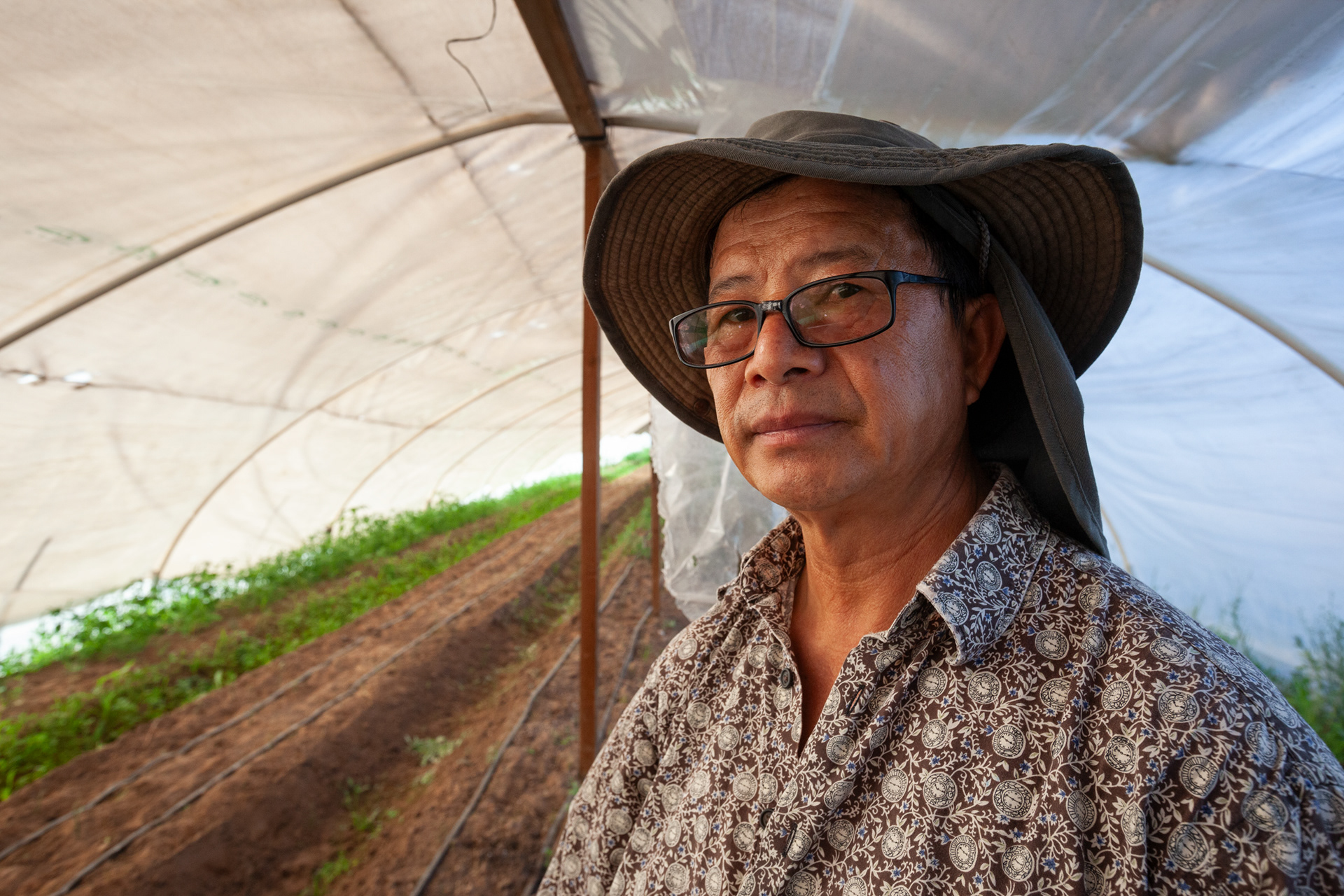
Forced by war to leave his country of birth, Xiong Pao Her has reinvented himself, growing food and creating visual beauty on a California farm, May 15, 2014