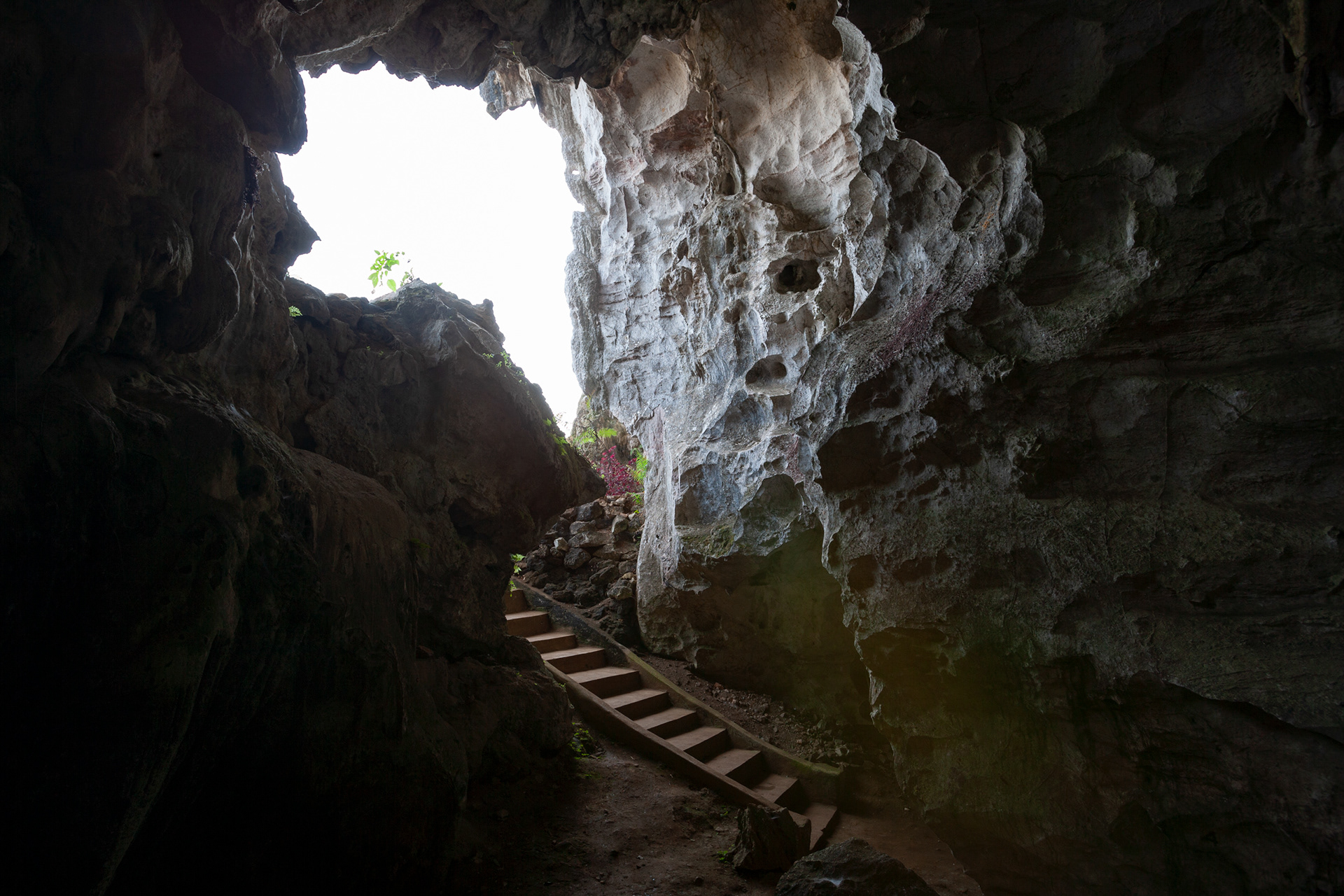
Pathet Lao Army Headquarters during the Secret War
Photographed December 19, 2006
The Laotian Civil War (1959-1975) pitted the incumbent Royal Lao Government against communist insurgents branding themselves as the Lao People’s Revolutionary Army or Pathet Lao. As the conflict unfolded, it increasingly became a proxy war of post-Cold War superpowers, with the United States CIA arming and training Hmong soldiers to fight against the Pathet Lao Army, which had backing from North Vietnam and China.
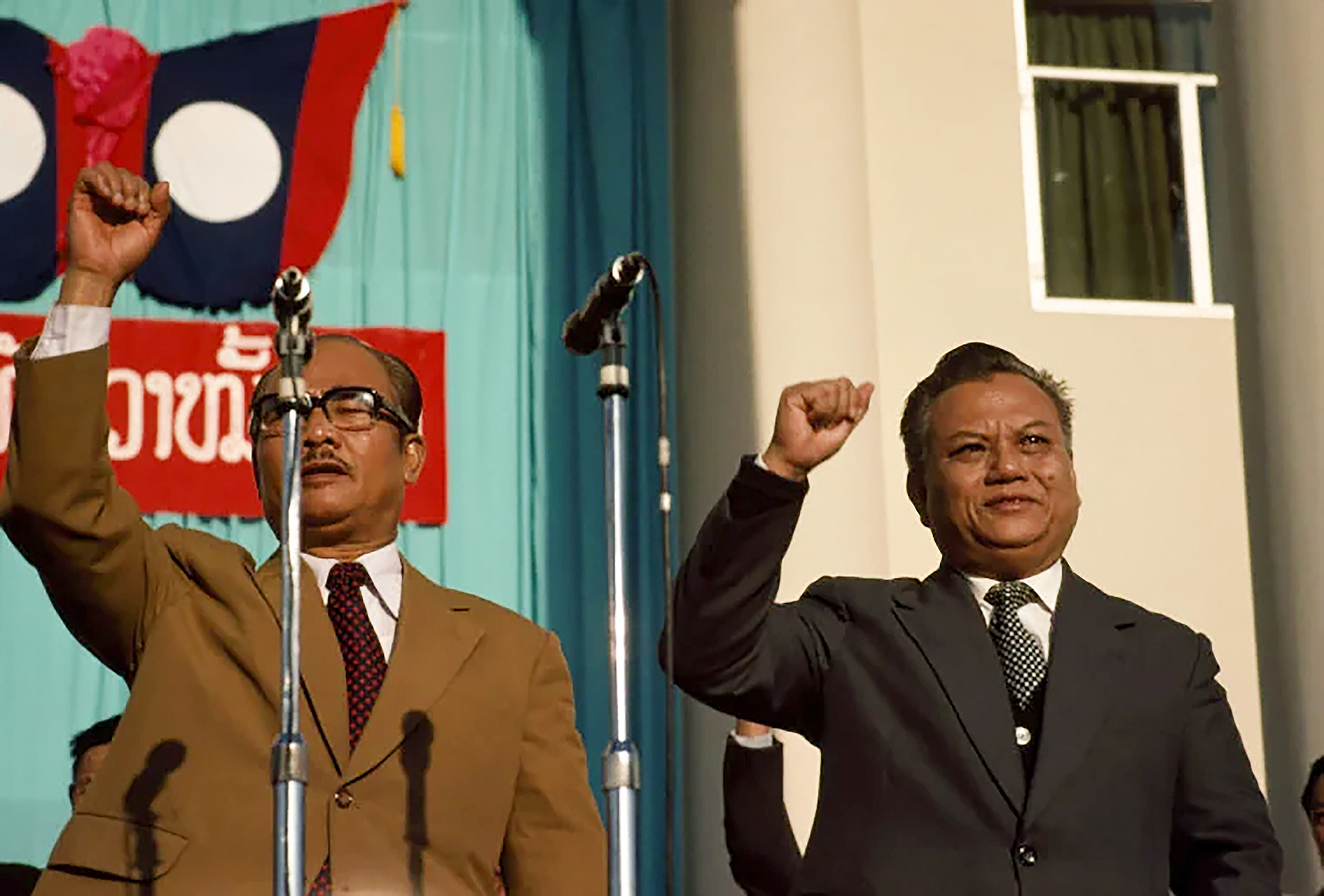
The Lao People’s Revolutionary Army was jointly commanded by two men, Prince Souphanovong and Kaysone Pomvihan. In a Shakespearian twist, Souphanovong, known as the ‘Red Prince,’ was an illegitimate half-brother of the Royal Lao Government’s Prime Minister Souvanna Phouma; both were sons of a high-ranking prince. Suphanovong had been indoctrinated into communist ideology during his college studies in Hanoi and Paris. His co-leader, Kayson Pomvihane was born in Laos to a Vietnamese father and a Lao mother. Kaysone also studied in Hanoi but dropped out to fight against the French colonialists.
The Pathet Lao made its headquarters in Vieng Xai, a small valley surrounded by steep karst mountains and thousands of caves in the far northeast of Laos near the Vietnamese border. From 1964-1973, the caves provided protection from almost constant American bombing sorties. At its peak, up to 23,000 people lived in 480 caves, which contained a hospital, a school, Pathet Lao offices, bakeries, shops, and even a theatre.
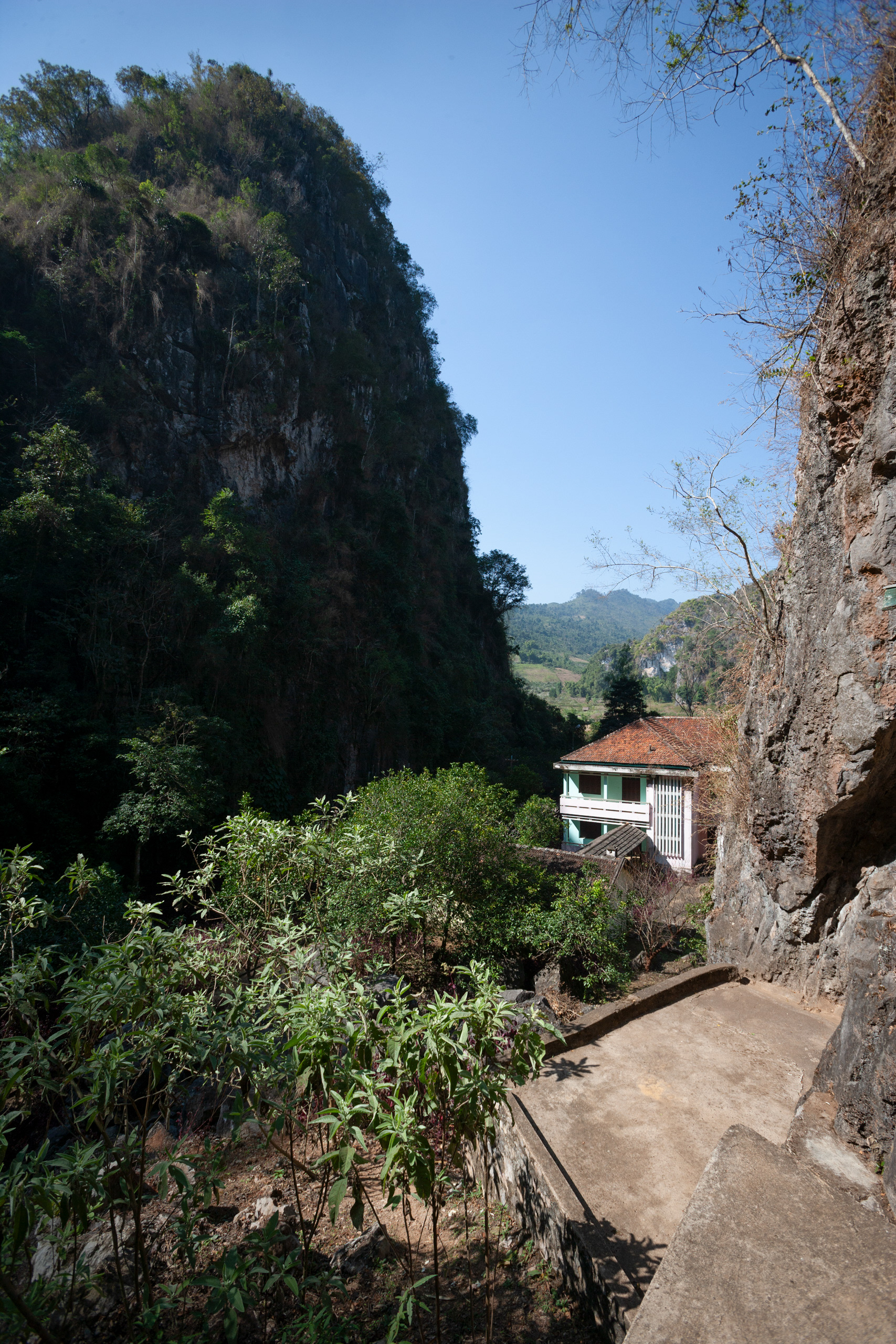
After a cease fire ended the U.S. bombing campaign in 1973, Souphanovong built a new house for his family just outside the cave where they had lived for a decade.
As the war progressed, the Pathet Lao army of mostly Vietnamese soldiers slowly advanced southwest toward the Lao capital, Vientiane. Hmong forces became increasingly depleted, with Vang Pao recruiting younger and younger boys to fight. In May, 1975, the Royal Lao Government fell to communist control and General Vang Pao was flown out of the country by the CIA. Kaysone Pomvihan issued a genocidal edict declaring that “the Hmong must be exterminated to the root.” Thus began a violent campaign of retribution, forcing thousands of Hmong to flee the country.
When I visited Vieng Xai in 2006, the formerly off-limits caves had just been opened to foreign tourists, very few of whom visit the remote region even today. I had the caves all to myself that day, wandering freely in and out of a dozen caves without ever seeing another person. No tourists, no guards, no staff, no explanatory signs. Only Souphanovong’s house remained off-limits, with physical barriers blocking its pathway.
Vieng Xai-00
Souphanovong, "The Red Prince" (L) and Kaysone Pomvihane (R) co-commanded the communist Pathet Lao Army. Both lived in Vieng Xai caves for about a decade.
After their victory over the Royal Lao Government in 1975, Kaysone issued a genocidal edict declaring that "the Hmong must be exterminated to the root."
Photo ca. 1970s.
Vieng Xai-01
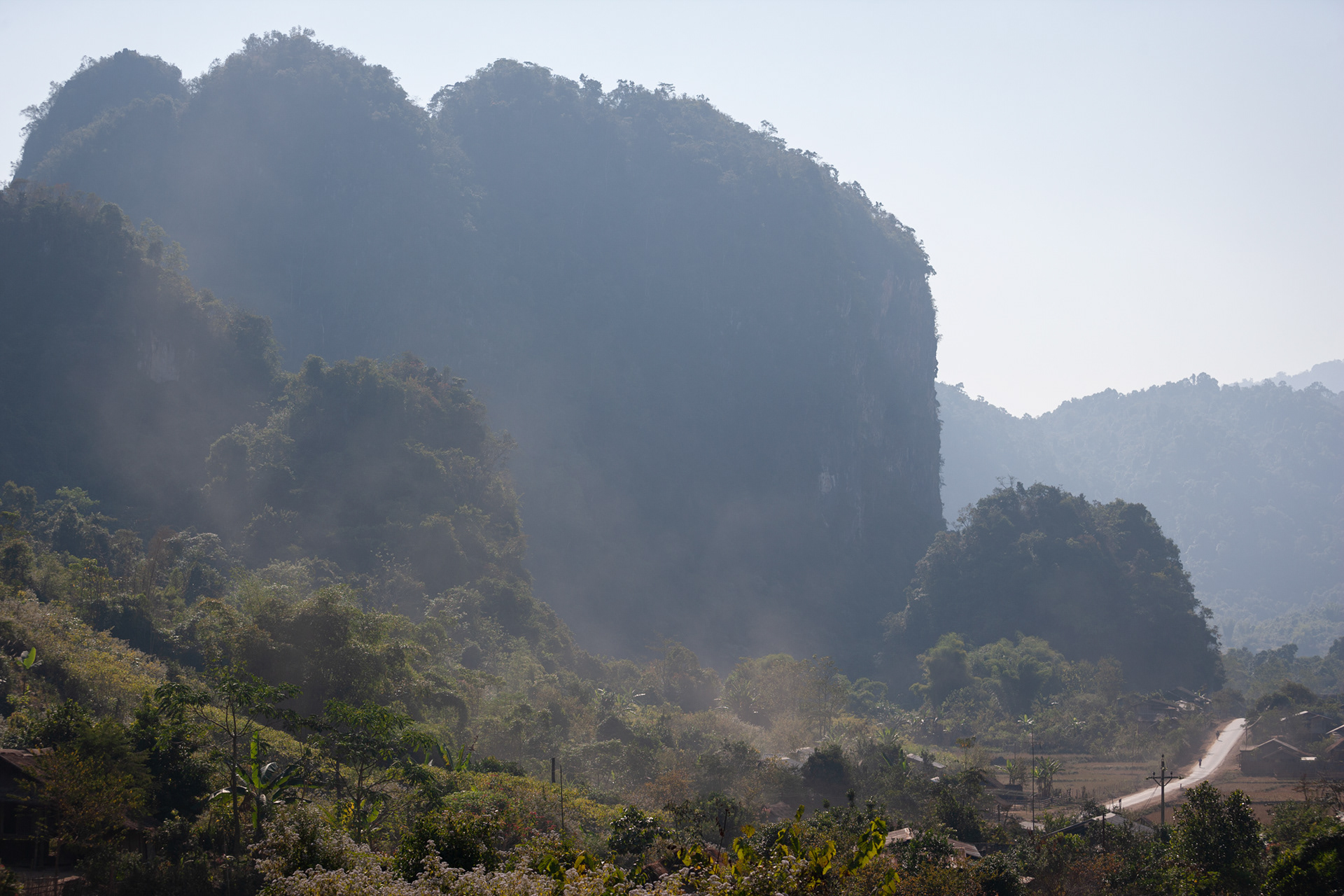
Surrounded by dramatic karst mountains, The remote Vieng Xai Valley is sparsely populated today. December 19, 2006.
Vieng Xai-02
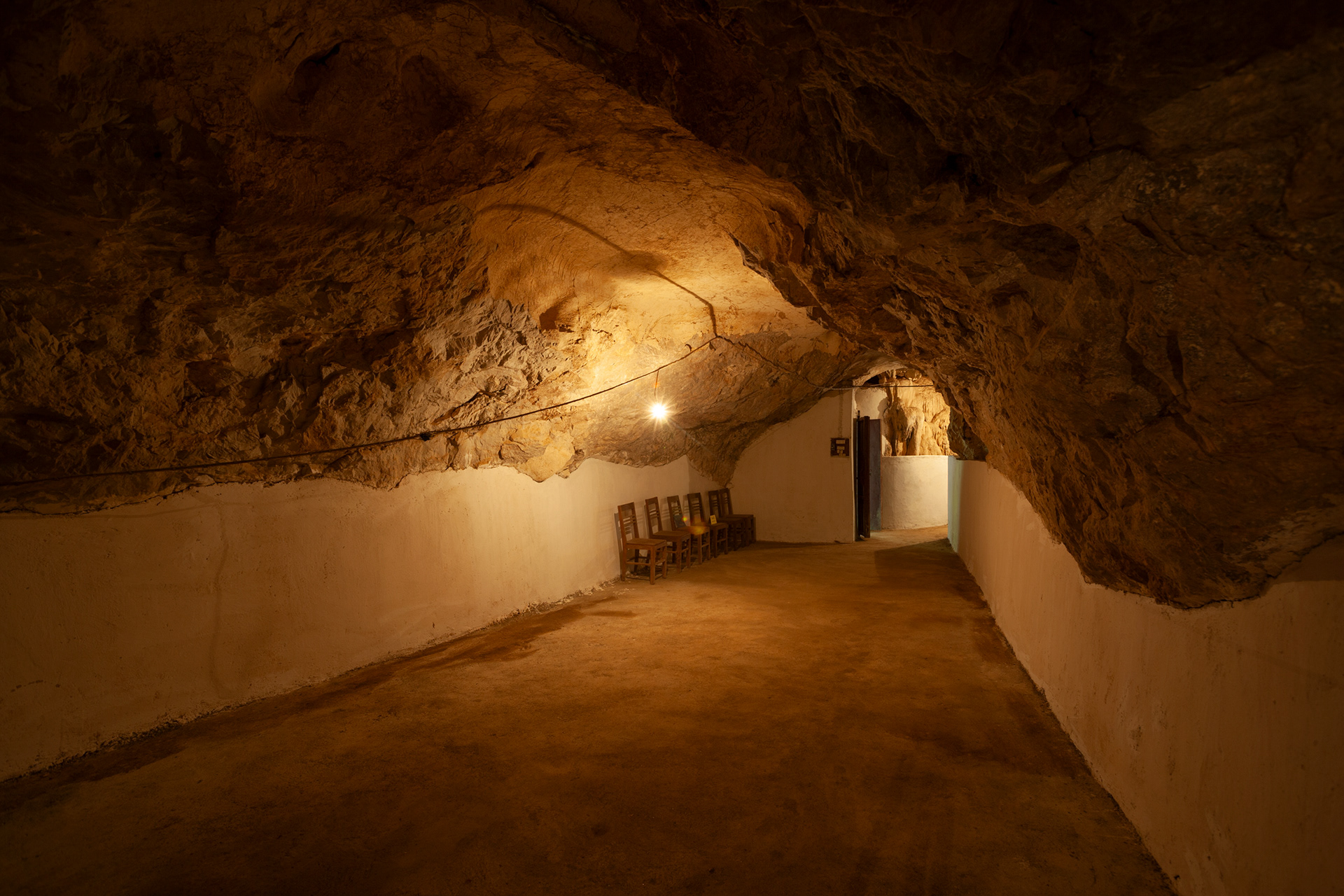
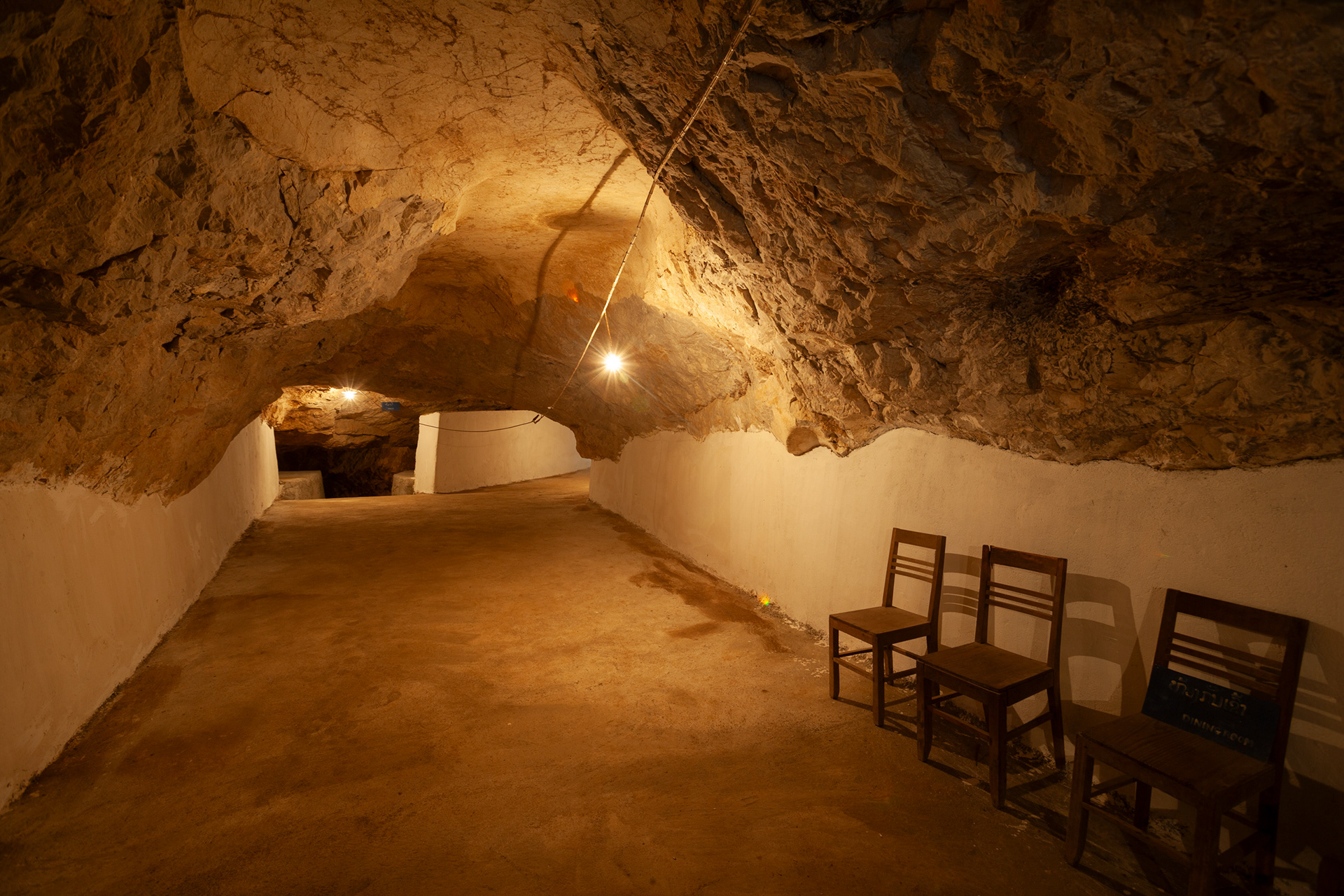
This long chamber was once part of Pathet Lao headquarters. December 19, 2006.
Vieng Xai-03
At the end of a long passage, this cave bifurcates into two more chambers. December 19, 2006.
Vieng Xai-04
The house Souphanavong built for his family after the 1973 cease fire sits just outside the cave where he lived for nearly a decade. Access to the home was prohibited during my visit. December 19, 2006.
Vieng Xai-05
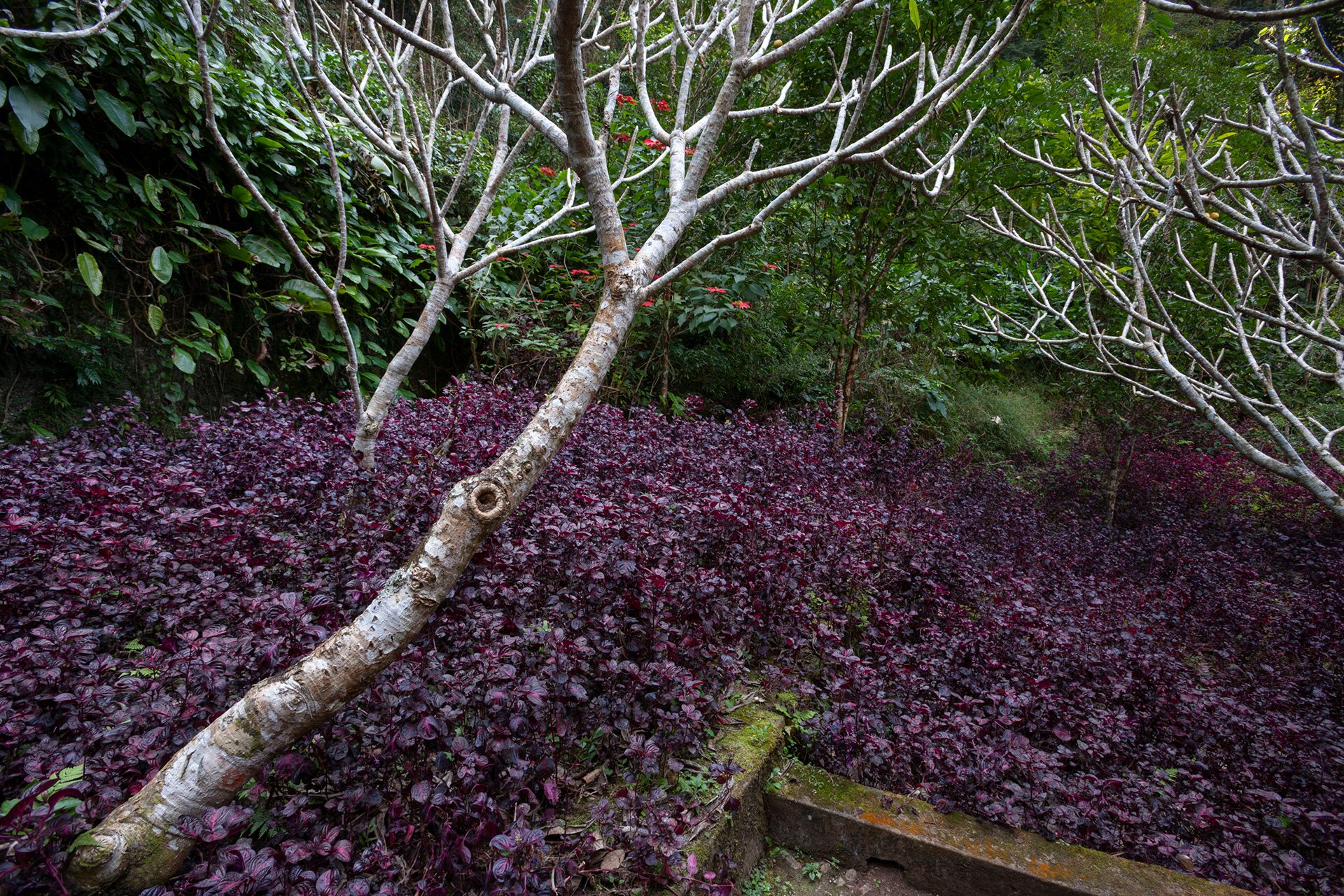
In the crater where an American bomb struck close to his home, Souphanovong had a garden planted with the cultivar Iresine Herbstii, also known as ‘Bloodleaf.’ A plaque in Lao script translates: “A wound in the heart of Laos.” December 19, 2006.
Vieng Xai-06
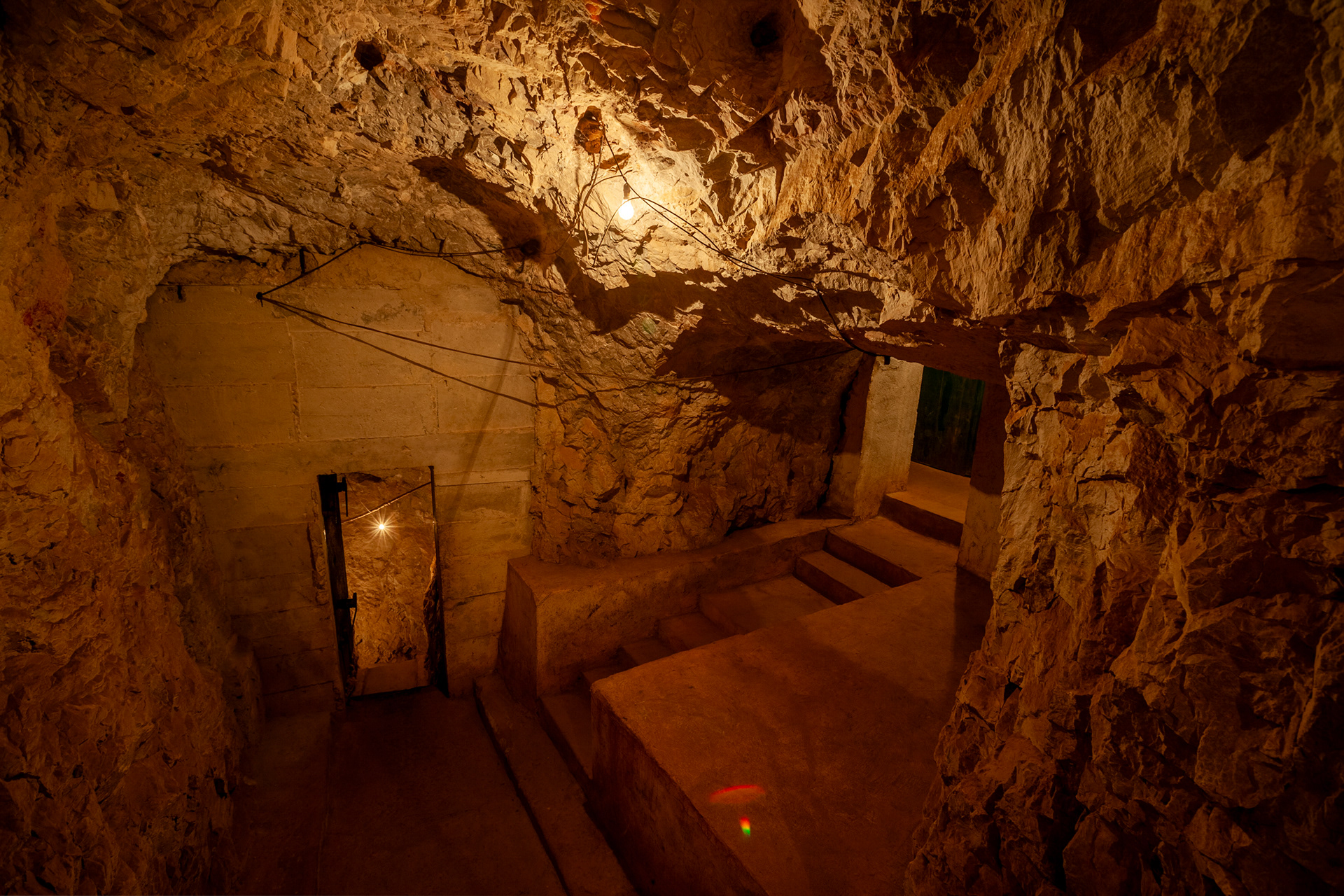
This junction of three chambers shows the multilevel complexity of the former Pathet Lao headquarters. December 19, 2006.
Vieng Xai-07
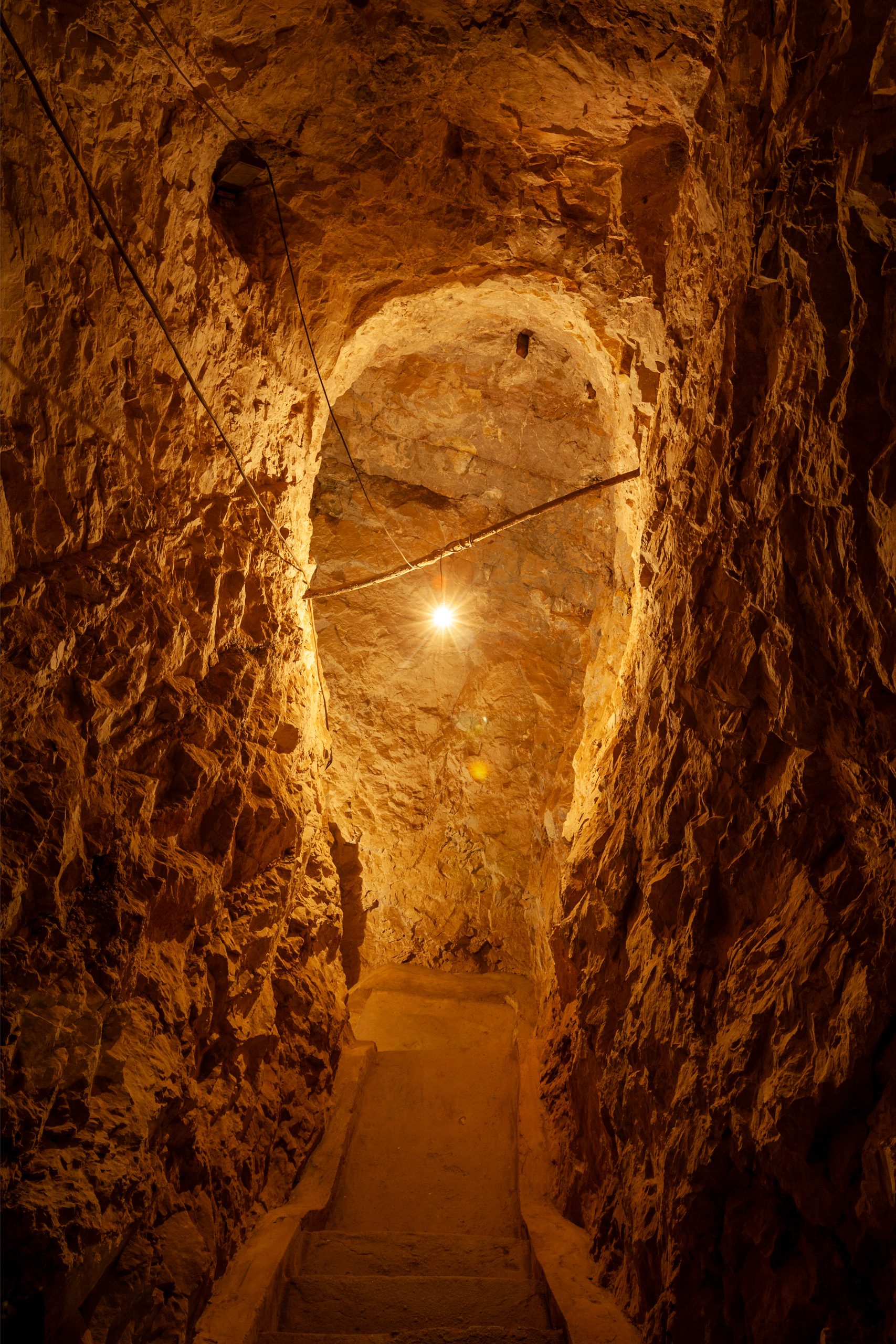
A steep, narrow passageway chiseled from limestone karst.
December 19, 2006.
Vieng Xai-08
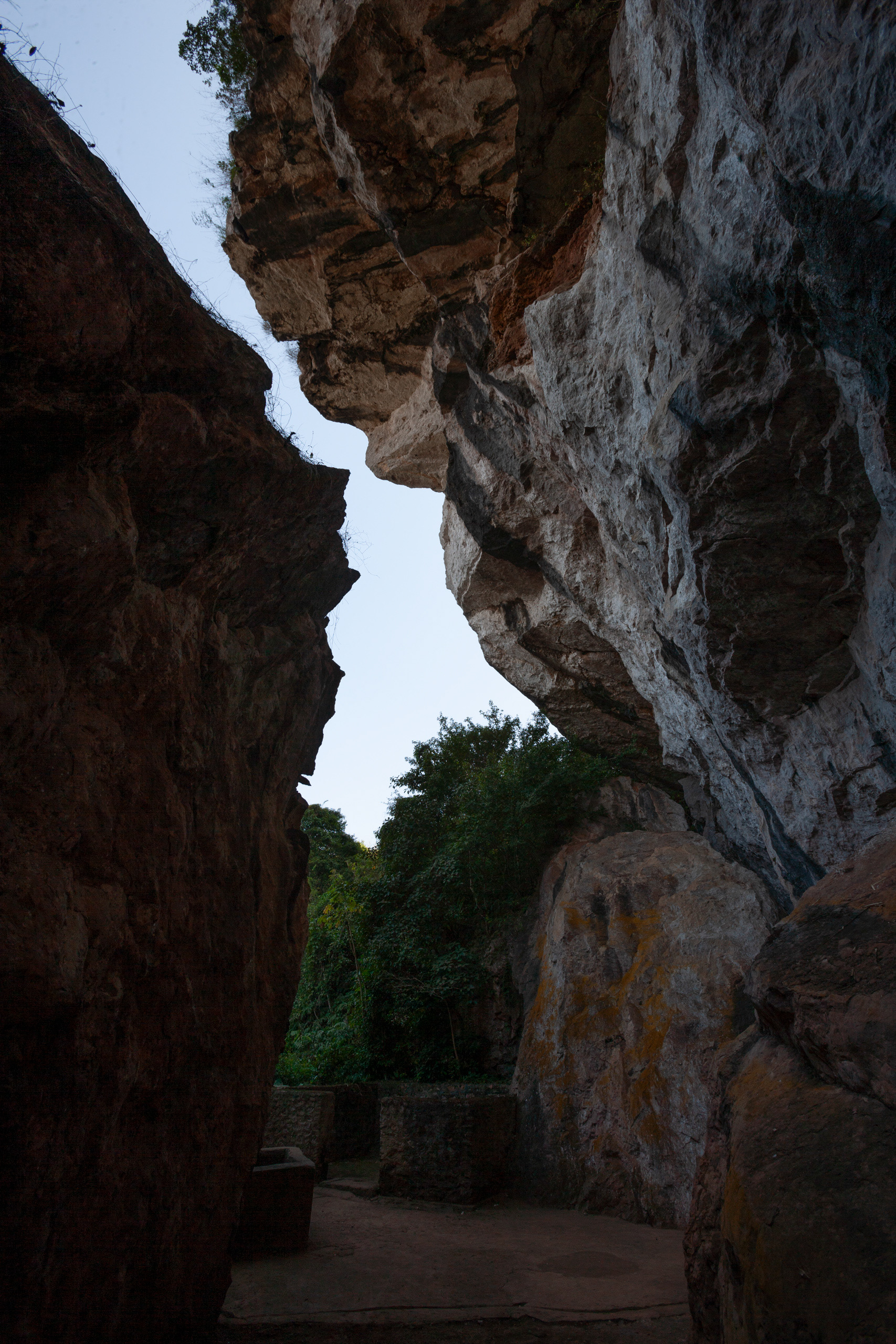
A natural cave entrance augmented with concrete and masonry.
December 19, 2006.
Vieng Xai-09
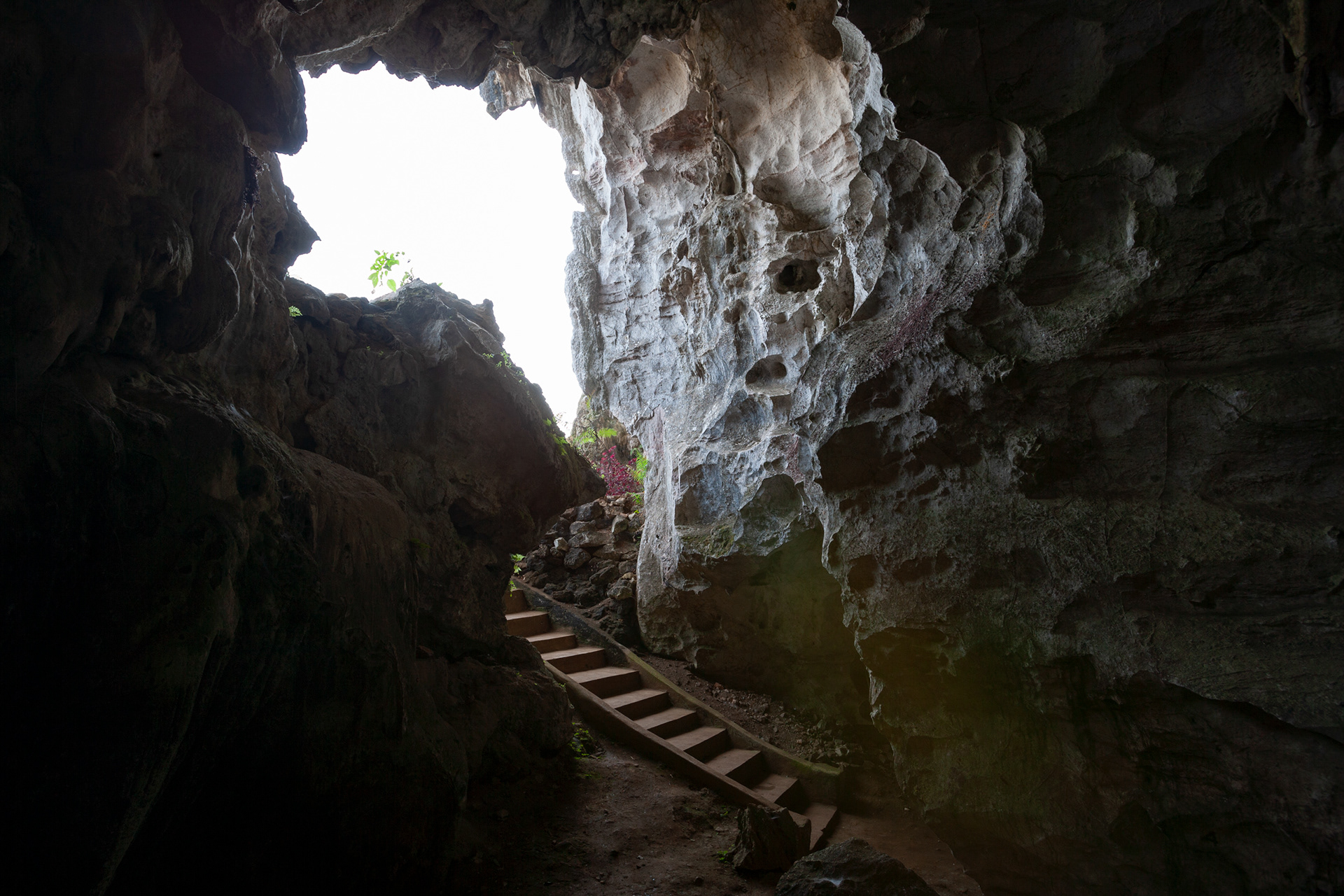
A stairway descends into another Pathet Lao cave entrance. December 19, 2006.
Vieng Xai-10
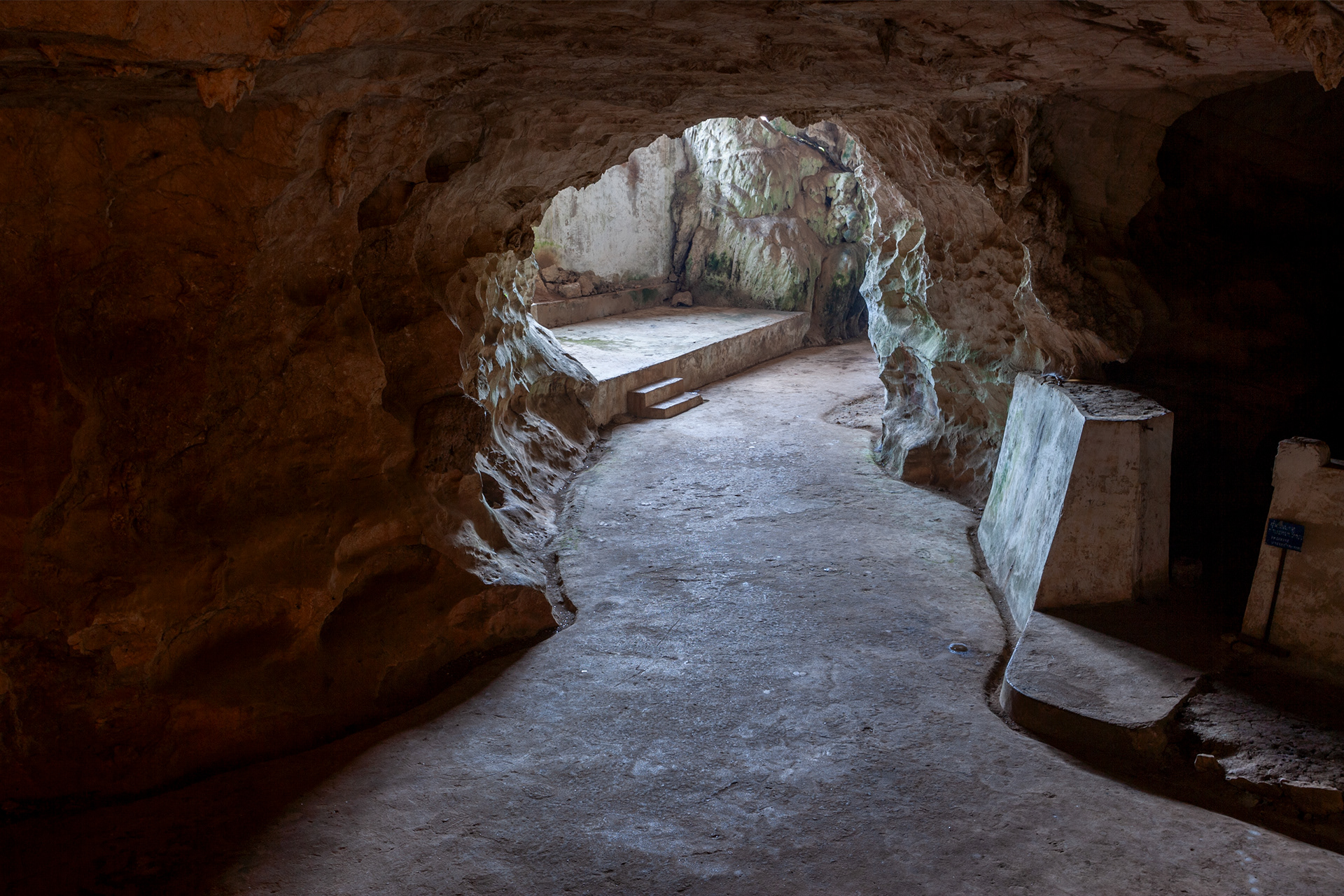
This low passageway leads to a large outer cave. December 19, 2006.
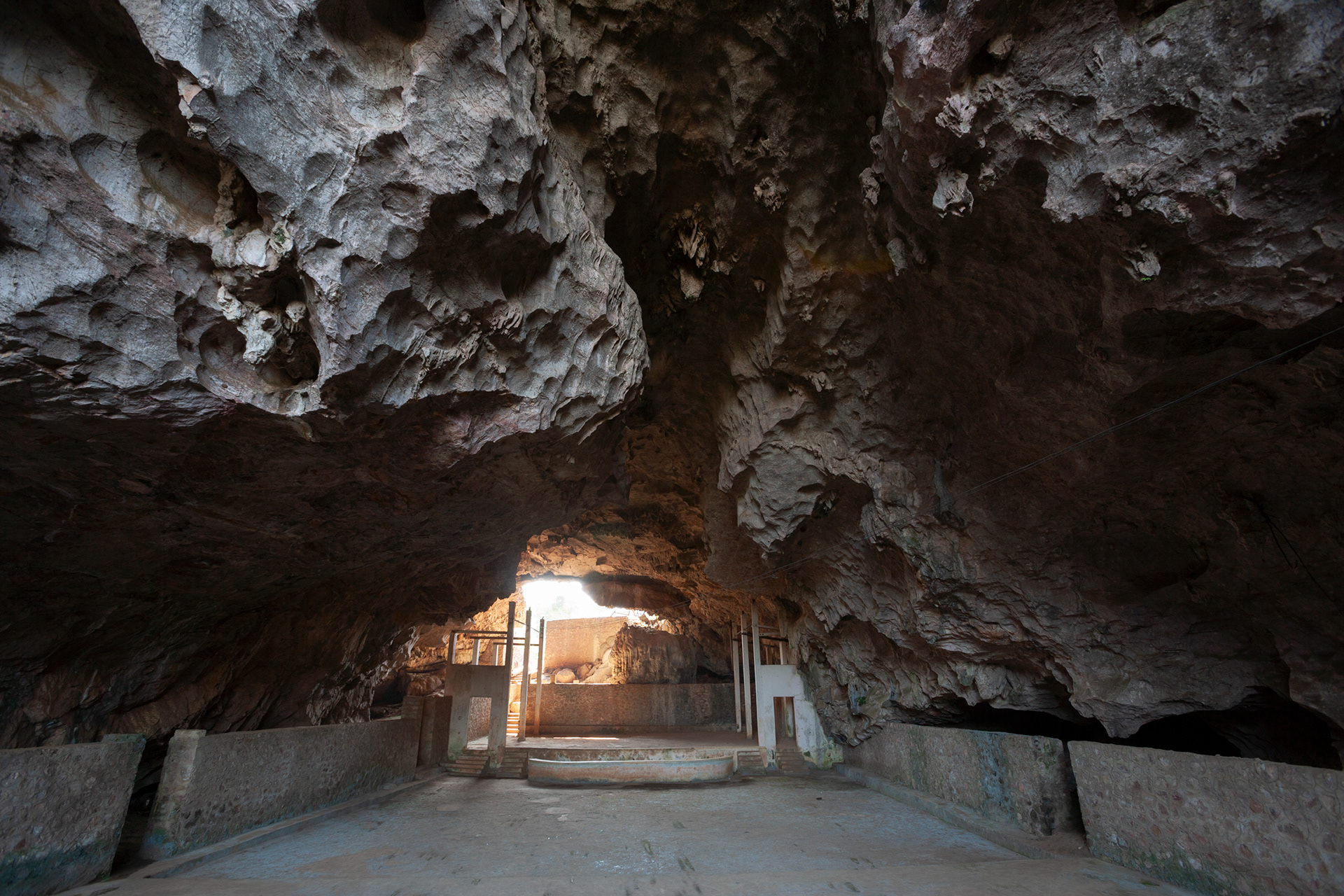
Vieng Xai-11
My camera was inadequate to convey the size of this cave, which is big enough to host a rock concert or assembled army. The two doorways at the sides of the stage give the best idea of the cave’s scale. December 19, 2006.