Photographed in several regions of Laos during 2006, 2007 and 2008
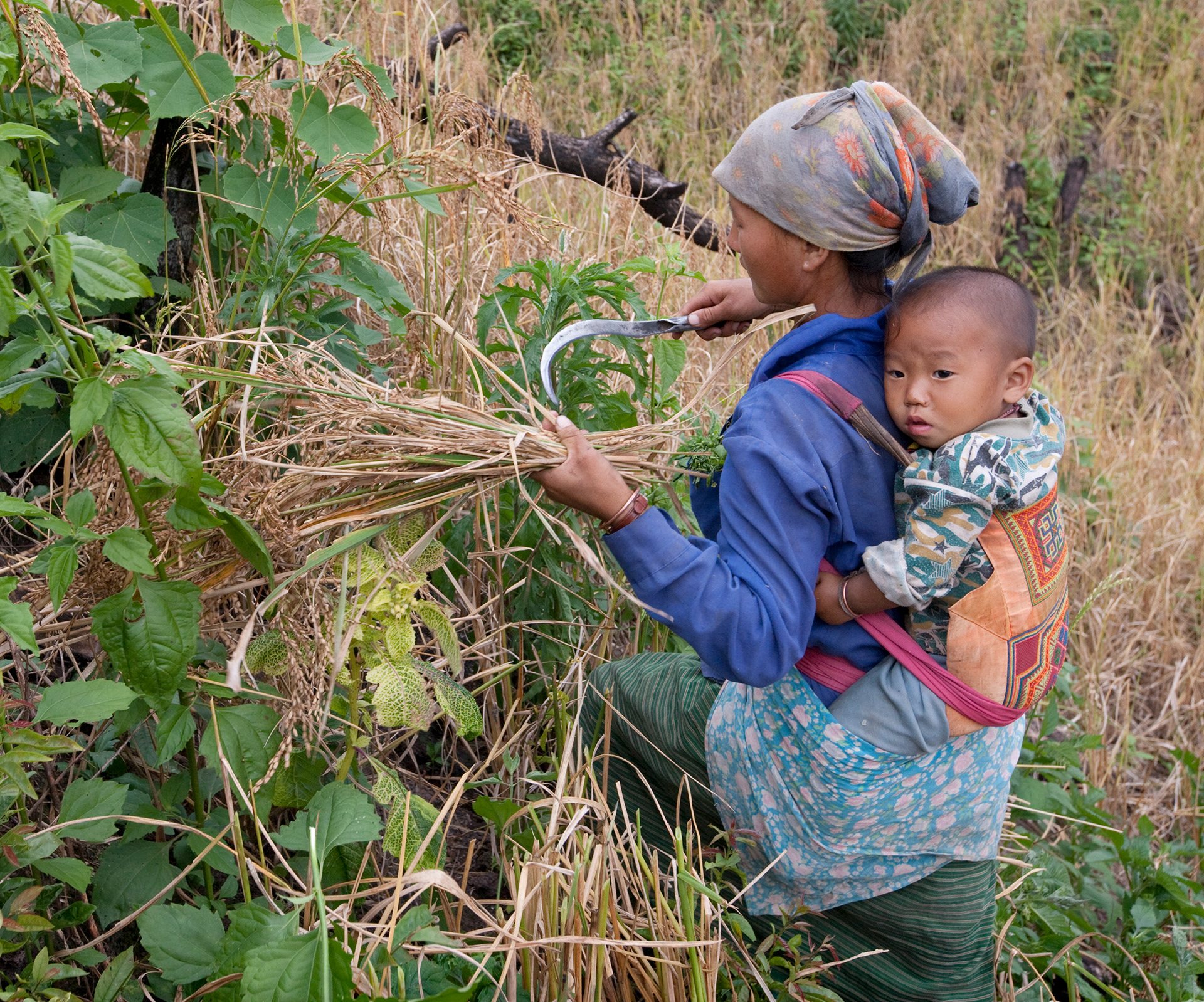
The purpose of this gallery is to give the reader a visual idea about how rice is cultivated in Laos. Seedlings are planted in the early rainy season (May and June), harvested in the cool dry season of November and December, then allowed to dry before threshing, pounding, winnowing, washing and, finally, cooking.
Currently, there are no photographs in the archive of Hmong swidden farmers burning their hillside fields during the late dry season in preparation for planting when the rainy season arrives. Nor are there any images of hillside rice planting. We hope to add some in the future.
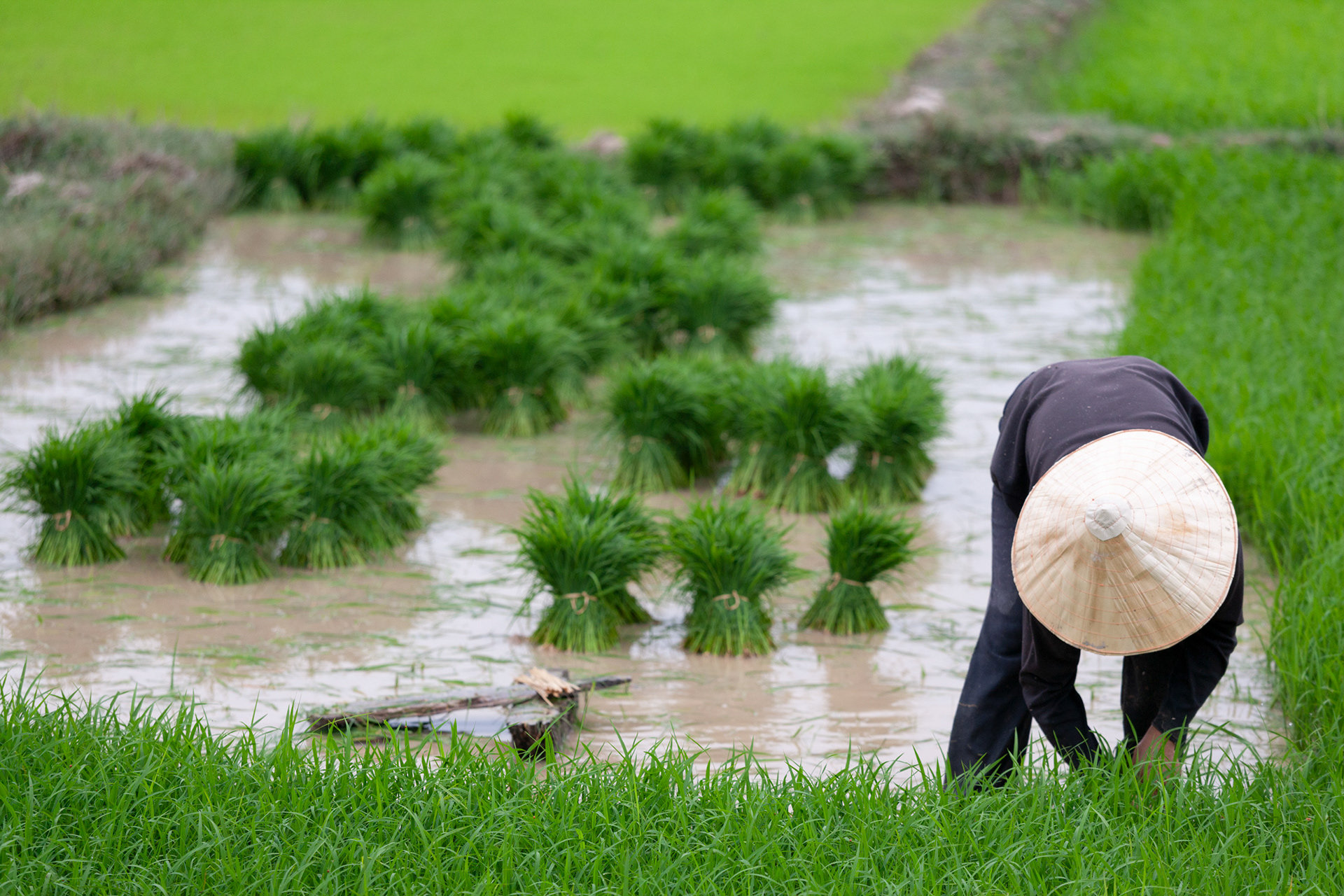
Rice production-01
A Laotian villager pulls rice seedlings out of the ground, ties them in small bundles and plants them in a paddy. Most Hmong living in the mountainous regions of Laos do not have enough surface water available for paddy farming. Instead, they must practice swidden farming, burning a new section of hillside each year, planting seedlings in the dry earth and waiting for the rains to come. Photographed in Vientiane Province, December 26, 2008.
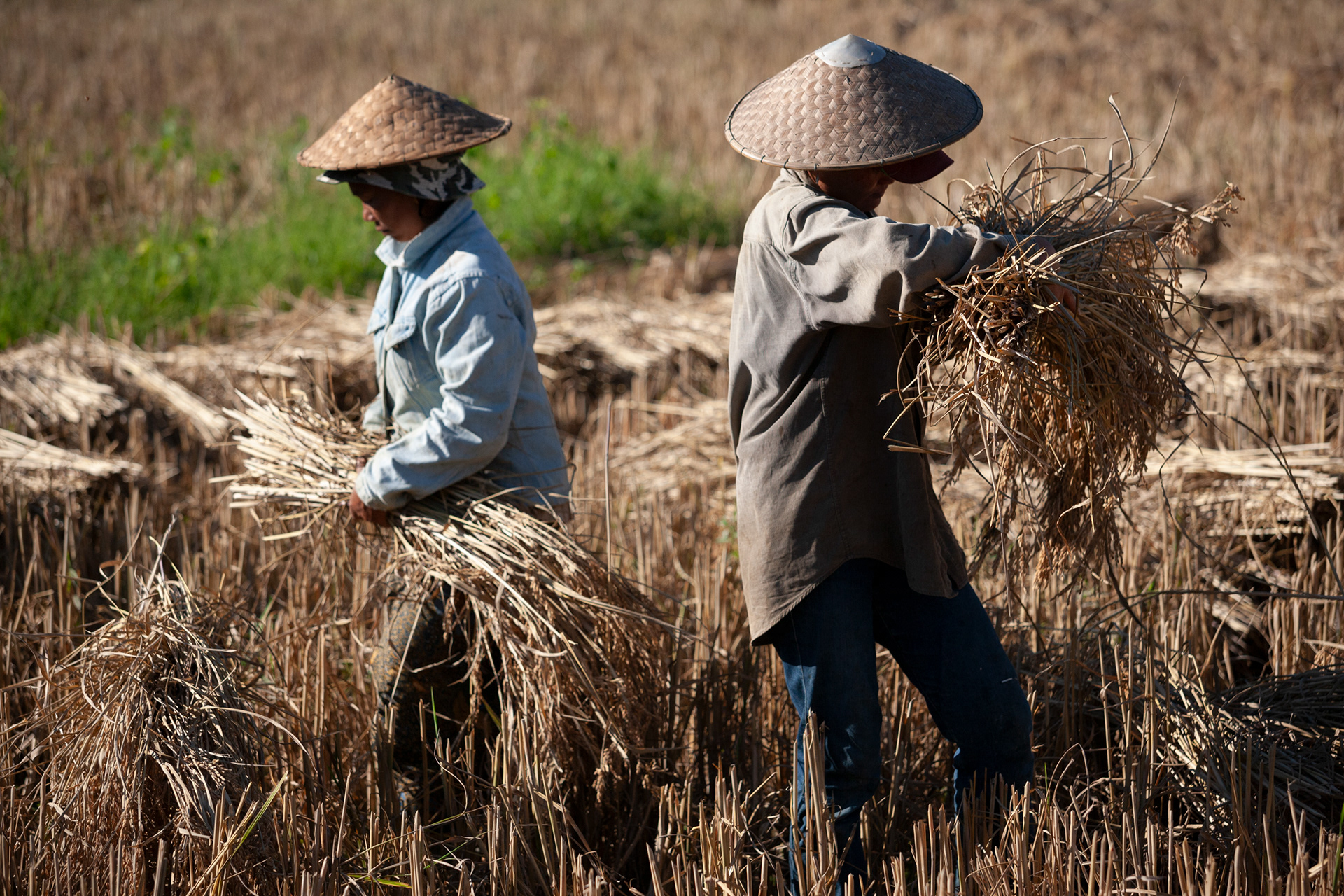
Rice production-02
Hmong villagers in northern Luang Prabang Province harvest bundles of rice in the dry season, November 24, 2006.
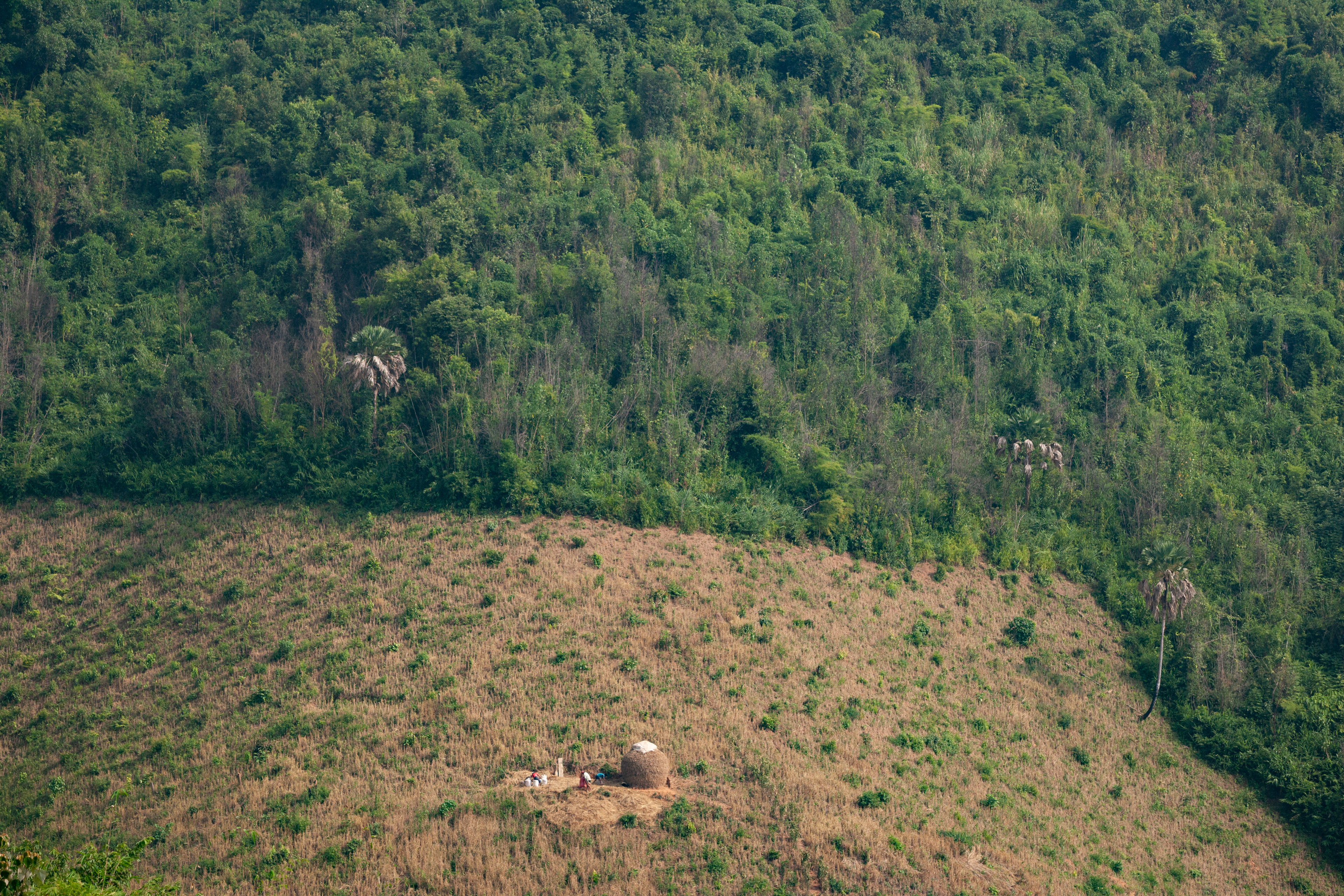
Rice production-03
Villagers in the mountains of central Luang Prabang Province harvest rice on a steep hillside, building a dome of cut stalks so that the rice can dry, November 14, 2006.
Rice production-04
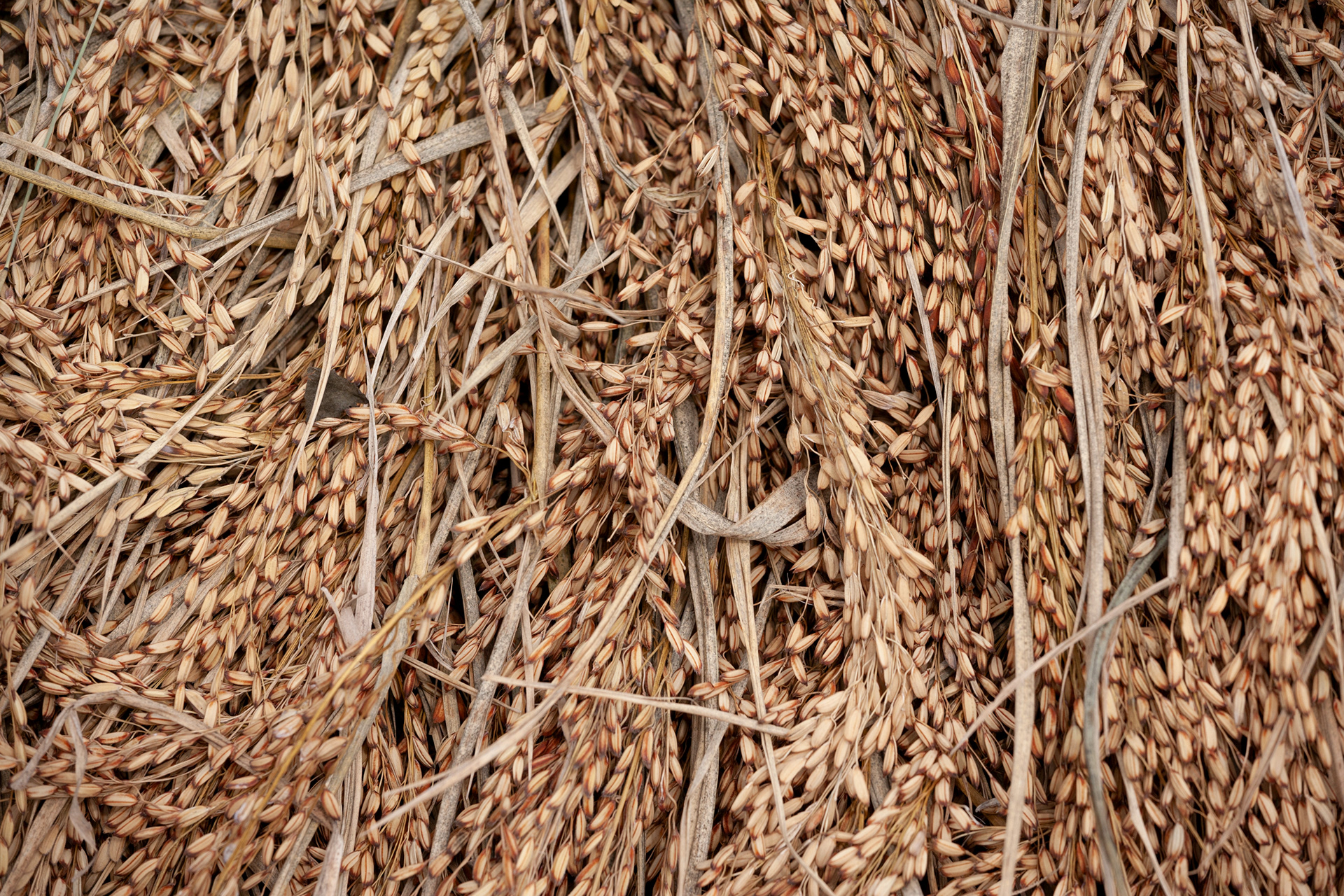
This recently harvested rice is now dry enough for threshing, Xieng Khouang Province, November 11, 2007.
Rice production-05
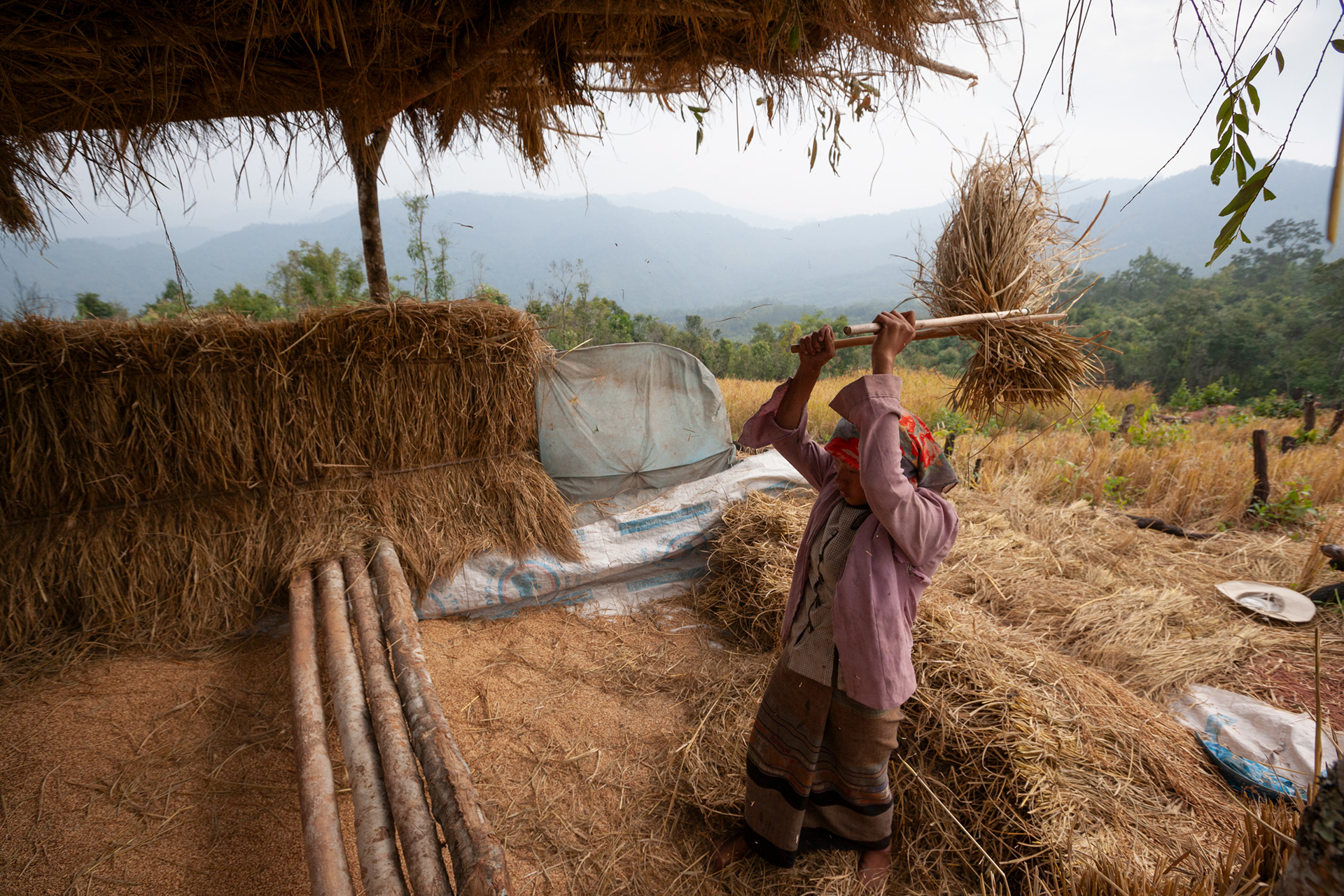
A Hmong woman threshes rice stalks by vigorously beating them against a platform made from four saplings, Xieng Khouang Province, November 11, 2007.
Rice production-06
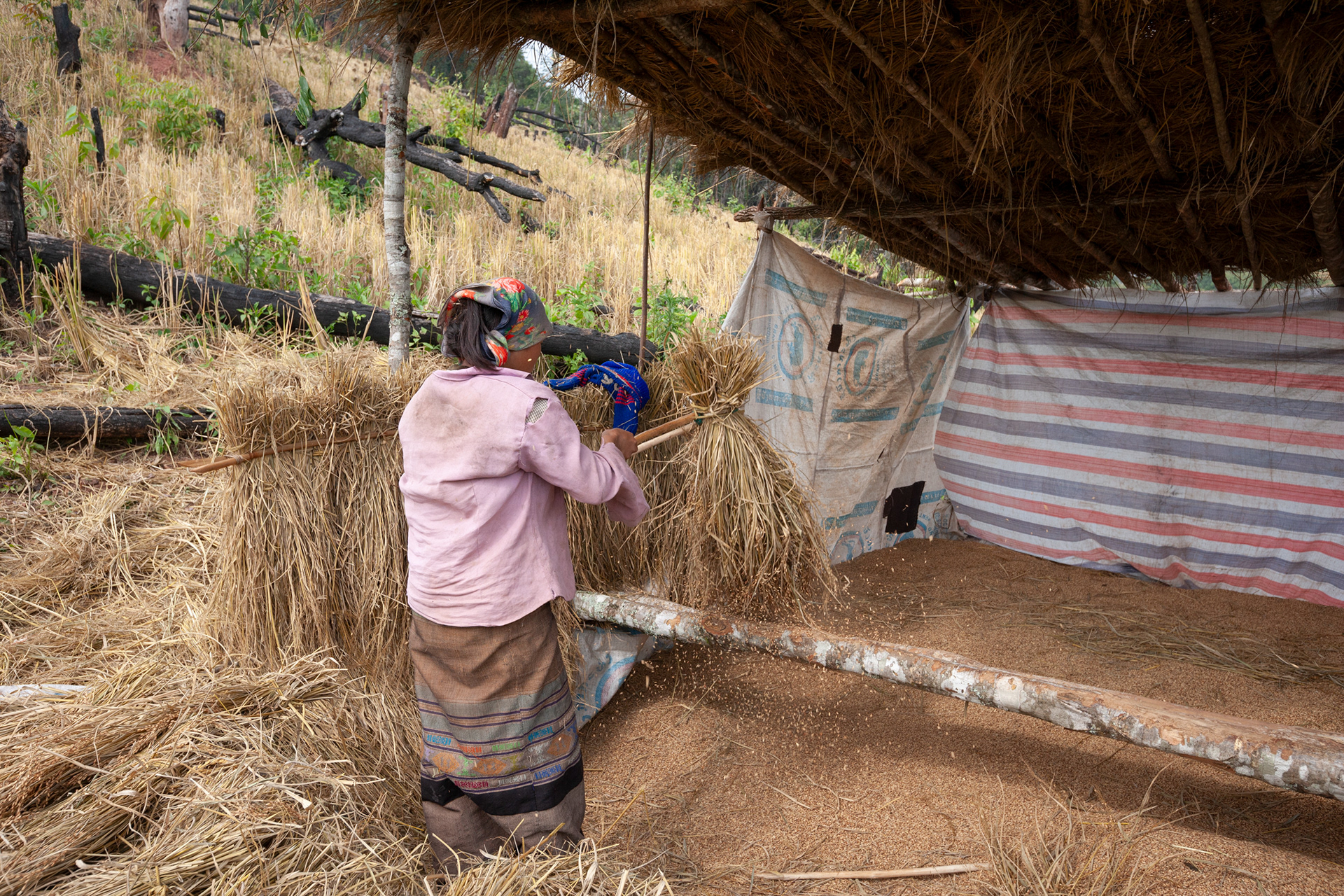
The rice kernels fall from their stalks as the woman beats them, Xieng Khouang Province, November 11, 2007.
Rice production-07
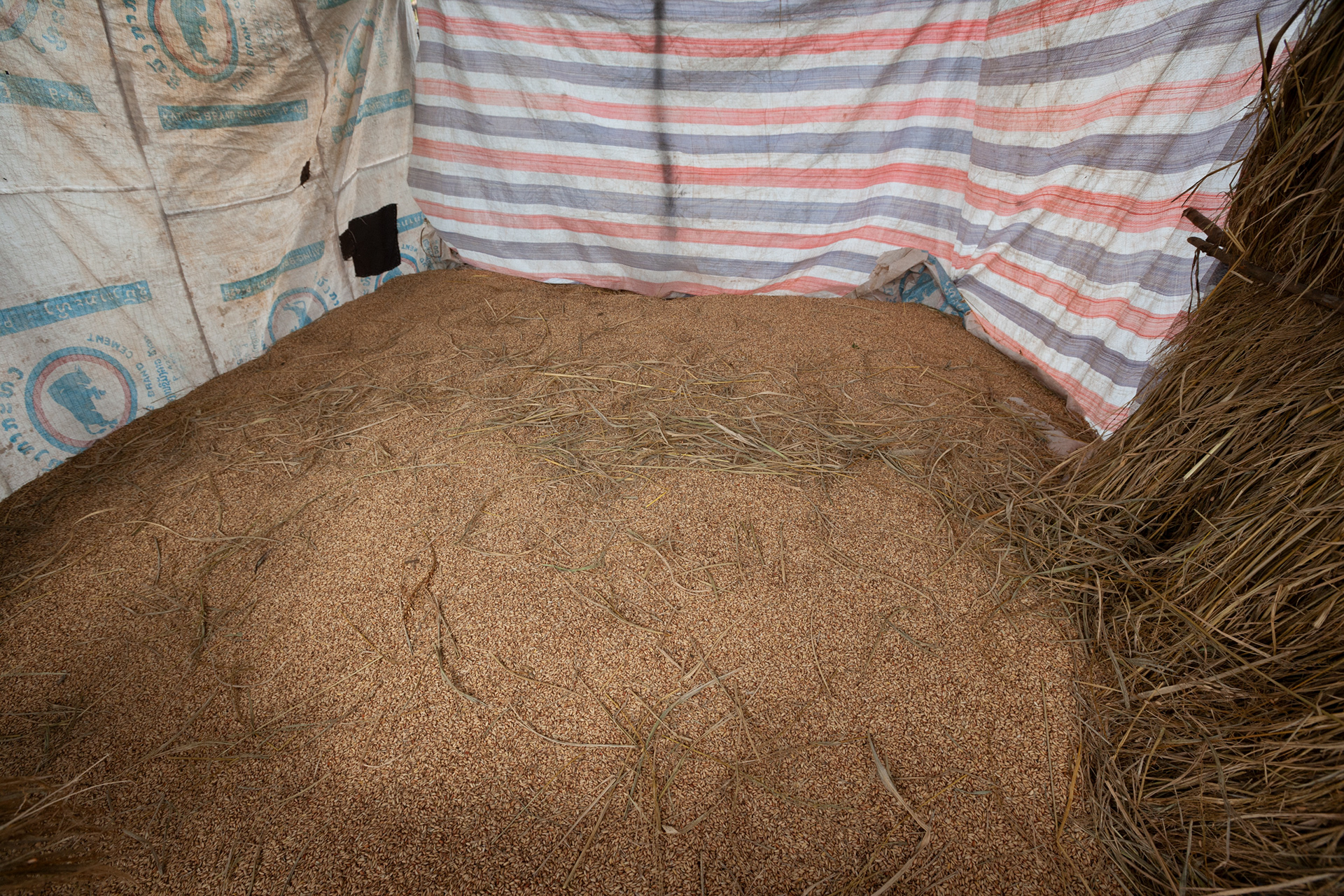
Millions of rice kernels, still in hulls, accumulate on the floor of the farmers’ makeshift threshing shed , November 12, 2007.
Rice production-08
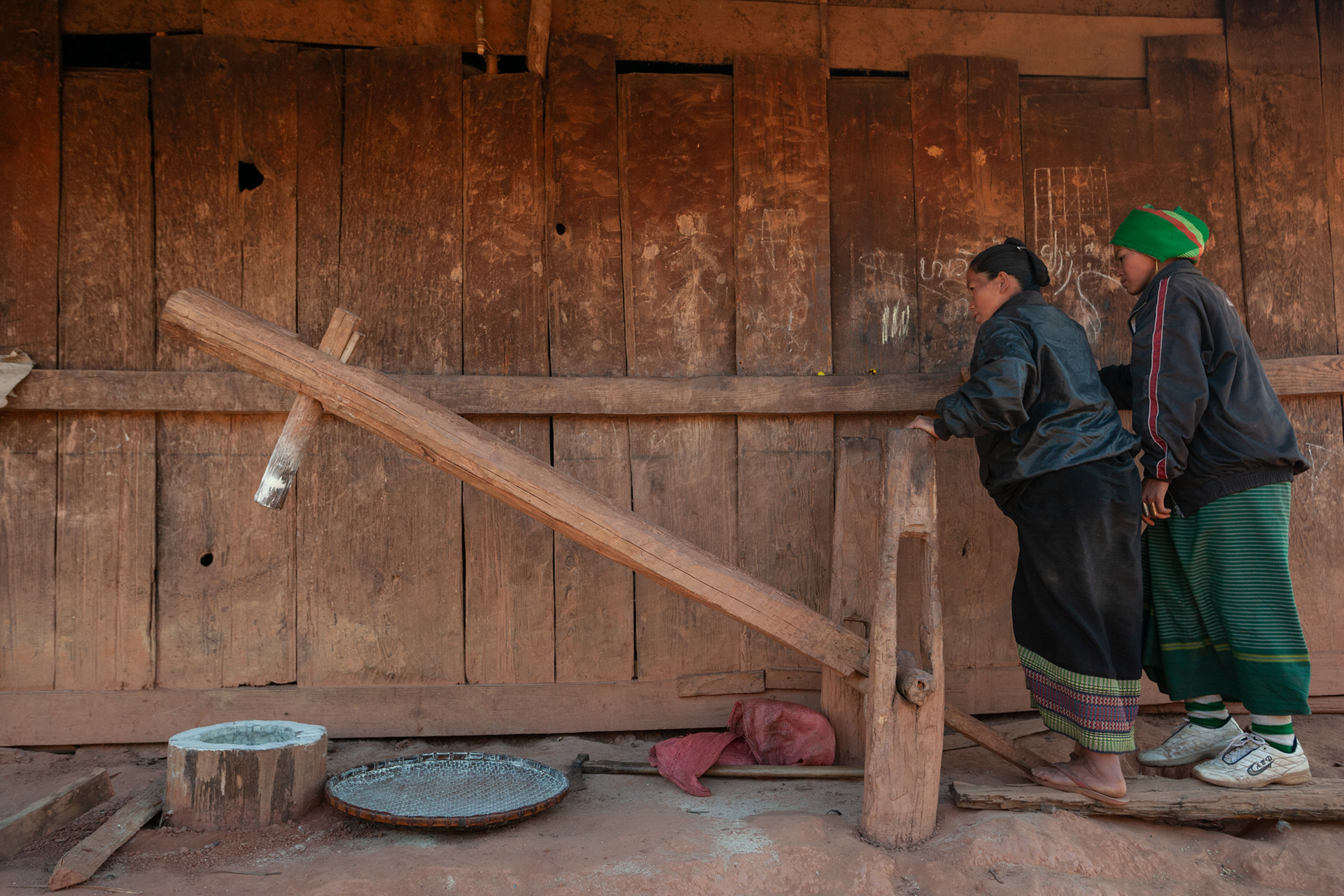
Two Hmong women pound rice, using a primitive fulcrum. The purpose of pounding the rice is to crack the hulls so that the kernels can be extracted, Sam Neua District, Houa Phan Province, December 18, 2006.
Rice production-09
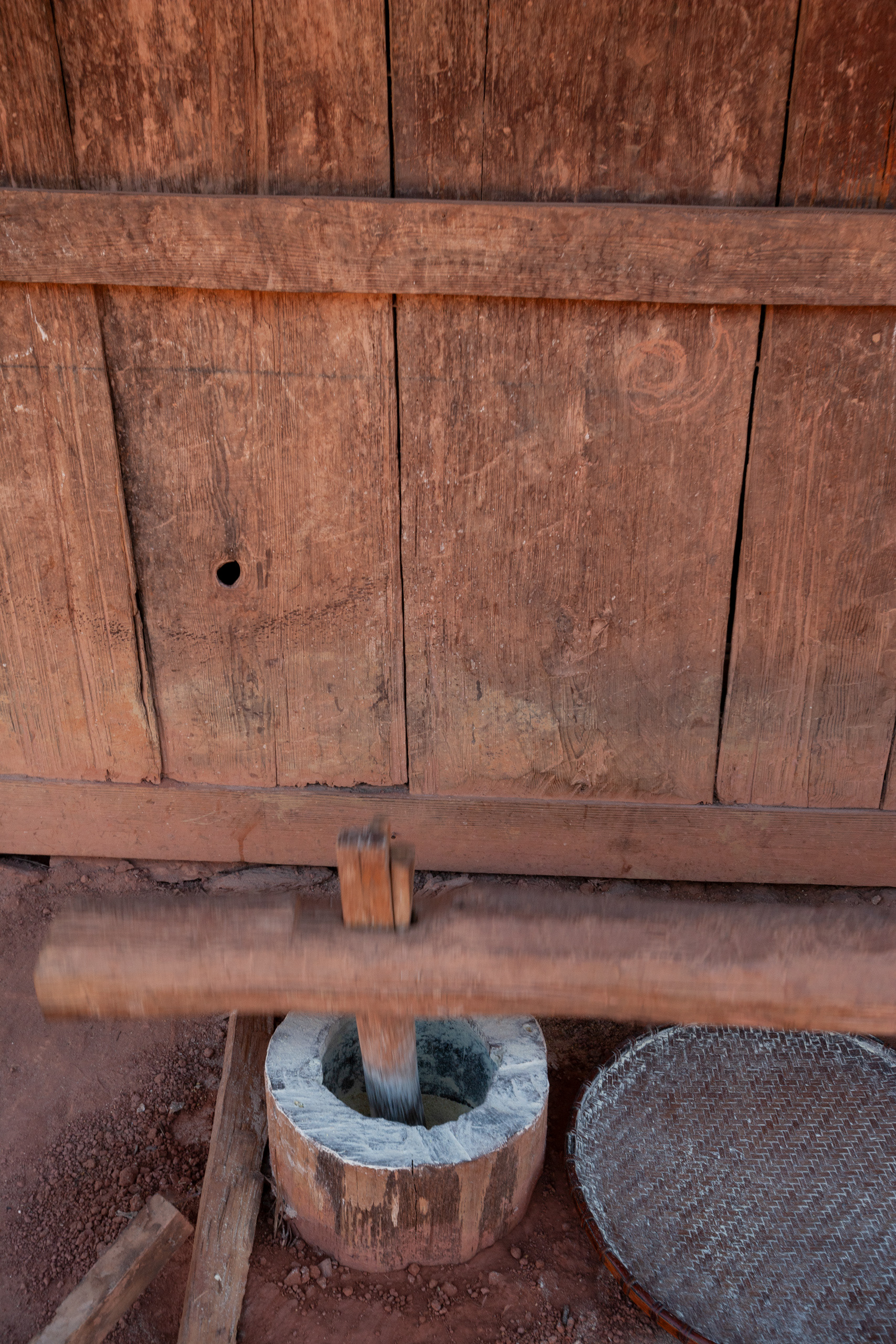
A closer view of the wooden bucket where the rice hulls are pounded and cracked to free their kernels, Sam Neua District, Houa Phan Province, December 18, 2006.
Rice production-10
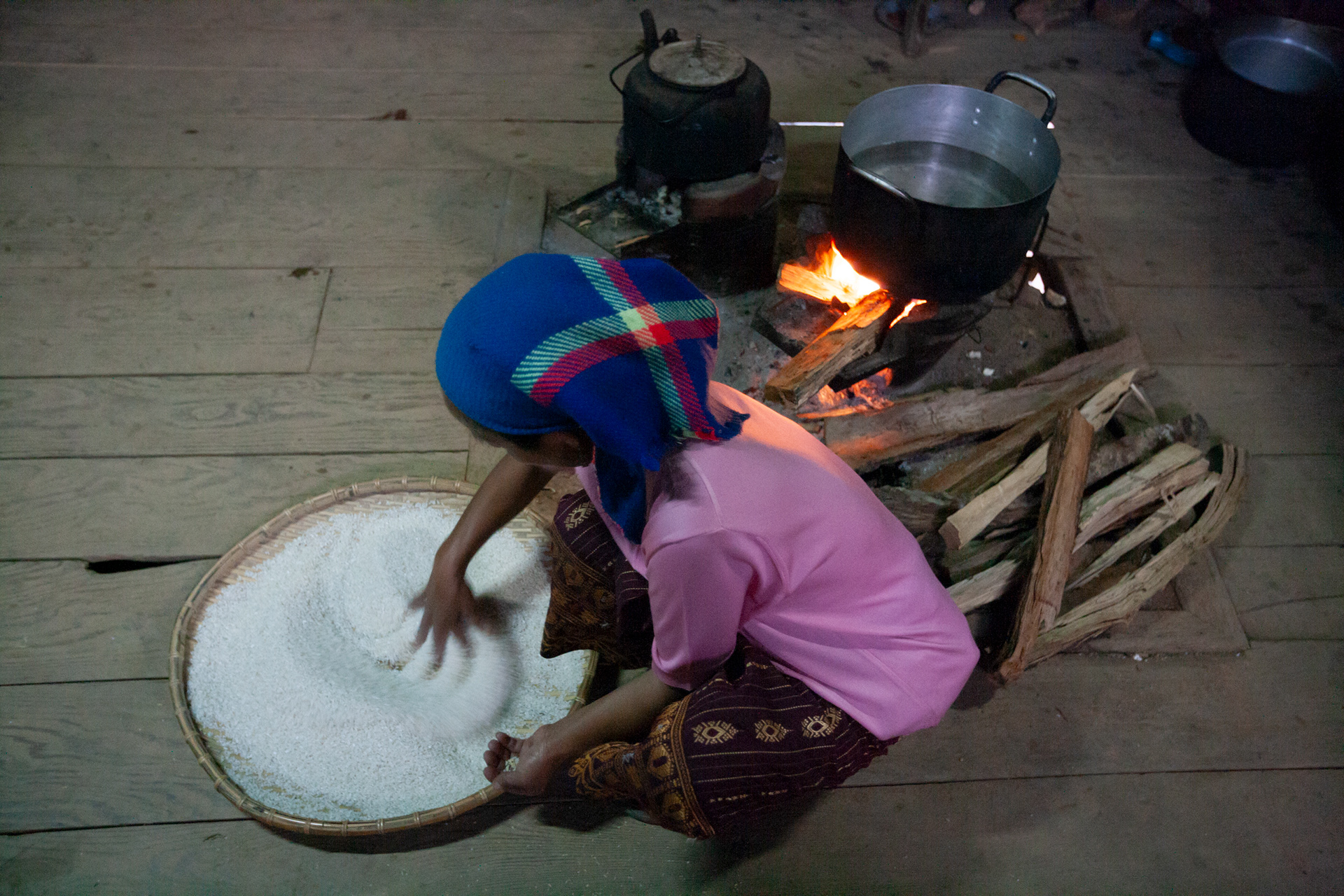
A Hmong woman just outside of Luang Prabang town begins the process of winnowing the rice to remove the cracked hulls before cooking, December 5, 2006.
Rice production-11
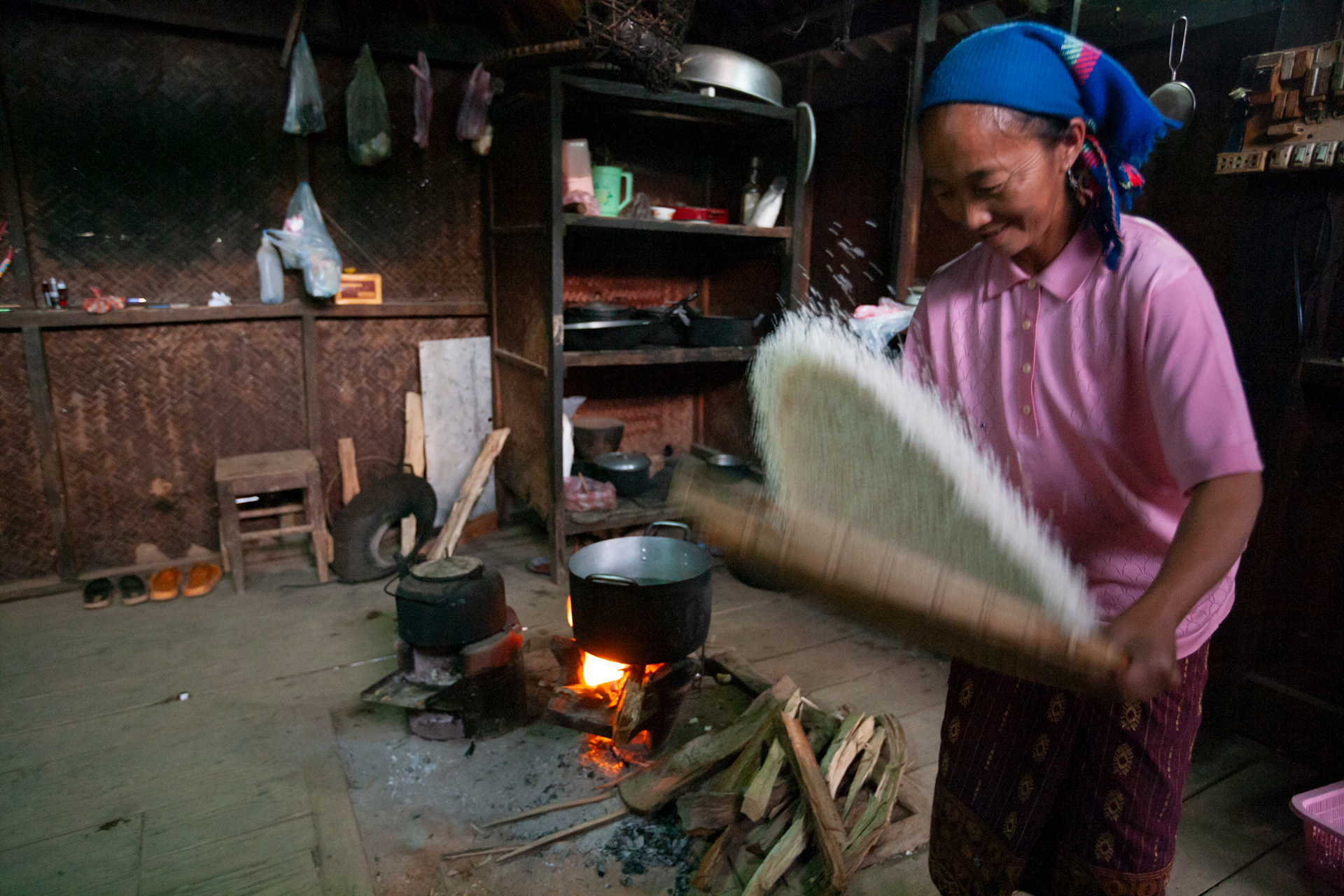
Using a wide purpose-built basket, she now tosses the rice repeatedly to separate the kernels from the cracked hulls, December 5, 2006.
Rice production-12
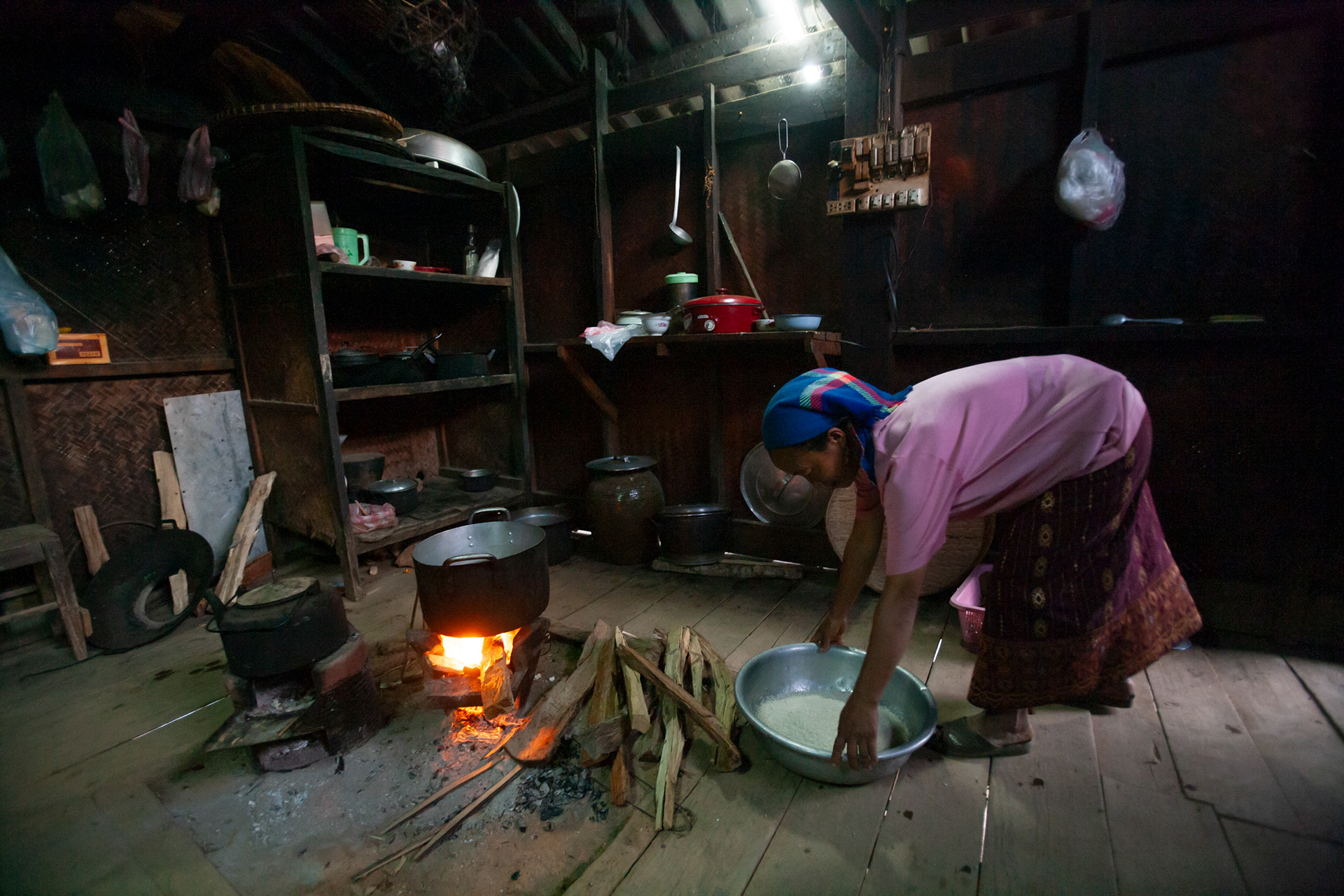
Next, she places the winnowed rice in a metal pan for washing, December 5, 2006.
Rice production-13
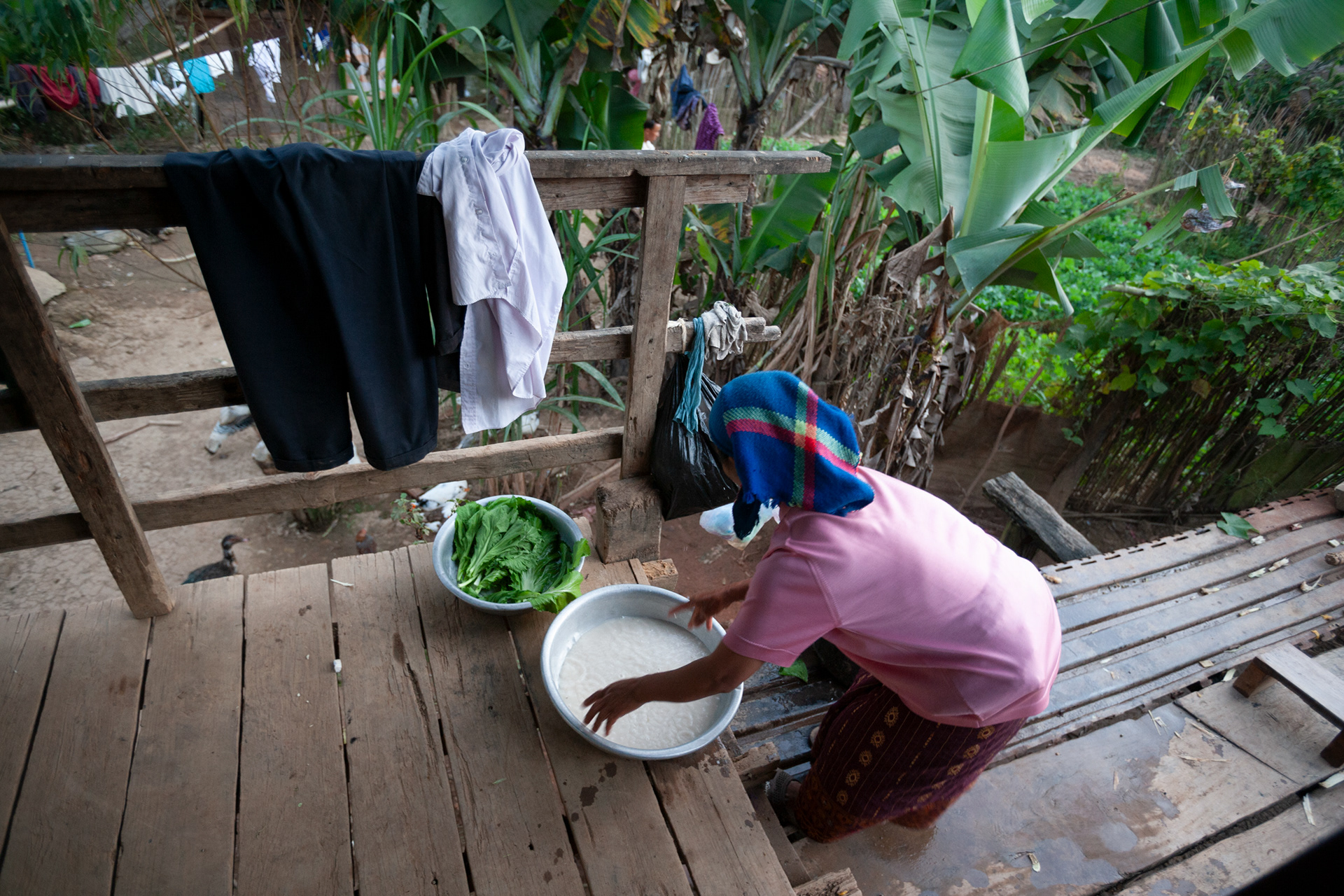
Filling the pan with water, she swishes the rice around to wash it. Any remaining hulls will float to the top for easy removal, December 5, 2006.
Rice production-14
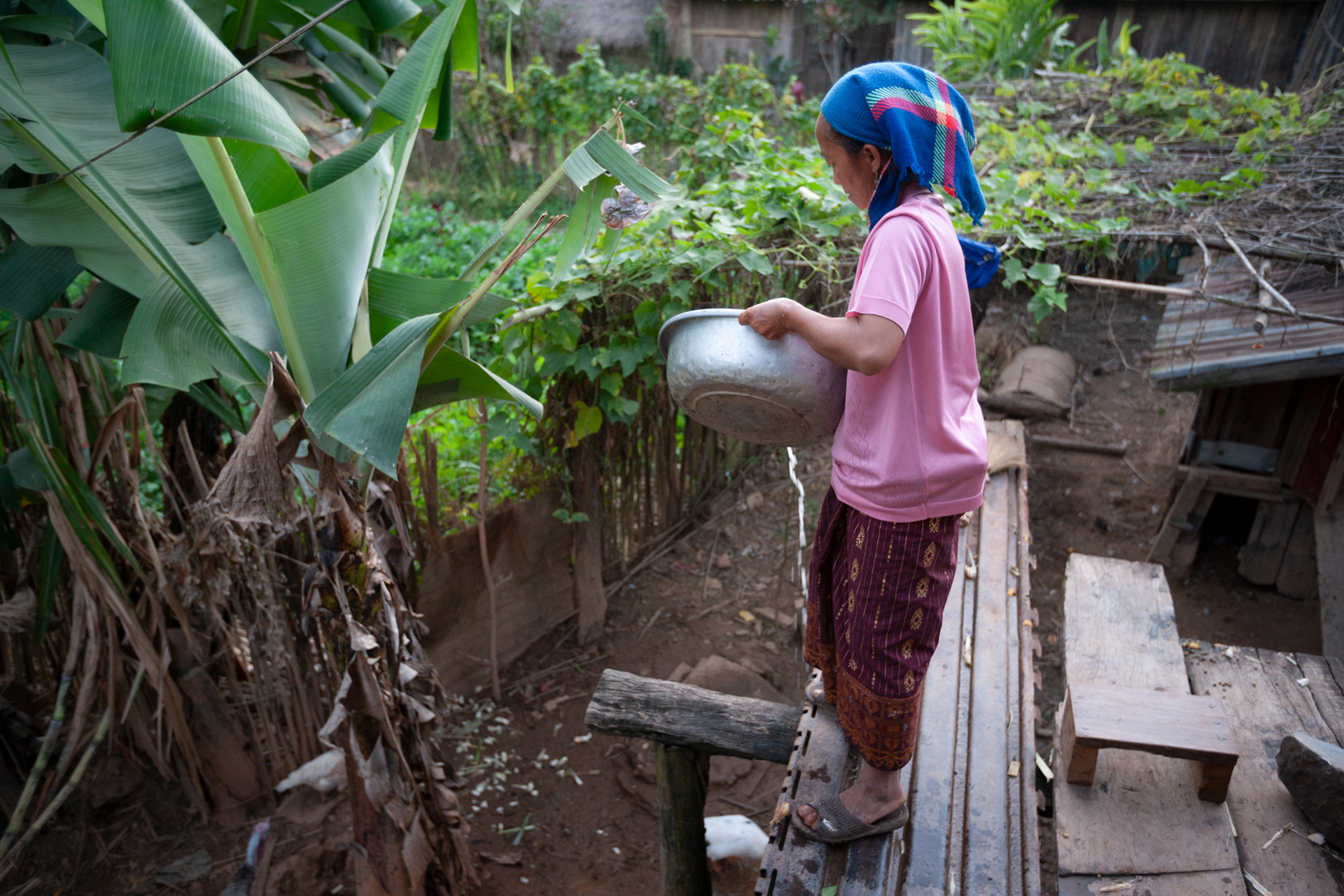
She carefully discards the water without losing any of the rice. She repeats the washing procedure twice to get the rice as clean as possible, December 5, 2006.
Rice production-15
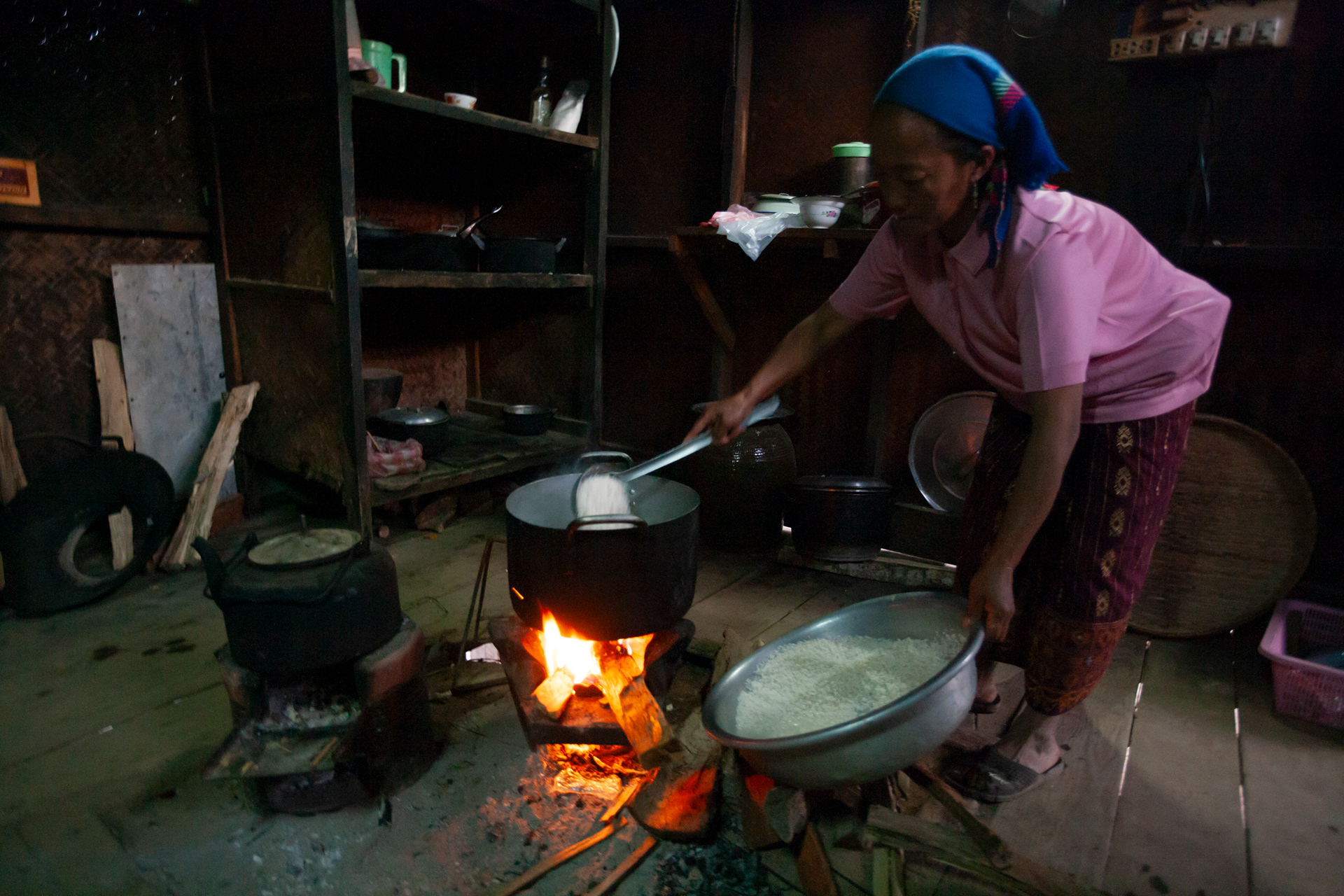
Finally, she ladles freshly winnowed and washed rice into a pot of hot water for cooking, December 5, 2006.
Rice production-16
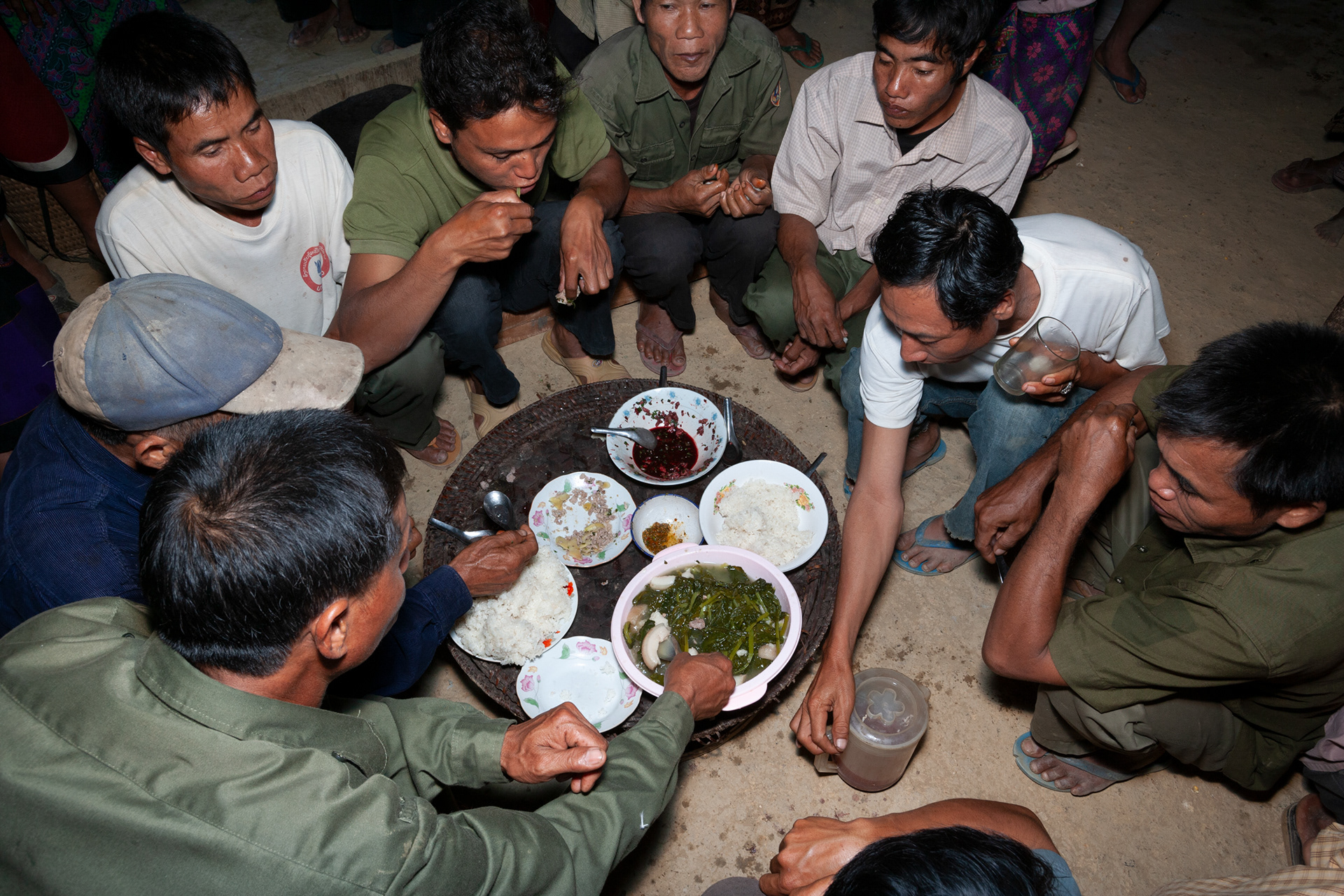
Fresh rice is served with pork and vegetable soup to hungry villagers in Northern Luang Prabang Province, November 24, 2006.