December 17th and 20th, 2006
Sam Neua District, Houa Phan Province
December 17, 2006
Ban Nong Oun was photographed during a five day excursion through Houa Phan Province and Sam Neua District in the far northeast of Laos. I was accompanied by my guide and tri-lingual interpreter, Long Vang.
More subject galleries from this trip will be added in the next two years with funding from the City of Fresno Measure P Expanded Access to Arts and Culture Fund.
As we rounded a curve on Route 1c, the large village came into view. Though we were impressed with its hilltop wooden houses and large, open commons, it was very quiet and sparsely populated that afternoon. Apart from a gaggle of young men engaged in an ardent game of volleyball, we only met a few children and older women. Little did we suspect that, on our return visit three days later, we would encounter an incredible Hmong Near Year spectacle.
Ban Nong Oun-01
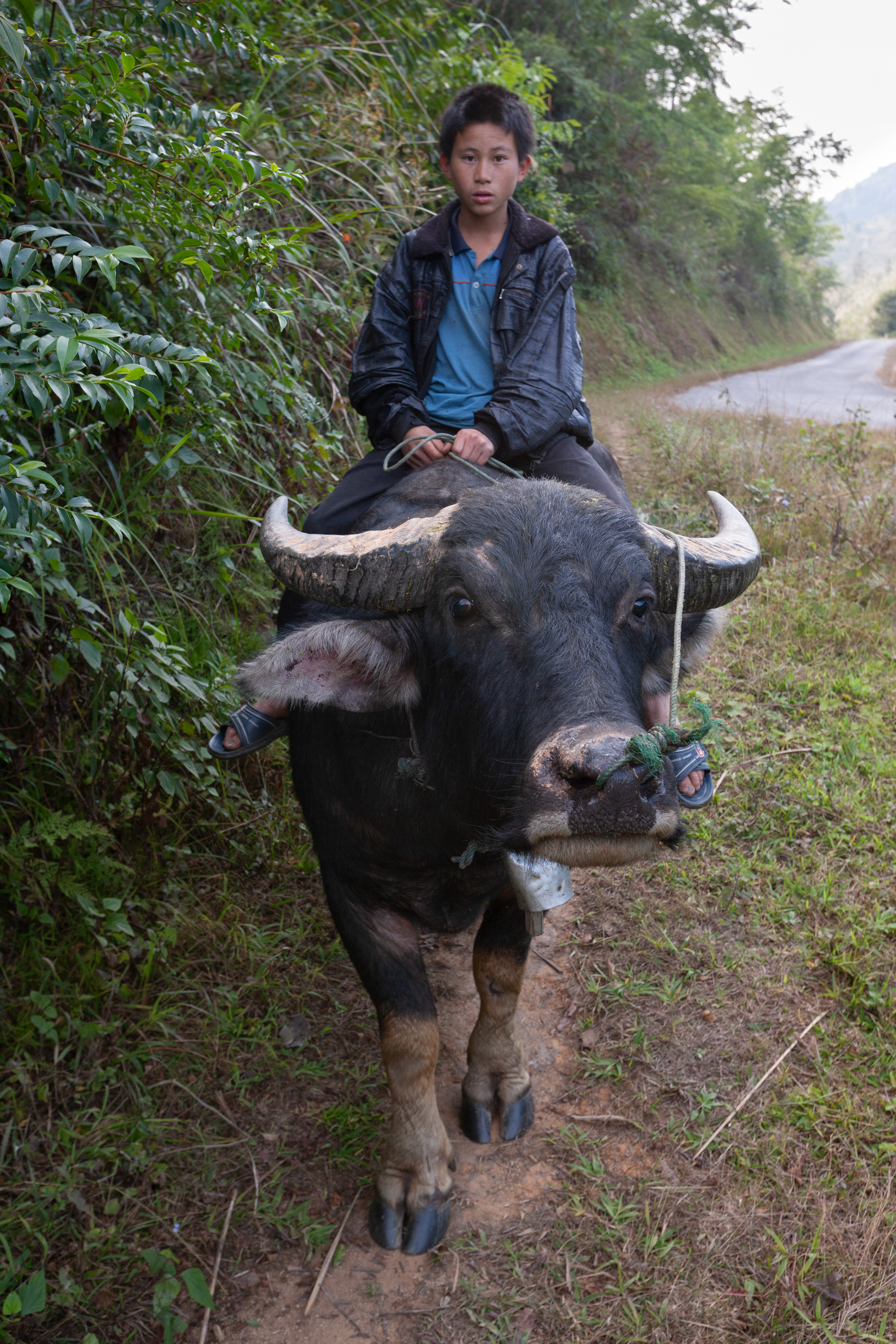
A Hmong boy rides a buffalo toward home just outside the village, December 17, 2006.
Ban Nong Oun-02
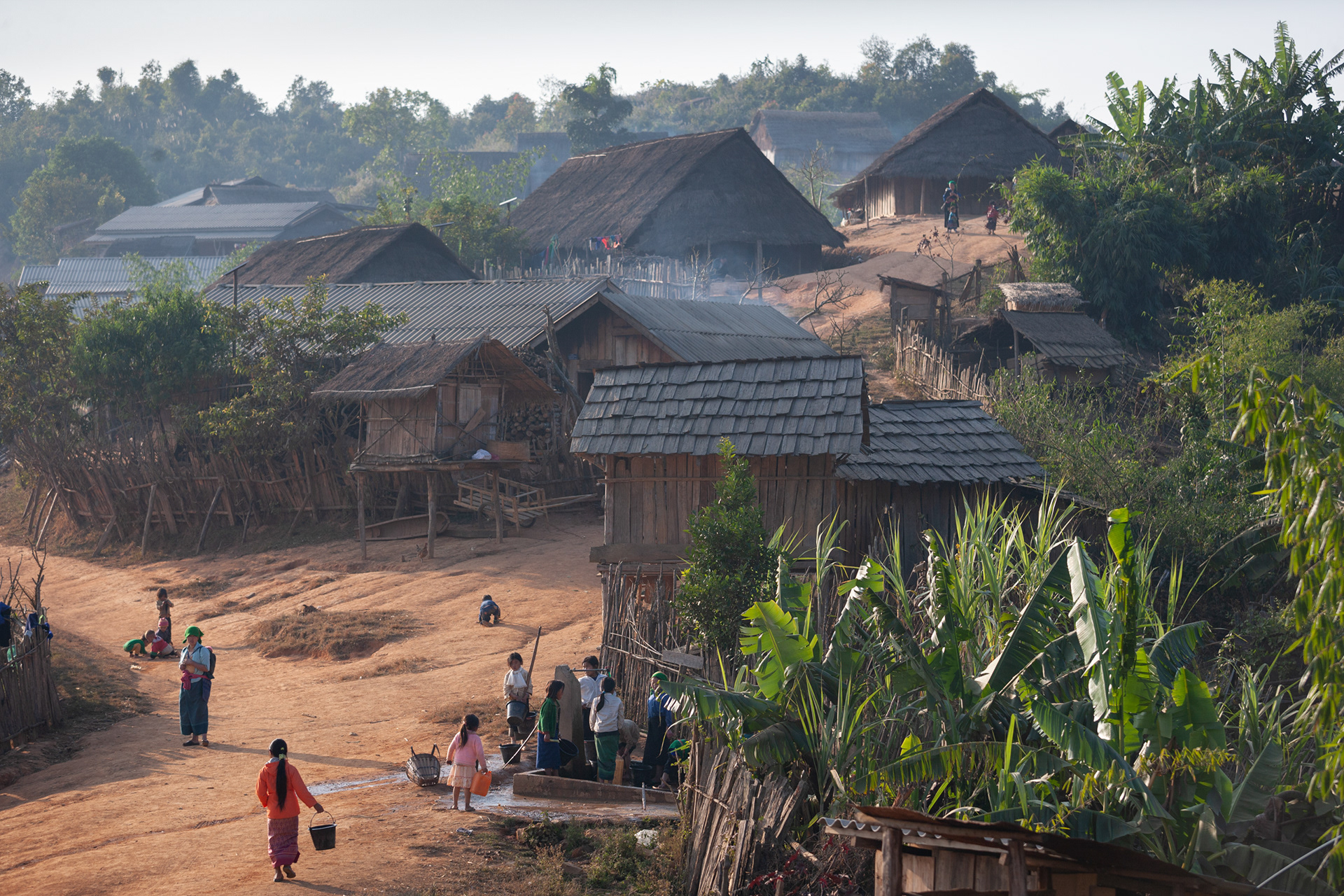
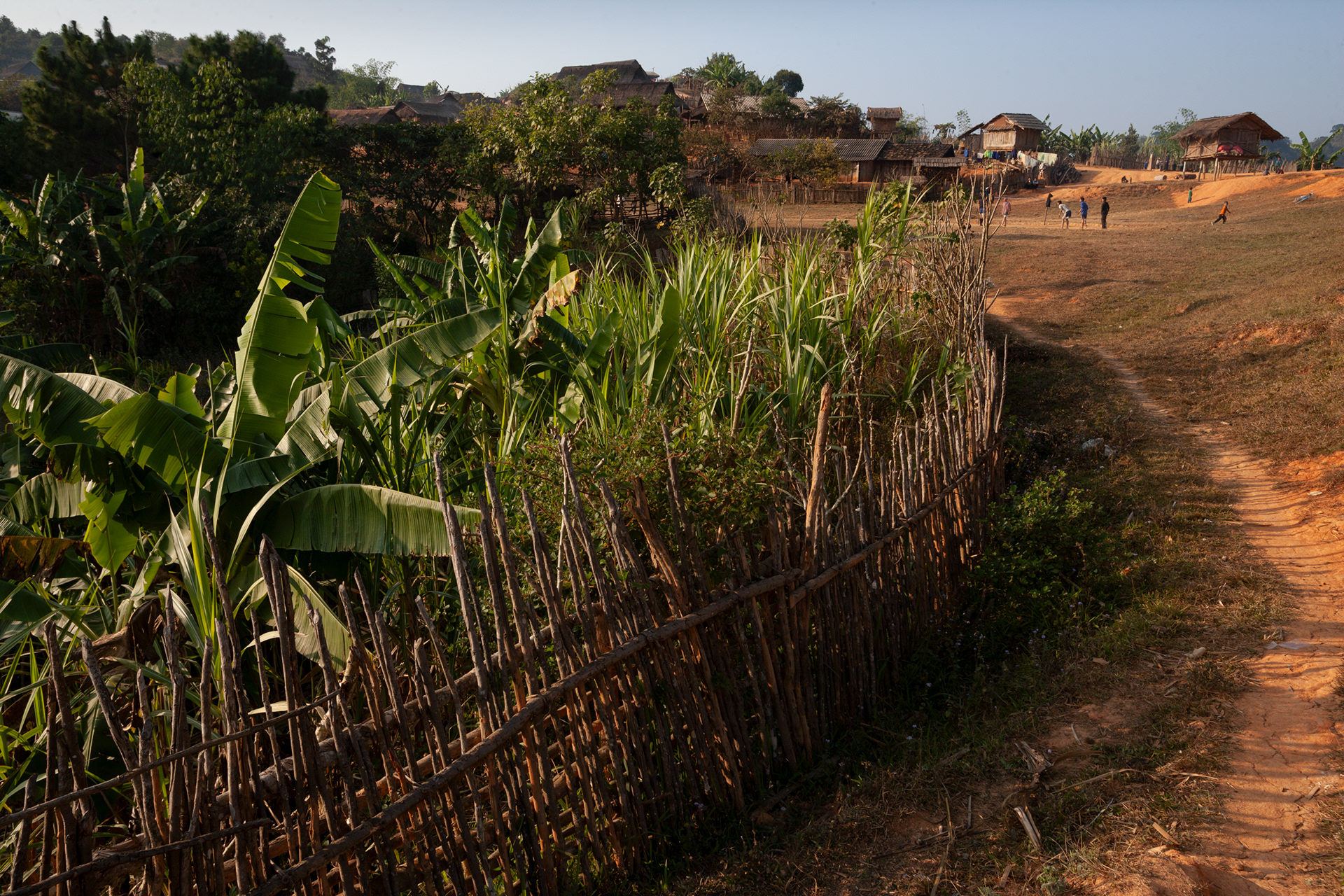
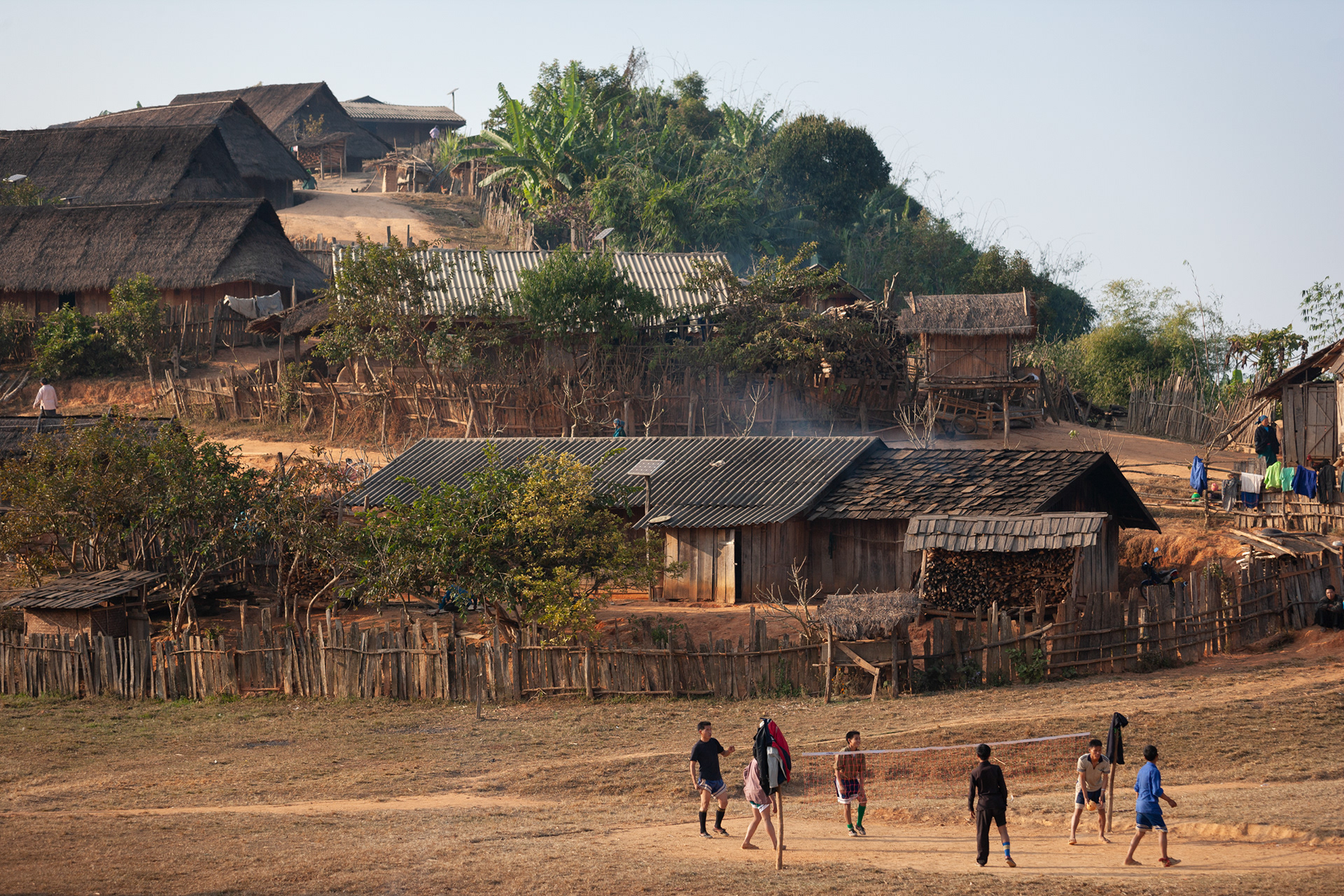
Our first view of Ban Nong Oun as we round a tight curve in the road. Lush vegetable gardens are common here, December 17, 2006.
Ban Nong Oun-03
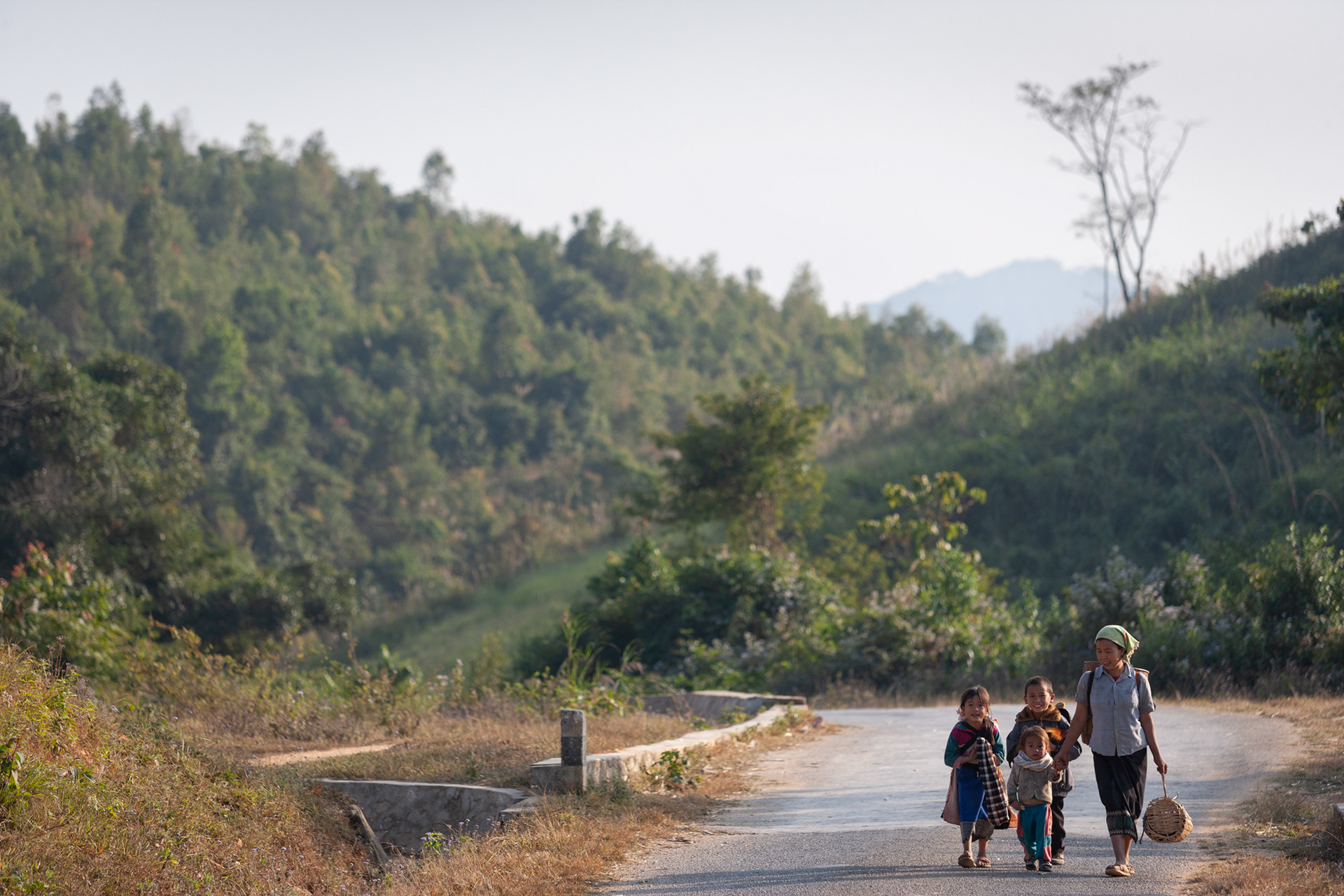
A woman and three children head home along winding Route 1c, December 17, 2006.
Ban Nong Oun-04
Impressive wooden houses arranged along the winding path to the hilltop. Note the small solar panel in the center of the image that can power a radio or charge a cellphone.
A foreign NGO had recently distributed solar panels to remote villages in Laos, December 17, 2006.
Ban Nong Oun-05
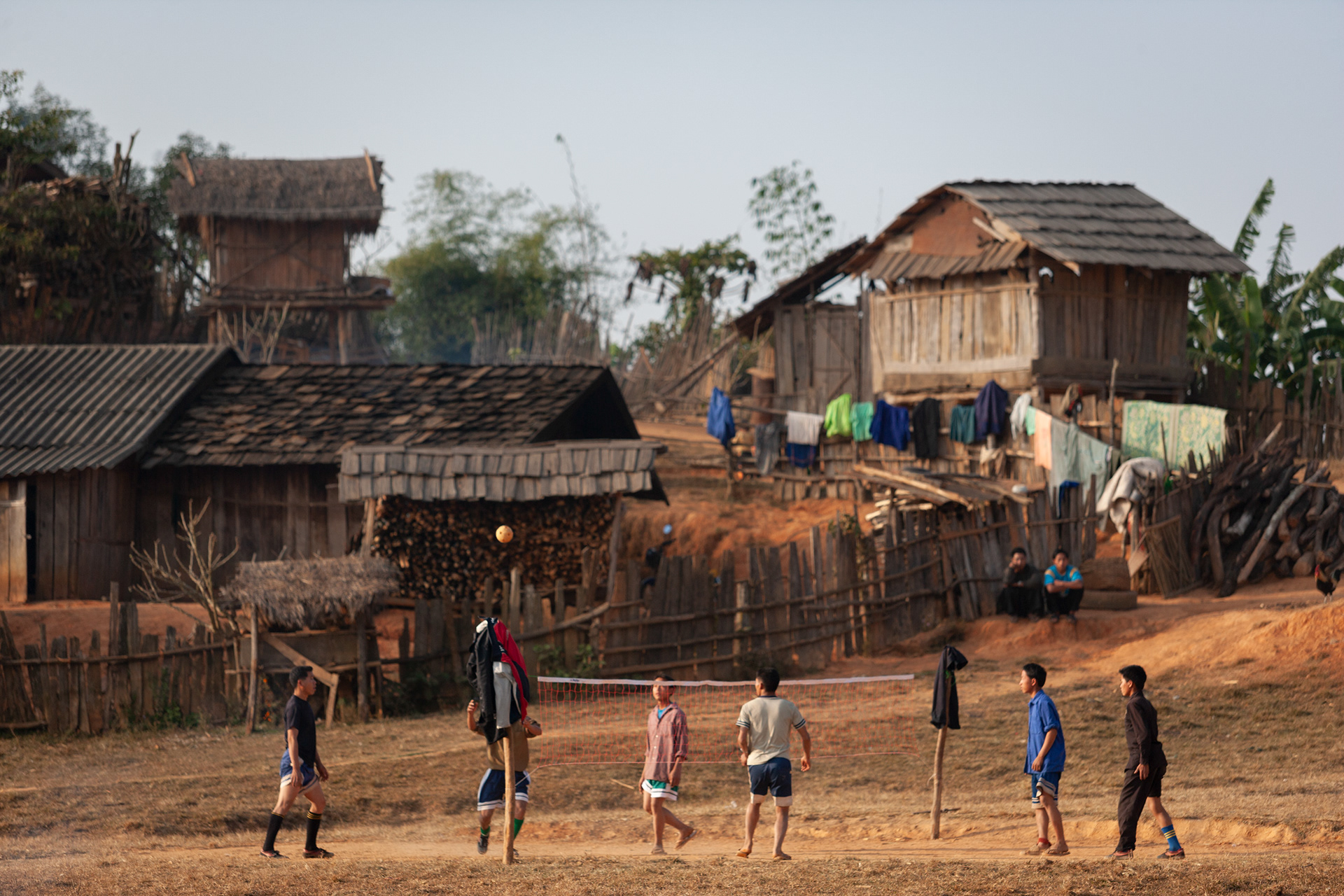
Teenage boys, some clad in soccer clothes, take volleyball seriously; once the rice harvest has finished, games are played almost continuously, December 17, 2006.
Ban Nong Oun-07
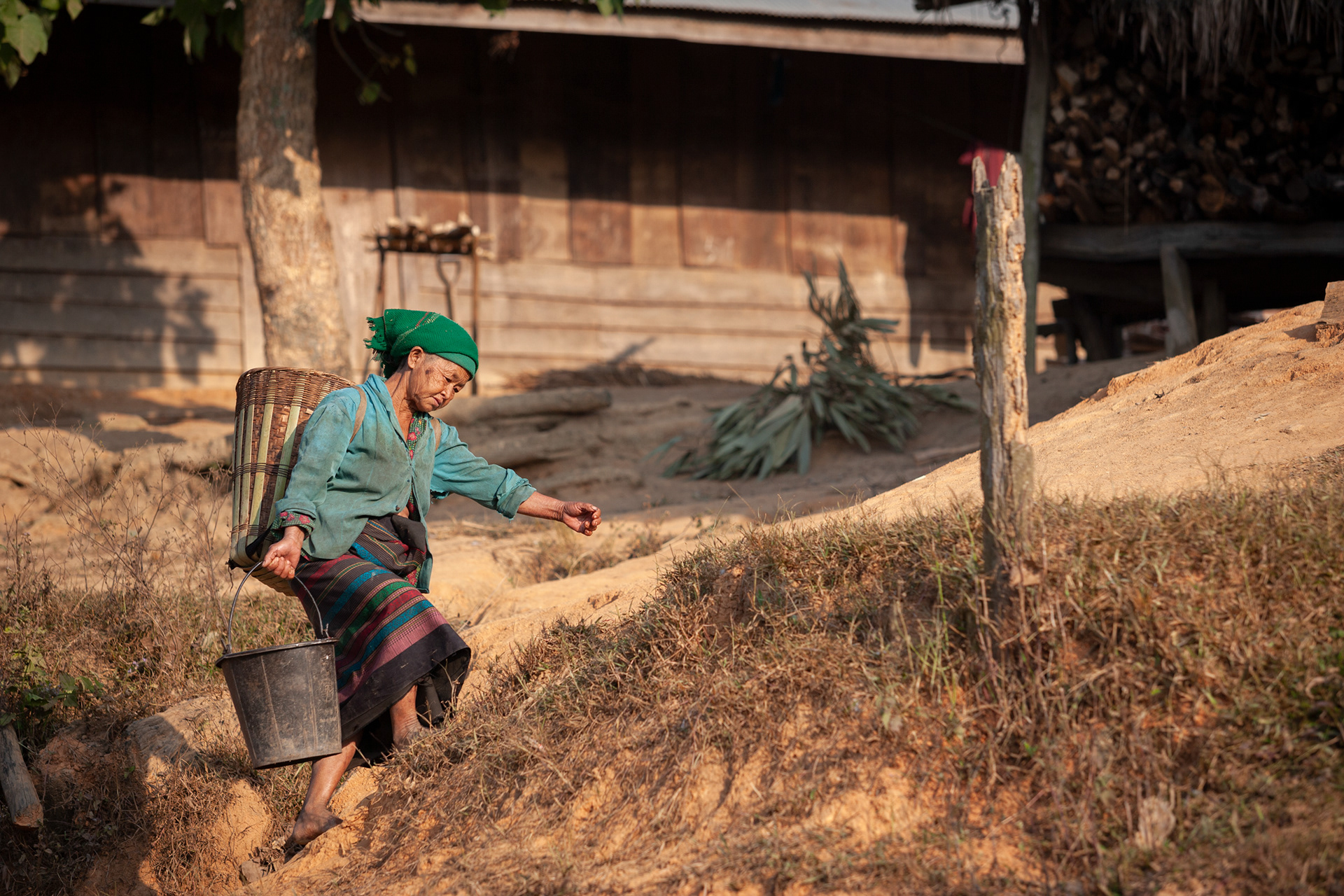
A woman hauls a heavy load of water up a steep hill, a task she doubtless repeats at least twice a day, December 17, 2006.
Ban Nong Oun-08
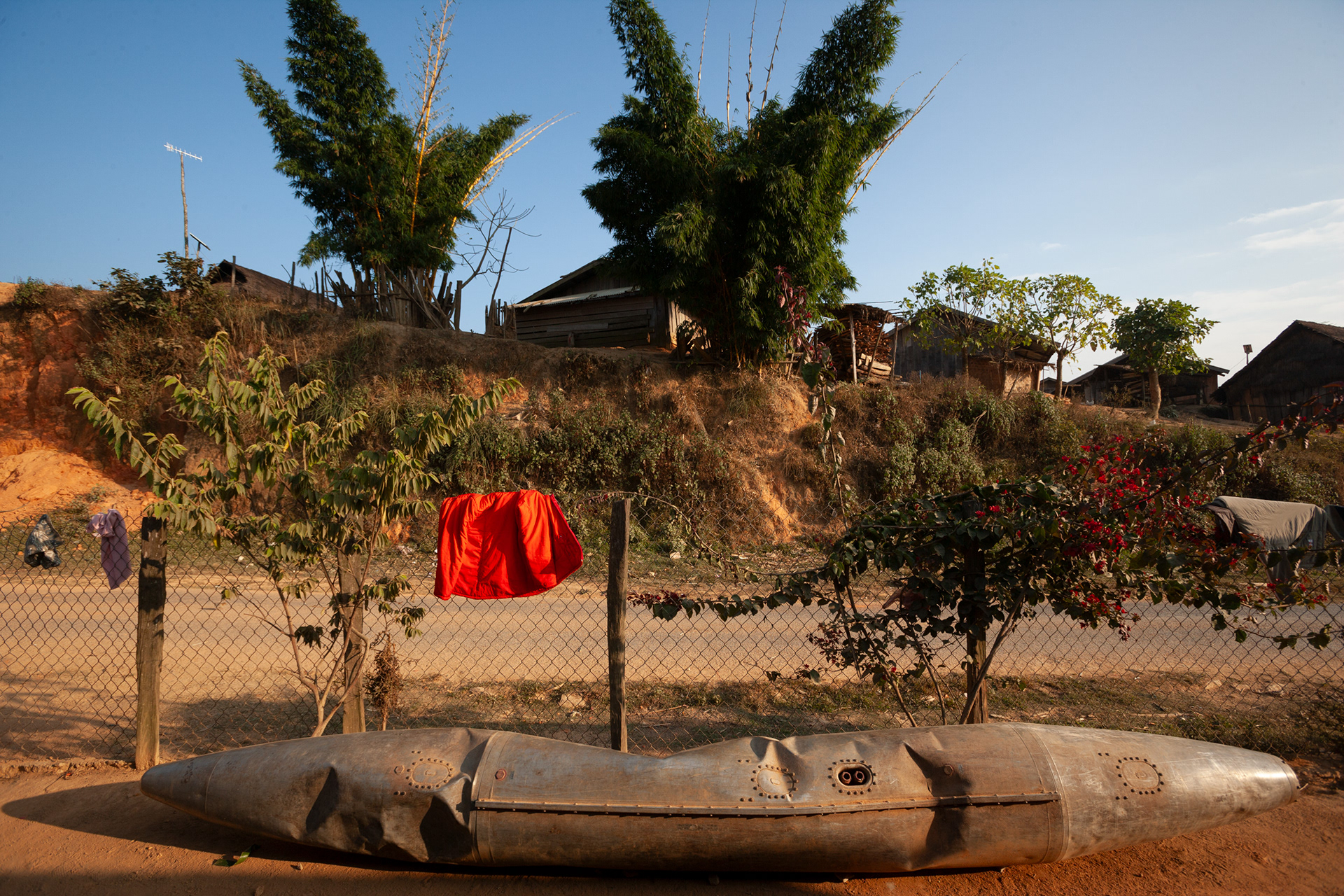
This unusual piece of American ordinance from the Secret War resembles a missile or submarine, December 17, 2006.
Ban Nong Oun-09
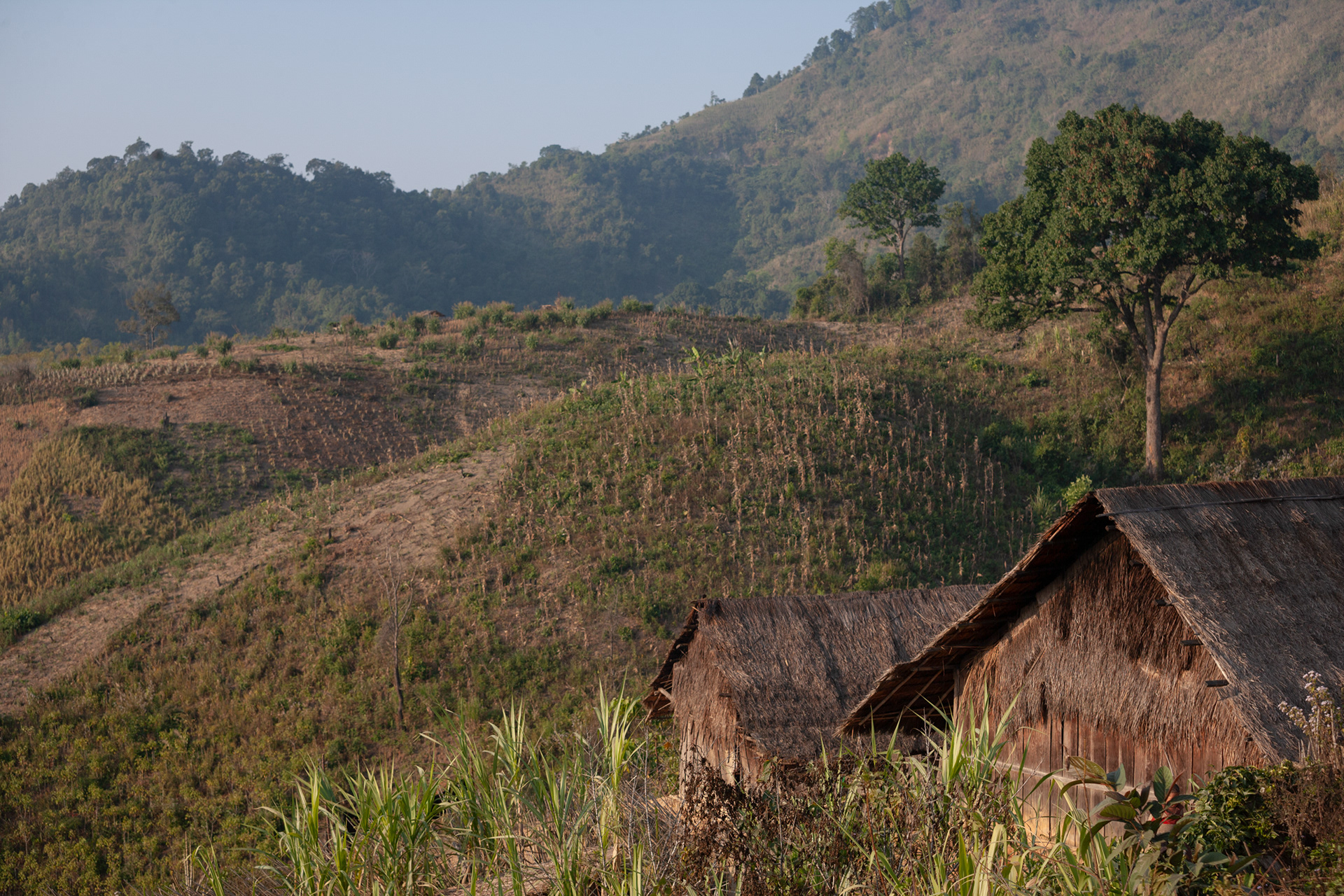
Corn growing on steep hillsides just outside the village. More substantial cultivated acreage must certainly lie out of sight to sustain a village of this size, December 17, 2006.
Ban Nong Oun-10
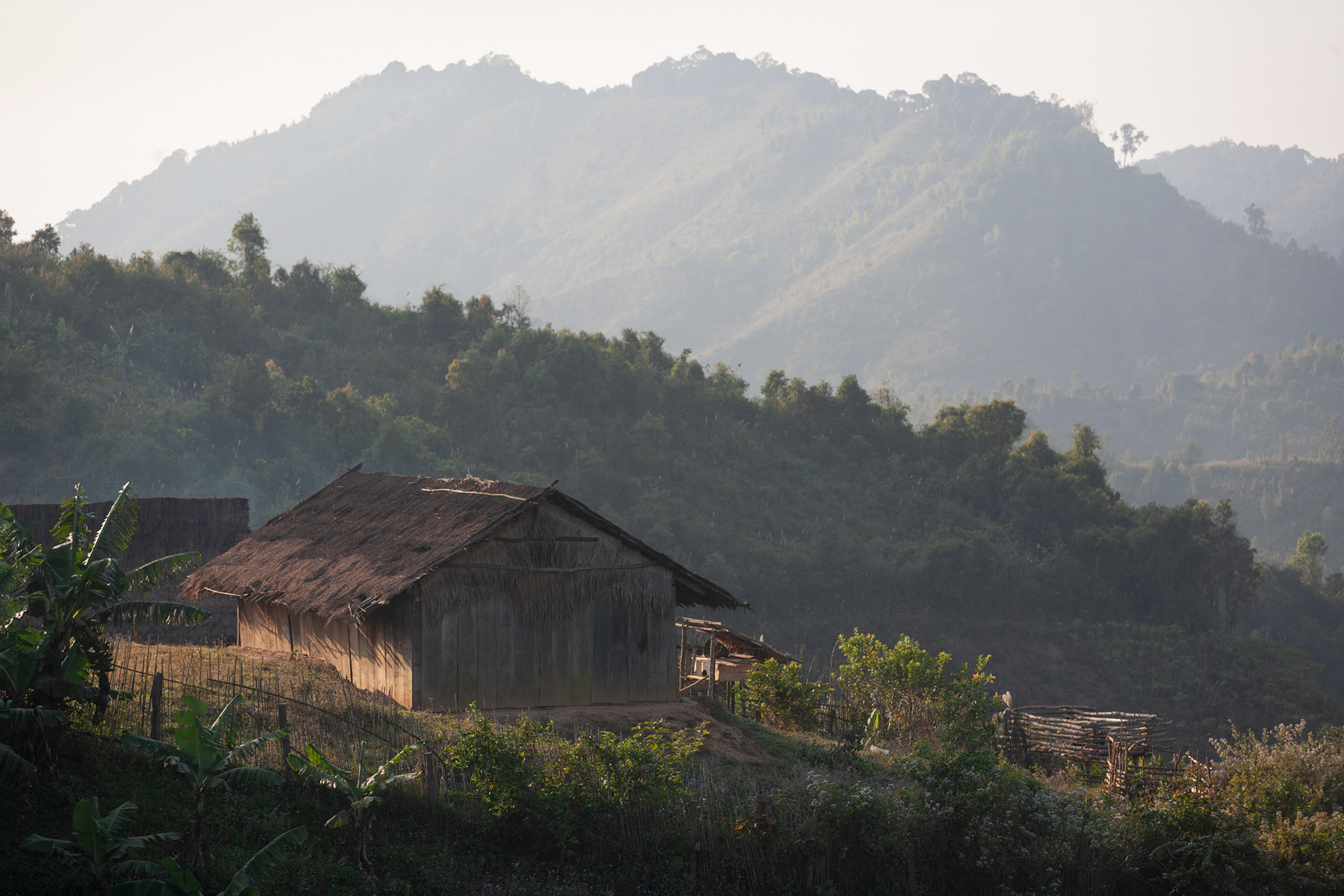
A homestead at the edge of the village includes pens for livestock and a barn, December 17, 2006.
Ban Nong Oun-11
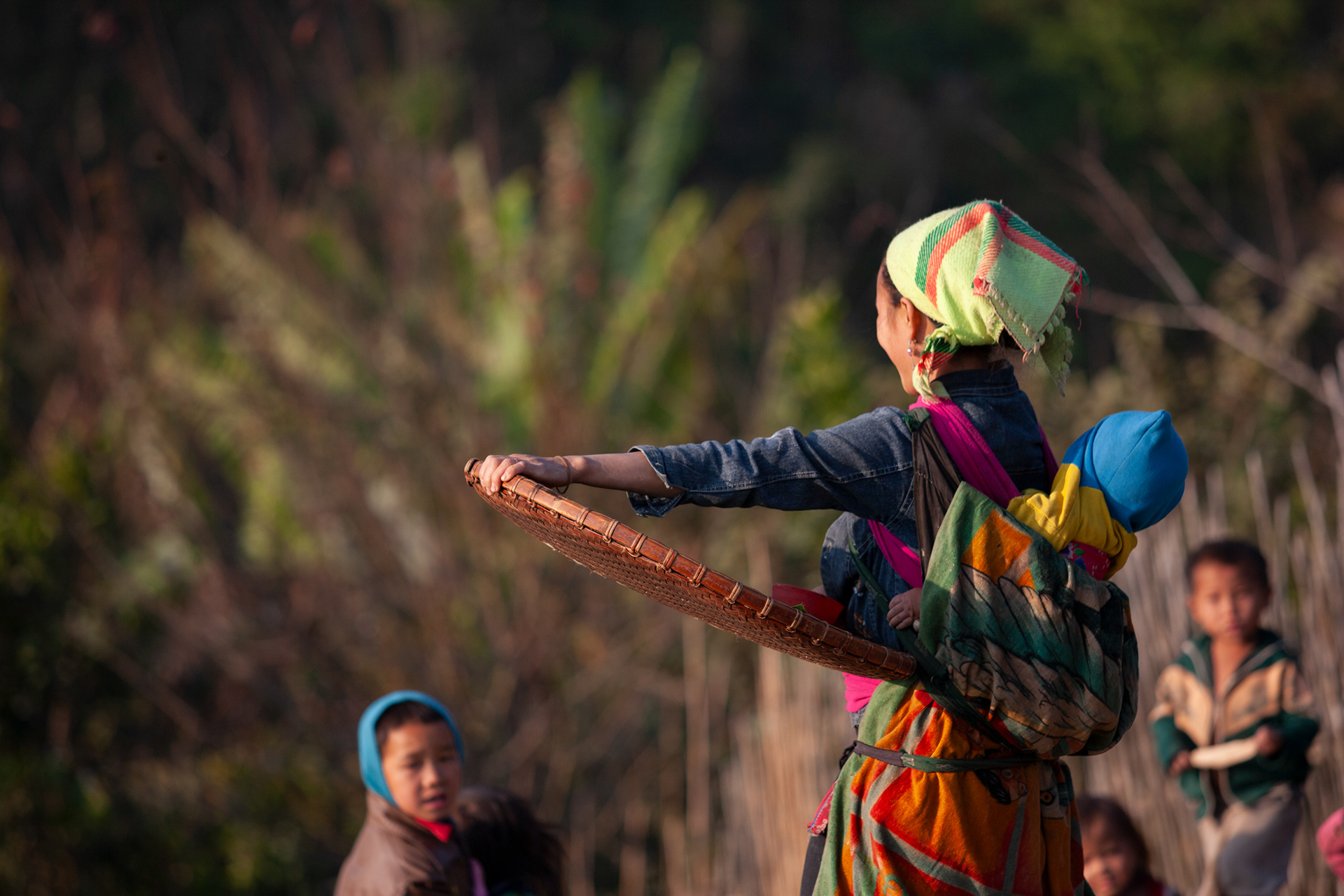
A woman holds a rice winnowing tray made from woven bamboo and carries a baby on her back. See folder L26 to learn how rice is winnowed before cooking, December 17, 2006.
Ban Nong Oun-12
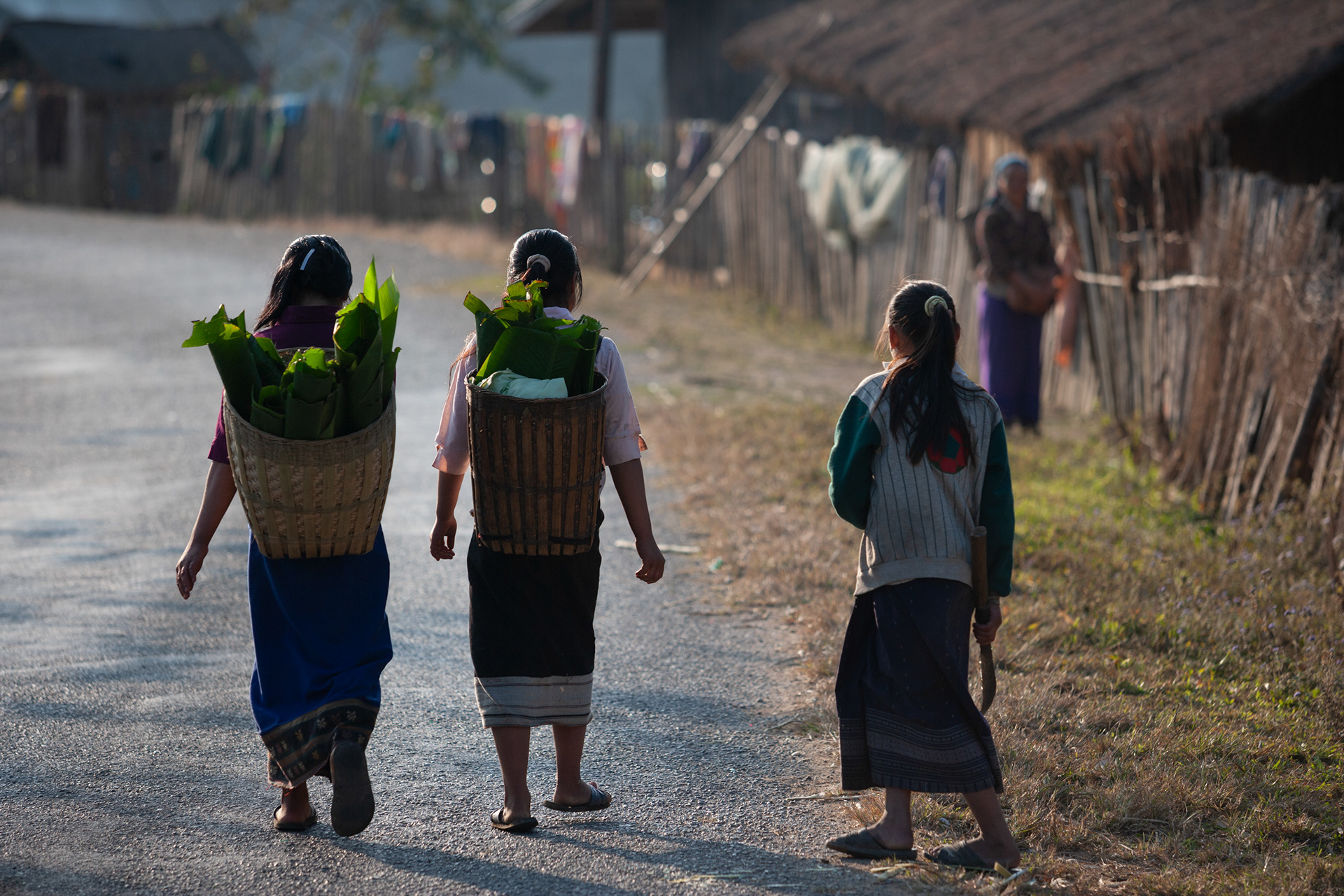
Three teenage girls carry baskets of banana leaves they have just gathered, December 17, 2006.
December 20th return visit
The following is an edited excerpt from the book Soul Calling: A Photographic Journey Through the Hmong Diaspora (©2012 Joel Pickford):
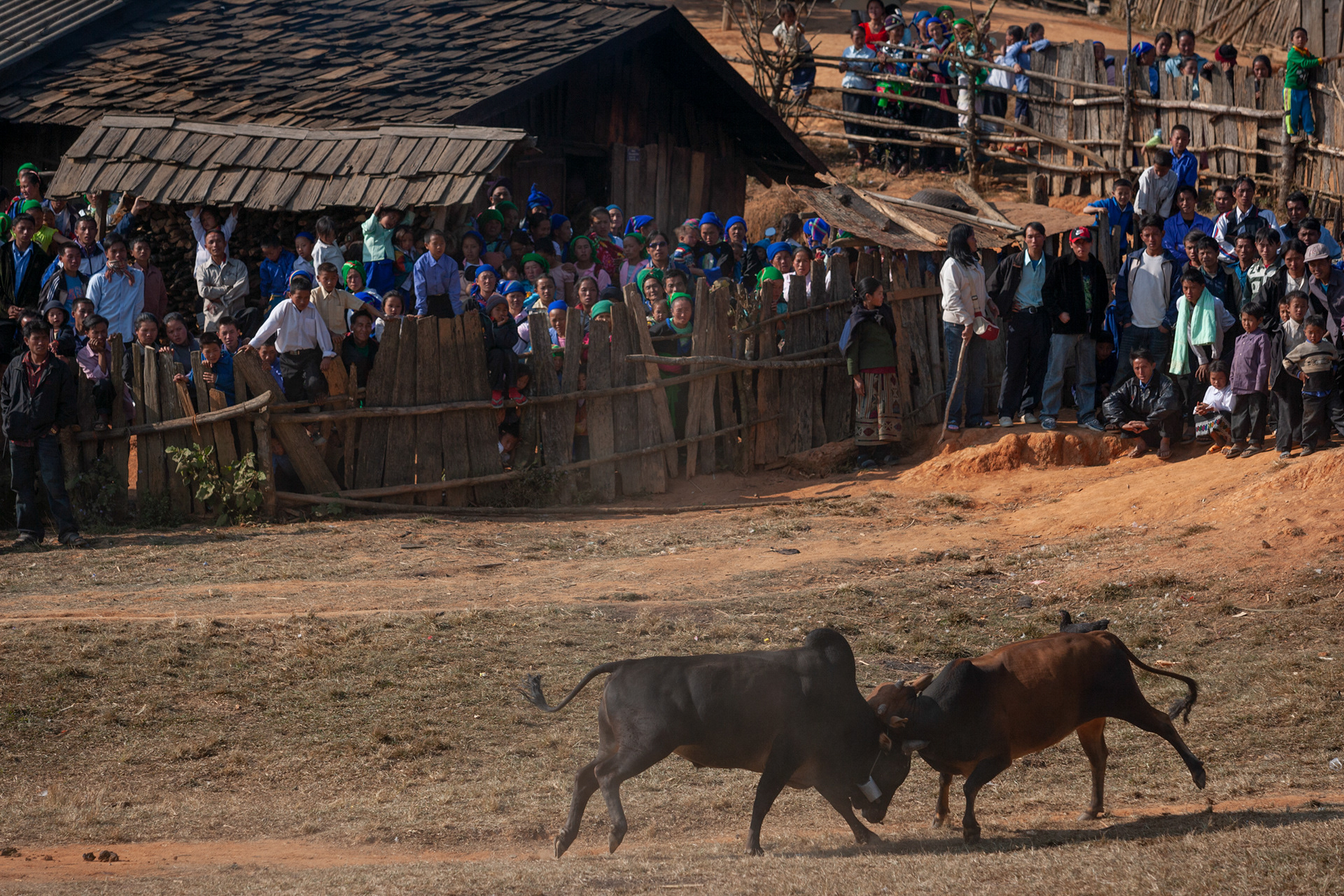
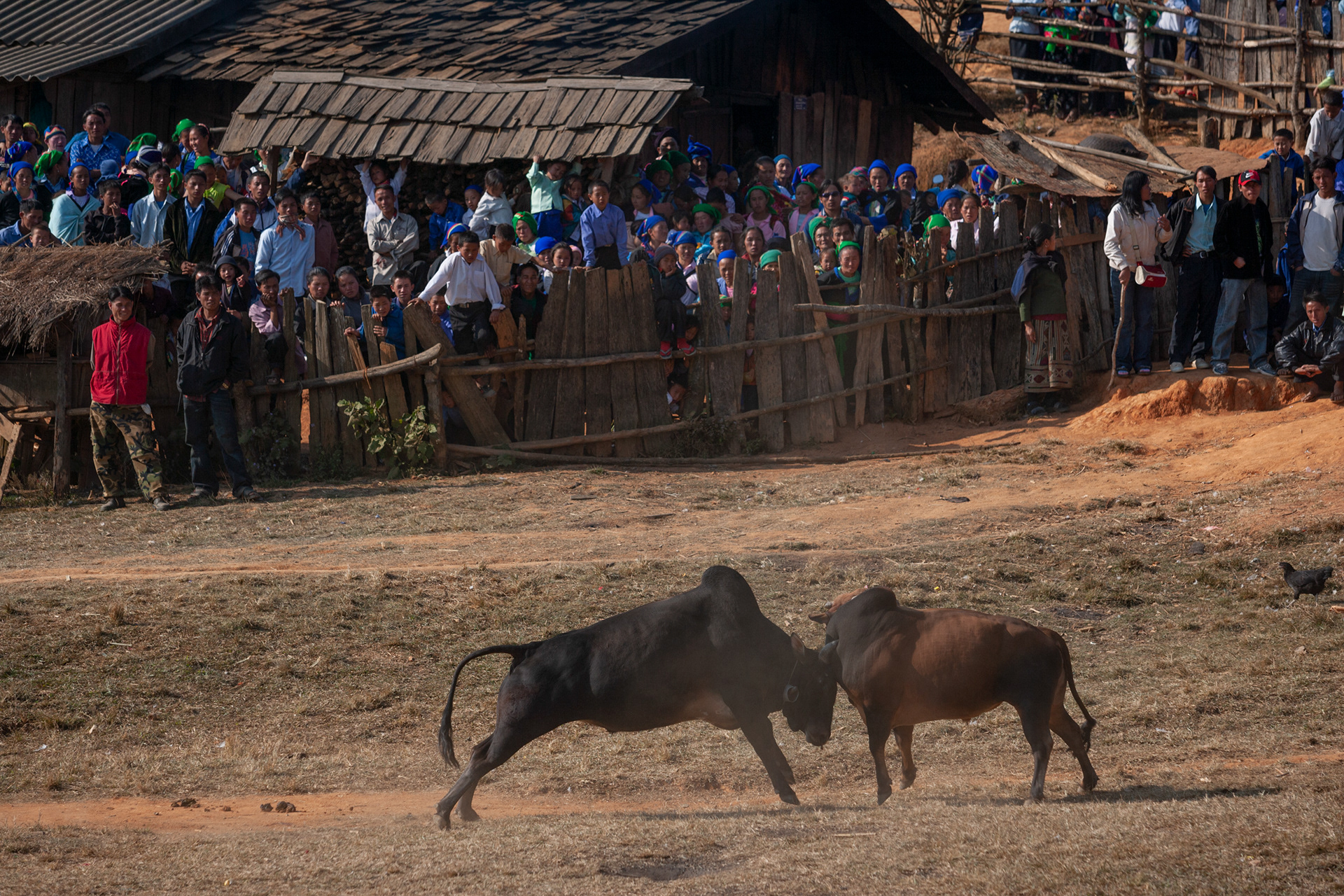
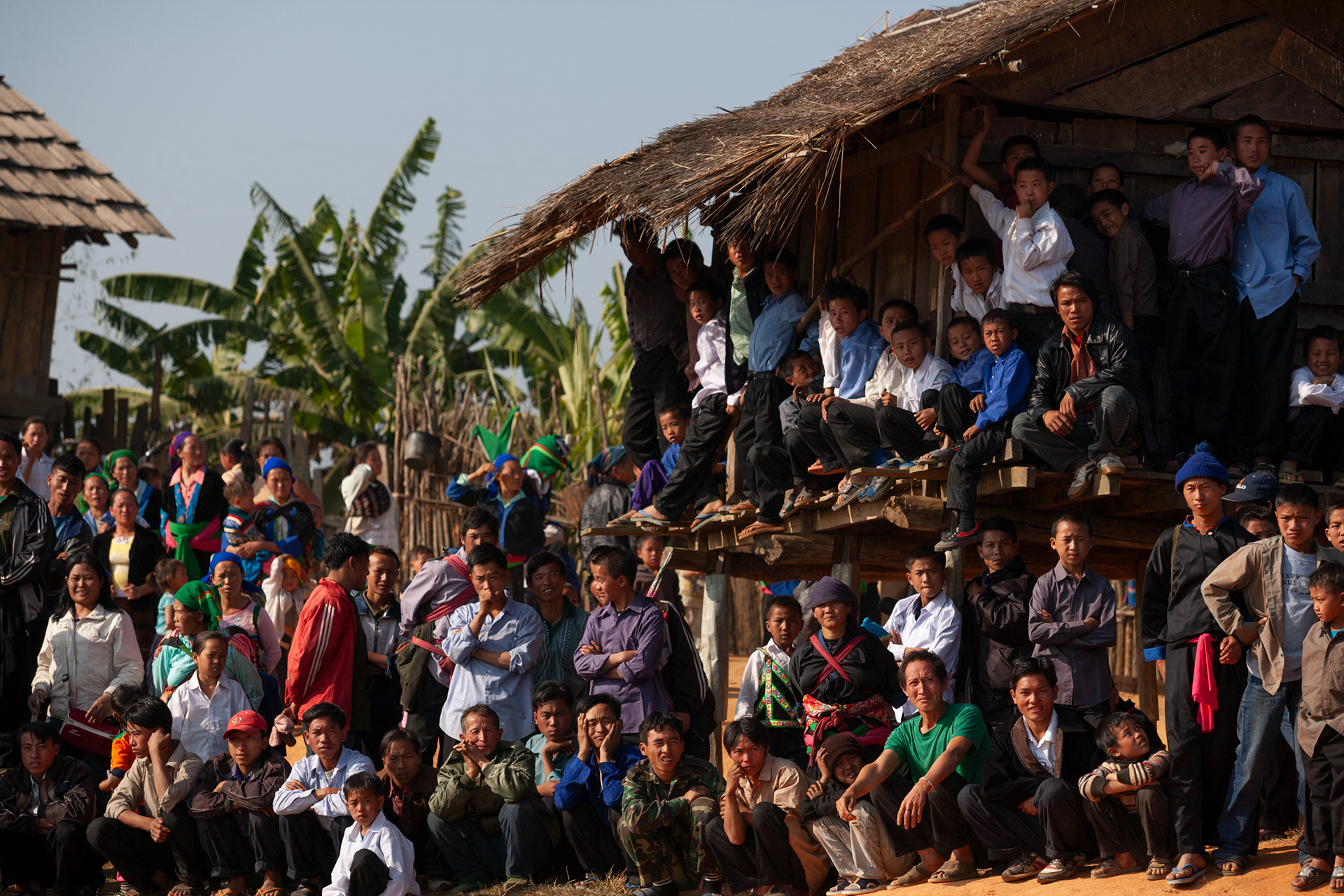
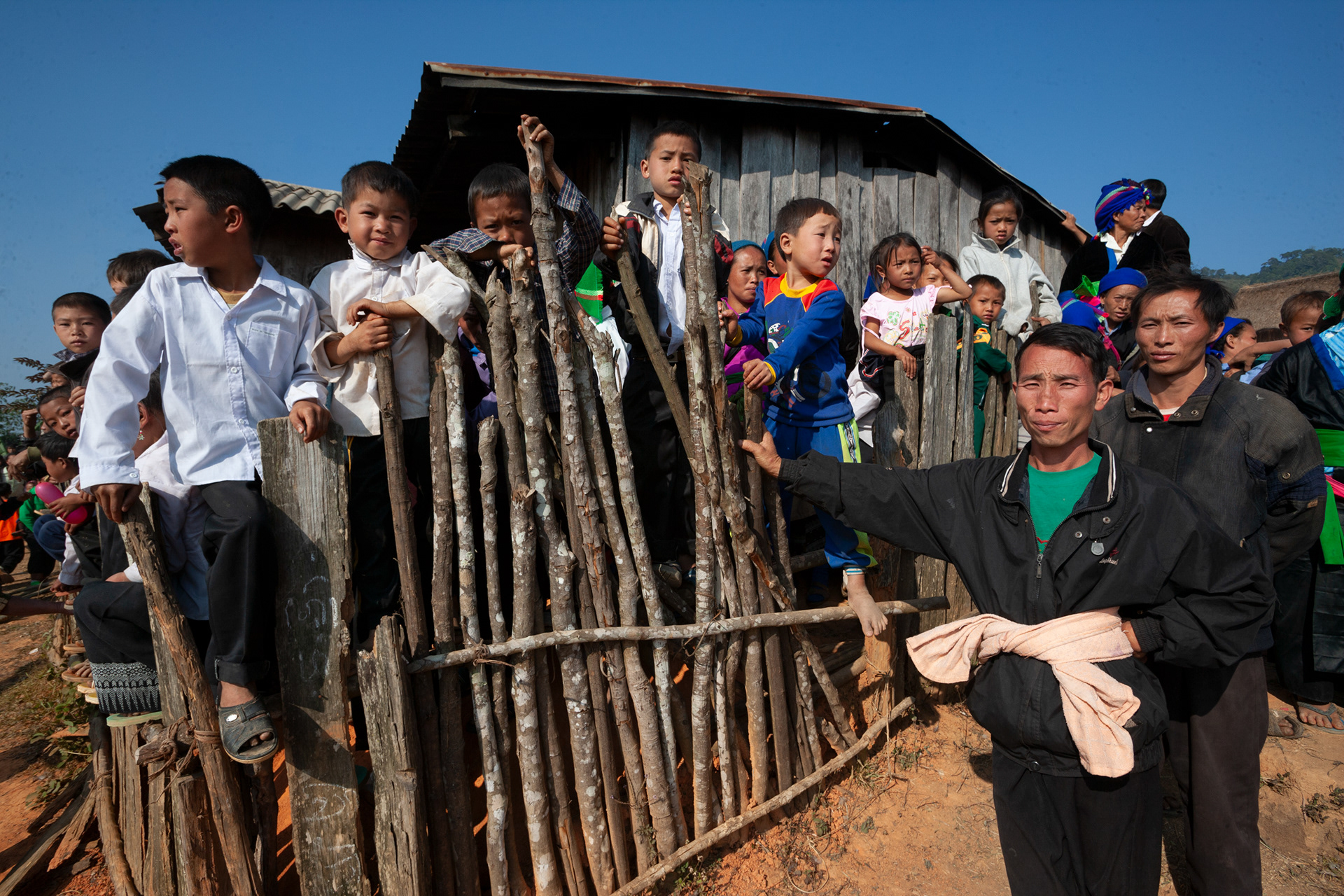
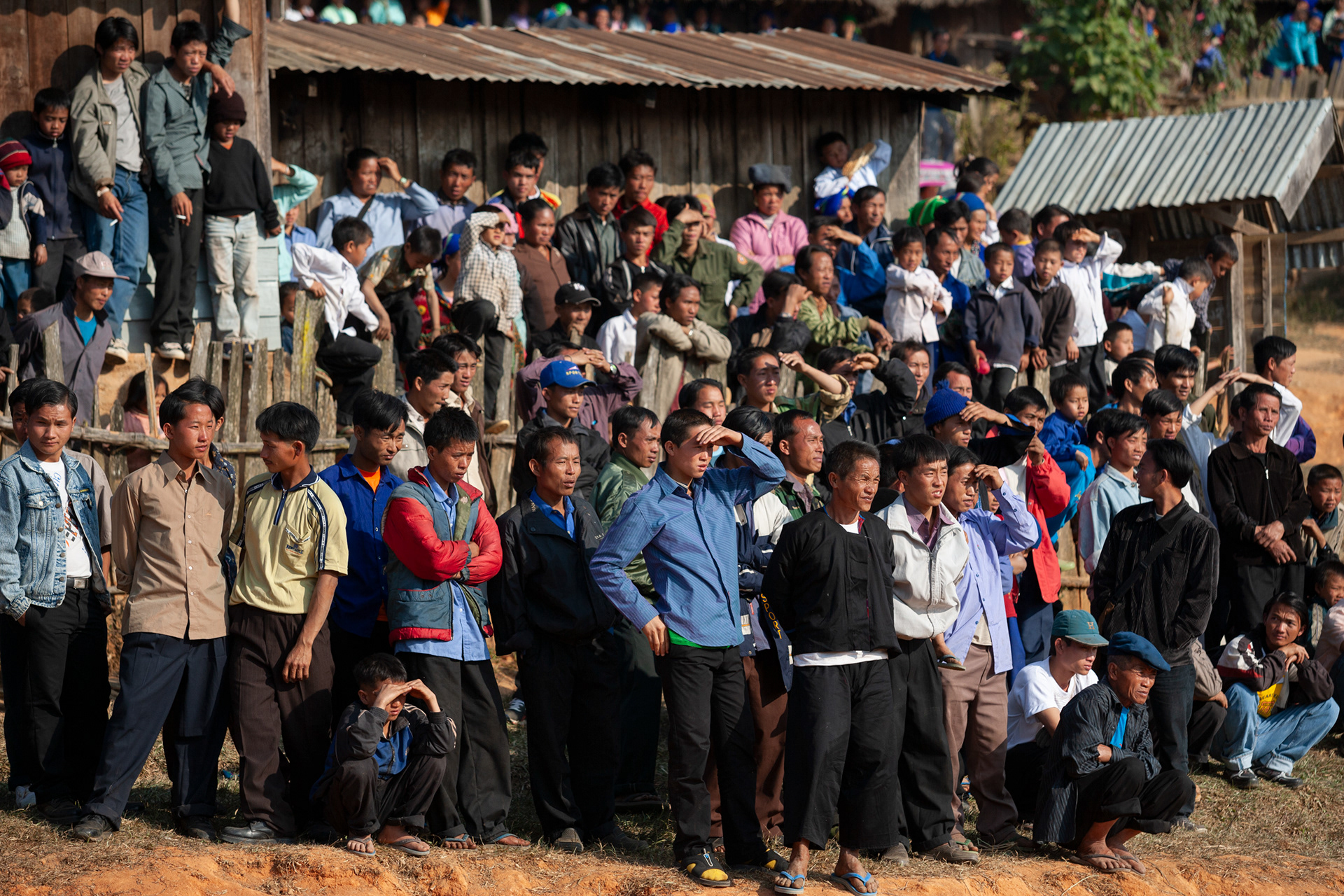
On our return trip from Sam Neua, we revisit Ban Nong Oun, where bullfights are taking place. The event draw hundreds of spectators from other villages. With many dressed in traditional costumes, the crowd is as much an attraction as the bullfighting. The dusty contest is staged in the village’s bowl-like central common; its houses are scattered over the surrounding hillsides and ridges. Spectators line the road, sit elbow to elbow on livestock fences, and even perch on rooftops to get a view of the action. A few brave souls meander about in the field with the handlers for a closer look; not infrequently they become part of the spectacle when the scuffling bulls force them to scatter and run.
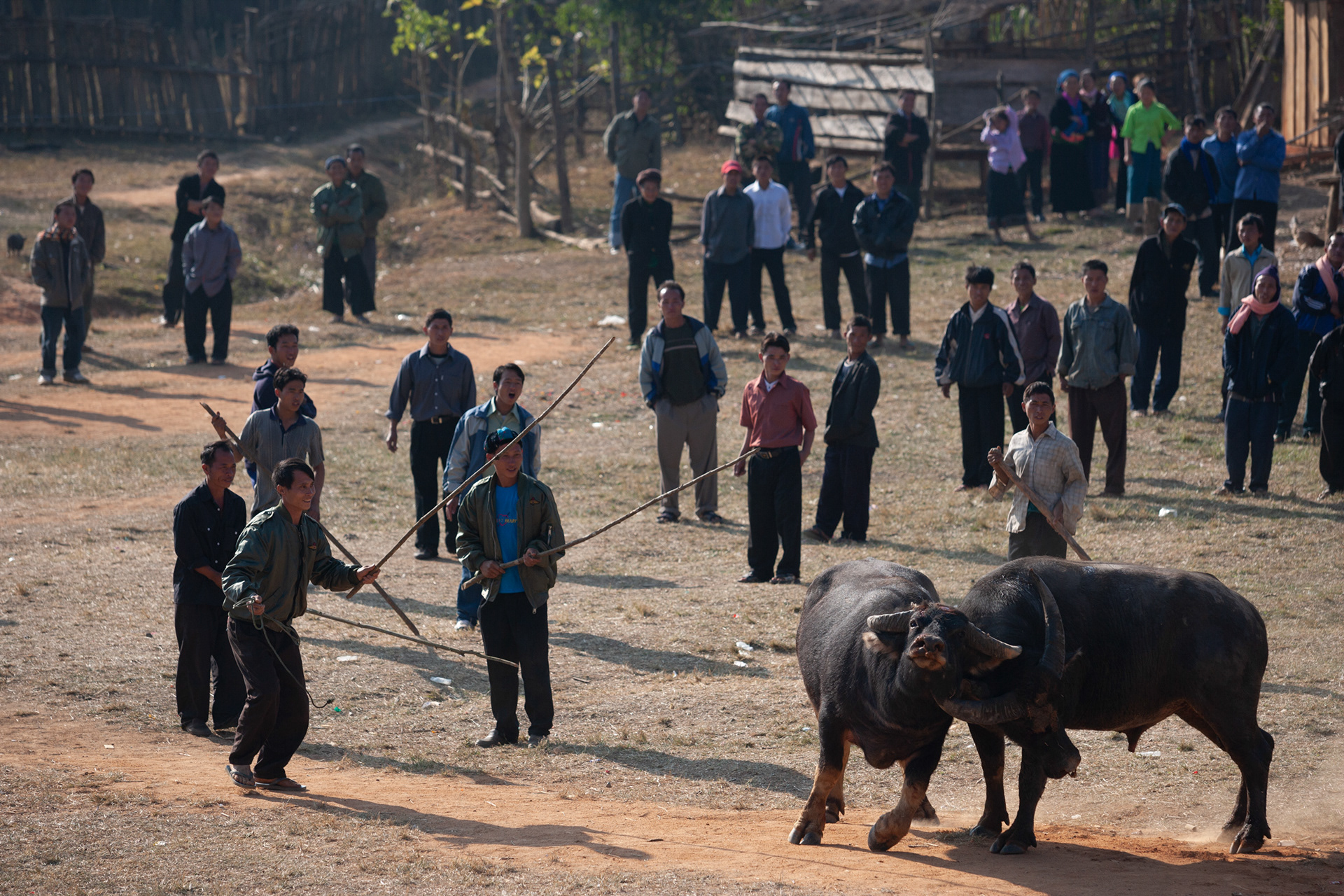
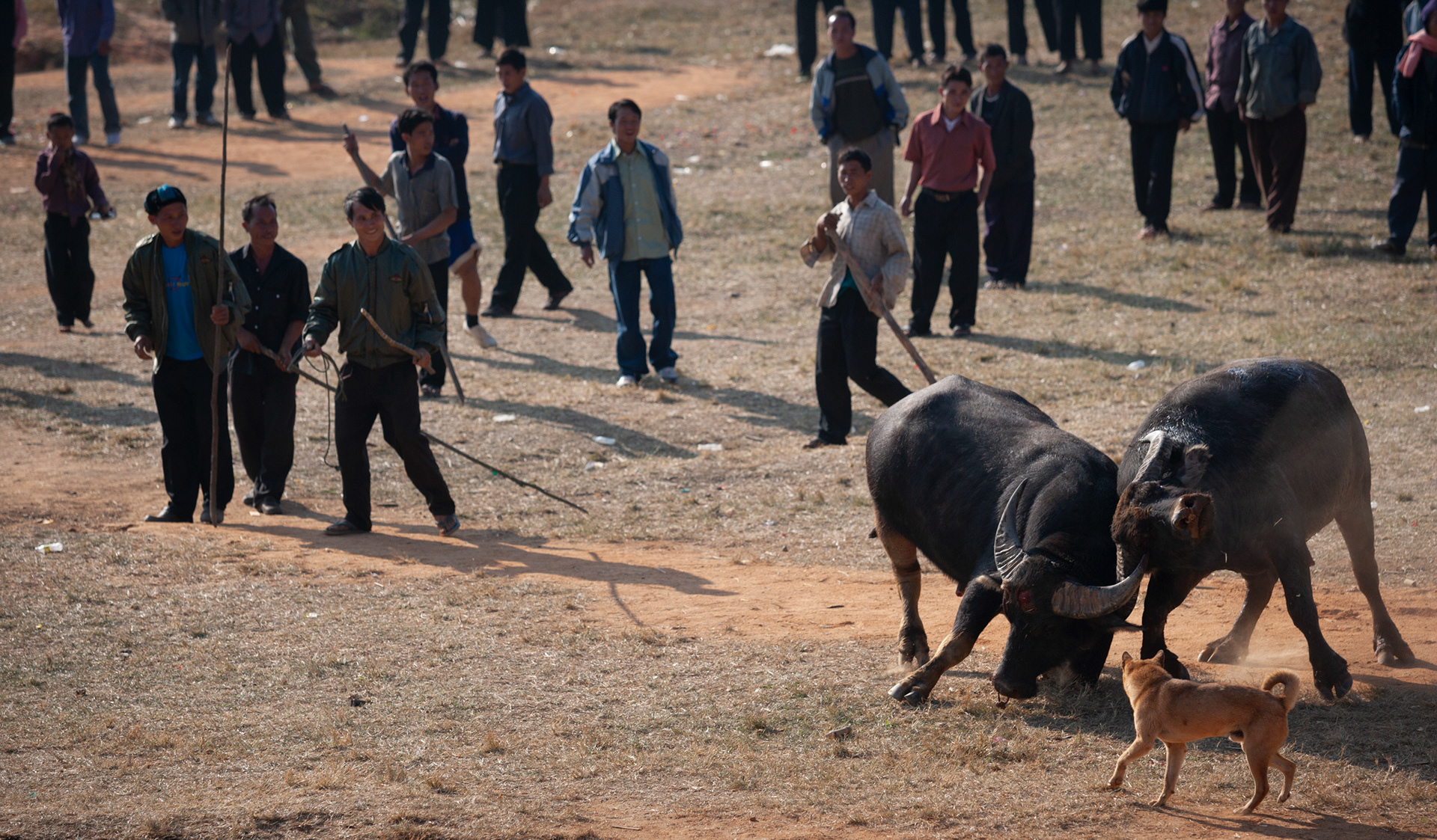
Compared with the Spanish version of the sport, Hmong bullfighting is surprisingly humane, even tame. Here the bulls fight each other, rather than being ritually killed by a matador and his picadors as they are in Spain. Bred specifically for fighting, the muscular animals sport tall Brahman humps, long midsections, and short, curved horns. Yet they are surprisingly reluctant to fight. By my count, seven out of every ten pairs of bulls introduced to each other fail to even tussle, wandering disinterestedly apart, despite the goading of their handlers. Spectators must sometimes wait an hour or more before two bulls finally take sufficient offense to one another and lock horns. When they do, a collective gasp is heard and all eyes are fixed on the dueling pair. The drama is usually over in a few minutes, when the stronger bull chases the weaker off the field without any major injury. Half a dozen handlers wielding tall bamboo poles scurry to block the bulls from running through the crowd but are not always successful.
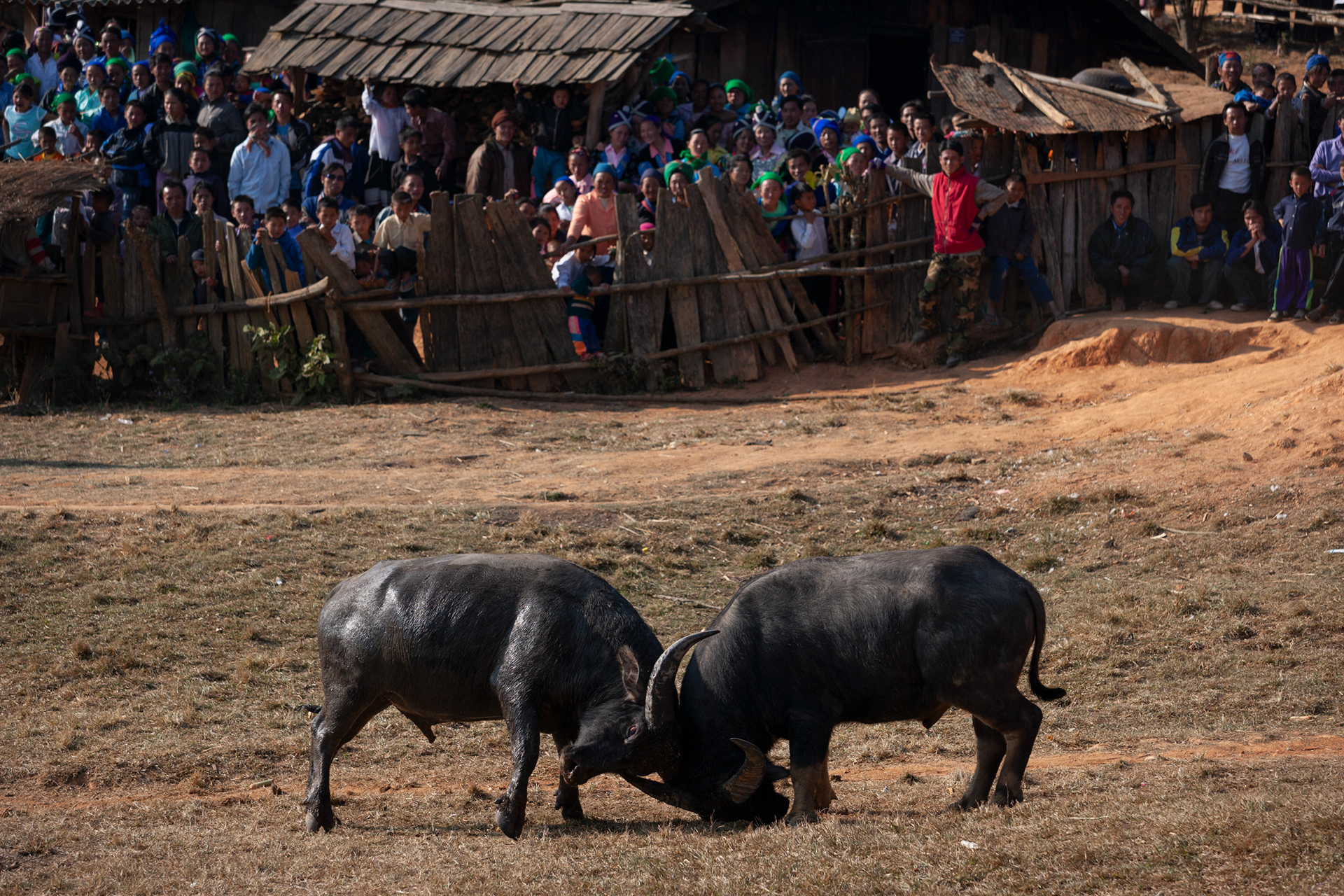
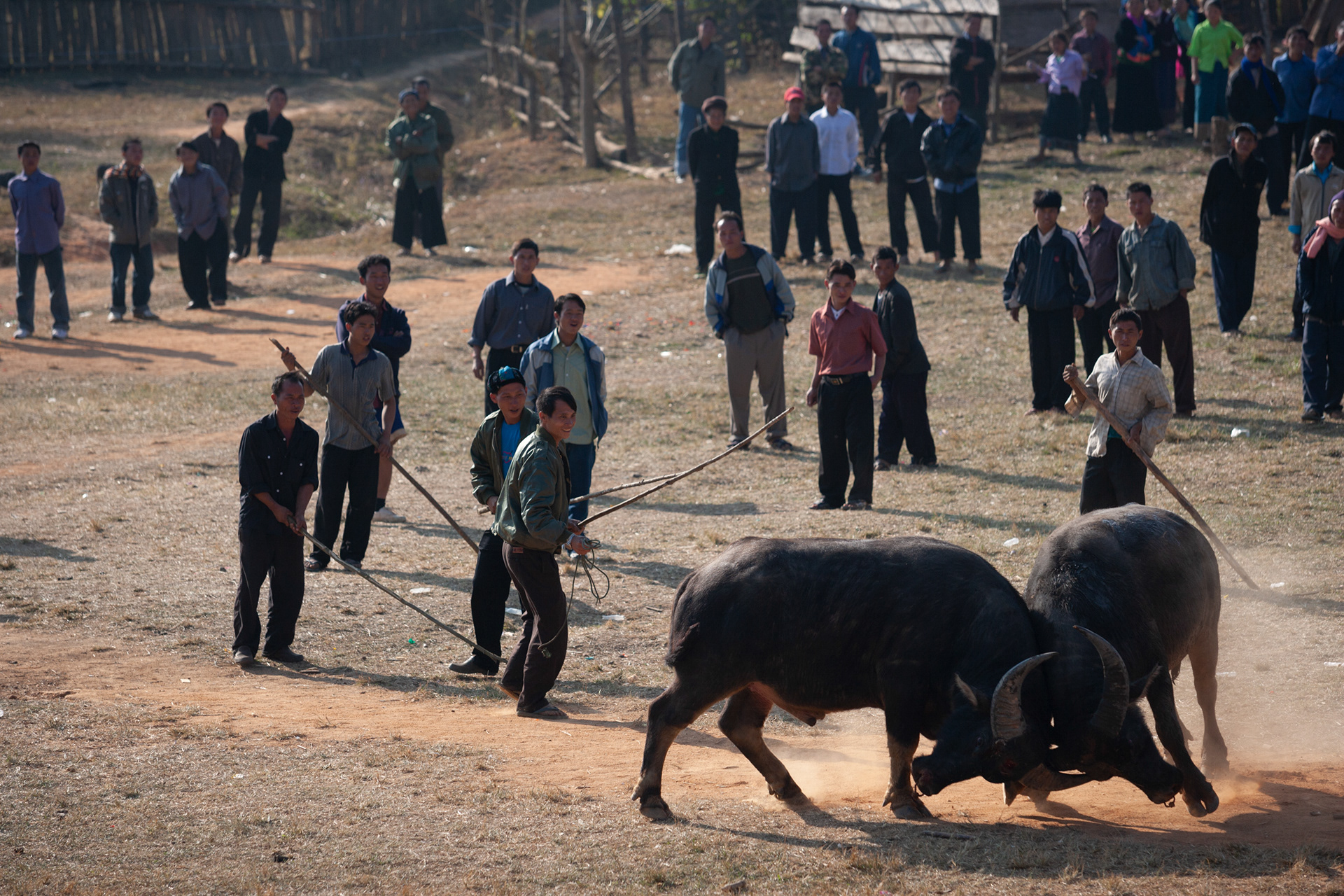
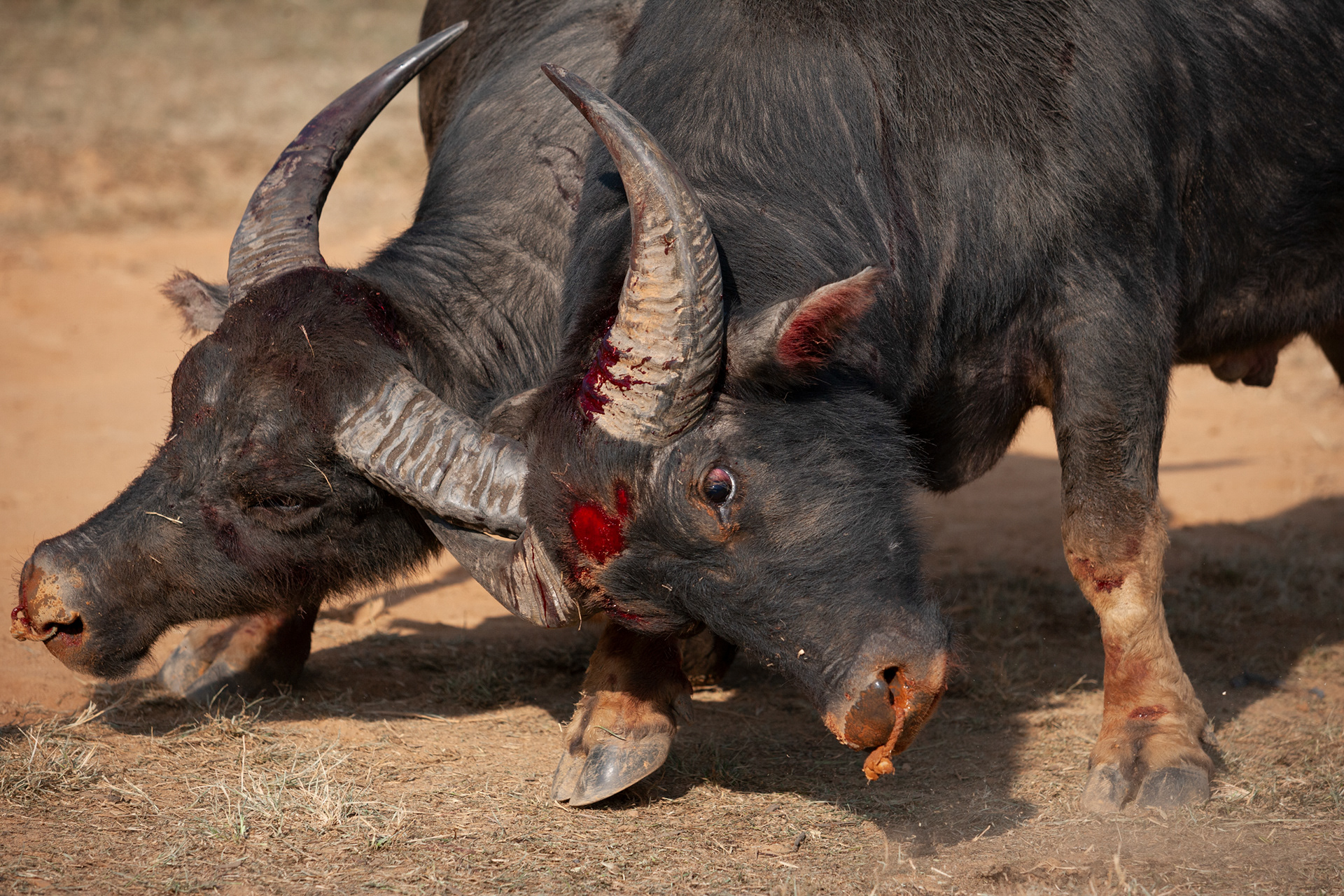
After several bullfights, a pair of water buffaloes is led onto the field. A shudder of excitement sweeps through the crowd. Larger and heavier than fighting bulls by several hundred pounds, buffalo bulls are also stronger, faster, and meaner. When the pair is introduced there is no hesitation: they immediately lock horns and begin pushing each other with a G-force not seen on the field all day. Occasionally they break apart, scuffle, then collide with a bone-on-bone impact that is audible even over the din of the raucous crowd. I decide to go around to the opposite side of the field and squeeze through the crowd for some closer shots. By now, the buffalo bulls are locked in a head-to-head stalemate, hundreds of pounds of pressure from each side holding the other in check. Soaked with sweat and breathing heavily, both animals are bleeding from head and neck wounds. I can’t resist going in for some quick close-ups. I run a few yards closer to the pair, snap a few frames, then run closer still. Finally, I move all the way in, squatting close to the ground and filling my frame with the faces of the enraged beasts. I can hear them exhaling as I focus on the crazed, glistening eye of the nearer bull. My lens captures the fur on its forehead, scraped raw and bleeding. Time slows and a strange sense of calm overcomes me; I feel as though I have all the time in the world to get the picture just right, clicking off one minor variation after another. Suddenly, with an abrupt motion, my perfect frame disintegrates and I feel the beat of heavy hooves at very close range. A surge of adrenaline propels me as I turn and run the opposite direction. Not daring to look back, I simply follow the handlers who are running ahead of me as fast as they can.
Once I reach a safe distance, I turn and watch as the larger buffalo concedes the contest by bolting in the opposite direction. With the victor in hot pursuit, they crash through a vegetable garden, taking out a small fence. The handlers run around the backside of the garden to head them off, pounding the earth with their tall bamboo poles. The buffaloes wheel about, inflicting substantial crop damage, and run back into the makeshift arena. Without pausing, they head full speed up toward the road. The crowd scatters and at least a hundred spectators who had been sitting on the roadside embankment all jump off at the same time. The buffaloes charge up the embankment and plow through a group of bystanders who do not move out of their way fast enough. A man carrying a baby on his back is knocked down, tumbling beneath eight galloping hooves. Miraculously, neither man nor baby is harmed. The buffaloes run down the road and disappear from sight, leaving their handlers in a cloud of dust.
Ban Nong Oun-13
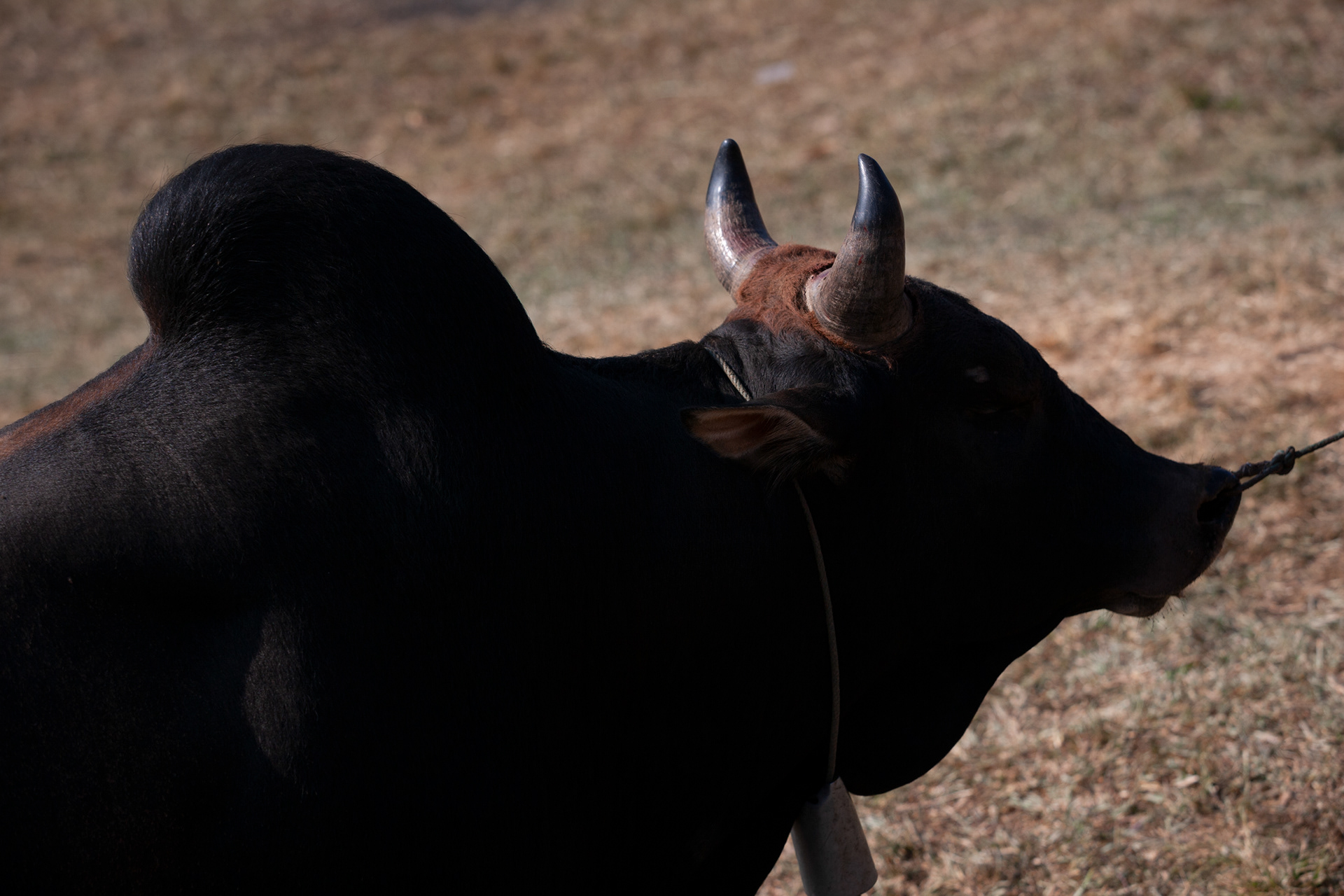
A Hmong fighting bull waits to be led onto the field, December 20, 2006.
Ban Nong Oun-14
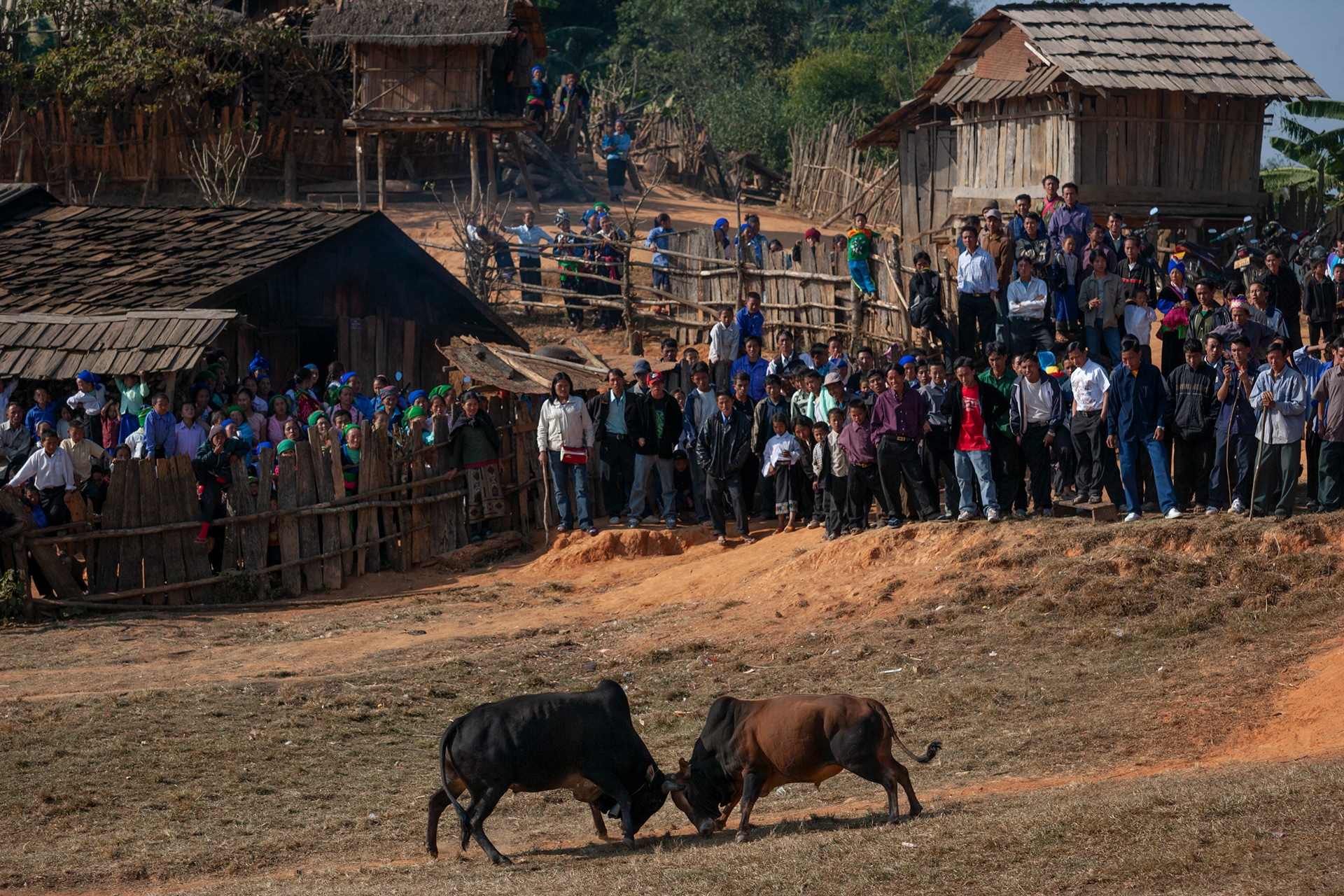
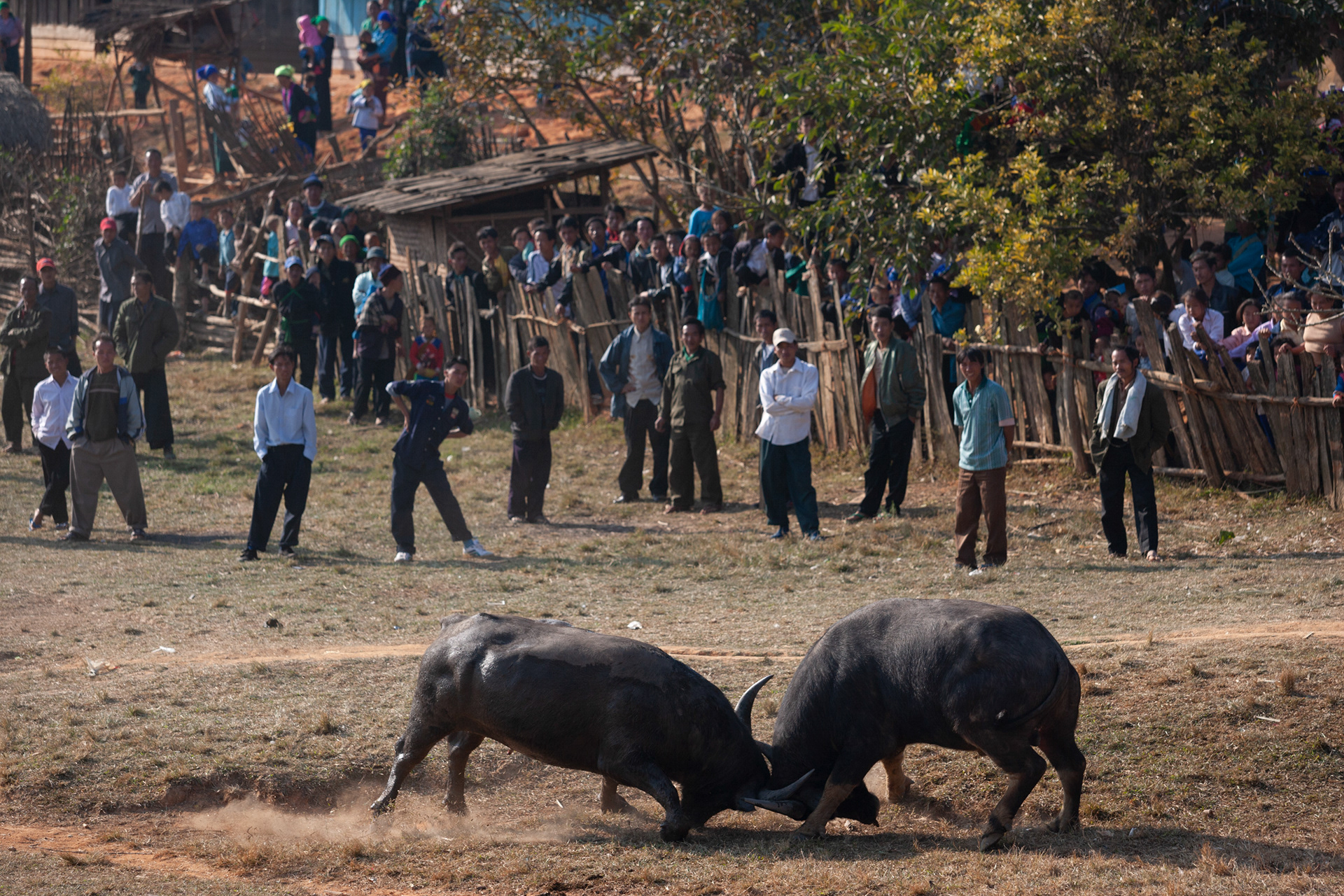
A pair of bulls lock horns as an excited crowd watches, December 20, 2006.
Ban Nong Oun-15
One bull thrusts hard, lifting the other off the ground, December 20, 2006.
Ban Nong Oun-17
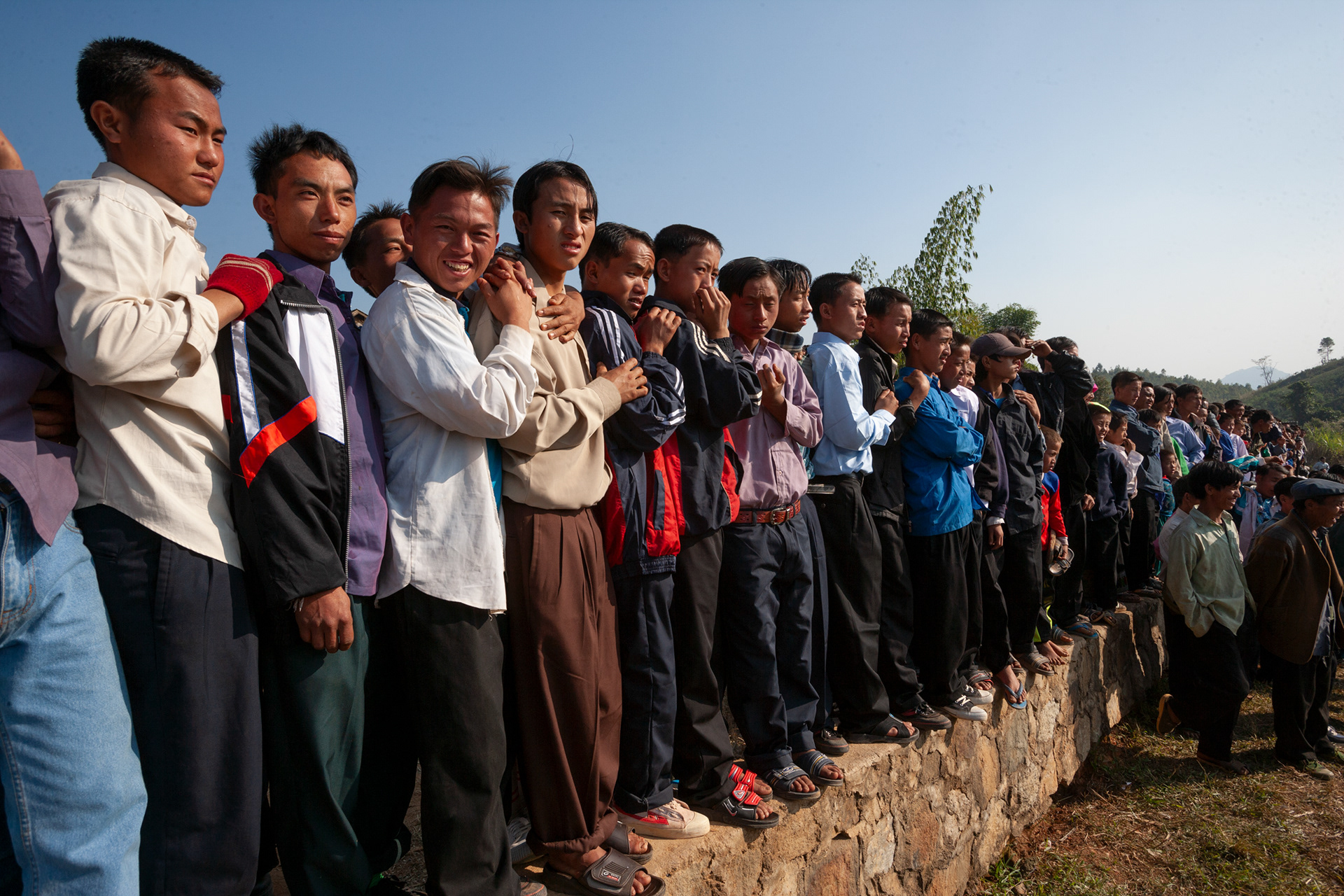
A crowd of young men watch the bullfight. With an eye toward attracting eligible girls, they have opted to wear their best Chinese-made, Walmart-style apparel instead of traditional costumes. Such clothing is relatively expensive for them, December 20, 2006.
Ban Nong Oun-18
The mixed crowd consists of people from many different villages, some of whom have walked many miles to be here, December 20, 2006.
Ban Nong Oun-19
A pair of buffalo bulls takes the field, eliciting a wave of excitement from the spectators who know this will not be an ordinary contest, December 20, 2006.
Ban Nong Oun-20
Spectators crowd every fence and embankment facing the central commons, December 20, 2006.
Ban Nong Oun-21
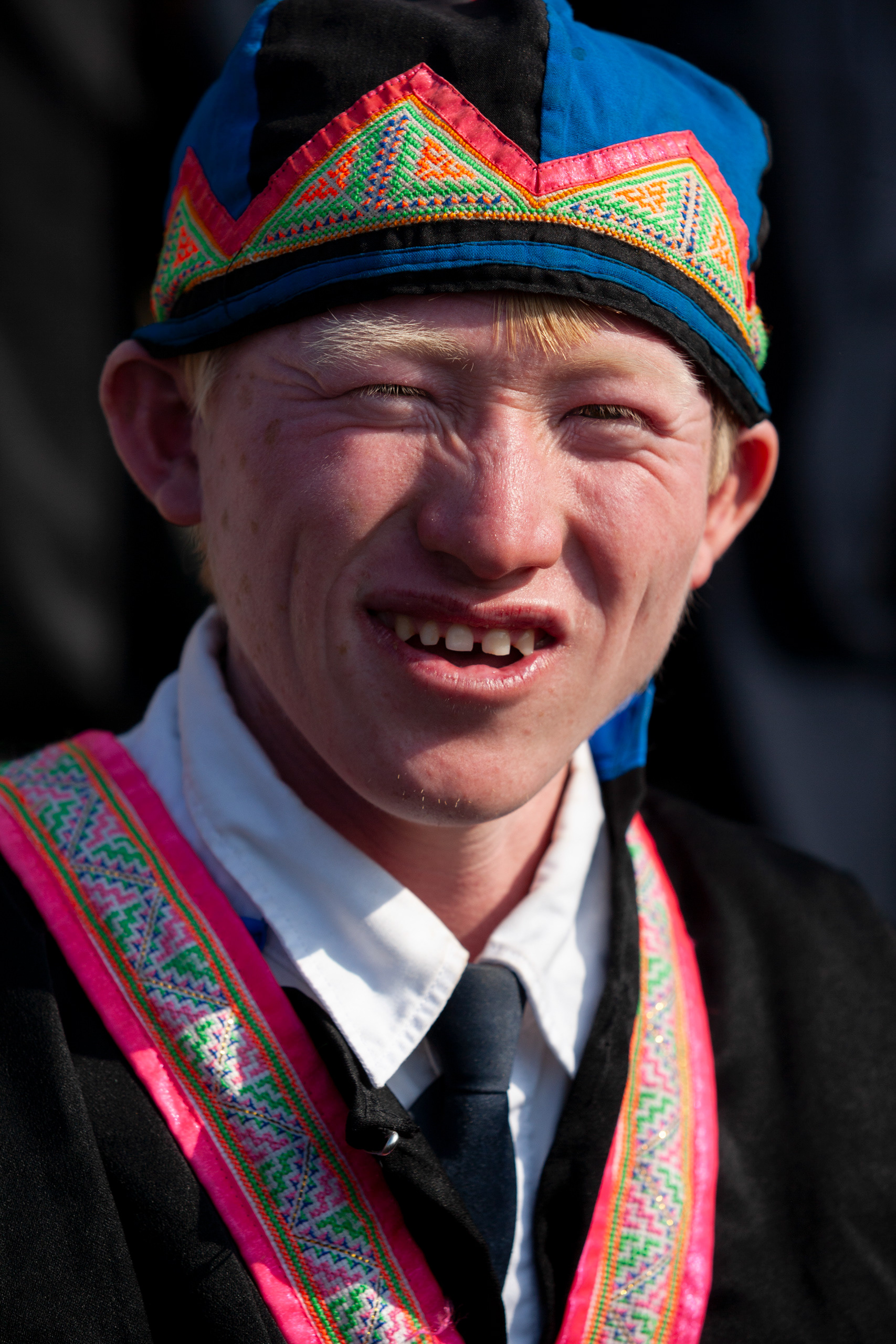
A rare albino Hmong youth is dressed the some of the finest New Year vestments seen all day. Rather than being ostracized, Hmong individuals with physical abnormalities are often treated with special respect and admiration, December 20, 2006.
Ban Nong Oun-22
Horns locked, the buffalo bulls have just lurched thirty feet toward the crowd, forcing the handlers to get out of the way quickly, December 20, 2006.
Ban Nong Oun-23
Handlers with bamboo poles try to herd the dueling pair back to the center of the field with no success, December 20, 2006.
Ban Nong Oun-24
The G-force these buffalos exert as they collide is orders of magnitude stronger than that of the purpose-bred fighting bulls, December 20, 2006.
Ban Nong Oun-25
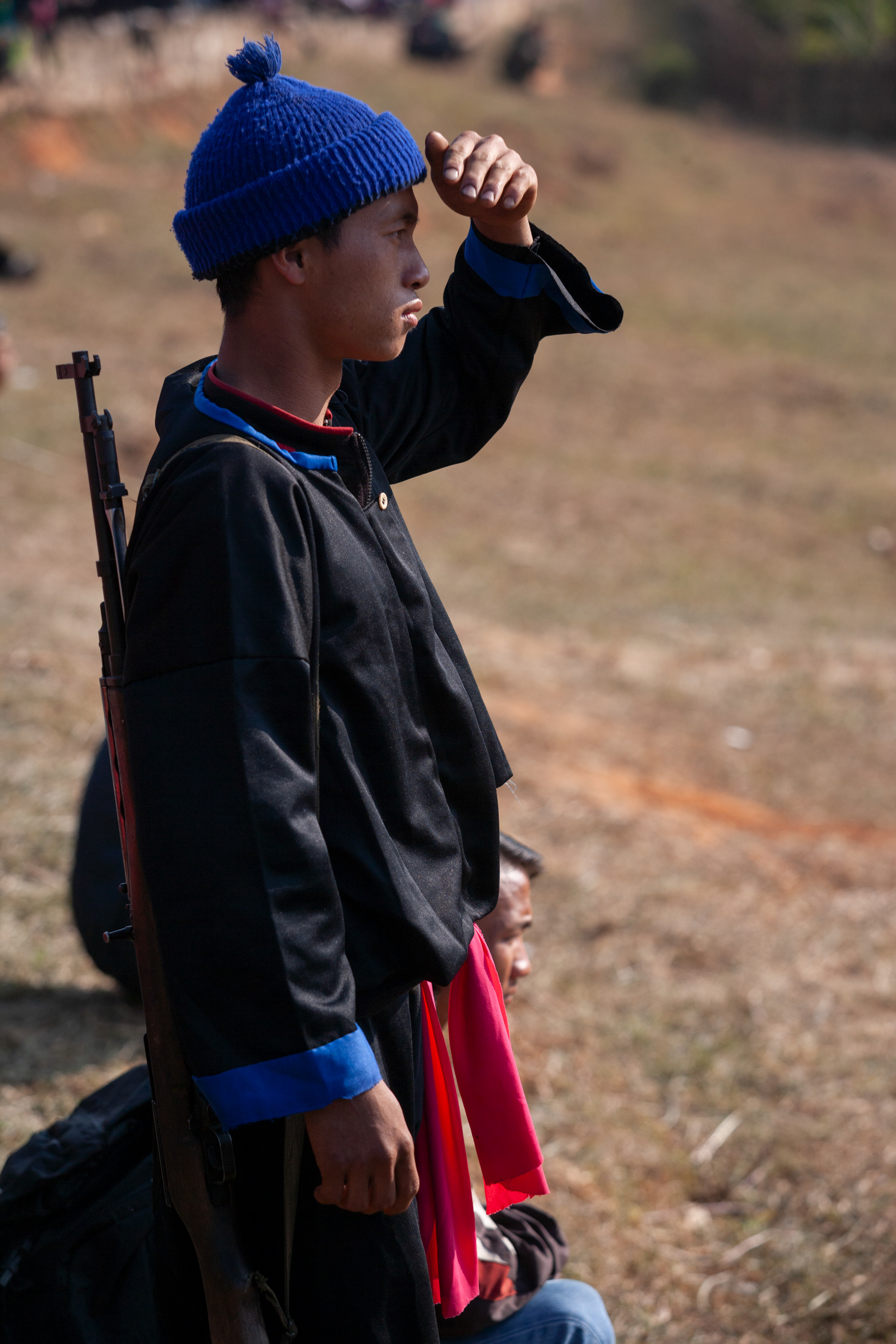
A Hmong police officer employed by the Lao government has been posted to keep order at this raucous event, December 20, 2006.
Ban Nong Oun-26
The crowd’s attention is rapt as the buffalo bulls give the best performance of the afternoon by far, December 20, 2006.
Ban Nong Oun-27
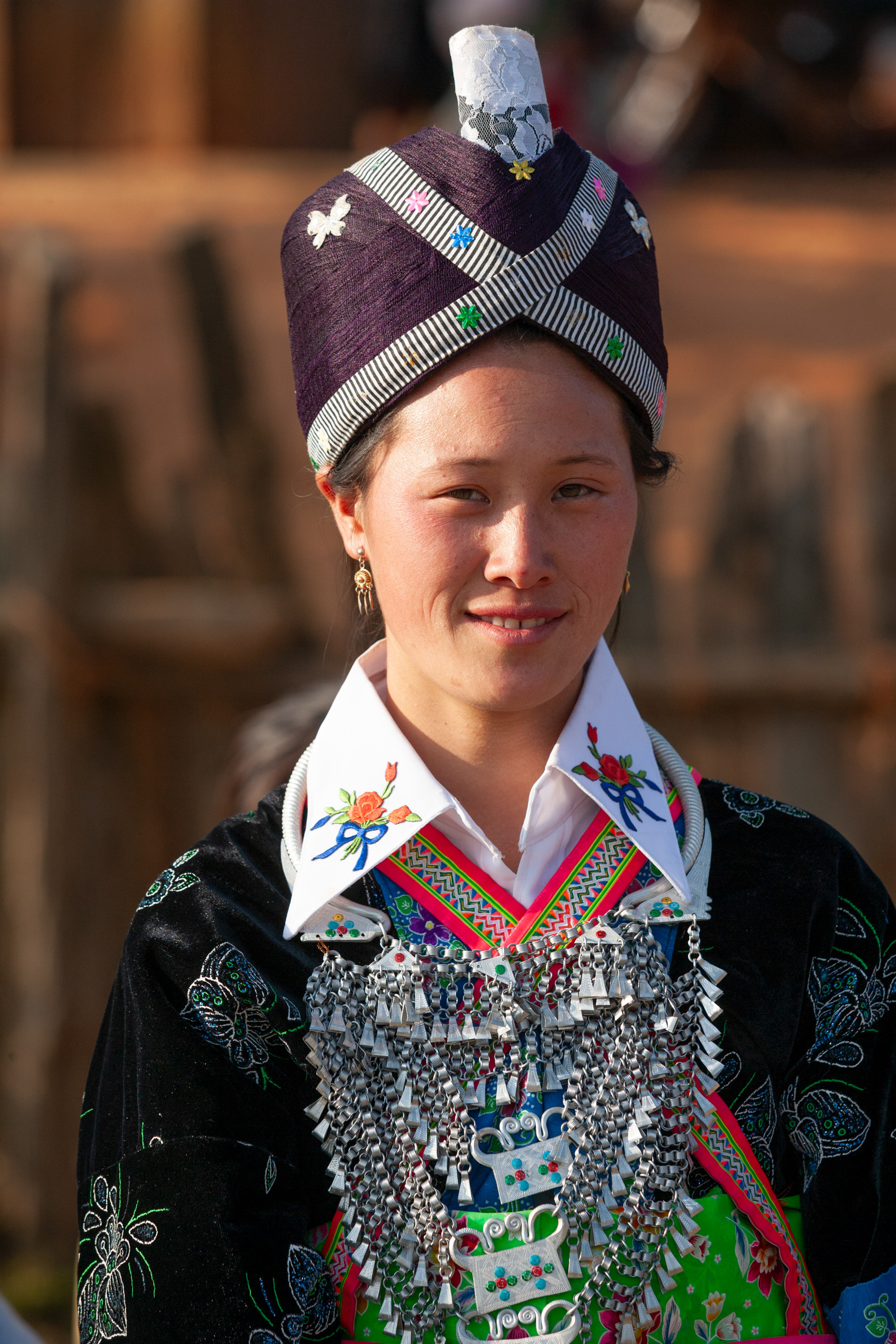
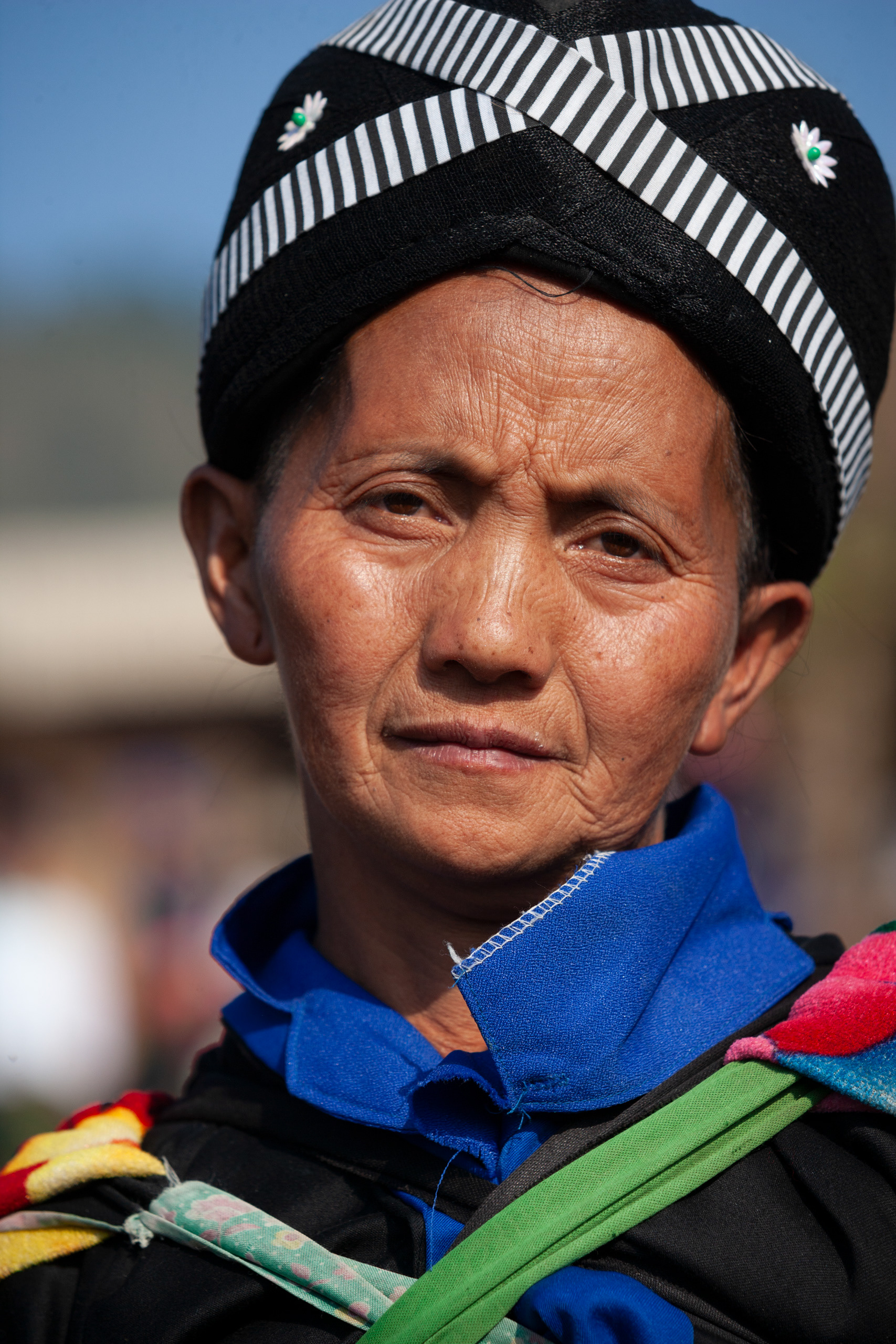
A Hmong woman in a traditional purple new year bonnet has sewn most of the clothes she wears, December 20, 2006.
Ban Nong Oun-28
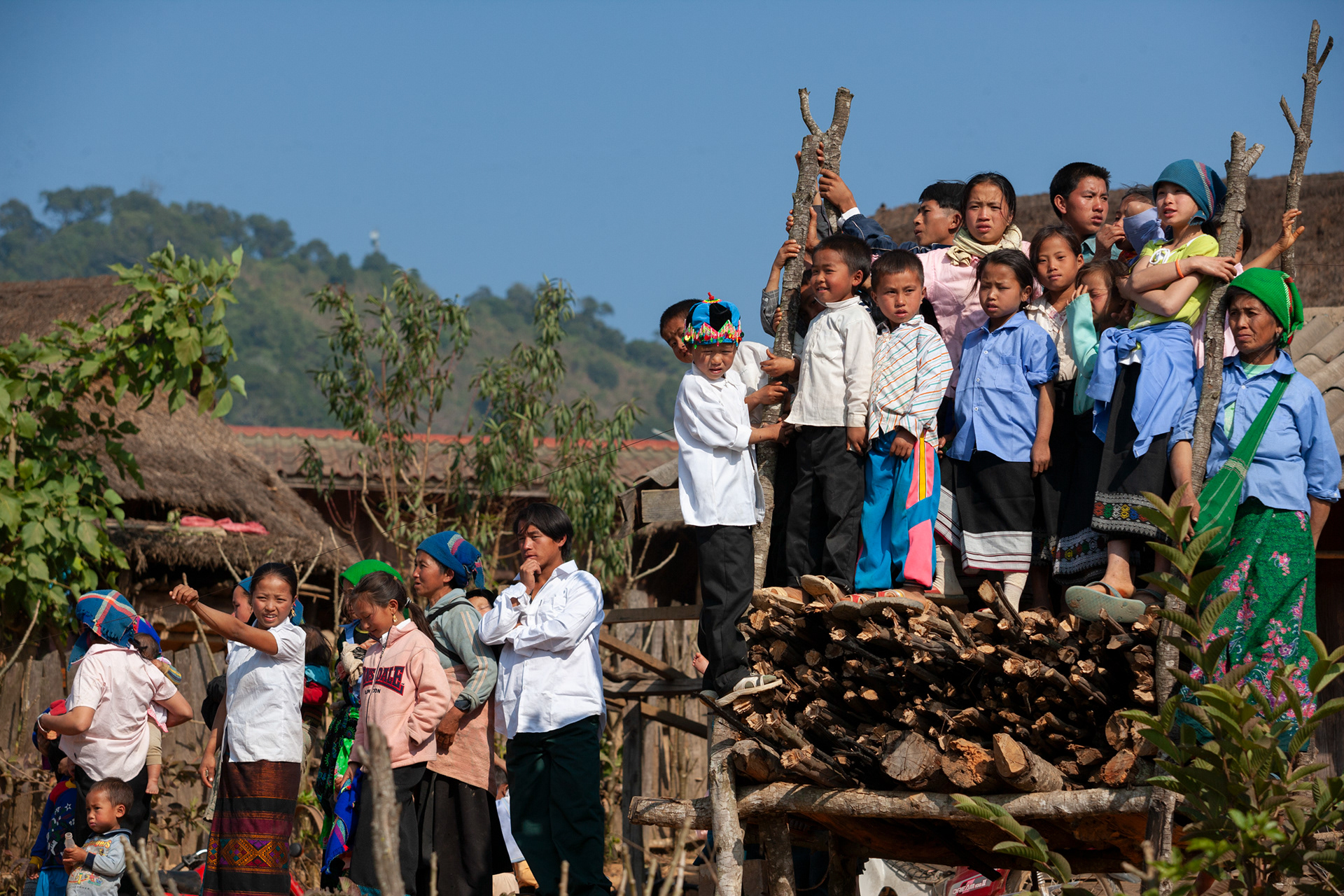
A gaggle of children have climbed a stack of firewood to get a better view of the action, December 20, 2006.
Ban Nong Oun-29
A village dog barks and goads the buffalo bulls, confident that it can outrun them, December 20, 2006.
Ban Nong Oun-30
A closeup view of the enraged beasts nearly became this photographer’s last picture. Only by running as fast as the handlers did I escape that fate, December 20, 2006.
Ban Nong Oun-31
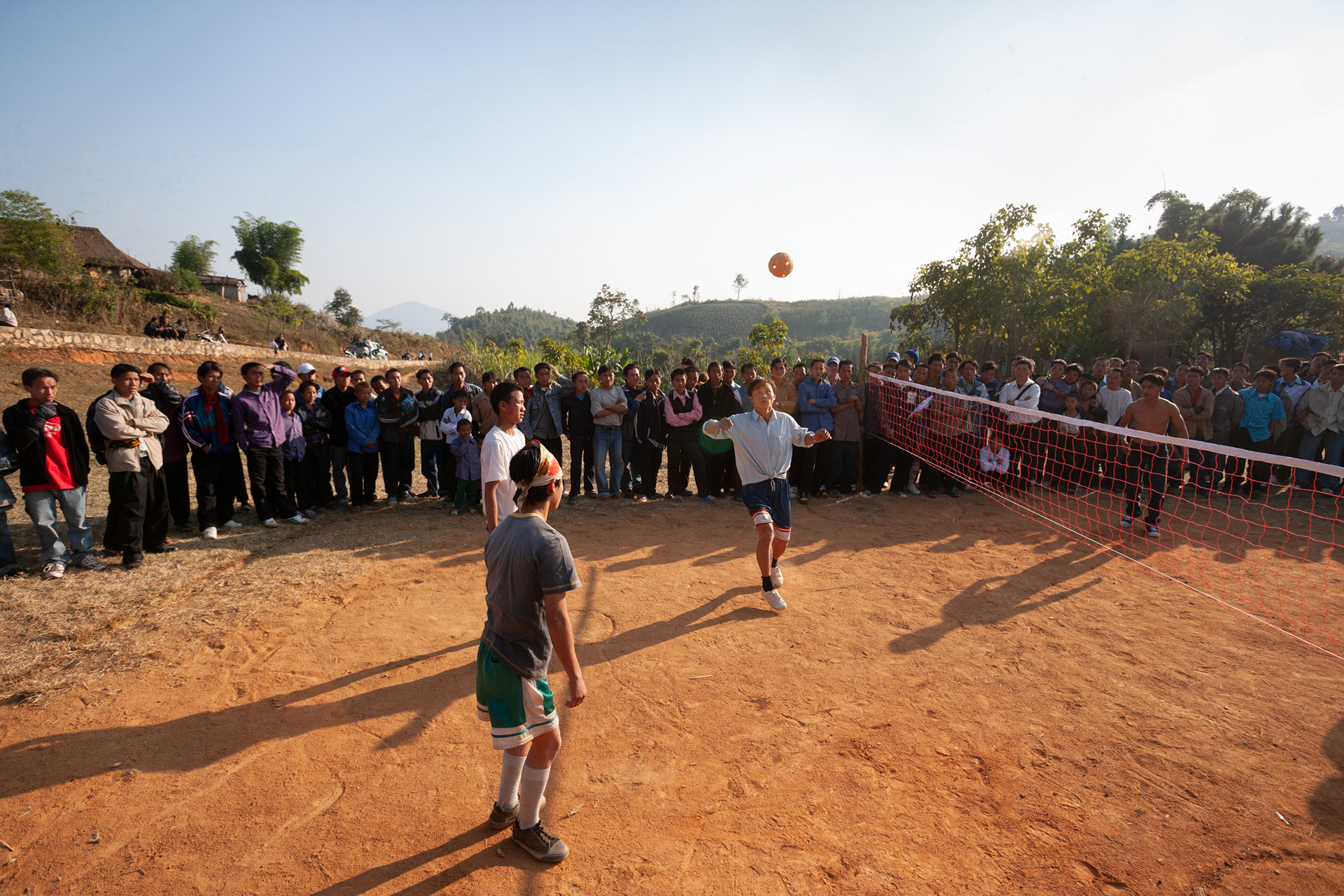
With the bullfights concluded, soccer-style volleyball reclaims the commons, entertaining new year celebrants, December 20, 2006.
Ban Nong Oun-32
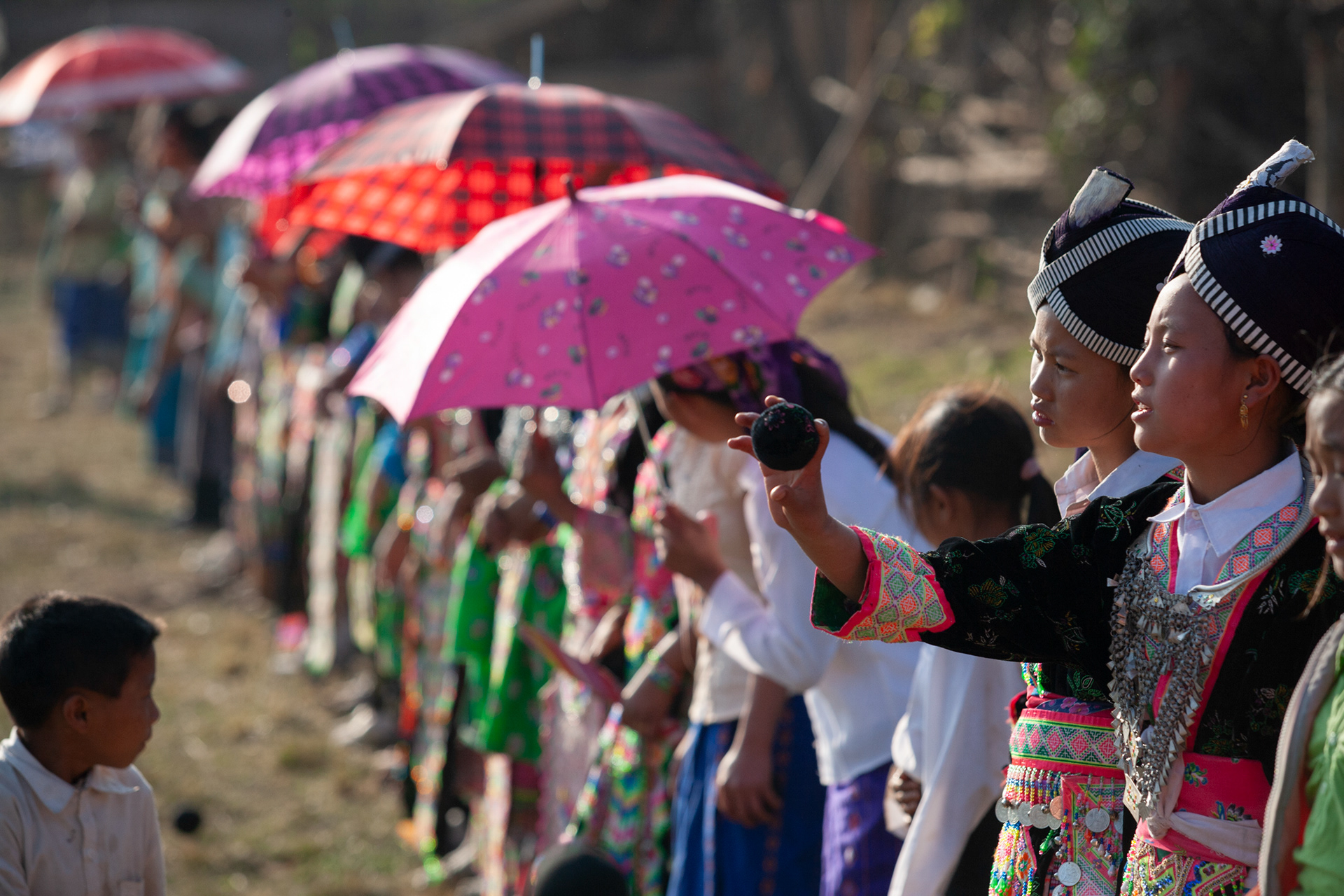
A line of girls quickly forms for a game of Pov Pov, the ancient new year ball tossing game that breaks the ice between young people looking for potential marriage partners, December 20, 2006.
Ban Nong Oun-33
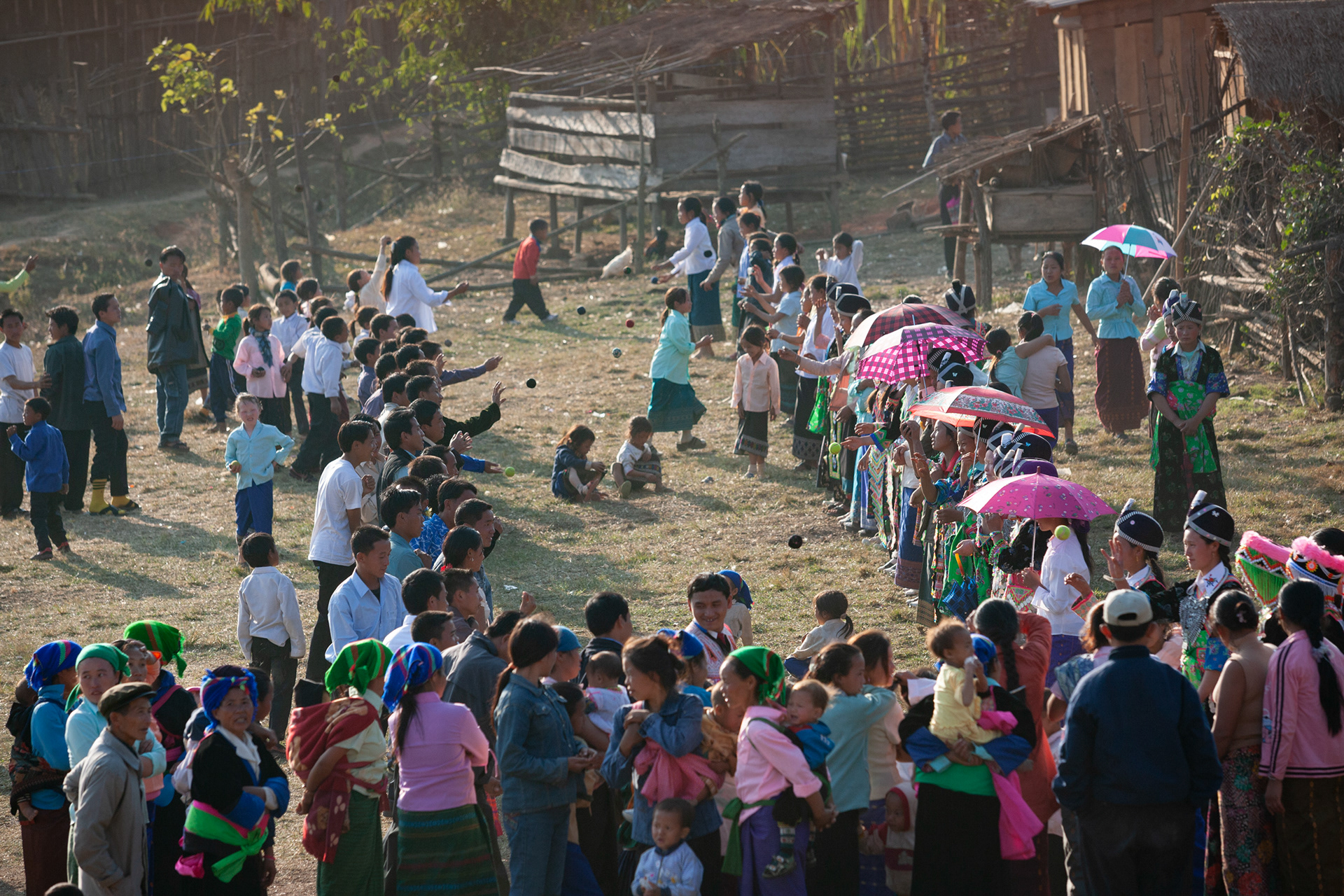
A wide view of the Pov Pov game shows a line of boys facing the girls, December 20, 2006.
Ban Nong Oun-34
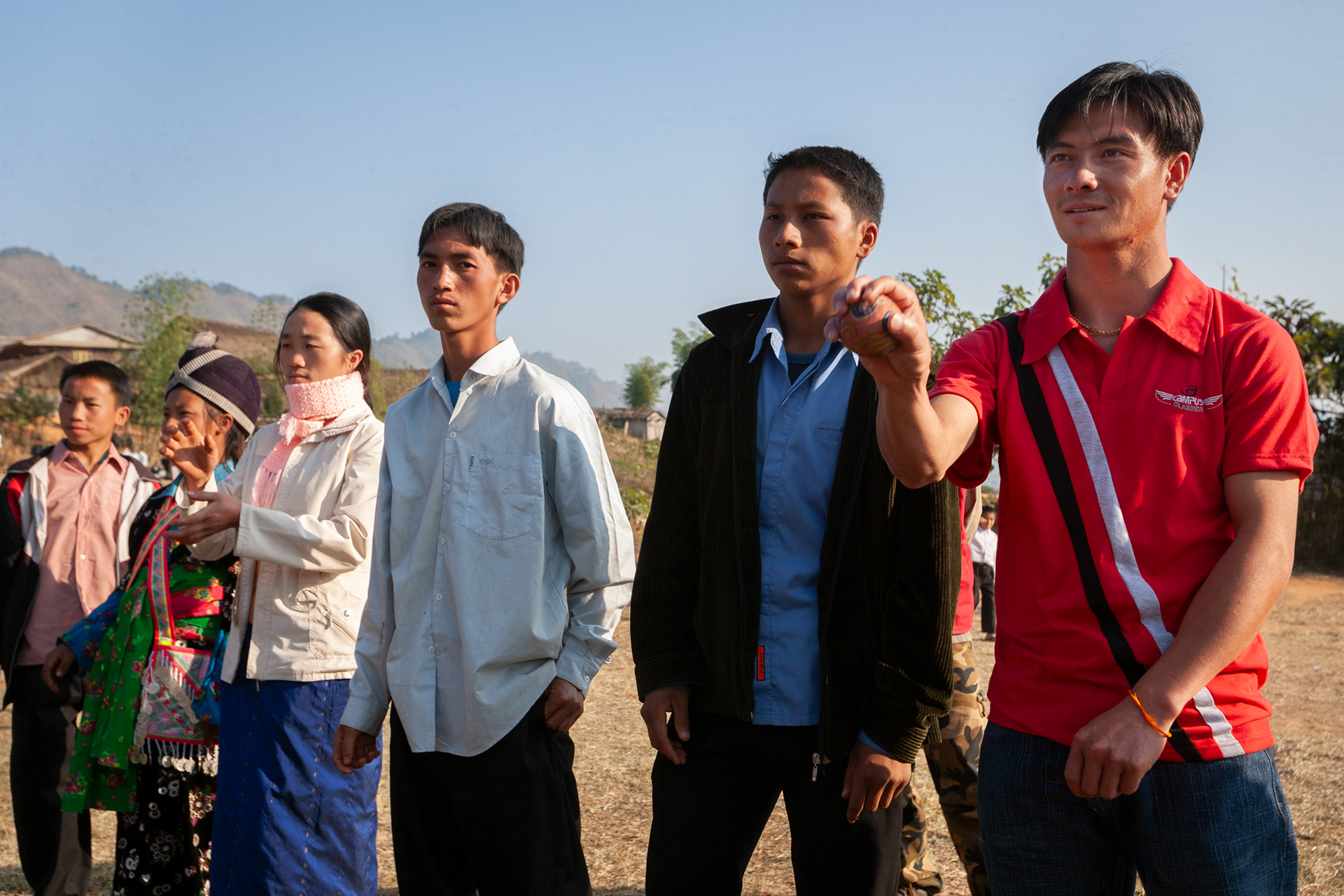
My guide, Long Vang (right), joins the Pov Pov game. At the time he was single, December 20, 2006.
Ban Nong Oun-35
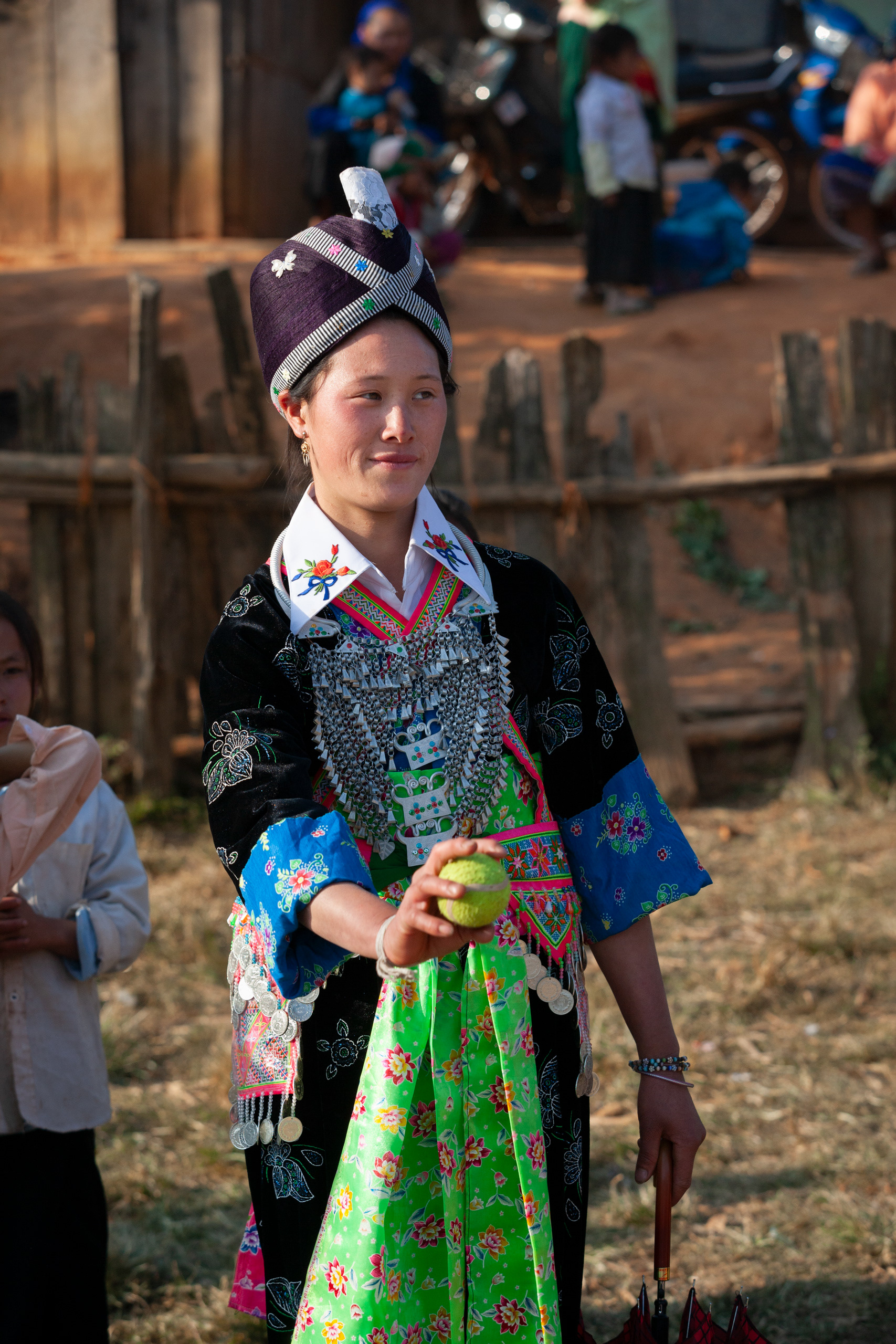
This tall, large-boned, young woman shows obvious signs of Caucasian patrimony. Far from being shunned, mixed race children are actually coveted and admired in both Hmong and Lao cultures, December 20, 2006.
Ban Nong Oun-36
A closer portrait of the mixed race woman taking part in the Pov Pov game, December 20, 2006.